
What an Interactive Entertainment Agency Does for IP Holders
When an IP holder searches for help entering games or interactive media, the results often point to entertainment booking firms or companies built around a single production touchpoint. That mismatch reflects a larger strategic problem: expanding an established world requires more than commissioning an isolated game or campaign. It requires a partner that can connect creative ambition, audience experience, technology, and commercial direction.
Partner with Arctic7 to build your interactive entertainment ecosystem
An interactive entertainment agency helps IP holders and publishers turn valuable worlds into connected experiences across games and interactive media. It aligns IP adaptation, ecosystem design, production strategy, and technical execution so each new touchpoint strengthens the larger narrative rather than operating as a standalone project.
For decision-makers, the distinction matters. The right partner can clarify what the IP is ready to become, which platforms best serve the audience, and how development should move from concept to production. The first step is understanding what this kind of agency actually does, and how its role differs from more narrowly focused providers.
What Is an Interactive Entertainment Agency?
An interactive entertainment agency is a strategic and production partner that helps intellectual property owners turn a single story, character, or world into connected experiences across games, film, television, immersive media, and digital platforms. It combines creative development with the technical disciplines required to make those experiences work together, rather than treating each project as an isolated release. This article is authored by Andrew MacLusky, CPO.
That definition matters because the phrase is often used loosely. Search results for interactive entertainment agency may lead to corporate-event entertainment, talent booking, or live-experience firms. Those businesses can be valuable when a company needs performers, event programming, or an activation for a specific occasion. Their focus is generally the event itself. An agency serving IP holders and publishers starts earlier and works at a broader level. It asks what the world should become, which audience each experience should reach, and how every expression can strengthen the same long-term property.
From one project to an interconnected world
A transmedia-focused agency is not simply a development shop that delivers one game, or a marketing agency that promotes an existing product. It connects strategy, narrative, production, technology, and audience experience. That may mean shaping an adaptation plan for a game publisher, developing cinematic assets that can serve multiple platforms, or designing the relationship between a franchise's interactive and screen-based experiences.
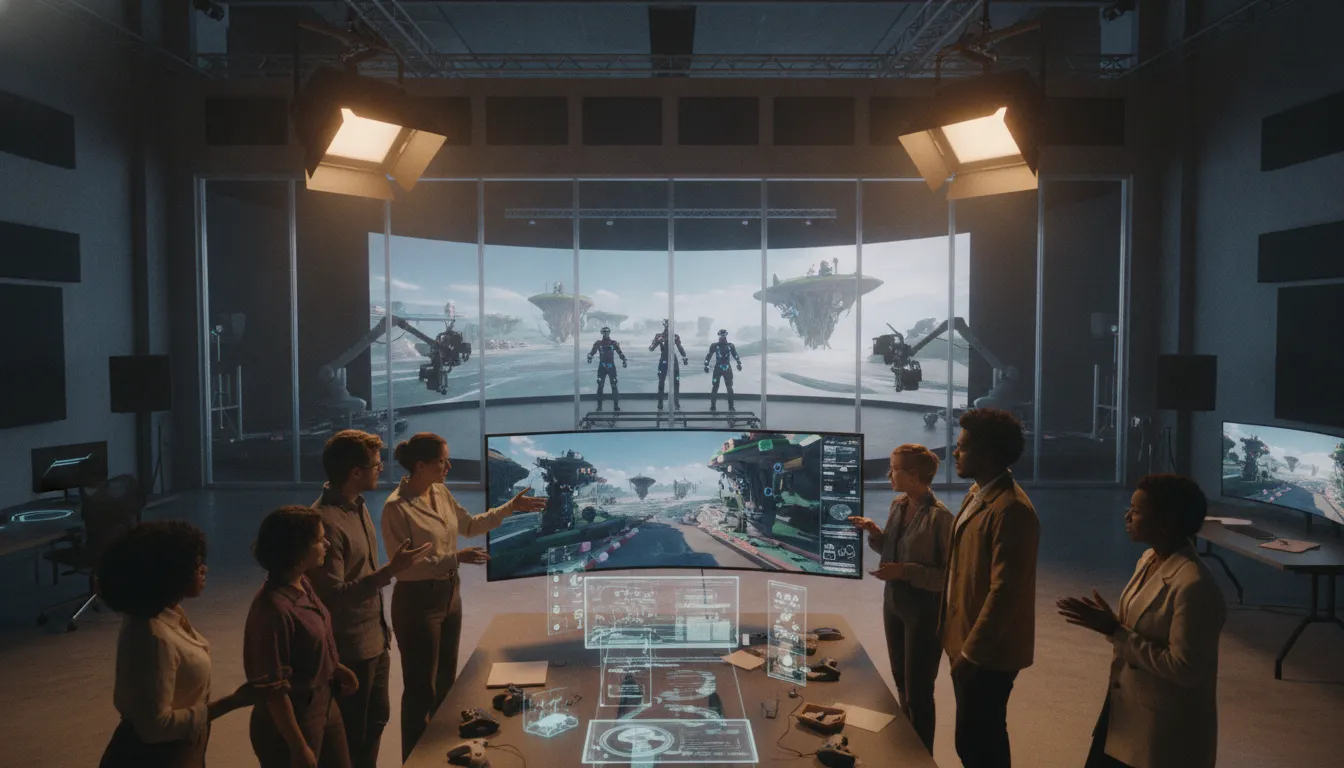
Arctic7's capabilities span six connected service lines: Transmedia Strategy, Game Development, Virtual Production, Cinematic Storytelling, Ecosystem Design, and Content Optimization. Together, they support both the creative and technical implementation of multi-platform storytelling. For example, virtual production can bring game-engine workflows into cinematic development, while ecosystem design helps ensure that separate touchpoints contribute to a coherent IP narrative.
Flexible partnership models for different ambitions
The right operating model depends on the scale, capabilities, and objectives of the IP owner. A Full-Scale Development engagement can provide end-to-end support when a partner needs a complete team. A Co-Development Partnership adds specialist capacity to an internal studio or publisher. A Specialized Service Engagement brings focused expertise to a defined challenge, such as virtual production, game development, or content optimization.
In each case, the agency should function as an enabler and partner, not as a packaged product. Its value is the ability to help decision-makers navigate creative and technical complexity, coordinate disciplines, and make informed choices about how an IP can expand. The strongest partnership leaves the rights holder with a clearer strategy, stronger production foundations, and an entertainment ecosystem built to grow beyond a single launch.
What Does an Interactive Entertainment Agency Do for IP Holders and Publishers?
An interactive entertainment agency helps an IP move from a single successful property into a connected portfolio of experiences. That work can span games, film, television, and immersive formats, but the objective is not to reproduce the same story everywhere. It is to determine how each medium can contribute something distinctive while remaining part of a coherent world.
For an IP holder or publisher, this begins with strategy. The agency assesses the existing universe, audience expectations, commercial opportunities, and production realities. It then identifies the platforms and formats that can extend the property most intelligently. The result is a roadmap for growth rather than a collection of disconnected adaptations.
Strategy that protects the core IP
Strong adaptation starts by clarifying what must remain consistent. An agency can help define the central themes, character logic, visual language, and rules that make an IP recognizable. Those principles create room for new stories and interactive mechanics without weakening the identity that audiences already value.
This strategic layer also helps align creators, developers, publishers, and rights holders. Managing IP across multiple entertainment ecosystems requires an integrated relationship between the people who protect the property and the teams who build new experiences. Without that alignment, each production may optimize for its own goals while the larger brand becomes fragmented.
Ecosystem design that creates new entry points
Ecosystem design connects the parts. A game might let audiences participate in a world, while a film or series establishes new narrative stakes and an immersive experience deepens the sense of presence. Each touchpoint should have a clear role, audience promise, and relationship to the broader narrative.
That structure can help established IP reach new audience segments without treating expansion as a simple distribution exercise. It also creates more ways for audiences to engage over time, strengthening the relationship between the property and its community. For publishers, those additional entry points can support more resilient and diversified revenue streams when they are built around a coherent strategy.
Production that connects creative ambition to delivery
Strategy only matters when it can be executed. The right partner combines creative development with the technical implementation required for multi-platform storytelling. Depending on the brief, that may include game development, cinematic storytelling, virtual production, content optimization, and the coordination of specialist teams.
Arctic7 describes this integrated model across its full range of services. The value is not a prepackaged product. It is an experienced partner that can help an IP holder decide what to build. Why it belongs in the ecosystem, and how to move it from concept through production with the larger world in view.
The Building Blocks of an Interactive Entertainment Ecosystem
An interactive entertainment ecosystem is built by connecting creative ambition to the operational disciplines that make an IP durable across platforms. The six pillars below work as a system, not a menu of disconnected services. Together, they help an IP holder create a coherent narrative, move audiences between experiences, and turn each new touchpoint into a meaningful extension of the whole.
That integrated model matters because the transmedia and interactive entertainment landscape is growing quickly. LED virtual production has moved from an emerging production approach toward a more established part of the industry. Growth creates opportunity, but it also raises the cost of fragmented decisions. Strategy, production, technology, and optimization must reinforce one another.
| Service pillar | Primary role | Ecosystem value |
|---|---|---|
| Transmedia Strategy | Defines how an IP can expand across games, film, television, and immersive media. | Creates a shared direction for story, audience, platform, and commercial decisions. |
| Game Development | Translates the IP into engaging interactive systems, mechanics, and player experiences. | Opens a high-engagement entry point while protecting the identity of the source material. |
| Virtual Production | Uses real-time tools, digital environments, and game-engine workflows for cinematic work. | Connects production assets and supports more efficient visual storytelling. |
| Cinematic Storytelling | Builds the films, series, trailers, and narrative moments that give the ecosystem emotional weight. | Deepens character, world, and audience connection across screen-based formats. |
| Ecosystem Design | Maps the relationship between platforms, experiences, audiences, and the broader IP. | Unifies disparate touchpoints into one recognizable brand narrative. |
| Content Optimization | Uses audience insight, performance signals, and iteration to improve content over time. | Strengthens discovery, engagement, and the commercial return of each channel. |
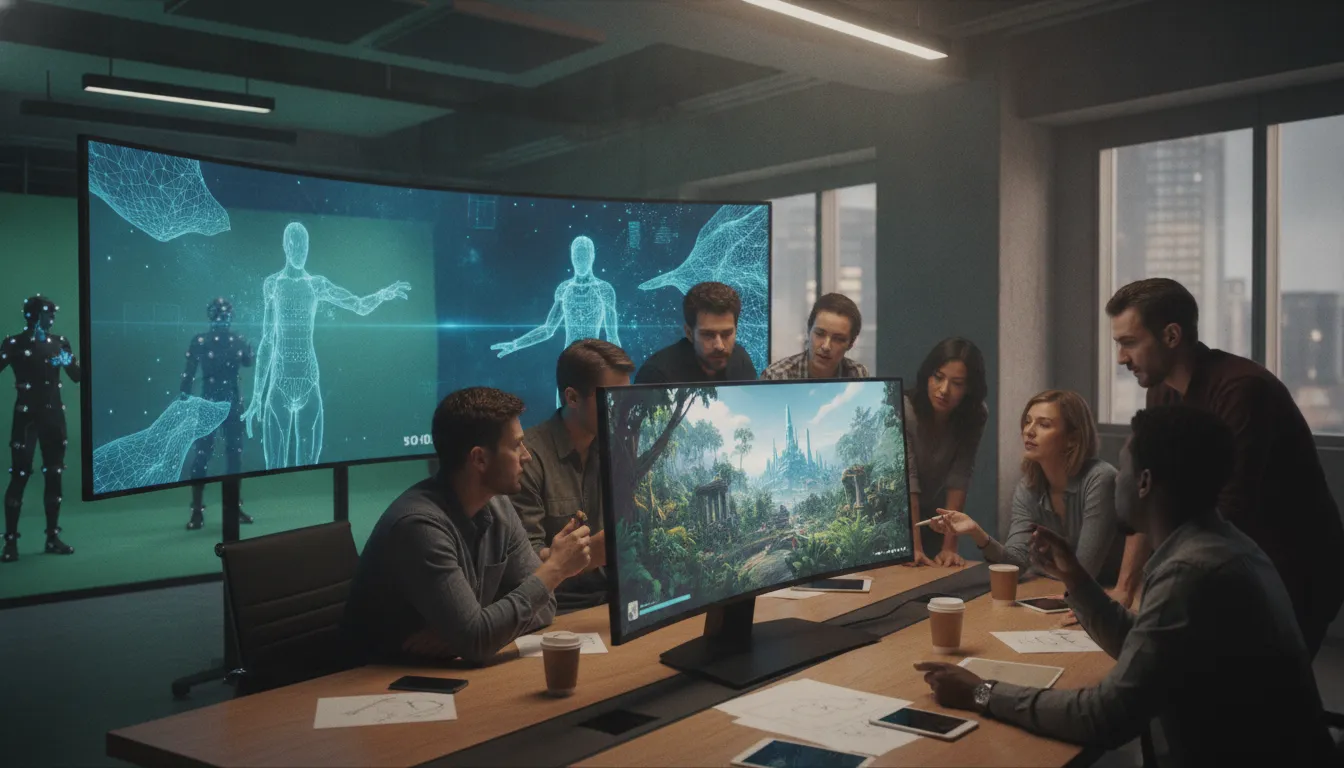
These pillars are interdependent. A strong strategy can identify the right platform, but game development must express that strategy through mechanics and player choice. Cinematic storytelling can establish the emotional core, while virtual production can make shared worlds and assets more practical to produce. Ecosystem design then ensures those experiences feel related rather than merely adjacent.
For publishers and IP holders, the distinction is important. The objective is not to create six separate deliverables. It is to make every platform contribute to a single, expanding IP narrative. That requires creative and technical execution in the same conversation, from early world-building through launch and ongoing refinement.
Arctic7 brings these disciplines together as a transmedia partner. Its game development services can support original production or co-development, while the wider model connects interactive design with cinematic, virtual-production, and optimization expertise. The result is an ecosystem designed to grow with the audience, rather than a collection of isolated projects.
How Does an Interactive Entertainment Agency Differ From a Marketing or Dev-Shop Agency?
The distinction is not simply about whether an agency can produce a game, campaign, or film asset. It is about who owns the connective tissue between those outputs. A conventional marketing agency is usually optimized for audience acquisition, brand communications, or campaign performance. A dev-shop is typically engaged to deliver a defined technical product against a specification. Both can be valuable partners, but each is generally accountable for a single touchpoint.
An interactive entertainment agency operates at the level of the broader intellectual property ecosystem. It helps you decide how an established world should expand across platforms. What each experience contributes to the narrative, and how creative ambition can be translated into viable production. Arctic7 describes this role as that of an enabler and partner for IP holders managing the creative and technical complexity of multi-platform expansion. Rather than as a product that can be bought off the shelf. That ecosystem-focused model changes the starting question from "What asset do we need?" to "What should this audience experience next?"
This distinction is worth taking seriously. The interactive and gaming portion of media and entertainment is now a recognized industry in its own right. The U.S. Department of Commerce treats the video game sector as a core component of the media and entertainment landscape, which reflects how much strategic attention the medium now attracts. A partner that only views games as a one-off project underestimates the weight of that opportunity.
Marketing agencies optimize attention, not necessarily the world behind it
Marketing specialists may build a launch campaign, social strategy, or audience funnel around an entertainment property. Their success is often measured through reach, engagement, leads, or conversion. An interactive entertainment agency must also consider continuity, canon, world-building, platform behavior, and the long-term role of each experience. The objective is not only to attract attention to an IP, but to create meaningful entry points that strengthen the relationship between audiences and the world itself.
Dev shops deliver components; transmedia partners connect capabilities
A dev shop can provide excellent engineering, art, or production support. The limitation appears when a project requires strategic interpretation alongside implementation. An interactive entertainment agency needs proficiency in both creative execution and technical delivery. That may include transmedia strategy, game development, virtual production, cinematic storytelling, ecosystem design, and content optimization, with each capability informing the others rather than operating in isolation.
This does not mean every engagement requires a single supplier for every task. The right partner should offer a range of models, from full-scale development to co-development partnerships and specialized service engagements. That flexibility lets an IP holder add targeted expertise without surrendering ownership of the vision. It also creates a more practical path for publishers and studios balancing internal teams, external vendors, timelines, and budgets.
The defining value, then, is end-to-end ownership of the problem, not end-to-end execution of every line of code. A marketing agency can make an experience visible. A dev shop can make a specification functional. An interactive entertainment agency helps ensure that the experience belongs to a coherent, expandable ecosystem, and that strategy, creative decisions, and technical implementation remain aligned as the IP grows.
From IP Adaptation to Production: The Three-Stage Process
Strong interactive entertainment does not begin with a platform decision or a production sprint. It begins by clarifying what makes the IP valuable, where it can travel, and how each new experience can strengthen the whole ecosystem. Arctic7 uses a three-stage transmedia process to move from that strategic foundation to coordinated execution: Get IP Ready, Define Strategy, and Activate Production.
Get IP Ready
Before adapting an established world for games, film, television, or immersive media, the core IP needs a clear set of creative and practical guardrails. This stage examines the world, characters, themes, audience promise, and existing canon, then identifies which elements can expand without weakening the original identity. It also surfaces production realities, rights considerations, platform opportunities, and the capabilities required to deliver them.
The goal is not to force every property into every medium. It is to establish a reliable foundation for decisions, so creators and stakeholders can distinguish a meaningful extension from a superficial repackaging. For IP holders, this preparation reduces ambiguity before significant development resources are committed.
Define Strategy
With the IP prepared, the next stage translates its potential into an interconnected entertainment strategy. The team determines which audience segments to reach, which platforms and formats best serve the narrative, and how the experiences should relate to one another. This is where creative ambition is balanced with business objectives such as audience growth, long-term engagement, and diversified revenue.
A useful strategy also clarifies sequencing. One project may establish the world, while another deepens character or invites participation. Each initiative should have a distinct purpose, a viable operating model, and a reason to exist within the larger ecosystem. The result is a shared direction for rights holders, publishers, developers, and production teams rather than a collection of disconnected deliverables.
Activate Production
The final stage turns the strategy into coordinated production across the right creative and technical disciplines. That may include game development, cinematic storytelling, ecosystem design, and virtual production. Arctic7's virtual art department and in-camera visual effects work, including six ICVFX projects with Lucasfilm. Illustrating the value of connecting film and game-engine workflows when the project demands it.
Virtual production can also shorten timelines and lower costs by bringing more decisions into a shared digital environment. Teams can test, iterate, and align earlier, reducing the expensive disconnects that emerge when departments work in isolation. For a practical view of how this approach operates, explore the virtual production workflow, plus the production tools and filmmaking pipeline that support connected cinematic and game production.
This process gives an interactive entertainment agency a disciplined way to protect the IP while creating room for new experiences. It keeps strategy, storytelling, and production connected from the first adaptation decision through delivery.
When Should You Partner With an Interactive Entertainment Agency?
The right time to engage an interactive entertainment agency is before expansion becomes an urgent production problem. If your franchise has a strong audience but exists primarily in one medium, you may already have the foundation for a game or connected film and television extension. The question is whether expansion can happen without weakening the original IP or fragmenting the audience experience.
When the franchise is ready to become an ecosystem
A franchise is ready for broader adaptation when its world contains characters, conflicts, visual language, or unexplored storylines that can support participation beyond the original format. A partner can test those possibilities against audience expectations, commercial objectives, and platform demands. This is more strategic than licensing a name to a separate product. The goal is to extend the IP across games, film, television, and immersive experiences while preserving a coherent narrative.
This matters when teams are developing separate touchpoints without a shared framework. An integrated approach can clarify which stories belong in each medium, what assets should be reusable, and how every experience contributes to the larger brand. Arctic7 describes this as building interconnected entertainment ecosystems that extend IP reach and strengthen engagement. Industry veterans can help establish the relationships needed to make that ambition practical.
When production demand exceeds internal capacity
AAA publishers and developers often need co-development support and transmedia strategy to meet production demands while expanding IP reach. The signal may be a growing backlog, a major release schedule, or a team stretched between core development and new platform opportunities. Bringing in a specialist does not require surrendering creative ownership. Co-development adds production capacity, technical expertise, and strategic support while your team retains control of the franchise.
The engagement model depends on the gap. Some organizations need full-scale development, while others need a specialist for a defined phase. The important test is whether the agency connects creative execution with technical implementation rather than adding another isolated vendor.
When virtual production can improve the production equation
Virtual production is another clear trigger. If conventional workflows extend timelines, increase location and post-production costs, or make collaboration between cinematic and game teams difficult, virtual production may create a more efficient path. Game-engine environments and shared digital assets can support cinematic storytelling while improving coordination. Arctic7's Unreal-based virtual production studio shows how these workflows come together in practice. An agency can assess where the technology will genuinely shorten timelines or lower costs, instead of treating it as a visual trend.
When one partner can unify commercial opportunity
Finally, consider a partner when your IP attracts opportunities across platforms but revenue planning remains fragmented. A connected ecosystem can create entry points, diversify revenue streams, and give audiences more ways to engage. That requires strategy, not simply more content. The agency should show how each platform supports the brand and business case before production begins.
Explore how Arctic7 can help expand your IP into interactive entertainment
Frequently Asked Questions
What should an interactive entertainment agency deliver first?
It should begin with a clear assessment of the IP, audience, rights, platforms, and commercial objectives. From there, the agency can define a strategy, identify the right interactive formats, and establish a practical roadmap for creative and technical production.
Can an interactive entertainment agency support an existing game publisher?
Yes. A publisher may engage an agency for co-development, transmedia strategy, ecosystem design, or a specialized production capability. The right model depends on the internal team, the stage of development, and the gaps that must be filled without disrupting ownership or delivery.
How is an interactive entertainment agency different from a game development studio?
A game studio typically focuses on creating and shipping a game. An interactive entertainment agency looks across the wider IP ecosystem, connecting game development with film, television, immersive experiences, and other audience touchpoints so each expression supports a coherent world.
When should an IP holder bring in an interactive entertainment agency?
Early involvement is useful when an IP holder is entering games for the first time, expanding an established franchise across platforms, or deciding how to reach new audiences. It is also valuable when strategic direction and production execution need to be coordinated under one partner.
What engagement models are available?
Common options include full-scale development, co-development partnerships, and specialized service engagements. A flexible model lets the IP holder choose the level of agency involvement, from strategic planning through creative execution, technical delivery, and ecosystem activation.
Ready to Build Your Interactive Entertainment Ecosystem?
Expanding an established IP across games, film, and television requires a clear strategy that connects creative ambition with practical production. The right partner can help you shape that ecosystem and move confidently from opportunity to execution.
New Immersive & XR Media Capabilities Added to Arctic7's Suite of Games, Film & TV and Digital Services

Arctic7 Shares Details of its Work on Skeleton Crew and Cinematics Partnership with Fateless

The Human Touch: Adding Personality to Project and Product Management
Whether it’s your team, your client, or your stakeholders, understanding the human dynamics is just as critical as hitting milestones.

McDonald's Case Study: Bridging Brand and Play | Arctic7
Bridging Brand and Play: An Interview with Lindsay Blenkhorn Daggitt