
The Essential Virtual Production Tools: A Guide
Your world has deep lore, unique environments, and characters that deserve an epic canvas. But translating that vision from the page to the screen often means compromising with the limitations of physical locations and the uncertainties of post-production. What if you could build your world without those constraints? This is the promise of virtual production. It gives creators direct, hands-on control over every element of the environment, from the lighting to the landscape. The right virtual production tools are more than just technology; they are instruments for storytelling, empowering you to build immersive, believable universes with greater creative freedom and precision than ever before.
Key Takeaways
- Move creative decisions to the live set: Virtual production changes the filmmaking process by enabling your team to see and adjust final shots as they happen, capturing complex visual effects in-camera.
- Achieve greater creative control and efficiency: This technology removes the limits of physical locations, allowing you to build any world you can imagine while saving time and money on travel, reshoots, and post-production.
- Match your tools to your project's needs: A successful virtual production starts with a clear strategy; define your creative scope, budget, and team skills first to select the right hardware and software for a smooth workflow.
What is Virtual Production?
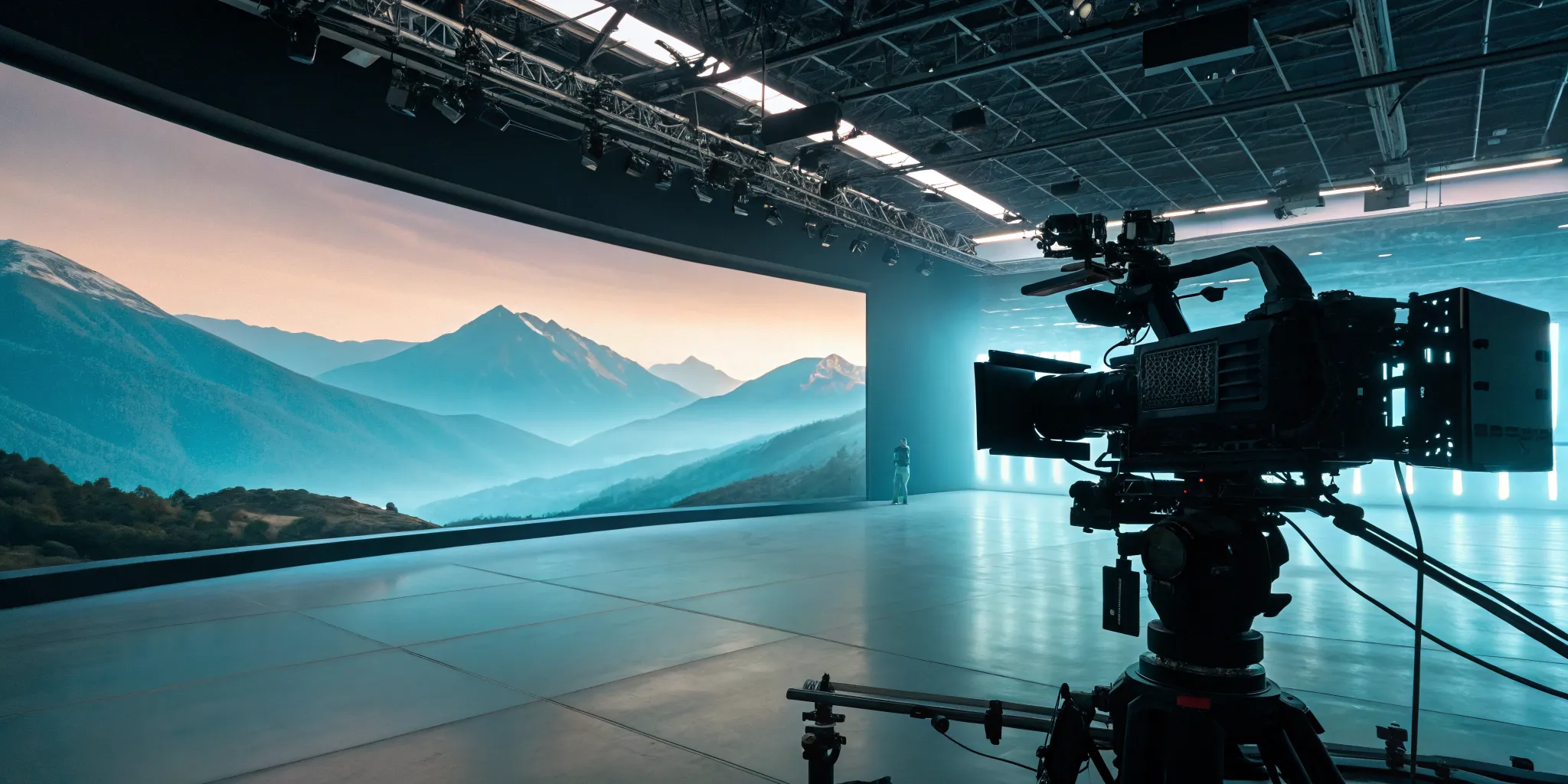
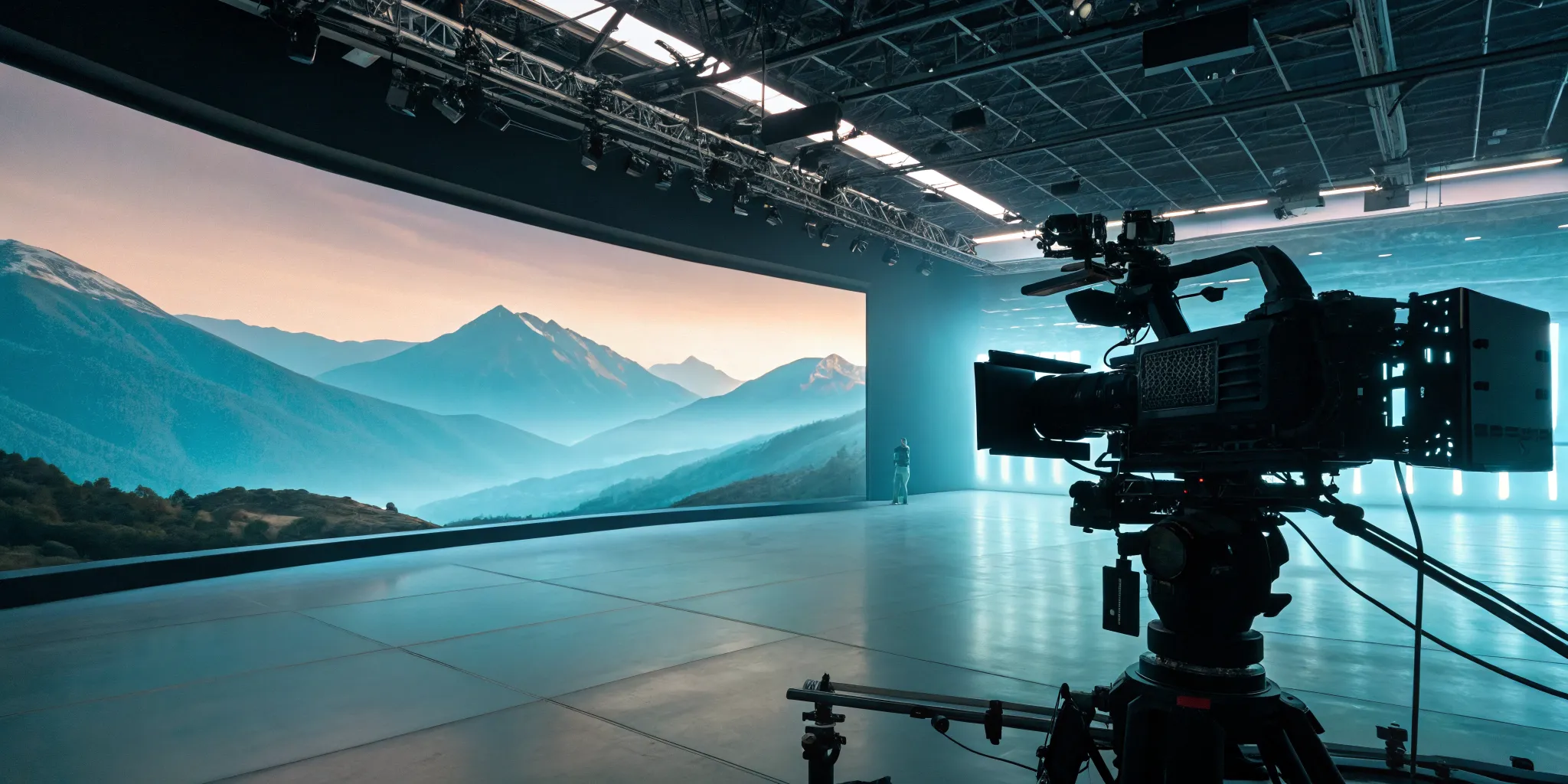
Think of virtual production (VP) as a way to merge the digital and physical worlds right on the film set. Instead of acting in front of a static green screen and waiting months to see the final visual effects, this approach uses massive, high-resolution LED screens to display dynamic, computer-generated backgrounds. Combined with real-time graphics engines and advanced camera tracking, virtual production allows filmmakers to create immersive sets that blend tangible props and actors with any digital environment imaginable.
This method fundamentally changes the production pipeline by moving key visual effects decisions from post-production into the live-action shoot. Directors, cinematographers, and actors can see the composite shot as it happens, allowing for immediate creative adjustments. It’s a powerful technique for extending intellectual property into new visual realms, giving creators the tools to build expansive, believable worlds with greater efficiency and control. Major productions, like Marvel Studios' Ant-Man and The Wasp: Quantumania, have used this technology to bring complex, otherworldly settings to life, demonstrating its capacity to handle even the most ambitious creative visions.
How It Integrates Real-Time Tech
The "real-time" aspect is what makes virtual production so transformative. It means the digital background displayed on the LED walls isn't just a pre-rendered video; it's an interactive environment. As the camera moves around the set, sophisticated tracking systems feed its position and orientation into a powerful graphics engine, like Unreal Engine. The engine then adjusts the perspective of the digital background instantly to match the camera's viewpoint. This creates a perfect parallax effect, making it seem as though the actors are truly inside a vast, three-dimensional space. This immediate feedback loop is a core component of modern virtual production platforms, giving creators the ability to experiment with shots and make decisions on the fly.
How It Blends Physical and Digital Worlds
Virtual production excels at creating a seamless blend between physical and digital elements. The LED screens serve as more than just a backdrop; they also act as the primary light source for the scene. The light from the digital environment realistically illuminates the actors, props, and physical set pieces, creating natural reflections and shadows that are incredibly difficult to replicate with traditional green screen techniques. This integration means a significant portion of the final visual effects are captured directly in-camera. It gives storytellers immense creative freedom, allowing them to change a sunny day to a stormy night or swap a desert for a futuristic city with a few clicks, all while maintaining a cohesive and believable visual style. Our virtual production services are designed to help you harness this technology to build your world without limits.
How Do Virtual Production Tools Change Filmmaking?
Virtual production is rewriting the rules of filmmaking by moving critical creative decisions from post-production directly into the shoot. This shift gives creators more immediate control and opens up new possibilities for collaboration and visual storytelling. Instead of imagining what a scene will look like after months of editing, teams can now see, shape, and perfect it live on set.
Capture Visual Effects In-Camera (ICVFX)
One of the biggest game-changers is capturing visual effects directly in-camera. With In-Camera Visual Effects (ICVFX), massive LED screens display digital backgrounds on set, replacing traditional green screens. This means actors perform within the story's world, not a blank void, leading to more grounded performances. They can interact with the alien landscape or futuristic city around them in real-time. This method also streamlines the workflow, as what you shoot is much closer to the final product. This cuts down on post-production time and costs, enabling the creation of stunning visuals like those in Ant-Man and The Wasp: Quantumania.
Collaborate in Real-Time
Virtual production tools foster a uniquely dynamic and collaborative environment. By blending physical sets with digital worlds, these tools allow the entire creative team to see and adjust the final shot as it happens. The director can move the sun, the cinematographer can test a lens, and the VFX supervisor can tweak an asset, all while the camera is rolling. This immediate feedback loop breaks down silos between production and post-production. Everyone is on the same page, making decisions together and ensuring the vision remains cohesive through a truly integrated production process.
Gain More Creative Control
Ultimately, virtual production gives filmmakers an unprecedented level of creative control. You are no longer bound by the limitations of a physical location or the guesswork of a green screen. If you want to shoot during a perfect "golden hour" for the entire day, you can. If you need to build a world that defies physics, it’s right there on the LED wall. This technology empowers creators to experiment and push storytelling boundaries. You can fine-tune every element of the environment, from lighting to weather, to perfectly match the scene's mood. This hands-on approach helps build immersive universes, like those in the Star Wars galaxy.
What Are the Benefits of Using Virtual Production Tools?
Adopting virtual production isn't just about using the latest technology; it's about making your entire creative process smarter, faster, and more flexible. For IP holders and studios, this translates into tangible advantages that impact everything from the budget to the final product. By blending the digital and physical worlds right on set, you can solve creative problems in real-time instead of fixing them months later in post-production. This shift gives your team more direct control over the final image, which is a huge advantage when you're building a world that needs to feel cohesive and believable.
The real magic happens when your creative teams can collaborate with immediate visual feedback. Directors, cinematographers, and visual effects artists can all see the composite shot live, allowing them to make informed decisions on the fly. This collaborative environment not only streamlines the workflow but also opens up new creative possibilities that were once too complex or costly to attempt. It’s a fundamental change that helps you tell bigger, more ambitious stories while managing resources effectively. At Arctic7, we’ve seen firsthand how our virtual production services empower creators to bring their most imaginative ideas to life with stunning results.
Save Time and Money
One of the most compelling reasons to use virtual production is its impact on your timeline and budget. By capturing complex visual effects in-camera, you significantly reduce the time and resources spent in post-production. Instead of waiting weeks or months to see a final shot, filmmakers get instant feedback on set. This allows for immediate adjustments to lighting, camera angles, and actor positioning, eliminating the need for expensive reshoots. Because actors and directors can see the virtual environment they're interacting with, they can make better creative choices during filming, leading to a more efficient shoot and a stronger final cut. This streamlined process ultimately lowers overall production costs without compromising on quality.
Get More Creative Flexibility
Virtual production tools give you the power to build and control any environment you can imagine. You’re no longer limited by the constraints of physical locations, weather, or time of day. Want to shoot a scene during a perpetual "golden hour" or on the surface of a distant planet? With an LED volume, you can do it all from a single soundstage. This technology empowers filmmakers to push creative boundaries and deliver visually stunning content that captivates audiences. It allows for a level of world-building and visual storytelling that was previously out of reach for many projects, giving you the freedom to fully realize your creative vision, as seen in projects like Marvel Studios' Ant-Man and The Wasp: Quantumania.
Improve Actor Performances
Acting against a green screen can be a challenge, as it forces performers to imagine their surroundings and react to things that aren't there. Virtual production changes this dynamic completely. By immersing actors in a real-time, interactive digital environment, they can see and react to the world around them naturally. This tangible setting helps ground their performances, making their reactions more authentic and believable. When actors can see the fantastical creatures or epic landscapes they are supposed to be interacting with, it often leads to stronger, more compelling performances that connect more deeply with the audience. This immersive experience helps bridge the gap between imagination and reality on set.
The Essential Software for Virtual Production
Choosing the right software is like picking the engine for your car; it determines how fast you can go and what kind of terrain you can handle. In virtual production, your software stack is the core of your creative and technical capabilities. It’s what renders breathtaking digital worlds, syncs them with live-action performances, and brings your entire vision to life on screen. While there are many tools out there, a few key players have become industry standards, each with its own strengths. Let's walk through the essential software you'll encounter.
Unreal Engine for High-Quality Graphics
When your project demands photorealistic visuals, Unreal Engine is the industry's powerhouse. It’s a real-time 3D creation tool that renders incredibly detailed graphics, lighting, and reflections instantly. This means you can see final-quality shots right on set, not months later in post-production. One of its most valuable features for filmmakers is virtual scouting, which allows your team to explore digital sets, plan camera angles, and make creative decisions before a single actor steps on stage. This level of pre-planning saves an immense amount of time and money, letting you perfect your world before the cameras even roll.
Unity for User-Friendly Production
If Unreal is the high-performance race car, think of Unity as the versatile, reliable SUV. Originally a game engine, Unity has become a popular choice for film and television because of its user-friendly interface and flexibility. It’s generally easier to learn, making it a great option for teams who need to get up and running quickly. Unity’s extensive Asset Store provides a massive library of pre-made digital items, which helps creators prototype scenes and test ideas rapidly. It also performs well on less powerful hardware, making it an accessible choice for a wider range of productions without sacrificing the core benefits of real-time rendering.
Pixotope for Live Production Applications
Virtual production isn't just for pre-recorded films; it's also transforming live events, and that's where Pixotope shines. This software is specifically built to handle the fast-paced, high-pressure environment of live broadcasts. Think news reports with dynamic 3D graphics, sports analysis with augmented reality overlays, or live concerts with immersive digital backdrops. Pixotope excels at integrating real-time graphics with live camera feeds seamlessly, ensuring there's no lag or disruption for the viewing audience. It’s designed to manage the unique complexities of live production, making it the go-to tool for projects that need to happen flawlessly in the moment.
Disguise for Media Integration
While game engines create the digital worlds, you need a system to manage and display that content perfectly on a massive LED volume. That’s the job of a media server like Disguise. It’s a specialized hardware and software solution that acts as the brain of the LED stage. Disguise ensures that your high-resolution content plays back smoothly and in perfect sync across hundreds of individual LED panels. It handles the complex tasks of color calibration and image mapping, so the digital environment looks seamless and believable from the camera's perspective. Without a powerful media server, even the most beautiful virtual world would fall apart on screen.
The Hardware That Powers Virtual Production
While powerful software gets a lot of the spotlight, it’s the physical hardware on set that truly brings virtual worlds to life. The right combination of displays, trackers, and cameras creates the seamless illusion that convinces both the cast and the audience. Getting these components to work in harmony is a core part of our virtual production services and is essential for a successful shoot. Let's look at the key pieces of hardware that make the magic happen.
LED Wall Systems and Displays
Forget the green screen. Modern virtual production sets are built around massive, high-resolution LED walls, often called an LED Volume. These screens display the digital environment in real-time, serving as both the backdrop and the primary light source for the scene. This setup allows filmmakers and actors to see the final shot as it’s being filmed, not months later. For productions like Marvel Studios' Ant-Man and The Wasp: Quantumania, this technology is a game-changer, enabling dynamic adjustments to lighting and scenery on the fly and capturing complex visual effects directly in-camera.
Motion Tracking Technology
To make the virtual environment believable, it has to react perfectly to the real-world camera's movement. This is where motion tracking comes in. Specialized camera tracking systems use sensors to monitor the precise position, orientation, and lens settings of the camera in physical space. This data is fed back into the game engine, which updates the virtual background’s perspective in real-time. The result is a perfect parallax effect, where the digital world moves in sync with the camera, creating a seamless blend of physical and virtual elements that feels completely natural.
Camera Systems and Sensors
Filming a screen presents unique technical challenges, so you can’t use just any camera for virtual production. The best cameras for the job have a "global shutter," which captures the entire image sensor at once. This is crucial for avoiding the weird visual artifacts, like banding or tearing, that can appear when filming an LED wall. A global shutter ensures the footage is crisp, clear, and free of motion blur. This feature used to be limited to high-end cameras, but more accessible options are making professional-quality virtual production possible for a wider range of projects.
What Are the Technical Challenges of Virtual Production?
Virtual production offers incredible creative freedom, but it’s not without its technical hurdles. Think of it like conducting an orchestra: every instrument, from the cameras and LED walls to the tracking sensors and software, must play in perfect harmony. When one element is out of tune, the entire illusion can fall apart. Successfully blending the physical and digital worlds in real-time requires a deep understanding of these potential issues and, more importantly, how to solve them.
For IP holders and creators, knowing these challenges isn’t about getting bogged down in technical details. It’s about appreciating the level of expertise required to pull off a seamless production. When you partner with a team that has mastered these complexities, you can focus on what you do best: telling your story. Let’s walk through some of the most common technical challenges you’ll encounter on a virtual production set and how a skilled team addresses them head-on. This is where technical excellence meets creative vision, turning potential problems into opportunities for innovation. Our work on projects like Ant-Man and The Wasp: Quantumania gave us firsthand experience in solving these very issues.
Syncing Multiple Cameras
On a virtual production set, every piece of hardware needs to communicate instantly. This is especially true for your cameras. If you’re shooting a scene with multiple cameras, each one must be perfectly synchronized with the LED wall’s background imagery and with each other. Even a millisecond of delay, or latency, can cause the background to lag behind the camera’s movement, which completely shatters the in-camera effect. Achieving this requires a precise synchronization of all elements to ensure that what the camera captures is a flawless, unified image. It’s a technical ballet that demands meticulous setup and constant monitoring.
Keeping Colors Consistent
Color is everything when it comes to creating a believable world. In virtual production, you’re matching the light and color from a digital environment on an LED screen with physical props, sets, and actors. If the colors don’t match perfectly, the illusion is broken. The process of color calibration is meticulous. First, the camera is adjusted to the physical lighting on set using a color chart. Then, a digital version of that same chart is displayed on the LED wall, and the wall’s color and brightness are fine-tuned until they perfectly match what the camera is seeing. This ensures a seamless blend between the real and virtual worlds.
Managing Complex Software
Virtual production doesn’t run on a single piece of software. It’s a complex ecosystem of tools working together, including game engines like Unreal Engine for rendering the 3D environment, media servers for playing back content, and tracking software that follows the camera’s every move. Getting these different platforms to integrate and communicate without a hitch is a major challenge. It requires a team with specialized skills to build and manage the software pipeline, ensuring that data flows correctly and the system remains stable throughout the shoot. These virtual production tools are powerful, but they demand expertise to run effectively.
Handling Content on Multiple Screens
An LED volume isn’t one giant screen; it’s an array of smaller panels working together to create a single, massive image. A key challenge is managing and syncing the high-resolution content across all these displays so it appears as one seamless, continuous world. This task falls to powerful media servers and specialized software that can process enormous amounts of data in real-time. These systems ensure that the digital environment plays back smoothly, without any tearing, stuttering, or visible seams between panels. The goal is to make the technology invisible, so the audience only sees the stunning world you’ve created.
How to Choose the Right Virtual Production Tools
With so many powerful tools available, picking the right ones can feel like a huge task. The key is to remember that there’s no single "best" setup for everyone. The ideal toolkit is the one that fits your specific project, budget, and team. Making the right choices upfront will save you headaches later and set your production up for success. Think of it as a three-part puzzle: your creative vision, your financial resources, and the people who will use the technology. Let's break down how to approach each piece.
Define Your Project's Scope
Before you get lost in software demos and hardware specs, take a step back and get crystal clear on your creative goals. Think about your project: What kind of visuals or characters do you need? Are you building a hyper-realistic sci-fi world or a stylized, fantastical environment for a new game? The answer will guide your technical requirements. A project that relies on complex, photorealistic digital assets will have different needs than one focused on live broadcast graphics. Defining your scope helps you create a shortlist of tools that can bring your unique vision to life.
Consider Your Budget and ROI
Let’s talk numbers. Virtual production costs can range from about $50,000 for basic setups to millions for the large-scale systems used by major studios. While that initial investment might seem steep, it’s important to look at the bigger picture. These costs often save money later by reducing filming time, eliminating travel to distant locations, and cutting down on complex post-production work. Think of it as a strategic investment, not just an expense. A well-planned budget accounts for upfront costs but also calculates the long-term return from a more efficient and creatively flexible process.
Assess Your Team's Skills
The most advanced tools are only as good as the people operating them. Before committing to a platform, honestly evaluate your team's technical abilities. Some platforms are designed to be more intuitive for beginners, while others demand deep expertise. While many tools are becoming more user-friendly, some training in 3D software is almost always helpful. You need to decide whether to train your current crew, hire new specialists, or partner with an expert team that already has the experience. Matching the technology to your team's skill set is crucial for a smooth and productive workflow.
Best Practices for a Smooth Virtual Production Workflow
Adopting virtual production doesn’t have to be a massive leap into the unknown. With the right approach, you can integrate these powerful tools into your pipeline efficiently. A successful virtual production relies on a solid plan and a clear understanding of the technology’s demands. By focusing on a few key practices, you can avoid common pitfalls and ensure your project runs smoothly from start to finish, allowing your creative vision to take center stage.
Plan Ahead with Virtual Scouting
One of the biggest advantages of virtual production is the ability to do extensive prep work before you ever step on set. Virtual scouting allows your team to explore digital versions of your locations in virtual reality. You can use 3D tools to meticulously plan camera angles, test different lens choices, and map out complex camera movements. This process lets you check lighting and composition without the cost and logistics of traveling to a physical location. By resolving creative and technical questions early, you can walk onto the soundstage with a clear, confident plan, which was a key part of our work on projects like the Star Wars universe.
Start Small and Consult Experts
If you’re new to virtual production, you don’t need to go all-in on the most complex setup right away. A great way to begin is by starting in phases. You could begin with simpler applications, like using an LED wall to display static or slowly moving backgrounds. Once your team is comfortable with that workflow, you can move on to more dynamic, realistic environments using tools like Unreal Engine with full camera tracking. Working with a partner who has deep experience in this field can make all the difference. An expert team can guide you through the process, helping you scale your efforts and choose the right transmedia services for your project’s needs.
Train Your Team
The most advanced technology is only effective in the hands of a skilled crew. While many virtual production tools are becoming more user-friendly, a foundational understanding of 3D software and real-time graphics is incredibly helpful. Invest in training for your existing team to get them comfortable with the new workflow. This ensures everyone from the director of photography to the art department can collaborate effectively within the virtual environment. For more specialized roles, you may need to bring in artists and technicians with specific experience. A well-prepared team is essential for turning technical potential into creative reality.
Focus on Color and Quality Control
Maintaining visual consistency is critical for making in-camera visual effects believable. This starts with precise color calibration. The process involves adjusting your cameras to the stage lighting using a physical color chart. Next, you display a digital version of that same chart on the LED wall and adjust the wall’s color and brightness until it perfectly matches what the camera captures. This meticulous step ensures that the digital background blends seamlessly with your physical set and actors, eliminating any disconnect for the audience. It’s this attention to detail that creates the stunning, immersive worlds seen in productions like Marvel Studios’ films.
What's Next for Virtual Production?
Virtual production is a field defined by rapid innovation, and the tools we use today are just the beginning. The technology is constantly evolving, and looking ahead, a few key trends are set to redefine how we create and experience stories. These advancements promise to make virtual production even more powerful, accessible, and integrated into every stage of the creative process. From smarter software to new ways of capturing reality, the future of filmmaking is being built right now.
Integrating AI and Machine Learning
AI and machine learning are quickly becoming essential partners in the creative process. Instead of replacing artists, these technologies handle repetitive and time-consuming tasks, like cleaning up motion capture data or generating variations of environmental assets. This frees up your creative team to focus on what matters most: the story, the performance, and the overall vision. AI can also improve final image quality in real-time, making virtual sets look more convincing than ever. As these tools become more sophisticated, they will make high-end virtual production services more accessible to projects of all sizes, opening up a whole new range of creative possibilities for IP holders.
The Rise of Cloud-Based Collaboration
The days of needing a massive, on-site server farm to run a virtual production are fading. Thanks to the cloud, powerful production tools are becoming available to anyone with a stable internet connection. This shift not only lowers the cost of entry but also transforms how teams work together. Artists, directors, and producers can collaborate in real-time from different corners of the globe, reviewing virtual sets and character animations simultaneously. This decentralized workflow makes production more flexible and efficient, allowing for a more agile and responsive approach to bringing complex transmedia worlds to life, no matter where your team is located.
Advances in Volumetric Capture
Imagine capturing an actor's performance not just on a 2D screen, but as a fully three-dimensional, photorealistic hologram. That's the power of volumetric capture. This technology records performances from every angle, creating a digital asset that can be placed into any virtual environment and viewed from any perspective. This is a game-changer for creating believable digital humans and creatures that blend seamlessly with real-world actors and virtual sets. As the technology improves and becomes more widespread, it will further erase the line between the physical and digital, enabling truly immersive storytelling across film, games, and interactive experiences.
Related Articles
- Indie Virtual Production Studio: The Essential Guide
- How Does Virtual Production Work? A Creator's Guide
- The Virtual Production Workflow: A Practical Guide
Frequently Asked Questions
Is virtual production only for huge sci-fi blockbusters? Not at all. While it’s famous for creating otherworldly planets, virtual production is incredibly versatile. Think of it as a tool for ultimate environmental control. It can be used to create a historical setting where you can film in perfect "golden hour" light all day, a fantasy forest without weather concerns, or even a realistic city street without the expense and logistics of shutting down actual traffic. The technology scales to fit the story, whether you're building a new galaxy or just need a controlled, flexible setting.
What's the real difference between this and just using a green screen? The biggest difference is that a virtual production set is an active, immersive environment, while a green screen is a passive, blank canvas. With a green screen, actors have to imagine their surroundings, and all the visual effects are created months later in post-production. With an LED wall, the digital world is right there on set. It provides realistic lighting and reflections on actors and props, and everyone from the director to the cast can see the final composite shot in real-time. This allows for better performances and immediate creative adjustments.
How can virtual production save money if the technology seems so expensive? It’s about shifting costs to create a more efficient process. While the initial setup can be a significant investment, it often leads to major savings down the line. You can drastically cut down on travel expenses by creating any location on a single soundstage. More importantly, you reduce the time and money spent on post-production because so many visual effects are captured directly in-camera. Making key creative decisions on set also eliminates the need for expensive reshoots later.
Do I need to replace my entire crew to work with this technology? You don't need to start from scratch, but you will need to adapt. A virtual production workflow introduces new roles, like real-time 3D artists, and requires existing crew members, such as the director of photography, to learn new techniques. The key is to assess your team's current skills and decide on the best path forward. This could involve investing in training for your current crew, hiring a few specialists, or partnering with an experienced virtual production team that can guide you through the process.
What's the most important thing to do before starting a virtual production project? The most critical step is thorough planning during pre-production. Because you can build and explore your sets digitally before filming begins, you should take full advantage of virtual scouting. This process allows your director, cinematographer, and art department to walk through the virtual world, plan every camera angle, and solve creative problems before anyone steps onto the physical set. A solid plan is the foundation for a smooth and efficient shoot.
New Immersive & XR Media Capabilities Added to Arctic7's Suite of Games, Film & TV and Digital Services

Arctic7 Shares Details of its Work on Skeleton Crew and Cinematics Partnership with Fateless

The Human Touch: Adding Personality to Project and Product Management
Whether it’s your team, your client, or your stakeholders, understanding the human dynamics is just as critical as hitting milestones.

McDonald's Case Study: Bridging Brand and Play | Arctic7
Bridging Brand and Play: An Interview with Lindsay Blenkhorn Daggitt