
Indie Virtual Production Studio: The Essential Guide
Virtual production once felt like a secret tool reserved for nine-figure blockbusters and groundbreaking shows like The Mandalorian. The idea of creating entire worlds on a soundstage seemed out of reach for anyone without a major studio's backing. But that's changing, and fast. The technology that powers these incredible productions has become more accessible and affordable than ever before. This shift puts unprecedented creative power directly into the hands of independent creators. Building your own indie virtual production studio is no longer a distant dream; it's a strategic and achievable goal that can transform how you tell stories, giving you ultimate control over your vision.
Key Takeaways
- Shift creative decisions from post-production to the live set: By seeing near-final visuals during filming, your team can iterate on lighting, framing, and environments instantly, leading to more intentional storytelling and fewer costly fixes.
- Own your world-building engine: An in-house VP studio is a strategic asset that cuts recurring production costs, allowing you to consistently expand your IP, prototype new concepts, and tell more ambitious stories.
- Master the workflow, not just the technology: Success in virtual production depends on meticulous planning, technical rehearsals, and a collaborative team; a solid process is more critical than having the most expensive gear.
What Is Virtual Production?
If you’ve ever felt limited by the traditional filmmaking process—the long waits for post-production, the guesswork of green screens, the logistical nightmare of location scouting—then virtual production (VP) is the creative breakthrough you’ve been waiting for. At its core, virtual production uses technology to merge the digital and physical worlds right on set, in real time. It’s not about replacing traditional techniques but enhancing them, giving you the power to see your final shot, complete with visual effects, as you film.
This approach fundamentally changes the production pipeline. Instead of fixing things in post, you’re making creative decisions live on set, with immediate feedback. It’s a more iterative, flexible, and collaborative way to bring ambitious worlds to life, whether you're creating a new level for a game or filming a scene on a distant planet.
Virtual Production vs. Traditional Filmmaking
Think of the classic filmmaking mantra: "We'll fix it in post." Virtual production flips that script entirely. Instead of shooting actors against a green screen and imagining the final scene, VP brings post-production directly onto the set. This shift allows directors, cinematographers, and actors to see the virtual environment they’re interacting with in real time. This immediate visual context is a game-changer, leading to more authentic performances and more intentional cinematography. It closes the gap between imagination and execution, giving creative teams unprecedented control during the most crucial phase of production. Major studios have used this approach to create incredible, immersive worlds in projects like Marvel Studios' Ant-Man and The Wasp: Quantumania.
Understanding Real-Time Rendering
The magic behind virtual production is real-time rendering. This is where powerful game engines, most notably Unreal Engine, come into play. Unlike traditional 3D software that can take hours or even days to render a single frame of high-quality graphics, a real-time engine processes everything instantly. This means you can see photorealistic digital sets and effects live through the camera lens. If you want to move a mountain, change the time of day, or adjust the lighting, you can do it on the fly and see the results immediately. This instant feedback loop empowers you to experiment and perfect your vision without the costly delays of traditional VFX workflows.
How LED Walls and Camera Tracking Work
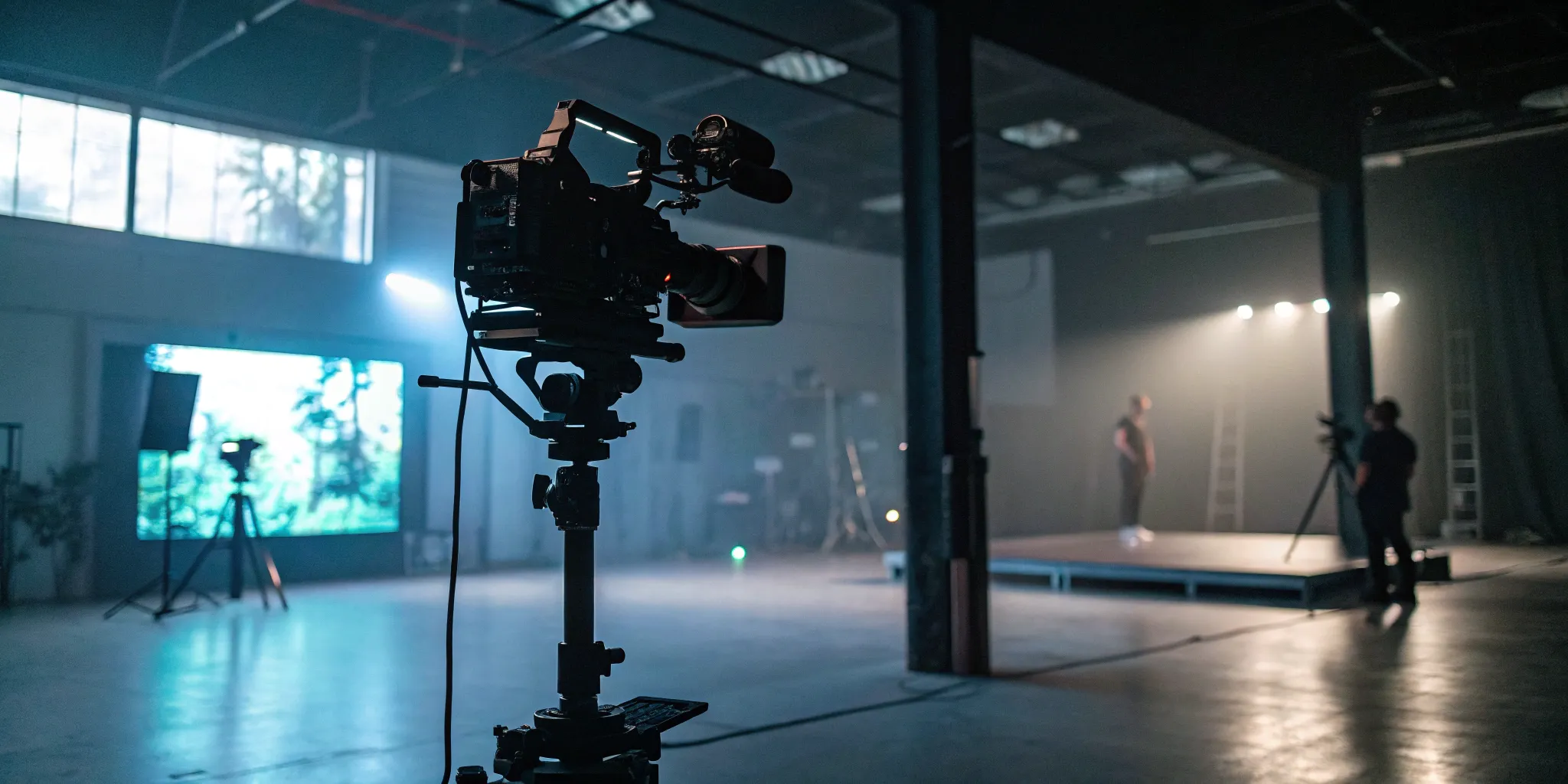
So, how does this all come together on set? The most common setup involves large LED walls that display the virtual environment behind the actors. These aren't just static backdrops; they are dynamic, interactive worlds. To make the illusion seamless, a camera tracking system monitors the physical camera's position and movement in real time. This data is fed back into the game engine, which adjusts the perspective of the virtual background to match the camera's viewpoint perfectly. This creates a phenomenon called parallax, where the background moves correctly relative to the foreground, tricking the eye into seeing a real, three-dimensional space. This technology allows you to build and explore any world imaginable, all from the comfort of your studio, using Arctic7's virtual production services.
Why Build Your Own Indie VP Studio?
Virtual production is no longer a tool reserved for Hollywood blockbusters. The technology has become more accessible, empowering independent creators and studios to build their own in-house virtual production (VP) stages. Setting up your own studio is a strategic move that puts you in the driver's seat, offering a level of efficiency and creative freedom that traditional filmmaking can't match. Instead of being limited by physical locations, weather, or the high costs of extensive travel, you can create any world you can imagine from a single, controlled space.
This approach fundamentally changes the production pipeline. By bringing high-end visual effects in-camera, you merge pre-production, production, and post-production into a more unified, fluid process. This not only saves time and money but also opens up new avenues for storytelling. For IP holders, an in-house VP studio means you can rapidly prototype ideas, develop new content for your worlds, and maintain consistent creative and visual quality across all your projects. It’s about building a sustainable ecosystem for your stories to grow, giving you the power to execute your vision without compromise.
Save Money and Resources
The initial investment in a VP studio might seem significant, but it pays dividends by drastically reducing the recurring costs of traditional production. Think about it: a single high-budget music video can cost upwards of $250,000, while a one-time studio setup of around $25,000 can be used to create many projects. This model shifts your spending from per-project expenses to a long-term asset.
You eliminate the need for costly location scouting, travel for cast and crew, permits, and extensive set construction. Instead of building a physical set for a single scene, you can create countless digital environments that can be reused and modified for future projects. This efficiency allows you to allocate more of your budget toward what appears on screen—improving asset quality, hiring talent, and refining the story.
Gain Creative Control with Real-Time Adjustments
One of the biggest advantages of virtual production is the ability to see your final shot, complete with the virtual background, while you're still on set. Unlike traditional green screen workflows, which involve a lot of guesswork, VP allows for immediate feedback. Directors, cinematographers, and actors can see the composite image in real-time, enabling them to make instant creative adjustments.
This real-time visualization means you can tweak lighting, change camera angles, or even alter the environment on the fly and see the results immediately. This iterative process fosters a more collaborative and creative on-set atmosphere. Actors can react to the virtual world around them, leading to more grounded performances. This level of control ensures the final product aligns perfectly with your creative intent, as seen in complex projects like Marvel Studios' Ant-Man and the Wasp: Quantumania.
Tell Bigger, Bolder Stories
Virtual production gives independent creators the tools to tell stories on a scale that was once only possible with massive budgets. Whether you’re dreaming of epic sci-fi landscapes, fantastical realms, or historically accurate settings, a VP studio makes it achievable. You are no longer constrained by the physical world or the logistical challenges of shooting in remote or inaccessible locations.
This technology empowers you to think bigger. You can craft visually ambitious narratives and build immersive worlds without leaving your studio. For IP holders, this means you can expand your universe with greater ease, creating rich, visually compelling content that deepens audience engagement. It’s a powerful way to develop your IP and bring your most imaginative ideas to life, ensuring your stories have the cinematic quality they deserve.
Speed Up Your Production Timeline
Time is one of the most valuable resources in any production, and virtual production helps you save a lot of it. By eliminating travel between locations, you can shoot scenes set in different parts of the world all in a single day. You’re no longer at the mercy of weather conditions or waiting for the perfect "golden hour" light—you can control the virtual sun with the click of a button.
This efficiency extends into post-production as well. Since many visual effects are captured in-camera, you significantly reduce the time and complexity of the post-production pipeline. This means less time spent on keying, rotoscoping, and compositing. The result is a much faster turnaround from principal photography to final delivery, allowing you to get your content to your audience sooner and begin working on your next project, much like the streamlined process used for Lollipop Racing.
Gear Up: Essential Equipment for Your Studio
Building a virtual production studio might sound like a massive undertaking, but it’s more accessible than you think. The key is to focus on the core components that work together to create your real-time filming environment. Think of it as assembling a high-performance toolkit that gives you complete creative control. Each piece of gear plays a critical role in bridging the gap between the physical and digital worlds, allowing you to build and shoot in fantastical locations without ever leaving the studio.
At its heart, a virtual production setup is about creating a seamless feedback loop between your camera, your actors, and the digital world projected behind them. This is the technology that powers the immersive storytelling seen in projects like The Mandalorian or our own work on worlds for Star Wars and Marvel. Getting the hardware right is the first step toward bringing that same level of magic to your own IP. We’ll break down the four essential pillars of your studio’s physical infrastructure: the LED wall, camera tracking technology, computing hardware, and the right lighting and audio setup.
Select Your LED Wall System
The LED wall is the centerpiece of your virtual stage. It replaces the traditional green screen, displaying your digital environments in stunning, high resolution. The biggest advantage? Virtual production lets you see your final composite shot—actors combined with the virtual background—while you are shooting. This allows your cast to react to the environment authentically and helps your director frame shots with perfect context. When choosing a system, pay close attention to the pixel pitch (the distance between LEDs). A smaller pixel pitch creates a denser, higher-resolution image, which is crucial for minimizing artifacts and making the background look believable on camera.
Choose Your Camera Tracking Tech
Camera tracking is the invisible link that syncs your physical camera’s movement with the virtual camera inside the game engine. This technology is what creates the parallax effect, making the digital background shift perspective realistically as your camera moves. It’s the secret sauce that convinces the audience they’re looking through a window into another world. There are several types of camera tracking systems, from optical solutions that use infrared cameras and markers to inertial systems that attach directly to your camera. The goal is to find a system that provides precise, low-latency data to ensure the real and virtual elements remain perfectly aligned in every shot.
Get the Right Computing Hardware
Your computing hardware is the engine that drives the entire virtual production process. Real-time rendering is incredibly demanding, so you’ll need serious processing power to run your game engine, process tracking data, and output high-resolution video to the LED wall simultaneously. As one indie case study noted, "Powerful computers... with NVIDIA GPUs were essential for creating these environments and for editing the high-quality footage quickly." Don’t cut corners here. Investing in robust workstations with top-tier graphics cards is fundamental to achieving a smooth, responsive, and visually stunning real-time workflow without frustrating lag or dropped frames.
Plan Your Lighting and Audio
Lighting for an LED stage requires a different approach than traditional filmmaking. Since the LED wall itself is a light source, your primary job is to blend your actors into the digital scene. A great starting point is to "use overhead lights on the virtual stage to help the actors blend in with the LED background." It’s also critical to avoid pointing lights directly at the screens, as this can cause reflections and wash out the background. Instead, use soft, angled lighting to shape your subjects. And don’t forget audio! Studio environments can have ambient noise from computers and cooling systems, so plan for proper sound dampening and microphone placement to capture clean, professional-quality dialogue.
Choose Your Virtual Production Software
Your hardware is the stage, but software is the director, the actors, and the script all rolled into one. The right software stack is what breathes life into your virtual production studio, turning static equipment into a dynamic storytelling machine. Think of it as an ecosystem where every piece has a specific job, from rendering breathtaking visuals in real time to ensuring your team is perfectly in sync. Choosing the right combination of tools is less about finding a single magic bullet and more about building a cohesive digital pipeline that supports your creative vision.
The core of your software setup will be a real-time game engine. This is the central hub where your digital worlds, camera tracking data, and live-action footage all come together. From there, you'll need tools to create the 3D assets and environments that populate your scenes, software to translate your camera's physical movements into the virtual space, and platforms to keep your entire workflow organized. Building this digital pipeline is a crucial step, and it’s where our team’s technical expertise helps creators connect all the dots, ensuring a smooth process from concept to final pixel. Getting the software right makes even the most ambitious projects manageable for an indie team.
Master Real-Time Rendering with Unreal Engine
At the heart of most virtual production stages, you’ll find Unreal Engine. What makes it so powerful for filmmakers is its ability to render everything in "real-time." This means you see stunning, photorealistic graphics instantly, without the long wait times typically associated with 3D animation. For you on set, this translates to immediate visual feedback. You can adjust lighting, change the time of day, or move a mountain in your background and see the final result live through the camera’s viewfinder. This capability transforms the filmmaking process from one of guesswork to one of interactive creation, allowing you and your team to make confident creative decisions on the fly.
Find Tools for Creating Virtual Environments
Your virtual worlds need to be built before they can be rendered. While Unreal Engine is where everything comes together, the individual assets—like characters, props, and architecture—are often created in dedicated 3D modeling programs like Blender, Maya, or 3ds Max. For indie studios, starting from scratch on every asset isn't always practical. This is where asset libraries like Quixel Megascans become invaluable. They provide access to vast collections of production-quality 3D models and textures, allowing you to build rich, believable worlds quickly. This accessibility proves that virtual production isn't just for massive blockbusters; it’s a powerful tool for any filmmaker looking to tell their story in a new way.
Sync Up with Camera Tracking Software
Camera tracking software is the invisible bridge connecting your real-world camera to its digital counterpart. This software takes data from the tracking hardware on your camera and feeds it into the game engine with near-zero latency. This ensures that when your camera pans, tilts, or dollies in the studio, the virtual background responds with perfect perspective and parallax, creating a seamless illusion of depth. For indie setups, there are increasingly affordable and effective solutions, such as the Vanishing Point System. Getting this sync right is non-negotiable; it’s the technical handshake that sells the entire effect to the audience and makes them believe your actors are truly in another world.
Collaborate with Cloud-Based Platforms
Virtual production is a team sport that generates massive amounts of data. Keeping everyone and everything organized is critical, especially for smaller teams where people often wear multiple hats. Cloud-based platforms are essential for managing this complexity. Version control systems like Perforce are the industry standard for managing game engine projects and their assets, preventing conflicts and data loss. Meanwhile, production management software like Autodesk ShotGrid helps you track shots, assign tasks, and review progress. These tools make advanced virtual production techniques more accessible, providing the structure needed for small, agile teams to collaborate effectively and bring their ambitious visions to life.
Set Up Your Studio Space and Workflow
Once you have your gear, the next step is to bring it all together in a functional space with a smart process. Your studio setup and production workflow are the foundation of your virtual production capabilities. This isn't just about where you place your LED wall; it's about creating an environment where technology, creativity, and collaboration can thrive. A well-designed workflow eliminates friction, allowing your team to move quickly and make creative decisions on the fly.
The beauty of virtual production is its flexibility. You can achieve incredible results without a massive soundstage, but it requires careful planning. Thinking through your layout, technical connections, and team roles ahead of time will save you countless hours and headaches once filming begins. This is where you transition from having a collection of equipment to operating a true virtual studio. At Arctic7, we specialize in building these interconnected entertainment ecosystems, ensuring every piece of the puzzle fits perfectly. Our strategic services can help you design a workflow that aligns with your creative vision and production goals, making the entire process smoother and more efficient from day one.
Plan Your Studio Layout
Forget the idea that you need a sprawling Hollywood studio that costs tens of thousands of dollars a month to rent. One of the biggest advantages of modern virtual production is its mobility. You can set up a functional stage in a small room, a garage, or a corner of a warehouse. The key is to plan your layout for maximum flexibility. Consider your ceiling height for lighting rigs and camera movement, and ensure you have enough clear floor space for your actors and camera to move freely. A controlled environment where you can manage ambient light is also crucial for getting the best results from your LED wall and creating seamless virtual worlds.
Build Your Technical Infrastructure
Your technical infrastructure is the central nervous system of your studio. It’s how your camera, tracking system, and real-time engine communicate. The goal is to create a stable and powerful pipeline using tools that are accessible for indie budgets. Start with Unreal Engine as your real-time rendering core—it’s free to get started. From there, integrate your camera tracking system, like the Vanishing Point system, with a capable camera like a Blackmagic Design model. For character work, you can bring in a Rokoko mocap suit and use software like Reallusion’s Character Creator to build and animate your virtual actors. These tools work together to form a cohesive and affordable production pipeline.
Optimize Your Production Workflow
Virtual production completely changes the traditional filmmaking timeline. Because you can see your final visuals in-camera during the shoot, the lines between pre-production, production, and post-production blur into a more fluid, iterative process. This allows you to accomplish an incredible amount in a short time—a single day of shooting can feel as productive as a full week of traditional filming. You can swap out backgrounds, adjust lighting, and reframe shots in real-time, giving you immense creative control on set. This accelerated workflow, seen in major productions like Ant-Man and The Wasp: Quantumania, is now accessible to indie creators who optimize their process.
Define Your Team's Roles
Technology is only half the equation; your team brings it to life. In a virtual production environment, collaboration is everything. You need a crew that can adapt to a real-time workflow and communicate effectively. Having skilled Unreal Engine artists who can manage the virtual environment during the shoot is absolutely essential. Other key roles include a virtual production supervisor to oversee the technical and creative integration, a camera operator comfortable with tracking technology, and an efficient crew to support the on-set operations. A supportive and technically proficient team is your greatest asset for turning ambitious virtual concepts into a stunning reality.
Prepare for Common Virtual Production Challenges
Virtual production opens up a universe of creative possibilities, but it’s not a magic wand. Like any powerful tool, it comes with its own set of challenges that require preparation and a clear strategy. Understanding these hurdles before you begin is the best way to ensure your project runs smoothly and successfully. From building new skills to managing complex technology, let's walk through the most common obstacles and how you can prepare your indie studio to overcome them.
Tackle the Learning Curve
Virtual production merges the worlds of filmmaking, game development, and live production, which means your team will likely need to pick up some new skills. This isn't just about learning software; it's about adopting a new mindset and workflow. The best training programs prepare your crew for the realities of a VP set, which often involves the same long hours and high pressure found in the traditional film industry. Encourage your team to be curious and adaptable. You can find excellent online courses and tutorials that provide a solid foundation, but hands-on practice is where the real learning happens. Start with small test projects to build confidence before diving into a major production.
Plan Your Initial Investment
It’s a common myth that virtual production is only for blockbuster budgets. While there is an initial investment in hardware, software, and talent, a well-planned VP workflow can actually save you money in the long run by reducing location costs and post-production fixes. For indie studios, the key is to invest strategically. You don't need the most expensive LED wall to start experimenting with in-camera VFX. Focus on building a solid foundation with the right computing hardware and camera tracking system. Smart pre-visualization can also help you allocate your budget effectively, ensuring every dollar spent on set makes it to the screen.
Manage Technical Complexity
Virtual production doesn’t get rid of technical challenges; it just moves them earlier in the process. Instead of fixing issues in post-production, you’re solving them live on set. This requires a strong technical team that can troubleshoot on the fly. It’s a misconception that VP reduces the need for VFX artists. In fact, their role is more critical than ever, as they are responsible for creating the real-time environments that appear on screen. For indie studios, partnering with a team that has deep technical expertise can be a game-changer. Having a partner like Arctic7 to manage your transmedia pipeline allows your creative team to focus on storytelling, not technical wrangling.
Debunk Common VP Misconceptions
One of the biggest misconceptions about virtual production is that it’s all about giant, expensive LED walls. While LED volumes are an incredible tool, they are just one piece of the puzzle. Virtual production is a broad methodology that includes everything from virtual scouting and pre-visualization to using green screens with real-time compositing. You can start using VP techniques without an LED wall. Another myth is that it solves all problems before the shoot. While it front-loads the work, creative decisions and technical adjustments still happen in real-time on set. Understanding the true scope of virtual production will help you set realistic expectations and use its tools more effectively.
Level Up: Where to Develop VP Skills
Virtual production technology is evolving at an incredible pace, but the tools are only as good as the artists and technicians who use them. Building a successful indie VP studio means investing in your team's skills just as much as you invest in your gear. The learning curve can feel steep, but the good news is that there are more resources available than ever before to help you and your team get up to speed. It’s not about knowing everything at once; it’s about building a foundation of knowledge and committing to continuous learning.
Think of it like this: you wouldn't hand a RED camera to someone who has never filmed before and expect a masterpiece. The same goes for Unreal Engine and LED walls. The real magic happens when technical proficiency meets creative vision. Whether you're a solo creator wearing all the hats or a studio head building a specialized team, a strategic approach to skill development is your key to unlocking the full creative potential of virtual production. This is where you turn raw technology into powerful storytelling. From online courses that break down complex software to communities that offer real-world advice, let's explore the best places to sharpen your VP skills.
Use Online Courses and Platforms
The days of needing to attend a prestigious film school to learn cutting-edge techniques are over. Today, you can learn the fundamentals of virtual production right from your desk. Online platforms offer a wealth of courses that teach you how to build and run your own VP studio using powerful tools like Unreal Engine. Many of these programs are designed for indie creators, helping you produce high-quality work without a blockbuster budget. Look for courses that include hands-on projects, as they’re the best way to build practical experience and a portfolio to show for it. The Unreal Engine Online Learning portal is a fantastic starting point, offering free, in-depth tutorials for all skill levels.
Tap into Community Support
You don’t have to figure everything out on your own. Virtual production is a collaborative field, and the community around it is incredibly supportive and eager to share knowledge. Joining online forums, Discord channels, and Facebook groups can connect you with experienced professionals and fellow learners who are tackling the same challenges as you. These spaces are perfect for asking specific technical questions, getting feedback on your work, and staying current on new workflows. Resources like the Virtual Production Indie Film Guide offer a free, centralized hub of information specifically for small studios, making it easier to find the answers you need without getting lost in a sea of information.
Prioritize Your Skill Development
The world of virtual production is vast, and it’s easy to feel overwhelmed by all there is to learn. The key is to be strategic. Instead of trying to master everything at once, identify the core skills that will have the biggest impact on your specific projects. Building a VP studio is a complex process, and a deep understanding of the fundamentals is essential before you can specialize. Start by creating a learning roadmap. If your next project is heavy on fantastical environments, focus on digital asset creation and world-building in Unreal Engine. If it’s a character-driven piece, dive into MetaHuman and motion capture workflows. This focused approach ensures your learning directly supports your creative goals.
Train for Specific Team Roles
As your productions grow, you’ll need a team with specialized skills. Virtual production pipelines require a new set of roles that don’t always map directly to traditional filmmaking. Instead of training generalists, it’s more effective to focus on developing talent for specific positions like a VAD (Virtual Art Department) Artist, an Unreal Engine Operator, or a Virtual Camera Operator. Many industry professionals agree that training programs should prepare people for the realities of working on a fast-paced set. By understanding the key roles in virtual production, you can build a well-rounded, efficient team where everyone knows their responsibilities, leading to a smoother and more creative workflow on set.
Plan Your First Virtual Production Project
With your studio set up, it’s time to move from theory to practice. Planning your first virtual production project is where your creative vision starts to take concrete shape. This stage is all about preparation, and a solid plan is the single most important factor in a successful shoot. It’s not about having a Hollywood-sized budget; it’s about being strategic and meticulous. By breaking the process down into clear, manageable steps, you can anticipate challenges and ensure your technology is ready to perform. This allows you to focus on what truly matters on shoot day: capturing incredible performances and telling a compelling story. Let’s walk through the key phases of planning your project.
Create and Prepare Your Assets
First things first: you need the digital building blocks for your virtual world. These assets include everything from 3D models of characters and props to the textures that give your environment a realistic feel. The great news is that virtual production is no longer just for big-budget blockbusters. You can create stunning worlds without breaking the bank. If you have a 3D artist on your team, you can build custom assets from scratch. Alternatively, you can find high-quality, ready-made assets from online stores like the Unreal Engine Marketplace, which can save you a significant amount of time and resources.
Design Your Virtual Environments
Once you have your assets, you can begin designing the virtual sets where your story will unfold. Using a real-time game engine is essential here, and for many indie studios, the go-to choice is Unreal Engine. This powerful software allows you to build and customize your digital environments with incredible detail and realism. You can construct anything from a fantastical alien landscape to a photorealistic city street. This virtual set will then be displayed on your LED wall or keyed in with a green screen, becoming the dynamic backdrop for your actors. It’s a process that gives you complete creative control over your world.
Plan Your Shots with Previsualization
A common myth is that previsualization, or pre-viz, is an expensive luxury reserved for major studios. In reality, it’s one of the most valuable planning tools an indie filmmaker can use. Think of pre-viz as a 3D, animated storyboard. It allows you to map out your shots, camera angles, and actor movements within your virtual environment before the shoot. This process helps you identify potential issues and refine your creative choices early on. By finalizing your shots during previsualization, you can walk onto the set with a clear, efficient plan, saving you invaluable time and money during production.
Run Technical Rehearsals
Preparation is everything in virtual production. Because you’re merging digital and physical elements in real time, a technical rehearsal is non-negotiable. This isn’t just for the actors; it’s a full run-through for your technology and crew. During this rehearsal, you’ll test your camera tracking systems, ensure the virtual environment renders correctly on the LED wall, and check that all your hardware is communicating properly. Running these tests helps you troubleshoot any glitches before the pressure is on. A comprehensive production checklist can ensure you cover all your bases, leading to a much smoother and more productive shoot day.
Master Storytelling in a Virtual World
Virtual production is more than just a technological shortcut; it’s a powerful new canvas for storytelling. By merging the physical and digital worlds in real-time, you can create immersive experiences that were once out of reach for indie creators. This technology gives you direct, hands-on control over your story’s universe, allowing you to build and modify worlds with incredible speed and flexibility. Instead of fixing it in post, you’re making creative decisions live on set, shaping the narrative as it unfolds. This immediate feedback empowers directors, cinematographers, and actors to experiment and collaborate in ways that traditional filmmaking can’t match.
This approach allows you to tell bigger, more ambitious stories without a blockbuster budget. You can craft intricate worlds and guide your audience through them seamlessly, whether you're developing a game, a film, or an entire transmedia franchise. The key is to think of the technology not as a limitation but as a partner in the creative process. It removes the abstract nature of a green screen and makes the fantastical tangible. With the right virtual production services, you can focus on what truly matters: bringing your vision to life and connecting with your audience on a deeper level.
Use Real-Time Visualization to Your Advantage
One of the biggest creative benefits of virtual production is the ability to see near-final shots as you film. This immediate feedback loop is a game-changer. Instead of imagining how a green screen scene will look months later, you and your team can see the composite image live on set. This allows for instant creative adjustments. Does the framing feel right? Is the virtual background conveying the right mood? You can answer these questions and refine your visual language on the spot, ensuring every shot serves the story. This process keeps the creative energy high and reduces the guesswork that often comes with post-production.
Switch Environments on the Fly
Imagine filming a scene in a bustling sci-fi city and then, just minutes later, shooting in a serene, otherworldly forest—all without leaving the studio. Virtual production makes this possible. You can swap out complex digital environments in a matter of moments, which is an incredible advantage for indie productions. This capability not only saves a huge amount of time and money on location moves but also opens up new narrative possibilities. Your story is no longer limited by physical logistics. You can take your characters—and your audience—anywhere you can imagine, just as major productions like Ant-Man and The Wasp: Quantumania have done.
Improve Actor-Environment Interaction
Actors deliver their most compelling performances when they can genuinely interact with their surroundings. A green screen can be a sterile and uninspiring space, forcing performers to rely entirely on their imagination. In a virtual production environment, actors are immersed in the digital world. They can see the landscapes, react to virtual events, and make eye contact with digital characters in real-time. This creates a more natural and grounded performance. The result is a more believable and emotionally resonant story that draws the audience in completely, making them feel like they are right there in the scene.
Control the Mood with Dynamic Lighting
Lighting is one of the most powerful tools for setting a story’s tone, and virtual production gives you unprecedented control over it. The LED walls don’t just display a background; they emit light, wrapping your actors and physical sets in realistic, dynamic lighting that perfectly matches the virtual environment. You can change the time of day from a golden-hour sunset to a stark midday sun with a few clicks. This allows you to fine-tune the mood of a scene in real-time to match the emotional arc of your story. This technique was famously used to create the iconic look of shows like The Mandalorian, proving how integral lighting is to world-building.
Run Your Indie VP Studio Like a Pro
Once your studio is up and running, the real work begins. Shifting from a hobbyist setup to a professional operation requires more than just great tech; it demands solid business practices. Running your indie studio like a pro means implementing structured workflows, fostering clear communication, and always planning for the future. These operational pillars will help you deliver high-quality projects consistently, attract bigger clients, and build a sustainable business that can grow with your ambitions.
Adopt Project Management Best Practices
In virtual production, meticulous planning isn't just a good idea—it's essential. Because so much of the creative work is front-loaded, your pre-production phase sets the foundation for the entire project. As one indie case study noted, with only one day to shoot, "detailed planning, including a comprehensive shot list, was extremely important to make sure everything went smoothly." Treat every project with this level of rigor. Use project management tools to track tasks, deadlines, and asset creation. A well-organized production plan ensures your team is aligned and your shoot days are efficient, saving you from costly delays and creative compromises.
Establish Your Quality Control Process
One of the biggest advantages of virtual production is the ability to see near-final shots live on set. This gives you an incredible opportunity for real-time quality control. Instead of waiting for post-production to spot issues, you can make adjustments to lighting, camera angles, and virtual assets on the fly. This immediate feedback loop is a game-changer, as it "means less time is needed for fixing things in post-production." To make the most of this, establish a clear process for reviewing shots on set. Designate a person responsible for signing off on the technical and creative quality of each take, ensuring your final product meets the high standards you and your clients expect.
Develop Effective Collaboration Strategies
Virtual production is a team sport that brings together artists, technicians, and performers in a uniquely integrated way. Success hinges on seamless communication between your Unreal Engine artists, camera crew, and creative leads. As industry experts emphasize, "Working with skilled Unreal Engine artists, a supportive virtual studio team, and an efficient camera crew is crucial for success." Foster a collaborative environment by using shared platforms for asset review and holding regular check-ins to keep everyone in sync. When your expert team works as a cohesive unit, you can solve problems faster and push creative boundaries further.
Prepare to Scale Your Operations
Your first project is a milestone, but the goal is to build a studio with longevity. As you gain experience, start thinking about how to scale your operations. This means documenting your workflows, creating a library of reusable assets, and investing in ongoing training for your team. With the right knowledge, even small teams can adopt advanced techniques. Look for opportunities to take on slightly larger or more complex projects to build your portfolio and capabilities. By strategically planning for growth, you can expand your transmedia services and position your indie studio as a go-to partner for ambitious creative projects.
Related Articles
- How Does Virtual Production Work? A Creator's Guide
- The Virtual Production Workflow: A Practical Guide
Frequently Asked Questions
Is building a virtual production studio actually affordable for an indie creator? Yes, it's more accessible than you might think. While there's an upfront investment in gear, it shifts your spending from recurring project costs—like location rentals and travel—to a long-term asset you own. You can start with a modest setup and scale up as you grow. The real savings come from the efficiency of the workflow, which dramatically cuts down on post-production time and allows you to create multiple projects using the same core equipment.
Do I have to use a giant LED wall to get started with virtual production? Not at all. While LED walls are incredible tools, they are just one part of the virtual production methodology. You can begin using VP techniques with a high-quality green screen and real-time compositing. This allows you to see your actors within the virtual environment live on set, which still provides many of the core benefits like better actor interaction and immediate visual feedback for your camera team.
What's the single most important role to have on my virtual production team? If you have to prioritize, a skilled Unreal Engine artist is absolutely essential. This person is responsible for building, managing, and making live adjustments to the virtual environment during the shoot. They are the bridge between your creative vision and the technology, ensuring the digital world looks great and runs smoothly. A great artist can solve problems on the fly and is crucial for a successful production.
How does virtual production actually change the storytelling process for a director or actor? It makes the fantastical tangible. For a director, it closes the gap between imagination and execution, allowing you to frame shots and make creative decisions with the final background already in place. For an actor, it replaces the abstract void of a green screen with an immersive environment they can see and react to, leading to more grounded and believable performances.
What's the biggest difference between a traditional production workflow and a virtual one? The biggest shift is that virtual production moves the majority of visual effects work from post-production into pre-production and the live shoot. Instead of the "we'll fix it in post" mentality, you are making creative and technical decisions in real-time on set. This creates a more fluid and iterative process where you can see a near-final image as you film, leading to a much faster path from shooting to final delivery.
New Immersive & XR Media Capabilities Added to Arctic7's Suite of Games, Film & TV and Digital Services

Arctic7 Shares Details of its Work on Skeleton Crew and Cinematics Partnership with Fateless

The Human Touch: Adding Personality to Project and Product Management
Whether it’s your team, your client, or your stakeholders, understanding the human dynamics is just as critical as hitting milestones.

McDonald's Case Study: Bridging Brand and Play | Arctic7
Bridging Brand and Play: An Interview with Lindsay Blenkhorn Daggitt