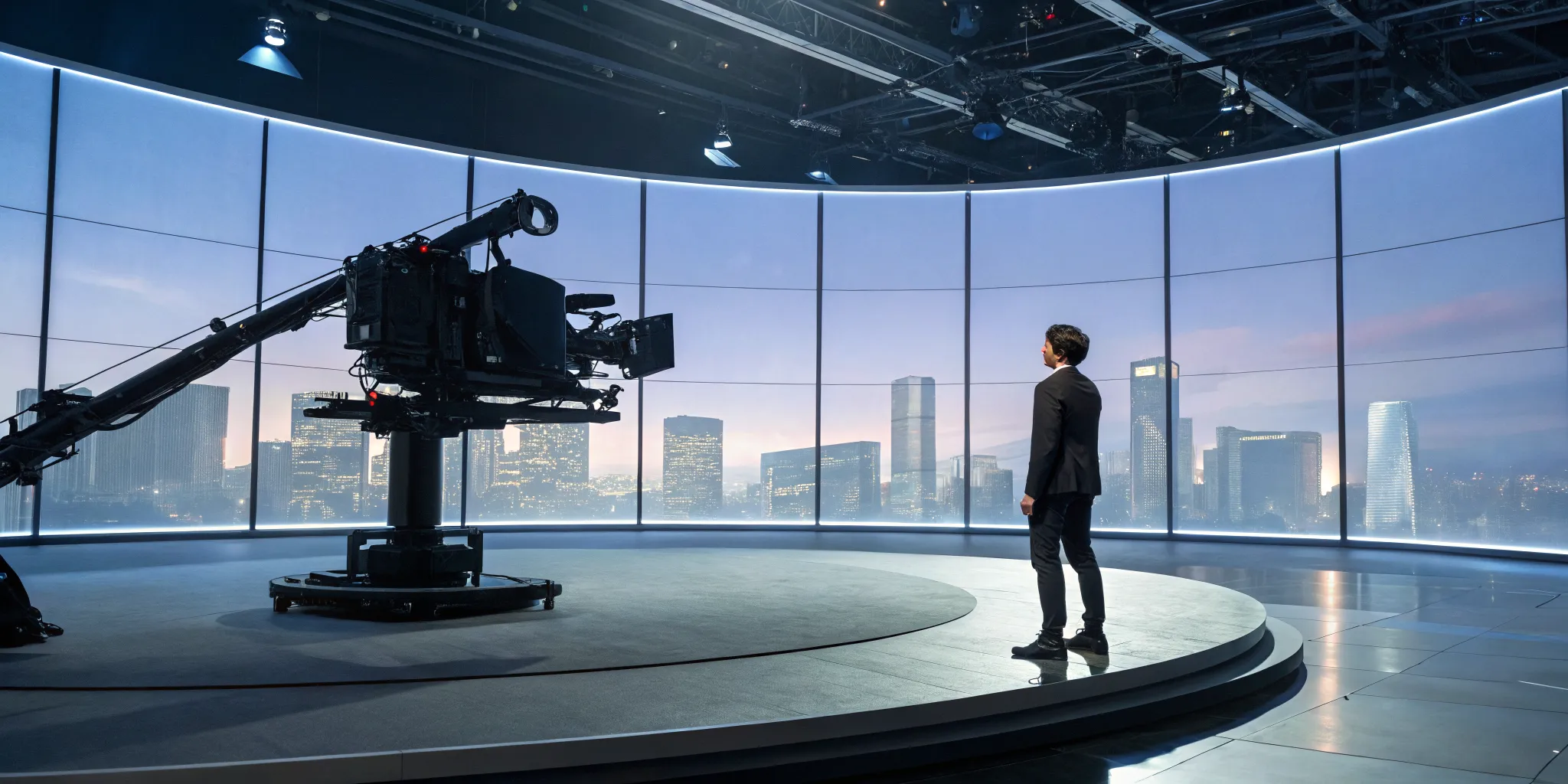

Breaking Down the Virtual Production Workflow in Filmmaking
You have a story to tell, and it’s bigger than a single film. You see it as a game, a series, and an immersive experience. The question is, how do you build that world efficiently without sacrificing quality or consistency? The answer lies in virtual production. The digital assets you create for a film—from character models to entire environments—are built in a game engine from the start. This means the virtual production workflow in filmmaking doesn't just produce a movie; it produces a reusable library of assets perfect for multi-platform storytelling, allowing you to expand your IP into new formats faster and more cohesively than ever before.
Key Takeaways
- Front-load your creative work: Virtual production moves the bulk of visual effects and world-building into pre-production. This approach lets you solve problems and finalize your vision early, leading to a more efficient shoot and a much shorter post-production timeline.
- Make decisions in real time: On a virtual set, directors, cinematographers, and actors see a near-final shot live. This allows your team to collaborate on the spot, adjusting lighting, camera angles, and performances with immediate feedback instead of waiting for post.
- Create a reusable digital universe: The high-quality assets built for your film are game-engine ready from day one. This makes them perfect for expanding your IP into video games and interactive experiences, ensuring visual consistency and a direct path to multi-platform storytelling.
What Is Virtual Production?
At its core, virtual production is a revolutionary way of filmmaking that blends the physical and digital worlds in real time. Instead of acting in front of a static green screen and imagining the world that will be added months later, actors perform inside a dynamic, interactive environment. This is made possible by surrounding the set with massive, high-resolution LED screens, often called an LED volume or wall. These screens display photorealistic digital backgrounds created using powerful game engines, like Unreal Engine.
As the camera moves, the background on the screen moves with it, creating a perfect sense of depth and perspective. This means the director, actors, and crew can see a nearly final version of the shot as it’s being filmed. The lighting from the LED screens also casts realistic reflections and light onto the actors and physical props, seamlessly integrating them into the virtual world. This approach front-loads the creative process, allowing for on-the-fly adjustments and giving filmmakers unprecedented control on set. It’s a technique that has been instrumental in creating immersive worlds for projects like the Star Wars series Skeleton Crew, changing how epic stories are brought to life.
How It's Different from Traditional Filmmaking
The biggest shift from traditional filmmaking is when the visual effects are created. In a typical workflow, VFX is a long, expensive post-production phase that happens after filming wraps. With virtual production, much of that work moves into pre-production and the actual shoot. The digital environments are built beforehand and are live on set. This allows for a more iterative and flexible process, where creative decisions about lighting, framing, and even the environment itself can be made in the moment. It closes the gap between imagination and execution, giving everyone on set immediate feedback and a shared vision for the final shot.
The Technology That Powers It
Virtual production is driven by a suite of interconnected technologies working in harmony. The most visible piece is the LED volume, which serves as the digital canvas. Powering the visuals on that canvas are real-time game engines, which render complex 3D environments instantly. To make the illusion believable, camera tracking systems constantly monitor the position and movement of the physical camera. This data tells the game engine how to adjust the digital background in real time, creating a perfect parallax effect that mimics a real-world view. These core components, supported by powerful hardware and 3D asset libraries, form the foundation of our virtual production services.
The Virtual Production Workflow: A Stage-by-Stage Guide
If you have a background in traditional filmmaking, the stages of virtual production will sound familiar: pre-production, production, and post-production. The key difference, however, is how virtual production completely rebalances the creative and technical workload across these phases. The process becomes heavily front-loaded, meaning that the most significant decisions and asset creation happen much earlier than you might be used to. Think of it as moving a huge portion of post-production into pre-production.
This fundamental shift allows your team to solve creative problems, build entire digital worlds, and even finalize complex visual effects before the cameras even start rolling. By moving the bulk of the work to the beginning of the timeline, the entire production becomes more efficient, predictable, and creatively flexible. Instead of discovering costly issues on set or getting stuck in a lengthy edit, you can identify and address challenges when they are easiest and cheapest to fix. This approach not only de-risks the project but also opens up new creative possibilities that were once impractical. Let’s walk through what each stage looks like in a modern virtual production environment.
Pre-Production
In a traditional workflow, pre-production is for planning. In virtual production, it’s for building. This is where your digital world truly comes to life, long before anyone steps onto a physical set. Artists and technicians use game engines to create every digital asset, from vast alien landscapes to the specific textures on a spaceship’s control panel. This stage is also where you can develop a "pitchvis," a high-quality visual pitch that functions like a mini-trailer to help secure funding and align the entire team on a single creative vision.
Because so much is created upfront, this phase is the most intensive part of the entire workflow. Most of the visual effects are designed, built, and approved here, which is a major departure from waiting until post-production. Our team provides comprehensive services to manage this entire front-loaded process, ensuring every digital element is ready for filming.
Production
When you step onto a virtual production set, you won’t find endless green screens. Instead, you’ll see actors performing inside a volume of massive, high-resolution LED screens displaying the digital environment in real time. As the physical camera moves, its position is tracked, and the virtual camera inside the game engine moves in perfect sync. This ensures the background perspective shifts naturally, creating realistic parallax and reflections that are captured directly in-camera.
This method has a huge impact on the creative process. Directors can frame shots against the final background, and cinematographers can light scenes with the actual light being cast from the LED panels. For actors, it’s a game-changer. They can see and react to the world around them, leading to more grounded and believable performances. This technology was central to our work on projects like Marvel Studios’ Ant-Man and The Wasp: Quantumania, where immersive digital worlds were essential to the story.
Post-Production
With so much visual information captured in-camera, the post-production phase becomes significantly shorter and more focused. The goal is no longer to build the world from scratch but to refine and polish what’s already there. This stage is where artists might add digital characters that were represented by placeholders on set, integrate complex effects that couldn’t be rendered in real time, or complete the final color grading and sound design.
Because the lighting and environments are already baked into the footage, the post-production team isn't spending months on keying, rotoscoping, and compositing. Instead, they can focus their efforts on the final touches that perfect the film. The detailed data and collaborative nature of the workflow streamline these final steps, making the path to the final cut faster and more straightforward. You can see the polished result of a modern workflow in our work on the game Lollipop Racing, which benefited from an integrated and efficient pipeline.
Pre-Production: Building the World Before You Shoot
In traditional filmmaking, you might hear the phrase, "We'll fix it in post." With virtual production, the mantra shifts to, "We'll perfect it in pre." This initial stage is the most intensive part of the entire workflow, and for good reason. It’s where you build, test, and finalize your digital world before a single frame is shot on set. By front-loading the creative and technical decisions, you create a solid foundation that makes the actual production process smoother, more predictable, and incredibly flexible. This meticulous planning is what allows your team to walk onto a set where the world is already alive, ready to be captured. At Arctic7, our strategic development process is built around this principle, ensuring every detail is mapped out from the start.
Creating Digital Assets and Environments
This is where your world takes its first digital breath. The Virtual Art Department (VAD) steps in to build every digital element your story needs. Think of them as the digital equivalent of a traditional art department, constructing everything from character models and props to vast, immersive environments. They work hand-in-hand with the director and production designer to decide what will be a practical set piece, what will be a digital asset displayed on the LED volume, and what might be added later. This team transforms concept art into photorealistic assets, like the stunning visuals seen in projects like Ant-Man and the Wasp: Quantumania, ensuring the virtual world feels completely tangible.
From Storyboard to Previsualization
Once you have your assets, it's time to see them in motion. This stage moves far beyond static storyboards and into dynamic previsualization, or "previs." It often starts with "pitchvis," which are like high-tech animated storyboards created in a game engine to map out key sequences. From there, the team moves into full previs. This is essentially a digital rehearsal for the film. Using the game engine, filmmakers can experiment with camera angles, lenses, lighting, and character blocking inside the virtual environment. The quality is often so high that it looks like a rough cut of the final scene, giving the entire crew a clear and unified vision of the creative goals before the shoot even begins.
Setting Up the Technical Pipeline
With the creative vision locked in through previs, the next step is to plan the technical execution. This is called "techvis," and it’s a critical bridge to the physical production. The techvis team answers all the "how" questions: How will the real-world camera and equipment interact with the virtual set? What specific camera movements, crane positions, and lens choices are needed to achieve the shots planned in previs? This stage is vital because it ensures that the creative ambitions are technically possible on the soundstage. It creates a precise blueprint for the on-set crew, which is essential for a smooth workflow, especially when working on technically complex projects like our work on Lollipop Racing.
What Happens on a Virtual Production Set?
A virtual production set feels like stepping into the future of filmmaking. It’s a highly collaborative and tech-forward space where creative decisions happen live, not months later in an editing suite. Instead of relying on green screens and guesswork, your team works inside a dynamic digital world that is visible to everyone on set. This immersive environment allows the entire crew, from the director to the actors, to see a near-final version of the shot as it’s being captured. The process seamlessly blends physical props and performances with virtual backdrops, creating a workflow that is both efficient and incredibly freeing for creators.
Forget the days of waiting for dailies to see if a shot worked. On a virtual set, you get immediate visual confirmation, which allows for more confident and creative storytelling. This shift fundamentally changes the on-set dynamic, turning production into a live, iterative process where the final vision takes shape right before your eyes. It fosters a shared understanding of the scene and empowers every department to contribute to the final image in real-time. This is where the magic happens, where technology and artistry meet to build worlds that were once impossible to capture in-camera. Let's look at the key components that make this on-set experience so different and powerful for bringing your IP to life.
Working with LED Volumes and Real-Time Renders
The centerpiece of a virtual production set is the LED volume. These are massive, high-resolution LED screens that surround the performance area, displaying the digital environments you built in pre-production. These aren't just static backdrops; they emit light and reflections that interact realistically with actors, costumes, and physical props. This eliminates the flat, artificial look of green screen lighting. Special cameras track the film camera’s every move, so the digital background shifts its perspective in perfect sync. This creates a convincing parallax effect, making it appear as though your actors are truly moving within a vast, three-dimensional world, a technique used to create stunning visuals in projects like Marvel Studios' Ant-Man and the Wasp: Quantumania.
How Actors Interact with Virtual Worlds
For actors, performing on a virtual set is a game-changer. Instead of staring at a blank green wall, they are immersed in the world of the story. They can see the alien landscape, the futuristic city, or the magical forest on the LED screens around them. This immediate visual context helps them deliver more authentic and grounded performances. Actors can make direct eye contact with a digital creature, react to a virtual explosion in real-time, and physically orient themselves within the scene. This direct interaction removes the guesswork and helps them connect more deeply with the story, which is essential for bringing expansive universes like Star Wars to life.
Making Real-Time Adjustments as a Team
One of the biggest advantages of a virtual set is the ability to make creative changes on the fly. Your director, cinematographer, and VFX artists can collaborate right there on set to perfect the shot. If the lighting doesn't feel right, you can move the sun in the virtual sky. If a background element is distracting, you can shift it or remove it instantly. This iterative process allows for immediate feedback and experimentation without the cost or delay of rebuilding physical sets or waiting for post-production. This collaborative workflow is at the heart of our virtual production services, empowering your team to make bold creative choices with confidence and see the results in real-time.
How Post-Production Changes with Virtual Production
If you’ve worked in traditional filmmaking, you know post-production can feel like a marathon after the sprint of shooting. It’s often where the world of the film is truly built, with visual effects artists spending months creating environments and effects against a green screen. Virtual production flips this model on its head. It doesn’t get rid of post-production, but it transforms it from a lengthy creation phase into a streamlined finishing stage. By capturing complex visual effects in-camera, you front-load the creative decisions, which means your post-production team can focus on refining and polishing the final product instead of building it from the ground up. This shift makes the entire process more efficient and creatively cohesive.
Why Post-Production Is Faster
The single biggest change to post-production is the speed. In a traditional workflow, the post-production phase can take many months, or even years, as VFX teams work to replace green screens and integrate digital elements. With virtual production, this stage is significantly shorter because most of the visual effects are already captured in-camera. The environments displayed on the LED volume are rendered in real time and filmed with the actors, meaning the background is already part of the principal photography. This dramatically reduces the amount of compositing and VFX work needed later, allowing you to move from the final take to the final edit much more quickly. The virtual production workflow essentially merges parts of post-production into the production phase itself.
Integrating Final Visual Effects
Even though much of the world is captured on set, post-production is still where you add the final layer of digital magic. This stage is less about creation and more about enhancement. For instance, if you used a lower-resolution digital character as a placeholder for an actor to interact with on set, post-production is where artists will integrate the final, high-fidelity version. This is also the time to add smaller effects that weren't practical to render in real time, like complex particle simulations or digital doubles for specific shots. The process often involves "postvis," where teams combine live-action footage with refined digital effects to ensure everything blends perfectly before the final render.
The Final Touches: Color and Finishing
The final steps of post-production, like color grading and sound mixing, are still essential, but they start from a much stronger place. Because the actors are lit by the light from the LED screen itself, the lighting on them naturally matches the environment. This creates a cohesive image that requires less work from the colorist to blend disparate elements. The collaborative nature of virtual production also pays off here. Since the director, cinematographer, and VFX team have been working together to approve the look of the world from pre-production onward, the creative vision is already baked into the footage. This consistent teamwork ensures the final polish enhances the established vision rather than trying to create it from scratch.
The Essential Virtual Production Toolkit
Virtual production might seem like magic, but it’s powered by a specific set of interconnected technologies. This toolkit is what allows creative teams to build, shoot, and refine visual effects in real time, right on the production stage. It’s a fusion of hardware and software that replaces the guesswork of a green screen with the certainty of seeing the final image through the camera lens. Understanding these core components is the first step to grasping how this workflow can transform your production process.
At its heart, the virtual production toolkit is about creating a feedback loop. Instead of waiting for post-production to see how digital elements will look, filmmakers can make creative decisions on the fly. This requires a powerful combination of rendering software, display technology, and tracking systems all communicating with each other instantly. From the game engines that build the worlds to the LED screens that display them, each piece plays a critical role. We'll break down the essential tools you'll find on any modern virtual production set, showing how they work together to create immersive and visually stunning results. This synergy is central to the creative and technical services that bring transmedia stories to life, ensuring every element feels cohesive from the start.
Game Engines and Real-Time Rendering
The creative core of virtual production is the game engine. Powerful software platforms like Unreal Engine are used to build and display photorealistic 3D environments in real time. Instead of rendering a single frame over several hours, a game engine renders a scene 60 times per second or more. This speed is what allows directors and cinematographers to see the virtual world through the camera’s viewfinder, complete with lighting, textures, and effects, as they film. It gives them the power to experiment with camera angles, adjust lighting, or even change the time of day with just a few clicks. This immediate visual feedback is a game-changer, turning the set into a dynamic, interactive canvas for storytelling.
LED Volume Technology
The LED volume is the physical stage where the digital world comes to life. These are massive, curved walls constructed from high-resolution LED panels that display the real-time environments generated by the game engine. Unlike a green screen, the LED volume acts as both the background and the primary light source, a technique used on major productions like Ant-Man and The Wasp: Quantumania. The light from the digital environment naturally illuminates the actors and physical props, creating realistic reflections that are difficult to replicate in post-production. This immersive setup not only looks better in-camera but also helps actors deliver more authentic performances, as they can see and react to the world around them.
Motion Capture and Camera Tracking
To create a believable illusion of depth, the virtual world must react to the physical camera's movement. This is achieved through sophisticated camera tracking systems. Sensors placed on the camera and around the set constantly feed the camera’s exact position, orientation, and lens data to the game engine. The engine then adjusts the background's perspective in real time, creating a perfect parallax effect that makes it seem like you’re looking through a window into another world. In addition, motion capture technology can be integrated to record an actor's performance and apply it to a digital character within the scene, allowing for seamless interaction between real and virtual actors on set.
Key Hardware and Lighting Tools
Behind every virtual production is a significant amount of computing power. A network of high-performance computers equipped with powerful graphics cards (GPUs) is required to run the game engine and render complex scenes without lag. This hardware ensures the visuals on the LED volume are smooth and responsive to every change. Beyond the computers, integrated lighting is key. While the LED volume provides a lot of the ambient light, physical lighting fixtures on set are synchronized with the digital lights in the virtual environment. This allows the lighting director to make adjustments to a physical light and see the corresponding digital light change instantly, ensuring the entire scene is lit cohesively and realistically from every angle.
What Are the Benefits of Virtual Production?
Virtual production is more than just a technological marvel; it’s a strategic shift that delivers powerful advantages for creators and IP holders. By moving a significant portion of post-production work into the pre-production and production phases, this workflow streamlines the entire filmmaking process. The benefits ripple through every department, from the director’s chair to the accounting office, and fundamentally change how you can approach a project. It offers a level of control and flexibility that was previously unimaginable in traditional filmmaking.
Instead of waiting months to see how visual effects will look, you can make creative decisions with the final image in mind, right on set. This immediacy not only saves valuable resources but also opens up new creative avenues for directors, cinematographers, and actors alike. For IP holders, the most exciting benefit might be how virtual production sets the stage for world-building. The digital assets you create become the foundation for a cohesive universe that can extend far beyond a single film. This creates a seamless experience for your audience and supports a robust strategy for multi-platform storytelling. It’s about working smarter, creating more freely, and building bigger, more immersive worlds.
Save Time and Money
One of the most compelling arguments for virtual production is its impact on your budget and schedule. By building digital environments, you can capture scenes set in multiple locations without ever leaving the studio, which dramatically reduces travel costs, permitting fees, and logistical headaches. Because you can see near-final shots in-camera, the need for costly reshoots diminishes. If a shot isn’t working, you can adjust the lighting, environment, or camera angle in real-time instead of discovering the problem months later in post. This front-loaded approach means you can make asset creation more efficient and get more done on your shoot days, keeping your project on time and on budget.
Gain Creative Freedom on Set
Virtual production hands creative control back to the filmmakers during production. Instead of guessing how a scene will look against a green screen, directors and cinematographers can see the virtual world integrated with the live-action elements instantly. This allows for immediate and iterative decision-making. Want to see the scene during a golden-hour sunset instead of midday? You can change it with a few clicks. This ability to make quick changes to ideas and digital elements in real-time fosters experimentation and allows your team to fine-tune the visual language of the story on the spot. It transforms the set into a dynamic creative sandbox where your vision can be perfected collaboratively and instantly.
Empower Your Actors' Performances
Acting against a green screen is a unique challenge that requires a lot of imagination. Virtual production changes the game by surrounding actors with the world of the story. Performing inside an LED volume means they can see the fantastical landscapes or futuristic cities their characters inhabit. This immersive experience allows them to interact more naturally with the virtual world, leading to more grounded and authentic performances. They can make direct eye contact with digital creatures or react to environmental cues in real-time. This not only helps the actors but also gives the director a clearer sense of the final scene, ensuring every performance feels connected to the world you’re building.
Expand Your Story Across Platforms
For IP holders, virtual production is a gateway to building vast, interconnected entertainment ecosystems. The high-fidelity digital assets created for a film—from environments and vehicles to characters and props—are inherently reusable. These game-engine-ready assets can be seamlessly repurposed for video games, virtual reality experiences, and other interactive content. This approach ensures visual consistency across all media, strengthening your brand and deepening audience engagement. By using virtual production, you’re not just making a movie; you’re building a digital library that supports multi-platform storytelling and diversifies your IP’s reach, just as we’ve seen in expansive universes like the one built for Star Wars: Skeleton Crew.
The Skills Your Virtual Production Team Needs
Adopting a virtual production workflow is about more than just investing in new technology; it’s about building a team with a specific and blended set of skills. Unlike traditional filmmaking where departments often work in sequence, virtual production demands a highly integrated and collaborative group of experts who can solve problems together in real time. The lines between pre-production, production, and post-production blur, and so do the roles. This shift requires a fundamental change in mindset, moving from a relay race model to one where everyone runs together.
Your team needs to be agile, technically proficient, and excellent communicators. Success depends on artists who can think like technicians and technicians who can think like artists, all working in sync with the director’s vision. This fusion of creativity and technical know-how is what allows for real-time adjustments on set, turning potential roadblocks into creative opportunities. Having a partner with a deep bench of experienced talent is critical, as they bring not just individual skills but a proven ability to function as a cohesive unit. From creating the digital assets to running the tech on set, every person plays a crucial part in making the virtual world feel real and responsive. The right team doesn't just use the tools; they innovate with them.
Real-Time 3D Art and Technical Skills
At the heart of any virtual production are the artists and technicians who build and run the digital world. The demand for real-time 3D artists has grown because they are responsible for creating the interactive, photorealistic environments that appear on the LED volume. These aren't static backdrops; they are complex scenes built in game engines that must react to the camera's movement instantly. This requires a deep understanding of 3D modeling, texturing, lighting, and optimization. Alongside them, technical artists ensure these beautiful assets run smoothly on the powerful hardware, troubleshooting issues and refining the pipeline so the technology never gets in the way of creativity.
Seamless Collaboration and Communication
Virtual production thrives on constant communication. The traditional, siloed approach where a project is handed from the art department to production to VFX simply doesn’t work here. Instead, directors, cinematographers, production designers, and VFX supervisors collaborate from the earliest stages. On set, they work side-by-side, making creative decisions together as they see the shot come to life in real time. This continuous feedback loop allows the team to experiment and refine the final image on the spot, rather than waiting weeks for post-production. This collaborative spirit was essential to our work on projects like Marvel Studios’ Ant-Man and the Wasp: Quantumania, where teams had to work in lockstep to create the Quantum Realm.
Strong Planning and Pre-vis Capabilities
In a virtual production workflow, the pre-production stage is where much of the magic happens. Because so many visual elements are finalized before shooting begins, meticulous planning is essential. This is where previsualization, or pre-vis, becomes incredibly powerful. It goes far beyond a simple storyboard, acting as a detailed digital rehearsal for the film. Using the game engine, your team can experiment with camera angles, lens choices, lighting setups, and actor blocking within the virtual environment. This detailed pre-production process allows you to solve creative and logistical problems early, ensuring that when you get on set, every department is aligned and ready to capture the perfect shot.
How to Transition to a Virtual Production Workflow
Making the move to virtual production can feel like a huge leap, but it’s more about shifting your mindset than completely overhauling everything you know. It’s a new way of filmmaking that blends cutting-edge technology with traditional creative processes. The key is to approach the transition with a clear plan. By focusing on integrating new tools, empowering your team, and front-loading your creative decisions, you can make the switch smoothly. This approach makes your entire process more collaborative and efficient from start to finish.
Best Practices for a Smooth Switch
The best way to begin is by understanding that virtual production isn't just a new tool; it’s a fundamental change to the filmmaking process. It merges the physical and digital worlds right on set, which requires a more integrated approach than traditional methods. Instead of seeing it as a replacement for old techniques, think of it as an enhancement. You can start small by incorporating virtual production into a single complex scene or a short film to help your team get comfortable with the technology and workflow. This allows you to build confidence and work out any kinks before committing to a full-scale production. A successful transition relies on blending innovative tech with the tried-and-true principles of great storytelling.
Assemble and Train Your Team
Virtual production thrives on collaboration, so your team structure needs to reflect that. The traditional walls between pre-production, production, and post-production come down. From day one, your director, cinematographer, production designer, and VFX supervisor need to be in the same room (or virtual space) with real-time artists and technical directors. This ensures everyone is aligned on the creative vision and technical execution. You’ll need to bring in specialists with game engine and 3D art skills, but it’s just as important to train your existing crew. Fostering open communication and a shared language between creative and technical departments is the secret to a successful virtual production team.
Handle the Demands of Pre-Production
In a virtual production workflow, pre-production becomes the most critical phase of your project. This is where the majority of your world-building and visual effects work happens. Instead of waiting for post-production to create digital environments, you build them upfront so they are ready for the live-action shoot. This front-loaded process allows you to visualize and experiment with scenes much earlier, giving you the freedom to test ambitious creative ideas, from fantastical worlds to complex action sequences. A huge part of this stage involves detailed technical planning, where you map out exactly how your virtual assets will interact with real-world cameras and lighting. This meticulous preparation is what makes the magic happen seamlessly during production, as seen in projects like Ant-Man and The Wasp: Quantumania.
Using Virtual Production to Support Multi-Platform Storytelling
Virtual production does more than just change how you shoot a film or series; it fundamentally changes what you can do with your intellectual property. The digital assets and environments you build for a movie are no longer single-use items. Because they are created in real-time game engines, these assets are inherently ready for other platforms, creating a direct and efficient path to expand your story into games, VR experiences, and other interactive media. This makes virtual production less of a filmmaking technique and more of a world-building engine for modern entertainment brands.
This approach allows you to create a truly cohesive universe for your audience. Imagine shooting a key scene for your show inside a detailed virtual environment. With traditional methods, that set is torn down after filming. With virtual production, that entire digital set can be repurposed as a playable level in a video game or an explorable location in a VR app. This not only saves significant time and budget on asset creation but also ensures a seamless visual identity across all your projects. Fans can move from watching the story to playing inside it, deepening their connection to the world you’ve built. Developing an interconnected entertainment ecosystem is a powerful way to extend the life and reach of your IP.
This consistency is crucial for building a believable and immersive world that audiences want to return to again and again. When the alien jungle in your film looks identical to the one in the companion game, it reinforces the authenticity of your story. Virtual production centralizes the creation of these core assets, making it easier to maintain brand integrity across different formats. It also allows for incredible flexibility. You can adapt environments to create unique content for different platforms, like offering an interactive tour of a hero's headquarters or telling a side story that’s exclusive to a mobile experience. This strategy is essential for franchises like the Star Wars universe, where a consistent look and feel across films, series, and games is key to audience immersion. By planning for multi-platform storytelling from the start, you create more opportunities for engagement and revenue.
Related Articles
- Your Guide to Virtual Production for Game Development
- The Virtual Production Workflow: A Practical Guide
- Indie Virtual Production Studio: The Essential Guide
Frequently Asked Questions
Is virtual production more expensive than traditional filmmaking? Not necessarily. While virtual production does require a larger upfront investment in pre-production to build the digital assets, it can lead to significant savings down the line. Think about the costs you can reduce or eliminate: traveling to multiple locations, expensive set construction, and lengthy post-production timelines. By solving creative problems and finalizing visual effects before and during the shoot, you minimize the need for costly reshoots and shorten the post-production schedule, which often makes the overall budget more predictable and manageable.
Is this technology only useful for big-budget sci-fi or fantasy films? Absolutely not. While virtual production is perfect for creating otherworldly landscapes, its real strength is giving you complete control over your environment. This is valuable for any genre. You could use it to recreate a historical setting with perfect accuracy, shoot a car chase through a city without shutting down streets, or film a conversation in a location that changes with the seasons. If your story requires a specific, controlled, or hard-to-reach setting, virtual production can be an incredibly powerful and efficient tool.
Do I need to replace my entire creative team to adopt this workflow? No, it's more about augmenting your team than replacing it. Your core creative leaders, like the director, cinematographer, and production designer, are more important than ever. The key is to integrate them with specialists who have expertise in real-time game engines and 3D art. The process is highly collaborative, so success comes from having your trusted creative team work alongside these technical artists from the very beginning, ensuring the technology serves the story, not the other way around.
If so much work is done in pre-production, does that mean I lose creative flexibility on set? It actually gives you more creative freedom, not less. The intensive pre-production work builds a dynamic and flexible foundation. Once you are on set, you can make significant creative changes in real time. You can adjust the lighting, move mountains in the background, or test different camera angles and see the results instantly. This allows for a level of on-the-fly experimentation that is impossible with traditional methods, where you are locked into a physical location or have to wait months to see VFX results.
What if I'm only focused on making a film? Are there still benefits to creating reusable assets? Even if you have no immediate plans for a video game or VR experience, building your world with reusable digital assets has major advantages. First, it streamlines the production of the film itself, giving you the creative control and efficiency we've discussed. Second, it future-proofs your intellectual property. Having a library of high-quality, game-engine-ready assets gives you valuable options down the road. These assets can be used for marketing, sequels, or interactive projects you may decide to pursue later, giving your IP a longer life and more potential for growth.
New Immersive & XR Media Capabilities Added to Arctic7's Suite of Games, Film & TV and Digital Services

Arctic7 Shares Details of its Work on Skeleton Crew and Cinematics Partnership with Fateless

The Human Touch: Adding Personality to Project and Product Management
Whether it’s your team, your client, or your stakeholders, understanding the human dynamics is just as critical as hitting milestones.

McDonald's Case Study: Bridging Brand and Play | Arctic7
Bridging Brand and Play: An Interview with Lindsay Blenkhorn Daggitt