



Virtual Production vs Green Screen: IP Holder Guide
For an IP holder, choosing between virtual production vs green screen is not a simple technology preference. The decision affects how directors see a world, how actors perform inside it, when costs arrive, how much work moves into post-production, and whether digital assets can serve a wider franchise. The right answer is often a deliberate combination of both methods.
Talk with Arctic7 about the right virtual production approach for your IP
By Andrew MacLusky, CPO
Virtual Production vs Green Screen: What Is the Difference?
Virtual production displays a digital environment during the shoot, often on an LED wall driven by a real-time engine. Green screen captures the performance against a chroma background and replaces that background later. Both methods can create convincing worlds, but they distribute creative control, lighting, labor, and risk across different production stages.
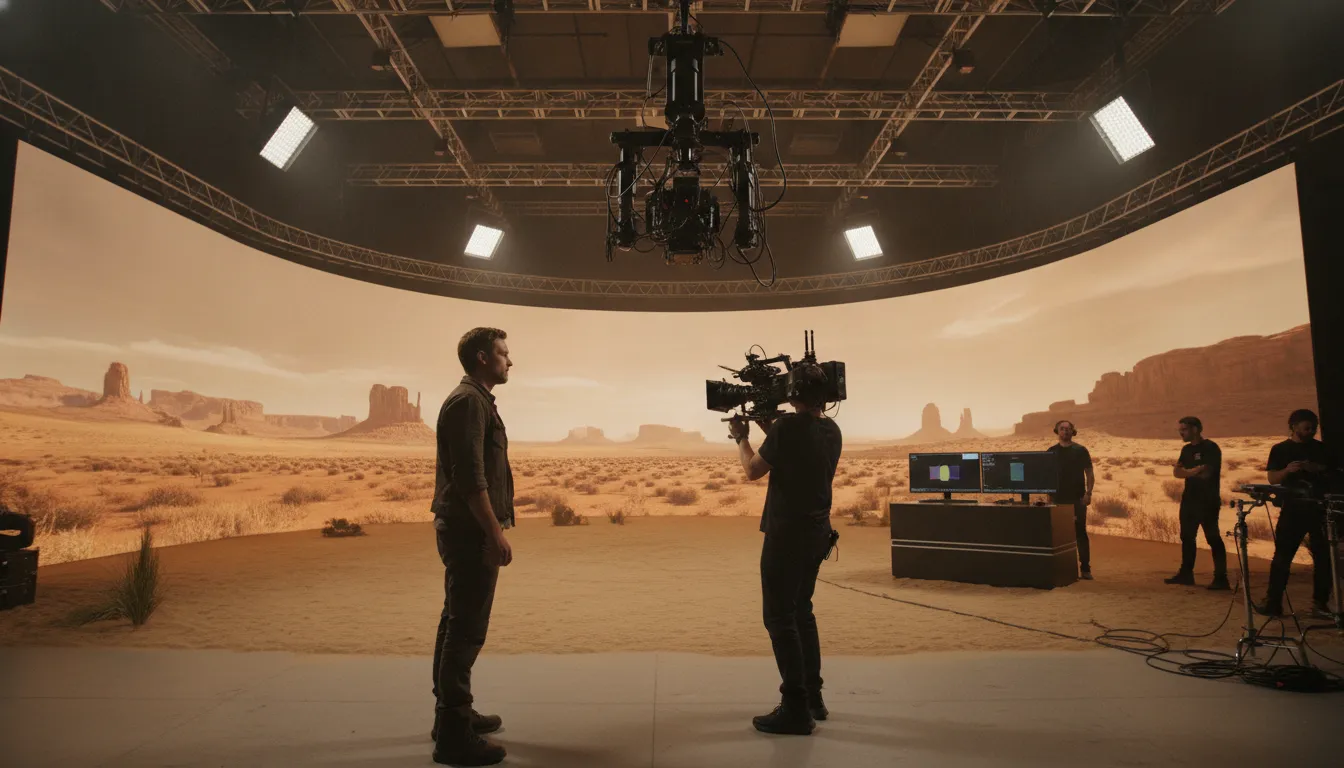
The distinction is about more than a green backdrop versus a wall of LEDs. With an LED volume, the camera can see the intended environment while the scene is being captured. The background can provide interactive light, reflections, color, and a sense of place for the cast and crew. Camera tracking and real-time rendering can also keep perspective aligned as the camera moves.
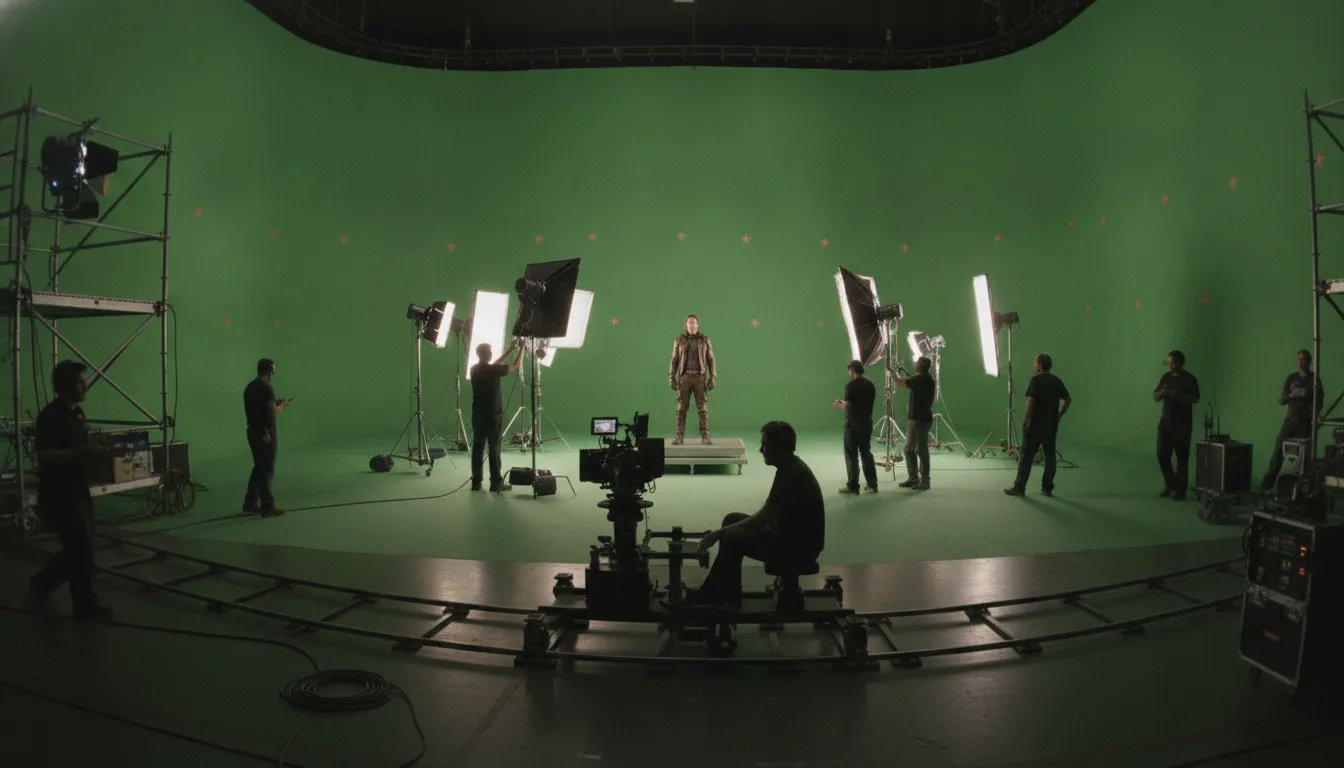
With green screen, the set remains deliberately neutral. The production team controls the foreground, lighting, blocking, and camera work on the day. Visual effects artists then key out the green and composite the final environment in post-production. That separation creates freedom to change the world later, but it also postpones some of the creative decisions and technical work.
Neither method is a universal replacement for the other. A contained dialogue scene with reflective costumes may benefit from an LED wall. A large action sequence with extensive digital destruction may be more practical on green screen. A project with both needs may use a hybrid pipeline, with each shot assigned to the method that serves its creative and operational demands.
The production landscape has also changed quickly. In 2022, Epic Games industry manager Miles Perkins told The Hollywood Reporter that the number of tracked LED stages had grown to roughly 300, up from three in 2019. That expansion does not make an LED wall right for every shot, but it gives IP holders a larger and more experienced production ecosystem to evaluate.
How Do the Two Methods Change Creative Control?
LED virtual production gives directors, cinematographers, performers, and executives a shared view of the intended scene while filming. Green screen gives the visual effects team more freedom to redesign the environment after capture. Choose LED when on-set decisions and interactive lighting matter most; choose green screen when late-stage flexibility is the priority.
Virtual production changes the feedback loop. Instead of reviewing a finished composite weeks or months later, the team can evaluate the relationship between the performer, camera, lens, and environment on set. A director can adjust a horizon, camera move, or lighting direction while the scene is still active. That visibility can reduce guesswork, especially when an IP depends on a specific visual identity.
Green screen keeps more variables open. The production can capture a performance without committing to the final location, time of day, or digital set. This is valuable when story decisions are still developing or when the environment must change in editorial. It also supports shots that would be difficult to render in real time at the required scale and detail.
The tradeoff is decision timing. LED production asks the creative and technical teams to make more choices before the shoot, including environment design, asset preparation, color management, tracking, and camera tests. Green screen moves more decisions into post-production. That is not automatically cheaper or slower, but it changes which team must be ready first.
For an IP holder, the practical question is where the project needs certainty. If the creative team needs to protect a recognizable world, approve performances against a finished environment, or use digital assets across formats, earlier visibility may be more valuable than maximum late-stage freedom.
Which Method Produces Better Lighting, Reflections, and Performance?
Virtual production usually has an advantage when natural interactive light, accurate reflections, and performer orientation are central to the shot. Green screen can match those results with careful lighting and compositing, while preserving more freedom for the final environment. The best choice depends on the surfaces, movement, and emotional demands of each scene.
An LED wall is a light source as well as a background. A sunset, neon street, underwater environment, or moving vehicle can cast changing color and intensity onto faces, costumes, props, and set pieces. Reflective materials can capture the surrounding world in camera rather than waiting for a digital replacement. This can give the cinematographer a more coherent starting image.
Green screen requires the lighting team to recreate those conditions with physical lights, interactive fixtures, and reference material. Skilled crews can produce excellent results, but the visual effects team still needs to preserve the relationship between the foreground and the later background. Green spill around hair, translucent materials, glass, and reflective surfaces can add cleanup work.
The performance benefit is less technical and more human. Actors can respond to a visible setting, a practical eyeline, and a believable color environment. That can matter for intimate scenes, creature interactions, or sequences in which the world itself influences the performance. Green screen can provide physical props and stand-ins, but it asks performers to work with more abstraction.
These advantages do not make LED volumes ideal for every shot. Wall brightness, viewing frustum, moire, screen resolution, camera movement, and real-time rendering limits must be tested. A green screen may remain the better choice when the frame contains fast movement, a very wide environment, or a background that will be substantially rebuilt in post.
Is Virtual Production More Expensive Than Green Screen?
Virtual production is not automatically more expensive or less expensive than green screen. It moves more investment into pre-production, including digital environments, technical tests, and real-time systems. Green screen can lower the capture-stage setup cost, but it may require more compositing, keying, cleanup, and environment work after filming. Compare total project cost, not day rates alone.
The cost question is often framed incorrectly. A green screen can appear efficient because the stage is familiar and the environment is not finished before the shoot. An LED volume can appear expensive because it requires specialized stage time, real-time rendering, tracking, and a prepared digital scene. Those are visible costs, while some green-screen costs emerge later in shots, reviews, revisions, and visual effects capacity.
Epic Games' Virtual Production Field Guide describes a central budgeting shift: detailed visual development can happen earlier in pre-production rather than later in post-production. That does not promise savings. It means the production must plan cash flow, approvals, staffing, and asset decisions around a different cost curve.
A useful comparison includes these categories:
- Pre-production: environment creation, virtual art department, previs, techvis, camera tests, and real-time optimization.
- Stage operations: LED volume rental, crew, tracking, calibration, power, rendering, and technical support.
- Capture: physical set pieces, lighting, lenses, camera movement, performance needs, and reshoots.
- Post-production: keying, rotoscoping, cleanup, environment creation, compositing, color, and review cycles.
- Reuse: whether environments, props, animation, and camera data can support later episodes, games, marketing, or experiential work.
For a single short shoot with a highly flexible concept, green screen may be financially sensible. For a recurring series, a world with complex reflections, or a franchise that will reuse digital environments, virtual production may create more value over several releases. The financial model should include that reuse rather than treating each production as an isolated cost center.
Which Option Is Better for Scheduling and Post-Production?
Virtual production can shorten the path from capture to a usable image by resolving more visual decisions on set. Green screen can accelerate shooting when environments are not ready, but it shifts keying, compositing, and approvals later. Select LED when schedule certainty and early creative review matter; select green screen when post-production flexibility outweighs immediate visibility.
Virtual production front-loads work. The environment, camera path, tracking system, and technical assumptions need to be tested before principal photography. That preparation can protect the shoot from late surprises and give decision-makers a clear review point. It can also create an early bottleneck if the digital world, approvals, or real-time pipeline are not mature enough.
Green screen can keep the camera stage moving while the digital environment develops in parallel. That is useful when the script is changing or multiple locations need to be captured before the final world is approved. The schedule risk appears later, when the compositing team must manage a large number of shots, revisions, and dependencies.
The right comparison is not "fast on set" versus "slow in post." It is whether the project has the people and review process to absorb work at each stage. A production with a strong virtual art department may benefit from early decisions. A production with established post-production capacity and an intentionally fluid visual direction may prefer green screen.
For series and franchise work, schedule planning should also account for asset continuity. A carefully prepared digital environment can give episodes a shared visual foundation. A green-screen pipeline can achieve the same continuity, but the visual effects team must maintain the environment across composites and revisions. In both cases, a clear asset and approval plan matters more than the label on the stage.
When Does Green Screen Still Make More Sense?
Green screen remains the stronger choice when the final environment will change substantially, the shot needs scale beyond the available LED volume, the project requires aggressive camera movement, or the production already has a well-matched visual effects pipeline. Its value is flexibility, not simply a lower initial stage cost.
Green screen can be the practical choice for:
- Late environment decisions: the creative team expects the location, season, or visual direction to evolve after filming.
- Large-scale backgrounds: the setting extends beyond a wall's useful resolution, viewing angle, or rendering capacity.
- Heavy simulation: the shot depends on destruction, crowds, weather, creatures, or effects that are better built and reviewed in post.
- Complex camera language: the production needs movement that a particular stage, tracking system, or render pipeline cannot support reliably.
- Established post capacity: a trusted visual effects team already has the pipeline, schedule, and experience to deliver the look.
Green screen is not a shortcut around creative planning. The team still needs a clear visual target, lighting references, eyelines, camera data, lens information, and a plan for interactive effects. The difference is that the target can remain more adjustable after the performance is captured.
For IP owners, green screen can also be a useful choice when the production wants to protect secrecy. A neutral stage may reveal less about an unreleased environment than an LED wall displaying a recognizable world. That benefit should be weighed against the need to give performers and executives enough context to make strong decisions.
When Is Virtual Production the Better Choice for an IP?
Virtual production is the stronger choice when an IP needs visible worldbuilding, interactive lighting, controlled locations, repeatable environments, or close collaboration between film, game, and technology teams. It is especially useful when digital assets can serve multiple releases and when creative leaders need to evaluate the image before post-production is complete.
LED virtual production deserves serious consideration when:
- The world is part of the performance: actors need to see and respond to the environment rather than imagine it.
- Light and reflection carry story: the scene depends on colored illumination, reflective surfaces, or changing conditions.
- Location control matters: the production needs repeatable time of day, weather, geography, or access without moving the entire crew.
- Executives need early confidence: stakeholders must see a close approximation of the finished image before approving a larger slate.
- Assets have a longer life: the environment, props, and characters may extend into games, trailers, experiential work, or future episodes.
The last point is important for transmedia projects. A digital environment built for an LED stage is not automatically ready for a game or an interactive experience. It may need new optimization, interaction design, licensing review, and platform-specific development. Still, a shared asset strategy can reduce duplicated effort and help teams protect a consistent world across formats.
Arctic7 positions virtual production within a broader transmedia capability, connecting strategy, creative execution, technical excellence, and ecosystem design. That perspective is useful when the question is not only how to shoot one scene, but how a production decision supports an IP's next story, platform, and audience relationship.
Can Productions Combine Virtual Production and Green Screen?
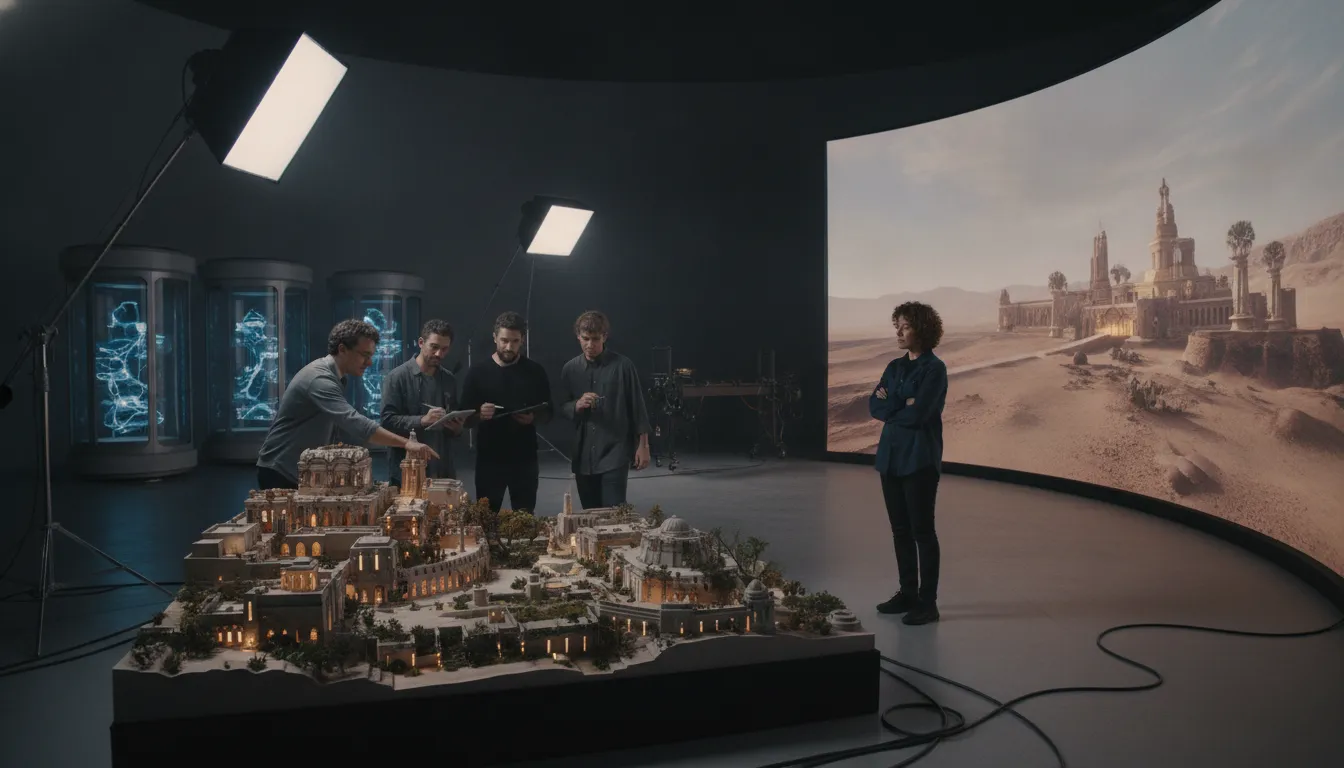
Yes. A hybrid production assigns each shot to the method that best serves its creative, technical, and budget requirements. An LED wall can handle scenes that need interactive light and visible worldbuilding, while green screen can handle scale, heavy effects, or environments that remain unsettled. Hybrid planning avoids treating the choice as all or nothing.
A hybrid pipeline may use an LED volume for dialogue scenes, reflective materials, vehicle interiors, or shots in which the cast must interact with the world. Green screen may handle wide vistas, rapidly changing environments, digital doubles, or sequences requiring extensive simulation. Traditional location work and practical sets can sit alongside both.
The production needs a shot-level decision process. For each sequence, ask:
- What must the performer see? Identify eyelines, emotional context, creature interaction, and physical reference.
- What must the camera capture? Note reflections, interactive light, motion, depth, lens behavior, and parallax.
- What must remain flexible? Mark environments, weather, scale, and story choices that are likely to change.
- What assets can be reused? Separate reusable world assets from shot-specific effects and temporary materials.
- Where is the strongest team? Match the method to available stage, real-time, production, and post-production expertise.
This process turns a technology debate into production design. It also gives finance, production, creative, and technology leaders a shared language for discussing tradeoffs. The result may be a more focused LED-stage schedule, a more predictable post pipeline, or a clear reason to use both.
How Should IP Holders Choose Between the Two?
IP holders should choose the production method at the intersection of creative intent, asset strategy, schedule, technical readiness, and total cost. Start with the shots that carry the most story and brand risk, test both approaches where uncertainty is high, then select the workflow that protects the final experience and the wider IP roadmap.
| Decision factor | Favor virtual production | Favor green screen |
|---|---|---|
| Creative review | Leaders need to see the world during the shoot | Final environment can wait until post |
| Lighting and reflections | Interactive light and in-camera reflections are essential | Surfaces are controlled or can be composited reliably |
| Schedule | Earlier decisions reduce late visual uncertainty | Parallel environment work can continue after capture |
| Scale and simulation | Contained environments and repeatable locations | Large vistas, crowds, destruction, or heavy effects |
| Asset strategy | Digital worlds may serve several formats | Assets are primarily shot-specific or still undefined |
| Team readiness | Virtual art and real-time teams can prepare early | Post and visual effects teams are the established strength |
Before committing, build a representative test rather than relying on a slide deck. Include the most reflective costume or prop, the most demanding camera move, a representative performer, and a scene that expresses the IP's visual identity. Compare the captured result, cleanup effort, review cycle, and asset reuse potential.
Then document the decision in terms a wider leadership group can approve. State which shots use which method, why they were selected, what must be ready before filming, what remains flexible, and how the assets will be managed after delivery. This makes the production choice auditable and protects the project from technology-led scope drift.
For further context, Arctic7's virtual production workflow guide explains how real-time environments and production planning connect. Its Unreal Engine virtual production guide explores the engine layer, while the virtual production filmmaking workflow article focuses on how the method fits cinematic production. You can also review Arctic7's virtual production pipeline guide and virtual production tools guide when turning the decision into a production plan.
Explore Narwhal Studios and Arctic7's virtual production capabilities
Frequently Asked Questions About Virtual Production vs Green Screen
What does virtual production mean?
Virtual production combines live-action filmmaking with real-time digital environments, tracked cameras, game engines, LED walls, and related tools. The environment may be visible to the cast and crew during filming, allowing lighting, perspective, and creative decisions to be evaluated earlier. The term can also include other real-time and in-camera visual effects workflows.
Is virtual production expensive?
Virtual production can require more early investment in digital environments, technical preparation, stage operations, and real-time expertise. Its total value depends on the project, not on the LED stage day rate alone. Compare pre-production, capture, post-production, review cycles, reshoots, and digital asset reuse before deciding whether the approach fits the budget.
What are the disadvantages of virtual production?
Common disadvantages include front-loaded preparation, specialized crew requirements, stage and render constraints, technical calibration, and the need to make some visual decisions earlier. An LED wall is also not a substitute for careful lighting, camera testing, and production design. A hybrid plan can reduce those limitations when the project needs more flexibility.
Is green screen still used in film and television?
Yes. Green screen remains useful for large environments, extensive simulations, digital doubles, rapidly changing locations, and projects with strong post-production capacity. It also preserves more freedom to change the background after filming. The method is most effective when the production gives the visual effects team accurate camera, lens, lighting, and performance information.
What is better than a green screen?
There is no single method that is better for every production. LED virtual production can be better when a project needs interactive light, reflections, visible environments, location control, and early creative review. Green screen can be better when the environment must remain flexible or the shot requires scale and effects that are more practical in post.
Discuss your virtual production decision with Arctic7
For IP holders, the strongest choice is the method that protects the story, supports the production team, and keeps the wider world ready for its next format.
For IP holders, the strongest choice is the method that protects the story, supports the production team, and keeps the wider world ready for its next format.
New Immersive & XR Media Capabilities Added to Arctic7's Suite of Games, Film & TV and Digital Services

Arctic7 Shares Details of its Work on Skeleton Crew and Cinematics Partnership with Fateless

The Human Touch: Adding Personality to Project and Product Management
Whether it’s your team, your client, or your stakeholders, understanding the human dynamics is just as critical as hitting milestones.

McDonald's Case Study: Bridging Brand and Play | Arctic7
Bridging Brand and Play: An Interview with Lindsay Blenkhorn Daggitt


