
How to Build a Virtual Production Stage That Works
Filmmakers can now shoot in three different countries on the same afternoon without booking a single flight. This massive shift is changing how studios plan and capture major entertainment projects.
Schedule a virtual production stage walkthrough with Arctic7
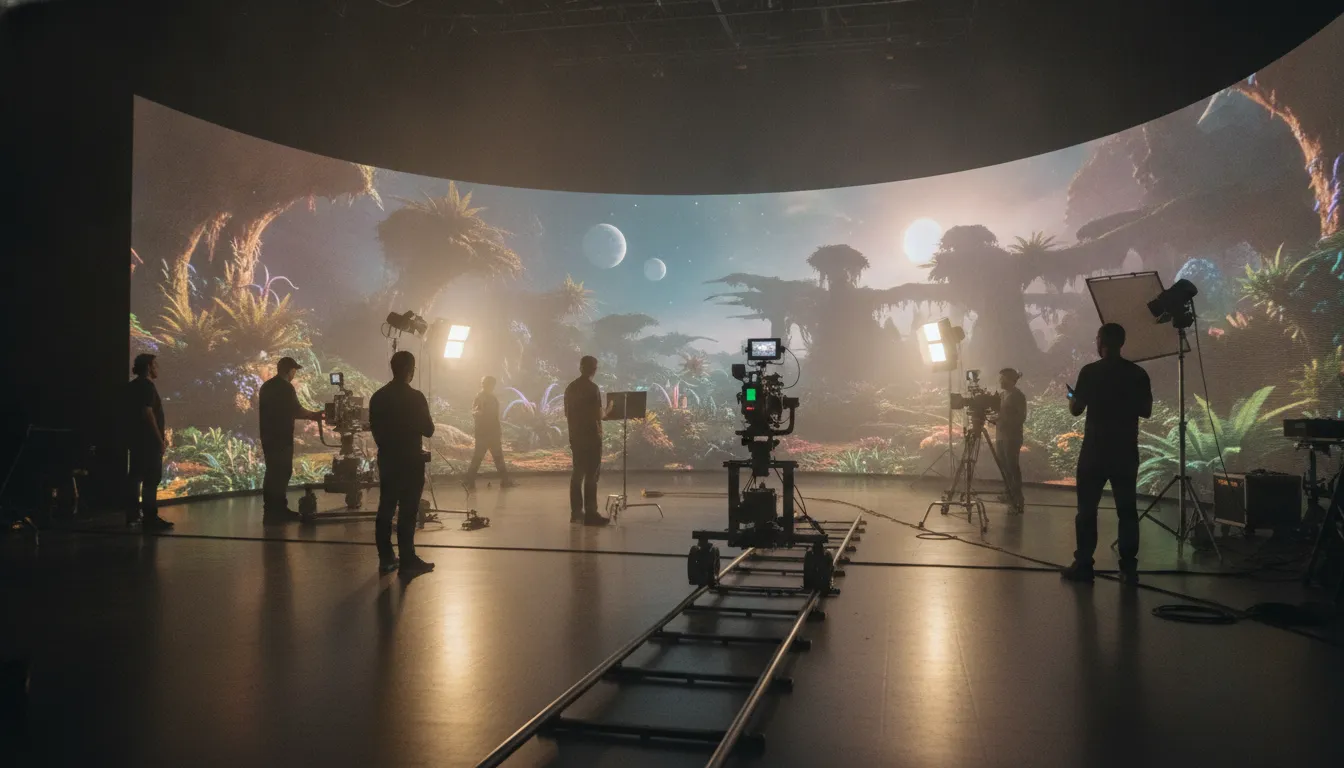
A virtual production stage is an advanced filming set that blends real-time digital worlds with physical camera tracking to display lifelike 3D backgrounds behind actors. By showing digital environments in sync with the physical camera lens, the rendering system creates a seamless blend of real actors and virtual sets.
According to Lipscomb University study details, these stages let crews shoot in many different locations in a single day without travel. This advanced setup cuts travel costs, speeds up production planning, and gives creative directors instant control over studio lighting and scene designs right on set. With this process, studios can quickly capture rich, controlled scenes that feel both huge and grounded.
While these systems are highly complex, they represent the future of storytelling for smart intellectual property holders who want to build interconnected worlds. You may wonder how these setups evolved from a rare tool into a major industry standard. The journey starts with
The Rapid Growth of Virtual Production Stages
Early roots in live broadcast
We often think of virtual filmmaking as a brand new idea. But the true roots of this craft go back to live TV news. For years, broadcast teams used real-time graphics to place hosts in digital sets. Over time, these basic systems merged with advanced game engine tech. This slow blend of tools laid the groundwork for the modern LED setup.
This match of live cameras and software grew fast. It changed how crews run a virtual production studio on set. Rather than waiting for months in post, teams could now build worlds in real time. They could test ideas, adjust lights, and see the final shots during the actual shoot. This shift made sets much more active and creative.
The Mandalorian breakthrough
The real breakout for this tech came in 2019. That was the year the first season of The Mandalorian went live. A skilled camera director named Greig Fraser led the way. He used Unreal Engine to project massive digital worlds onto physical walls of light. This step changed how the whole industry looked at filming.
Fraser used a massive LED wall to blend actors with digital spaces. This modern virtual production stage uses real-time engine rendering to show 3D worlds. The camera moves in perfect sync with the screen behind the cast. As a result, the camera captures real light and reflections from the virtual space. This means crews do not need to rely on old green screen keys.
Global adoption and studio scale
After 2019, the market for these stages exploded around the globe. Industry expert Miles Perkins of Epic Games shared some amazing growth figures. In 2019, there were only three such stages in the world. But by October 2022, that number rose to about 300 active stages. This rapid rise shows how fast studios have embraced this new way to work.
For studio chiefs, this growth is not just about cool visuals. It is about speed and cost. This path of virtual production helps crews work in multiple spaces on the same day. It cuts down on travel and logistics. By using a single stage, you can film a desert scene in the morning and a snowy peak after lunch. This level of control keeps projects on track and on budget.
Anatomy of a Virtual Production Stage: The Hardware That Makes It Work
A physical virtual production studio brings digital worlds right to the set. Unlike older green screens, this setup merges actors with backgrounds. The system relies on several high-tech parts that must work in unison. Film crews can capture shots in a controlled space, which saves both time and travel costs.
LED panels and visual volume
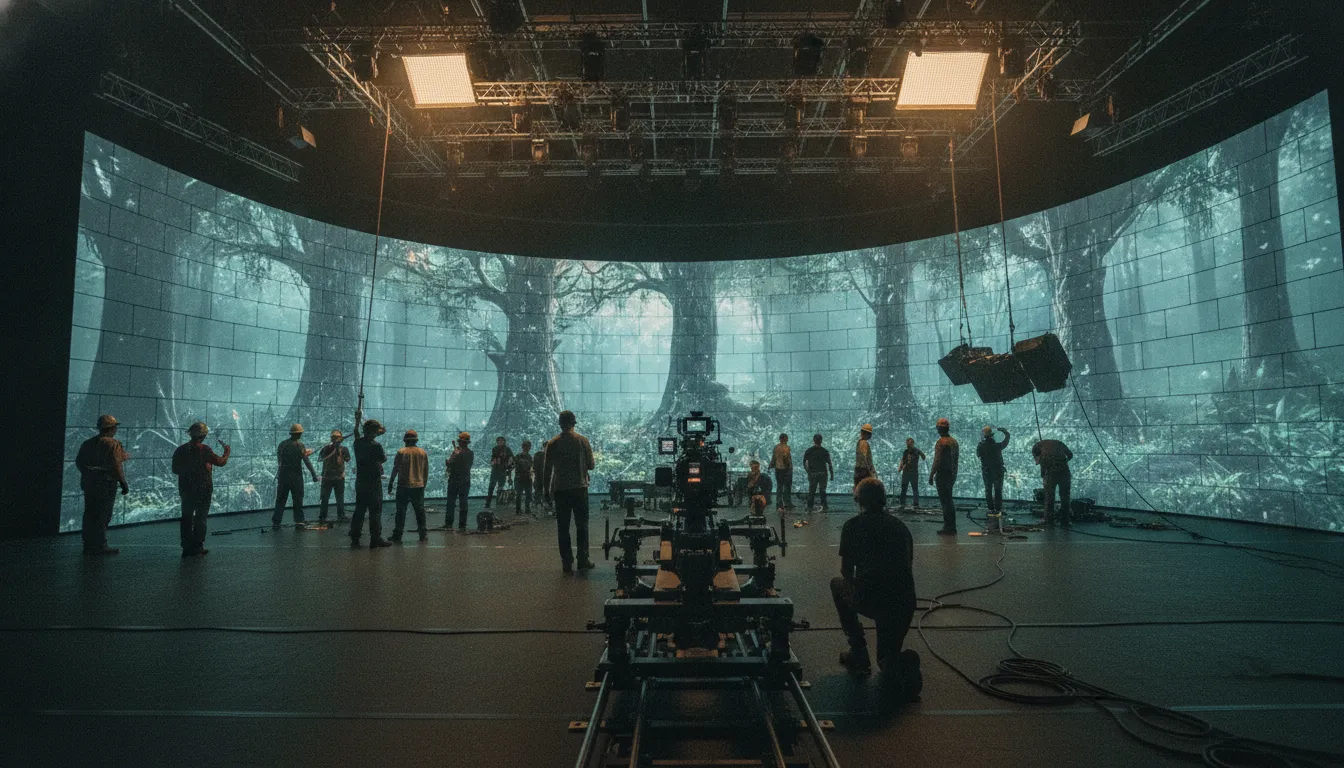
The core of any virtual production stage is the LED wall. For example, the stage at Universal Studios uses a curved wall built from 200 ROE BP2v2 panels. With a tight 2.8mm pixel pitch, these panels make the background look clear. Above the stage, an LED ceiling of 75 CB3 tiles adds more depth. This ceiling acts as a virtual sky, casting soft light down onto the physical set.
The studio covers 3,500 square feet with a stage floor of 68 feet by 52 feet. This layout gives filmmakers plenty of room to build physical sets in front of the screens. Actors can move naturally.
The shape of the wall is also key. A curved setup wraps around the actors. This curve helps the camera capture wide angles without showing the edge of the stage. The LED ceiling works with the wall to form a complete dome of light. This dome ensures that the digital world surrounds the cast from every side.
Real-time rendering and camera tracking
A modern stage relies on a high-tech LED volume wall to show 3D scenes. This setup uses real-time engine rendering to display photorealistic 3D environments right behind the actors. To make these digital worlds look real, camera tracking systems follow the physical camera as it moves. The system can use active markers or sensors on the camera body.
These systems ensure that the virtual background on the LED wall shifts in perfect sync with the camera. If the camera tilts up, the virtual sky tilts down. Because of this sync, the background moves exactly how a real set would. This sync creates a natural sense of depth on screen and prevents any visual lag.
Stage lighting and environmental control
Lighting is another key part of this setup. On older sets, matching real lights to a background was a hard task. But a virtual production stage solves this issue. The LED wall acts as a large light source that casts colored light onto the actors. Also, the stage environment allows for controlled lighting. Crews can change the lighting to match any time of day or weather condition. This means you can switch from a bright morning sun to a dim night scene in a few seconds.
The stage can also link physical lights to the 3D engine. When the digital sun sets on screen, the physical studio lights dim at the same time. This link makes physical actors and props blend perfectly with the digital scene.
Planning Your Virtual Production Stage Before First Light
Planning a shoot on a virtual production stage starts long before you turn on the LED panels. To get the best results, you must align your physical studio space with your digital assets. This process needs a clear roadmap for both your crew and your tech. A strong start ensures that your team can focus on storytelling once the cameras roll.
Space and layout preparation
To keep the shoot running smoothly, you must plan your stage layout with care. LED wall virtual production systems rely on control and broadcast rooms to manage the complex data flow between rendering engines and display hardware. Without this space, your crew cannot handle the massive data needs of real-time render files. Building a solid physical setup is just as important as writing great code.
A sequenced setup plan
Setting up your shoot means following a strict timeline. To guide your project, we have built a sequence of planning steps that keeps your team on track. This path helps you map out your space and your files so that you do not face surprise issues on set.
- Pre-vis planning: Define your scope and environments before you build any final files. This step helps you find potential errors early.
- Stage design: Plan your floor size, your LED wall footprint, and where to put your gear. Make sure your crew has enough space to move around the set.
- Room setup: Build control and broadcast rooms to manage data flow from rendering engines to the screens. These rooms house the servers that power your real-time assets.
- Asset pipeline: Set up your art team early so they can build and optimize 3D assets. High-quality files must be ready well before the first shoot day.
- System testing: Leave enough lead time to run full tests on your tracking and lighting tech. A complete dress rehearsal will prevent costly delays on set.
Software and tracking sync
A successful virtual production workflow brings physical gear and digital code together. This production process combines hardware infrastructure with advanced software workflows, including camera tracking systems and real-time engine integration. When these tools work as one, your director can see the final shot instantly on set. This instant view speeds up decisions and saves hours of post work.
To achieve this sync, your tracking tech must send camera data to your real-time engine in milliseconds. This loop lets the 3D background shift in perfect step with your camera lens. Starting with a clear plan for your virtual production stage will prevent delays and keep your budget in check during the shoot. Proper prep is the key to a stress-free production day.
What Does a Virtual Art Department Do on a Virtual Production Stage?
Filming on a modern virtual production studio needs a new way of planning. In the past, art teams built sets on physical stages. Now, an expert crew must build these spaces in the digital world. This Virtual Art Department is the key to a smooth shoot on a virtual production stage.
Making Digital Worlds
The main job of this department is to make the 3D assets and digital backdrops. They use real-time software to build rich and life-like worlds. This work happens long before the cameras start to roll. They make sure that the virtual files are ready for the big screens.
The artists build these virtual worlds in layers. First, they design the basic terrain and layout. Next, they add details like rocks, plants, and buildings. By doing this work early, they prevent problems on set and can test new ideas quickly.
Managing Assets Early
A good virtual production needs this skilled team to manage all digital files and assets before filming begins. This process is a mix of science and art. This work needs deep research and expert skills to make a shoot succeed, as shown by NYU Tisch.
The crew checks how the 3D assets look under virtual lights. They also test how the objects load on the system. The art team manages details like these:
- Digital props and buildings that actors will see on the screen.
- Large landscapes and sky domes that set the mood and depth of a scene.
- Lighting assets that cast real glow on the physical set and actors.
- System tests to keep the frame rate high and smooth.
When an art team gets files ready early, the shoot stops costly delays. If a 3D model is too heavy, the system might lag. This lag breaks the magic of the virtual world. The art group trims each 3D file to keep the stage running at top speed.
On-Set Visual Tweaks
This group also supports the team during the active shoot by connecting real-time engines to the screen hardware. Real-time engines let directors see the final lighting, camera angles, and effects right on the set. They can view the whole frame on the live screen. This setup reduces the need for slow changes after the shoot is done.
If a director wants to move a mountain or change the time of day, the art team does it in seconds. They use the game engine to adjust the digital world on the fly. This speed gives the director more design freedom. The crew does not have to wait for post-production to see if a shot works.
How Does the Art and Content Pipeline Feed the LED Wall?
Building a good shoot on a virtual production stage needs a steady stream of 3D assets. This process connects art teams with the real set through a clear virtual production workflow. By building these worlds early, crews can avoid many common shoot-day issues.
Environment creation and digital tools
Artists use tools like Maya, Blender, and Photoshop to build 3D worlds. These digital content creation tools help teams shape the mountains, buildings, and skies that will appear on the wall. Every asset must fit the scale of the real set. This phase is where the look of the film is born. Art teams must work close together. They make sure the color and look of the 3D files match the real props on the set.
This pipeline is not just about making art. It combines heavy hardware with sophisticated software workflows to bring assets into a real-time engine. The engine must track the live camera to update the background fast. This blending of real and virtual systems is what makes the stage work. When the camera moves left, the 3D background shifts to match. This shift creates the depth that you see in final films.
Real-time asset optimization
Assets must run at a high frame rate on the stage. If a 3D model has too many details, the engine will lag, which breaks the look of the background. Artists must trim every asset before it goes to the stage. They use levels of detail to lower the load on the system. They cut down the detail of the models while keeping them looking sharp.
They also bake lighting into textures. This step helps the engine render light without extra work. Low-detail models are used for distant objects. High-detail models are kept close to the camera. This smart balance keeps the performance smooth and stable. If the frame rate drops, it can ruin a take and cause visual glitches.
Review cycles and version control
Using a real-time engine changes how teams review content. Since the engine displays assets fast, directors can preview final lighting and framing on set. This instant feedback reduces the need for costly changes later. If a mountain looks too small, the team can scale it up during the shoot instead of waiting for post-production. This speed lets teams make creative decisions on the fly.
To make this work, teams must use strict version control. Since many artists work on the same virtual production files, file tracking is key. A clean pipeline ensures that the stage always runs the latest approved files. It prevents crews from shooting with outdated versions. This care saves time and keeps the project on track. A single wrong file can halt the entire shoot.
Why Is Stage Readiness and Shoot-Day Execution Critical?
Shoot day is not the time to find errors. In virtual production, success is won or lost during the weeks before the camera rolls. This is because filming with real-time assets shifts most of the post-production work to the front of the schedule. Planning every detail early is the only way to keep your project on track.
The virtual art department
A smooth shoot needs a trained Virtual Art Department (VAD) to manage all digital assets and 3D scenes before filming begins. The VAD builds, tests, and refines the 3D environments. This work ensures that the digital world runs smoothly on the LED wall. Without this team, a director faces slow load times and technical bugs on set.
Preparation by the VAD helps you avoid mid-shoot surprises. This department tests how the 3D assets respond to camera tracking. They also make sure the digital files match the physical props. By finding these bugs early, you do not have to stop the shoot to fix code.
On-set preview and live control
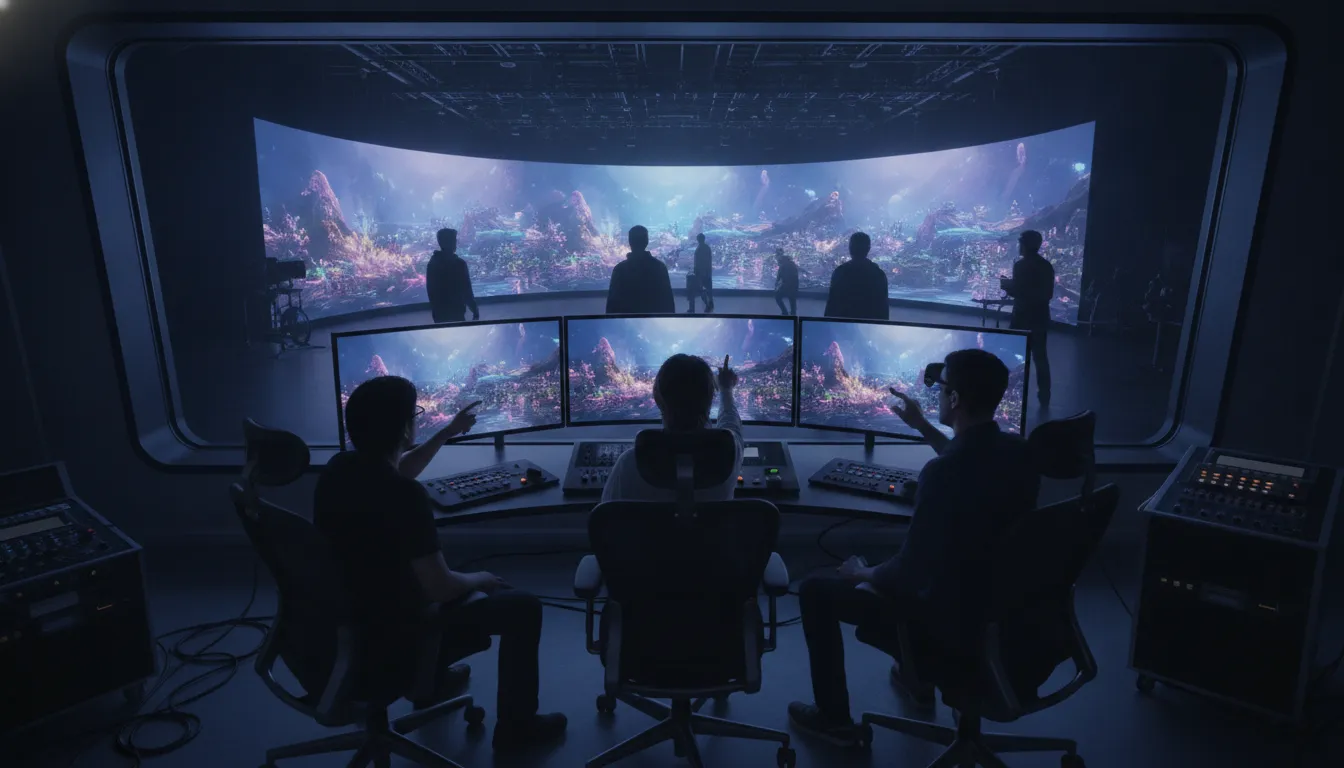
Using real-time rendering engines on set gives the director great creative control. This setup lets directors preview the final lighting, scene layout, and visual effects in real time. They can see these details right on the screen while the actors perform. Making these choices on set cuts the need for slow post-production changes later.
Planning this kind of virtual production workflow aligns the art team with the physical crew. Direct lighting control is another key benefit of real-time engines. Directors can change the time of day or shift the weather with a few clicks. The LED wall casts natural light directly onto the actors and set pieces.
This means the digital world and physical world blend together in a natural way. Creative teams can work together to adjust the look on the spot, which saves days of work in post-production. This active teamwork keeps the project on track. It allows the whole crew to work with high speed.
Stage verification and booking
Before booking a stage, you must verify that the crew and hardware are ready for your project. A non-verified stage can cause delays that break your budget and schedule. When you use a proven virtual production stage, you protect your budget. The technical crew can resolve problems quickly, and the hardware will stay in sync.
For example, Arctic7 partners with Narwhal Studios to offer a fully verified stage. This studio combines cinematic storytelling with technical skill. The team tests each asset and layout before the cameras start. This thorough planning ensures a smooth shoot day and high-quality final frames.
Working with a verified partner removes the guesswork from the filming process. You can trust that the cameras, tracking systems, and LED walls will work as one. This peace of mind allows you to focus on the story and the actors. It ensures you get the exact shots you planned.
| Stage readiness | Unprepared stage | Verified, prepared stage |
|---|---|---|
| Asset pipeline | Environments built late, tested on set | Assets optimized and rehearsed before arrival |
| Camera tracking | Risk of background lag mid-take | Linked and synced to the physical camera |
| Lighting | Manual matching, slow changes | Real-time, matched to the digital world |
| Creative control | Fix visual gaps in post-production | Preview final look on set and adjust live |
| Budget risk | Costly delays and reshoots | Predictable schedule, fewer surprises |
Talk to Arctic7 about planning your virtual production stage today
Frequently Asked Questions
What technology is required for a virtual production stage?
A virtual production stage needs a mix of hardware and software. According to NYU Tisch, this setup combines camera tracking systems with real-time engine integration. It also needs a large LED wall, LED ceiling panels, and specialized control rooms. These control rooms manage the data flow between the rendering engines and display hardware.
How does real-time engine rendering work on a virtual production stage?
Real-time engines show 3D digital worlds on the LED wall while filming. As the physical camera moves, tracking systems make sure the background shifts in perfect sync. This lets directors see the final lighting and composition directly on set. According to Lipscomb University, this process blends digital worlds with camera tracking to create a realistic scene.
What are the benefits of using a virtual production stage over green screen?
A virtual production stage lets film crews shoot in multiple virtual environments in a single day. This removes the need to travel to distant locations. According to Lipscomb University, the stage also provides a highly controlled, flexible studio environment. Directors can adjust lighting to match any time of day, and actors can see their actual surroundings instead of a green screen.
Why is an experienced Virtual Art Department important for virtual production?
The Virtual Art Department builds the digital assets and environments before any filming begins on set. According to NYU Tisch, successful virtual production needs a solid practice in both technology and creativity. An experienced team ensures the digital environments are fully optimized and ready. This preparation prevents costly technical delays and ensures a smooth shoot on the physical stage.
Build and Execute Your Virtual Production Stage With Arctic7
Building a virtual production stage is a significant investment in hardware, software, and specialized talent. Done well, it unlocks faster turnaround, richer storytelling, and a competitive edge for your entire production slate. Done without the right preparation, it risks costly delays that eat the very efficiency it promises.
Arctic7 was built to help IP holders and studios execute across the full entertainment ecosystem, and our virtual production capabilities are delivered through Narwhal Studios. We design, prepare, and run verified virtual production stages with an experienced Virtual Art Department that keeps your asset pipeline ready and your shoot-day workflow predictable.
Ready to scope, prepare, or book a virtual production stage for your next production? Talk to Arctic7's virtual production team about your goals, timeline, and the readiness your project needs.
New Immersive & XR Media Capabilities Added to Arctic7's Suite of Games, Film & TV and Digital Services

Arctic7 Shares Details of its Work on Skeleton Crew and Cinematics Partnership with Fateless

The Human Touch: Adding Personality to Project and Product Management
Whether it’s your team, your client, or your stakeholders, understanding the human dynamics is just as critical as hitting milestones.

McDonald's Case Study: Bridging Brand and Play | Arctic7
Bridging Brand and Play: An Interview with Lindsay Blenkhorn Daggitt