
Virtual Production Explained: Real-Time Film & Game Pipeline
Film and television production is moving from a sequence of handoffs toward a connected creative environment. Real-time engines, immersive stages, and camera-tracking systems let teams make more consequential decisions while a project is still taking shape, rather than discovering every limitation in post. The same shift is creating new opportunities for game studios and IP holders to share assets, preserve canon, and plan for interconnected entertainment ecosystems.
Explore Arctic7's virtual production and ICVFX services to see how a real-time pipeline can unify your next film, TV, and game production.
At its core, virtual production combines real-time graphics engines with immersive technologies to bring digital environments and production decisions closer together on set. The approach can improve collaboration and efficiency while enabling more ambitious visual work and new forms of remote co-creation, as documented in an academic review of the field: research on virtual production workflows.
Understanding the term requires separating the broad production philosophy from the specific tools behind it. The foundation is a coordinated relationship between real-time rendering, physical space, and the camera, which changes how creative and technical teams shape a scene.
What Is Virtual Production?
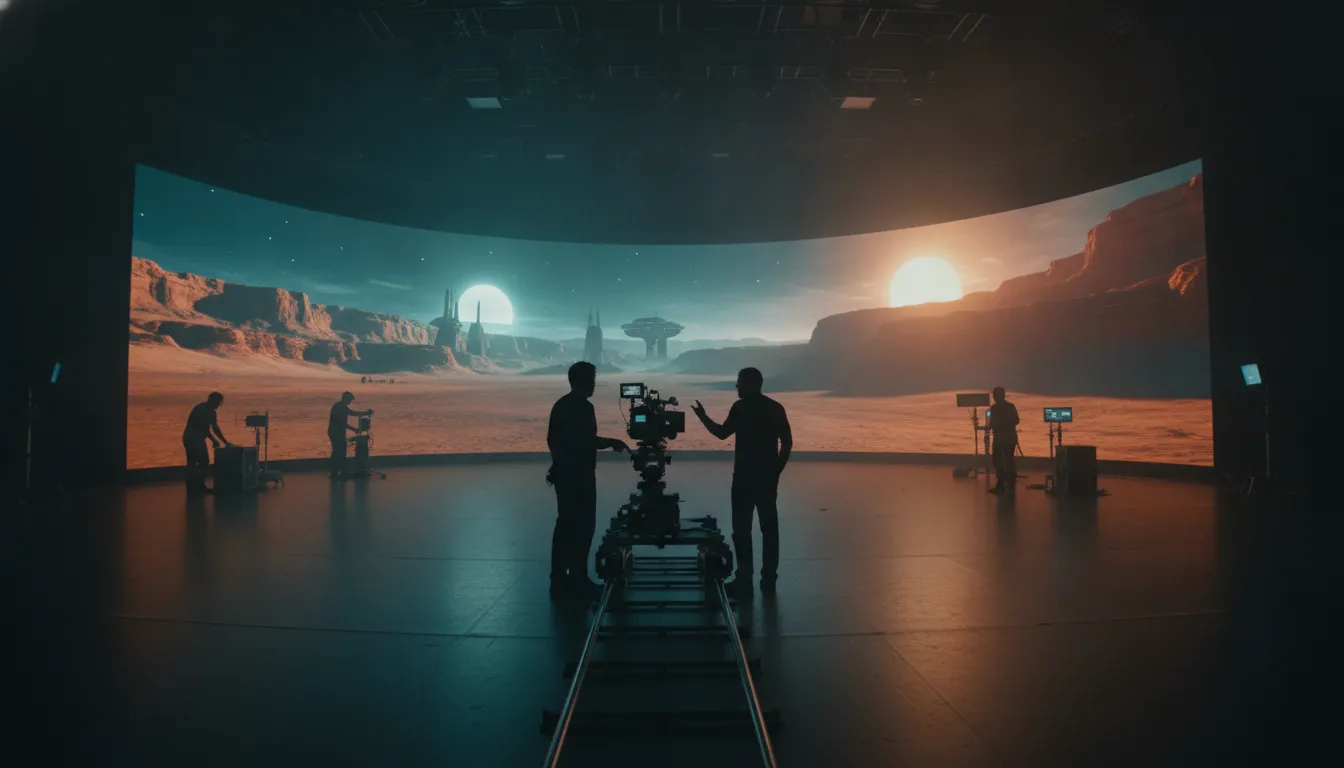
Virtual production is a filmmaking approach that brings real-time digital environments into the physical production space. It combines a real-time graphics engine, an LED volume, and camera tracking so digital scenery responds to the camera as the shot is composed. Rather than waiting for post-production to reveal the finished environment, the creative team can evaluate a near-final image while the scene is being filmed.
The most visible expression of this approach is In-Camera Visual Effects, or ICVFX. A real-time engine renders the background onto LED walls, while camera tracking aligns the perspective of that environment with the physical camera. The result is final-quality visual information captured in camera, including the interaction of light and color between the digital world and the performers. This does not eliminate every form of visual effects work, but it changes when and where important creative decisions are made. Unreal Engine describes ICVFX as the use of real-time engines to display backgrounds on LED walls for in-camera capture.
From broadcast graphics to cinematic worlds
The underlying idea is not entirely new. Broadcast teams have used real-time graphics for years, including live sports coverage and election programming. What has changed is the scale, fidelity, and creative ambition of the system. The same basic principle of synchronizing digital imagery with a live camera can now support expansive fictional worlds, complex lighting conditions, and performances designed for film and television. Research on these workflows also points to their potential to improve collaboration and enable new forms of remote co-creation across large productions.
Its development has been rapid. The history commonly traced through on-set virtual production begins with Clayton Jacobson's idea of improving green-screen work in 2003. A prototype LED stage followed in a shed in 2016, then the OverDrive demonstration in 2017. In 2018, cinematographer Greig Fraser used the technology while filming The Mandalorian. By October 2022, Epic Games estimated that roughly 300 virtual production stages existed, up from only three in 2019. These milestones show how quickly a specialized production experiment became part of the industry's strategic vocabulary. The documented timeline captures that progression.
For executives, the distinction matters because virtual production is more than a collection of screens and cameras. It is a shared creative environment where cinematography, art, technology, and performance can converge earlier. Teams make informed choices with the image in front of them, while IP holders gain a foundation for worlds that span film, television, games, and immersive media.
How a Real-Time Pipeline Unifies Film and Game Production
The boundary between film production and game development is becoming less useful as real-time technologies mature. The same digital environments, characters, lighting systems, and simulation tools can support a cinematic sequence, an episodic series, and an interactive experience. This is more than a technical convergence. It changes how an IP holder can plan creative assets, protect continuity, and extend a world across multiple forms of entertainment.
One Engine, Two Industries
Photorealistic gaming technologies are increasingly used for backgrounds and special effects in film and television, reflecting a broader shift toward gaming-inspired real-time pipelines. A central example is Unreal Engine, which now sits at the intersection of filmmaking and game development. Its real-time rendering environment gives filmmakers a way to evaluate composition, lighting, camera movement, and digital locations while creative decisions are still being made.
For game teams, the same engine supports interactive worlds that must respond to player choices and movement. For film and television teams, it can provide a live visual context for performers, cinematographers, and directors. The working methods are not identical, but the underlying production language is increasingly shared. A real-time scene can move from concept and previs into final-pixel imagery, then continue evolving for an interactive format.
That shared foundation also improves collaboration. Artists, designers, technical directors, and production leaders can review the same digital environment rather than translating intent between disconnected tools. Research identifies real-time workflows as a means of supporting creativity, collaboration, and decision-making in large-scale audiovisual projects. For a deeper look at the technology, see Unreal Engine for virtual production.
Asset Reuse Across Film and Games
The strategic advantage is not simply producing one scene faster. It is building assets with a longer useful life. A photorealistic environment created for a film can be adapted for a game, an immersive installation, or a future series. Characters, props, locations, and effects can become parts of a coherent asset library instead of being rebuilt from scratch for every platform.
Reuse still requires thoughtful adaptation. A cinematic asset may need new interaction logic, optimized geometry, different level-of-detail settings, or a revised lighting approach before it works in a game. Yet the underlying creative investment can carry forward. That creates a stronger basis for transmedia planning, because the visual identity and rules of an IP can remain consistent while the audience experience changes.
For IP holders, this is a direct route to greater value from world-building. The real-time pipeline connects production decisions to a broader ecosystem of stories and experiences, helping teams expand an IP across film, television, games, and immersive media. Arctic7 brings that cross-platform perspective to its services, combining strategic, creative, and technical capabilities around the needs of the world being built.
LED Volumes and In-Camera VFX, Explained
An LED volume is a large, often curved wall of high-resolution panels that displays a digital environment behind the performers. Instead of treating that environment as a placeholder for post-production, the production team can light the scene. Frame the shot, and capture the interaction between foreground and background on the stage. Real-time engines generate the environment, while camera-tracking data continuously aligns the perspective on the wall with the camera's position and lens. As the camera moves, the background shifts naturally with it, preserving the visual relationship that makes the setting read as a real place.
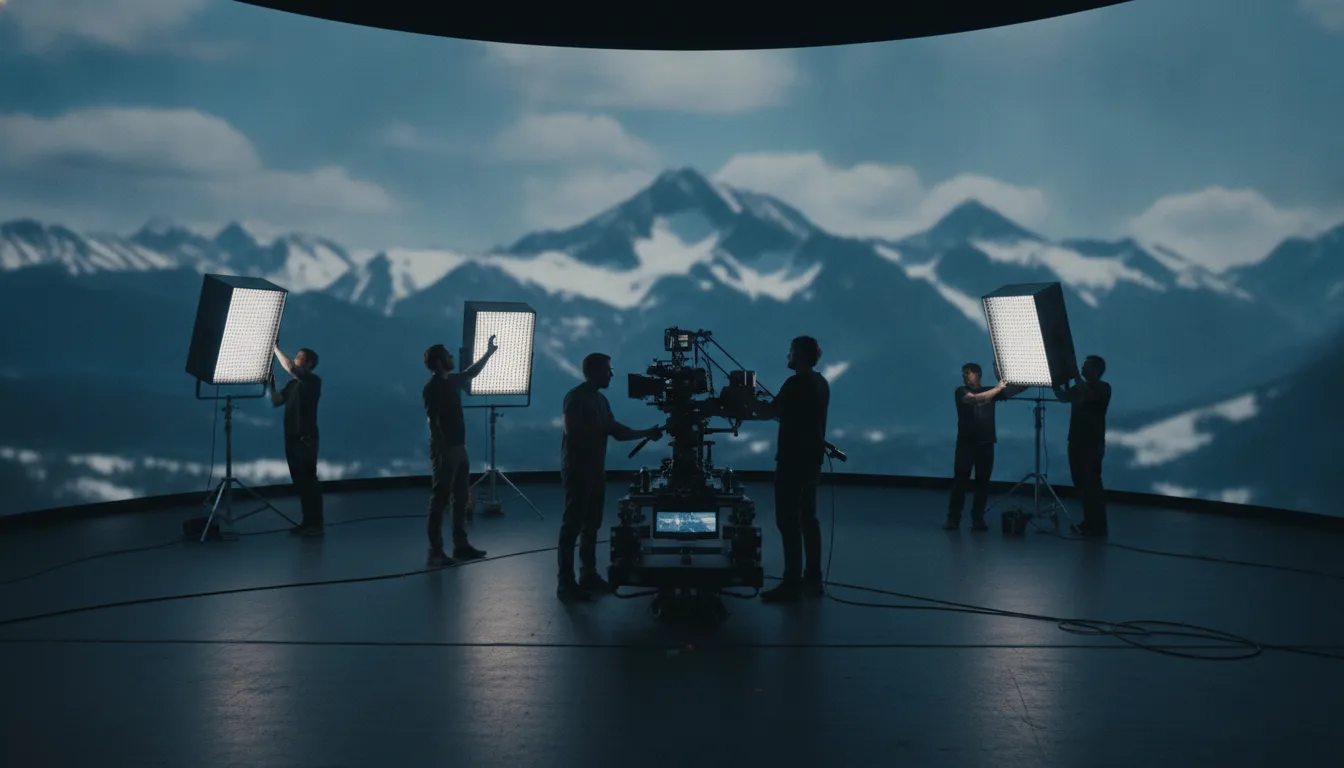
That alignment is central to in-camera visual effects, or ICVFX. The engine renders the background directly on the LED wall, allowing the camera to record final-quality visual information during the shoot. Reflections, color from the environment, and interactive light can be present in the image rather than recreated later through a separate compositing process. Unreal Engine describes ICVFX as a workflow in which real-time engines display backgrounds on LED walls for in-camera capture of final-quality visuals. The technology is part of a broader virtual production toolkit, not a replacement for every form of visual effects.
The creative benefit is immediate feedback. Directors, cinematographers, performers, and production designers can evaluate the shot in context instead of making decisions against a green screen and waiting for a later visual-effects pass. Real-time rendering lets filmmakers see high-quality results during production, supporting faster creative decisions and more useful collaboration on set. Academic research also identifies the approach's potential to transform large-scale workflows and enable new forms of remote co-creation. A guide to virtual production tools can help teams understand the systems that make this possible.
For producers, the operational advantage is a smaller post-production burden. A real-time pipeline does not eliminate post entirely, but it reduces the volume of shots that depend on extensive background replacement, cleanup, or late-stage fixes. That can make schedule and creative risk more visible earlier, when changes are still practical. The result is a more connected process: the physical stage, digital environment, camera, and creative decision-making work together rather than arriving in sequence. For productions built around ambitious worlds, that connection can protect the intended look while giving the team more control over how the world appears on screen.
Inside the Virtual Art Department Workflow
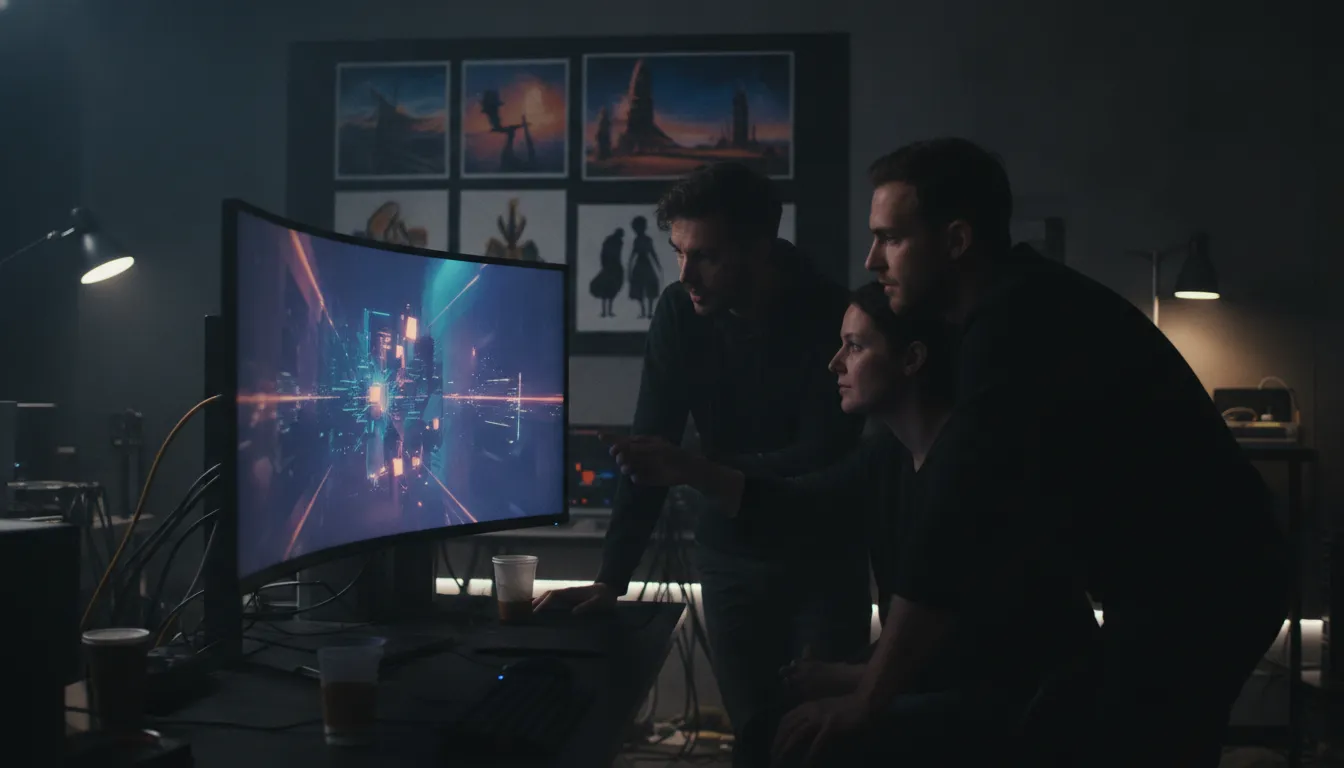
A Virtual Art Department (VAD) brings key creative and technical decisions forward, before principal photography begins. It connects the director, production designer, cinematographer, virtual production team, and real-time artists around a shared digital environment. The result is not simply a more detailed storyboard. It is a working visual foundation for the scenes, assets, and camera decisions that will shape the shoot.
What a Virtual Art Department Does
The VAD typically develops the digital environments and production assets needed to explore a sequence in context. That can include set extensions, props, characters, lighting studies, and other elements that will eventually appear on an LED volume or support final-pixel work. The team also creates previsualization and scene layouts, helping creative leaders test scale, composition, blocking, and camera language before the physical stage is occupied.
This early collaboration gives the production a clearer basis for decision-making. Instead of discovering late that a digital environment does not fit the intended performance, the team catches the issue while there is still time to revise it. Real-time pipelines support this iterative process and reduce late-stage rework. They also help distributed teams review the same environment and make informed choices together.
The VAD is therefore both a creative department and a coordination layer. It translates the director's intent into assets and layouts that can move between departments, while keeping the virtual world aligned with the story. For a broader view, see the benefits of a Virtual Art Department.
How Arctic7 Puts VAD to Work
Arctic7 pioneered Virtual Art Department workflows through Narwhal Studios, bringing VAD into a wider real-time production capability. The work sits alongside asset creation, Final Pixel, and In-Camera Visual Effects (ICVFX), allowing the digital environment to develop with the requirements of the eventual shoot in view.
That continuity matters for IP holders. A VAD workflow preserves creative intent as a world moves from concept into production, creating assets that support future film, TV, and game experiences. It also gives leadership a more concrete way to evaluate scope and risk before principal photography. Through its virtual production services, Arctic7 treats the department as part of an interconnected entertainment ecosystem, not an isolated preproduction step.
Why IP Holders and Studios Are Choosing Virtual Production
For IP holders and studio leaders, the case for adopting these methods is not limited to replacing a physical set or reducing a post-production burden. It is a way to connect creative ambition with a more adaptable production model. Real-time workflows can increase efficiency, visual scope, and flexibility, giving teams more room to make informed choices while the work is still taking shape.
A stronger business case for creative decisions
Traditional production often forces major creative decisions into separate phases. A concept is approved, a set is built, footage is captured, and the consequences of an earlier choice may not become visible until post. Directors, cinematographers, designers, and producers can assess the performance, camera, lighting, and environment in real time, refining the work before it becomes hard to reverse.
That visibility changes how studios manage risk. The research describes its potential to foster creativity, collaboration, and decision-making, while real-time pipelines reduce the burden of "fix it in post" (academic research on the approach). The value is not automatic cost reduction. It is a better allocation of time, resources, and creative attention across the life of a project.
From a single production to an expandable world
The strategic advantage becomes more significant when the project is part of a larger franchise. A carefully developed environment, character system, or visual rule set can support more than one screen experience. Photorealistic real-time environments created for film can also inform interactive experiences, helping IP holders extend a world into games, TV, and film, without isolating each platform.
This is where transmedia readiness and canon integrity matter. Expansion should not flatten an IP into a collection of disconnected executions. It should preserve the qualities that make the world recognizable while allowing each medium to use its own strengths. A shared real-time foundation can make that conversation more practical, because creative and technical teams are working from a more consistent understanding of the world.
Arctic7 approaches this challenge as a transmedia partner rather than a standalone production vendor. Its Arctic7 Method, organized around Ready, Define, and Activate, helps IP holders build interconnected entertainment ecosystems across games, film, and television. The goal is to prepare the IP for expansion, define the opportunity and its governing principles, then activate the right creative and technical capabilities for each platform. Studios evaluating that broader model can explore Arctic7 services as part of the discussion.
As entertainment increasingly relies on photorealistic gaming technologies for backgrounds and effects, real-time production is also becoming a competitiveness issue. The studios best positioned to benefit will not be those that adopt the technology for its own sake. They will be the ones that connect real-time capability to stronger decisions, coherent worlds, and a clear strategy for growing the value of their IP.
Virtual Production vs. Traditional VFX: Key Differences
The distinction is not simply a choice between newer and older technology. Traditional visual effects generally capture actors and environments first, then build, composite, and refine digital elements after the shoot. Real-time production shifts more of that decision-making into the stage, where an engine and tracked camera display backgrounds on LED walls for in-camera capture. This approach can reduce the burden of "fix it in post," although it does not eliminate post-production or make every scene a candidate for an LED volume.
The practical advantage is earlier visibility. Directors, cinematographers, and production designers can assess composition, lighting, and performance against the digital environment while the scene is being made. Research also identifies immersive technologies as useful for scouting and pre-production decisions, allowing teams to visualize scenes before committing to physical sets. Academic research on virtual production workflows describes this as a shift toward more collaborative and iterative creative processes.
That shift changes the cost profile rather than guaranteeing lower costs. Building or hiring a stage, preparing tracked environments, and developing the required technical expertise can demand significant upfront investment. The return is strongest when a production benefits from rapid creative iteration, controlled environments, repeatable locations, or assets that may support a broader entertainment ecosystem. Smaller independent productions may still face adoption barriers, particularly around access to equipment, talent, and infrastructure. The same research cautions that democratization depends on overcoming these barriers.
| Dimension | Virtual production | Traditional VFX |
|---|---|---|
| Capture approach | Real-time environments can appear on an LED wall, with camera tracking supporting in-camera capture of final-quality visuals. Unreal Engine explains ICVFX. | Actors and physical elements are captured first, while digital environments and effects are primarily composited and refined after the shoot. |
| Creative feedback | Immediate real-time feedback lets the team evaluate framing, lighting, scale, and interaction during production, supporting faster creative loops. | Teams often wait for post-production renders or composites before seeing the combined result, which can delay decisions and revisions. |
| Iteration cost | Changes can be efficient once the digital environment is prepared, but stage access, asset development, tracking, and specialist crew create meaningful upfront costs. | It can defer technical spending until post, yet late changes may require additional compositing, rendering, and review cycles. Neither model is automatically cheaper. |
| Typical use cases | Controlled environments, complex or distant locations, scenes requiring interactive lighting, and projects that benefit from previz, scouting, and rapid on-set decisions. | Large-scale simulations, digital environments that are difficult to display on stage, creature work, invisible effects, and shots where post-production offers greater control. |
Talk to Arctic7 about your virtual production pipeline and see how VAD, ICVFX, and real-time asset reuse can support your world-building strategy.
Frequently Asked Questions
What does virtual production mean in practice?
Virtual production is a filmmaking approach that combines real-time graphics engines, immersive technologies, and conventional production methods. Teams can visualize environments, test creative decisions, and collaborate before or during a shoot, rather than waiting for every result to be resolved in post-production. Research in audiovisual production describes the approach as a way to improve creativity, collaboration, decision-making, and efficiency. Academic research on virtual production workflows supports that broader definition.
Is virtual production the same as CGI?
No. CGI is computer-generated imagery, while virtual production is a broader production process that may use CGI, real-time rendering, camera tracking, LED volumes, previsualization, and live collaboration. In an ICVFX setup, a real-time engine renders the environment on an LED wall so the camera captures the background in-camera, producing final-quality visuals during the shoot. Unreal Engine's overview of ICVFX explains this distinction.
What does a virtual producer do?
A virtual producer coordinates the creative, technical, and operational decisions that connect the physical shoot with the real-time pipeline. That can include aligning directors, cinematographers, art departments, VFX teams, engine artists, and stage technicians around the same approved scene. The role is less about operating one tool and more about making sure the technology serves the story, schedule, and intended audience experience.
When should a studio consider using virtual production?
Consider it when a project needs complex environments, repeatable worldbuilding, early creative certainty, or a consistent visual language across film, television, games, and immersive experiences. It can also help teams scout and visualize scenes before building physical sets. The strongest business case usually comes when the real-time assets outlive one production, supporting a wider ecosystem instead of a one-off visual effect.
Ready to Discuss Your Virtual Production Strategy?
A clear real-time approach can help align creative ambition, production planning, and the long-term potential of your IP across entertainment formats. To discuss a virtual production strategy tailored to your goals, contact Arctic7. Our team can help you assess where a connected pipeline may strengthen your next project and support a broader transmedia ecosystem.
New Immersive & XR Media Capabilities Added to Arctic7's Suite of Games, Film & TV and Digital Services

Arctic7 Shares Details of its Work on Skeleton Crew and Cinematics Partnership with Fateless

The Human Touch: Adding Personality to Project and Product Management
Whether it’s your team, your client, or your stakeholders, understanding the human dynamics is just as critical as hitting milestones.

McDonald's Case Study: Bridging Brand and Play | Arctic7
Bridging Brand and Play: An Interview with Lindsay Blenkhorn Daggitt