
What Is Virtual Production? Complete Guide for IP Holders
For an IP holder, the production method can shape more than a single scene. It can influence how quickly a creative team tests ideas, how confidently directors make decisions, and how easily one world extends across screen and interactive formats.
What is virtual production? It is a filmmaking approach that combines traditional production with real-time graphics, virtual environments, and technologies such as LED stages, augmented reality, and virtual reality. By bringing more of the final visual experience into the shoot, it supports faster collaboration and more informed creative decisions. Research on virtual production describes its potential to improve efficiency while expanding creative collaboration.
Book a consultation to explore virtual production for your IP and see how LED volumes, real-time engines, and ICVFX fit your next project.
The important distinction is not simply whether a production uses digital effects. It is where and when those effects enter the creative process, and how the workflow connects the people, tools, and environments responsible for the finished world. That foundation makes the core technologies easier to understand.
What Is Virtual Production? A Definition for IP Holders and Studios
Virtual production is an umbrella term for filmmaking workflows that combine traditional production methods with real-time graphics engines, virtual reality, and augmented reality. Rather than keeping creative development, filming, and visual effects strictly separate, it connects them through shared digital environments and real-time collaboration. An academic review of virtual production describes this combination as a process that can support creativity, collaboration, decision-making, and efficiency across audiovisual work.
For an IP holder or studio, the practical definition is straightforward. Virtual production brings more of the final visual experience into the production environment before the project is complete. A director, cinematographer, actor, or creative executive can make decisions while the scene is being developed. They no longer wait until post-production to understand how the finished sequence will look.
What makes virtual production different?
Real-time engines are central to the process. They generate and update digital environments as production happens, enabling instantaneous visual feedback and in-camera effects. The result may include a fully digital setting, an extension of a physical set, or a blended environment. In that blended world, live-action performances and computer-generated elements respond to one another. These effects are not merely added after filming. They can be visible through the camera during the shoot, giving the team a more immediate view of the intended image.
This does not mean virtual production replaces every conventional filmmaking technique. Physical sets, practical lighting, lenses, costumes, live performances, and traditional editorial remain important. The difference is that digital tools are integrated into the creative process early enough to influence decisions on set and throughout development.
Why it matters for modern entertainment IP
Virtual production also bridges two creative disciplines that are increasingly connected: film-style cinematic quality and game-engine interactivity. That bridge matters when an entertainment property must extend across film, television, games, and other platforms. The same digital thinking can support a richer world, more flexible iteration, and stronger alignment between teams working across formats.
For studios evaluating the approach, virtual production services should therefore be assessed as part of a broader content and IP strategy, not as a single visual-effects technique. Its value comes from bringing story, technology, performance, and production decisions into a more connected ecosystem.
The Core Technologies That Power Virtual Production
Virtual production brings several technologies into one connected production environment. Each solves a different creative or operational problem, but their value increases when they work together. LED volumes provide the visible world, and real-time engines generate and update that world. Production teams also use virtual cameras, motion capture, and immersive tools to make decisions before and during the shoot.
ICVFX in practice
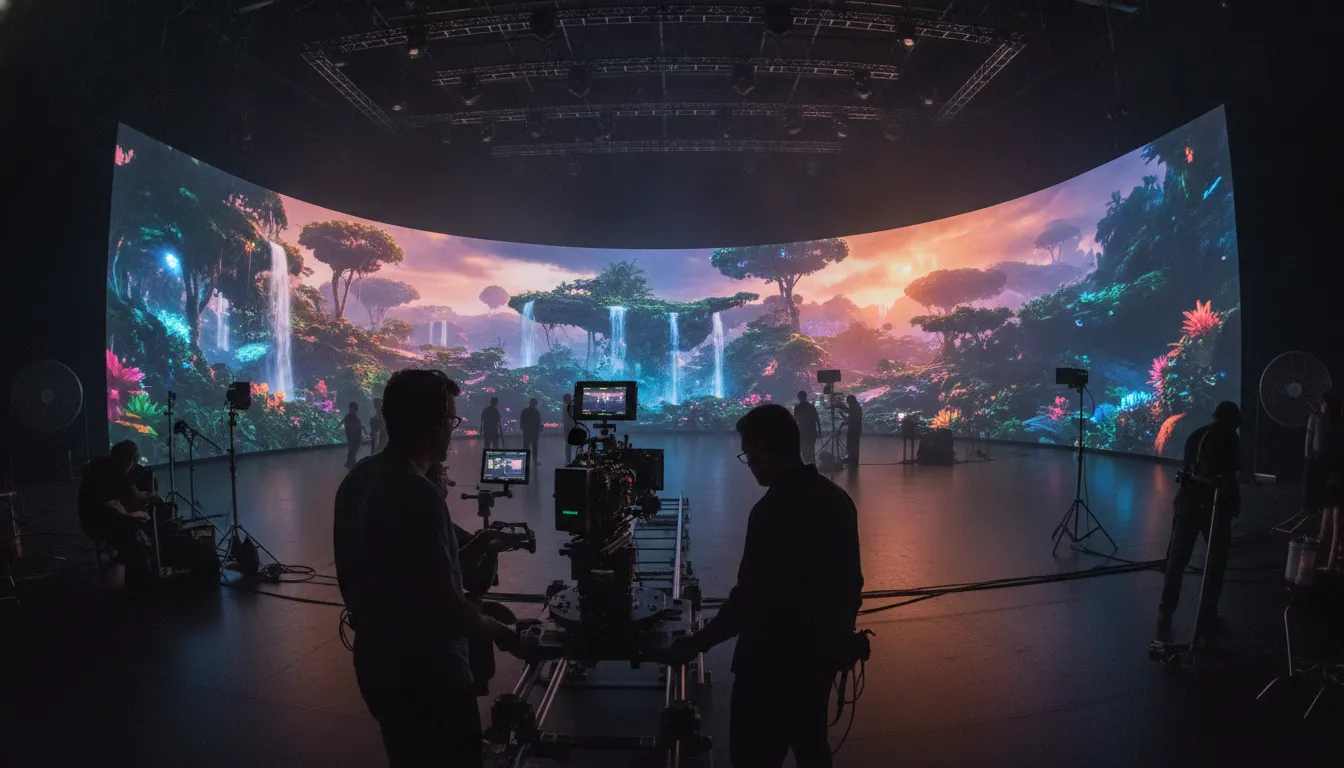
In-camera visual effects, or ICVFX, place digitally created environments on large LED screens surrounding the physical set. The team captures that environment as part of the shot instead of filming against a green screen and compositing the background later. Real-time assets are rendered on the LED volume behind the performers and physical set pieces, creating a more immediate view of the intended image.
This approach can also provide interactive light from the digital environment, helping the physical scene feel visually connected to its surroundings. The virtual production pipeline depends on careful coordination between these digital assets, the screens, the camera, and the crew.
Real-time engines and dynamic LED backgrounds
A real-time game engine, especially Unreal Engine, acts as the engine room of the workflow. It renders high-fidelity virtual sets quickly enough for filmmakers to see changes as they happen. When the camera moves, the system adjusts the perspective of the digital background so the environment responds naturally to the shot.
Dynamic LED backgrounds can also react to camera movement and actor interaction, preserving the spatial relationship between the performers, the lens, and the virtual world. This is one reason game-engine expertise is increasingly relevant to cinematic production. The same technical foundation can support visual storytelling across film, television, and interactive experiences. For a closer look at the software and hardware involved, see the virtual production tools guide.
Motion capture and virtual scouting
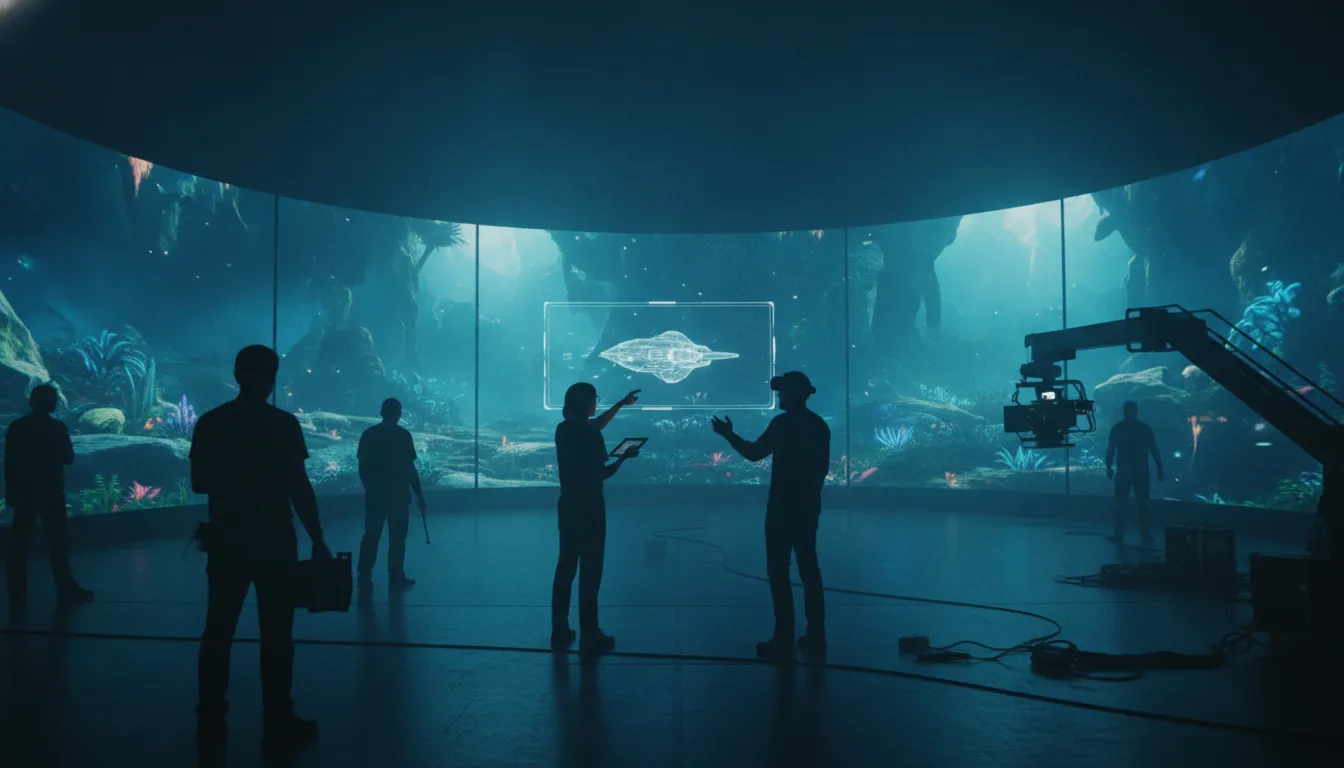
Motion capture extends the workflow beyond the physical volume. It can translate an actor's movement or performance into a digital environment, helping teams develop realistic characters, creatures, and scenes before final assets are locked. Virtual scouting works in the opposite direction: directors and cinematographers can use VR headsets to explore digital locations. Test viewpoints, and plan shots before constructing physical sets or committing to a location. These tools shift important creative decisions earlier in the process, when camera position, lighting, composition, and environment design can still be refined efficiently.
Together, these technologies turn virtual production into more than a display system. They create a shared visual environment where creative, technical, and production teams can evaluate the same scene and make informed decisions in real time.
Virtual Production vs Traditional Production: What Changes on Set
The most important difference is not simply the presence of an LED wall. Virtual production changes when and where creative decisions happen. Traditional filmmaking often moves through sequential departments and stages: design, photography, visual effects, and post-production. Virtual production brings more of those disciplines into an integrated workflow, allowing teams to test and refine choices while the project is still being captured. A step-by-step virtual production workflow for filmmaking shows how those disciplines connect in practice.
That shift requires stronger preparation, but it can also give directors, cinematographers, performers, and producers a shared view of the work earlier. The practical differences become clearer when the two approaches are compared directly.
| Dimension | Virtual production | Traditional production |
|---|---|---|
| Workflow | Uses a more integrated, non-linear process. Artists, directors, and technical teams can collaborate across production stages instead of waiting for one department to finish before another begins. | Typically follows a more linear sequence, with production and post-production separated into distinct phases. |
| Set building | Digital environments can be prepared in advance and displayed through real-time systems, while physical sets are built where they provide practical value. | More of the setting must be built physically, found through location work, or constructed digitally after filming. |
| Visual feedback | Directors can refine camera angles, lighting, and composition inside the virtual environment before filming, then review the intended look on set. | Many visual decisions remain provisional until footage is processed, composited, or reviewed in post-production. |
| Actors' experience | Performers can respond to a visible, spatially relevant environment rather than imagining every background element. This can support more grounded interactions and performances. | Green-screen work often asks actors to perform against a neutral surface while relying on direction, eyelines, and imagination for the unseen environment. |
| Post-production | More visual problem-solving happens before or during the shoot, reducing pressure on later compositing and effects work when the assets and planning are ready. | Post-production carries more responsibility for creating environments, integrating effects, and correcting decisions deferred during filming. |
| Location travel | Digital locations can reduce the need to travel to distant physical sites, while still giving the production control over the environment and its continuity. | Remote or changing locations may require larger travel, transport, accommodation, and logistical commitments. |
What this means for production planning
Virtual production does not eliminate pre-production. It makes pre-production more consequential. Digital environments, camera plans, lighting decisions, and technical tests need to be developed before the cameras roll. That front-loaded effort can reduce downstream pressure, but only when the creative and technical teams share a clear plan.
For a practical look at the stages, roles, and handoffs involved, explore how a virtual production pipeline works. The right choice depends on the project, its creative language, and the level of control required, not on treating one method as universally superior.
Why IP Holders and Studios Are Adopting Virtual Production
For studios and IP owners, virtual production is becoming a practical operating model rather than a visual-effects novelty. The attraction is not simply that digital environments look convincing. It is that creative, production, and technical decisions can happen closer together, when changes are still manageable and the full team can evaluate their impact.
More control before the most expensive decisions
Real-time workflows give directors, cinematographers, and other stakeholders immediate visual feedback. Teams no longer wait until post-production to discover that a composition, lighting choice, or background fails the story. They can review final-look shots during production and adjust them while the cast and crew are still on set. This supports faster creative decision-making and reduces the risk of expensive rework. The research literature identifies improved efficiency, collaboration, and decision-making as central benefits of the virtual production process (academic research on virtual production).
The same principle can lower post-production pressure. When real-time engines and in-camera visual effects establish more of the image during the shoot, productions have less dependence on extensive, costly compositing afterward. That does not eliminate post-production, but it can move important decisions earlier, when they are easier to test and revise. In practice, teams invest more deliberately in pre-production assets and planning, then gain a clearer view of the result on set (pipeline guide).
A production model built for distributed collaboration
Virtual production also addresses the geographic and environmental constraints of conventional location work. Digital environments can reduce the need to move large crews, equipment, and talent to distant locations, supporting a more sustainable production footprint while preserving creative ambition. A studio can build a controlled physical setup and use virtual environments to represent places that would otherwise require repeated travel or extensive construction.
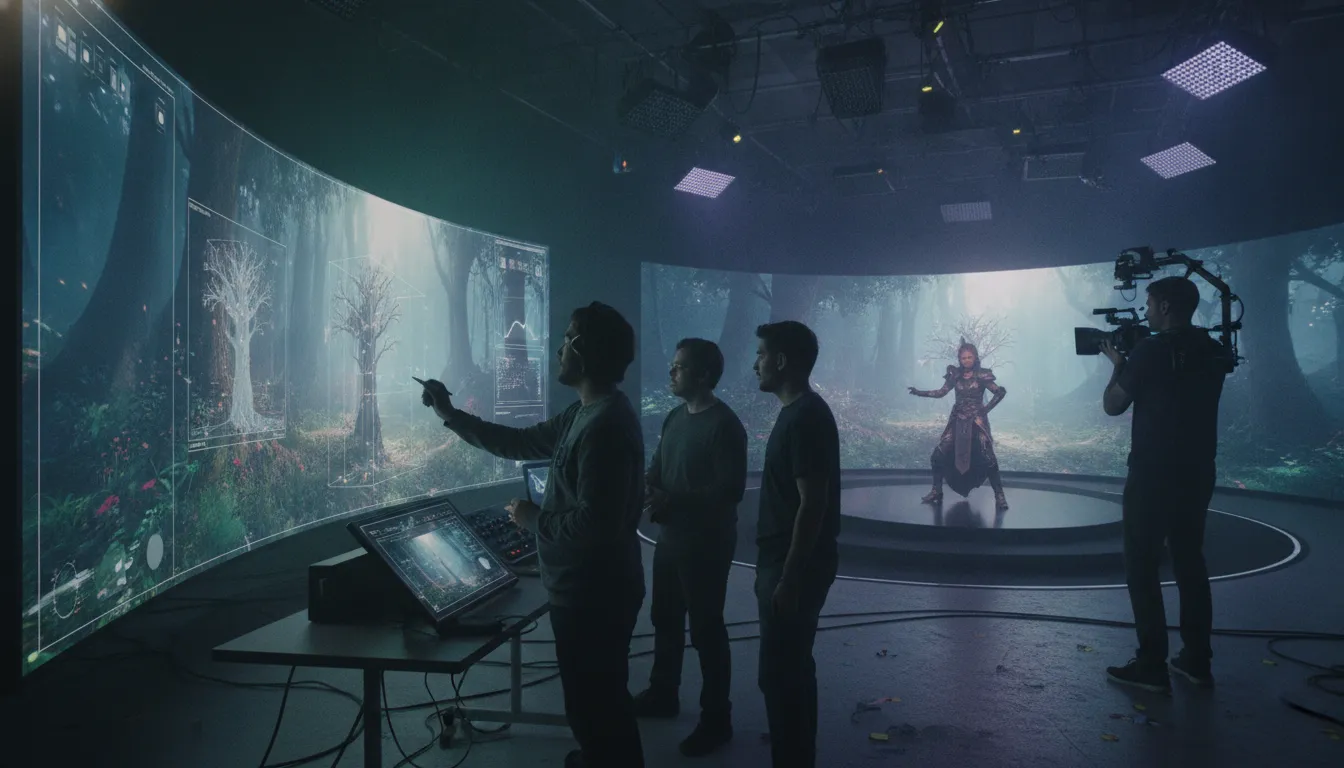
Remote co-creation is another strategic advantage for globally distributed IP teams. Creative leaders, technical artists, game developers, and other partners can contribute to content development without needing to be physically present for every decision. That flexibility matters as franchises expand across film, television, games, and other formats.
It also helps explain the sector's momentum. Polaris Market Research valued the global virtual production market at $1.62 billion in 2021, projecting a 17.9% CAGR through 2030 to roughly $6.65 billion. Adoption still requires a specialized team that understands both production and real-time technology, but for ambitious IP, that expertise can turn complexity into a repeatable advantage.
How Virtual Production Expands Transmedia and IP Reach
For an IP holder, virtual production is more than a way to capture polished scenes. It can become connective infrastructure for building a world that works across film, television, games, and other interactive formats. When creative teams plan environments, characters, and visual language with real-time tools, the same underlying assets can serve multiple expressions of the property. Teams avoid rebuilding everything from scratch for each medium.
One asset pipeline, multiple expressions of the world
Virtual production bridges the gap between cinematic quality and game-engine interactivity, making an IP more adaptable for both games and film. Arctic7's virtual production services can help teams think about that adaptability early, while the world is still being designed. A digital environment created for an on-camera sequence may also inform a playable location, a cinematic trailer, or a television extension.
The value is not simply reusing files. It is preserving continuity in the rules, atmosphere, and visual identity that make a fictional world recognizable. For IP owners planning that kind of expansion, a transmedia universe strategy can help connect the dots across formats.
That approach gives IP owners a stronger foundation for expansion. A studio can develop a setting for a film while considering how its geography, characters, and story systems might translate into an interactive experience. Game teams, in turn, can work from a more deliberate cinematic language rather than treating the game and screen adaptations as disconnected projects. The result is a world that feels related across touchpoints while still allowing each medium to do what it does best.
Virtual production as a strategic transmedia enabler
Arctic7 positions virtual production as an enabler for broader transmedia strategy, not as an isolated production service. Its integrated approach allows seamless transitions between game development and virtual production stages. That matters when an IP roadmap includes several formats and the handoffs between creative, technical, and production teams can determine whether the ecosystem feels coherent.
For decision makers, the practical question is how early to establish that shared foundation. Bringing game development and virtual production expertise into the same conversation can reveal opportunities to build once, refine collaboratively, and extend deliberately. It also helps protect the qualities that audiences value most, including cinematic immersion, interactive depth, and a consistent sense of place. With the right partner and pipeline, each new story can deepen the larger ecosystem rather than simply repeat an existing asset in a different channel.
Talk to our team about your virtual production roadmap and find out where real-time workflows can deliver the most value for your IP.
Frequently Asked Questions
How does virtual production work?
A real-time engine renders a digital environment while cameras capture actors and physical set elements. That environment can appear on an LED wall during filming, so the crew sees and photographs the setting with correct lighting and perspective on set. Motion capture and virtual scouting can also support planning and performance.
Is virtual production the end of the green screen?
No. LED volumes and green screens serve different creative and production needs, and a project may use both. An LED environment is useful when actors need to respond to a visible setting. It also helps when the camera, lighting, and reflections must react to the digital world in real time. Green screen remains practical for shots that require extensive compositing or environments that are not prepared for an LED stage.
What are the main benefits for a studio?
Virtual production gives directors and cinematographers earlier visibility into the final look, including camera angles, lighting, composition, and in-camera effects. It can reduce some post-production pressure, support remote collaboration, and limit travel to distant locations. These benefits are strongest when digital assets and creative decisions are planned before the shoot.
What technology is used in virtual production?
The core toolkit typically includes a real-time engine such as Unreal Engine, LED volume technology, camera tracking, digital environments, and in-camera visual effects. Depending on the project, teams may also use motion capture, virtual reality headsets for scouting, and systems that synchronize the virtual environment with the physical camera and stage.
Does virtual production suit smaller productions?
It can, but the approach must match the project's scale and resources. A virtual production workflow requires people who understand both film production and real-time technical systems. Smaller teams may benefit from the creative control and reusable digital assets. They must scope the stage, technology, and pre-production plan carefully. Virtual production is not an automatic shortcut.
Ready to Explore Virtual Production for Your IP?
A focused conversation can help you assess how virtual production fits your creative goals, production model, and wider IP plans. To schedule a consultation, explore Arctic7's virtual production services and take the next step with a partner built for interconnected entertainment ecosystems.
New Immersive & XR Media Capabilities Added to Arctic7's Suite of Games, Film & TV and Digital Services

Arctic7 Shares Details of its Work on Skeleton Crew and Cinematics Partnership with Fateless

The Human Touch: Adding Personality to Project and Product Management
Whether it’s your team, your client, or your stakeholders, understanding the human dynamics is just as critical as hitting milestones.

McDonald's Case Study: Bridging Brand and Play | Arctic7
Bridging Brand and Play: An Interview with Lindsay Blenkhorn Daggitt