
Unreal Engine VAD: A Guide for Film & TV Studios
You’ve seen the incredible results of virtual production on LED stages, but how do those stunning digital worlds get there? It all starts long before the cameras roll, with a process that is becoming the new foundation of modern filmmaking: the Virtual Art Department. This is where your story’s world is first born, not as a 2D drawing, but as a fully realized, interactive 3D environment. A well-structured Unreal Engine VAD serves as the digital blueprint for your entire project, creating the assets and scenes that will be used from pre-visualization all the way to final-pixel shooting. In this article, we’ll break down exactly what a VAD is, the tools it uses, and how you can build this crucial foundation for your next production.
Key Takeaways
- Front-load creative decisions to save time and money: A Virtual Art Department lets you build, test, and finalize your world digitally during pre-production, which helps you avoid expensive on-set changes and keeps your project on budget.
- Unify your team's vision in real-time: VAD creates a shared, interactive space for all departments to collaborate, ensuring everyone from the director to the VFX supervisor is aligned on the final look before filming even begins.
- Build a structured pipeline for creative freedom: Establishing clear standards for asset creation, version control, and optimization is essential; this technical discipline creates a stable foundation, giving your team the freedom to innovate without technical roadblocks.
What Is a Virtual Art Department (VAD)?
Think of a Virtual Art Department, or VAD, as the digital evolution of a traditional film art department. It’s a process that uses real-time 3D tools, like Unreal Engine, to design, build, and visualize your world before you ever step onto a physical set. Instead of relying solely on 2D concept art and physical models, a VAD creates interactive, three-dimensional environments that your entire team can explore and refine from the earliest stages of pre-production. This approach helps bridge the gap between initial ideas and the final shot, creating a clear, unified vision for everyone involved.
By building your world virtually first, you can test creative choices, identify potential issues, and ensure every department is aligned long before the cameras start rolling. It’s about making smarter, more informed decisions upfront to create a smoother production process and a more compelling final product. This digital-first mindset allows for a level of creative freedom and collaboration that was previously impossible. Directors can block scenes, cinematographers can plan shots, and production designers can experiment with textures and lighting, all within a shared, dynamic space. It transforms pre-production from a series of static steps into a fluid, iterative conversation.
How VAD Compares to Traditional Art Departments
A traditional art department builds the world with sketches, mood boards, and eventually, physical sets. While effective, this process can be slow and expensive when changes are needed. A VAD, on the other hand, brings that entire process into a real-time digital environment. By leveraging these technologies, your creative teams can visualize and iterate on scenes live, making the process incredibly flexible. Imagine walking through a digital version of your set with the director and cinematographer, moving walls, changing the lighting, and testing camera angles instantly. This allows you to make crucial creative decisions and solve problems before a single piece of the physical set is built, saving significant time and budget down the line.
Where VAD Fits Into Your Production Pipeline
A VAD is most powerful when integrated early, during pre-production and visualization. It’s the foundational step for any virtual production workflow, creating the digital assets and environments that will be used later on. For projects with a fixed story, like a film or a TV series, the VAD ensures every visual element aligns perfectly before shooting begins. It serves as a central hub where the director, production designer, and VFX supervisor can collaborate. The digital sets and assets created by the VAD don’t just stay in pre-production; they become the interactive backdrops for actors on LED stages or the final pixels in a fully animated scene, ensuring a seamless transition from concept to final frame.
Unreal Engine Tools That Power Your VAD
Unreal Engine is packed with features that are practically tailor-made for a Virtual Art Department. These tools give your creative teams the power to build, light, and film within a digital space, making the entire production process more flexible and collaborative. Let's look at a few of the most impactful tools your VAD will use to bring your project to life.
Render in Real-Time with Lumen
Lighting can make or break a scene, and this is where Lumen shines. It’s a dynamic global illumination and reflections system that gives you incredibly realistic lighting that reacts instantly to changes. Imagine adjusting a light source and seeing the beautiful, accurate bounce lighting and reflections update in real time. For film and TV studios, this means you can create visually stunning, immersive environments without the painfully long rendering times you might be used to. Lumen allows your team to experiment with lighting and mood on the fly, ensuring the final look perfectly matches your creative vision.
Scout Virtually with Sequencer and Camera Tools
Think of Sequencer as your virtual film set. It’s Unreal Engine’s multi-track editor for creating cinematic sequences, letting you block out scenes, test camera angles, and edit shots together before you ever build a physical set. This tool is a game-changer for pre-visualization, allowing directors and cinematographers to scout locations and plan shots virtually. With Sequencer, your teams can collaborate in real time, making adjustments and iterating on creative ideas instantly. It’s an invaluable way to streamline your workflow and ensure everyone is aligned on the visual language of the project from the very beginning.
Manage High-Fidelity Assets with Nanite
Every VAD deals with a massive number of digital assets, from tiny props to detailed character models. Nanite is Unreal Engine’s virtualized geometry system that lets you work with an incredible amount of detail without slowing your system to a crawl. Artists can import film-quality source assets with millions of polygons and see them render perfectly, maintaining high performance. For studios, Nanite makes it possible to manage high-fidelity assets and push the boundaries of visual quality. You no longer have to compromise on detail, allowing you to create truly breathtaking and believable worlds for your audience.
Design Worlds with Environment Tools
The world your story takes place in is just as important as the characters themselves. Unreal Engine offers a powerful suite of tools for designing these worlds, from sculpting vast landscapes to painting in lush foliage. These features empower your VAD to build rich, expansive environments that feel alive and completely immersive. By creating environments in Unreal Engine, your team can craft everything from sprawling alien planets to historically accurate cityscapes. This not only enhances the storytelling but also gives your audience a deeper connection to the world you’ve built, making the entire experience more engaging and memorable.
How VAD Is Changing Film and TV Production
The Virtual Art Department (VAD) is more than just a new piece of technology; it’s a fundamental change in how films and television shows are made. Traditionally, production follows a rigid, step-by-step process where creative decisions are locked in early and become expensive to change later. VAD flips this model on its head. By using real-time game engines, it creates a fluid, collaborative space where creative and technical teams can work together from the earliest stages of pre-production.
This approach brings the post-production process into pre-production, allowing you to solve problems and refine your vision before a single frame is shot. Instead of waiting for concept art or building physical models, your team can walk through a virtual set, experiment with lighting, and block out scenes in a fully realized 3D environment. This shift not only saves a significant amount of time and money but also opens up new creative possibilities. It’s a smarter, more flexible way to bring your world to life, ensuring the final product is exactly what you envisioned. Arctic7's transmedia services are built around this modern, integrated approach to production.
Plan and Visualize Scenes in Pre-Production
One of the biggest advantages of a VAD is the ability to see your project with incredible clarity long before you start filming. A Virtual Art Department uses 3D software like Unreal Engine to plan and visualize scenes, creating detailed digital environments that everyone on the team can explore. This means the director, cinematographer, and production designer can all walk through a virtual set together, making sure every doorway, light source, and piece of furniture aligns with the creative vision. This shared understanding eliminates guesswork and ensures the entire crew is working toward the same goal from day one.
Collaborate in Real-Time Across Departments
VAD breaks down the walls that traditionally separate production departments. By using real-time technology, teams can collaborate in a shared virtual space, making creative decisions together. Imagine your cinematographer suggesting a new camera angle, and your lighting director instantly adjusting the virtual sun to show how shadows will fall. This live, interactive process makes creative development more dynamic and inclusive. As seen in major productions like the Fallout TV show, this real-time collaboration allows different departments to work together seamlessly, ensuring all creative inputs are considered and integrated on the spot, not weeks later.
Iterate Creatively on the Fly
In a traditional pipeline, creative changes are slow and costly. With a VAD, iteration is practically effortless. The VAD creates an environment where your team can visualize ideas clearly and make changes easily before committing to physical sets or final animation. Want to see how a room looks with different wallpaper? Test ten options in a minute. Curious if a scene works better at dawn than at dusk? Change the time of day with a single click. This freedom to experiment without consequence allows for more thoughtful and informed decision-making, ultimately leading to a stronger final product, much like the stunning visuals seen in films like Ant-Man and the Wasp: Quantumania.
Why Use VAD for Pre-Visualization?
Adopting a Virtual Art Department for pre-visualization is more than a technical upgrade; it’s a strategic shift that brings clarity and efficiency to your pre-production phase. By building and exploring your world digitally before you commit to physical sets or locations, you can make smarter, more informed decisions from day one. This proactive approach allows your team to solve creative problems, test ambitious ideas, and align on a unified vision, all while saving significant time and resources. It’s about front-loading the creative work so that when the cameras roll, everyone is confident and ready to execute.
Save Costs Before You Start Filming
One of the most compelling reasons to use a VAD is the potential for major cost savings. Traditionally, making changes during pre-production or, even worse, during principal photography can be incredibly expensive. Building, painting, and then altering a physical set costs both time and money. A VAD helps you sidestep these expenses by creating a digital twin of your set first. Your team can visualize ideas clearly and make changes easily before spending a lot of money on physical construction or final animation. This digital sandbox allows you to experiment freely, ensuring your budget is spent on the final vision, not on costly revisions. Our transmedia services are designed to integrate this process smoothly, de-risking your production from the start.
Make Creative Decisions Faster
In a traditional workflow, the time between having a creative idea and seeing it visualized can be days or even weeks. A VAD closes that gap almost completely. By using real-time technologies, filmmakers can visualize and iterate on scenes live, making the creative process more flexible and immediate. Directors and cinematographers can walk through a virtual set, test different camera lenses, block scenes, and experiment with lighting in real-time. This transforms creative meetings from theoretical discussions into hands-on workshops. As seen in projects like our work on Lollipop Racing, this rapid iteration empowers your team to find the best version of a scene quickly and collaboratively.
Align Your Vision with the Final Product
Keeping an entire production team aligned on a single creative vision is a huge challenge. A script, concept art, and storyboards can all be interpreted differently by various departments. A VAD acts as the definitive source of truth. It’s especially useful for content with a fixed story, like a film or TV episode, because it ensures everything looks right and fits together. When your director, production designer, and VFX supervisor can all explore the same digital environment, ambiguity disappears. This shared understanding guarantees that the aesthetic and mood established in pre-production carry through to the final product, which is critical when working with iconic IPs like the Star Wars universe.
How to Use VAD for On-Set Virtual Production
Once pre-production is complete, your Virtual Art Department’s work becomes the backbone of your on-set virtual production. This is where all the planning, asset creation, and world-building pay off, allowing your team to shoot final pixels in-camera. By bringing these digital environments to the physical stage, you can give your cast and crew immediate context, empowering them to deliver their best performances. This real-time interaction transforms the filmmaking process from one of guesswork to one of immediate, tangible results.
Arctic7 has deep experience with on-set virtual production, having contributed to projects like Marvel Studios’ Ant-Man and the Wasp: Quantumania and Lucasfilm’s Star Wars: Skeleton Crew. Our team helps productions bridge the gap between digital artistry and practical filmmaking, ensuring a smooth and efficient shoot.
Integrate with LED Volumes and In-Camera VFX
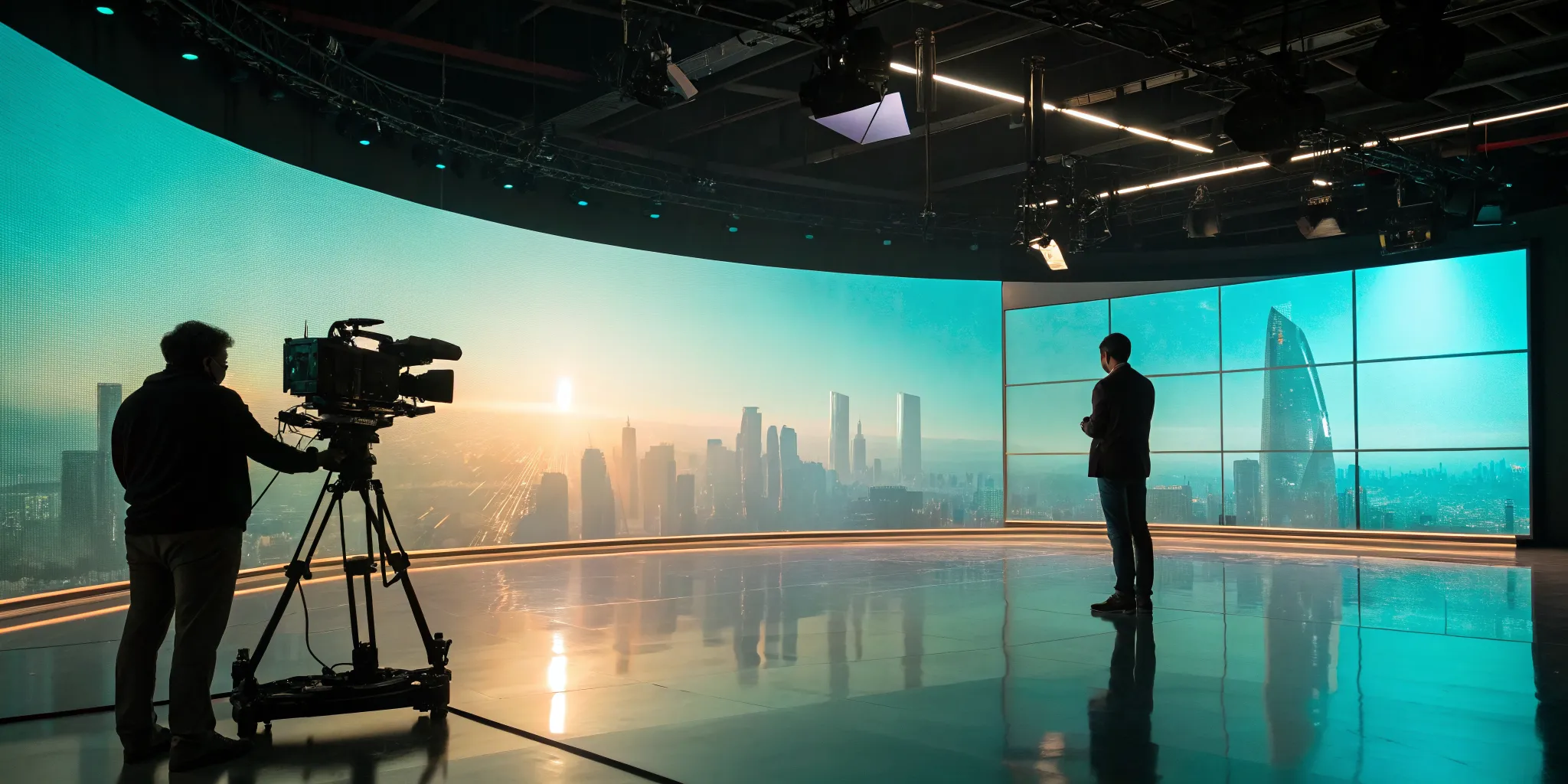
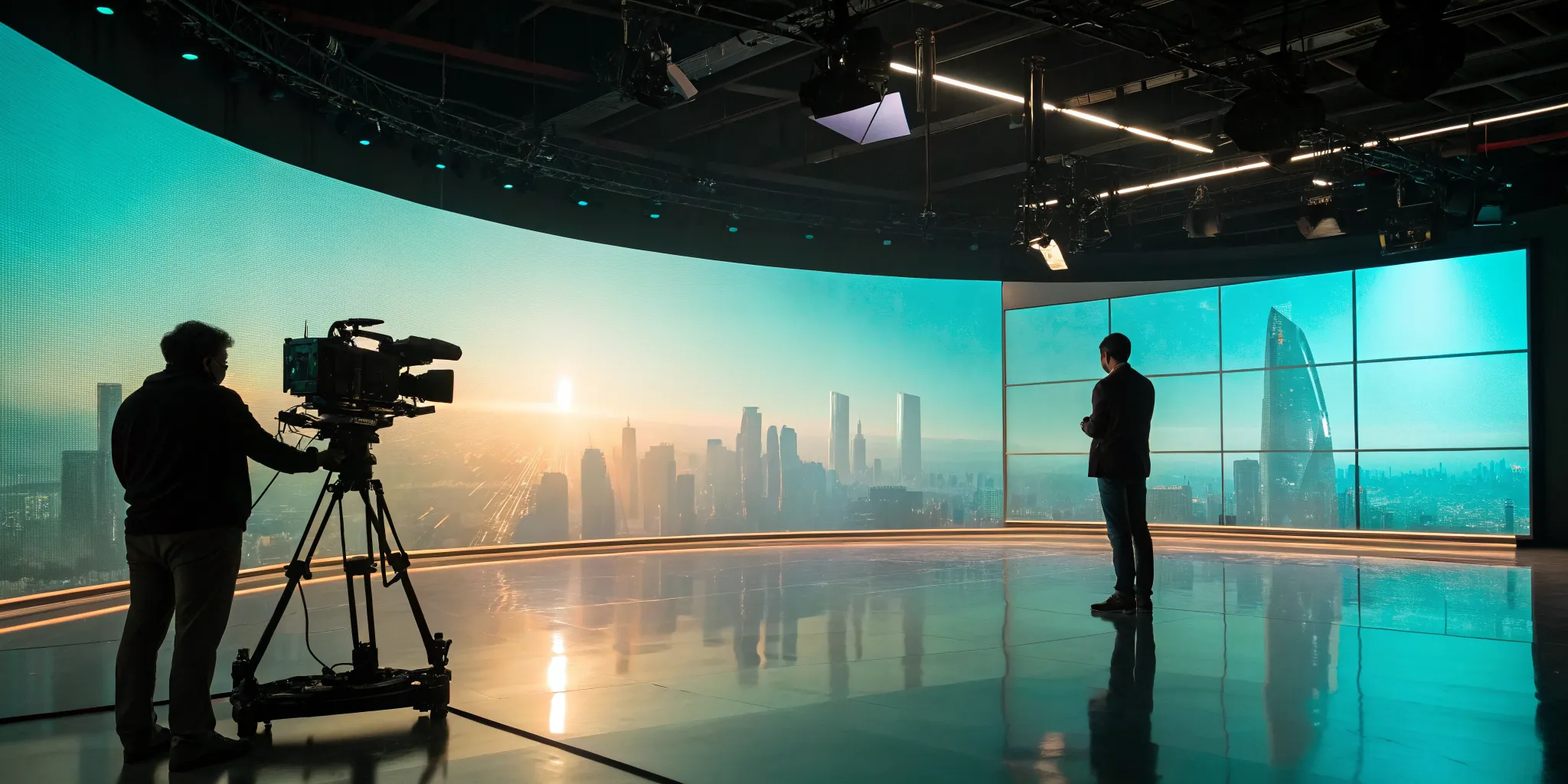
The most powerful application of VAD on set is its integration with LED volumes for in-camera VFX (ICVFX). The digital scenes your VAD built in Unreal Engine are projected onto massive LED walls that surround the physical set. Because these are real-time environments, you can make creative decisions live. By leveraging real-time technologies, VADs enable filmmakers to visualize and iterate on scenes as they shoot, making the creative process more flexible. If a director wants to move a mountain, change the time of day, or adjust the lighting, the VAD team can make it happen in moments, not weeks. This gives you final-shot quality right in the camera, dramatically reducing the need for green screens and extensive post-production work.
Sync Digital Assets with the Physical Set
For the illusion to work, the digital world must react perfectly to the physical camera’s movements. This is where asset synchronization comes in. At the core of virtual production lies real-time rendering and motion-tracking technology that enables actors and filmmakers to interact with the digital environment while on set. As the camera operator moves, tracking data is fed back into Unreal Engine, which adjusts the background’s perspective in real time. This creates a perfect parallax effect, making it seem as though you are looking through a window into a real location. This seamless blend of physical props and digital extensions makes the world feel completely cohesive and believable for everyone on set.
Create Immersive Stories with AR and VR
Your VAD’s assets can extend beyond the LED volume. With virtual production, filmmakers can create realistic or artistic film settings while reducing the need for physical sets and enabling immersive storytelling experiences. For example, you can use augmented reality (AR) overlays on monitors or tablets to show crew members how digital characters or effects will be integrated into a scene. This same library of high-fidelity assets can also be repurposed for transmedia promotions, like VR experiences or mobile games, creating a connected universe for your audience. This approach helps you build a richer, more immersive story world that engages fans long after the credits roll.
Overcoming Common VAD Challenges
Adopting a Virtual Art Department is a game-changer, but like any major shift in your production process, it comes with a few hurdles. You might be worried about how it will fit with your current workflows, whether your team will adapt, or how to manage the new costs. These are all valid concerns, but they are far from roadblocks. With a bit of planning and a clear strategy, you can smoothly transition to a VAD-powered pipeline. The key is to think of this as an evolution, not a complete overhaul. You’re building on the creative foundation you already have, just with more powerful and flexible tools.
The challenges generally fall into four main areas: technical integration, team adoption, quality control, and resource planning. By tackling each one thoughtfully, you can set your studio up for success and start reaping the creative and financial rewards of virtual production much faster. The goal is to create an interconnected ecosystem where your creative vision can flourish without technical limitations. Our comprehensive services are designed to guide partners through this exact process, ensuring a seamless integration that enhances your storytelling capabilities from day one. Let's walk through how to handle each of these common challenges.
Integrate VAD into Your Existing Pipeline
One of the first technical puzzles to solve is making your new VAD tools communicate with your existing pipeline. If your systems are siloed, you’ll create bottlenecks instead of efficiencies. The solution is to establish a centralized hub for all your digital assets and production data. Think of it as a digital backlot where every department can access the latest version of a model, environment, or sequence. Implementing standardized processes and a robust asset management system is critical. This ensures that the digital world you build in pre-production seamlessly transfers to the on-set LED volume and into post-production VFX without painful conversions or data loss.
Get Your Team Onboard and Trained
New technology is only as good as the team using it. Resistance to change is natural, but you can turn hesitation into excitement with the right approach. Focus on demonstrating how VAD empowers your artists and technicians, giving them more creative freedom and reducing tedious tasks. Provide comprehensive training that goes beyond just the software, focusing on the new collaborative workflows. Consider starting with a pilot project to build confidence and showcase early wins. Having an experienced team to guide your crew can make all the difference, transforming what feels like a roadblock into an opportunity for your entire studio to grow its skills and efficiency.
Maintain Quality Control Across Departments
When multiple departments are collaborating in a shared digital space, maintaining visual and technical consistency is essential. A 3D asset might look perfect in the art department but cause performance issues on the virtual production stage. To avoid this, you need to establish and document clear standards from the very beginning. Create detailed guidelines for everything: asset creation, polygon counts, texture resolutions, and naming conventions. A well-defined review and approval process ensures that every element meets both creative and technical requirements before it enters the main pipeline. This level of discipline is how complex projects like Ant-Man and The Wasp: Quantumania maintain a cohesive and high-quality final picture.
Plan Your Budget and Resources
Integrating a VAD requires a forward-thinking approach to budgeting and resource allocation. There are upfront investments to consider, including high-performance hardware, software licenses, and specialized training for your team. It’s important to map out these costs clearly and plan for scalability as your VAD capabilities grow. Instead of viewing this as a simple expense, frame it as a strategic investment. The efficiencies gained in pre-production, reduced on-set costs, and accelerated creative iteration deliver a significant return. A well-planned budget prevents unexpected hurdles and ensures your team has the resources it needs to fully realize the potential of virtual production.
How to Optimize for Real-Time VAD Production
Keeping your virtual environment running smoothly is essential for a successful VAD pipeline, especially during on-set production. The goal is to hit your target frame rate without compromising the visual quality you’ve worked so hard to create. This isn’t about cutting corners; it’s about working smarter. By focusing on a few key areas, your team can ensure the virtual world performs flawlessly in real-time, allowing for seamless collaboration and creative iteration when it matters most.
Manage Geometry and Level of Detail (LOD)
Think of geometry as the digital blueprint for every object in your scene. Highly detailed models look fantastic up close, but rendering millions of polygons at once can slow your project to a crawl. This is where managing your Level of Detail (LOD) becomes a game-changer. The LOD system in Unreal Engine allows you to use simpler versions of an object when it’s further from the camera, reducing the strain on performance. Your audience will never notice the swap, but your system will thank you. By creating and assigning LODs to your assets, you can maintain a high-fidelity look while ensuring your virtual set runs efficiently for a fluid, real-time experience.
Optimize Lighting, Shadows, and Materials
Lighting and shadows are what breathe life and realism into a virtual scene, but they are also among the most performance-intensive elements. Fully dynamic lighting that casts real-time shadows from every source looks incredible, but it isn't always necessary. You can gain significant performance by strategically using a mix of dynamic and baked lighting. Before your technical artists begin, it’s crucial for the director and art department to align on the final aesthetic. This ensures that optimization efforts support the creative vision, not undermine it. Our creative and technical services help teams find this perfect balance, delivering stunning visuals that perform under pressure.
Adjust Project Settings and Resolution
Sometimes the most effective optimizations happen at a project-wide level. Unreal Engine gives you granular control over global settings that can have a big impact on performance. This includes everything from the default render resolution to shadow quality and post-processing effects. It’s about finding the sweet spot that meets your production’s specific needs. Not every project requires a native 4K output with all settings on maximum, especially during pre-visualization or on-set blocking. Adjusting these settings helps you achieve a stable frame rate, which is critical for in-camera VFX and a smooth workflow for your entire team. This tailored approach is key to how we deliver technically excellent results on projects like Ant-Man and the Wasp: Quantumania.
Build a VAD Pipeline That Works for You
A powerful VAD pipeline is more than just software; it’s a system of processes that supports your creative vision without getting in the way. Building a custom pipeline that works for your studio is one of the most important steps you can take to ensure your virtual productions run smoothly. When every part of the process is defined, from asset creation to final review, your team can focus on creativity instead of wrestling with technical hurdles. This foundation is what separates a chaotic production from a streamlined one, allowing you to iterate faster and make bolder creative choices with confidence.
At Arctic7, we specialize in creating these interconnected entertainment ecosystems. Our services are designed to help you build a VAD pipeline that integrates seamlessly with your existing workflows, whether you're a small indie studio or a major entertainment brand. We believe a great pipeline should feel invisible, empowering your artists to do their best work. By focusing on a few key areas, you can create a repeatable and scalable foundation for all your future projects. Let’s walk through the four pillars of a successful VAD pipeline that will set your production up for success from day one.
Structure Your Asset Library and Version Control
A VAD generates a massive number of digital assets, from 3D models to textures and materials. Without a solid organizational structure, your project can quickly become a tangled mess of files. Start by establishing a clear folder structure and consistent naming conventions. This simple step ensures that artists can find what they need and that assets plug into scenes correctly.
From there, you’ll want to implement version control. Tools like Perforce are essential for managing revisions and preventing artists from accidentally overwriting each other’s work. A well-structured asset library helps your team visualize ideas and make changes easily before committing significant time and money to the final product, giving you a clear history of every creative decision.
Standardize How You Create Assets
To ensure every asset works perfectly within Unreal Engine, you need to standardize how they are created. This means setting clear technical guidelines for your team to follow. These standards should cover everything from polygon counts and texture resolutions to material setups and file formats. This isn’t about limiting creativity; it’s about establishing a shared technical language that makes collaboration seamless.
When everyone builds assets the same way, you reduce friction and eliminate guesswork. This consistency is critical for large-scale projects where hundreds or thousands of assets must come together in a single, cohesive world. Our work on projects like Ant-Man and the Wasp: Quantumania shows how standardized asset creation allows for building complex, high-fidelity environments that perform flawlessly in real-time.
Find Tools and Plugins to Extend Your Capabilities
While Unreal Engine is incredibly powerful out of the box, its true strength lies in its extensibility. The engine is designed to be the hub of your production, connecting to a wide array of other tools and plugins that can enhance your workflow. Think of it as building a custom toolkit tailored to your studio’s specific needs.
You might integrate project management software like ShotGrid for review and feedback, or find specialized plugins on the Unreal Engine Marketplace for everything from advanced physics simulations to procedural environment generation. Using these tools can speed up the creative process and open the door for more experimentation, allowing your team to push creative boundaries without reinventing the wheel.
Set Up Clear Communication Workflows
Technology is only half the equation. A successful VAD pipeline depends on clear and consistent communication between everyone involved. The VAD acts as a bridge connecting the director, cinematographer, production designers, and VFX artists, so it’s vital that information flows freely between them. Using a VAD gives every department a clear visual reference, but you still need a process for sharing updates and feedback.
Establish a central hub for communication, whether it’s a project management tool like Asana or a dedicated platform like Slack. Define the approval process so everyone knows who has the final say on assets and scenes. A strong communication workflow ensures your entire team stays aligned, minimizing misunderstandings and keeping the production on track.
What's Next for Virtual Art Departments?
The world of virtual production is moving fast, and the VAD is right at the center of it all. The future isn't just about using these tools; it's about how they're becoming more integrated, powerful, and accessible. We're seeing a major push towards even deeper integration of real-time technologies, which lets filmmakers visualize and change scenes live on set. This makes the creative process incredibly flexible, turning what used to be static pre-visualization into a dynamic, collaborative session. Imagine adjusting the lighting of a digital sunset with your DP in real-time, long before a single physical light is set up.
This evolution is leading to a more refined hybrid version of filmmaking, where the lines between the digital and physical worlds blur even further. VADs will continue to reduce the need for extensive location scouting and massive physical set builds, saving both time and money. As the technology behind LED volumes and real-time rendering gets better, what you see in the VAD will be even closer to the final pixel. Perhaps the most exciting part is that these powerful tools are becoming more accessible. It's not just for blockbuster films anymore. New workflows and more affordable equipment are allowing productions of all sizes to adopt VAD principles, opening up creative possibilities for a wider range of storytellers. The VAD of tomorrow is more integrated, more intuitive, and more inclusive.
Related Articles
- Why Your Next Project Needs a Virtual Art Department
- What is a Virtual Art Department & Why You Need One
Frequently Asked Questions
Is a VAD only for big-budget sci-fi or fantasy films? Not at all. While VAD is fantastic for creating otherworldly planets, its real strength is in the planning process. It can be used for any project, including historical dramas or contemporary thrillers. Think of it as a way to build and scout any location digitally, whether it’s a realistic apartment set or an alien landscape. This allows your director and cinematographer to plan shots and lighting with incredible precision, saving time and preventing surprises on set, no matter the genre.
Does using a VAD mean I have to replace my existing art department? Absolutely not. A VAD is a set of tools that empowers your existing art department, not a replacement for it. It gives your talented production designers and artists a new, dynamic canvas to work on. Instead of relying only on 2D sketches, they can build and refine their ideas in a 3D space, collaborating in real-time with the director and VFX team. It enhances their craft and integrates their work more deeply into the entire production pipeline.
How early should we bring in a VAD for our project? The sooner, the better. A VAD delivers the most value when it’s integrated at the very beginning of pre-production, even during the script development phase. By building the world digitally first, you can make crucial creative decisions about sets, lighting, and camera placement before you commit to costly physical builds or location shoots. This front-loads the decision-making process, giving your entire team a clear, unified vision to work from.
What is the single biggest advantage of using a VAD? If I had to pick just one, it would be creative alignment. A VAD creates a single source of truth that every department can see and interact with. A script or a piece of concept art can be interpreted in many different ways, but a fully realized virtual set cannot. When your director, cinematographer, and production designer can all walk through the same digital space together, ambiguity disappears. This shared understanding is what prevents expensive mistakes and ensures the final product truly matches the original vision.
What happens to the virtual world after production is finished? This is one of the most exciting parts. The high-fidelity digital assets created by your VAD don’t just disappear after the film wraps. They become a valuable library that can be repurposed for sequels, video games, virtual reality experiences, or marketing campaigns. This allows you to expand your story's universe across different platforms, creating a richer, more connected world for your audience to explore long after they’ve left the theater.
New Immersive & XR Media Capabilities Added to Arctic7's Suite of Games, Film & TV and Digital Services

Arctic7 Shares Details of its Work on Skeleton Crew and Cinematics Partnership with Fateless

The Human Touch: Adding Personality to Project and Product Management
Whether it’s your team, your client, or your stakeholders, understanding the human dynamics is just as critical as hitting milestones.

McDonald's Case Study: Bridging Brand and Play | Arctic7
Bridging Brand and Play: An Interview with Lindsay Blenkhorn Daggitt