




Transmedia Storytelling Examples for IP Leaders
A franchise can appear in films, games, series, and immersive experiences without becoming a coherent storyworld. The difference is not the number of platforms. It is whether each medium contributes something distinctive while the whole remains legible, inviting, and strategically governed.
Explore Arctic7's transmedia and virtual production capabilities
In brief: The most useful transmedia storytelling examples show how strong IP leaders assign every medium a meaningful role. Create clear pathways for audiences, and protect the underlying world as it expands. The lesson is less about copying a successful franchise than about making disciplined choices that fit your IP, audience, and operating model.
For decision-makers, comparison turns familiar franchises into a practical diagnostic. Look past surface scale to examine what each extension adds, how audiences enter and move through the world, and which decisions keep the ecosystem coherent over time. That lens reveals the principles behind durable expansion, beginning with the roles different media are asked to play.
What Can Transmedia Storytelling Examples Teach IP Leaders?
Transmedia storytelling examples are most useful when treated as operating models, not franchise wish lists. The strongest cases align distinct medium roles around one coherent world, give audiences more than one meaningful entry point, and establish governance before expansion. For IP leaders, the question is not how many platforms can carry a story, but what each one should make possible.
Start with the distinction between presence and contribution. Transmedia storytelling involves telling a story through multiple distinct media, but a coordinated experience requires more than repeating the same narrative in different formats. Jenkins describes the model as integral fiction elements dispersed systematically across delivery channels to create a unified entertainment experience. The practical implication is clear: each medium needs a defined job.
A film might establish the central dramatic arc, while a game gives audiences agency inside the world. A series can deepen a secondary character, and a community layer can invite participation or role-play. The academic literature identifies unique medium contribution as a core ideal, while also recognizing that transmedia experiences can span websites, social platforms, forums, video, games, books, comics, and television (academic research on transmedia structure). That breadth creates opportunity, but it also creates coordination risk.
Four questions should guide an expansion decision:
- Role: What can this medium do better than the others?
- World: Which rules, characters, and themes must remain consistent?
- Pathway: Where does a new audience enter, and what might persuade it to continue?
- Governance: Who owns canon, approvals, continuity, and the handoff between creative and production teams?
These questions turn creative ambition into an auditable system. Researchers have proposed structural patterns and taxonomies for comparing different transmedia forms, which gives leaders a way to evaluate an expansion beyond instinct or platform fashion. In practice, that means documenting the creative core, assigning narrative responsibilities, and testing whether every planned extension adds depth rather than noise.
For a closer look at how those responsibilities translate into execution, review this guide to multi-platform narrative design and this framework for extending IP across platforms. The goal is not maximal distribution. It is an interconnected entertainment ecosystem in which every audience touchpoint earns its place and remains legible within the larger IP.
How the Marvel Cinematic Universe Turns Platform Roles Into a System
The Marvel Cinematic Universe is useful as a transmedia storytelling example because its strength is not simply the number of places its stories appear. A published industry description identifies movies, television, digital and traditional advertising, and other touchpoints as parts of the wider story world. The strategic lesson is how those roles can work together.
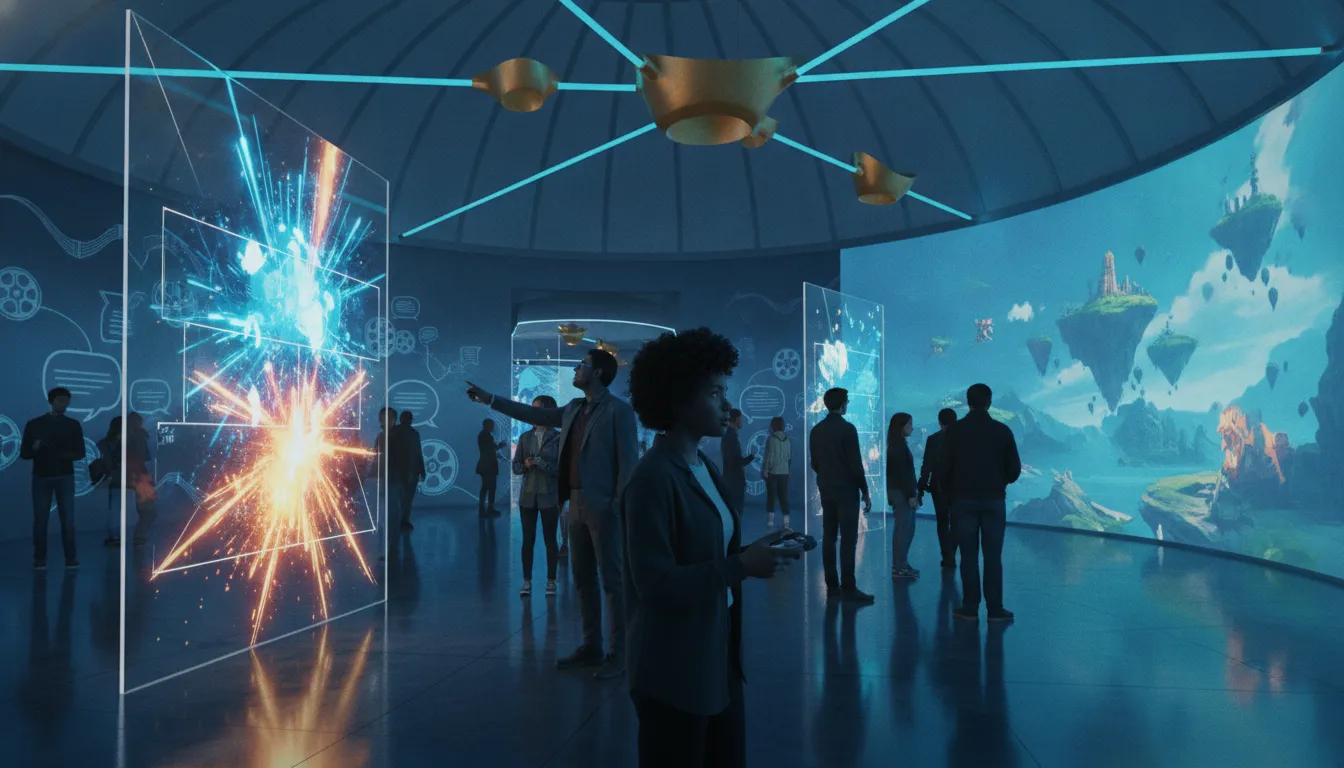
At the level of sourced description, the MCU distributes audience contact across distinct formats rather than treating a film as the only meaningful entry point. Interpretation begins when we ask what each format is expected to do. A feature film can establish a major event or character relationship. A television series can create room for slower development, different points of view, or a more sustained relationship with a world. Advertising and digital touchpoints can maintain recognition, signal continuity, and direct attention toward the next experience.
That division of labor matters because transmedia design is not the same as repeating one asset everywhere. Research on the form argues that each medium should make its own contribution to the unfolding story. The MCU example, as described in the industry source, therefore illustrates a system of roles: some platforms carry narrative weight. Some deepen context, and others help audiences find or re-enter the world.
Design the sequence, not just the channel mix
For an IP owner, the practical question is not whether a franchise should be present on film, television, games, social platforms, or live experiences. It is what a person should encounter first, what that experience makes them curious about, and which platform can answer that curiosity without requiring exhaustive prior knowledge. Different audiences may prefer a film, a series, or an interactive experience, so entry points should be intentional rather than accidental.
This is the same discipline behind multi-platform narrative design: define the creative job of every platform, establish dependencies between releases, and protect the coherence of the world as it expands. A platform plan becomes valuable when it creates progression for returning audiences while leaving a credible path in for newcomers.
What Star Wars Teaches About Canon, Depth, and Long-Term Stewardship
Star Wars demonstrates that a durable storyworld is not created by placing the same characters in more formats. It grows when each medium adds a meaningful layer, while a coherent canon gives audiences confidence that those layers belong to one world. For IP leaders, the lesson is to design expansion and stewardship together from the beginning.
A documented cross-platform description identifies films, screenplays, radio dramas, novelizations, and video games as formats used to build the Star Wars canon storyworld. The list matters less as a franchise inventory than as a demonstration of range. Each format can serve a different relationship with the world: film can establish visual scale. A radio drama can make sound and performance central, a novelization can deepen interiority, and a game can invite active participation. Those are strategic interpretations, not claims about the commercial performance of any individual release.
The academic definition of transmedia storytelling provides the governing principle. Henry Jenkins describes it as the systematic dispersal of integral fiction elements across multiple delivery channels to create a unified and coordinated entertainment experience. In that model, each medium ideally makes its own unique contribution to the unfolding story. Canon is therefore more than a continuity document. It is the framework that lets distinct contributions accumulate without becoming disconnected or contradictory.
Canon creates depth, not just control
For an IP owner, stewardship begins by deciding what must remain fixed and where creators can interpret, expand, or experiment. A central timeline, character logic, and set of world rules can protect the creative core. Around that core, different entry points can welcome different audiences. Someone may begin with a film, while another person enters through a game, book, or audio experience. The objective is not to force every audience member through the same sequence. It is to make each path legible and rewarding.
This is where multi-platform narrative design becomes an operating discipline. Before commissioning another format, ask what new experience it enables, which canon responsibilities it carries, and how its contribution will remain discoverable over time. A roadmap that answers those questions can turn expansion into cumulative world-building rather than a collection of disconnected adaptations.
From The Matrix to Pokemon, Each Medium Must Do New Work
The strongest transmedia storytelling examples do more than place one property on several platforms. They give each medium a reason to exist. The Matrix and Pokemon illustrate that distinction from different directions: one invites audiences to explore a connected narrative through varied forms, while the other demonstrates how a world can support different kinds of participation. The strategic lesson is not to copy either franchise, but to design purposeful roles for every format.
In a transmedia system, a film can establish tone and dramatic stakes, a game can make the audience act within the world, and a series of short-form pieces can deepen character or context. Jenkins describes the ideal as each medium making a unique contribution to the unfolding story (academic research on transmedia structure). That contribution should be meaningful on its own while remaining coherent with the wider storyworld.
For an IP leader, the useful test is not "Where else can we distribute this?" It is "What can this medium do that the others cannot?" Before commissioning another adaptation, use four questions.
- What kind of attention does this format invite: watching, playing, reading, discussing, or creating?
- Which character, conflict, setting, or perspective benefits from that form?
- Does the experience add new understanding, or merely repeat an existing scene?
- What audience pathway connects this contribution to the wider world?
| Medium role | Distinctive contribution | Executive test |
|---|---|---|
| Film or series | Emotional arc, visual scale, and sustained character development | Does it establish or deepen the story's central promise? |
| Game | Agency, exploration, and consequence inside the world | What can the audience do here that viewing cannot provide? |
| Book or audio | Interiority, context, and imaginative detail | Which perspective or layer deserves slower attention? |
| Community or immersive format | Participation, role-play, and shared discovery | What meaningful role does the audience receive? |
This is the difference between transmedia and simple repurposing. Transmedia distributes integral story elements across channels to create a unified, coordinated entertainment experience (academic research on transmedia structure). Crossmedia, by contrast, often adapts or repurposes the same content for a similar or complementary experience. Both can be commercially sensible, but they require different creative and production plans.
That distinction should shape the brief from the beginning. A platform map that lists films, games, social channels, and books is not yet a strategy. The strategy emerges when every entry has a defined narrative or participatory function, a clear audience relationship, and an accountable owner. For more context, compare this principle with multi-platform narrative design and video game IP expansion examples before building the roadmap.
Why Audience Pathways Matter More Than Platform Count
More platforms do not automatically create a larger or more engaged audience. A strong storyworld gives different people meaningful ways in, then makes movement between those experiences feel intentional. The strategic question is not how many channels an IP can occupy, but which pathway each audience member can follow.
Audience research consistently points to different media preferences within the same story universe. One person may prefer a film, another a novel, and another a game. Social distribution should follow the places where a target audience is already active, rather than treating every network as equally valuable. These principles are reflected in documented transmedia examples and cross-platform storytelling research.
A practical audience-pathway model
- Invite. Choose the most accessible entry point for each priority audience. A film trailer, character short, creator interview, or social discovery moment may introduce the world without requiring prior knowledge.
- Deepen. Give interested audiences a reason to continue. A game can offer agency, a novel can provide interiority, and a series can develop relationships over time. Each medium should contribute something that the others cannot deliver as effectively.
- Participate. Create an appropriate role for the audience, such as discussion, role-play, creation, or community discovery. Participation should serve the world and the audience, not exist merely to generate activity.
- Return. Use meaningful narrative or experiential bridges to bring audiences back to another format. The next step should be clear, but never feel like an obligation to consume everything.

This model helps executives evaluate a proposed channel before approving it. What audience does it serve? What unique work does it perform? What does it make possible next? A platform that cannot answer those questions may increase production complexity without strengthening the ecosystem. The same discipline underpins transmedia universe strategy and multi-platform narrative design: assign each experience a defined role, then connect the roles through a coherent creative and production plan.
East Los High Shows How Purpose Can Shape a Storyworld
East Los High demonstrates that transmedia storytelling examples do not need to begin with a blockbuster franchise. The project was studied as transmedia edutainment focused on the sexual and reproductive health of young Latina/o Americans. Its value as a case study is the clarity of its audience and public-health purpose, not an unsupported claim about campaign performance.
The American Journal of Public Health study, published in June 2016, identifies East Los High as a project designed to promote sexual and reproductive health among young Latina/o Americans. Those details establish a useful strategic starting point: the storyworld was connected to a defined audience and a defined purpose. The documented case does not, by itself, justify claims about reach, behavior change, or other outcomes beyond what the source reports.
Purpose should influence the world, not sit beside it
For an IP leader, the lesson is more demanding than adding a social message to an existing narrative. A clear purpose can shape the characters selected, the conflicts they face, the settings that feel credible, and the formats through which audiences encounter the story. Each extension should answer a practical question: what can this medium make possible for this audience that another medium cannot?
That principle aligns with the academic definition of transmedia storytelling as a process in which integral elements of a fiction are dispersed systematically across delivery channels to create a unified and coordinated entertainment experience. The same research notes that each medium ideally makes a unique contribution to the unfolding story. East Los High therefore offers a framework for evaluating expansion: begin with the audience need. Then assign narrative and experiential work to the formats that can serve it best.
This approach can support projects far beyond public-health edutainment. A studio extending an IP across games, film, television, or immersive experiences can define the audience promise before commissioning content. Multi-platform narrative design and transmedia storytelling for brands then become ways to connect creative purpose, format choice, and production planning, rather than a race to occupy more channels.
How to Apply Transmedia Storytelling Examples to Your IP Roadmap
The most useful transmedia storytelling examples are not templates to copy. They are decision tools. Use them to test whether your IP has a strong core, whether every medium has a meaningful role, and whether expansion can be governed, produced, and measured as one connected experience rather than a collection of disconnected releases.
- Audit the core. Start with the elements audiences already value: characters, conflicts, settings, themes, and unanswered questions. A narrative audit should distinguish the non-negotiable creative core from material that can evolve. Ask whether the IP has enough depth to support additional perspectives, timelines, or forms without diluting its identity. Arctic7's strategy workshops are designed to assess IP readiness and identify credible expansion opportunities before production commitments are made.
- Assign each medium a job. Choose formats according to what they can do best, not because a platform is fashionable. A film may establish emotional scale, a game may let audiences act inside the world, and an immersive experience may turn setting into participation. Jenkins's influential account argues that each medium should make its own unique contribution to the unfolding story (academic research on transmedia structure). A practical roadmap should name the narrative contribution, audience, and success condition for every format. For further planning context, see multi-platform narrative design.
- Define canon and governance. Expansion creates value only when audiences can trust the world. Establish what is canonical, who approves new story material, how continuity is documented, and where creative teams can take calculated risks. Treat governance as an operating system, not a late-stage legal review. Research identifies recurring structural patterns across transmedia forms that can support useful taxonomies and analysis (the transmedia storytelling model). Your production blueprint should turn those principles into owners, review gates, and version-controlled reference material.
- Map audience pathways. Define how a person can enter the world, deepen their involvement, and move between experiences without needing to consume everything. Map a film-first route, a game-first route, and any community or immersive route that matters to the audience. Each pathway should offer a satisfying experience on its own while rewarding progression into another medium. This is where audience research, distribution planning, and platform-specific creative decisions meet.
- Stage production and measurement. Sequence the roadmap around readiness, resources, dependencies, and learning. Begin with the format that proves the strongest strategic assumption, then use evidence to refine later releases. Track more than reach: measure completion, repeat engagement, movement between experiences, sentiment, and signals of deeper world participation. Arctic7 combines strategy, creative execution, game development, film and television production, and immersive capabilities to align these workstreams around a scalable vision.
Explore Arctic7's virtual production and transmedia capabilities.
Frequently Asked Questions
What is a strong example of transmedia storytelling?
The Marvel Cinematic Universe is a useful example because its story unfolds across films, television, advertising, and other audience touchpoints. The strategic lesson is not simply its scale. Each channel helps create a coordinated storyworld, giving decision-makers a model for assigning distinct roles to different formats. The comparative example is documented in the research discussed above.
How is transmedia storytelling different from crossmedia?
Transmedia storytelling distributes integral elements of a unified story across multiple channels, with each medium ideally making a unique contribution. Crossmedia more often adapts or repurposes the same content across formats. The distinction matters because an IP roadmap should define what new narrative or experiential value each platform creates.
Which media should an IP owner choose first?
Start with the audience journey and the role the IP needs to play, not with a predetermined platform count. Audiences may prefer a film, novel, or game within the same universe, so the strongest sequence meets people in relevant formats while preserving a coherent storyworld. Test the core proposition, then stage expansion around capability, access, and demand.
What can Star Wars teach about managing a transmedia storyworld?
Star Wars demonstrates the value of long-term stewardship across films, screenplays, radio dramas, novelizations, and video games. For professional IP leaders, the practical lesson is to establish clear canon and governance before adding new contributors. A shared framework protects continuity while leaving room for each medium to offer a meaningful entry point.
Can a transmedia project have a purpose beyond entertainment?
Yes. East Los High was studied as transmedia edutainment focused on the sexual and reproductive health of young Latina/o Americans. The case shows why audience definition and intended impact should shape the storyworld from the outset, especially when success depends on more than reach or commercial performance. The case study was published in the American Journal of Public Health in June 2016.
Explore Your IP's Next Connected Experience
Strong transmedia programs begin with a clear relationship between story, audience, and medium. If you are evaluating how film, television, games, or immersive formats can work together around an existing property, Arctic7 can help turn that ambition into a practical creative and production roadmap.
New Immersive & XR Media Capabilities Added to Arctic7's Suite of Games, Film & TV and Digital Services

Arctic7 Shares Details of its Work on Skeleton Crew and Cinematics Partnership with Fateless

The Human Touch: Adding Personality to Project and Product Management
Whether it’s your team, your client, or your stakeholders, understanding the human dynamics is just as critical as hitting milestones.

McDonald's Case Study: Bridging Brand and Play | Arctic7
Bridging Brand and Play: An Interview with Lindsay Blenkhorn Daggitt


