
Interactive Narrative Design: From Screenplays to Game Scripts
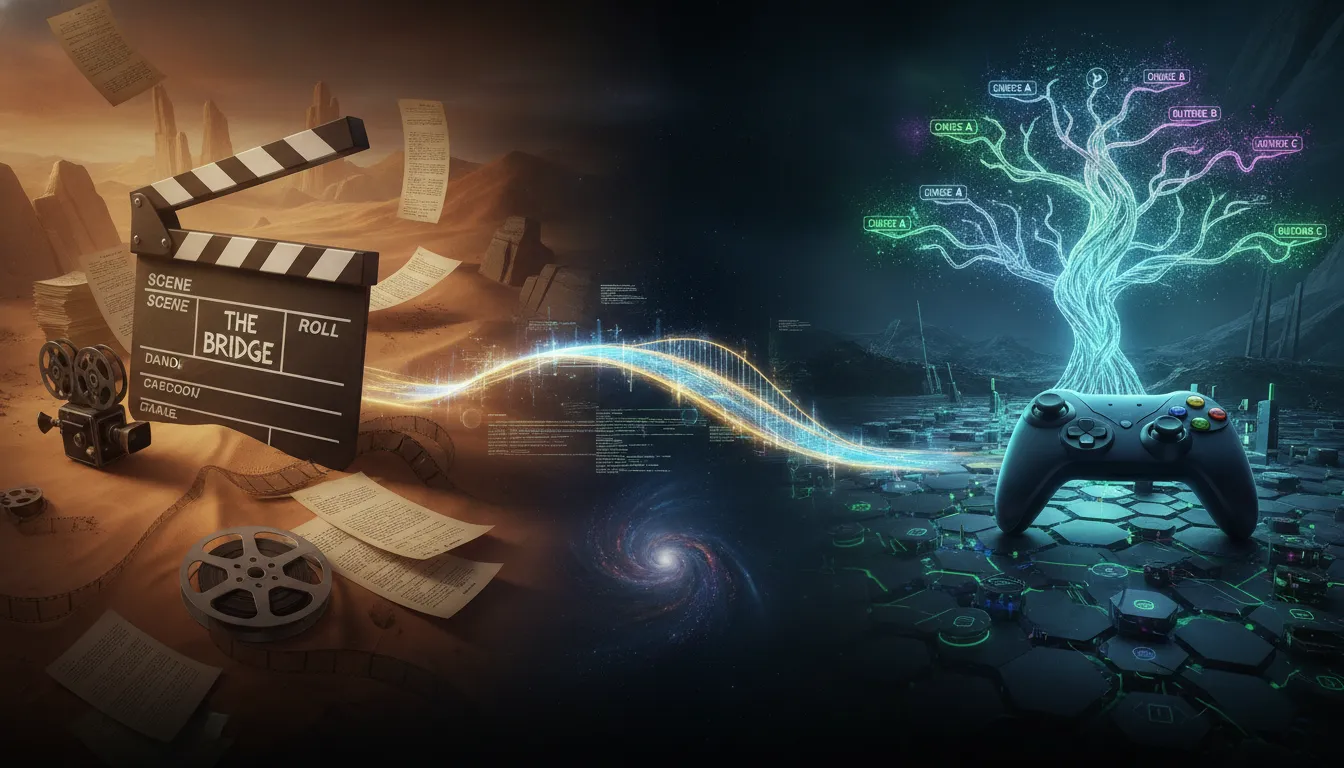
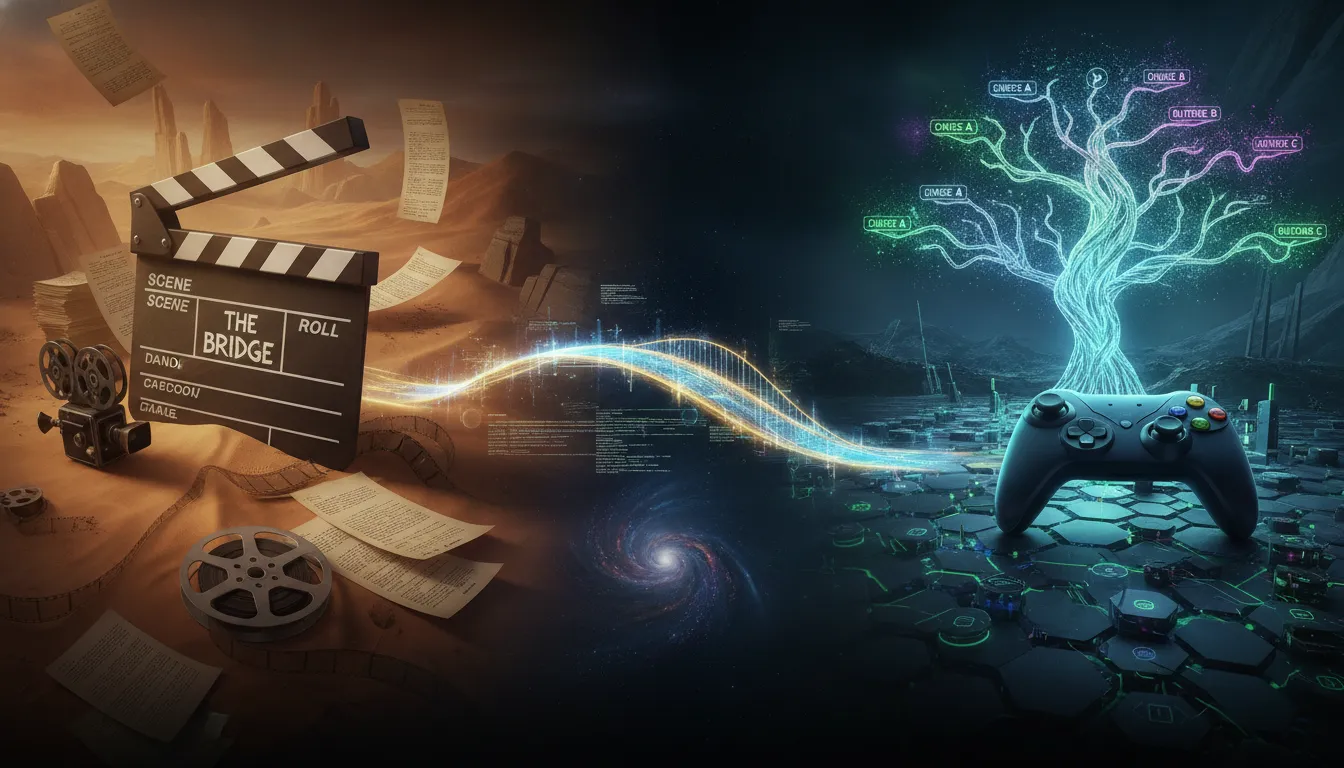
Linear screenplays often fail when they are forced into the rigid systems of a video game. Writers must move from a fixed plot to a world where players make the choices that shape the story.
Schedule a narrative workshop consultation to learn how Arctic7 helps IP holders bridge the gap between linear scripts and player-driven worlds.
Interactive narrative design blends game design with storytelling to create experiences where player choices drive the plot. Unlike linear scripts where audiences watch passively, interactive narratives require systems that respond to user actions while protecting the core IP mythology. This approach lets creative teams build interconnected entertainment ecosystems across games, film, and television.
What Is Interactive Narrative Design?
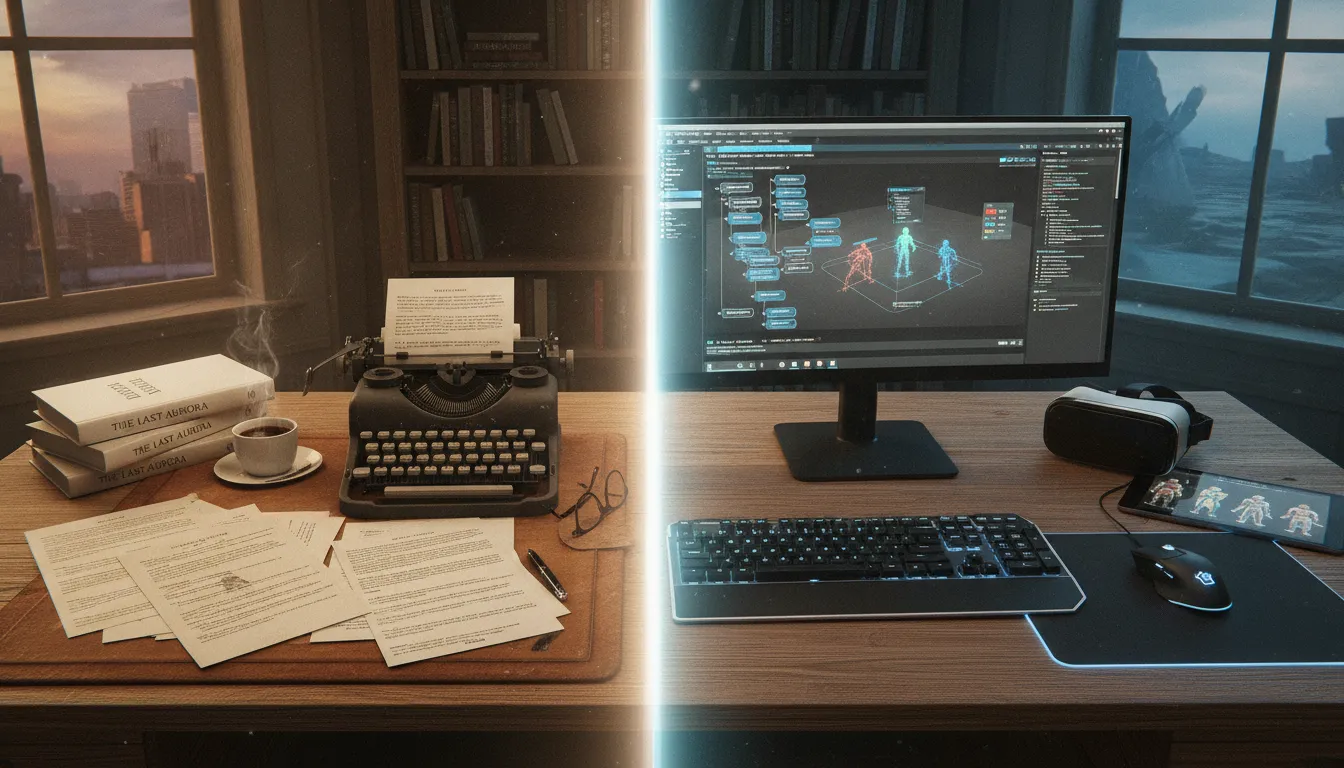
Interactive narrative design is the discipline where game design and storytelling converge. It shifts writers from crafting fixed plots to building systems that let players influence the story in real time while maintaining narrative coherence and protecting the intellectual property.
For writers coming from film and television, this represents a fundamental shift in how stories are built. In games, you do not just write what happens in a scene. You design how a player discovers and interacts with the story across dozens of possible paths. This is a sub-discipline of game design, which means the narrative designer must think like a game designer first. Every decision about pacing, character motivation, and plot resolution must account for the player's freedom to explore, fail, and try again.
Building the story engine
A narrative designer does more than write dialogue. They work across teams to build a story engine that drives tension and defines the world's rules. Level design, art direction, systems design, character design, and sound all contribute to how the story reaches the player. According to Johnnemann Nordhagen, narrative design is how we find ways for players to meet the story we want to tell.
A critical part of the role is setting the bounds of the world. This ensures the story stays consistent even when players make unexpected choices. At Arctic7, our narrative workshops help teams turn static plots into responsive systems. These workshops bring together writers, designers, and producers to align on the narrative vision before production begins.
Another important function is maintaining narrative consistency across all game systems. If a character's dialogue describes a cold climate, the level design and art direction must support that. The narrative designer acts as the guardian of continuity, ensuring every element of the game reinforces the story.
Designing for player agency
The central goal of interactive narrative design is player agency. A story must leave room for meaningful choices while making the player feel genuinely in control. This requires understanding how game mechanics interact with narrative beats. You are not just writing a scene. You are writing a system that can branch based on what a person does in the game world.
How Does Interactive Narrative Design Differ from Linear Screenwriting?
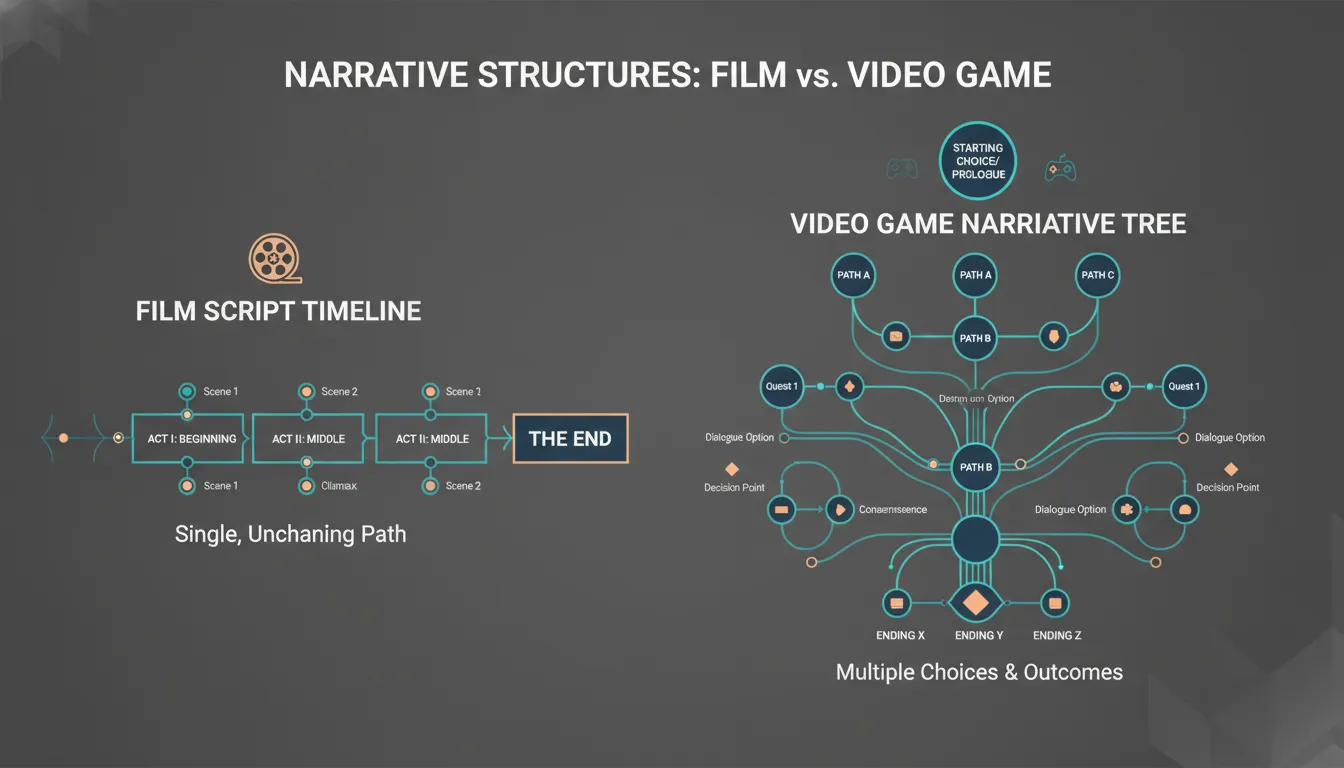
Linear screenplays follow a fixed sequence of events controlled entirely by the writer. Interactive narratives give the player an active role, using branching paths, emergent systems, and player-driven outcomes that change with each playthrough.
The shift from film scripts to game scripts demands a new way of thinking about the audience. In film, the writer controls every beat and the viewer watches passively. In games, the flow changes fundamentally. As noted in the Game Narrative Toolbox, games do not have viewers. They have players who play an active role in shaping the experience.
Three story types in games
Johnnemann Nordhagen identifies three main narrative structures in games. The linear story feels closest to a film script because events stay the same every time. The branching story lets player choices change the outcome. The emergent story uses game systems to generate narrative based on player actions. Each type offers a different way to link gameplay with plot.
Comparison of narrative models
| Feature | Linear Screenplay | Interactive Narrative |
|---|---|---|
| Audience Role | Passive viewer | Active player |
| Story Path | Single, fixed path | Many, branching paths |
| Outcome | Pre-set ending | Choices change results |
| Control | Writer has full control | Control shared with player |
| Structure | Start, middle, end | Dynamic story engine |
Essential Skills for Transitioning from Screenwriter to Narrative Designer
Moving from screenwriting to narrative design requires mastering branching dialogue, systems thinking, cross-team collaboration, and a player-first mindset. The narrative designer must act as both writer and game designer to build worlds that respond to player input.
In film, the writer rules every beat. In games, the player holds the power. A narrative designer combines the roles of writer and game designer, building the systems that deliver the story to the player.
Mastering branching dialogue and choice
Screenwriters excel at tight, linear dialogue. In games, dialogue must account for multiple paths. Lines must feel natural even when encountered in different orders. This requires planning for branches where player choices change the conversation while staying true to each character's voice. A single line of dialogue may need three or four variations to account for different player decisions earlier in the story.
Character relationships also evolve differently in interactive narratives. A character who trusts the player after a helpful decision will speak differently than one who was betrayed. Tracking these relationship states across the entire game is a core skill of the narrative designer.
Systems thinking for storytellers
Narrative designers use game mechanics to tell story without words. A loot system can reveal a world's economy. Map design and art direction all contribute to the narrative. As the Los Angeles Film School notes, writers must adapt their skills to the non-linear flow of games. If you need expert guidance, a game narrative design agency can help navigate this transition.
Adopting a player-first mindset
The biggest shift for a writer is focusing on the player. In film, the writer controls the story. In games, the player is the hero. The narrative must leave room for player agency while still delivering a coherent experience. Environmental storytelling through items, notes, and world details lets players discover the plot at their own pace.
How Can You Protect Your IP While Giving Players Real Agency?
Protecting IP in interactive narratives requires a central story bible that defines canon, narrative audits to identify load-bearing story elements, and a robust story engine that lets players make meaningful choices without breaking the core mythology.
IP holders face a tension when moving into games. They need to protect their story world while giving players meaningful influence. This balance is at the heart of multi-platform narrative design. If players have too much power, they may break the canon. If they have too little, the game feels hollow. The solution lies in designing flexible story frameworks that allow meaningful player input without compromising the integrity of the IP.
Successful transmedia franchises like Star Wars and Harry Potter maintain strict canon while offering players agency within defined boundaries. This approach has proven that player freedom and IP protection are not mutually exclusive when the right systems are in place.
The role of the central story bible
Arctic7 uses a central story bible to set the core rules for any IP. This guide defines what can and cannot happen in your world, ensuring every player choice stays within the boundaries of the canon. A good bible helps you extend your IP across platforms while preserving the story's soul.
Using narrative audits to find core pillars
Before expanding an IP, you must know what makes it work. Stage 1 of the Arctic7 Method uses a full narrative audit to identify the load-bearing elements of your story. We examine past scripts, games, and comics to find the core themes and character arcs that define the brand. This process reveals where players can influence the narrative without damaging the mythology.
Practical Techniques for Writing Interactive Narratives
Writing interactive narratives requires setting clear story bounds, building a responsive story engine, using diegetic storytelling, planning meaningful consequences, and testing branches for narrative coherence across all possible player paths.
Writing for games is about designing how players interact with a digital world. This requires thinking like a game designer while maintaining narrative craft. Here is a practical framework for building interactive narratives:
- Define the Bounds of Your Story. Set the scope for your world by identifying the core elements that cannot change. A narrative designer defines these boundaries and builds the engine that operates within them. This keeps the project focused and ensures the story stays on track.
- Build Your Story Engine. Create a system that generates meaningful choices. A good story engine maintains tension and ensures the narrative leads toward the right themes regardless of player decisions. This requires understanding how level design, systems design, and narrative work together.
- Use Diegetic Storytelling Tools. Tell story through in-world elements that characters can see and hear, like radios, maps, and environmental details. This keeps players immersed in the story world rather than relying on menus and UI elements.
- Plan Meaningful Consequences. Every major player choice should produce a visible outcome. If a decision does not change the story in some way, players lose trust in the interactive nature of the experience.
- Test All Branching Paths. Map out every possible player journey through the narrative. Verify that each path delivers a coherent story experience and that all branches eventually resolve without dead ends or contradictions.
Why Partner with an Agency for Interactive Narrative Design
Partnering with an agency that combines AAA game development and film production expertise helps IP holders build cohesive transmedia worlds. Arctic7's integrated model delivers narrative workshops, story engine development, and multi-platform IP expansion under one roof.
Creating a transmedia world requires expertise in both game systems and deep storytelling. Most teams excel at one but struggle with the other. A game narrative design agency bridges this gap and helps build an interconnected entertainment ecosystem.
Mix game and film capabilities
Top agencies bring AAA game development and film production skills together. Arctic7 uses this integrated model to help IP holders expand their worlds with narrative design for virtual production, story engine development, and multi-platform rollout strategies. This combination of capabilities is rare but essential for modern IP expansion.
Protect your IP with expert workshops
Arctic7's narrative workshops help IP holders define their story bible, identify core narrative pillars, and build a story engine that scales across games, film, and television. These sessions ensure your IP remains consistent while opening new revenue opportunities across platforms.
Frequently Asked Questions
Answers to common questions about interactive narrative design, from the tools used to how writers can transition from linear screenwriting to player-driven storytelling.
How do you write a branching narrative for games?
Writing a branching narrative starts with defining the core story that never changes regardless of player choices. Map out key decision points where player actions alter the narrative path. Use a story engine or dialogue tree tool to track branches and ensure every path leads to a coherent resolution. Test each branch independently to verify narrative consistency.
What software tools are used for interactive narrative design?
Common tools include Twine for prototyping branching narratives, Articy Draft for professional game narrative design, and engine-specific tools like Unreal Engine's Blueprints or Unity's Timeline. Many narrative designers also use standard screenwriting tools like Final Draft combined with game design documentation to bridge the gap between script and engine.
Can a film writer transition into game narrative design?
Yes. Screenwriters bring strong dialogue, character development, and structure skills. The transition requires learning game design fundamentals, branching logic, and systems thinking. Arctic7's narrative workshops help writers build these skills while working on real transmedia projects.
How does interactive narrative design protect IP?
Interactive narrative design protects IP by establishing a central story bible that defines the unchangeable elements of the world. Narrative audits identify the load-bearing pillars of the mythology. The story engine then operates within these bounds, allowing player agency without breaking canon.
What is the difference between a game writer and a narrative designer?
A game writer focuses on crafting dialogue, cutscenes, and scripted events. A narrative designer builds the systems and frameworks that deliver the story to the player. The narrative designer thinks in terms of player agency, branching paths, and how game mechanics serve the plot. Most successful game projects employ both roles.
Ready to Build Your Interactive Narrative?
Whether you are expanding an existing IP into games or building a new transmedia world from scratch, Arctic7 has the expertise to help. Our team combines AAA game development, film production, and narrative design to create interconnected entertainment ecosystems that audiences love.
Schedule a narrative workshop consultation to start building your interactive narrative strategy today.
New Immersive & XR Media Capabilities Added to Arctic7's Suite of Games, Film & TV and Digital Services

Arctic7 Shares Details of its Work on Skeleton Crew and Cinematics Partnership with Fateless

The Human Touch: Adding Personality to Project and Product Management
Whether it’s your team, your client, or your stakeholders, understanding the human dynamics is just as critical as hitting milestones.

McDonald's Case Study: Bridging Brand and Play | Arctic7
Bridging Brand and Play: An Interview with Lindsay Blenkhorn Daggitt