
Mastering Narrative Design for Virtual Production
You’ve built a world your audience loves, with characters they connect with on a deep level. Now, you want to expand that universe into new, interactive formats. The biggest challenge isn't the technology; it's ensuring the heart of your story doesn't get lost in the process. How do you give an audience agency without breaking the narrative? How do you build a game or VR experience that feels like a genuine extension of your IP, not just a tech demo? The answer lies in a thoughtful approach to narrative design for virtual production. It’s the crucial framework that bridges creative vision with technical execution, creating immersive experiences that feel authentic and emotionally resonant.
Key Takeaways
- Make Narrative and Technology Equal Partners: In virtual production, the story and the tech must be developed in tandem from the very beginning. This collaborative, front-loaded approach ensures your creative vision is supported by the technology, resulting in a more cohesive and immersive final experience.
- Prioritize Audience Agency to Deepen Engagement: Shift from a passive viewing model to an active one by designing adaptive plots and responsive characters. Giving your audience meaningful choices that influence the outcome is the key to making them feel like a part of the world, not just a visitor.
- Build Environments That Actively Tell the Story: Use your world as a powerful narrative tool. Every detail, from lighting to architecture, should communicate your story's history, tone, and conflict, adding layers of depth that make the experience more believable and emotionally resonant.
What is Narrative Design in Virtual Production?
Think of narrative design as the architectural blueprint for a story. It’s the process of crafting and structuring a narrative so it creates a meaningful experience for the audience, especially across different media formats. In virtual production, this goes beyond a traditional script. It’s about designing the very fabric of the story's world and deciding how the audience will move through it. Whether you're building a game, a VR experience, or an interactive film, narrative design ensures that the story is not just told, but felt. It’s the framework that holds every character, plot point, and environmental detail together, creating a cohesive and compelling universe for your IP.
How Narrative Design Differs From Traditional Storytelling
Traditional storytelling, like in a novel or a film, typically puts the audience on a fixed path. You’re a passenger along for the ride. Narrative design, on the other hand, hands you the map. It focuses on how the story is presented and, more importantly, how the audience interacts with it. Instead of just following a plot, the user becomes part of it, and their choices can shape the outcome. This approach requires a deep understanding of pacing, character development, and the audience's emotional journey, as these elements are no longer static. As the Interaction Design Foundation notes, this allows users to feel connected to the virtual world in a way passive media can't replicate.
Why It’s Essential for Immersive Experiences
A great story is what separates a memorable virtual world from a forgettable tech demo. Without a strong narrative, even the most visually stunning environment can feel empty. Narrative design is essential because it breathes life into these digital spaces, making them feel real, emotional, and significant. It’s what makes an audience feel truly "there." By creating experiences that resonate on a personal level, you build a much deeper connection between the audience and your IP. This is how you expand a universe in a way that feels authentic and engaging, as seen in projects like Star Wars: Skeleton Crew, where every detail contributes to a larger, immersive story.
The Core Elements of Great Narrative Design
A great story feels like magic, but it’s built on a solid foundation. In virtual production and interactive media, that foundation rests on three core pillars: compelling characters, an immersive world, and an adaptive plot. These aren't separate ingredients you just mix together; they're deeply interconnected elements that must work in harmony. The characters’ motivations should shape the plot, the world should reflect the story’s themes, and the plot should give the audience meaningful ways to interact with both. This synergy is what transforms a passive viewing into an active experience.
What makes narrative design for these new mediums so exciting is that these elements are alive. A character isn't just reciting lines; they're reacting to a player's choices. A world isn't just a static backdrop; it can change in real-time to heighten the emotional stakes. The plot isn't a straight line from A to B; it's a branching tree of possibilities. Getting these elements right is what separates a cool tech demo from a truly unforgettable experience. It’s how you ensure your audience doesn’t just watch your story—they live it. At Arctic7, our strategic approach focuses on weaving these elements together from the very beginning, ensuring the technology always serves the story.
Develop Characters for Virtual Worlds
Characters are the heart of any story. They are the audience’s anchor, the emotional entry point into the world you’ve built. In an interactive space, a character has to be more than just a well-written personality; they need to be a responsive and believable entity. Today’s audiences are looking for stories that resonate on a personal level, with characters who reflect a wide range of experiences. Your narrative design must account for this by creating individuals who can react authentically to a player’s decisions, showing vulnerability, growth, and conflict in ways that feel earned, not scripted. This means designing character arcs that are flexible enough to accommodate player agency while still telling a cohesive story.
Build Worlds That Serve the Story
In virtual production, the world is more than a setting; it’s a character in its own right. The environment should breathe life into your narrative, conveying tone, history, and conflict without a single line of dialogue. Thanks to virtual production, designers have unprecedented control over the story’s atmosphere. You can instantly shift a sunny landscape to a stormy twilight to mirror a character’s inner turmoil or reveal a hidden clue with a subtle change in lighting. This technology allows us to build worlds, like the Quantum Realm in Marvel Studios’ Ant-Man and The Wasp: Quantumania, that are not only visually stunning but also deeply integrated with the narrative, making the story more immersive and emotionally impactful.
Design Adaptive Plots for Interactive Media
A linear plot has a clear beginning, middle, and end. An adaptive plot has a beginning, a middle full of possibilities, and multiple potential endings. This is where narrative design becomes a true art form. Your job is to create a story structure that empowers the audience to make meaningful choices that have real consequences. This doesn't mean complete chaos; it means designing a system of cause and effect where player actions guide the narrative down different paths. This immersive quality personalizes the experience, making each person’s journey through the story feel unique and deeply their own. It’s about balancing freedom with structure to create a satisfying and coherent interactive story.
How Technology Shapes the Story
In virtual production, technology isn't just a tool you use at the end of the process; it’s a creative partner from day one. The narrative and the tech develop together, each one influencing and inspiring the other. This close relationship opens up possibilities that simply don’t exist in traditional filmmaking or game development. Instead of writing a script and then figuring out how to build it, you can design the story with the capabilities of the technology in mind. This allows for more dynamic, interactive, and visually stunning worlds.
For IP holders, this means you can think bigger. A scene that might have been cut for budget or logistical reasons in a traditional pipeline can become a reality. The ability to make creative decisions in real-time, seeing the final pixel-look on set, gives writers and directors an unprecedented level of control. It transforms the storytelling process from a linear sequence of steps into an iterative, collaborative loop. This synergy is at the heart of creating truly expansive and interconnected entertainment ecosystems, which is central to our transmedia services. The story is no longer just what happens on screen; it’s how the audience gets to experience it.
Leverage Game Engines and Real-Time Rendering
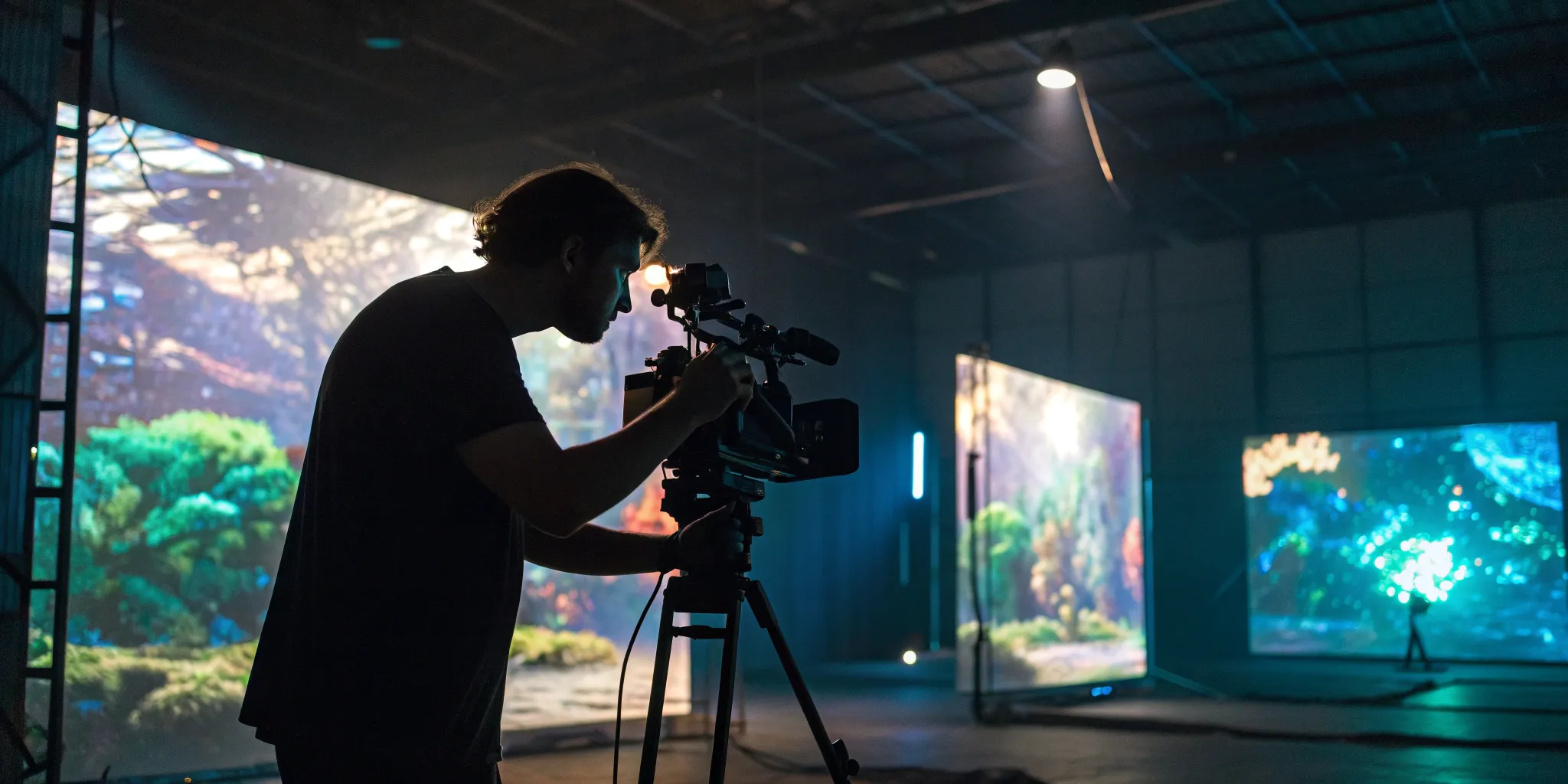
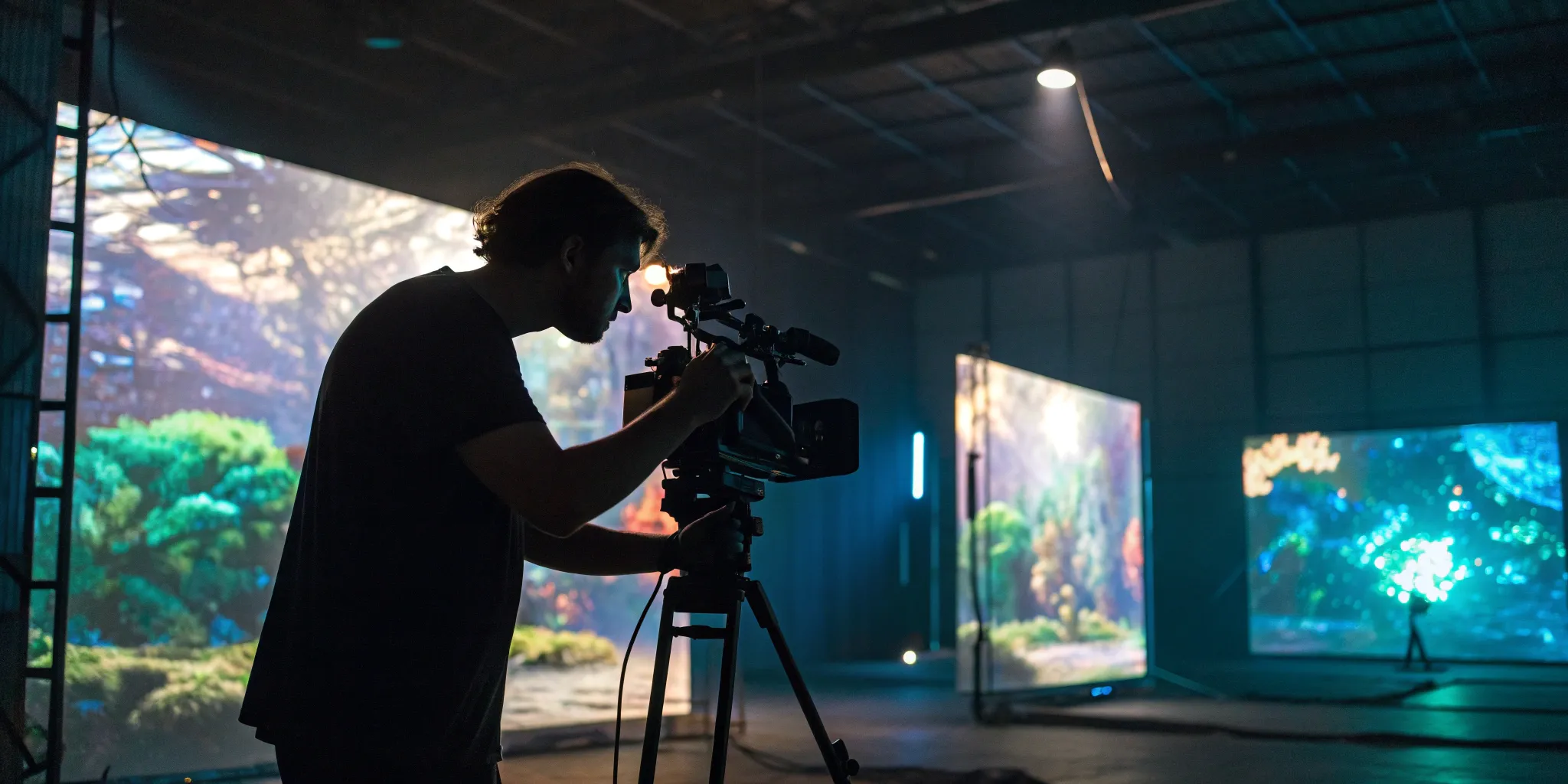
Game engines are the foundation of virtual production, and they completely change how you can approach a scene. By mixing physical sets with real-time digital backgrounds, filmmakers can create shots during filming that used to be possible only in post-production. Imagine your actors performing on a small set, but on the monitor, they’re standing on a breathtaking alien planet that reacts to their every move.
This immediate visual feedback allows for instant creative adjustments. A director can change the lighting, move a mountain, or shift the time of day with a few clicks, all while the camera is rolling. This empowers writers and performers to experiment and adapt in the moment, leading to more authentic and powerful storytelling. It’s a fluid process that blends the digital and physical worlds seamlessly.
Use VR and AR to Deepen the Narrative
Virtual and augmented reality offer a powerful way to pull your audience directly into the story. Instead of just watching events unfold, users can step inside the world you’ve built. VR provides a 360-degree experience that makes them a part of the environment, allowing them to interact with objects and characters in meaningful ways. This level of immersive storytelling turns a passive viewer into an active participant.
With AR, you can overlay narrative elements onto the real world, creating experiences that feel personal and immediate. Imagine a character from your story appearing in a fan’s living room to deliver a crucial piece of information. These technologies give you new tools to build empathy, create memorable moments, and let your audience influence the narrative path, making each person’s journey through your world unique.
Explore AI for Dynamic Storytelling
Artificial intelligence is quickly becoming an essential tool for creating more complex and responsive narratives. AI can manage intricate branching plots, ensuring that every player choice leads to a logical and satisfying outcome. It can also power non-player characters (NPCs) with more believable behaviors and dialogue that adapts to the player's actions, making the world feel truly alive.
Beyond character interactions, the role of AI in virtual production helps streamline creative workflows. It can assist in generating environmental assets, animating secondary characters, or even suggesting plot developments based on established story rules. By handling some of the more technical and repetitive tasks, AI frees up your creative team to focus on what they do best: crafting a compelling and emotionally resonant story.
Create Compelling Characters and Worlds
At the heart of every great story are characters we connect with and worlds that feel real enough to touch. In virtual production, these elements are more than just a backdrop for the plot—they are living, breathing parts of the experience. The goal is to move beyond static settings and create dynamic ecosystems that respond to the narrative and the audience. This is where your IP can truly shine, transforming a single story into an expansive universe that audiences can explore for years to come.
Building these compelling worlds requires a deep understanding of the source material and a vision for its future. It’s about taking the essence of what makes your characters and world special and finding new ways to express it through interactive media. Whether you're expanding a beloved franchise like the Star Wars universe or building a new one from the ground up, the key is to create a space that feels both authentic and full of possibility. When the world itself tells a story and the characters within it feel truly alive, you create an immersive experience that captures the audience's imagination and keeps them coming back for more.
Write Character Arcs That React to Player Choices
In interactive storytelling, characters can't just follow a fixed path. Their growth and development should be directly influenced by the audience's decisions. This creates a powerful sense of agency and makes the narrative feel deeply personal. Instead of a single, linear arc, you design a web of potential journeys for each character. Narrative designers use a mix of writing, game design, and psychology to build characters who evolve believably in response to player actions. A character might become more cynical after a series of betrayals or more hopeful if the player consistently chooses kindness. This dynamic approach turns characters from story puppets into relatable, complex individuals.
Use Environmental Storytelling to Your Advantage
Your world is a character in its own right, and every detail within it can tell a piece of the story. This is environmental storytelling: using the setting to communicate narrative information without relying on dialogue or text. A throne room adorned with battle-worn tapestries tells a story of a kingdom's long history of conflict. An overgrown, abandoned playground can evoke a sense of loss and mystery. By carefully moulding the film's aesthetic to echo the story's themes and emotional beats, you create a richer, more immersive experience. Every prop, texture, and architectural choice should serve the narrative, adding layers of meaning for the audience to discover.
Design Believable Spaces That Tell a Story
Virtual production gives you unprecedented control to build these story-rich environments. Unlike traditional filmmaking, you can design and perfect your digital sets long before the cameras roll, ensuring every element serves the narrative. This technology allows designers to have full control over the virtual environment, from the quality of light to the weather. Need to shift the mood from hopeful morning to ominous twilight? You can do it in an instant. This flexibility allows you to create spaces that not only look believable but also feel emotionally resonant, actively shaping the audience's experience of the story as it unfolds.
Common Narrative Design Challenges (and How to Solve Them)
Virtual production opens a universe of creative possibilities, but it also introduces a unique set of narrative puzzles. The most compelling interactive stories don't just happen; they're the result of carefully navigating the complex relationship between technology, interactivity, and audience perception. Instead of seeing these challenges as roadblocks, think of them as opportunities to innovate and push the boundaries of storytelling. The key is to anticipate these hurdles and build a strategy to address them from the very beginning of your project. With the right approach, you can transform potential pitfalls into the very elements that make your narrative unforgettable. A partner with deep technical excellence can be invaluable in turning ambitious creative visions into seamless, immersive realities.
Work Within Technical and Creative Limits
Every creative endeavor has its limits, and virtual production is no exception. The technology is powerful, but it has specific constraints you need to understand and respect. For instance, technical issues like camera metameric failures—where colors look different to the camera than they do to the human eye—can quickly break immersion if not addressed. The solution isn't to fight the technology, but to work with it. This means your narrative and technical teams must collaborate closely from day one. By understanding the capabilities and limitations of your tools, you can make informed creative choices that play to the strengths of the medium, ensuring the final product is both technically sound and narratively compelling, much like the complex visual effects work required for projects like Ant-Man and the Wasp: Quantumania.
Balance Interactivity with a Coherent Plot
One of the biggest challenges in interactive narrative is giving the audience meaningful agency without letting the story unravel. When you hand over control, how do you ensure the plot remains coherent and emotionally resonant? The key is to design interactivity that serves the story. Every choice or action available to the user should feel logical within the world and deepen their connection to the narrative. This requires a delicate balance. You can design branching paths that explore different facets of the story while always returning to a core emotional throughline, or you can focus on environmental interactions that reveal backstory and character motivations without derailing the main plot. The goal is to make interactivity a tool for immersive storytelling, not a distraction from it.
Manage Audience Expectations and Feedback
The magic of virtual production lies in its ability to create seamless, believable worlds. As one expert noted, "The trick to good virtual production is that you shouldn't realize that what you're watching is not real." This suspension of disbelief is fragile. If the audience feels the technology, the illusion is broken. Managing this means building worlds with consistent internal logic and paying meticulous attention to detail. It also involves understanding what your audience expects from the experience and delivering on that promise. Rigorous playtesting and gathering feedback are crucial for identifying moments where the immersion falters. By refining the narrative based on real user experience, you can ensure your world feels authentic, engaging, and truly alive.
Put Narrative Design into Practice
This is where the theory meets reality. Great narrative design isn't just about big ideas; it's about executing those ideas within a complex technical and creative pipeline. The most successful projects are built on a foundation of smart planning, continuous testing, and a clear vision for how the story will live across different platforms. By focusing on these practical steps, you can turn an ambitious concept into a tangible, immersive experience that truly connects with your audience. It’s about being methodical in your creativity and ensuring every element, from the first line of code to the final scene, serves the story you want to tell.
Plan and Collaborate in Pre-Production
In virtual production, the old model of "fix it in post" is a recipe for disaster. The process demands a significant shift, encouraging teams to create content and environments before filming even begins. This front-loaded approach means your narrative designers, artists, and technical directors need to be in sync from day one. This early collaboration ensures the story's core is baked into the digital assets and interactive mechanics, not just layered on top. By investing heavily in this pre-production phase, you create a more cohesive world, streamline the production process, and avoid costly changes down the line. It’s about building the sandbox before you invite players in.
Test and Iterate on Your Interactive Narrative
You can't truly know how an interactive story feels until someone interacts with it. That's why rigorous testing is non-negotiable. You should always "test your VR story with real users" to get feedback on their emotional journey and the choices they made. This isn't just about finding bugs; it's about discovering if your narrative beats land, if player choices feel meaningful, and if the emotional arc resonates. Treat feedback as a gift that helps you refine the experience. Iteration is a natural and essential part of the process that makes the final story stronger, more intuitive, and more impactful for the audience.
Consider Your Cross-Platform Storytelling Strategy
Your story doesn't have to live on a single screen. A powerful narrative can extend across games, films, and augmented reality, creating a richer, more expansive world for your audience. The key is to design each experience to stand on its own while contributing to the larger universe. For example, the most effective AR stories don't just overlay digital objects onto the real world; they "use the user's environment" to build a deeper connection. Thinking about your transmedia strategy early on allows you to create narrative threads that weave between platforms, rewarding dedicated fans and offering multiple entry points into your IP.
What's Next for Narrative Design?
The world of narrative design is moving faster than ever, pushed forward by new technology and shifting audience expectations. The lines between creator and audience are blurring, leading to stories that are more personal, responsive, and expansive. For IP holders, this opens up incredible new avenues for connecting with fans. Let's look at the key trends shaping the future of storytelling in virtual production and beyond.
AI's Growing Role in Adaptive Storytelling
Artificial intelligence is quickly becoming a powerful partner in the creative process. Far from replacing writers, AI is streamlining workflows and opening doors to truly adaptive storytelling. Imagine narratives that can change and evolve based on a player's decisions, creating a unique experience for every single person. AI can help manage complex branching plots and even generate responsive dialogue, allowing your characters to react believably to unexpected actions. This integration of AI and virtual production means creative teams can spend less time on repetitive tasks and more time building rich, dynamic worlds that feel alive.
How Real-Time Feedback Will Shape Stories
The ability to get real-time feedback is a game-changer for narrative design. In virtual production, you can see how a scene looks and feels instantly, but this concept extends to the story itself. We're moving toward narratives that can adapt in the moment, responding to a user's choices or even their emotional state. This creates a deeply personalized storytelling experience where the audience feels like a true co-author of the journey. When a story can pivot based on a player's hesitation or curiosity, it fosters a much deeper connection to the characters and the world, making the narrative feel less like a script and more like a conversation.
New Opportunities in Transmedia Storytelling
The most exciting frontier is how these technologies fuel transmedia storytelling. Your IP doesn't have to live on a single screen; it can become an entire ecosystem. By designing stories that span across games, series, and interactive experiences, you invite your audience into a much larger world. You can build a dedicated community by rewarding them with a richer, more complete story as they engage with more platforms. This approach allows you to explore different facets of your characters and world, creating a cohesive universe that deepens fan loyalty. It’s how a beloved property like Star Wars continues to expand its lore and engage audiences in new and exciting ways.
Related Articles
- How Does Virtual Production Work? A Creator's Guide
- The Virtual Production Workflow: A Practical Guide
Frequently Asked Questions
Isn't this just a fancy term for screenwriting? Not quite. While both involve crafting a great story, screenwriting typically creates a single, fixed path for the audience to follow. Narrative design is more like creating a story's entire ecosystem. It focuses on building a world with its own rules and characters that can react to an audience's choices. It’s less about writing one perfect script and more about designing a system that can generate many meaningful story experiences.
Does my story have to be a game to use these principles? Absolutely not. While narrative design is essential for games, its principles apply to any experience where the audience has some form of agency. This could be an interactive film where you choose a character's path, a VR experience that lets you explore a historical event, or an AR story that unfolds in your own living room. The core idea is to move the audience from a passive viewer to an active participant, no matter the medium.
This sounds very technical. How much do my writers need to know about game engines or AI? Your writers don't need to become programmers, but they do need to be part of a collaborative conversation with the technical team from the very beginning. The magic happens when storytellers understand the possibilities the technology offers, and the tech experts understand the story they're trying to serve. It’s about building a team where creatives can ask, "What if we did this?" and the technical artists can help find a way to make it happen.
How does strong narrative design actually help my IP's long-term success? A strong narrative design builds a deeper, more personal connection with your audience. When people feel like their choices matter and they've had a unique journey through your world, they become more than just consumers; they become true fans. This level of engagement builds a loyal community that is eager to explore every part of your universe, which is essential for expanding your IP across different platforms and creating lasting value.
What's the first practical step to applying narrative design to my IP? The first step is to think about your world beyond a single plotline. Before you write a script, map out the core rules, conflicts, and themes of your universe. Ask yourself what makes your world feel alive and what kinds of choices you want your audience to make within it. This foundational work on the world's design and the audience's potential role in it is the strategic blueprint you'll need before you start building the actual experience.
New Immersive & XR Media Capabilities Added to Arctic7's Suite of Games, Film & TV and Digital Services

Arctic7 Shares Details of its Work on Skeleton Crew and Cinematics Partnership with Fateless

The Human Touch: Adding Personality to Project and Product Management
Whether it’s your team, your client, or your stakeholders, understanding the human dynamics is just as critical as hitting milestones.

McDonald's Case Study: Bridging Brand and Play | Arctic7
Bridging Brand and Play: An Interview with Lindsay Blenkhorn Daggitt