Hire Virtual Production Artists: A Studio's Guide
You have a story to tell and a world you want your audience to experience. Virtual production provides the tools to make that vision a reality, bridging the gap between your imagination and the screen. But the bridge itself is built by people: the artists who craft every digital asset, light every scene, and solve every technical challenge. The journey from concept to final shot depends entirely on their skill and creativity. If you’re ready to hire virtual production artists, this guide will show you how to find the right partners to translate your creative goals into a stunning and immersive final product.
Key Takeaways
- Look for a creative partner, not just a technician: A great virtual production artist needs more than software expertise. Review their portfolio for a strong artistic eye and ask about their experience working with creative teams to find someone who can help shape your story.
- Start with a clear project plan: Before you even think about hiring, create a detailed brief that defines your project's scope, artistic style, and deliverables. This clarity will help you set an accurate budget and find talent that truly fits your world.
- Finalize the details before you sign: Protect your project by doing your homework. Ask for detailed case studies and references, then create a clear Statement of Work (SOW) that outlines all deliverables and deadlines. This ensures there are no surprises and everyone shares the same vision.
What Is Virtual Production (and Why Does It Matter)?
If you’re looking to expand your IP, you’ve likely heard the term “virtual production” or VP. It’s more than just a buzzword; it’s a production method that is fundamentally changing how stories are brought to life on screen. At its core, virtual production is about merging the physical and digital worlds in real time, giving creative teams an unprecedented level of control and flexibility right on set. For IP holders, this means you can build more immersive worlds, create stunning visuals, and do it all more efficiently than ever before.
Understanding what virtual production is, and what it isn't, is the first step toward figuring out how it can serve your story. It’s a powerful tool that, when wielded by the right artists, can help you create unforgettable experiences for your audience. Let's break down what it involves and why so many studios are making it a central part of their strategy.
How virtual production works
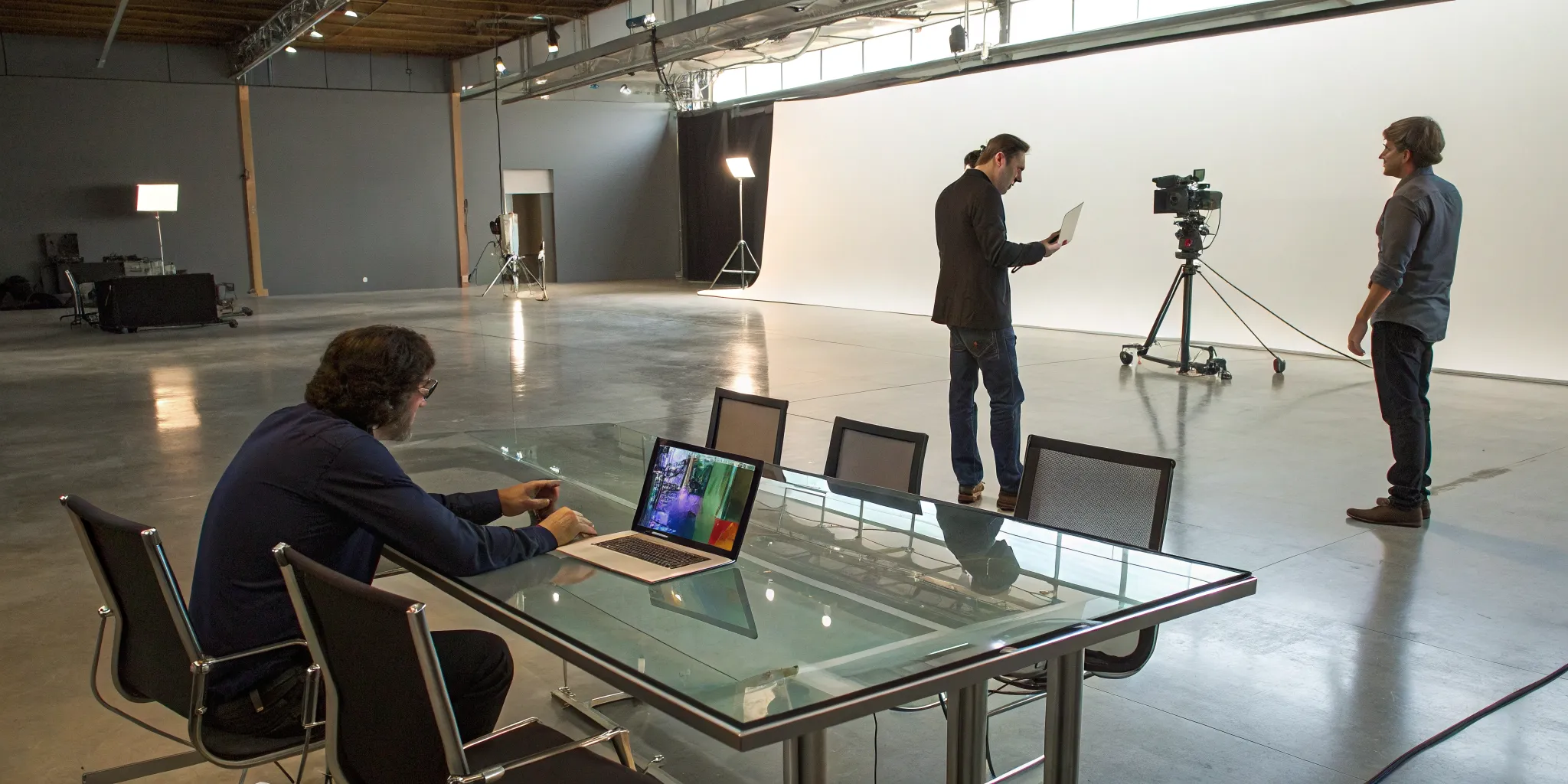
Virtual production blends live-action filmmaking with computer-generated imagery (CGI) as you shoot. Instead of filming actors against a green screen and adding the digital world in post-production, VP uses technologies like massive LED walls and real-time game engines (like Unreal Engine) to create the background environment right on set. This means directors, actors, and the crew can see the final scene, or a close version of it, as it's being filmed. This immediate feedback loop is changing the way movies are made by allowing for on-the-fly creative adjustments, from changing the lighting to moving a mountain in the background with a few clicks.
Why studios are embracing virtual production
The shift toward virtual production isn't just about creating cool visuals; it's also a smart business decision. Studios are adopting this technology because it streamlines the entire filmmaking process. By creating digital sets, you can drastically reduce the need for expensive and logistically complex location shoots. This means less travel, smaller crews, and fewer weather-related delays. This controlled environment not only saves money but also gives creators more time to focus on performance and storytelling. For many, virtual production is reshaping filmmaking by making ambitious, world-building projects more achievable and cost-effective, which is a huge win for any studio.
Common misconceptions to set aside
One of the biggest misunderstandings about virtual production is that it’s here to replace traditional filmmaking entirely. That simply isn’t the case. Instead of thinking of it as a replacement, it’s better to see it as a powerful addition to the filmmaker's toolkit. The most effective projects blend practical sets and effects with digital enhancements. Understanding the myths and realities of virtual production is key; it’s not about choosing digital over physical but about finding the perfect harmony between them. This hybrid approach allows for more creative freedom and can lead to visual experiences that wouldn't be possible with just one method alone.
What Do Virtual Production Artists Actually Do?
The term "virtual production artist" can feel a bit broad, but that’s because their role is so dynamic and central to the entire process. These artists are the architects and operators of the virtual worlds you see on screen. They are a unique blend of creative visionary and technical wizard, working at the intersection of filmmaking and game development. Understanding their key responsibilities is the first step in finding the right talent for your project. Let's break down what these artists actually do on a day-to-day basis.
Design real-time environments
At the heart of virtual production are the worlds themselves. A VP artist is responsible for designing and building these immersive, real-time environments. Using powerful game engines like Unreal Engine, they create digital sets that can be changed on the fly. Imagine adjusting the lighting from dawn to dusk with a single click or moving a mountain range during a take. This is the power they bring to the set. This approach to virtual production gives directors and cinematographers incredible flexibility, allowing them to experiment and make creative decisions while seeing the final shot, not a green screen, in the camera.
Handle animation and motion capture
Virtual production artists are also the bridge between human performance and digital characters. They are deeply involved in handling animation and motion capture (mocap). Working alongside actors, they use specialized technology to capture every nuance of a performance and translate it into a digital model in real time. This immediate feedback is a game-changer. Directors can see how the animated character looks and moves during the actual take, allowing them to give more precise direction to the actors. According to the Visual Effects Society, this integration is key to the future of filmmaking, making the process more collaborative and efficient.
Manage LED volumes and compositing
Forget endless green screens and the guesswork that comes with them. A key part of a VP artist's job is managing the massive LED walls, or "volumes," that display the virtual environments on set. These artists ensure the digital background perfectly syncs with the camera's movement, creating realistic parallax and reflections that would be impossible with a static backdrop. This not only results in a more believable final image but also transforms the experience for the cast and crew. Actors can now react to the world around them, and the entire team sees a close-to-final shot right on set, which streamlines the entire production pipeline.
Integrate sound design
A world isn't truly immersive until you can hear it. That's why virtual production artists also play a role in integrating sound design. While they aren't the sound designers themselves, they collaborate closely with the audio team to ensure the soundscape is woven into the virtual environment. This means syncing ambient sounds, character audio, and environmental effects with the real-time visuals. As the Audio Engineering Society points out, this cohesive approach is vital for establishing the mood and atmosphere of a scene. It ensures that what the director sees and what the audience eventually feels is a complete, believable world from the very start of production.
Key Skills for a Virtual Production Artist
Virtual production is a dynamic field that merges the worlds of filmmaking, animation, and game development. Because of this, a great virtual production artist is a unique blend of technician and creative. They need the technical chops to operate complex software in a real-time environment and the artistic sensibility to build immersive, believable worlds. When you’re looking to hire, you’re not just filling a single role; you’re looking for someone who can bridge multiple disciplines.
Finding the right person means looking beyond a single specialty. A talented artist might be a brilliant 3D modeler, but they also need to understand how their work impacts the entire pipeline, from the on-set LED volume to the final composite. This requires a specific combination of hard and soft skills. As you begin your search, focus on these five key areas to identify artists who can truly bring your project to life and work seamlessly with your existing team.
Technical proficiency with core software
A virtual production artist’s toolkit is vast. While roles can be specialized, a general understanding of the entire content creation pipeline is essential. Artists often come from backgrounds like 3D modeling, animation, or game art, and they should be comfortable with the industry-standard software for their discipline. This could include tools like Maya or Blender for 3D modeling, ZBrush for digital sculpting, and Substance Painter for creating realistic textures.
The specific software proficiency you need will depend on the role you’re hiring for. An Environment Artist will have a different skill set than a Character Animator or a Lighting Specialist. The key is to find someone with deep expertise in their area who also understands how their work fits into the larger puzzle. A strong candidate can speak to their experience with various virtual production roles and demonstrate their ability to create assets that are optimized for a real-time workflow.
Game engine expertise (Unreal, Unity, and beyond)
Game engines are the heart of virtual production, and expertise here is non-negotiable. These platforms are where digital environments are built, lit, and rendered in real time. Unreal Engine has become the dominant force in film and television, known for its photorealistic rendering capabilities and robust toolset. However, Unity remains a powerful engine, especially in mobile gaming and certain interactive experiences. A top-tier artist will be fluent in at least one of these engines.
This expertise goes far beyond simply importing assets. A skilled artist understands how to optimize scenes for performance, create complex materials, implement lighting that looks cinematic, and use scripting tools like Unreal’s Blueprints to add interactivity. They know how to push the engine to its limits while maintaining the stable frame rates needed for on-set shooting. Our work on projects like Lollipop Racing shows how game engine mastery can create vibrant, responsive worlds that captivate audiences.
Compositing and post-production knowledge
The work of a virtual production artist doesn’t stop on the virtual set. A crucial skill is understanding how the real-time elements will be integrated with live-action footage during post-production. This knowledge of compositing ensures that what’s created in the engine will blend seamlessly with what’s captured by the camera. Artists who understand this can anticipate potential issues and make smarter creative choices on set, saving significant time and money later.
They should be familiar with the principles of compositing and have some knowledge of software like Foundry’s Nuke or Adobe After Effects. This allows them to think like a VFX artist, considering things like color space, lens distortion, and depth of field. This holistic view helps bridge the gap between production and post-production, which is essential for creating a cohesive final image in complex projects like Marvel Studios' Ant-Man and The Wasp: Quantumania.
A strong creative portfolio
Technical skills are only half the equation. A virtual production artist’s portfolio is where you’ll see their creative vision and artistic eye in action. Look for high-quality results that demonstrate a strong sense of composition, lighting, color theory, and storytelling. The work should not only be technically proficient but also aesthetically compelling. A great portfolio will showcase a range of styles and prove the artist can adapt to different creative briefs.
Pay close attention to project breakdowns. These can be more revealing than the polished final product, as they show the artist’s process and problem-solving skills. Does their work align with the visual language of your IP? Can you see them building a world that feels authentic to your story? A portfolio is the best indicator of an artist’s quality and whether their creative sensibilities match your project’s needs. You can see examples of our creative work in our latest news and case studies.
Collaboration and communication skills
Virtual production is an intensely collaborative process. It brings together departments like cinematography, art, and VFX in a fast-paced, real-time environment. Because of this, an artist’s ability to communicate and collaborate is just as important as their technical skill. They must be able to clearly articulate technical ideas to non-technical team members, like a director or producer, and quickly adapt to creative feedback on set.
Look for artists who are team players and effective problem-solvers. During an interview, ask about their experience working with different departments and how they handle creative disagreements or technical challenges under pressure. The fast-paced nature of a virtual production set leaves little room for miscommunication. The right artist is someone who can contribute to a positive and efficient working environment, which is a core value we hold within our own expert team.
How to Evaluate a VP Artist's Portfolio
An artist’s portfolio is your single most important tool for vetting talent. It’s more than a collection of pretty pictures; it’s a direct look into their technical skills, creative sensibilities, and professional standards. Here’s how to look past the shine and analyze what really matters for your project.
Analyze their demo reel
A demo reel is designed to impress, but you need to watch it with a critical eye. Look for evidence of the specific skills your project requires. A great reel doesn't just show the final product; it often includes breakdowns that peel back the layers, revealing the artist's specific contribution. Are you seeing the skills needed for virtual production, like environment art, CG generalist work, or Unreal Engine development? Platforms used to hire virtual production freelancers often categorize artists by these exact skills, so use them as a checklist. A strong reel demonstrates not just talent, but a clear understanding of the entire production pipeline.
Match their experience to your project
It’s not enough to find a good artist; you need to find the right artist for your world. As you review their work, ask yourself if their style and experience align with your IP's unique needs. If their portfolio is filled with hyper-realistic military assets, they might not be the best fit for your whimsical, stylized story. Look for artists whose past work resonates with your project’s aesthetic and technical demands. For example, bringing a vibrant, cartoonish world to life requires a completely different skill set than creating a gritty, photorealistic environment, as seen in our work on Lollipop Racing.
Spot the potential red flags
While you’re looking for green flags, be just as vigilant for the red ones. An artist with an unusually low rate might seem like a bargain, but as industry pros often say, bad VFX can be worse than no VFX at all. A price that seems too good to be true often leads to low-quality work that can damage your IP's credibility. Other red flags include a portfolio with inconsistent quality, an inability to articulate their specific role on team projects, or a lack of process breakdowns. Vetting talent is about protecting your investment and ensuring you partner with reliable, high-caliber transmedia experts.
Where to Find Top Virtual Production Talent
Once you know what skills you’re looking for, the next step is finding the right people. The virtual production talent pool is growing, but the top artists are in high demand. Your search will likely lead you down three main paths: partnering with a specialized studio, hiring freelancers from a marketplace, or connecting with artists through professional networks. Each approach has its own benefits, depending on your project’s scale, budget, and timeline. Let's look at where you can find the experts who will bring your vision to life.
Specialized studios and transmedia partners
For large-scale projects or IP holders looking to build an entire ecosystem, partnering with a specialized studio is often the most effective route. These studios come with a complete, pre-vetted team of artists, engineers, and strategists who are already accustomed to working together. This eliminates the challenge of building a team from scratch and ensures a cohesive workflow from day one. A transmedia partner like Arctic7 provides comprehensive services that cover everything from initial strategy to final execution, making them ideal for complex projects that span games, film, and other media. This approach gives you a single point of contact and a team that understands how to manage the entire virtual production pipeline.
Freelance platforms and talent marketplaces
If your goal is to fill a specific role or you have a smaller, well-defined project, freelance platforms can be a great resource. Websites like CGHERO are dedicated to connecting studios with creative professionals for virtual production work. These platforms often feature portfolios, experience levels, and reviews, which helps you assess potential candidates. Many marketplaces also offer access to vetted talent, meaning they’ve already verified the artist’s skills and experience. This can save you significant time in the hiring process. Hiring freelancers gives you flexibility, but it also means you’ll be responsible for managing individual contracts, communication, and integration with your core team.
Industry networks and professional groups
Sometimes the best talent is found through word-of-mouth and professional connections. Industry networks on LinkedIn, specialized forums, and even Reddit communities can be valuable places to find experienced artists. These groups offer a direct line to professionals who are passionate about their craft and active in the industry. Engaging in these communities can also give you a realistic sense of market rates and availability. For example, discussions on forums like Reddit's r/vfx often reveal that top-tier talent commands a higher budget. While this route requires more effort in vetting and outreach, it can lead you to hidden gems who aren't actively browsing job boards.
How to Budget for Virtual Production Artists
Setting a realistic budget is one of the most critical steps in bringing your virtual production project to life. The costs can vary widely, so understanding the key variables will help you plan effectively and avoid surprises down the road. Whether you’re hiring a single freelancer or partnering with a full-service studio, knowing how to allocate your funds ensures you can achieve your creative vision without breaking the bank. It’s all about matching your project’s needs with the right talent and financial strategy.
Freelance rates vs. studio partnerships
Your first major budget decision is whether to hire individual freelancers or engage a dedicated studio. Freelancers offer flexibility and are often hired on an hourly or per-project basis. Depending on experience and specialization, freelance rates for 3D artists can range anywhere from $25 to over $150 per hour. This route can be cost-effective for smaller, well-defined tasks.
On the other hand, partnering with a studio like Arctic7 provides a more comprehensive and predictable cost structure. You get an entire team of specialists, established workflows, and project management baked in. This is often a better fit for complex, large-scale projects where you need a cohesive team to handle everything from strategy to execution. A studio partnership typically involves a project fee or retainer, giving you a clearer picture of the total investment from the start.
Key factors that influence cost
Several elements will directly affect the cost of hiring virtual production talent. The single biggest factor is project complexity. A simple, static virtual environment will cost significantly less than a dynamic world with complex character animations and interactive elements. The specific skill sets required also play a huge role. For example, an artist specializing in advanced character rigging or photorealistic lighting will command a higher rate.
Your timeline is another critical factor. Tight deadlines often require bringing on more senior artists or a larger team to get the work done on time, which naturally increases costs. According to The Animation Guild, specialized roles and expedited schedules are primary drivers of higher production expenses. Clearly defining these elements upfront will help you get a more accurate estimate from potential artists or studio partners.
Get the most from your budget
To make your budget work harder, clarity is your best friend. Start by creating a detailed project brief that outlines your vision, scope, and specific deliverables. This document becomes your roadmap, helping to prevent scope creep, which is a common source of unexpected costs. When everyone understands the goals from day one, the production process becomes much more efficient.
Maintaining open and consistent communication is just as important. Regular check-ins and a clear feedback loop help artists stay on track and reduce the need for time-consuming revisions. As a guide from Creative Bloq suggests, a strong brief and good communication are fundamental to a successful collaboration. By investing time in planning and communication upfront, you set the project up for a smoother, more cost-effective execution.
Why you need a contingency fund
No matter how well you plan, unexpected challenges can and do arise in production. You might need last-minute revisions, encounter a technical hurdle that requires extra work, or decide to add a small feature you hadn't originally considered. This is where a contingency fund becomes essential. It’s a portion of your budget set aside specifically for these unforeseen expenses.
Industry best practices suggest having a healthy buffer. The Producers Guild of America recommends setting aside 10% to 20% of your total production budget for contingency. This safety net gives you the flexibility to address issues without having to compromise on quality or derail your timeline. Think of it as insurance for your creative vision; it ensures you can deliver a polished final product, even when things don’t go exactly as planned.
Prepare for These Common Hiring Challenges
As you start your search for the perfect virtual production artist, it helps to know what challenges might pop up. Being prepared for these common hurdles will make the hiring process smoother and set your project up for success from day one. Let's walk through a few key areas to keep in mind so you can build your team with confidence.
Balance quality with cost
Let's talk budget. While it's tempting to find the most affordable option, virtual production is a field where quality and cost are closely linked. A budget of around $1,000 per minute of VFX work is often considered quite limited and may not attract the experienced artists you need for a polished final product. For perspective, even a relatively simple three-minute VFX job can command a budget of at least $18,000 in the U.S. Aligning your budget with your quality expectations is one of the most important steps you can take. It ensures you’re not just hiring an artist, but investing in a result that meets your vision.
Find the right fit for your scope
Finding a talented artist is one thing; finding the right artist for your specific project is another. The needs of a cinematic cutscene are very different from those of an interactive VR experience. Before you hire, clearly define your project's scope, artistic style, and technical pipeline. This will help you filter for talent with relevant experience. Using platforms that connect you with vetted creative professionals can be a great shortcut, as they pre-screen artists and studios. This ensures you’re connecting with people who not only have the skills but are also a good match for the scale and creative direction of your work.
Manage communication with remote teams
Virtual production often involves collaborating with artists and studios across the globe, which makes clear communication non-negotiable. Misaligned expectations or missed updates can derail a project quickly. From the outset, establish a solid communication plan. Look for a partner who prioritizes transparency and manages the entire process, keeping you in the loop with regular updates. This proactive approach is crucial for working with remote teams effectively. It helps prevent misunderstandings, ensures the final product matches your vision, and builds a strong, collaborative relationship, no matter the distance.
Build Your Virtual Production Dream Team
Putting together the right team is the most critical step in any virtual production project. The technology is powerful, but it’s the artists, engineers, and producers who bring your vision to life. Your team structure will depend on your project's scale and complexity, but thinking through these key areas will set you up for success from day one.
Identify your core roles
Every virtual production has unique needs, but most teams are built around a few core disciplines. You’ll need artists who can create stunning visuals and technicians who can manage the complex workflows. Key roles often include Environment Artists, CG Generalists, 3D Artists, and Unreal or Unity Developers who build and optimize the real-time world. You may also need an Animation Producer to manage timelines and a Sound Designer to create an immersive audio experience. Understanding these distinct skill sets helps you write a clear job description and find the right person for each part of the puzzle.
Decide between in-house and outsourced talent
Once you know the roles you need, you have to decide where to find your talent. Do you build an in-house team or look for outside help? Hiring full-time staff gives you long-term stability, but it’s a significant investment. Outsourcing to freelancers or specialized studios offers flexibility and access to a global talent pool for specific project needs. This approach is often more cost-effective for short-term projects or when you need a very specific skill. Many studios find a hybrid model works best, combining a core in-house team with external experts. We're always looking for great people to join our team and contribute to this collaborative environment.
When to hire a full-service transmedia partner
If you're managing multiple moving parts, coordinating a team of individual freelancers can quickly become a full-time job. This is often the point where a full-service partner makes sense. Instead of hiring piece by piece, you engage a single studio that has a team of skilled VFX artists and developers ready to go. A dedicated partner ensures your project stays on track and finishes on time, handling all the project management so you can focus on the creative vision. This is especially valuable for large-scale projects or when expanding an IP across multiple platforms, as a partner can provide the strategic oversight needed to create a connected entertainment ecosystem, like in our work on Lollipop Racing.
Finalize These Details Before You Sign
You’ve found a promising artist or studio, and you’re ready to move forward. This is an exciting step, but it’s also the most critical. Before any contracts are signed or handshakes are made, you need to iron out the final details to ensure the partnership is set up for success. Think of this as your final pre-flight check. Getting clarity now prevents misunderstandings and costly changes down the line, ensuring your creative vision is executed flawlessly.
Define the project scope and deliverables
A successful project starts with a crystal-clear understanding of what needs to be done. Before you sign, work with your potential partner to create a detailed Statement of Work (SOW). This document should explicitly outline the project's scope, key milestones, deadlines, and specific deliverables. For example, will they deliver raw motion capture data, fully rendered scenes, or something in between? A well-defined scope is your best tool against scope creep. A great partner will offer comprehensive services and work with you to define these terms, ensuring the right talent is matched to each task and that everyone shares the same vision for the final product.
Ask these questions before partnering
This is your chance to confirm that a potential partner’s workflow and communication style align with yours. Don’t hesitate to schedule a call to discuss your goals and ask direct questions. How do they handle feedback and revisions? Who will be your primary point of contact? Can they walk you through their process for a project similar to yours? Understanding their approach to collaboration is just as important as their technical skill. You’re not just hiring a service provider; you’re building a creative partnership. Make sure you get to know the team you’ll be working with and feel confident in their ability to bring your IP to life.
Vet their credentials and past work
By now, you’ve likely seen their demo reel, but it’s time to dig a little deeper. Look for projects that are directly relevant to your needs. Virtual production involves a wide range of skills, from creating real-time environments to managing LED volumes, so you need to confirm they have the specific expertise you require. Ask for detailed case studies that explain their role and the project's outcome. For example, seeing their specific work on a major film can give you a much clearer picture of their capabilities than a short sizzle reel. Don’t be afraid to ask for references to learn what it was like to work with them.
Related Articles
- The Virtual Production Workflow: A Practical Guide
- How to Hire a Virtual Production Company: A Smart Guide
- How Does Virtual Production Work? A Creator's Guide
- Indie Virtual Production Studio: The Essential Guide
- Your Guide to Virtual Production Services for TV Pilots
Frequently Asked Questions
My project isn't a sci-fi epic. Can virtual production still benefit my IP? Absolutely. While virtual production is famous for creating otherworldly landscapes, its real strength is giving you complete control over your environment. This is valuable for any genre. You could use it to recreate a specific historical period without scouting expensive locations, build a whimsical, stylized world for an animated story, or simply guarantee perfect "golden hour" lighting for an entire day of shooting. Think of it less as a genre tool and more as a way to build your unique world with greater efficiency and creative freedom.
I'm interested in virtual production, but I don't know where to start. What's my first move? Before you even think about hiring, your first step is to get crystal clear on your own vision. Sit down and write a detailed brief. What is the story you want to tell? What is the look and feel of the world? What are the absolute must-have shots or sequences? Having this document forces you to define your scope and goals. It will become your most valuable tool when you start talking to artists and studios, as it helps them give you an accurate budget and a realistic plan.
When does it make more sense to hire a freelancer versus partnering with a full studio? This really comes down to project scale and how much management you want to handle yourself. Hiring a freelancer is a great option when you have a very specific, well-defined task, like creating a single 3D asset or filling a short-term gap on your team. Partnering with a studio makes more sense for larger, more complex projects. A studio provides a complete, managed team of specialists who already know how to work together, which is ideal when you need to build an entire world or expand your IP across multiple platforms.
What's the biggest mistake people make when budgeting for virtual production? The most common mistake is creating a budget that doesn't align with the project's creative ambitions. It's easy to underestimate the cost of high-quality work. While it can be tempting to go with the lowest bidder, subpar visual effects can do more harm to your IP's credibility than no effects at all. A realistic budget accounts for the level of detail you want to achieve and includes a contingency fund (usually 10-20%) for those inevitable unexpected challenges that pop up during production.
Besides nice visuals, what really matters when I'm reviewing a VP artist's portfolio? A polished final product is great, but you need to look for the "how" and the "why." Look for project breakdowns that show the artist's process and problem-solving skills. This gives you a much better sense of their capabilities than a flashy sizzle reel. Also, pay close attention to relevance. An artist might be incredibly talented, but if their portfolio is full of gritty, realistic work and your IP is bright and stylized, they may not be the right creative fit. You're looking for a partner whose work demonstrates they can capture the specific soul of your project.
New Immersive & XR Media Capabilities Added to Arctic7's Suite of Games, Film & TV and Digital Services

Arctic7 Shares Details of its Work on Skeleton Crew and Cinematics Partnership with Fateless

The Human Touch: Adding Personality to Project and Product Management
Whether it’s your team, your client, or your stakeholders, understanding the human dynamics is just as critical as hitting milestones.

McDonald's Case Study: Bridging Brand and Play | Arctic7
Bridging Brand and Play: An Interview with Lindsay Blenkhorn Daggitt