
Why Brands Use Transmedia Storytelling for Lasting Fandom
Why brands use transmedia storytelling is not a question of putting the same campaign on more channels. It is a question of whether a brand or intellectual property can become a world people want to enter, explore, and share. When each medium contributes something distinctive, audiences gain more ways to participate and the brand gains more durable reasons to stay relevant.
Explore how Arctic7 builds connected entertainment experiences across formats.
What is transmedia storytelling for brands?
Transmedia storytelling for brands is the deliberate expansion of a shared world across media, with each format contributing a distinct story, experience, or point of view. A film, game, social experience, live event, or immersive installation can stand on its own while adding meaning to the larger ecosystem.
That distinction matters because transmedia is often confused with a campaign adapted for multiple channels. A trailer resized for social media, a television spot cut into short clips, and a product message repeated in an email sequence may be effective multichannel marketing. They are not automatically transmedia storytelling.
In a transmedia system, the medium has a job. A film may establish the central conflict. A game may give the audience agency inside the world. A short-form series may reveal a character's history. A live or immersive experience may turn the audience into participants. The whole becomes richer because the parts are designed to complement, not duplicate, one another.
Henry Jenkins, whose work helped establish the modern framework, describes transmedia storytelling as the systematic distribution of integral elements across multiple channels, with each medium making its own contribution to the story. His example of The Matrix illustrates the principle: films, animation, comics, and games each add different pieces to a larger world. Read Jenkins' transmedia storytelling principles for the original framework.
Why do brands use transmedia storytelling?
Brands use transmedia storytelling to give audiences more meaningful ways to engage, turn a single release into an evolving relationship, and create a connected set of entry points. The model can deepen fandom, extend the useful life of an IP, and open new commercial opportunities without reducing the story to one format.
The business case is strongest when storytelling and audience behavior reinforce one another. A connected world can help a brand move from a one-time impression to a sequence of experiences: discover the premise, follow a character, play inside the rules, discuss a theory, attend an event, or return for the next chapter.
1. It turns attention into participation
Most brand content asks people to watch, read, or scroll. Transmedia can ask them to do something. They might choose a path in a game, decode a clue, create fan art, debate a character's decision, or bring a friend into the world. That shift from exposure to participation gives the audience a role in the life of the IP.
Participation also creates signals that a brand can learn from. Which characters attract discussion? Which entry point brings in new audiences? Where do people stop? These questions are more useful than treating every impression as an isolated success. The goal is not to force every fan through every channel. It is to design enough meaningful paths that different audience segments can find a role that fits.
2. It gives a franchise more time to compound
A single release has a narrow window of attention. A well-designed transmedia world can create a rhythm of discovery and return. A new game can reopen interest in a film. A series can make an older character newly relevant. A live experience can make the world tangible. Each addition creates a reason to revisit the whole without requiring the brand to repeat the same story.
This is why long-running franchises often feel larger than their individual releases. Their durability comes from a balance between recognizable identity and fresh contribution. The audience knows the promise of the world, but it still has something new to learn, play, collect, discuss, or experience.
3. It creates more than one route into the world
People do not enter entertainment ecosystems in the same way. One person may discover a character through a film, another through a game, and another through a creator or live event. A transmedia approach lets each format become a credible front door instead of treating one flagship release as the only acceptable beginning.
That flexibility is especially valuable for brands serving different regions, age groups, levels of fandom, and accessibility needs. It can also make a complex world easier to approach. A new audience member can enjoy a self-contained experience, while a dedicated fan can connect details across formats and gain additive comprehension.
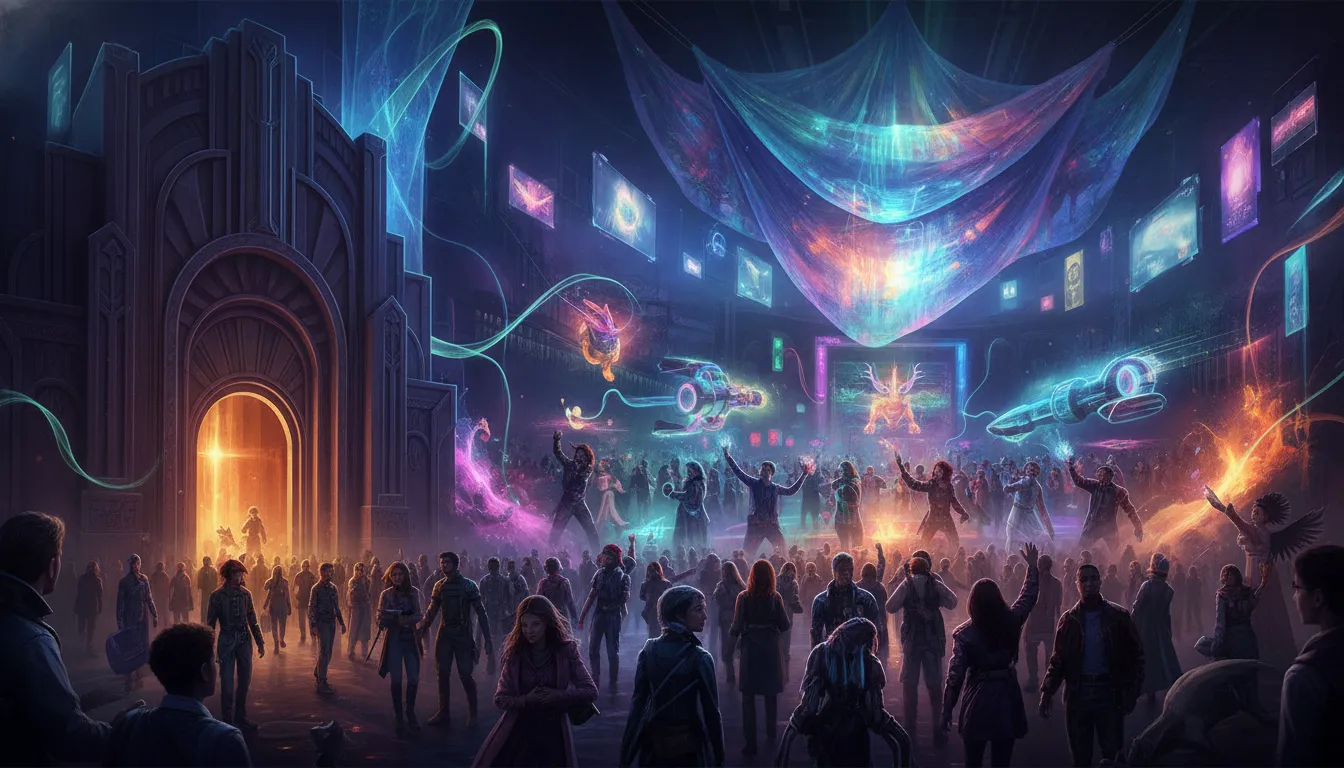
How does transmedia storytelling turn audiences into participants?
Transmedia storytelling turns audiences into participants by giving each medium a meaningful form of agency, discovery, or contribution. Fans can choose where to begin, connect clues across experiences, create interpretations, and share the world with others. Participation becomes part of the relationship rather than a request added after the campaign.
This does not mean a brand should make every audience member solve a puzzle. Participation can be active or light-touch. A player may shape the story through choices. A viewer may follow a character's side story. A fan community may expand the conversation through theories and creative work. A casual audience member may simply enjoy one complete experience and decide to explore another.
The important design question is what the audience can do in each environment. Film is powerful for scale, performance, and emotional framing. Games create agency and repeatable interaction. Social platforms can support conversation and rapid response. Live and immersive spaces create presence and shared memory. When those strengths are used intentionally, the ecosystem feels designed for people rather than distributed at them.
Research and industry analysis point to the same principle. A Kellogg School of Management analysis of transmedia brand storytelling describes campaigns such as The Hunger Games as worlds that used multiple platforms to encourage spreadability and participation. The lesson is not to copy a campaign tactic. It is to give each platform a reason to exist in the audience journey.
Why do new entry points matter for brand growth?
New entry points matter because discovery is fragmented and audiences have different levels of familiarity, time, and motivation. A transmedia world can welcome someone through a short story, game, event, or visual experience, then offer deeper paths for those who want more. This expands reach without making every experience identical.
A new entry point should answer at least one of three questions: What does this format make easier to understand? What can people do here that they cannot do elsewhere? What part of the world becomes more emotionally or culturally relevant through this experience?
Without a clear answer, a brand may simply create a larger content calendar. With one, each release can serve a different audience need. A short-form character story can lower the commitment required to begin. A game can reward longer engagement. A behind-the-scenes or virtual production experience can invite people to see how a world is made. The system becomes a set of connected invitations, not a collection of disconnected outputs.
This is also where accessibility and continuity matter. Every entry point should communicate enough context to be satisfying on its own. Cross-platform knowledge can reward dedicated fans, but it should not become a barrier that makes new audiences feel excluded. The best ecosystems create optional depth rather than mandatory homework.
See how Arctic7 connects story, technology, and production across entertainment formats.
How can brands use transmedia storytelling for lasting fandom?
Brands can use transmedia storytelling for lasting fandom by protecting a recognizable core while allowing each format to offer fresh participation. Fandom grows when people feel that the world is coherent, worth returning to, and open enough for interpretation. Consistency earns trust; meaningful expansion gives that trust somewhere new to go.
Long-term fandom is not the same as maximizing the number of channels. It depends on a durable audience promise. What does this world make people feel? What questions can remain open? Which characters, themes, or systems can sustain new stories? What kinds of contribution can fans make without being treated as unpaid distribution?
Pokemon is a useful example because its games, animated stories, trading card play, products, and community experiences have made the world legible through multiple forms of engagement over decades. A 2025 case study in Advances in Economics and Management Research examines Pokemon's transmedia strategy as a model of coordinated world-building, platform-specific contribution, and participatory culture. The relevant lesson for brand leaders is structural: longevity comes from a system that can keep adding value without losing its identity.
Fandom also grows through social memory. People remember the experience they shared with friends, the theory they argued for, or the character they discovered at a formative moment. A connected entertainment ecosystem gives a brand more opportunities to create those memories, especially when each new experience respects what audiences already care about.
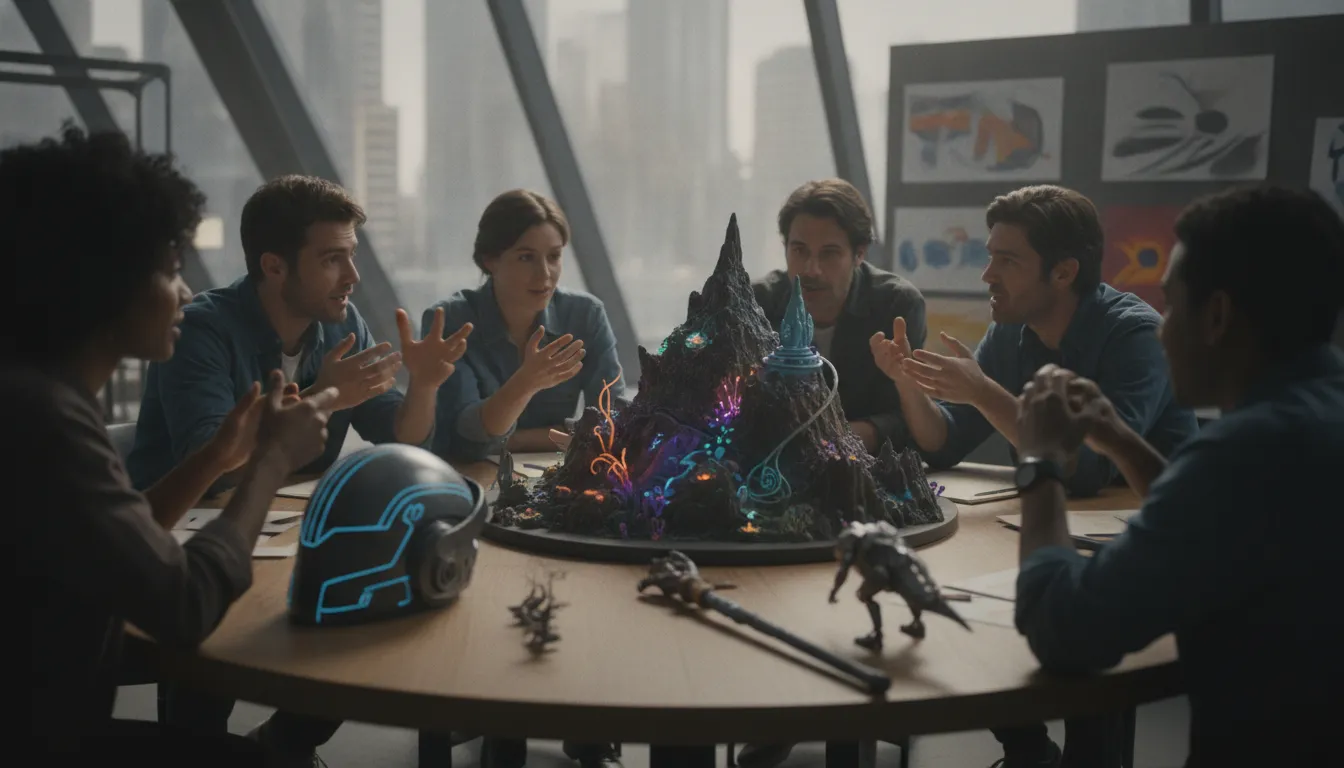
What business outcomes can transmedia storytelling support?
Transmedia storytelling can support stronger engagement, longer franchise relevance, diversified revenue opportunities, and more resilient audience relationships. It does not guarantee commercial success. The outcome depends on the quality of the IP, the fit between format and audience behavior, disciplined rights and canon management, and the ability to measure movement across the ecosystem.
For brand and IP leaders, the value should be considered as a portfolio rather than a single campaign metric. A new experience may acquire an audience, deepen existing fandom, test a character, support licensing, or create a repeatable community behavior. Those outcomes can appear on different timelines and may not be visible in one platform's dashboard.
| Transmedia decision | Audience value | Potential business value |
|---|---|---|
| Assign each medium a distinct role | More reasons to explore the world | Better use of format-specific investment |
| Create multiple entry points | Lower barrier to discovery | Broader reach across audience segments |
| Build optional depth for fans | Greater participation and return visits | Longer franchise relevance |
| Connect releases to one world | Coherent experience across touchpoints | More resilient ecosystem value and licensing potential |
Measurement still matters, but it should follow the audience journey. Teams can track discovery, movement between experiences, repeat participation, sentiment, community activity, and downstream commercial signals. Arctic7's framework for measuring transmedia ROI explores how audience engagement, brand equity, and revenue attribution can be considered together rather than as isolated platform results.
See how connected production capabilities can support a larger entertainment ecosystem.
When is transmedia storytelling the right fit for a brand?
Transmedia storytelling is the right fit when a brand or IP has a world with unresolved potential, an audience that wants more than one kind of interaction, and a business reason to build beyond a single release. It is not the right fit when expansion would create repetition, dilute the core promise, or outpace production readiness.
Use this checklist before committing to a multi-format roadmap:
- There is a world, not only a message. The IP has characters, themes, rules, or tensions that can sustain more than one meaningful experience.
- Each format has a job. The team can explain what film, games, social, live, or immersive experiences each contribute that the others cannot.
- The audience has a reason to participate. The plan creates agency, discovery, contribution, or community rather than asking people to consume more versions of the same asset.
- Entry points are clear. New audiences can begin without completing a catalogue of prior content, while dedicated fans can find optional depth.
- Rights and canon can be managed. Decision-makers understand what must remain consistent and where creators can experiment.
- The operating model can support the ambition. Strategy, creative execution, technology, production, and measurement are connected early enough to prevent expensive fragmentation.
If several answers are no, the next step may be an IP audit or a focused pilot, not a sprawling universe. A smaller, well-designed extension can teach a team more than a large rollout with no clear audience promise.
What should brand and IP leaders ask before investing?
Before investing, brand and IP leaders should ask whether expansion serves the audience, whether every format adds something new, and whether the organization can protect coherence while moving at production speed. The strongest transmedia plans connect creative ambition to rights, resources, audience insight, and a measurable reason to exist.
- What part of the world will audiences want to enter next?
- Which format can express that part better than the current one?
- Can someone discover this experience without feeling lost?
- What kind of participation are we inviting, and what will we learn from it?
- How will the team protect the core identity while enabling new creative voices?
- What outcome would justify the next investment: reach, participation, retention, cultural relevance, revenue, or a combination?
These questions shift the conversation from "How many channels should we use?" to "What kind of world are we building, and why will people return?" That is the strategic heart of the model.
Arctic7 works with IP holders, games publishers, studios, and entertainment brands to connect transmedia strategy with creative execution and technical delivery. Its transmedia universe strategy guide covers the planning boundary, while the entertainment ecosystem perspective explains how connected experiences can extend an IP beyond a single release.
Talk with Arctic7 about building a connected world your audience can enter, explore, and remember.
Frequently asked questions
Why do brands use transmedia storytelling?
Brands use transmedia storytelling to deepen participation, create more entry points, extend franchise relevance, and connect audience engagement to broader ecosystem value. The approach works when each medium contributes something distinct instead of repeating the same campaign.
What is the difference between transmedia and multimedia storytelling?
Multimedia storytelling may deliver the same message through several formats. Transmedia storytelling gives each format a distinct role in expanding a shared world, so audiences can experience a complete piece in one medium and discover additional meaning across others.
How does transmedia storytelling build fandom?
It builds fandom by giving people optional depth, meaningful ways to participate, and more opportunities to share experiences with others. A coherent world earns trust, while new characters, perspectives, and forms of interaction give fans reasons to return.
Does every brand need a transmedia strategy?
No. Transmedia is best suited to brands or IP with a world that can support meaningful expansion and an audience that benefits from different forms of engagement. A focused pilot or single-format story may be a better choice when those conditions are not present.
How should a brand measure transmedia success?
Measure the audience journey across discovery, participation, movement between experiences, repeat engagement, sentiment, community behavior, and commercial outcomes. Use a shared framework that distinguishes early engagement signals from longer-term brand and revenue effects.
New Immersive & XR Media Capabilities Added to Arctic7's Suite of Games, Film & TV and Digital Services

Arctic7 Shares Details of its Work on Skeleton Crew and Cinematics Partnership with Fateless

The Human Touch: Adding Personality to Project and Product Management
Whether it’s your team, your client, or your stakeholders, understanding the human dynamics is just as critical as hitting milestones.

McDonald's Case Study: Bridging Brand and Play | Arctic7
Bridging Brand and Play: An Interview with Lindsay Blenkhorn Daggitt