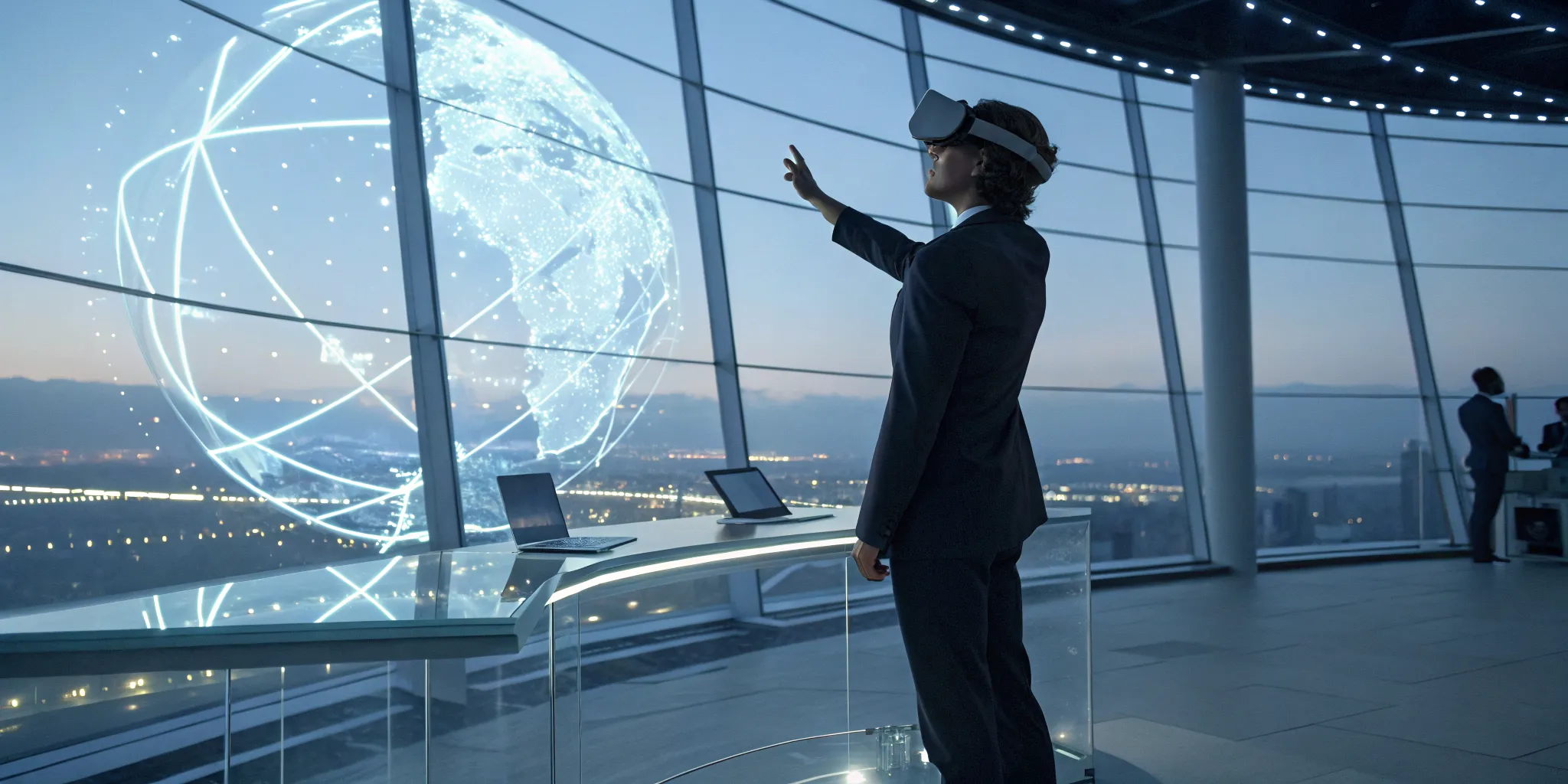

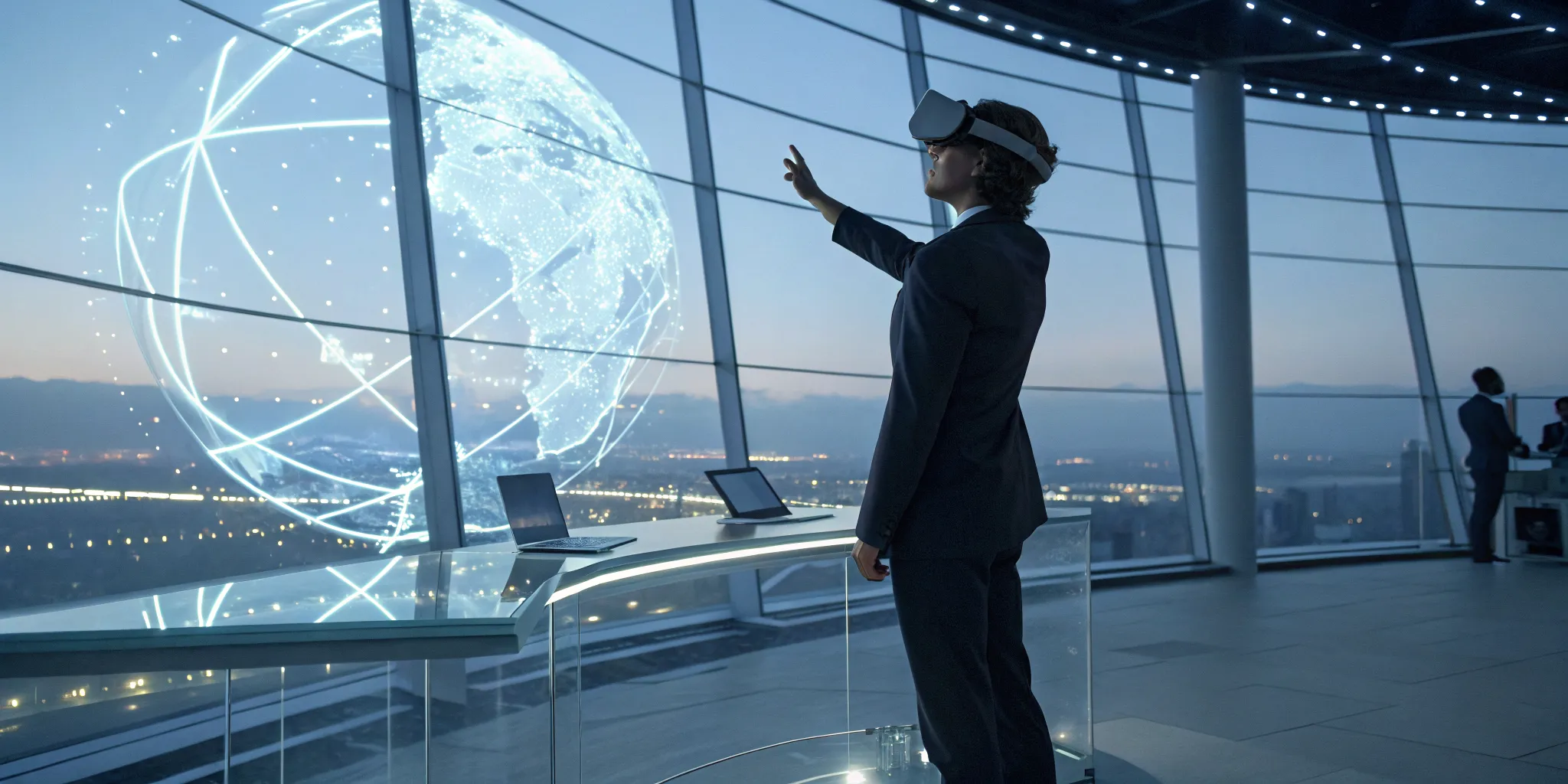
What Is Virtual Reality Command and Control?
Managing a large-scale creative franchise across games, film, and television requires a level of oversight that goes far beyond spreadsheets and video calls. How do you ensure your directors, artists, and producers share a unified vision when they are spread across the globe, working on countless digital assets? You need a central nervous system for your production. This is the role of virtual reality command and control. It provides creative leaders with a powerful, immersive platform to oversee every aspect of a project. By stepping into a virtual environment, your team can review digital sets, coordinate complex sequences, and make collaborative decisions in real time, ensuring creative integrity is maintained from start to finish.
Key Takeaways
- Go Beyond Flat Screens: VR command and control transforms complex data into an immersive 3D environment you can step inside. This spatial understanding helps your team process information more intuitively, leading to quicker and more confident creative decisions.
- Connect Global Teams and Cut Costs: VR creates a shared virtual workspace where your key stakeholders can collaborate in real time, regardless of their location. This approach streamlines global productions, reduces travel expenses, and provides a safe, cost-effective environment for training.
- Start with a Strategic Pilot Program: You do not need to overhaul your entire workflow to get started with VR. Begin with a focused pilot program to solve a specific challenge, and work with an experienced partner to handle the technical details and ensure your team feels confident with the new tools.
What Is Virtual Reality Command and Control?
Virtual Reality Command and Control (VR C2) moves the entire operational hub, that classic room full of screens and people, into a shared, immersive digital space. Instead of being physically present in a control center, team members can put on a headset and step into a virtual environment from anywhere in the world. This virtual room can be customized to display any data source, from live video feeds and sensor readings to 3D maps and interactive models. It’s a system designed for making faster, more informed decisions by presenting complex information in a way that’s intuitive for the human brain to process. For creators and IP holders, this technology opens up new ways to manage complex productions and even build interactive story worlds.
How VR Differs from Traditional Systems
For decades, command centers have looked the same: large, expensive rooms lined with monitors displaying 2D charts and data streams. This setup is costly to maintain, physically restrictive, and makes remote collaboration difficult. More importantly, it forces operators to translate flat data into a three-dimensional understanding of a situation, which can be slow and mentally taxing. VR command and control completely changes this dynamic. It eliminates physical boundaries, allowing you to create an infinite, adaptable workspace. Our brains are wired to understand the world in 3D, and by presenting data immersively, VR helps teams grasp complex situations almost instantly, reducing cognitive load and speeding up response times.
The Building Blocks of a VR C2 System
The shift to VR C2 is possible thanks to a few key technological advancements. First, we have more data than ever before, streaming in from countless sensors and sources. Second, high-speed networks like 5G allow us to transmit massive amounts of this data with minimal delay. This combination of data and speed provides the foundation for rich, real-time virtual environments. The final piece is the hardware. Modern VR headsets can render complex 3D visualizations, turning abstract data into an interactive landscape you can step inside. This is why industries from emergency services to the military are exploring how virtual production techniques can transform their operational capabilities.
The Strategic Advantages of VR Command and Control
Moving beyond the limitations of traditional control rooms, virtual reality command and control (VR C2) offers a suite of strategic benefits that can transform how teams manage complex projects. For IP holders and studios, this isn't just about adopting new technology; it's about finding smarter, more efficient ways to bring creative visions to life. By shifting operations into a virtual environment, you can give your team a deeper understanding of the project, a more flexible workspace, and better tools for collaboration.
The core advantages of VR C2 are clear and impactful. It provides a level of situational awareness that flat screens simply can't match, allowing your team to visualize and interact with complex data in three dimensions. It also removes the physical constraints of a traditional office or studio, creating an infinite, customizable workspace. Furthermore, it connects global teams in a shared virtual space, fostering real-time collaboration without the need for travel. These benefits not only streamline workflows but also lead to significant cost savings in both operations and training, making it a powerful tool for any forward-thinking creative enterprise. Our virtual production services are built on these principles, helping our partners execute ambitious projects with greater precision and efficiency.
Gain Unparalleled Situational Awareness
One of the most significant advantages of VR is its ability to give your team a complete and intuitive understanding of a project. VR headsets display data in 3D, which helps our brains process complex information much faster and with less mental strain. Instead of trying to interpret multiple charts, maps, or data streams on a 2D monitor, your team can step directly into a virtual representation of the environment. You can see a digital battlefield or a complex film set as if you are actually there. This immersive perspective allows for quicker, more informed decisions, whether you're coordinating a live event or reviewing the intricate details of a game world.
Create an Infinite Virtual Workspace
In a traditional control room, you're limited by the number and size of your physical monitors. In a virtual control room, those limitations disappear. There are no physical limits on how many screens or how much information you can display, and you can arrange everything exactly how you need it. Imagine a director surrounded by virtual screens showing live camera feeds, 3D asset libraries, storyboards, and communication channels. This infinite canvas allows creative leaders and production teams to organize vast amounts of data in a way that makes sense for their specific workflow. This flexibility is essential for managing the multi-platform storytelling that defines modern entertainment franchises.
Enable Seamless Remote Collaboration
VR C2 breaks down geographical barriers, allowing your key stakeholders to connect and collaborate from anywhere in the world. People can join a virtual control room from different continents using just a VR headset. This is a game-changer for global productions, enabling directors, artists, and producers to meet inside a virtual set, review digital assets in real time, and make collaborative decisions instantly. This capability is crucial for keeping large, distributed teams aligned, as we've seen in our work on major IPs like the Star Wars universe. It reduces travel costs, shortens feedback loops, and ensures the entire team is working from a single source of truth.
Reduce Operational and Training Costs
Implementing VR C2 can lead to substantial savings across your operations. For instance, VR training is a safe and affordable way to get teams up to speed on complex workflows. New crew members can learn the ins and outs of a virtual production stage without the risk of making costly errors during a live shoot. This simulated training feels real, which helps teams perform better under pressure. Beyond training, VR reduces the need for expensive physical set construction during pre-visualization. Teams can build, modify, and walk through digital sets at a fraction of the cost, allowing for more creative iteration and better planning before a single physical asset is built.
How VR Sharpens Decision-Making in High-Stakes Scenarios
When the stakes are high and every decision counts, clarity is your greatest asset. Virtual reality command and control systems provide that clarity by transforming how your team interacts with information and each other. Instead of being overwhelmed by data streams on flat screens, your team can step inside the data, making complex situations immediately understandable. This immersive approach allows for quicker, more informed decisions, whether you're coordinating a global marketing launch for a new game or managing a complex virtual production shoot. It moves your team from simply viewing information to experiencing it. This shift sharpens decision-making by making data more intuitive, breaking down barriers to collaboration, and allowing you to test strategies in a risk-free environment before you commit to them in the real world.
Integrate and Act on Real-Time Data
Our brains are wired to process information in three dimensions. VR leverages this by presenting data not as flat charts, but as interactive, 3D environments. Imagine your project’s entire asset pipeline visualized as a physical space you can walk through, instantly spotting bottlenecks that would be hidden in a spreadsheet. This spatial understanding helps your team grasp complex information with less mental effort. When you can see the entire "battlefield" of your production, from pre-production to final delivery, you can react to real-time changes with confidence and precision. This is where Arctic7’s technical excellence comes into play, building systems that make data intuitive.
Foster Collaborative Decision-Making
In a virtual control room, geography becomes irrelevant. Your key decision-makers, whether they're in Los Angeles, London, or Tokyo, can meet in the same virtual space using a VR headset. There are no physical limits on the amount of information you can display; you can arrange an infinite number of screens and data feeds to suit your needs. A director can walk through a digital set with the VFX supervisor, making real-time adjustments to lighting and camera angles. This level of seamless collaboration accelerates feedback loops, reduces misunderstandings, and ensures the entire team is aligned on the creative vision, all without the cost and time of international travel.
Scale Your Environment to Match the Mission
Virtual environments are perfectly suited for planning, rehearsal, and simulation. Before you build a multi-million dollar physical set, your team can walk through its digital twin in VR, testing stunt choreography or camera placements to identify issues early. This allows for more frequent and effective practice in a cost-efficient manner. For game developers, it means simulating network loads or testing level designs with virtual play-testers. By scaling the virtual environment to match your mission, you can de-risk complex operations and refine your strategy before committing significant resources, much like the work done for major productions like Ant-Man and the Wasp: Quantumania.
Transforming Training with VR Simulation
The same technology that builds breathtaking new worlds for entertainment also creates powerful training environments. Virtual reality simulation takes learning out of the textbook and into a hands-on space where teams can build real skills. Instead of just talking about a process, they can live it. This is especially valuable for complex, high-stakes operations where you can’t afford mistakes on the job. By creating interactive, true-to-life scenarios, VR helps teams develop the muscle memory and confidence they need to perform flawlessly when it counts. It’s about moving from theory to practice in the most effective way possible.
Create Safe and Repeatable Training Scenarios
One of the most significant advantages of VR is the ability to practice dangerous or expensive procedures in a completely safe environment. You can simulate a catastrophic failure on a virtual production set or a complex interactive sequence without any real-world risk to your crew or equipment. This approach allows for unlimited repetition. Trainees can run through a scenario as many times as needed to master it, building confidence and competence with each pass. As experts in firefighter training have noted, effective VR training is a safe and affordable way to learn because it makes the experience feel real, which helps people react better in actual emergencies.
Simulate Realistic, High-Stress Environments
Effective training isn't just about knowing the steps; it's about performing them under pressure. VR excels at recreating the high-stress conditions of real-world operations, from the noise of a bustling film set to the time crunch of a live broadcast. This level of immersion helps train teams to stay focused and make clear decisions when the stakes are high. For example, the U.S. Air Force found that VR provides a cost-effective method to introduce personnel to crisis response, with 84% of Airmen reporting that it improved their medical skills. For creative projects, this could mean preparing your team to handle unexpected technical challenges during a live interactive event, ensuring a smooth experience for your audience.
Analyze Performance for Faster Improvement
VR simulation doesn't just provide an experience; it captures data. Every action, decision, and hesitation can be tracked, recorded, and analyzed. This creates an incredible opportunity for detailed, objective feedback. After a session, you can review a team's performance, pinpointing exact moments where communication broke down or a procedure was missed. This data-driven debriefing process accelerates learning and allows for highly targeted coaching. By creating training that feels real, you can help your teams perform better and achieve project goals more efficiently. This iterative process of practice and analysis is central to our development services, ensuring every project benefits from continuous refinement.
Where Is VR Command and Control Making an Impact?
Virtual reality command and control isn't just a concept for the future; it's a practical tool delivering results today. Across industries where stakes are high and decisions are critical, VR is changing how leaders gather information, coordinate teams, and manage complex operations. From military battlefields to emergency response sites, these real-world applications demonstrate the power of immersive technology to enhance human capability. Understanding how these sectors leverage VR can provide a clear roadmap for applying the same principles to your own creative and production workflows.
Military and Defense
For decades, the military has been a pioneer in using simulation for training. The U.S. Army has long recognized that virtual simulations are highly effective, evolving from basic flight simulators to sophisticated, multi-person combat scenarios. VR command and control takes this a step further. It allows commanders to enter a virtual command center where they can visualize the entire operational area in 3D, track unit movements in real-time, and test strategies before deploying a single soldier. This immersive oversight provides unparalleled situational awareness, enabling faster, more informed decisions in environments where every second counts. It’s about creating a risk-free space to master high-stakes leadership.
Emergency Services
First responders face unpredictable and dangerous situations, making realistic training essential but difficult to execute. VR offers a powerful solution. Teams can now train for large-scale emergencies using a disaster simulator that replicates complex events like earthquakes or industrial accidents. Incident commanders can use a VR C2 system to oversee the entire scene, directing firefighters, police, and medical personnel from a virtual command post. This allows them to practice resource allocation, communication protocols, and strategic decision-making under simulated stress. By allowing teams to safely experience and learn from failure, VR training builds the muscle memory and confidence needed to perform effectively during a real crisis.
Utilities and Infrastructure
Managing a city’s power grid or a national transportation network involves monitoring an overwhelming amount of data. VR command and control is transforming this field by creating a new era of information management. Instead of staring at dozens of flat screens, operators can step into a 3D virtual model of their entire infrastructure. Here, they can see real-time data on equipment performance, identify potential failures before they happen, and collaborate with field technicians on complex repairs. This intuitive, visual approach allows for quicker problem-solving and more proactive maintenance, ensuring that essential services run smoothly and reliably for everyone.
Entertainment and Media Production
The same principles that give a commander battlefield awareness can give a director creative control. In entertainment, VR command and control is the engine behind virtual production. It allows creative teams to step inside a digital set before a single physical piece is built. Directors, cinematographers, and VFX artists can collaborate in a shared virtual space to frame shots, adjust lighting, and block scenes with digital characters. This process gives creators complete command over the digital world, enabling them to make real-time creative decisions that once took weeks of post-production. It streamlines the entire filmmaking process, saving time and money while opening up new possibilities for storytelling.
How to Integrate VR into Your Current Workflow
Bringing a powerful new technology like VR into your established processes can seem like a monumental task, but it does not have to be. A thoughtful, step-by-step approach can make the transition smooth and ensure you get the most value from your investment from day one. Instead of a complete overhaul, think of it as a strategic upgrade. By focusing on specific needs, testing on a small scale, and leaning on expert guidance, you can build a strong foundation for VR integration that delivers real results. This methodical process helps you prove the concept, gain internal support, and scale your efforts intelligently. The key is to start with a clear plan that addresses your unique operational challenges and goals.
Assess Your Operational Needs
Before you even think about headsets or hardware, the first step is to look inward. What are the biggest challenges in your current workflow? Where are the communication breakdowns, data bottlenecks, or operational inefficiencies? The goal is to identify specific problems that VR is uniquely equipped to solve. For example, many operations struggle to make sense of complex datasets. As experts note, the ability to show data in 3D can turn an overwhelming spreadsheet into an intuitive, interactive model. By pinpointing these opportunities first, you ensure that your VR implementation is a targeted solution, not just a technology in search of a problem. Our strategic services can help you identify exactly where VR can make the biggest impact.
Launch a Pilot Program
Once you have identified a need, resist the urge to go all-in. The smartest way to begin is with a focused pilot program. This allows you to test VR’s capabilities in a controlled, low-risk environment. For instance, creating a virtual control room for training exercises is a perfect starting point. It provides a safe space for your team to practice high-stakes scenarios without real-world consequences, allowing for more frequent and effective drills. A pilot program is your opportunity to gather concrete data, work out any kinks, and demonstrate tangible value to key stakeholders. This hands-on experience is invaluable for building a business case and creating a roadmap for a wider, more ambitious rollout.
Partner with an Experienced VR Team
You do not have to become a VR expert overnight to use it effectively. Integrating this technology comes with its own set of challenges, from technical implementation to user adoption. That is why finding the right partner is so critical. An experienced VR team does more than just build a solution; they bring strategic insight and a deep understanding of how to apply the technology to your specific industry. Research highlights the challenges of implementing innovative solutions in established industries. A partner who has been there before can help you sidestep common pitfalls. The right team will work with you to ensure the technology not only works flawlessly but is also embraced by the people who use it every day.
Overcoming Common VR Implementation Hurdles
Adopting any new technology comes with its own set of questions, and VR is no different. While the strategic advantages are clear, it’s smart to plan for the practical side of implementation. You might be wondering about the initial investment, how a new system will fit with your current tools, or how your team will adapt. These are the right questions to ask. The good news is that these challenges are well-understood, and with the right strategy, they are entirely manageable. Thinking through these points ahead of time ensures a smoother transition and helps you get the most out of your investment from day one.
The key is to see these hurdles not as roadblocks, but as steps in a clear project plan. By addressing costs, system integration, performance, and team training proactively, you set your project up for success. A partner with deep experience in virtual production and interactive technology can guide you through each stage, turning potential challenges into strengths. They can help you build a realistic budget, design a seamless integration plan, and create a training program that resonates with your team. This collaborative approach allows you to focus on what matters most: empowering your team and achieving your mission objectives with powerful new capabilities.
Managing Initial Costs and Infrastructure
Let’s be direct: implementing a VR system requires an upfront investment. This includes acquiring the right hardware, like headsets and high-performance computers, and the cost of developing or licensing the VR software itself. It’s easy to look at these initial expenses as a barrier, but it’s more productive to view them as a strategic investment in your operational future. Planning a phased rollout or starting with a pilot program can make these costs more manageable. Working with an experienced partner can also help you define a clear budget and identify the most effective service solutions to maximize your return on investment.
Integrating with Legacy Systems
Your organization already has systems and workflows in place, and a new VR platform needs to play nicely with them. Integrating cutting-edge virtual reality technology with existing legacy systems can seem complex, but it's a common challenge in any digital transformation. The goal is to ensure a seamless flow of data and communication between the old and the new. This requires careful planning and technical expertise to build the right connections. A partner with a proven track record in complex digital pipelines, like those used in major film productions, will have the skills to make sure your new VR system enhances, rather than disrupts, your current operations.
Solving for Latency and Content Quality
In VR, performance is everything. A laggy or low-quality experience isn't just frustrating; it can cause motion sickness and completely undermine the tool's effectiveness. Latency, the delay between your actions and the system's response, must be virtually nonexistent. This requires powerful hardware and, just as importantly, expertly optimized software. Creating a smooth, high-fidelity virtual environment is a technical art form. It’s why partnering with a team that has a background in creating high-performance interactive content, like in our work on Lollipop Racing, is so critical. They have the skills to ensure your VR experience is immersive and effective.
Driving User Adoption and Training
The most advanced technology is only useful if your team feels confident using it. Driving user adoption is about more than just handing out headsets; it’s about empowering your people through thoughtful training and support. An intuitive user interface is the first step, making the system easy to learn and operate. From there, a structured training program can help users get comfortable with the new tools and understand how to apply them to their specific tasks. When your team sees how VR makes their job easier and more effective, they won't just adopt the technology, they'll champion it. The right expert team can help you design a system and a training plan that puts your people first.
What's Next for VR Command and Control?
VR command and control is already a powerful tool, but what's on the horizon is even more exciting. The technology isn't standing still. It's merging with other groundbreaking fields to create systems that are smarter, more immersive, and more connected than ever before. These advancements are set to redefine how teams collaborate and make critical decisions, pushing the boundaries of what's possible in high-stakes environments. Let's look at a few key trends shaping the future.
AI and Machine Learning Integration
Imagine having an intelligent partner inside your virtual command center. That's the promise of integrating AI and machine learning. These technologies can analyze massive streams of data in real time, identifying patterns and flagging critical information that a human operator might miss. Instead of getting bogged down by information overload, your team can focus on strategy and execution. AI can enhance decision-making processes by predicting outcomes, suggesting optimal courses of action, and automating routine monitoring tasks. This allows for faster, more informed responses when every second counts, turning your C2 system into a proactive, intelligent environment.
Deeper Immersion Through Haptics
Visuals and audio create a sense of presence, but the next frontier in immersion is touch. Haptic technology introduces tactile feedback into the virtual world, allowing you to feel sensations like the vibration of machinery or a subtle pulse confirming a command. In a C2 scenario, this is more than just a cool feature; it’s a new channel for information. A specific haptic cue could signify a system alert or confirm an action without adding to visual clutter. By engaging the sense of touch, haptic feedback systems make virtual interactions feel more tangible and intuitive, which deepens immersion and can even improve reaction times.
The Shift to Distributed Command
One of the most transformative trends is the move toward fully distributed command. VR removes the physical limitations of a traditional control room. Your team is no longer tied to a single location. Experts from anywhere in the world can put on a headset and join the same virtual space, collaborating as if they were side-by-side. This virtual environment offers infinite real estate for data displays, maps, and video feeds. This capability is essential for global operations and remote creative collaboration. At Arctic7, we use similar principles in our virtual production services to bring creative teams together, breaking down geographical barriers to build expansive new worlds.
Related Articles
- Why Your Next Project Needs a Virtual Art Department
- Getting Started in VR AR Game Development
- The True Multi-Platform VR AR Experience Cost
- Virtual Art Department Services: A Full Breakdown
- The Virtual Production Workflow: A Practical Guide
Frequently Asked Questions
Is VR Command and Control just for military or emergency services? Not at all. While the technology was refined in those high-stakes fields, its core benefits are universal. It's about giving teams a better way to understand complex information and collaborate from anywhere. For creative projects, this means directors, artists, and producers can meet inside a virtual set to make decisions, or a development team can visualize an entire game world to spot issues. The principles of clear communication and shared understanding are just as critical in media production as they are in any other field.
This sounds expensive. How can a smaller studio or project justify the cost? It's best to think of it as a strategic investment rather than a simple expense. The upfront cost for hardware and software is often balanced by significant savings down the line. You can reduce travel budgets, minimize costly errors by rehearsing in VR first, and shorten production timelines with faster decision-making. A great way to start is with a focused pilot program. This allows you to prove the value on a smaller scale before committing to a full-scale implementation, ensuring the investment makes sense for your specific goals.
How is this different from a multi-person video call with screen sharing? This is a great question because it gets to the heart of what makes VR so powerful. A video call is like looking through a window, while a VR control room is like being in the room together. Instead of just seeing flat screens, your team can interact with 3D models, walk around a virtual set, and have a true sense of shared space. This immersive experience makes complex data instantly intuitive and fosters a much deeper level of collaboration that a simple video conference can't replicate.
What if my creative team isn't very technical? How steep is the learning curve? This is a common and valid concern with any new technology. The good news is that modern VR systems are designed to be as intuitive as possible. The goal is to make the technology disappear so your team can focus on their work. A successful rollout always includes a thoughtful training plan that empowers users, not overwhelms them. By partnering with an experienced team, you can ensure the system is easy to use and that your people have the support they need to feel confident from day one.
How can we start using this without disrupting our current workflow? The best approach is a gradual and strategic one. You don't need to change everything overnight. The first step is to identify a specific challenge in your current process, like remote collaboration on visual effects or pre-visualization for a complex scene. Then, you can launch a small pilot program to test how VR can solve that specific problem. This allows you to learn, gather data, and show clear results without causing major disruptions, building a strong foundation for a wider rollout later.
New Immersive & XR Media Capabilities Added to Arctic7's Suite of Games, Film & TV and Digital Services

Arctic7 Shares Details of its Work on Skeleton Crew and Cinematics Partnership with Fateless

The Human Touch: Adding Personality to Project and Product Management
Whether it’s your team, your client, or your stakeholders, understanding the human dynamics is just as critical as hitting milestones.

McDonald's Case Study: Bridging Brand and Play | Arctic7
Bridging Brand and Play: An Interview with Lindsay Blenkhorn Daggitt