
Virtual Production Solutions for Film, TV, and Commercials
Bad weather and delayed travel routinely cost film productions over fifty thousand dollars a day. Digital stages and real-time game engines now bring any environment directly to the set. This shift allows producers to control their schedules and shoot multiple global locations in one afternoon.
Virtual production solutions combine real-time graphic engines, LED walls, and camera tracking to merge physical filmmaking with digital environments on the live set. By shifting visual effects from post-production to the main shoot, these tools let directors see and capture realistic backgrounds live through the lens. As detailed by research published in PMC, this setup increases production efficiency while giving creative teams more control over teamwork and design choices on set.
This guide provides a clear overview of these capabilities, covering previsualization, virtual art departments, LED volumes, and in-camera visual effects. You will learn how these methods reduce costs, shorten schedules, and help you find the right partner to expand your franchise across platforms.
To make the most of these new real-time workflows, producers must understand how they differ from old methods. To help you use this shift, we first look at the core tools and their history in What Are Virtual Production Solutions? The path begins with
What Are Virtual Production Solutions?
A Fusion of Game Engines and Film Tech
The way we create films, shows, and commercial projects is going through a massive shift. At its heart, virtual production solutions combine real-time graphic engines with immersive systems like virtual reality and augmented reality. This mix changes the entire filmmaking workflow from start to finish. It lets creative teams merge physical and digital worlds in real time on a physical stage.
Instead of waiting for post-production to add backgrounds, crews can see final-quality digital scenes while they shoot. This setup allows directors and actors to interact directly with the digital space. It removes the guesswork of green screens by putting real-time imagery right behind the actors. You can inspect the overall process through our virtual production services to see how this works in practice.
The Broadcast Roots of Real-Time Graphics
While these methods seem new, they have deep roots in other media. The broadcast sector has used virtual production techniques for many years to create live-to-air graphics. Sports shows and live election coverage have relied on these systems to place virtual maps and data around hosts in real time. The technology has now moved from live TV studios to high-end film sets.
Today, the tech is far more advanced. Film and TV crews do not just show simple graphics anymore. Instead, they use massive LED screens to create giant, lifelike backgrounds that cast natural light on physical actors. This modern method, known as in-camera visual effects (ICVFX), bridges the gap between old-school film skills and modern game engines.
Driving Efficiency and Creative Flow
The main draw of this technology is not just how good it looks. These systems help production teams work faster and smarter. By bringing digital assets into the early phases of prep, crews can make key design choices before anyone steps on set. This process fosters deeper teamwork, inspires stronger creativity, and guides better choices for directors and artists alike.
Working this way makes production far more efficient. Crews no longer have to travel to many remote spots or build endless physical sets. Instead, they can change the entire setting with the click of a button. This setup gives the creative team total control over their set, which leads to a smoother, faster shoot.
The Production Pain Points Virtual Production Solutions Address
Rising travel and set building costs
Standard filmmaking has many hidden traps. When you make a movie or show, you face rising costs from travel and built sets. Moving a large crew to a far location takes time and money. Building big physical stages also drains your budget. These high costs can halt your project before it starts. A modern virtual production workflow reduces travel and set building costs by using digital spaces. Instead of flying your cast and crew across the globe, you can bring the world to your studio. This means your crew stays in one place, which keeps your team safe and cuts down on carbon emissions from flights.
Uneven scene lighting and reshoots
Another big pain point is the weather. When you shoot outside, the sun moves fast and clouds block the light. This leaves you with odd lighting that does not match from shot to shot. You may have to wait hours for the right sky, or pay for costly reshoots later. Fixing dark or bright scenes in post can take weeks of slow work. With virtual tools, you gain full control of the sun and sky. You can lock in a perfect golden hour and keep it for as long as you need to shoot. You never have to worry about rain, wind, or losing the light.
Rigid schedules and slow feedback loops
In a standard shoot, the crew must work on a rigid path. You often do not see how the final scene will look until weeks after the camera stops. This slow feedback loop can hurt your creative choices. Directors and artists have to guess how real actors will blend with digital backgrounds. If a scene does not work, you must set up a reshoot or pay for costly edits. These late changes can delay your release date and stress your team.
Virtual production solutions change this slow process. A major study shows that this new tech fosters creativity and collaboration on set while making the team more efficient. Instead of guessing, you can see and edit the final scene in real time. You can make key choices on set and lock in your frames on the spot. This lets your team work together to solve issues before you pack up.
You can see how these new steps work in action. By exploring Arctic7's project portfolio, you can find real examples of these tools in use. Using these modern ways to make films helps you save time, cut costs, and focus on the art of storytelling.
How LED Volumes and In-Camera VFX Change the Set
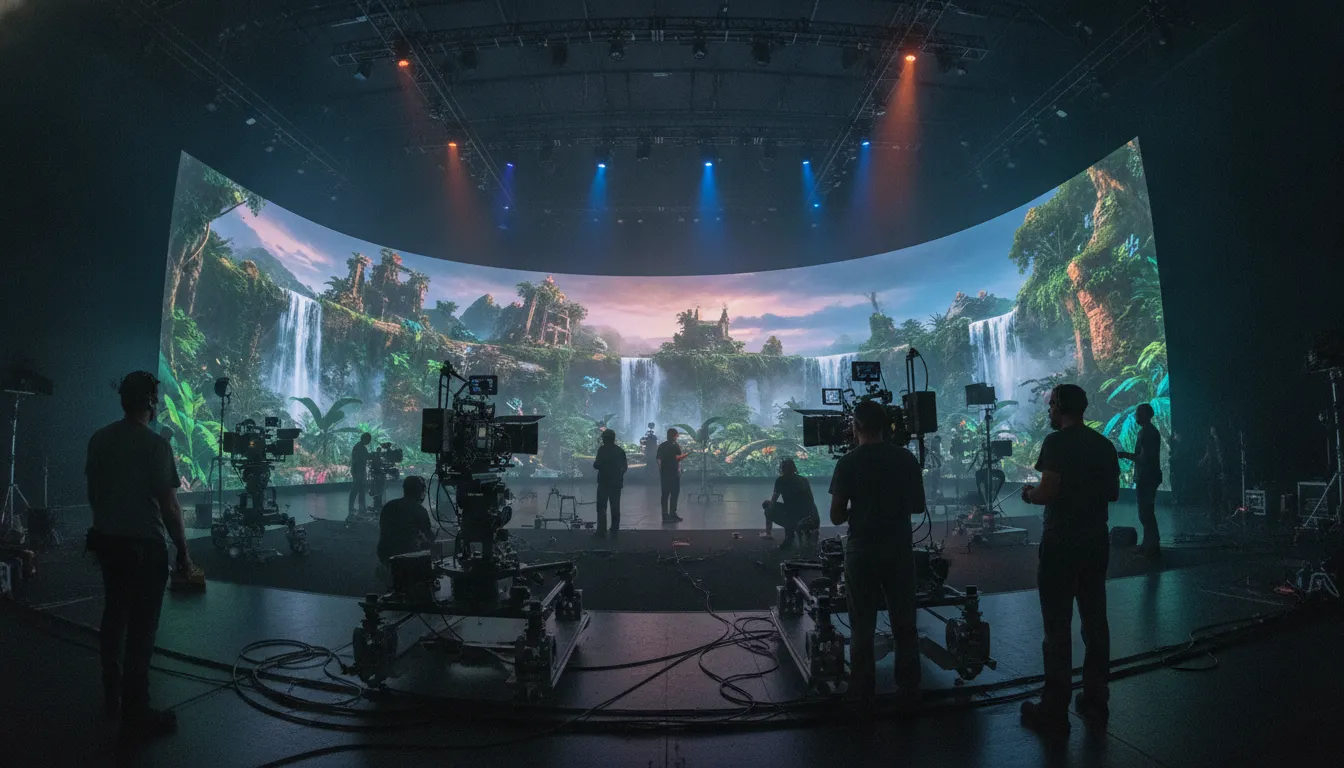
Modern filmmaking uses virtual production solutions to change how we build worlds. The most visible part of this shift is the LED volume. This setup wraps a soundstage in curved LED walls and a ceiling. Instead of blank green screens, these walls show live 3D backdrops that react to the camera in real time.
The anatomy of an LED soundstage
The core of this system is the link between the camera and a real-time game engine. A sensor tracks the exact position of the camera on the stage. As the camera moves, the backdrop on the LED wall shifts to match the lens perspective. This live process is called in-camera visual effects, or ICVFX.
Today, movie and television teams rely on real-time gaming tools to create lifelike backgrounds and effects. Through Narwhal Studios, the virtual production arm of Arctic7, we use these tools to build interactive sets. We have delivered six of these projects for partners like Lucasfilm.
With an LED volume, the light from the backdrop falls on the actors and props. This creates natural reflections on skin, metal, and glass. The crew can see the final shot through the camera during the shoot. You no longer wait months to see if the lighting matches, removing a huge amount of guessing on set.
Direct visual feedback for actors and crew
This live feedback changes how actors perform on set. In the past, actors stood in front of blank green screens and had to imagine the setting. On an LED virtual production studio, they see the real world around them. This lets them react to the scene naturally, which helps directors and camera crews make fast choices.
Because the visual effects are captured in the camera, the team saves time and money. You do not need to spend weeks fixing green-screen color spill or bad edge blends. If you need end-to-end help with these stages, our virtual production services can guide your team. We help from early ideas to the final shoot.
Alternative paths to real-time scenes
While LED walls are a great choice, they can be very costly to build and run. Luckily, you have other options to get high quality shots. A projection-based system is a highly flexible alternative that gives you great results for a fraction of the cost of LED volumes. These setups use laser projectors to cast high-resolution backgrounds onto screens, offering a smart path for smaller projects.
Previsualization and the Virtual Art Department
Planning with previz and techviz
Before you turn on a camera, you must know how your shot will look. Previsualization, or previz, helps directors map out scenes in a 3D digital space. Technical visualization, or techviz, takes this design step further. It tests real-world camera moves, lens choices, and physical stage limits. By testing these setups early, production teams find and fix errors before they ever step onto a physical set. This phase ensures that every shot is possible, which saves time and prevents costly mistakes during principal photography.
The role of the virtual art department
The Virtual Art Department, or VAD, is the core bridge between art direction and real-time engineering. In the past, artists designed sets that crews built out of wood and paint. Now, the VAD builds highly detailed 3D assets for LED screens. These digital models must run smoothly in real-time game engines before principal photography starts. This planning ensures that the background is fully ready on day one of the shoot. When you adopt modern virtual production solutions, the VAD helps you see and change your virtual sets quickly during planning.
Remote co-creation and pipeline management
Because these assets are digital, creative teams do not need to be in the same room. Directors, artists, and technical experts can work on the same virtual set from different parts of the world. Published research shows that remote co-creation of content is a major benefit for large-scale projects. Teams can edit 3D assets and test camera angles across continents in real time. Working together remotely speeds up the feedback loop and keeps everyone on the same page. This removes the need for costly travel and lets you hire talent from anywhere.
Arctic7 has deep skill in managing these digital workflows. The company helped pioneer Virtual Art Department workflows through Narwhal Studios, its virtual-production unit. Our partners have also done large in-camera visual effects projects with major studios like Lucasfilm. We understand how to design and deliver assets that fit your budget and technical needs. By managing your whole virtual production pipeline, we keep your project on schedule. Our team ensures that your virtual sets are fully prepared before your actors ever walk onto the LED stage.
How Virtual Production Fits Film, Television, and Commercial Projects
Producers use different virtual production solutions based on their goals, schedules, and budgets. Feature films, TV shows, and commercials each have unique needs on set. While a big-budget film might use huge LED walls for months, a small commercial team needs fast setups and quick turnarounds. Finding the right mix of tools helps teams work faster and save money.
Needs of Feature Films and Television Series
For feature films, teams need high-end systems that can handle large worlds. They often use massive LED volumes to capture complex shots in real time. According to the Louisiana Economic Development agency, movies and series rely more on gaming tech for photorealistic backgrounds and special effects. This shift helps creators lock in their look early.
Television teams also benefit because they can reuse these digital sets across many episodes. Using a stable virtual production workflow in filmmaking ensures that a show looks the same from week to week.
Virtual Production for Fast Turnaround Commercials
Commercial projects do not have long schedules. They need to shoot many versions of an ad in a single day. For these fast tasks, simple tools work best. Producers can use a virtual projection solution instead of a costly LED wall.
This option gives teams high-quality results at a fraction of the cost. It is a smart choice that works well in tight spaces. Directors can switch backgrounds with the click of a key. This speed helps brands test new ideas and finish projects on time.
How Methods Compare
Each type of project uses these tools in a different way. To find the right fit, you must compare how these systems scale. The table below shows how these tools match your project needs.
| Project Type | Primary Use | Key Benefit | Typical Tech |
|---|---|---|---|
| Feature Film | Large-world environments and hero shots. | Complete creative control on set. | Massive LED volumes and real-time engines. |
| Television Series | Consistent sets across many episodes. | Saves travel time and set-building costs. | Medium LED volumes and virtual art assets. |
| Commercials | Fast version tests and quick turnarounds. | Low cost and high flexibility. | Virtual projection or small LED setups. |
No matter what you build, virtual production solutions can fit your workflow. Large films will continue to use LED walls, but smaller shows and ads can now use projection to save money. By picking the right tech, producers can create beautiful worlds on any budget. The key is to plan early and choose tools that match your exact goals.
Why Arctic7 for End-to-End Virtual Production Solutions
The Arctic7 method
When you plan a movie or show, you need a clear path from start to finish. We do not just lease tech to you. We give you full virtual production solutions that cover your project from the first idea to the final shot. Our team uses the Arctic7 Method, a three-step framework to ensure your success.
- Ready. We assess your show goals, budget, and technical needs to define a realistic scope for the virtual production.
- Strategy. We build a tailored approach that maps the right tools to your story, balancing quality and cost.
- Blueprint. We deliver a clear plan that guides your crew on set and prevents costly mistakes during the shoot.
Proven studio pedigree
Producers want to know their partners can perform at a high level. Arctic7 brings deep skill and knowledge to the screen. Our virtual production studio, Narwhal Studios, pioneered Virtual Art Department (VAD) workflows in the industry. We do not just build assets; we design them to run in real time.
We have worked on six in-camera VFX (ICVFX) projects with Lucasfilm. Our past work means we know how to handle complex pipelines and deliver final-pixel output on tight schedules. You gain a partner with a proven history of success on major Hollywood projects.
A single creative partner
Working with a patchwork of vendors can slow down your project. If your previz team does not speak to your LED volume crew, errors happen on set. We resolve this by acting as your single partner.
Our team handles everything from the Virtual Art Department to the final shoot. This joined-up approach saves time and keeps your vision clear. When everyone works on the same page, your story comes to life with fewer issues.
This joined workflow does more than just make the work easy. Many studies show that virtual production tools help teams work, create, and make decisions together. At the same time, this method helps teams save time. Instead of fixing problems in post-production, your team can make key choices together in real time on the stage.
Modern films and series often need crew members to work from different parts of the world. Research shows that virtual production helps teams work from different places on large projects. Our tools support this co-creation, allowing artists and directors to work together even when they are far apart.
This means you do not have to fly your entire team to a single physical space to make creative choices. You can review real-time backdrops, adjust lighting, and tweak backgrounds from anywhere. We bring your global talent into one virtual room.
By packing all these steps into a single service, we help you manage costs while keeping quality high. Whether you need previz, real-time engines, or in-camera VFX, we design the pipeline to fit your needs. You can learn more about how we build these setups by checking our virtual production services. Our goal is to give you the exact tools you need to create stunning visual worlds.
Risks and Realities: Planning a Realistic Virtual Production
Virtual production offers huge benefits, but it also brings real risks if you do not plan well. Many teams jump into these workflows without the right prep. This lack of prep often leads to high costs and delays. For small and medium teams, the barrier to start is a major hurdle.
The Independent Production Barrier
Independent films and smaller shows face a steep path to use these methods. Research shows that barriers to adoption still slow down small and medium teams. These groups often lack the cash, tools, and skills they need to make the shift. Without big studio budgets, setting up a full screen stage is not possible. You must look at other options to make the math work.
One smart choice is to use projection instead of costly LED walls. A Christie virtual projection solution gives you a highly flexible setup. It lets you create top quality shots at a small fraction of the cost of LED volumes. This setup uses laser or hybrid light systems to put clean backgrounds on screen. For many independent directors, this is the best way to save cash.
Budgeting the Technology Stack
Planning a budget for this new tech needs more than just buying gear. You must pay for tracking systems and strong rendering computers. But this hardware is only one part of the total cost. You also need to hire a skilled crew to run these complex systems on set. Many groups do not budget for the staff needed to operate the digital wall.
Another major risk is asset readiness. In a traditional shoot, you build physical sets and fix visual effects in post production. In virtual sets, you must build the 3D assets before the cameras roll. This shift means you must plan the timeline for previsualization and the virtual art department. If your digital assets are not ready on day one, your entire crew will stand idle.
Finding the Right Solution Fit
To avoid these traps, you need to match your tools to your goals. Do not let the hype guide your budget. Instead, look for a partner that offers real virtual production services. A team like Arctic7 offers proven virtual production solutions to make advanced technology easy to reach. They will help you design a practical virtual production guide for your next shoot.
Schedule a consultation today to plan an end-to-end virtual production solution for your project.
Frequently Asked Questions
What are the core benefits of virtual production solutions?
These virtual production solutions help film crews see digital backgrounds on set in real time. This process reduces travel needs and physical set-building costs. According to a guide by CG Spectrum, the technology helps teams work together and make faster creative choices. It also lets directors adjust backgrounds instantly during a live shoot.
How do virtual production solutions integrate with LED volumes?
LED volumes use massive screens that display backgrounds synced to camera motion. This setup allows actors and crew to see the digital world around them. It uses real-time engines to update the background image as the camera moves. You can learn more about how this tech fits together in our virtual production pipeline guide.
What role does the Virtual Art Department play in virtual production solutions?
The Virtual Art Department builds 3D worlds, props, and assets before filming starts. These digital assets are built to run in real-time game engines. This planning helps the director plan camera shots and lighting before arriving on set. According to research published on PubMed Central, these steps help teams work together and make key decisions early in the process.
Are virtual production solutions suitable for commercial projects?
Yes, virtual production solutions are highly useful for commercials. They let brand teams swap backgrounds, test lighting, and change digital assets in minutes. This speed helps teams shoot many ads in a single day without moving locations. To plan your next shoot, read our guide on the virtual production workflow for key tips.
Ready to plan your next virtual production?
Delays in preproduction can derail your entire shooting schedule and drive up your costs before you even step onto the stage. When you wait to plan your real-time environments, you risk losing valuable time and money during the actual shoot. Starting early lets your creative team solve key design issues in a virtual space so you can get great results on time.
Ready to get started? You can schedule a consultation with our team today to discuss how our virtual production solutions can support your film or commercial. We are ready to help you plan your pipeline and build real-time worlds that fit your budget. You can also view our past work in Arctic7's project portfolio to see our tools in action.
New Immersive & XR Media Capabilities Added to Arctic7's Suite of Games, Film & TV and Digital Services

Arctic7 Shares Details of its Work on Skeleton Crew and Cinematics Partnership with Fateless

The Human Touch: Adding Personality to Project and Product Management
Whether it’s your team, your client, or your stakeholders, understanding the human dynamics is just as critical as hitting milestones.

McDonald's Case Study: Bridging Brand and Play | Arctic7
Bridging Brand and Play: An Interview with Lindsay Blenkhorn Daggitt