
Virtual Production Services: A Buyer's Guide
A single day of reshoots on a physical set can cost hundreds of thousands of dollars. Producers must find ways to lock in their creative choices before capturing a single frame. Modern tools help teams build and test worlds long before the crew arrives on set.
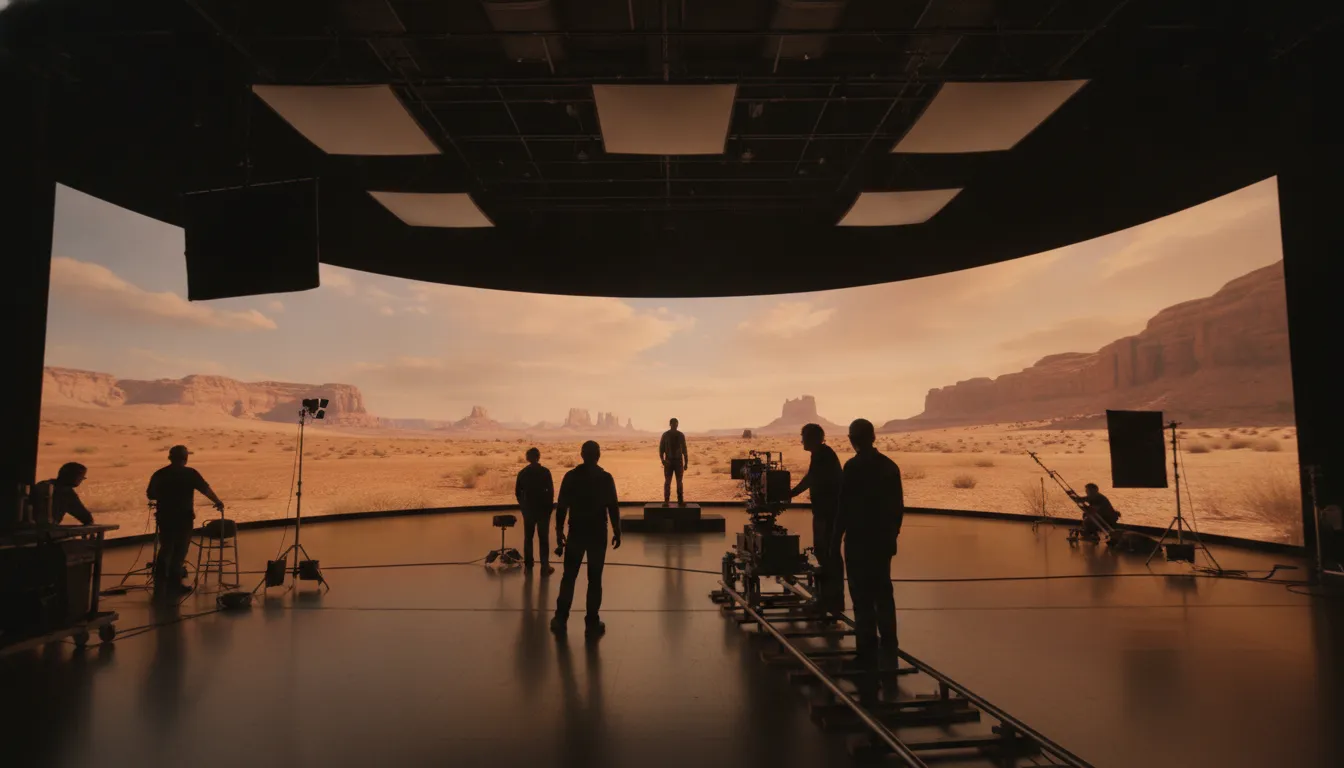
Virtual production services combine traditional filmmaking methods with real-time 3D game engines to project photorealistic digital environments onto massive LED screens on set. This highly advanced process allows crew members to project beautiful digital sets instead of relying on blank green screens during the main shoot. By using these real-time tools on set, cameras can capture finished visual effects and natural lighting live during the main physical production phase. According to important academic research from the Arizona State University Film School, this modern setup saves money by making your filming more efficient. This integrated workflow helps modern producers maintain full visual control, reduce expensive travel times, and solve narrative problems long before final editing begins.
Knowing how to scope these advanced tools into your production budget and timeline is the key to a successful shoot. To help you manage this transition, we must first answer the question, What Are Virtual Production Services? The path begins with
Explore Arctic7 virtual production services to plan your next shoot.
What Are Virtual Production Services?
The film and TV industry is changing how it builds worlds. For decades, crews relied on flat green backdrops or built costly physical sets on soundstages. Now, virtual production services offer a new path. This method combines physical filmmaking with digital tools. It lets filmmakers see and control their scenes as they shoot in real time. This change makes work faster and gives teams more visual control on set.
The shift from green screens
In the past, actors stood in front of blank green screens and had to imagine their worlds. Directors had to wait for months during post-production to see the final shots. Today, bright LED screens replace those green screens. These massive walls display rich, lifelike sets directly behind the actors. This setup helps actors react to their surroundings naturally.
LED walls emit actual, natural light onto the physical set and the cast. This means light and shadows look right at once, with no strange green glow. Crews no longer need to spend weeks fixing bad lighting in post. They can capture final pixels directly in the camera during the shoot. It also saves money by making production faster and more precise. This benefit was noted by experts at Arizona State University.
Real-time rendering technology
At the heart of these services is the power of 3D software. Teams design digital worlds using real-time 3D engines, also known as game engines. This technique combines physical and virtual filmmaking by showing sets on LED walls, as explained by the Nashville Film Institute. The digital background tracks camera movements at once. As the camera pans, the digital set shifts in perfect perspective to keep the scene looking real.
Using virtual art department services, artists can design these sets before filming even begins. They build assets, test angles, and plan shots in a virtual space. This means production teams can find and fix design issues early. They do not have to wait for the physical set build to see if an angle works. This early planning helps keep the project budget and timeline on track.
Modern studio adoption
Major media firms are using these workflows to plan and shoot big projects. Since the tech debuted in 2019, it has changed the industry. For example, teams used these methods to make the hit series The Mandalorian. Filmmakers also used these workflows to shoot major movies like Dune and The Batman. These projects show how the tech works for both TV series and massive feature films.
These big films prove that the tech is ready for any project. Whether you are a small studio or a large brand, these workflows help you build big worlds. They reduce travel costs and give you total control over the shoot. Working with a skilled transmedia partner makes these advanced tools easy to use.
Six Virtual Production Services Producers Can Procure
Producers need to know how to buy and use these tools to get the best value on their projects. Modern film teams use virtual production services to blend real and digital parts on set. This work starts in pre-production and runs until the final edit is complete. By planning early, teams can save money, speed up timelines, and keep control of their vision. It changes how we think about making films.
Previsualization
This is the first step in pre-production. Often called pre-vis, it helps directors plan shots using simple 3D models. You can see how a scene looks before you hire a crew or build a set. This early step lets you find issues with camera angles and pacing before they cost money on set. The main goal is to build a clear visual guide for the whole crew. By working out camera moves early, you avoid costly delays on shoot days.
Virtual Location Scouting
This work also takes place in pre-production. Instead of flying a crew to a real site, you put on a virtual headset. This lets the director and art team walk through a digital set from any office. You can choose camera spots and check lighting in a virtual space. This saves travel costs and helps teams make quick choices about the shoot. It also lets teams scout places that do not exist in the real world.
Virtual Art Department (VAD)
The Virtual Art Department builds the assets for your shoot. This phase spans both pre-production and asset creation. The VAD team designs 3D sets that will run on real-time game engines. You can procure virtual art department services to ensure these assets are ready for the shoot. The digital assets must look great and run fast so they do not lag on set. These digital models act as the real sets for your actors.
LED Volume and Stage Production
This is the core of the production phase. Real actors stand on a real stage surrounded by huge LED screens. According to the National Film Academy, these screens show clear digital sets that are rendered in real time. This replaces the old green screen method. The cast can see the set, which helps them give better, more natural displays of emotion. It also makes lighting the stage much easier and more realistic.
In-Camera VFX (ICVFX)
This service takes place during filming. ICVFX links the camera to the game engine so the digital background shifts with the camera lens. This tech creates real light and reflections on the actors, which saves money and makes scenes look real. As reported by Arizona State University, this process improves speed and accuracy on set. It has been used to film major projects like The Mandalorian and Dune. By capturing VFX on set, you reduce the time spent on post work.
Post-Integration
This is the final phase of post-production. Although virtual production does most VFX work in-camera, some scenes still need extra polish. Post-integration teams blend any real set extensions with the digital models. They clean up shot errors, adjust color, and add final digital effects. This step ensures that every shot is smooth, clean, and matches the visual style of the film. It ties the whole project together before release. This helps deliver a final product that looks great on any screen.
| Virtual Production Service Line | Production Phase |
|---|---|
| Previsualization | Pre-production |
| Virtual location scouting | Pre-production |
| Virtual Art Department (VAD) | Pre-production and asset build |
| LED volume and stage production | Production |
| In-camera VFX (ICVFX) | Production |
| Post-integration | Post-production |
How Virtual Production Services Change a Film and TV Budget
Adopting new methods in film and television changes how you plan your finances. Adding virtual production services into your project shifts where and when you spend your funds. While the total cost may remain similar to a classic shoot, the timeline of those costs shifts to the early stages of production.
The front-loaded budget shift
Most film projects place visual effects costs in post-production. When you use virtual production services, you shift this spend to pre-production. You must fund digital sets and stage setups before filming starts, using real-time 3D game engines to project photorealistic sets onto LED walls. This method merges real and virtual tools to build a live backdrop behind physical actors, as shown in the Nashville Film Institute guide.
Previsualization, or previz, is a key labor driver in this phase. Creative teams work with a virtual art department services partner to build 3D assets early. They check shots and lighting long before crew members arrive on set. Spending more money on early labor prevents costly errors during filming and speeds up the shoot schedule.
Key technical cost drivers
Producers must understand the technical elements that drive LED volume costs. The main cost driver is the LED panel screen itself. Screen price depends on resolution and pixel pitch, which is the space between pixels. While a smaller pitch means a sharper image, it costs more and needs more computer power to run the rendering engine.
To run these virtual worlds, you need massive GPU and server capacity on set. Rendering complex 3D environments in real-time takes vast processing power. The budget must cover both the stage rental and the tech crew who run the gear. Scoping these needs early helps you avoid surprises when shooting starts.
Where budgets recover costs
While virtual stages need high upfront funding, they save money down the line. Replacing green screens with high-resolution LED screens makes set work faster and smoother. Actors see their surroundings instead of a blank wall, while directors make creative choices in real time rather than waiting for VFX teams.
These savings show up in key budget areas. First, you will spend less money on travel and lodging because you can shoot multiple scenes on one stage. This reduces travel costs for both actors and crew. Second, since the lighting and background are baked into the raw footage, you spend less time fixing shots in editing.
Post-integration is another factor to consider. When you capture in-camera visual effects, you get final pixels on set and do not need to wait for months of post-production. It also prevents the need for costly re-shoots, as the director can see the final composite right away. This real-time feedback ensures that the shots you capture are exactly what you need, which can save production costs by preventing mistakes.
What a Virtual Production Timeline Looks Like
Classic film plans put most creative work at the very end. But virtual production shifts this model by moving key tasks to the start. The Nashville Film Institute notes that this style combines real and virtual filmmaking by projecting sets onto screens. To get the best results, teams use virtual production services to manage this new timeline.
The front-loaded schedule
The main lever for controlling your timeline is starting your virtual art department early. This group builds 3D sets and digital files before shooting starts to prevent stage delays. When you use dedicated virtual art department services, you ensure visual assets match your goals. This process lets directors make live decisions on set, which saves time and lowers post-production costs.
Why the timeline shifts forward
With classic filming, you can delay background choices until post-production. With virtual sets, those decisions must happen early. If assets are not ready when the cameras roll, the LED volume sits idle, which drives up stage costs. So, planning and scouting early reduces on-set problems and keeps your project on track.
Steps in a virtual project
A standard virtual workflow moves through five key steps to take a project from concept to final pixel. Each phase helps ensure visual success and on-time delivery.
- Previsualization and planning: Teams create rough 3D models to map out camera angles and actor movements. This step helps directors see the scene layout and plan shot lists before physical work starts.
- Asset creation in the virtual art department: Artists build the photorealistic 3D sets and props using game engines. These digital spaces must be fully complete and tested before the shoot day begins.
- Virtual scouting and setup: Directors and crew wear virtual reality headsets to walk through digital sets. They select camera positions, adjust lighting, and place props in real time from anywhere.
- LED volume shoot: Actors perform in front of high-resolution LED walls that display the digital sets. As noted by Arizona State University, this approach improves speed and accuracy compared to old green screens.
- Post-production integration: Since the background is captured in-camera, post-production is much faster. Editor tasks are mostly limited to fine color tuning and joining final clips.
Why Producers Should Choose a Single Accountable Partner for Virtual Production Services
Standard film sets often suffer from slow setups and high travel costs. To fix this, virtual production swaps green screens for bright LED walls. This tech combines physical and virtual filmmaking. It uses real-time game engines to project real 3D sets behind actors.
But managing this tech needs deep skill across six distinct areas. If you hire a new vendor for each step, you will face major delays. Choosing a single partner to manage these virtual production services keeps your project on track. One team handles everything from start to finish.
A single team for six pipelines
A complete setup relies on six key parts. First, previz lets you plan the shots on screen. Second, virtual scouting helps you find the best camera angles in a digital space. Third, the Virtual Art Department builds the assets. When you use one partner, these three prep steps flow into each other without any gaps.
The final three steps happen on the stage. Fourth, the team runs the LED volume. Fifth, they make the in-camera VFX in real time. Last, they handle the post-integration to clean up any shots. Having one partner own all six steps makes the whole process fast and smooth.
When these six service lines are split, you lose creative control. A design made in the first stage might not run well on the LED walls during the shoot. This leads to costly re-work on set. An end-to-end partner ensures that each step is designed for the final LED stage.
The risk of using many vendors
Some producers try to build their own team from many vendors. For instance, they might hire one studio for the art and another to run the LED walls. This patchwork setup leads to blame when things go wrong. If the 3D assets do not load fast, the whole shoot must stop.
A delay on a virtual set is costly. It can waste tens of thousands of dollars in just one hour. Research from the Arizona State University shows that real-time tools make production faster. But this only works when your systems are in sync. When too many vendors own the tech, finding a small bug can take all day.
Real world proof of success
Arctic7 was built to solve these exact problems. As a transmedia partner, we connect the entire pipeline from design to final pixels. We prove this through our own group, Narwhal Studios, which has done six major projects with Lucasfilm. Their work shows how a single pipeline gives high-end results. By owning the entire workflow, we remove the risk of team gaps.
Our teams work under a single set of standards. This means your virtual art department designs assets that work well on the LED stage. You get a smooth, safe production timeline without the stress of managing many vendors. We handle the tech. This lets you focus on your story.
This single approach also saves money. Instead of paying many project managers, you work with just one point of contact. This speeds up choices and keeps your budget lean. Producers can spend more time on the story and less time on vendor contracts.
Talk to a virtual production partner and scope these services into your budget.
Frequently Asked Questions About Virtual Production Services
What are virtual production services?
Virtual production services combine physical and virtual filmmaking, using real-time 3D game engines to render photorealistic environments that are projected onto LED walls behind a physical set. Producers procure these services to capture in-camera VFX, reduce location travel, and make creative decisions in real time on set.
How do virtual production services work?
The team builds a photorealistic environment in a real-time engine, then renders it live onto a large LED volume while the camera is rolling. Camera tracking keeps the perspective true, so the imagery reads as a real location in frame. In-camera VFX captures the composite on set rather than painting it out later in post.
What are the benefits of using virtual production services?
Virtual production improves efficiency and accuracy by replacing blank green screens with high-resolution LED environments. And it can save money by reducing location travel, on-set re-shoots, and post-addition cleanup. It also gives directors and cinematographers real-time creative control over the world around the action.
How much do virtual production services cost?
Cost depends on scope: LED stage setup and availability, panel resolution and pixel pitch, real-time rendering capacity, asset creation in the Virtual Art Department, and post-integration. Virtual production shifts spend earlier in the pipeline, toward the asset build, but can lower overall cost through fewer re-shoots and less location travel.
What hardware and software is required for virtual production?
At the core is a real-time game engine, a large LED volume, camera tracking systems, and the GPU processing to render environments live. Supporting capability includes the Virtual Art Department software for building assets and the playback and media servers that push imagery to the wall. A full-service partner supplies and integrates all of it.
How does virtual production integrate into traditional film workflows?
Virtual production slots into the standard pipeline: previsualization and asset build happen in pre-production. The LED volume and in-camera VFX in production, and plate integration and finishing in post. The key is starting the Virtual Art Department build early so the environments are ready when principal photography begins.
Scope Your Next Production with a Single Accountable Partner
You do not have to assemble a patchwork of separate vendors for previsualization, virtual location scouting, Virtual Art Department, LED volume, in-camera VFX, and post-integration. Working with one partner who owns the full virtual production workflow keeps your budget, timeline, and creative vision aligned from previz to final grade. Talk to the Arctic7 team about your project and see how their transmedia virtual production services can be scoped to your next film or television production.
Explore Arctic7 virtual production services to book a consultation, or visit Narwhal Studios to see the in-camera VFX volume behind Arctic7's virtual production work.
New Immersive & XR Media Capabilities Added to Arctic7's Suite of Games, Film & TV and Digital Services

Arctic7 Shares Details of its Work on Skeleton Crew and Cinematics Partnership with Fateless

The Human Touch: Adding Personality to Project and Product Management
Whether it’s your team, your client, or your stakeholders, understanding the human dynamics is just as critical as hitting milestones.

McDonald's Case Study: Bridging Brand and Play | Arctic7
Bridging Brand and Play: An Interview with Lindsay Blenkhorn Daggitt