Your Guide to the Real-Time Virtual Production Workflow
As an IP holder, your world is your most valuable asset. Ensuring that its look, feel, and rules remain consistent as you expand from a book to a film, a series, or a game is a monumental challenge. Different teams and production methods can lead to visual drift, diluting the universe you so carefully built. This is where virtual production becomes a strategic tool for world-building. By creating digital assets that can be shared across all media, you establish a single source of truth for your IP. The real-time virtual production workflow allows your creative teams to work from the same playbook, ensuring that the alien planet in your film looks identical in your video game, creating a truly cohesive and interconnected entertainment ecosystem for your audience.
Key Takeaways
- It's a fundamental workflow change, not just a tech upgrade: Virtual production flips the traditional filmmaking model by moving visual effects and major creative decisions into pre-production and the live shoot. This "get it right in camera" approach requires intensive planning but results in greater creative control and efficiency on set.
- Collaboration is non-negotiable: Virtual production breaks down traditional silos, requiring your creative leads (like the director and DP) and technical specialists (like game engine artists) to work together in real time. This constant communication is what makes the technology effective.
- It's a strategic tool for IP expansion: Virtual production allows you to create digital assets, like worlds and characters, that can be reused across film, TV, and games. This ensures your universe feels consistent and cohesive, providing a richer experience for your audience on any platform.
What Is Real-Time Virtual Production?
If you've ever wondered how your favorite sci-fi and fantasy shows create such breathtaking, immersive worlds, the answer is likely real-time virtual production. Think of it as a revolutionary way to make films and television that merges the physical and digital worlds right on set. Instead of acting in front of a green screen and waiting months for visual effects to be added, actors perform inside a stage surrounded by massive LED screens. These screens display the final digital environment, from alien planets to fantasy kingdoms, in real-time.
This technology allows directors, actors, and the entire crew to see the finished shot as it's being filmed. It’s a dynamic and collaborative process that gives creators unprecedented control, letting them make adjustments on the fly. For IP holders, this means your world can be brought to life with stunning visual fidelity from the very first day of shooting. It’s a game-changer for storytelling, enabling a more cohesive and visually consistent universe across different media, which is central to our transmedia services at Arctic7.
How It Works
The magic of virtual production unfolds across three interconnected stages. The process begins with pre-production, where artists and technicians build the digital assets for your world. This is where we create everything from sprawling cityscapes to detailed character models. We can even produce a "pitchvis," a short, trailer-like visualization, to showcase the project's look and feel. Next comes production, or the actual filming. The digital environments are projected onto the LED screens surrounding the set, creating realistic lighting and reflections. Special cameras track the filmmaker's every move, and the digital background adjusts its perspective in perfect sync. This creates the illusion that the actors are truly inside the digital world, capturing final-pixel shots directly in-camera.
Real-Time vs. Traditional Filmmaking
The traditional filmmaking process is like an assembly line; each step must be completed before the next can begin, making changes late in the game costly and time-consuming. In contrast, the virtual production workflow is a more fluid, collaborative circle. Creative decisions about lighting, set design, and visual effects can be made and seen instantly on set, not months later in an editing suite. This real-time approach offers incredible advantages. You can swap a sunny day for a stormy night with a few clicks, experiment with camera angles without rebuilding a set, and ensure the lighting on your actors perfectly matches the virtual environment. This flexibility gives creative teams more freedom to experiment and perfect the story, ensuring the final product is as compelling as the world you imagined.
The Technology That Powers Virtual Production
Virtual production isn’t powered by a single piece of technology, but rather a whole ecosystem of hardware and software working together in perfect sync. Think of it as a digital symphony conducted on a film set. This combination of tools is what makes it possible to blend live-action performances with photorealistic digital worlds in real time, giving filmmakers unprecedented creative control right from the camera. Let’s look at the key components that make the magic happen.
LED Volume Stages
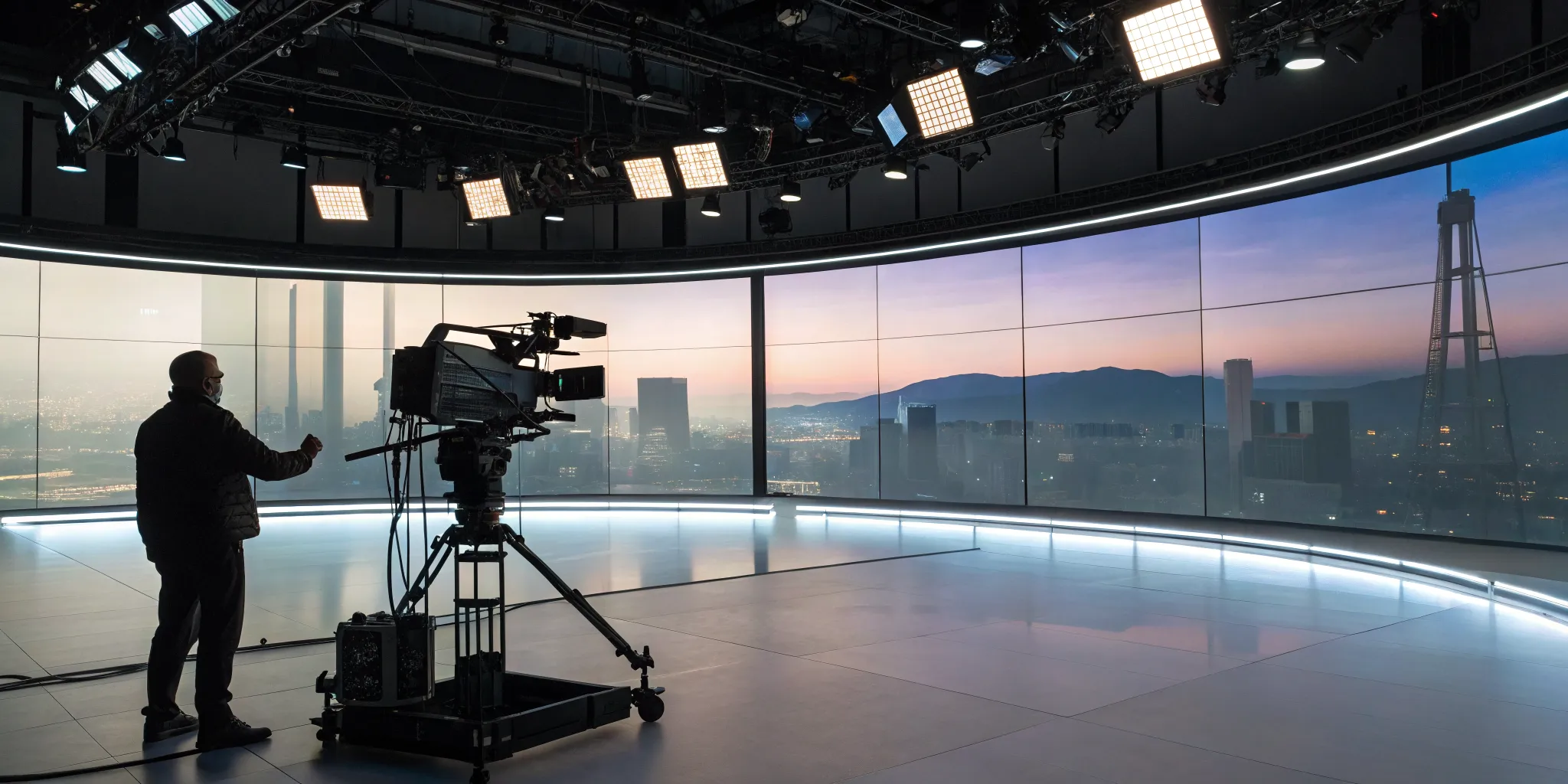
Forget the endless green screens of the past. The centerpiece of a modern virtual production studio is the LED volume. These are massive, curved walls made of high-resolution LED panels that display the virtual environment. Instead of acting against a blank green backdrop, performers are immersed in the digital world, seeing the desert planet or fantasy forest around them. This not only helps them deliver more authentic performances but also allows the director and cinematographer to frame shots with the final background already in place. The virtual production workflow allows for realistic lighting and reflections on actors and props, creating stunning in-camera visual effects that drastically reduce post-production work.
Game Engines Like Unreal Engine 5 and Unity
The breathtaking visuals you see on the LED walls are generated by powerful real-time game engines, with Unreal Engine 5 and Unity leading the charge. These engines are the brains of the operation, rendering complex, photorealistic 3D environments at incredibly high frame rates. Because they are designed for interactive experiences, they can change the environment on the fly. Need the sun to be lower in the sky or the weather to turn stormy? The engine can make it happen instantly. This is where expertise in both game development and film production becomes essential, as it allows teams to build and control these dynamic worlds. Our transmedia services leverage this technology to create assets that can live in a game, a film, or a series.
Motion Tracking and Camera Systems
To create a believable sense of depth and perspective, the virtual environment must react perfectly to the movement of the real-world camera. This is achieved with sophisticated motion tracking systems. Sensors are attached to the camera, which constantly feed its exact position, orientation, and lens information into the game engine. As the camera operator pans, tilts, or dollies, the engine adjusts the background’s perspective in real time. This creates a seamless parallax effect, tricking the eye into believing the actors are in a genuine three-dimensional space. It’s this flawless synchronization that makes the illusion of a virtual set completely convincing on screen.
3D Modeling and Live Compositing Tools
Before any filming can begin, the digital world itself must be built. This is where 3D artists and designers come in, using a suite of powerful software to create every last detail of the virtual set. Tools like RealityCapture can build 3D models from photographs of real-world objects, while programs like Houdini are used for complex animations and visual effects. These assets are then imported into the game engine to create the interactive environment. During the shoot, live compositing tools blend the footage from the physical camera with the digital background in real time, giving the crew a live preview of the final shot. This process was fundamental to our work on projects like Marvel Studios' Ant-Man and The Wasp: Quantumania.
VR Headsets for Pre-Visualization
One of the most powerful planning tools in virtual production is the use of virtual reality for pre-visualization, or "previs." Long before the crew steps onto the expensive LED stage, directors, cinematographers, and production designers can put on a VR headset and "scout" the digital location. This allows them to walk through the virtual set, test different camera angles, block out actor movements, and make critical creative decisions. Using VR in previs helps the team solve problems early and arrive on set with a clear, unified vision. It’s an invaluable step that saves time, reduces uncertainty, and fosters greater creative collaboration from the very beginning.
The Three Stages of a Virtual Production Workflow
The virtual production workflow reorders the traditional filmmaking process, moving a huge chunk of creative decision-making to the very beginning. Instead of the old "fix it in post" mentality, the goal is to get it right on set. This method is broken down into three main stages: pre-production, production, and post-production. While the names are familiar, their functions are quite different. Pre-production becomes an intensive world-building phase where digital assets are created and tested. Production is where you film your actors inside these pre-built digital worlds, with the ability to make changes on the fly. Finally, post-production is streamlined into a finishing stage for final polishes and complex effects.
This front-loaded approach is a core part of our strategy development at Arctic7, as it ensures creative alignment and technical readiness before the cameras even start rolling. By understanding how these stages work together, you can see how virtual production offers more control and flexibility, allowing your team to iterate and perfect the story in real time. This shift not only saves time and resources down the line but also opens up new creative possibilities that were once impossible to achieve. It’s about building a more collaborative and efficient pipeline from start to finish.
Pre-Production: Plan, Build, and Create Your Assets
This is where the heavy lifting happens. Think of pre-production as the blueprint and construction phase for your digital world. Instead of waiting for post-production, your visual effects (VFX) team gets involved from day one. The Virtual Art Department (VAD) designs and builds all the digital elements, from sprawling alien landscapes to detailed props. They use powerful game engines to create high-fidelity previews, or "pitchvis," which are like interactive storyboards. This allows your entire creative team to walk through scenes, test camera angles, and make key decisions long before stepping onto the physical set. It’s all about planning and building your assets upfront to ensure a smooth shoot.
Production: Film With Live Visuals and Real-Time Renders
Welcome to the LED volume. During production, the digital environments you built are projected onto massive LED screens that surround your set. This isn't just a fancy backdrop; it creates realistic lighting and reflections on your actors and physical props, immersing them in the scene. Special camera tracking systems ensure that as the physical camera moves, the digital background moves with it in perfect sync. This is where the real-time aspect shines. Directors can request changes to the environment, like moving a mountain or changing the time of day, and see the results instantly. This was a key part of the process for films like Ant-Man and the Wasp: Quantumania, allowing for incredible creative freedom right on set.
Post-Production: Finalize Your Edits and Deliver
While virtual production gets you incredibly close to the final picture on set, post-production still plays a vital role. This stage is now focused on refinement rather than rescue. Artists will add complex digital characters or effects that were too demanding to render in real time during the shoot. They might also clean up any visual seams or integrate placeholder elements with their final, polished versions. A process called "postvis" is often used, where editors work with the live-action footage and rough digital effects to lock down the cut. This makes the final compositing and VFX integration much more efficient, ensuring a seamless and polished final product without the guesswork of a traditional workflow.
Assembling Your Virtual Production Team
Virtual production brings together a unique mix of talent, blending classic filmmaking roles with new technical specialists. Think of it as building a bridge between Hollywood and Silicon Valley, right on your set. Unlike a traditional production where technical and creative teams can sometimes feel siloed, a virtual production crew collaborates closely from the very first day. This constant communication is the secret sauce. The director, cinematographer, and production designer work hand-in-hand with game engine artists and systems engineers to build and shoot in the virtual world simultaneously.
This integrated approach means creative decisions can be made and seen in real-time, which is a game-changer for any project. The team can experiment with lighting, camera angles, and environmental changes on the fly, confident that what they see on the LED volume is what they'll get in the final cut. Having the right people in these roles is just as important as having the right technology. A successful virtual production depends on a team that can speak both the language of cinematic storytelling and the language of real-time technology. Finding a partner with deep creative and technical expertise is key to uniting these disciplines and ensuring your vision comes to life seamlessly on the LED stage.
Key Creative Roles on Set
While the technology is new, the core creative roles are still essential, though their responsibilities evolve. The Director can now step inside the digital world with the actors, directing scenes against a final-pixel background instead of a green screen. The Cinematographer or Director of Photography (DP) works with both physical and virtual cameras, framing shots that blend the real and digital seamlessly. The Production Designer’s work starts much earlier, as they are responsible for creating the digital assets and environments that will be displayed on the LED volume. This team gets to see their creative choices come to life instantly, allowing for more experimentation and on-the-fly adjustments.
The Technical Crew and Real-Time Specialists
This is where you’ll find the new faces on set. The Virtual Production Supervisor is the linchpin, overseeing all technical aspects and ensuring the digital world runs smoothly. They lead a team of real-time specialists, including Technical Artists who manage and optimize assets within the game engine, and LED Stage Engineers who calibrate and operate the volume. These experts make the real-time workflow possible, giving creatives instant visual feedback. As projects become more ambitious, the demand for artists who can work with real-time 3D is growing fast. This technical crew is responsible for the virtual production work that bridges the gap between the real and the imagined, making fantastical worlds feel tangible on screen.
Why Choose Real-Time Virtual Production?
Adopting a real-time virtual production workflow is more than just a technical upgrade; it’s a strategic shift that redefines how creative projects are brought to life. By moving key decisions and visual effects work to the beginning of the process, you create a more efficient, flexible, and collaborative environment for your entire team. This front-loaded approach gives you unprecedented control over the final image directly on set, which can have a massive impact on your budget, timeline, and creative output.
For IP holders and studios, this means getting a clear vision of your project far earlier and making informed decisions with confidence. Instead of waiting months to see how visual effects will integrate, you see a near-final shot as it’s being filmed. This transparency not only de-risks the production process but also opens up new possibilities for storytelling. From saving significant resources in post-production to giving your creative team more freedom, the benefits of real-time virtual production are transforming how modern entertainment is made. Arctic7's virtual production services are designed to guide you through this entire process, ensuring your vision is realized with technical and creative excellence.
Save Time and Money in Post-Production
One of the most compelling advantages of virtual production is the ability to drastically reduce the time and expense of post-production. In a traditional workflow, visual effects and color grading are handled after filming wraps, which can lead to lengthy and costly revisions. With real-time virtual production, most of these elements are finalized live on set. Since digital effects and environments are rendered in-camera, there's simply less work to do later.
This "fix it in pre" approach means your team can make crucial creative choices, like adjusting lighting or changing background elements, during the shoot itself. Because the digital and physical components are blended from the start, the integration is more seamless, minimizing the need for extensive compositing. This shift not only accelerates your delivery timeline but also makes your budget more predictable, as you resolve potential issues before they become expensive post-production problems.
Gain More Creative Freedom on Set
Virtual production empowers your creative team by giving them immediate visual feedback. Instead of acting against a green screen and imagining the final scene, directors, cinematographers, and performers can see and interact with the virtual world in real-time. This direct connection helps everyone understand what the final shot will look like much earlier, fostering a more intuitive and collaborative atmosphere on set.
This real-time feedback loop allows for rapid iteration. Ideas can be tested and refined on the fly, giving filmmakers more creative freedom to experiment with camera angles, set dressing, and character blocking. For example, our work on projects like Marvel Studios' Ant-Man and the Wasp: Quantumania demonstrates how this technology allows for the creation of complex, otherworldly environments that actors can realistically engage with. This immediate connection between performance and environment often leads to more dynamic and believable results.
Achieve Perfect Lighting and Visual Consistency
Achieving realistic lighting is one of the biggest challenges when working with green screens, often resulting in unnatural "green spill" on actors and props. Virtual production solves this with LED volumes. The high-resolution LED walls not only display the digital background but also emit light, illuminating the set and actors with the same lighting as the virtual environment. This creates natural reflections and ensures the talent is perfectly integrated into the scene.
Furthermore, camera tracking systems ensure the digital background moves in perfect sync with the physical camera's movements. This effect, known as parallax, is crucial for creating the illusion that the actors are truly inside the digital world. The result is a visually consistent and photorealistic image captured directly in-camera, which maintains a high level of quality and believability throughout the project.
Film Anywhere With Digital Set Design
Virtual production liberates you from the constraints of physical locations. With digital sets, you can shoot in any environment imaginable without leaving the studio. This eliminates the time and expense associated with location scouting, travel, and company moves. You can film a scene on a distant planet in the morning and in a historical city in the afternoon, all on the same stage, giving you incredible scheduling flexibility.
This approach also makes production more predictable by removing variables like weather and lighting changes. Using VR headsets, filmmakers can even scout locations virtually during pre-production, walking through digital sets to plan shots and make creative decisions. Because scenes and sets are created digitally, reshoots become much simpler and more cost-effective. This efficiency allows you to focus your resources on what matters most: telling a compelling story.
Common Challenges in Virtual Production
Virtual production offers incredible creative possibilities, but it’s smart to go in with a clear picture of the potential hurdles. Understanding these obstacles from the start helps you plan effectively and assemble the right team to bring your vision to life without any surprises.
High Upfront Investment
Let's be direct: the initial costs for virtual production can be steep. Renting an LED volume and acquiring the necessary real-time technology requires a significant upfront investment. While this technology ultimately saves money in post-production, the initial budget needs to account for these expenses. Think of it as a strategic investment in a more efficient workflow. Proper planning ensures these upfront costs are balanced by long-term gains.
The Need for Specialized Skills
Virtual production demands a unique blend of expertise. Finding crew members fluent in game engines, live compositing, and traditional on-set practices can be difficult, as the roles are new and highly technical. This is why partnering with a team that already has this specialized talent is so important. Having experienced real-time specialists who understand the technology and the creative process is essential for a smooth production that stays on schedule.
Physical Stage and Space Limitations
While an LED volume can display an infinite digital world, the stage itself has physical boundaries. The size of the LED wall can limit the scale of your physical set pieces and camera movements. This doesn't mean you can't achieve epic scale; it just means you have to plan for it. Careful pre-visualization and smart set design help you work within these physical limits to create a sense of vastness without needing a massive stage.
Integrating Different Production Stages
Virtual production merges pre-production, production, and post-production into one continuous process. The challenge is getting these traditionally separate stages to work together seamlessly. Decisions made in pre-production have an immediate impact on set, and what happens on set directly influences the final shot. A successful project depends on a pipeline where creative and technical teams are in constant communication. This integrated workflow is key to making the process efficient and collaborative.
Best Practices for a Seamless Workflow
Virtual production can feel like magic, but a successful project relies on a solid plan, not just powerful technology. The real-time nature of this workflow means that preparation is everything. By shifting key decisions and creative work to the pre-production phase, you can avoid costly delays and give your team the freedom to create their best work on set. Adopting a few best practices will help you make the most of your virtual production, ensuring a smooth process from the first concept to the final render. These steps are all about working smarter, fostering collaboration, and using the technology to its full potential.
Start Pre-Visualization Early
Think of pre-visualization, or previs, as creating a detailed, animated blueprint for your project before you ever step onto the stage. In virtual production, this stage is absolutely critical. This is where you’ll map out camera angles, actor movements, and the general flow of each scene within your digital environment. By creating and refining these digital assets early on, you can solve creative problems and make key decisions when changes are easy and inexpensive. This front-loaded approach is a core principle of the virtual production workflow, as it saves an immense amount of time and guesswork later. It allows your team to experiment freely and enter the production phase with a clear, unified vision.
Align Creative and Technical Teams From Day One
Virtual production thrives on collaboration. Unlike traditional filmmaking where departments often work in separate phases, VP brings everyone together from the very beginning. Your director, cinematographer, production designer, and VFX artists need to be in constant conversation with the technical crew running the game engine and LED volume. This tight-knit collaboration is what allows for real-time creative changes on set. When your creative leads can see the virtual world and make adjustments instantly, the line between physical and digital disappears. This requires a truly integrated approach, bringing together a diverse team of specialists where every member, from creative to technical, contributes to the final frame.
Prioritize Color and Lighting Calibration
In a virtual production environment, the LED volume isn't just a background; it's your primary light source. This is a huge advantage, as it bathes your actors and physical props in the same light that exists within the digital scene, creating a naturally cohesive image. However, this only works if everything is perfectly calibrated. Taking the time to meticulously match the color profiles of your cameras and the LED panels is non-negotiable. This ensures that what you see on the volume and what the camera captures are identical. Getting this right means you can achieve beautiful, realistic lighting in-camera, drastically reducing the need for complex color correction and lighting adjustments in post-production.
Plan VFX and Compositing in Pre-Production
One of the biggest shifts in virtual production is that visual effects are no longer just a post-production task. Instead, VFX and compositing are planned and often executed during pre-production and the live shoot itself. This concept, known as in-camera VFX (ICVFX), involves creating final-pixel imagery on the LED volume that gets captured directly by the camera. By building high-fidelity digital environments and effects ahead of time, you can blend the real and virtual elements seamlessly on set. This approach gives directors and actors the benefit of performing in a fully realized world, leading to more grounded performances. It also means your team leaves the shoot with shots that are much closer to final, as seen in projects like Ant-Man and the Wasp: Quantumania.
Build a Flexible and Scalable Pipeline
Your virtual production pipeline is the entire ecosystem of hardware, software, and workflows that brings your project to life. It needs to be both robust and adaptable. A flexible pipeline allows your creative team to make changes on the fly without causing technical meltdowns. For example, if a director wants to move a mountain in the background, the system should be able to handle that request in real-time. A scalable pipeline is one that can grow with your needs, whether you're shooting a short commercial or building a vast transmedia universe. At Arctic7, we specialize in designing these kinds of custom pipelines, ensuring that all project data is managed efficiently and that creative decisions remain consistent from start to finish.
How Virtual Production Is Changing Storytelling
Virtual production is more than a technological upgrade; it’s a fundamental shift in how we approach storytelling. By merging the physical and digital worlds in real time, it opens up new ways to create expansive, cohesive narratives. For IP holders, this technology provides the tools to not only tell a story but to build a universe that can live and breathe across multiple platforms, creating a deeper and more engaging experience for your audience.
Expand Your IP Across Film, TV, and Games
Virtual production makes it easier than ever to maintain creative consistency as you expand your story across different media. Digital assets, from character models and environments to vehicles and props, can be created once and then shared between your film, television, and game development teams. This ensures that the world you’ve built looks and feels the same everywhere a fan interacts with it. This method is key to building interconnected entertainment ecosystems that feel unified and authentic. It allows your IP to grow organically, with each new project enriching the world and giving your audience more to explore.
Build Worlds for Multiple Platforms
With virtual production, you are no longer constrained by the limitations of physical sets or real-world locations. You can design and build entire digital worlds that can be used and reused across multiple projects. This approach not only reduces the time and cost associated with set construction but also gives you incredible creative flexibility. The vast, digital environments created for a blockbuster film can be seamlessly adapted for a spin-off series or an interactive game. This was a key part of our work on projects like Ant-Man and the Wasp: Quantumania, where digital world-building allowed for the creation of a visually stunning and complex universe that can be explored in new ways.
Improve Collaboration Across Teams
One of the most powerful aspects of virtual production is its ability to unite your entire crew around a single creative vision. The real-time workflow allows directors, cinematographers, and actors to see the final composite shot live on set. This eliminates the guesswork of working with green screens and provides immediate visual feedback, so creative decisions can be made with confidence. This process breaks down the traditional barriers between production and post-production, fostering a more collaborative and efficient environment. It ensures your creative and technical experts are aligned from the very beginning, working together to bring the story to life exactly as intended.
Is Virtual Production Right for Your Project?
Deciding to use virtual production is a significant choice that shapes your entire creative process. While the technology offers incredible advantages, it’s not a one-size-fits-all solution. The best way to determine if it’s right for you is to weigh the creative benefits against the practical demands. Virtual production shines brightest on projects that require extensive world-building or complex visual effects. If your story is set in a fantastical realm, a distant planet, or a historical period that’s impossible to recreate, VP allows you to build those environments digitally and immerse your actors in them from day one.
This approach gives your creative team unprecedented control on set. Instead of guessing how a scene will look against a green screen, directors and cinematographers get instant feedback, making real-time adjustments to lighting, environments, and camera angles. The virtual production workflow front-loads much of the creative decision-making into pre-production, which can dramatically reduce time and costs in post. However, this requires meticulous planning. The process is less forgiving of on-the-fly changes, as the digital assets must be built and optimized before filming begins. There’s also a high upfront investment in technology and the need for a crew with specialized skills in game engines and real-time graphics. Ultimately, the choice comes down to your project’s specific needs. If your vision demands seamless integration of real and digital worlds, and you’re prepared for a production process centered on planning and precision, virtual production could be the key to bringing your story to life in ways you never thought possible.
Related Articles
- Your Guide to Virtual Production for Game Development
- The Virtual Production Workflow: A Practical Guide
- Indie Virtual Production Studio: The Essential Guide
Frequently Asked Questions
Is virtual production only for big-budget sci-fi and fantasy projects? Not at all. While it’s perfect for creating otherworldly planets, its real strength is environmental control. Think of a historical drama that needs a specific city street without modern cars, or a car commercial that requires a perfect sunset that lasts for hours. Any project that benefits from a controlled, digital environment can use this technology, whether you're building a new galaxy or just ensuring you never lose the light.
How is this different from just using a green screen? The biggest difference is the immediate, realistic result you get on set. With a green screen, actors are performing in a void, and the lighting often requires a lot of correction in post-production to look natural. An LED volume, however, provides the actual light for the scene, creating authentic reflections on actors and props. You see a near-final shot as you film it, which helps everyone make better creative choices in the moment.
Does using virtual production mean we can skip post-production? It doesn’t eliminate post-production, but it does change its function from rescue to refinement. You’ll still need a post-production phase for tasks like adding complex digital characters, final color grading, and other detailed polishes. The goal is to capture as much as possible in-camera, which makes the post-production process much faster, more predictable, and less about fixing problems.
How does this help me expand my story into a game or other media? This is where virtual production truly shines for IP holders. The digital assets you create for your film’s virtual set, such as environments, vehicles, and props, are built in a game engine. This means they can be directly repurposed for a video game, an animated series, or other interactive experiences. It ensures your world feels consistent everywhere, creating a cohesive universe for your audience while saving you from building everything from scratch for each new project.
What is the single most important factor for a successful virtual production? Without a doubt, it’s planning. The entire process is front-loaded, so the majority of creative and technical work happens in pre-production before you even step on set. Having a clear vision and aligning your creative and technical teams from day one is absolutely essential. When you invest in thorough preparation, you create a smooth and efficient shoot where your team has the freedom to focus on telling the best story possible.
New Immersive & XR Media Capabilities Added to Arctic7's Suite of Games, Film & TV and Digital Services

Arctic7 Shares Details of its Work on Skeleton Crew and Cinematics Partnership with Fateless

The Human Touch: Adding Personality to Project and Product Management
Whether it’s your team, your client, or your stakeholders, understanding the human dynamics is just as critical as hitting milestones.

McDonald's Case Study: Bridging Brand and Play | Arctic7
Bridging Brand and Play: An Interview with Lindsay Blenkhorn Daggitt