
What Is On-Set Virtual Production? A Creator's Guide
Your story calls for a scene on a planet with two suns, or perhaps inside a microscopic world that defies physics. How do you bring these impossible places to life without them feeling artificial? The answer lies in a transformative technology that is reshaping how ambitious stories are told. On-set virtual production (OSVP) moves beyond the limitations of traditional sets and green screens by surrounding your cast and crew with the world itself. Using vast, high-resolution LED walls powered by real-time game engines, OSVP makes your digital environment a tangible part of the shoot. This gives your director immense creative freedom and provides actors with an immersive world to react to, resulting in more grounded, believable performances from day one.
Key Takeaways
- OSVP shifts creative work to the front end: Instead of fixing things in post-production, virtual production moves major creative decisions about lighting and visual effects to the live set. This requires detailed planning but allows for immediate feedback and greater control during filming.
- It's a powerful tool, not a magic bullet: Virtual production is not the right fit for every project due to its high upfront costs and technical demands. Carefully consider if its benefits, like realistic lighting and location versatility, align with your specific story and budget before committing.
- Collaboration is non-negotiable: The OSVP process requires constant communication between all departments from the very beginning. Selecting a partner with both technical mastery and creative alignment is critical for managing the production and building a cohesive world across different platforms.
What Is On-Set Virtual Production?
If you’ve ever wished you could step directly into the digital worlds you create, on-set virtual production (OSVP) is the technology that makes it happen. Think of it as a revolutionary step beyond the green screen. Instead of filming actors against a blank backdrop and adding visual effects later, OSVP uses massive, high-resolution LED screens to display your virtual environment right on the physical set. This approach merges the physical and digital realms in real time, allowing for unprecedented creative control.
As defined by its pioneers, on-set virtual production is a technique where LED panels serve as a dynamic backdrop, displaying computer-generated imagery that reacts to the camera's movement. For creators and IP holders, this means you can shoot your final shot, with visual effects included, directly in-camera. It’s a method that gives directors, cinematographers, and actors immediate visual context, changing how stories are brought to life on screen. This isn't just a technical upgrade; it's a creative one that allows for greater consistency and immersion when expanding a world across different media. It empowers your team to make better decisions on the fly, ensuring the final product perfectly matches your vision without the long wait times of traditional post-production pipelines.
Breaking Down the Core Components
The magic of OSVP lies in its ability to make the virtual world visible to everyone during the shoot. With traditional green screen work, actors have to imagine their surroundings, and the crew has to guess how the final scene will look. OSVP eliminates that guesswork. The virtual background is displayed on the LED screens live, so the director can frame shots against the actual environment and actors can react to it authentically. This immediate feedback loop is a fundamental shift, allowing for more creative and collaborative decisions right on set. It’s a core part of the strategic services that help build immersive and believable worlds from day one.
What Are LED Volumes?
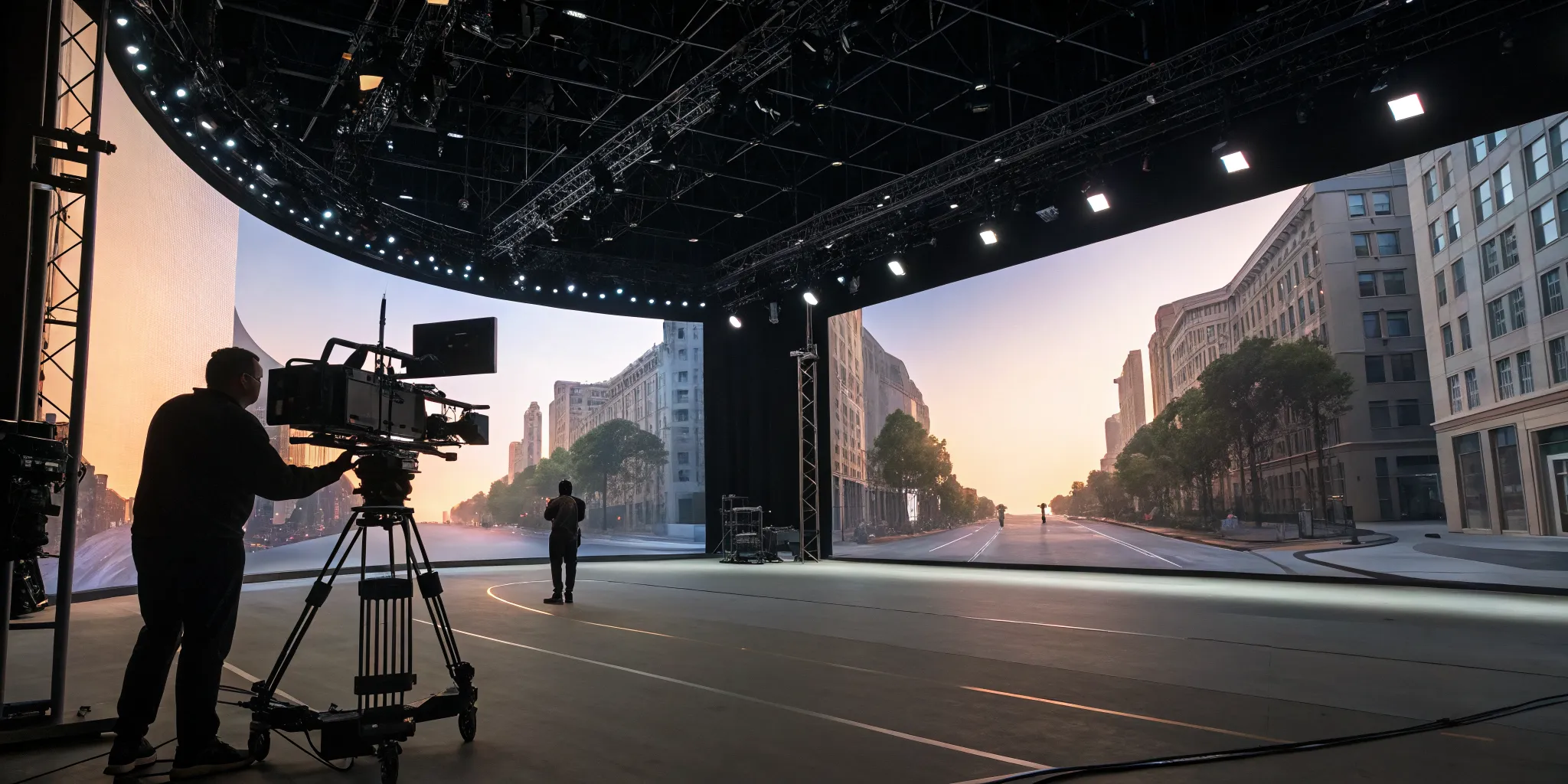
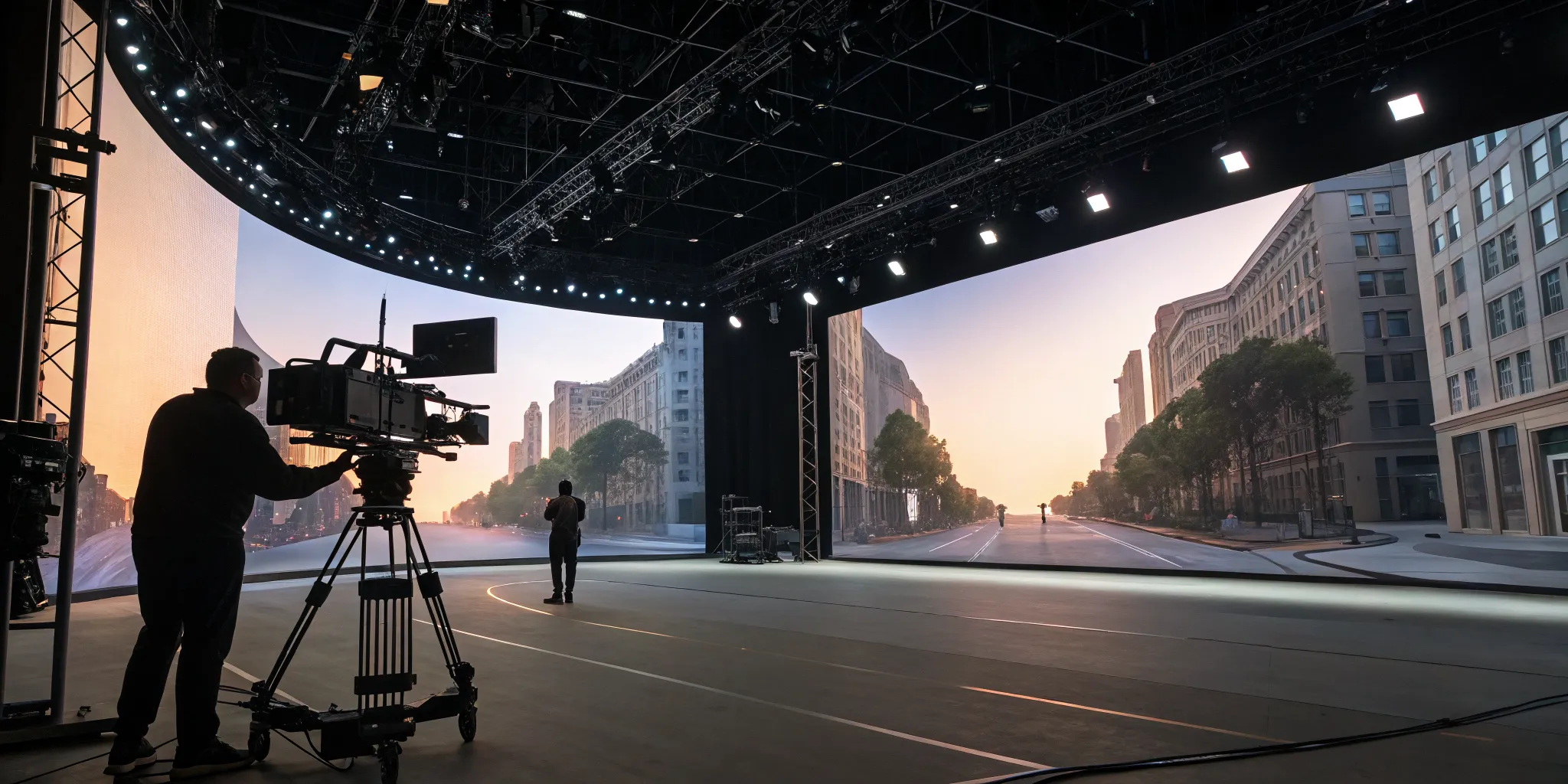
The term "LED volume" refers to the physical stage where OSVP takes place. It’s an immersive space constructed from large, curved LED screens that act as the background and sometimes even the ceiling of a set. These aren't just any screens; they are high-resolution panels designed to display incredibly detailed and vibrant computer-generated images or pre-recorded video footage. When you place actors and physical props inside the volume, the light from the LED screens illuminates them naturally. This creates realistic reflections and ambient lighting that would be incredibly difficult and time-consuming to replicate in post-production, making the final image feel grounded and cohesive.
The Role of Game Engines in Real-Time Rendering
Game engines are the powerhouse behind the real-time magic of OSVP. An engine like Unreal Engine acts as the central brain, processing massive amounts of data instantly. As the camera moves around the set, a motion capture system tracks its exact position and sends that data to the game engine. The engine then renders the virtual world from the camera's precise perspective and projects it onto the LED volume. This process creates a perfect parallax effect, meaning the background shifts naturally with the camera's movement, creating a genuine sense of depth. This real-time rendering is what sells the illusion, making it possible to capture stunning visuals like those seen in our work on Ant-Man and the Wasp: Quantumania.
How Is On-Set Virtual Production Different from Green Screen?
If you’ve spent any time on a film set, you’re probably familiar with green screen. It’s been the go-to solution for visual effects for decades. On-set virtual production (OSVP) offers a different approach, but it’s not a simple replacement. Think of it as another powerful tool in your creative arsenal. The fundamental difference comes down to timing: green screen composites happen in post-production, while OSVP brings the final background into the shot, in-camera and in real time.
This shift from "fix it in post" to "create it on set" changes everything from actor performance to lighting. For IP holders, understanding this distinction is key to deciding which technology best serves your story and production goals. It helps you plan more effectively and collaborate with partners like Arctic7 to build your world, whether you're working on a film, a series, or a game. Let's break down the key differences.
Comparing Green Screen and OSVP Workflows
The most significant change OSVP introduces is to the production workflow itself. With a traditional green screen, the background is added long after filming wraps. Actors perform against a solid green wall, often relying on imagination and tennis balls on sticks to understand their environment. The visual effects team then spends months in post-production keying out the green and compositing in the digital background.
OSVP flips this process. The virtual background is rendered in real time and displayed on massive LED screens right there on set. This means your cast and crew can see the final environment during filming. Actors can react to the world around them, and directors can frame shots with the final composition in mind. This was a core part of our work on projects like Marvel Studios' Ant-Man and the Wasp: Quantumania, where complex digital worlds needed to feel tangible for the performers.
Why Lighting Is the Real Game-Changer
One of the biggest challenges with green screen is lighting. You have to light your actors and physical set pieces to match a digital background that doesn't exist yet. This often leads to a disconnect, where the lighting on the actors feels separate from the world they’re in. Correcting this in post-production is time-consuming and can still look artificial.
This is where OSVP truly shines. The LED screens aren't just a backdrop; they are also the primary light source. The light from the virtual environment naturally illuminates the actors, props, and set, creating incredibly realistic lighting and reflections that are captured in-camera. This technique, known as emissive lighting, grounds your characters in the scene, making everything feel cohesive and believable from the moment you call "action."
When to Stick with Green Screen
While OSVP offers incredible advantages, it isn't the right solution for every single shot. As one industry expert put it, virtual production is another tool in the arsenal, not a cure-all. There are times when the classic green screen is still the more practical and efficient choice.
For instance, if a scene involves large-scale practical effects like explosions, major water sequences, or pyrotechnics, you wouldn't want to risk damaging a multi-million dollar LED volume. Green screen is also often a better fit for shots requiring extremely complex VFX that can't be rendered in real time or for simpler scenes where the background is out of focus. The key is to choose the right tool for the job, and sometimes, that’s still the trusty green screen.
A Look Inside an On-Set Virtual Production Stage
Walking onto an on-set virtual production (OSVP) stage feels like stepping into the future of filmmaking. Instead of a static green screen, you’re surrounded by a massive, glowing wall of light displaying a photorealistic world. It’s an intricate dance of hardware and software working in perfect sync to blend the physical and digital realms right before your eyes. Understanding how these stages operate is key to grasping the creative potential they offer. From the physical setup of the LED screens to the complex data pipeline running behind the scenes, every component plays a vital role in creating seamless, in-camera visual effects. Let's pull back the curtain and see how it all comes together.
Setting Up the LED Volume
The centerpiece of any virtual production stage is the LED volume. Think of it as a dynamic, digital set composed of large LED screens that serve as the background. These screens display real-time, computer-generated images or videos, effectively replacing a physical location or a green screen. The setup is more than just a big TV; the LED panels are typically arranged in a curve to create an immersive environment that wraps around the action. Many volumes also include an LED ceiling, or "lid," which provides realistic, integrated lighting and reflections on actors and props. This physical structure is where your digital world becomes a tangible space for the cast and crew.
How Camera Tracking and Mo-Cap Work Together
For the illusion to hold, the virtual background must react perfectly to the camera's every move. This magic is achieved through camera tracking. On set, the physical camera is tracked using a motion capture system that records its precise position, orientation, and lens data. This information is fed directly into a game engine, which acts as the brain of the operation. The engine then "projects" the correct view from a virtual camera onto the LED wall in real-time. As the cinematographer pans, tilts, or dollies, the background shifts with genuine depth and parallax, creating a seamless 3D world from the camera's perspective.
Mapping the Real-Time Rendering Pipeline
The real-time rendering pipeline is the workflow that makes instant creative changes possible. It’s a powerful system where digital assets are processed by a game engine and displayed on the LED volume with virtually no delay. This allows for an incredible level of flexibility right on set. Your director or cinematographer can make tweaks to lighting, adjust the placement of virtual props, or even change the weather on the fly. This immediate feedback loop is a game-changer, empowering your creative and technical teams to experiment and refine the shot live, rather than waiting weeks for post-production results.
How to Manage Your Digital Assets
A successful OSVP shoot depends on a well-organized library of digital assets. These are the building blocks of your virtual world, including 3D models, textures, and environments. Before filming even begins, every asset must be optimized for real-time performance and sorted for easy access. Keeping all your digital parts neat and easy to find is crucial, as a disorganized asset library can cause significant delays on set. This meticulous preparation is what enables the real-time adjustments that make OSVP so powerful, allowing your team to build and modify worlds with efficiency and creative freedom, as seen in our work on projects like Lollipop Racing.
Why Choose On-Set Virtual Production?
Deciding to use on-set virtual production (OSVP) is about more than just accessing the latest technology. It’s a strategic move that can fundamentally improve your creative process and final product. By moving a significant portion of post-production work directly onto the live-action set, OSVP offers a more integrated and efficient way to build worlds. For IP holders, this means gaining greater creative control, streamlining complex shoots, and delivering a more immersive experience for your audience. Let's look at the specific advantages that make OSVP such a powerful tool for modern storytellers.
Achieve Realistic, Responsive Lighting
One of the biggest challenges with traditional green screen is making the lighting look natural. With OSVP, this problem practically solves itself. The massive LED walls that display your virtual environment also act as the primary light source for the scene. This light realistically reflects off actors, costumes, and props, creating natural highlights and shadows that are perfectly synced with the digital background. You get complex, dynamic lighting that would take weeks to replicate in post-production, all captured in-camera. This was a key technique used in projects like Ant-Man and the Wasp: Quantumania to integrate actors seamlessly into the quantum realm.
Capture Visual Effects In-Camera
Imagine getting your final visual effects shots on the day of filming. That’s the power of in-camera VFX (ICVFX). Because the camera is filming a real-time rendered background on the LED volume, effects like depth of field, lens flares, and complex reflections are captured organically. This reduces the guesswork and heavy compositing work later on. Your director of photography can frame shots with confidence, knowing that what they see in the monitor is incredibly close to the final pixel. This approach gives your creative team more control on set and helps lock in the visual style of your project from day one.
Get Immediate Feedback for Cast and Crew
Filming against a green screen can be disorienting for everyone on set. Actors have to imagine the world around them, and the crew has to guess how the final shot will look. OSVP changes that dynamic completely. Actors can see and react to their environment, leading to more grounded and believable performances. The director, cinematographer, and crew can see the composite shot in real-time, allowing them to make immediate adjustments to camera movement, blocking, and composition. This collaborative, real-time feedback loop ensures the creative vision is being executed exactly as intended, as seen in the production of shows like Star Wars: Skeleton Crew.
Streamline Your Production Timeline
OSVP can dramatically condense your production schedule. Instead of spending weeks traveling to different locations, you can bring any environment to a single stage. Digital sets can be loaded in minutes, allowing you to shoot scenes in a desert in the morning and a futuristic city in the afternoon. For episodic series with recurring locations, you can build a digital set once and reuse it throughout the season, saving significant time and resources on construction and teardown. This efficiency allows you to focus more of your budget and energy on what appears on screen, a core part of Arctic7's strategic services.
Gain Creative Freedom and Location Versatility
What if your story calls for a scene on a planet with two suns or inside a microscopic world? With OSVP, your only limit is your imagination. This technology gives you the freedom to create and shoot in fantastical locations that would be impossible or prohibitively expensive to build physically. It also provides incredible versatility, letting you capture golden hour for twelve straight hours or instantly switch from a snowy mountain to a tropical beach. This level of control empowers you to tell bigger, more ambitious stories and bring stylized worlds like the one in Lollipop Racing to life without logistical constraints.
What Are the Challenges of On-Set Virtual Production?
On-set virtual production offers some incredible creative advantages, but it’s not a magic wand. Like any powerful tool, it comes with its own set of challenges. Going in with a clear-eyed view of the potential hurdles is the best way to make sure your project runs smoothly and successfully. Thinking through these factors ahead of time helps you build a realistic plan, assemble the right team, and make smart decisions on set. Here are the main challenges to keep on your radar.
Planning for High Upfront Costs
Let’s be direct: the initial investment for on-set virtual production can be steep. The technology itself is a major expense. A single small LED panel can cost around $2,000, and you need a lot of them to build a volume. Renting a fully equipped LED stage can run anywhere from $30,000 to $100,000 per day. For large-scale projects, creating the custom virtual environments can push costs even higher. This is why detailed strategic planning is so critical. Understanding these upfront costs allows you to budget effectively and ensure the investment aligns with your project’s goals, preventing surprises down the line.
Finding the Right Technical Expertise
Because on-set virtual production technology is still quite new, the pool of seasoned experts is smaller than in traditional filmmaking. Many crews are still on a learning curve, figuring out the best ways to shoot on an LED stage and get the most out of the tools. This can make it challenging to find professionals who have deep, hands-on experience. You need people who understand the entire pipeline, from creating digital assets to running the stage on shoot day. Assembling an experienced team that has already worked through these complexities is one of the most important steps you can take to ensure your production’s success.
Working with Visual Quality Limitations
One of the biggest draws of OSVP is getting amazing visual effects in-camera. However, it’s important to know that there can be a trade-off in visual quality compared to traditional VFX. Because the environments are rendered in real-time, there can be limits to the level of detail and complexity you can achieve on set. As many VFX professionals discuss, traditional, non-real-time rendering allows for more processing time, which can result in higher-fidelity images. This doesn’t mean OSVP looks bad, far from it, but it does mean you need to plan your shots and consider if a hybrid approach might be best for scenes requiring extreme detail.
Handling Space and Movement Constraints
An LED volume, while immersive, is still a finite space. This can create some practical constraints for your scenes. For example, long “walk-and-talk” shots are tricky, as using a treadmill on set can often look unconvincing. The technology also has some current limitations when it comes to generating photorealistic, real-time digital characters that can interact seamlessly with live actors. Understanding these boundaries early on helps you and your director design scenes that play to the technology’s strengths. It’s all about matching the right tool to the right storytelling moment, which is central to how experts approach complex virtual environments.
How to Run a Successful OSVP Shoot
An on-set virtual production shoot is an incredible experience, but its success hinges on more than just impressive technology. It requires a shift in mindset, moving much of the creative and technical work that used to happen in post-production to the pre-production and on-set phases. Think of it as being incredibly prepared so you can have more creative freedom when it counts. When your teams are aligned and your technology is dialed in, the shoot itself becomes a fluid, dynamic process. With the right partner and a solid plan, you can make sure your time on the virtual stage is efficient, collaborative, and creatively fulfilling. The key is to treat the virtual world with the same attention to detail as a physical set.
Plan and Pre-Visualize Everything
In OSVP, planning is everything. Before you even think about stepping onto the stage, you need a detailed blueprint. This is where pre-visualization, or "previs," comes in. It’s far more than just storyboarding; it’s about creating a dynamic, digital rehearsal of your entire shoot. You’ll carefully plan where actors and cameras will move to match the virtual world, mapping out every shot and interaction. This process helps you identify potential issues, refine your creative vision, and ensure your physical and digital elements will work together seamlessly. Investing time in a thorough previs phase is one of the most effective ways to save time and money once the cameras are rolling. It’s a core part of our strategic services for this very reason.
Run Thorough Technical Rehearsals
Once your plan is in place, it’s time for a tech rehearsal. This is a non-negotiable step for any OSVP shoot. Before your cast arrives, your crew needs to do full practice runs of all the technology to fix any problems. This is your chance to test the LED volume, calibrate the camera tracking systems, and ensure the game engine is rendering your virtual environment without a hitch. Think of it as a dress rehearsal for your technology. It’s all about making sure every component is communicating correctly so that when you’re ready to film, the tech fades into the background, allowing your director and cast to focus purely on performance.
Match Your Lighting to the Virtual World
One of the biggest advantages of OSVP is the realistic lighting it produces, but it doesn’t happen automatically. The secret is to make sure the real lights on set match the lights in the virtual background. The LED volume itself acts as a massive, dynamic light source, wrapping your actors in the light of the virtual world. However, you’ll still need a skilled lighting director to add physical lights that complement and enhance the scene. This blend of virtual and practical lighting is what sells the illusion, creating a cohesive image where your actors look like they truly belong in the environment. This technique was essential for our work on projects like Marvel Studios' Ant-Man and the Wasp: Quantumania.
Use Real-Time Adjustments to Your Advantage
The real magic of OSVP is its flexibility. Unlike a traditional shoot where major environmental changes are left for post-production, virtual production allows you to make creative decisions on the fly. Filmmakers can change lighting or move props in the virtual world right away while filming. Want the sun to be a little lower in the sky? Need to shift a mountain range a few feet to the left for a better composition? Your virtual art department can make those adjustments in real time, giving the director and cinematographer immediate feedback. This ability to experiment and iterate live on set opens up a world of creative possibilities that simply wasn't possible before.
Prioritize Accurate Camera Tracking
Accurate camera tracking is the invisible force that holds the entire illusion of OSVP together. On set, the camera is live-tracked with a motion capture system, and that movement data is sent directly into the game engine. The engine then projects the correct perspective of the virtual world onto the LED volume in real time. This creates a perfect parallax effect, meaning the background shifts naturally as the camera moves, just as it would in a real location. Without precise, stable tracking, the connection between the camera and the virtual world breaks, and the audience will immediately sense that something is off. It’s a critical component for creating immersive worlds, like those seen in the Star Wars universe.
Is On-Set Virtual Production Right for Your Project?
Deciding to use on-set virtual production (OSVP) is a major decision that impacts your budget, creative process, and logistics. While the technology offers incredible opportunities, it’s not a one-size-fits-all solution. The key is to weigh the upfront costs against the long-term savings and creative benefits and to consider whether this immersive approach truly serves your story. By evaluating your project's specific needs, you can determine if OSVP is the right path for bringing your vision to life. Let's look at a few key factors to help you make that choice.
Considering Your Budget and Scale
Let's be upfront: on-set virtual production requires a significant financial investment. Renting an LED volume can cost $30,000 to $100,000 per day, before you even create your custom virtual environments. While these numbers seem high, it’s important to view them in context. For large-scale projects, OSVP can be offset by eliminating expenses for travel, shipping equipment, and building physical sets. It’s a trade-off that requires careful planning, but for the right project, the investment can streamline production and lead to incredible creative results. Our comprehensive services can help you map out these costs.
Finding the Right Storytelling Fit
Beyond the budget, the most important question is whether OSVP serves your story. This technology shines when your narrative involves fantastical worlds or locations that are impossible to shoot in reality. Because the virtual background is rendered in real-time, your actors and crew can see and react to the world around them. This creates a more immersive filming experience than staring at a green screen, helping actors deliver authentic performances and allowing directors to frame shots with confidence. For projects like our work on the Star Wars universe, this technology is a game-changer for bringing expansive worlds to life.
The Sustainability Advantage
Choosing on-set virtual production can also be a more sustainable approach to filmmaking. By replacing physical sets with digital environments, you drastically reduce the material waste from set construction. OSVP also cuts down on extensive travel; instead of flying your cast and crew to different continents, you can bring any location to a single studio. This shrinks your project’s carbon footprint and simplifies logistics by reducing the need for travel, accommodations, and location permits. It's a smart choice for both the planet and your bottom line, aligning with the industry's move toward a green production model.
Why Collaboration Is Key to OSVP Success
On-set virtual production is more than a technological upgrade; it’s a fundamental shift in how creative teams work together. The old model of siloed departments and a “fix it in post” mindset simply doesn’t apply here. Instead, success in OSVP depends on constant communication and deep collaboration from the very beginning. Think of it as moving the entire post-production process into pre-production and the live shoot. Everyone, from the director and cinematographer to the VFX artists and production designers, must be in sync because every decision has an immediate ripple effect across all departments.
This collaborative approach ensures that the creative vision is clear and achievable within the technical framework. When your teams are aligned, you can make decisions in real-time on set, confident that every department is working toward the same goal. This is where having a partner with integrated services becomes invaluable. They can bridge the gap between creative intent and technical execution, creating a unified workflow that brings your world to life seamlessly. Without this tight-knit collaboration, you risk miscommunication, costly delays, and a final product that falls short of its potential. A truly collaborative environment turns OSVP from a complex technical challenge into a powerful creative tool.
Align Your Teams from Day One
The most successful OSVP projects begin with a unified team. Before a single digital asset is created, your key players, including the director, cinematographer, production designer, and VFX supervisor, need to establish a shared vision. A good virtual production team will work with the entire crew to figure out the best way to achieve a given scene, ensuring everyone understands the creative goals and technical requirements. This early alignment is crucial for managing expectations, especially when filmmakers and talent have high standards for the final look and feel. Getting everyone on the same page from the start prevents misunderstandings and allows the team to move forward with a clear, collective purpose.
Plan Virtual Environments in Pre-Production
In the world of OSVP, pre-production is everything. This is where you build your virtual sets, plan your shots, and map out every detail of the shoot. For projects with recurring locations, like a television series, virtual sets can be built during prep and reused throughout the season, saving significant time and resources. This phase requires meticulous planning, as you must carefully map where actors and cameras will move to ensure their actions align perfectly with the virtual world. This detailed work upfront, like the asset creation for projects such as Lollipop Racing, allows for a much smoother and more predictable production, letting creativity flourish on set.
How to Prepare Your On-Set Crew
One of the biggest advantages of OSVP is how it transforms the on-set environment. The experience is fantastic compared to a bluescreen stage because crews can work in a more natural way. They see the final image live on the LED volume, which helps everyone from the camera operator to the gaffer ensure their creative vision is being represented on screen. To make this happen, you have to prepare your crew and your tech. It’s essential to test everything with full practice runs before filming begins. These technical rehearsals allow you to identify and fix any problems with the hardware or software, ensuring the technology is a reliable tool, not a roadblock, when it’s time to shoot.
How to Choose the Right Virtual Production Partner
On-set virtual production is a deeply collaborative process, and your partner choice will have a massive impact on the final product. You're looking for more than a stage rental; you need a team that integrates with your own, understands your creative goals, and brings the technical firepower to make it happen. The right partner becomes an extension of your vision, helping you explore new creative territory while keeping the production on track. When you start your search, focus on three key areas: technical mastery, creative synergy, and scalability.
Look for Technical and Pipeline Expertise
A great virtual production partner needs more than impressive hardware. They need a deep, practical understanding of the entire pipeline, from digital asset creation to the final in-camera shot. Think of them as the architects of your virtual world. They should be fluent in real-time rendering, camera tracking, and LED volume integration, ensuring every technical piece works in harmony. A partner with proven technical excellence can anticipate challenges before they derail your shoot and troubleshoot on the fly. Ask about their workflow to see how they ensure a smooth production.
Ensure Creative and Transmedia Alignment
Technical skill is crucial, but it means little if your partner doesn't connect with your creative vision. The ideal team doesn't just execute your ideas; they contribute to them. They should be passionate about your story and understand the core of your IP. This is especially important if you have transmedia ambitions. You want a partner who thinks in terms of world-building, not just shot-building. Finding a team that understands how to expand a universe, like the work done for the Star Wars galaxy, ensures your story remains cohesive and powerful across every platform.
Confirm Scalability Across Film, TV, and Games
Your needs can change from one project to the next. You might be shooting a single scene for a television series one day and planning a full feature film the next. Your virtual production partner should be able to scale their services to match the scope and budget of your project. This flexibility shows they can adapt to different production models, whether it's for a blockbuster film like Ant-Man and the Wasp: Quantumania, an episodic series, or an interactive game. A scalable partner can grow with you, providing a consistent resource as you build out your IP.
What's Next for On-Set Virtual Production?
On-set virtual production is already a powerful tool, but the technology is far from finished. It’s constantly evolving, opening up even more exciting possibilities for creators who want to build expansive worlds. The future of OSVP is being shaped by advancements in a few key areas, from smarter rendering engines to more flexible production models. These innovations aren't just technical upgrades; they represent a fundamental shift in how we can approach filmmaking and storytelling. For IP holders, this means more dynamic ways to bring a universe to life and create cohesive experiences across different media.
Imagine being able to generate photorealistic environments in real time with the help of AI, or collaborating with your international team as if they were right there on set with you. The next generation of LED screens promises visuals so crisp and lifelike they are indistinguishable from reality, completely immersing your cast and crew in the story. These developments are making the production process more efficient, creatively liberating, and collaborative. As a partner in transmedia development, we see these trends not just as tools, but as gateways to deeper, more engaging narratives that can live across film, games, and interactive experiences. The future is about making world-building more intuitive and integrated than ever before.
AI-Powered Real-Time Rendering
This is where things get really interesting. Artificial intelligence is being integrated into virtual production to enhance real-time rendering capabilities. Think of it as giving your virtual set a brain. This allows for incredibly dynamic and responsive environments that can react to an actor’s performance or a director’s creative whim in the moment. As AI algorithms become more advanced, they can simulate complex elements like changing weather patterns or subtle shifts in lighting with stunning realism. This further erases the line between the digital and physical worlds, giving you the power to make creative decisions on the fly without breaking the flow of production.
The Next Generation of LED Tech
The quality of your virtual set is only as good as the screen it’s displayed on, and the next generation of LED tech is advancing at an incredible pace. The next wave of LED panels is lighter, more energy-efficient, and capable of producing much higher resolutions and more accurate colors. Innovations like microLED are set to dramatically improve the visual fidelity of the virtual backgrounds you see on set. For filmmakers, this means the environments you create will feel more immersive and look completely seamless when integrated with your live-action footage. The goal is to make the technology invisible, allowing the story and performances to take center stage in a believable, captivating world.
The Rise of Hybrid and Remote Production
Recent years have shown us that great work doesn’t have to happen in one place, and filmmaking is no exception. We’re seeing a major shift toward hybrid and remote production models, where on-set virtual production is combined with powerful remote collaboration tools. This setup allows key team members, from VFX supervisors to art directors, to contribute to a shoot from anywhere in the world. This not only adds a huge amount of flexibility to your production but also breaks down geographical barriers. You can assemble your dream team based on talent, not location, ensuring you have the best creative minds working on your project.
How OSVP Shapes Transmedia Storytelling
This is where the true power of OSVP comes into play for IP holders. Virtual production is a game-changer for transmedia storytelling, allowing you to build interconnected narratives that span across film, television, and games more seamlessly than ever before. The digital assets and immersive environments you create for a film can be repurposed for a video game or a VR experience, ensuring your world feels consistent and authentic on every platform. This approach not only streamlines the creation of multi-platform content but also deepens audience engagement. When fans can explore the same world they saw in a movie within a game, their connection to your IP becomes much stronger.
Related Articles
- How Does Virtual Production Work? A Creator's Guide
- The Virtual Production Workflow: A Practical Guide
- How to Hire a Virtual Production Company: A Smart Guide
Frequently Asked Questions
Is on-set virtual production going to completely replace green screen? Not at all. It's best to think of on-set virtual production as another powerful tool in your creative toolkit, not a universal replacement for green screen. While OSVP is incredible for creating immersive environments and realistic lighting in-camera, green screen is still the more practical choice for certain situations. For example, if your scene involves large-scale practical effects like explosions or major water sequences, you wouldn't want to risk damaging the expensive LED screens. The key is to strategically choose the right technology for the specific shot you need.
How can OSVP save money when the daily rental costs are so high? This is a great question, and it’s about looking at your budget holistically. While the upfront cost of an LED stage is significant, the savings come from what you no longer have to spend on. You can eliminate the costs of building and transporting massive physical sets, as well as the expenses tied to flying your entire cast and crew to multiple locations. A single virtual production stage can become a desert, a futuristic city, and a fantasy forest all in the same week. This condenses your schedule and reallocates budget from logistics and post-production into pre-production and the final image itself.
Can the digital assets from a film shoot be used for a video game or other projects? Yes, and this is one of the most exciting aspects of using virtual production. The high-quality 3D environments, characters, and props you build for a film or series are essentially game-ready. These assets can be repurposed for a video game, a virtual reality experience, or other interactive media. This approach ensures your world feels consistent and authentic across every platform, which is a huge advantage for IP holders looking to build a cohesive transmedia universe. It streamlines development and deepens your audience's connection to the world you've created.
What is the single most important factor for a successful OSVP shoot? If I had to pick just one, it would be deep collaboration from the very beginning. In traditional filmmaking, departments can often work in silos. With OSVP, that's not an option. Your director, cinematographer, production designer, and VFX supervisor must be in constant communication during pre-production. Because the virtual world has to be built before you shoot, every creative and technical decision is made upfront. Getting everyone aligned on a shared vision from day one is the key to a smooth, efficient, and creatively fulfilling shoot.
How does OSVP change the experience for actors and directors on set? It completely transforms the on-set dynamic for the better. For actors, it means they are no longer performing in a void of green screens; they can see and react to the world around them, which leads to more natural and grounded performances. For directors and cinematographers, it provides immediate creative feedback. They can see a nearly final version of the shot in the monitor as they film, allowing them to adjust framing, lighting, and blocking in real time to perfect the composition. It turns the filmmaking process into a more interactive and collaborative experience.
New Immersive & XR Media Capabilities Added to Arctic7's Suite of Games, Film & TV and Digital Services

Arctic7 Shares Details of its Work on Skeleton Crew and Cinematics Partnership with Fateless

The Human Touch: Adding Personality to Project and Product Management
Whether it’s your team, your client, or your stakeholders, understanding the human dynamics is just as critical as hitting milestones.

McDonald's Case Study: Bridging Brand and Play | Arctic7
Bridging Brand and Play: An Interview with Lindsay Blenkhorn Daggitt