
Immersive Experience Development: A Strategic Guide for IP Holders
Schedule an immersive experience development consultation with Arctic7
Immersive experience development is a strategic transmedia process that expands intellectual property across linked entertainment ecosystems, helping IP holders build deep bonds with fans through steady new stories. According to research from ScholarSpace, this form of storytelling reaches broad audiences across media while helping major studios achieve strong ROI and brand protection. A successful project needs a partner who bridges technical skill with world-building strategy by using a proven plan to turn concepts into rich worlds. This structured approach to multi-platform growth drives long-term success by meeting fans in the virtual spaces where they already spend their time and attention.
What Is Immersive Experience Development?
Immersive experience development is the end-to-end process of building interactive digital worlds that live across multiple platforms, from games and VR to film and live events. It moves beyond creating single assets to architecting whole ecosystems where fans participate rather than passively consume. Arctic7 approaches this by combining narrative strategy, virtual production, and multi-platform deployment to turn IP concepts into revenue-generating entertainment properties.
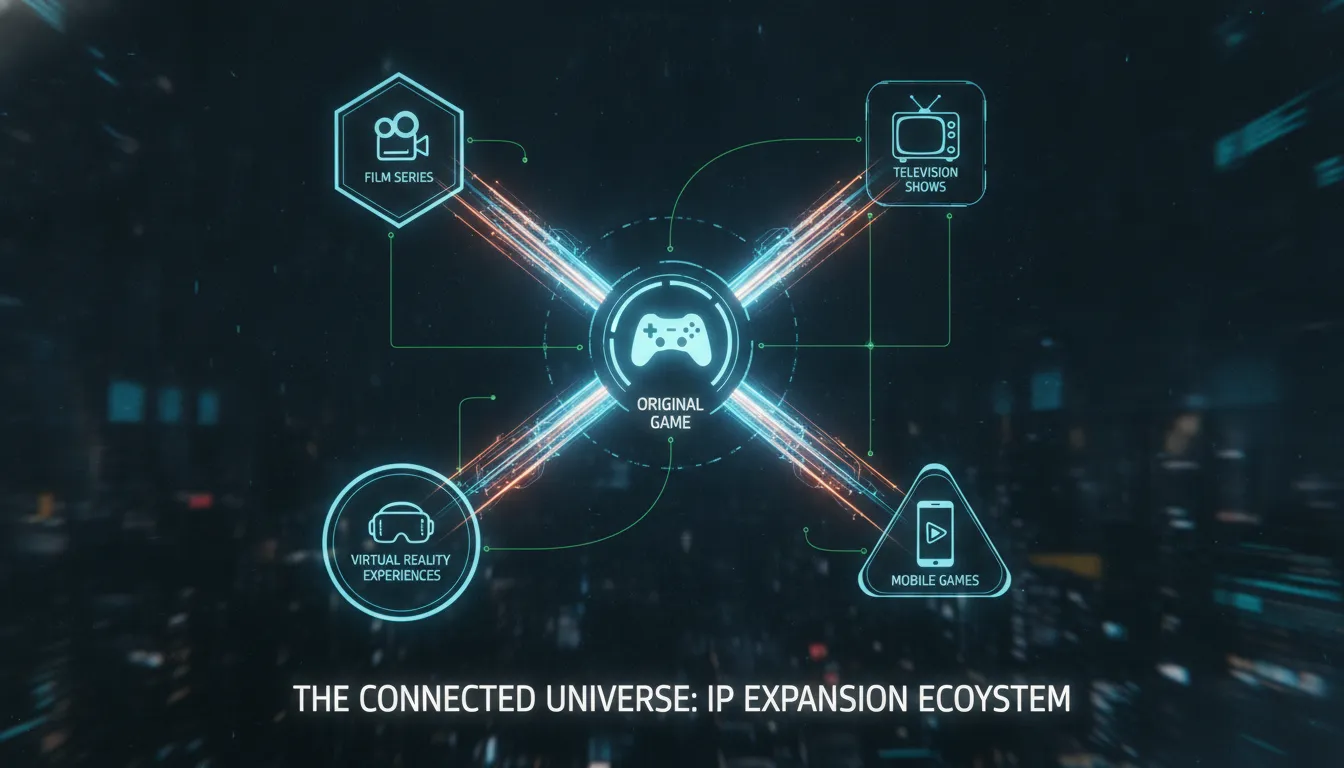
For major brands, immersive experience development means much more than building a VR app or a mobile game. It is the process of constructing a world that lives across many screens and physical spaces. This path lets a brand take a story from a single work and expand it into a full universe that fans can join, explore, and influence.
A transmedia approach to IP expansion
Immersive experience development uses a transmedia model where a creator expands a story across many platforms. This is not about making a sequel or a spin-off. Instead, it involves creating transmedia storytelling paths that let fans move between media types naturally. Each new part of the world adds something unique. A film might show the main plot, while a game lets a fan explore a side story in depth.
This method helps brands sustain their stories long-term rather than relying on single product launches. By using multiple formats, an IP holder meets fans where they spend their time, building stronger bonds and unlocking more revenue streams from the same core story. When done well, the story becomes a living thing that exists in both the real and digital worlds simultaneously.
From single concept to interactive ecosystem
True development in this space goes beyond the tools. It requires a clear plan to bridge old media and active participation. Successful work depends on balancing human and business factors during the design phase. The project must feel right to the fan while meeting the studio's commercial goals.
At Arctic7, we treat this as a strategic partnership rather than a one-time task. We use a three-stage path that starts with an IP readiness workshop, moves into a full platform strategy, and ends with production activation. This flow ensures every choice serves the whole ecosystem. Explore our transmedia services for IP holders to see this framework in practice.
Why Do IP Holders Need Immersive Experience Development?
IP holders invest in immersive experience development to protect brand integrity across platforms, drive deeper audience engagement, and unlock new recurring revenue streams. A structured transmedia approach keeps the core world consistent while allowing each medium to expand the story in unique ways. This builds long-term fan loyalty and creates a more resilient entertainment business model than single-medium releases.
For owners of major stories, moving into these new spaces is about more than technology. It is a strategic growth imperative. Immersive experience development helps brands connect with fans in deeper ways, generate new revenue, and protect brand value across all media.
Protect your brand and grow ROI
Brand safety is the top concern for any IP holder. Moving a story to a new platform carries risk if not executed carefully. Arctic7's immersive development services for entertainment brands keep your world intact by ensuring characters, themes, and visual identity remain consistent as they expand. This quality focus helps you maximize return on investment for each new project. IP holders consistently find that brand protection and high ROI are the two pillars of a successful multi-platform launch.
- Consistent brand identity: Every platform extension reinforces the same core visual and narrative rules
- Reduced fragmentation risk: A central strategy prevents lore conflicts between different media
- Measurable ROI: Each medium feeds into a unified analytics framework
Drive deeper audience engagement
Fans today want to participate in the story. They do not just want to watch; they want to act. Transmedia tools let you expand your world across film, games, books, and XR, helping you reach broader audiences who use different devices. When fans can step into a world, they stay loyal longer. They feel a sense of ownership that a passive viewing experience cannot replicate.
This engagement model also unlocks new revenue streams. You are no longer dependent on a single box office or app store. You can monetize through in-world purchases, live events, subscriptions, and cross-platform content drops. By building an interconnected ecosystem, you give your IP room to breathe and grow in a crowded market.
Build a lasting entertainment ecosystem
Success in today's market requires more than a great concept. It demands a plan that spans all screens and spaces. Partnerships focused on long-term growth help you find new value in existing IP. You can bridge games and television to discover new audiences. This approach keeps your story fresh and lets you test new ideas with lower risk to your core world.
A strong ecosystem also attracts partners. When your world is already built for multiple platforms, it becomes more attractive to collaborators. Arctic7 has executed this at scale, with work spanning projects across Star Wars, Marvel, and original IP that demonstrate how transmedia ecosystems drive sustained audience growth.
The Arctic7 Method: A Proven Framework for Immersive Development
The Arctic7 Method is a three-stage framework for immersive experience development: IP readiness workshops, strategy definition and world building, and production activation. Each stage builds on the last, ensuring that creative ambition is matched by technical capability and commercial viability. This method has been validated across dozens of projects for global entertainment brands.
High-quality immersive experience development needs more than technical skills. It requires a clear framework to protect the brand and grow the fan base. The Arctic7 Method is a three-stage approach that turns a story into a full world fans can inhabit. Helping IP holders expand their reach while keeping the core narrative safe.
Stage 1: IP readiness workshops and discovery
The first stage evaluates the strengths of a storyworld. Arctic7 conducts deep workshops to assess how ready an IP is for growth across platforms. These sessions identify which story elements work best for games, film, or VR. By examining the brand early, teams can avoid risks and identify the best paths to ROI. This stage ensures every new piece of media adds value to the main narrative.
During these workshops, the team analyzes the existing fan base and story history, identifying key themes that must remain consistent across all media. This careful assessment builds a strong foundation for everything that follows, ensuring that any new transmedia work feels like a natural extension of the world.
Stage 2: Strategy definition and world building
Once discovery concludes, the team builds a comprehensive platform strategy. This roadmap shows how the story will move between books, film, games, and XR. Arctic7 uses the Transreality Storyboarding Framework (TSF) to design spaces where fans can engage with the brand, ensuring each medium plays to its strengths.
A good strategy balances human needs with business goals. It maps how fans will move from a movie to a game to a VR experience. This stage also sets the technical parameters for the project. By planning the full transmedia design path upfront, teams save time and money later. The result is a roadmap that guides creative and technical teams through the entire build process.
Stage 3: Production activation and virtual mastery
The final stage turns the plan into a real product. Arctic7 leverages deep virtual production expertise, honed through work on major films like Star Wars and Marvel. Using tools like Unreal Engine, the team creates assets that work for both film and games. This "build once, deploy everywhere" approach ensures visual consistency across every touchpoint.
- Pre-visualization: Real-time scene blocking and camera planning before physical production begins
- On-set virtual production: LED walls and real-time rendering for in-camera visual effects
- Cross-platform asset packaging: One source asset set optimized for film, games, VR, and mobile
Production also involves rigorous testing and refinement to ensure the final product meets the IP holder's quality standards. This stage brings together creative vision and technical execution to launch a successful world that grows the IP's value for years to come.
How Do You Build Narrative Worlds Across Multiple Platforms?
Building narrative worlds across multiple platforms requires a unified story bible, the Transreality Storyboarding Framework for cross-platform mapping, and co-creation mechanisms that let fans participate in the story. The key is establishing core canon rules that apply to every medium while allowing each platform to tell platform-native stories that expand rather than repeat the central narrative.
Building a story that stays consistent across many screens is one of the hardest challenges in immersive experience development. The narrative design must link games, film, and XR while keeping the world identical for every user. A strong storyworld needs clear rules and deep history, which lets an IP expand into new areas without losing its soul.
Building cohesive storyworlds
A stable storyworld maintains its internal logic across all media. The facts of the world should not change between a movie and a game. Using VR narrative extensions is one proven way to add depth. These side stories fit into the main timeline but live in a VR space. Giving fans a way to step inside the world and experience it from new angles.
This approach is central to cinematic VR experience development today. It lets creators tell stories that would not work on a flat screen. In VR, the sense of scale and presence changes how fans connect with the lore. When these pieces fit together well, the story feels more complete and the brand stays protected.
Using the Transreality Storyboarding Framework
Creating these worlds needs a structured method. The Transreality Storyboarding Framework (TSF) helps teams design experience spaces that work across multiple media types. TSF provides a way to map how a story transitions between platforms, examining how users interact with the world in each space.
Using TSF makes it easier to set up transmedia storytelling workflows for franchises. It ensures the story drives the technology, not the other way around. By mapping out the user journey first, teams identify the best moments for fans to engage across platforms. Reducing the risk of building content that does not fit the brand.
Engaging fans through co-creation
Modern storytelling is no longer one-directional. Fans want to shape the worlds they love. Narrative design now includes narrative co-creation as a core tool, allowing the audience to influence how the story grows. This can happen through games where player choices matter or through events that let fans contribute to the lore.
- Choice-driven narratives: Player decisions in games shape the canon timeline
- Community world building: Fan-created content integrated into official lore
- Live events: In-world experiences that evolve the story in real time
From Prototype to Production: Technical Excellence in Immersive Development
Moving from prototype to production in immersive experience development requires virtual production workflows that reduce iteration costs, cross-platform asset pipelines, and rigorous production activation processes. Arctic7's virtual production approach, proven across six Star Wars projects and multiple Marvel collaborations, enables fast iteration cycles and consistent high-fidelity output across every platform target.
Moving from vision to live product is a defining phase in immersive experience development. Teams must turn creative ideas into stable, high-quality worlds. This shift demands technical skill, clear workflows, and a commitment to quality that protects the brand at every step.
Streamlining with virtual production
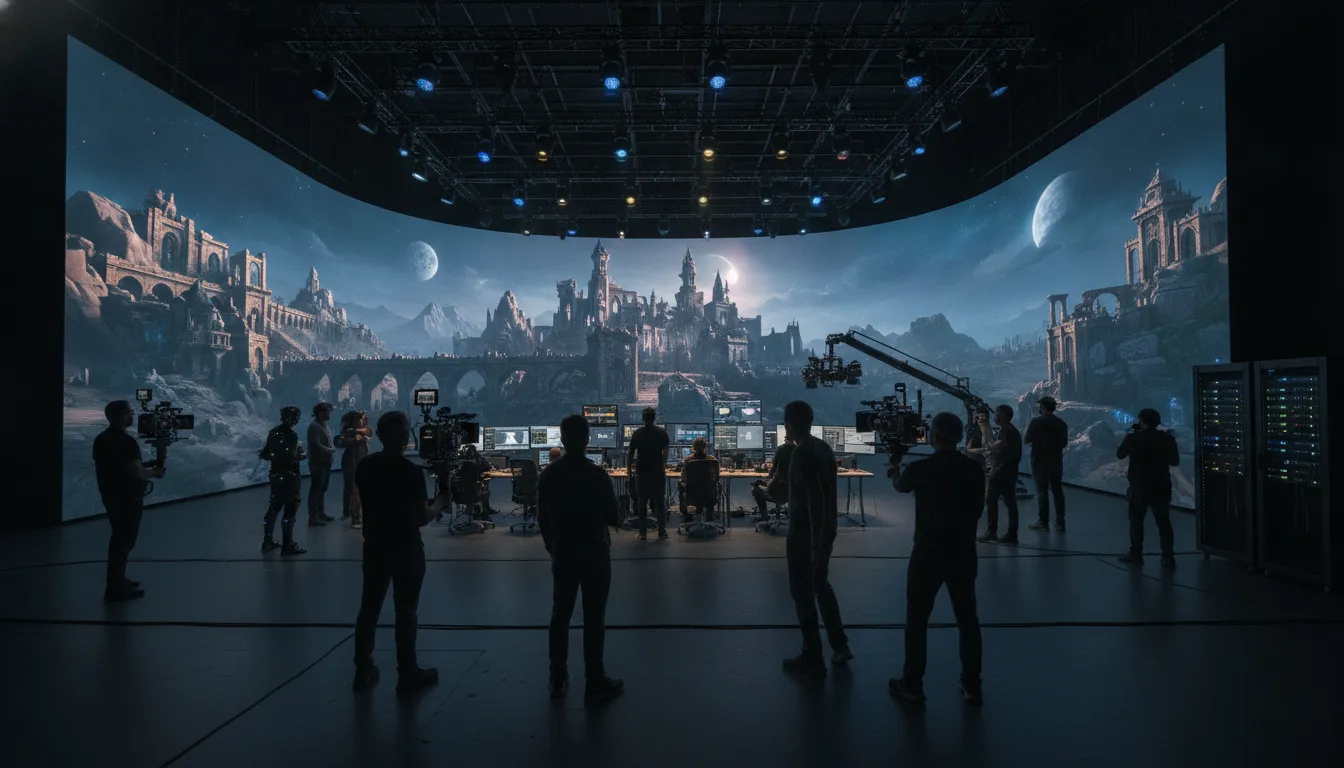
Virtual production is a core tool that changes how immersive worlds are built. It allows teams to see digital scenes in real time while filming. This virtual production for worldbuilding expertise helps cut errors and speeds delivery of complex assets. Instead of waiting for renders to complete, artists iterate on the fly, making faster decisions with immediate visual feedback.
This workflow has been validated across six Star Wars projects and multiple Marvel collaborations according to Arctic7 project data. It ensures the final product meets the quality standards of elite IP holders while staying on schedule and within budget.
Reducing iteration costs
High costs often block full-scale immersive launches. But virtual production tools help lower the expense of making changes. When teams can test ideas quickly in a digital space, they catch issues earlier, saving time and money during the final build phase. This encourages bolder creative choices without budget risk.
| Criteria | Traditional Production | Virtual Production |
|---|---|---|
| Turnaround Time | Slow, post-production dependent | Fast, real-time assets |
| Iteration Cost | High for late changes | Low, on-set editing |
| Creative Flexibility | Limited by physical sets | High with digital environments |
| Review Cycles | Delayed until final renders | Instant during live sessions |
| Output Quality | Variable by budget | Consistently high-fidelity |
Achieving production activation
The final phase is production activation, where strategy meets real-world deployment at scale. This involves moving from prototype to platform-ready release. Teams must ensure the experience runs well on all target devices. This technical rigor protects the brand and maximizes ROI for IP holders.
Effective delivery depends on tools that support media fidelity across platforms. According to research from the University of Hawaii, successful projects need processes that expand dimensions and shared interactions. This focus on technical excellence ensures the experience feels authentic and keeps audiences engaged.
How Do You Launch, Measure, and Iterate an Immersive Ecosystem?
Launching an immersive ecosystem requires phased deployment across platforms, unified measurement frameworks, and data-driven iteration cycles. Key metrics include cross-platform engagement rates, content consumption patterns, and per-platform revenue attribution. Arctic7 uses a continuous feedback loop that feeds measurement data back into content planning and platform optimization.
Launching an immersive experience is not the end of development. It is the beginning of a new cycle. Once the world is live, the focus shifts to measurement, optimization, and ongoing content expansion. This continuous loop keeps the ecosystem growing and evolving alongside audience expectations.
Phased deployment strategy
Rather than launching everything at once, successful IP holders deploy their ecosystem in phases. This starts with a flagship experience, typically a game or interactive film, followed by companion content on other platforms. Each phase builds audience awareness and data that informs subsequent launches.
Measuring what matters
Measurement goes beyond vanity metrics. IP holders should track:
- Cross-platform engagement: How fans move between game, film, VR, and live events
- Content consumption patterns: Which story elements drive the most interaction
- Revenue attribution: Per-platform contribution to total ecosystem ROI
- Brand sentiment: Fan perception across markets in the US, Europe, and Middle East
Arctic7 builds custom analytics frameworks for each ecosystem, ensuring that data flows back into content planning. This creates a feedback loop where measurement drives iteration, and each new release performs better than the last.
Continuous iteration and expansion
Immersive ecosystems that succeed are never static. They evolve through regular content drops, seasonal events, and platform expansions. The best IP holders treat their ecosystem as a live service, releasing new stories and experiences on a predictable cadence. This keeps fans engaged between major releases and maintains the brand's presence in the cultural conversation year-round.
Talk to Arctic7 about your immersive experience development strategy
Frequently Asked Questions
What is immersive experience development?
How does immersive experience development differ from traditional game development?
What is the Arctic7 Method for immersive experience development?
How do you measure success in an immersive entertainment ecosystem?
What types of IP benefit most from immersive experience development?
Ready to Scale Your IP Through Immersive Experience Development?
Bringing a storyworld to life across multiple platforms requires a partner who understands both the creative and technical dimensions of immersive experience development. Arctic7 combines narrative strategy, virtual production expertise, and cross-platform deployment capabilities to help IP holders build ecosystems that grow audience engagement and revenue year over year.
Whether you are a game publisher looking to expand into film and television, a studio exploring VR and XR experiences. Or an entertainment brand building a transmedia strategy from scratch, Arctic7 has the framework and track record to deliver. Our work spans major franchises including Star Wars and Marvel, as well as original IP launches across games, film, and virtual production.
Contact Arctic7 to start your immersive experience development journey
New Immersive & XR Media Capabilities Added to Arctic7's Suite of Games, Film & TV and Digital Services

Arctic7 Shares Details of its Work on Skeleton Crew and Cinematics Partnership with Fateless

The Human Touch: Adding Personality to Project and Product Management
Whether it’s your team, your client, or your stakeholders, understanding the human dynamics is just as critical as hitting milestones.

McDonald's Case Study: Bridging Brand and Play | Arctic7
Bridging Brand and Play: An Interview with Lindsay Blenkhorn Daggitt