


How to Choose a Transmedia Storytelling Company
Choosing a partner to expand an established IP is not the same as commissioning disconnected adaptations. The right decision depends on three questions. Can the team protect the core world? Can each format add a meaningful role? Can the work move from strategy to production with stakeholders involved?
A transmedia storytelling company should connect strategy, creative development, and platform-specific production into one accountable plan. Look for a partner that shows how each medium adds to the wider experience. Confirm decision rights. Ask for credible evidence across games, film, television, or immersive formats.
That evaluation starts with the deliverables, not the pitch. Before comparing portfolios or engagement models, establish what a genuinely connected experience should produce and how its creative logic will remain coherent as the IP expands.
Explore Arctic7's connected entertainment capabilities
What Should a Transmedia Storytelling Company Actually Deliver?
A transmedia storytelling company should deliver more than versions of one idea in different formats. It should create a coordinated storyworld, define what each platform contributes, and give your team a practical blueprint for protecting the IP while expanding its reach. The result is strategic alignment, platform-specific development, and a clear path from concept to production.
That distinction matters because transmedia storytelling is not simply storytelling across multiple media. Academic research describes it as distributing integral elements of a fiction across delivery channels to create a unified, coordinated entertainment experience. Ideally, each medium makes its own distinct contribution to the unfolding story, rather than repeating the same material in a new container. The research on transmedia storytelling provides a useful standard for evaluating whether a proposed ecosystem is genuinely connected.
For a buyer, the first deliverable should be an IP foundation. This may include workshops, narrative audits, audience considerations, and creative guardrails that clarify what is fixed, what can evolve, and where new stories can responsibly emerge. Without this foundation, separate production teams can make locally reasonable decisions that weaken the larger world.
The second deliverable is a unified strategy and rollout plan. It should explain the role of every selected platform, the experience each one is intended to create, and how audiences move between them. Ask to see the assumptions behind those choices, not just a list of proposed formats. A film, game, immersive experience, or digital channel should earn its place by adding a meaningful narrative or engagement function.
The third deliverable is an actionable production blueprint. It should connect creative intent to workflows, responsibilities, dependencies, timelines, and decision rights. Arctic7's three-stage method follows this progression: prepare the IP, define the unified strategy, then activate platform-specific production while maintaining alignment. That approach helps turn an ambitious world into coordinated work that teams can actually execute.
When comparing partners, request examples of the artifacts they will produce at each stage. Look for evidence of stakeholder alignment, clear handoffs, and a method for resolving creative or technical conflicts. You can also review the scope of an agency's integrated entertainment capabilities to see whether its stated strategy is supported by the production disciplines your IP will require.
How Do You Evaluate a Transmedia Storytelling Company's Strategic Fit?
A strong strategic fit means the partner can protect the soul of your IP while translating it across platforms with purpose. Evaluate whether the company can clarify canon, define each medium's role, map audience pathways, establish decision rights, and align creative, commercial, and production stakeholders before development begins.
Start by asking how the prospective partner understands the property, not how many formats it can produce. Request a concise IP stewardship plan that identifies what is canonical, what is adaptable, and who has authority to approve changes. It should also show how the team will preserve character, world, and tone across games, film, television, or immersive experiences.
Next, examine the architecture of the audience journey. Academic research identifies story, navigational, and instance patterns as useful ways to evaluate transmedia experiences. Story patterns clarify whether a channel tells a complete story, contributes one part, or enhances the wider narrative. Navigational patterns consider how audiences move through the story and choose channels. Instance patterns address how audiences interact with each experience and how platform characteristics shape participation. The research model offers a useful lens for challenging vague platform plans.
Use that lens in the pitch process. Ask the company to map one audience pathway from discovery to deeper participation, then explain why each platform belongs in that sequence. A credible plan should account for native audience behavior rather than forcing every audience member through the same route. A USC profile of Cenima Studios similarly describes blending multiple mediums under one cohesive story and meeting audiences where they already experience content: the USC interview provides a helpful example of this platform-aware thinking.
Finally, test alignment in the operating model. Who owns the story bible? Who resolves canon disputes? Which decisions remain with the IP holder, and which can the partner make independently? Look for workshops, narrative audits, creative guardrails, rollout plans, and clear approval gates. Arctic7's transmedia strategy for IP holders is a useful reference point for the level of strategic specificity buyers should expect.
Which Capabilities Matter Across Games, Film, and Television?
A credible transmedia partner should connect creative strategy to development and production. Look for a team that can protect the core of an IP while adapting its expression to games, film, television, immersive experiences, and native audience platforms.
The strongest capability set is not a list of isolated departments. It is a coordinated way of working, with clear handoffs between narrative, design, production, technology, and optimization. Ask prospective partners to show how those disciplines stay aligned from the first storyworld decisions through delivery and iteration.
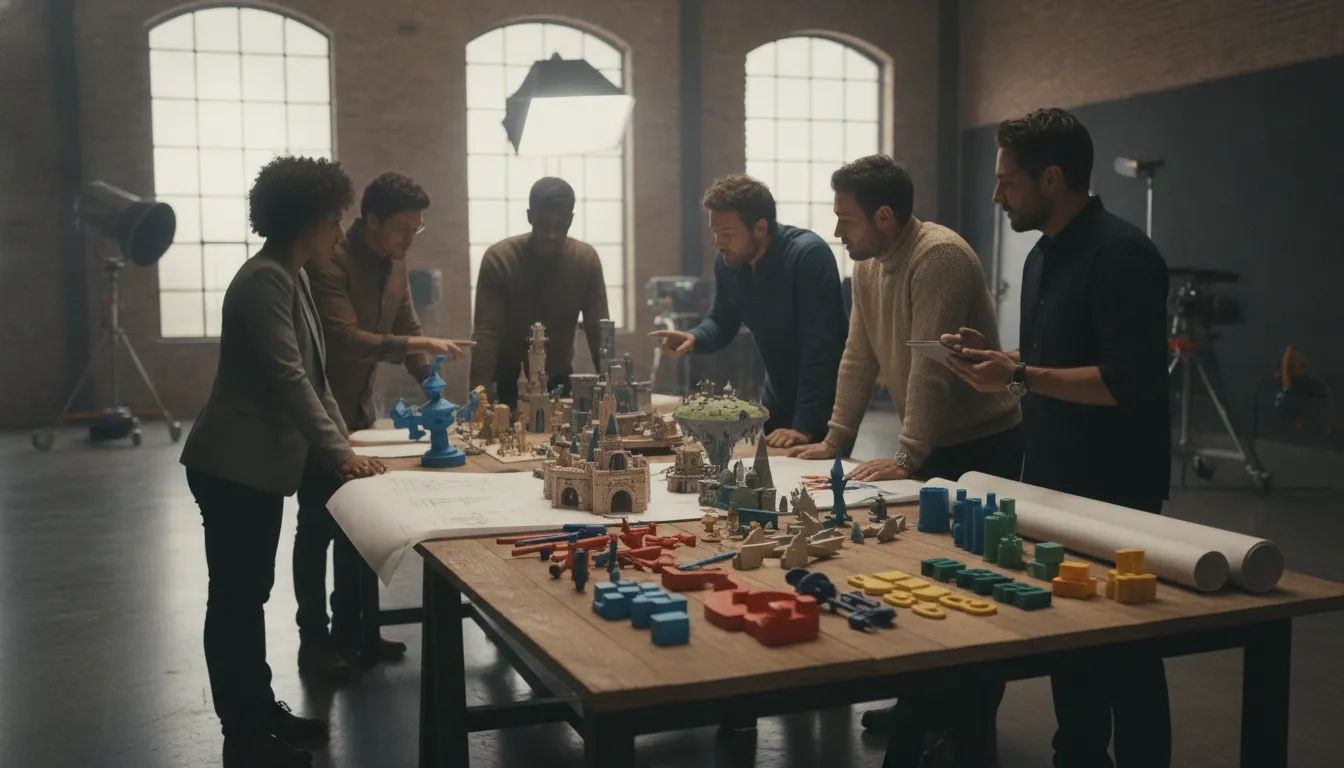
Narrative strategy and platform-aware design
Strategy should establish the role of each medium before production begins. A game may invite agency and repeat engagement, while film or television may carry a more authored dramatic arc. Immersive work can place the audience inside the world. The partner should define what each format contributes, how canon is managed, and where experiences connect without becoming duplicates.
That strategic foundation should result in practical guardrails, workflows, deliverables, and timelines. It should also make decision rights visible, so creative ambition does not become confusion when multiple teams and stakeholders are involved. Arctic7's integrated entertainment capabilities span strategy, creative execution, and technical production.
Production depth across formats
Cross-platform work requires more than concept development. Evaluate the team's ability to support game development, cinematic storytelling, film and television production, immersive or XR experiences, and the specialist work that connects them. A partner may contribute through full-scale development, co-development, or a focused engagement, depending on the scope and the capabilities already inside your organization.
For a games-led initiative, ask how design, engineering, art, and live operations will work together. Arctic7's game development capability is one relevant area to assess, particularly when a project must extend an IP beyond a passive viewing experience.
Virtual production, technical pipelines, and optimization
Technical fluency matters because production choices shape what can be created, revised, and reused. Narwhal Studios is documented in the customer knowledge base as a capability focused on virtual production, in-camera visual effects, and real-time visualization. These tools can support closer collaboration between creative and technical teams, provided the pipeline is planned around the project's actual needs.
Finally, content optimization should continue after launch. A serious partner should be able to review audience signals, platform requirements, and content performance, then recommend improvements without losing the identity of the wider world. That combination of narrative judgment, production discipline, and technical accountability is what turns a collection of formats into a connected entertainment ecosystem.
How Should the Collaboration Model Work?
The right engagement model depends less on what a partner can produce than on what your internal team is prepared to own. A clear division of responsibility protects the IP, keeps approvals moving, and prevents a promising cross-platform concept from becoming a collection of disconnected deliverables.
Arctic7 supports three broad approaches: full-scale development, co-development, and specialized engagements. Each can work well when the scope, decision rights, and available internal capacity are defined before production begins.
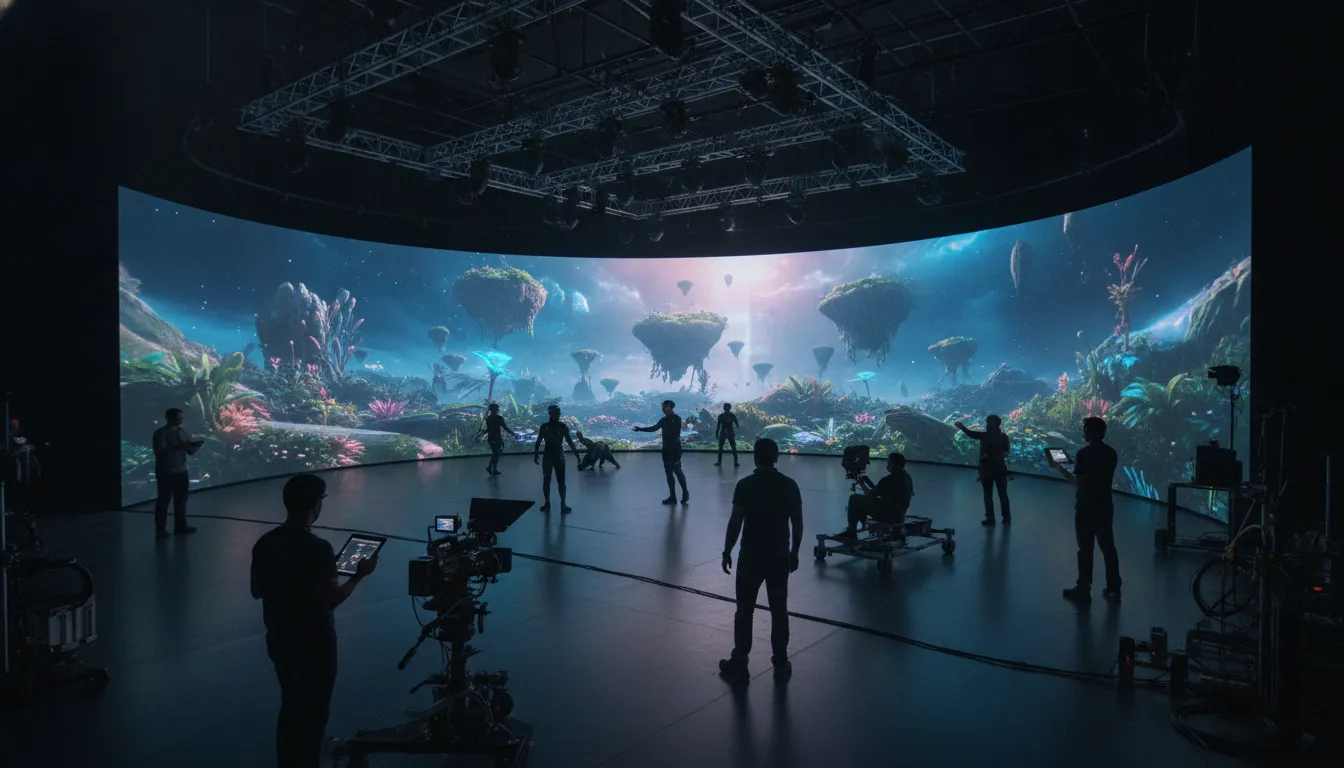
Full-scale development
Full-scale development suits IP holders that have a significant opportunity but need an external partner to carry a broad portion of strategy, creative development, production, and technical execution. The partner may help shape the roadmap, establish platform roles, coordinate specialist teams, and translate the approved direction into finished experiences. This model can provide momentum when internal resources are limited, but the IP holder still needs an accountable executive sponsor and a clear approval path.
Co-development
Co-development is often the strongest fit for an established studio, publisher, or franchise team with meaningful production capability already in place. The partner adds complementary expertise while internal leaders retain ownership of selected workstreams. Before kickoff, document who owns narrative decisions, canon, art direction, technical architecture, platform relationships, testing, and final sign-off. A shared production blueprint should make those boundaries visible rather than leaving them to informal conversations.
Specialized support
A specialist engagement is appropriate when the core strategy and leadership already exist, but a project needs focused expertise. Examples might include game development, virtual production, real-time visualization, or a specific phase of a film workflow. Resources such as production pipeline planning and film workflow integration can help teams identify where specialist support will create the most leverage.
Whichever model you choose, treat collaboration design as part of the creative strategy. Confirm the cadence of reviews, the artifacts required at each gate, the escalation route for disagreements, and the capacity each party is committing. A transmedia storytelling company should make those mechanics easier to see, not more difficult to govern.
What Proof of Execution Should an IP Holder Request?
A credible partner should make its capabilities inspectable before you commit. Ask for evidence that connects comparable scope to named responsibilities, working artifacts, technical testing, and accountable delivery. The strongest proof is not a logo wall. It is a clear explanation of what the team made, how it was validated, and who owned each decision.
Comparable scope, not just recognizable names
Request two or three examples that resemble your challenge in meaningful ways. Look for multiple platforms, sensitive canon, emerging technology, complex stakeholders, or a production environment that must scale. For each example, ask what the partner owned, which disciplines were involved, and where its role ended. A famous credit without scope is difficult to evaluate.
Portfolio examples can still be useful when they are described precisely. Arctic7's knowledge base documents a seven-year Disney Lucasfilm partnership and work connected with Marvel's Ant-Man and the Wasp: Quantumania. Those references should be treated as documented portfolio credentials, not as an endorsement or a promise that a new engagement will produce the same result.
Artifacts that show how the work becomes real
Ask to see appropriately redacted examples of the artifacts a team uses to move from ambition to execution. These may include a narrative audit, creative guardrails, platform map, production blueprint, responsibility matrix, technical test plan, or change-control process. The goal is to see whether the partner can protect the core IP while translating it into distinct experiences for different audiences and channels.
Academic research offers a useful lens for this review. A model illustrated through twenty transmedia case studies examines structural patterns across transmedia storytelling. Use that lens to ask how each channel contributes, how audiences navigate between channels, and how interaction or consumption changes by platform. Read the research model as a framework for sharper questions, not as a production scorecard.
Testing, references, and accountable delivery
For technology-led work, ask what was prototyped, tested, rejected, and improved. A USC profile of Cenima Studios describes building and testing, including trial and error, as part of emerging-technology work. That is a useful standard: request evidence of the learning loop rather than a polished final image alone. Also ask for references who can discuss collaboration, communication, and delivery discipline, not only creative quality.
Finally, identify the accountable lead, decision rights, escalation path, review cadence, and acceptance criteria. A partner with virtual production, ICVFX, or real-time visualization capability should be able to explain how those capabilities fit your wider plan. Arctic7's virtual production capability is one example of the specialist depth an IP holder can examine alongside the broader delivery model.
How Can You Compare Transmedia Partners Before You Choose?
At the decision stage, compare a potential partner by the quality of its thinking and the reliability of its operating model, not by the breadth of a services page. A credible transmedia storytelling company should make it easier to protect the IP, assign responsibility, and move from an interconnected vision to platform-specific production.
Use the following seven-point checklist in discovery meetings. Ask each partner to show the evidence behind its answer, then record whether the capability is proven, proposed, or still uncertain.
| Criterion | Buyer question | Useful evidence |
|---|---|---|
| Strategic fit | Why does each platform belong in this IP? | Strategy, audience map, platform roles |
| IP stewardship | Who owns canon and approval decisions? | Guardrails, story bible, decision rights |
| Delivery readiness | Can the team show comparable execution? | Artifacts, tests, references, accountable lead |
- Strategic fit: Can the team explain what your IP is trying to become, which audiences matter, and why each platform belongs in the experience? Look for a defined strategy and rollout, not a collection of disconnected format ideas. If useful, compare its approach with this guide to transmedia strategy for IP holders.
- IP stewardship: How will the partner protect canon, tone, character logic, and creative decision rights as the world expands? Request the proposed guardrails, approval paths, and escalation process.
- Cross-platform capability: Evaluate the actual disciplines available across games, film, television, immersive work, and digital experiences. A partner should show how specialists collaborate rather than simply listing every medium. Review its integrated entertainment capabilities and ask which work is handled in-house, co-developed, or supported by specialists.
- Collaboration model: Decide whether you need full-scale development, co-development, or a focused engagement. Clarify team composition, client responsibilities, meeting cadence, approvals, and handoffs before the creative work begins.
- Delivery evidence: Request comparable examples, named roles, representative artifacts, and an explanation of what the partner actually delivered. A recognizable credit alone is not proof of equivalent scope. A relevant production partnership example can help frame the level of detail you should expect.
- Governance: Test how the team manages dependencies, change requests, technical risk, and alignment across stakeholders. Ask to see a sample production blueprint, timeline, or decision register with sensitive details removed.
- Next-step test: Before committing to a large programme, agree on a bounded workshop, audit, or planning sprint. Define the inputs, deliverables, decision-makers, and success criteria. The result should reveal how the partner thinks and works with your team, not merely produce another pitch deck.
The strongest choice is the partner whose strategic judgment, creative stewardship, technical range, and delivery habits remain clear under scrutiny. That comparison gives your team a defensible basis for selecting a collaborator, while leaving room to shape the final engagement around the IP's actual needs.
Frequently Asked Questions
What should an IP holder ask a transmedia storytelling company to deliver first?
Ask for a practical discovery and strategy package, not only a creative pitch. It should clarify the IP's narrative foundations, audience opportunities, platform roles, creative guardrails, stakeholder responsibilities, and a staged production blueprint that can guide later development.
How can we tell whether a partner can protect story coherence across formats?
Request to see how the team documents canon, defines each medium's role, and manages approvals across disciplines. A credible partner should explain how games, film, television, and immersive experiences contribute to one connected world without forcing every channel to repeat the same content.
Should we choose a full-service partner or a specialist studio?
Base the decision on your internal capabilities and the work required. Full-scale development can suit teams seeking broad ownership. Co-development or specialist support may be more effective when you already have production leadership, technology, or format expertise in place.
What proof of execution should we request during vendor evaluation?
Ask for comparable case studies, named responsibilities, representative deliverables, production workflows, testing practices, and references where appropriate. Look for evidence of collaboration across creative and technical teams, rather than relying on a list of recognizable logos or broad capability statements.
How should we compare potential transmedia partners without focusing only on price?
Compare strategic fit, IP stewardship, cross-platform capability, communication model, decision rights, delivery discipline, and relevant proof of execution. Ask each company to explain assumptions, dependencies, risks, and the first measurable outputs they would produce for your project.
Explore Your Next Transmedia Opportunity
Choosing the right partner begins with a clear view of how strategy, production, and technology can work together around your IP. Arctic7 can help you explore connected entertainment possibilities across platforms, with virtual production as one practical pathway from concept to execution.
Explore Arctic7's virtual production capabilities and get started
New Immersive & XR Media Capabilities Added to Arctic7's Suite of Games, Film & TV and Digital Services

Arctic7 Shares Details of its Work on Skeleton Crew and Cinematics Partnership with Fateless

The Human Touch: Adding Personality to Project and Product Management
Whether it’s your team, your client, or your stakeholders, understanding the human dynamics is just as critical as hitting milestones.

McDonald's Case Study: Bridging Brand and Play | Arctic7
Bridging Brand and Play: An Interview with Lindsay Blenkhorn Daggitt


