
Games to Film Adaptation Strategy: A 7-Step Guide
Moving a game to film or television is not a matter of transferring a plot from one screen to another. A strong games to film adaptation strategy sequences rights, audience, narrative, format, development, and production decisions so the screen project feels like a natural expansion of the interactive world rather than a licensed costume.
The opportunity is substantial, but so is the strategic risk. Bain's 2024 Gaming Report found that more than half of gamers surveyed had watched a show or movie based on a video game in the previous year. The same report noted an average 28 percent lift in average concurrent users six months after a game-related show or movie. For rights holders, adaptation is not only a screen bet. It can become a coordinated franchise moment.
Talk with Arctic7 about building a connected game, film, and television ecosystem.
Why does a game to film adaptation need a strategy?
A game to film adaptation needs a strategy because the two mediums create meaning differently. Games earn engagement through agency, systems, exploration, and repeat play. Film and television guide attention through performance, editing, sound, and a fixed point of view. The adaptation plan must decide what transfers, what changes, and what remains sacred.
That decision cannot wait for a screenplay draft. It should shape the earliest rights conversation, audience research, format selection, creative leadership, development package, and production model. A rights holder that starts with only a plot summary often discovers too late that the most valuable part of the game was not the plot. It was the player relationship with the world.
What should rights holders confirm before adapting a game?
Before development begins, rights holders should confirm ownership, approvals, audience promise, canon authority, and the commercial job of the screen project. This readiness pass prevents a familiar failure mode: a project has permission to use the brand but no shared answer about which version of the brand the audience is being promised.
1. Map the rights and approval path
Start with an asset and rights map rather than a handshake. Identify the game publisher, studio, creators, composers, performers, licensors, platform partners, trademarks, music, story elements, character likenesses, and third-party materials that may appear in the adaptation. WIPO's guide to intellectual property in video games describes a game as a combination of software, audiovisual material, music, story, world, and other protected elements. That complexity is why adaptation readiness requires a deliberate rights inventory.
Then define who has approval authority over the screenplay, casting, canon, marketing, title, and changes to signature characters. A rights agreement that does not clarify decision rights can create creative drift, delayed approvals, and avoidable conflict once multiple production partners are attached.
2. Write the audience promise
Separate the audiences that already play the game, audiences who know the franchise socially, and viewers who may encounter the property for the first time. Each group needs a reason to care, but they do not need the same entry point. Write a short audience promise that states what the screen project will deliver emotionally and tonally without promising a scene-by-scene recreation.
- What emotional experience do existing players protect most strongly?
- Which world rules must a new viewer understand quickly?
- What can the screen project reveal without reducing the game experience?
- What would feel like a betrayal of the property's identity?
These answers become a decision filter. They are more useful than a vague instruction to "stay faithful," because fidelity has to be defined at the level of player expectation, world logic, character motivation, tone, and theme.
How do you find the narrative spine for a game adaptation?
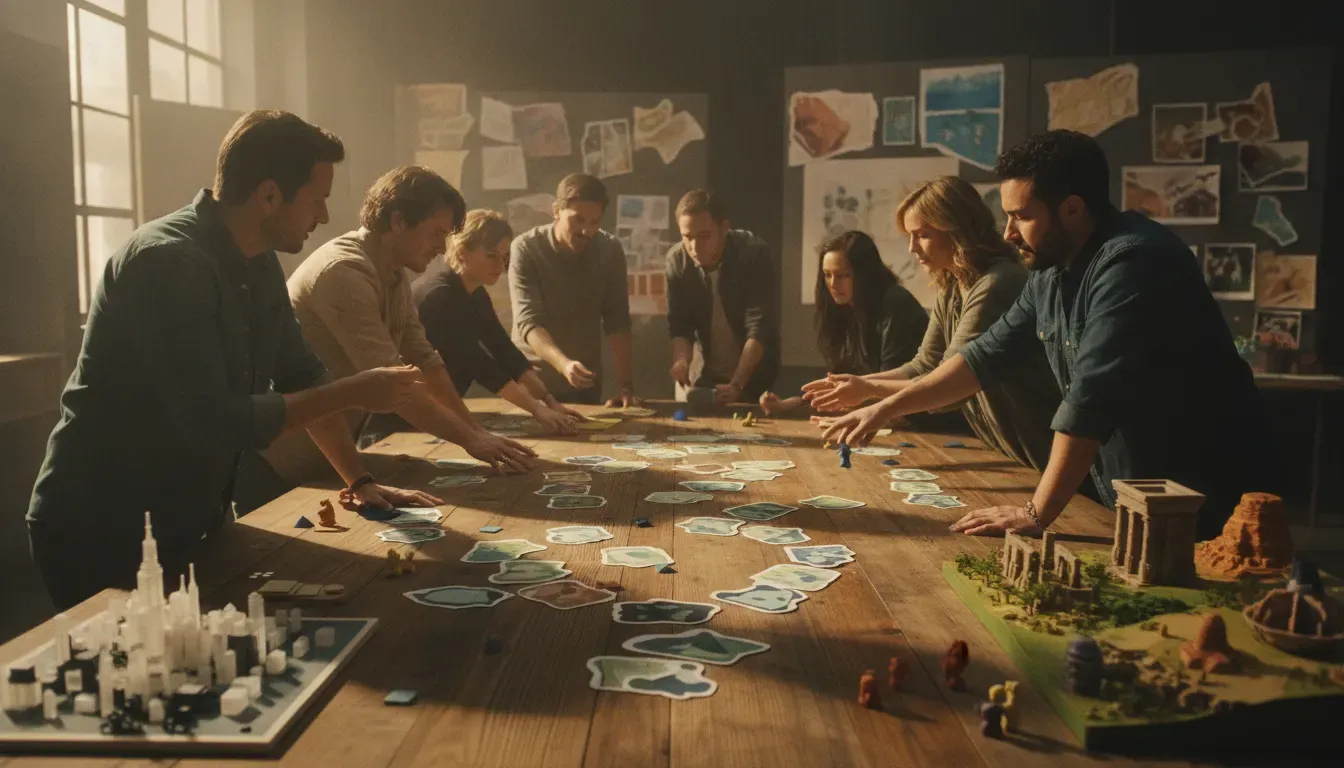
The narrative spine is the smallest set of character, world, conflict, and thematic commitments that can hold the screen version together. It is not a condensed walkthrough. It is the reason the story deserves another medium. Find it by separating the game's dramatic identity from its progression systems, then testing which elements can generate compelling scenes without player control.
Move from plot inventory to story architecture
Build a story architecture document with five layers:
- World promise: the distinctive rules, tensions, and visual language that make the setting recognizable.
- Character engine: the relationships and internal conflicts that can sustain a scene-driven story.
- Central question: the question the screen version explores, even if the game expresses it through play.
- Canon boundary: the facts that cannot change, the facts that can expand, and the facts that should remain undisclosed.
- Audience pathway: how a new viewer enters the world and where an experienced player sees meaningful continuity.
This is where a game adaptation strategy should distinguish between preservation and repetition. The screen project can honor a game's core theme while changing chronology, combining characters, or moving the point of view. The test is whether those changes deepen the same world promise or replace it with a generic genre story.
For a broader view of how connected narrative systems work, Arctic7's guide to multi-platform narrative design provides a useful adjacent framework. This article's focus is narrower: applying that thinking to the one-way move from interactive IP into film or television.
Which screen format fits the property?
Format is a strategic choice, not a packaging decision made after the story is written. Choose the format that gives the property enough room to express its strongest dramatic engine while setting a sustainable production scope. A feature film may suit a concentrated transformation story, while a series may better support an ensemble, a large world, or a mystery that depends on controlled revelation.
| Property signal | Potential format | Strategic question |
|---|---|---|
| One decisive protagonist and contained transformation | Feature film | Can the central conflict resolve with the right emotional weight in one sitting? |
| Ensemble cast, factional conflict, or layered mystery | Serialized television | What can each episode reveal while preserving long-term tension? |
| Large world with several character entry points | Limited series or connected slate | Which story should establish the screen canon first? |
| Experimental tone or strong creator point of view | Distinctive feature or premium series | What formal choice protects the game's unusual identity? |
Do not select a series simply because the game world is large. Scale without a dramatic engine produces exposition. Likewise, do not force a contained story into a feature because the brand is recognizable. The right format creates enough space for the adaptation's core promise and no more.
What development materials should move from game to screen?
A screen adaptation needs more than a pitch deck and a list of recognizable characters. The development package should turn interactive knowledge into a shared production language. It should show how the world works, what the first screen story is, how the audience enters, and which creative decisions are still open for exploration.
A practical adaptation package
- Adaptation thesis: one page explaining why this property belongs on screen now and what the adaptation adds.
- World and canon guide: a living source of truth for rules, history, locations, factions, visual motifs, and red lines.
- Character dossiers: screen-relevant motivations, relationships, contradictions, and change arcs.
- Format and season or feature outline: the dramatic spine, turning points, pacing logic, and proposed endpoint.
- Visual language guide: references for production design, camera grammar, lighting, scale, and the relationship between practical and digital environments.
- Continuity matrix: a record of what is shared with the game, what is new, and what is intentionally withheld for future stories.
- Production assumptions: early notes on locations, virtual production, effects, performance capture, game-engine assets, and specialist teams.
The continuity matrix deserves particular attention. It gives the game team and screen team a way to discuss change without treating every difference as a crisis. It also helps the rights holder plan future games, expansions, films, series, and experiences as parts of one ecosystem.
Arctic7's transmedia universe strategy guide explores the wider architecture of interconnected IP. For a game-to-screen project, the practical deliverable is a smaller operating system: one world bible, one decision log, and one clear owner for canon.
How should game and film teams collaborate?
Collaboration works when game expertise enters development early and when the screen team has room to make a real screen work. The goal is not to make every department report to every other department. The goal is to establish shared decisions, clear escalation paths, and recurring creative exchanges before production assumptions harden.
Use a cross-medium operating model
- Appoint a franchise creative lead: one person or small council owns the world promise across formats.
- Pair domain leads: bring narrative, art, technology, production, and game design leads into the same development rhythm.
- Review at decision gates: schedule structured reviews for story, character, visual language, casting, production design, and marketing claims.
- Share useful assets: where appropriate, align reference models, world data, previs, environments, and performance notes without assuming every asset should be reused.
- Keep a change log: record why a major adaptation choice was made, who approved it, and what future work it affects.
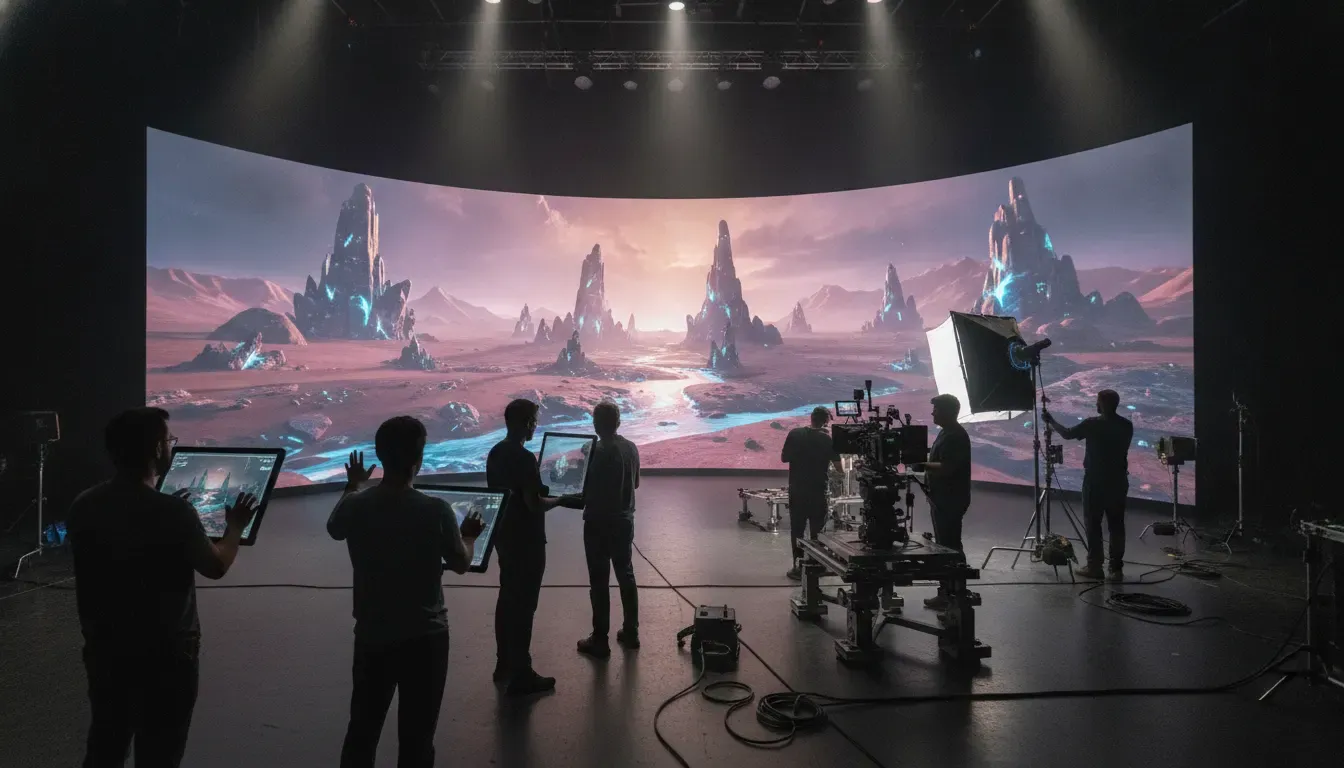
Virtual production can make this collaboration tangible. Shared real-time environments allow film and game teams to test scale, lighting, geography, and visual continuity together. Arctic7's virtual production workflow guide covers the wider process, while the adaptation-specific question is simple: which shared world decisions will reduce translation loss between the game and the screen?
Explore Arctic7's game development and co-development capabilities for connected IP.
How do you protect what made the game distinctive?
Protecting a game's identity means preserving the source of player attachment, not copying every mechanic into a passive medium. Identify the game's distinctive ingredients, rank them by audience value, and give each one a screen equivalent. Some survive as action, some as visual language, some as character behavior, and some as the structure of the mystery.
- Agency: translate the feeling of meaningful choice into characters who make difficult, visible decisions.
- Exploration: use geography, discovery, and controlled revelation to make the world feel larger than the immediate plot.
- Systems: turn rules and constraints into consequences that shape character and story.
- Mastery: create a progression of competence, knowledge, or emotional understanding for the screen audience.
- Community: respect the language, rituals, and interpretations that players have built around the property.
A screen adaptation should also protect the game's tonal contract. A comic game can still have serious stakes, and a dark game can still contain playfulness. Tonal flattening often happens when a team mistakes maturity for bleakness or accessibility for simplification. A strong adaptation chooses what to clarify, not what to dilute.
Rights holders can use the guide to extending game IP across platforms to identify possible future touchpoints. The screen project should remain the priority, but its choices should not close off the next coherent expansion.
What is the right sequence for a games to film adaptation strategy?
The right sequence moves from identity to audience, then from story to format, development, production, and learning. Sequencing matters because each decision narrows the next one. Rights holders should not commission expensive production design before the format is clear or lock a season order before the narrative spine has been tested.
- Readiness: map rights, approvals, canon ownership, audience segments, and non-negotiable identity signals.
- Opportunity: define why the screen project exists, what it adds, and how it supports the wider franchise without requiring a game purchase.
- Story: build the narrative spine, character engine, world promise, and continuity boundary.
- Format: select feature, limited series, ongoing series, or a connected approach based on dramatic need.
- Package: create the adaptation thesis, bible, outline, visual language, continuity matrix, and production assumptions.
- Align: establish the cross-medium leadership model, decision gates, asset-sharing rules, and change log.
- Learn: launch with a measurement plan that tracks audience response, franchise health, and the next creative decision.
This sequence is deliberately different from film-to-game planning. A game adaptation inherits a world that audiences have already navigated. Its first job is not to add interactivity. Its first job is to create a compelling screen experience while proving that the interactive property has more than one viable expression.
How should rights holders measure continuity after launch?
Measure more than opening-week viewing or box office. A connected game-to-screen strategy should show whether the adaptation attracts new viewers, respects existing players, improves qualified interest in the franchise, and creates useful evidence for the next release. Combine performance data with structured feedback from players, viewers, creators, and production partners.
- New audience reach and completion or retention by episode or film window.
- Engagement from existing players without treating every disagreement as a failure.
- Search, community, and social questions that reveal where the world is confusing or compelling.
- Changes in game participation, reactivation, or expansion interest after the screen release.
- Creative and production lessons that can improve the next medium-specific project.
These measures do not turn creative judgment into a dashboard. They create a feedback loop. The most valuable outcome may be a clearer understanding of which character, location, theme, or mechanic deserves the next investment and which ideas should remain exclusive to the game.
Build a practical cross-medium production blueprint with Arctic7.
Games to film adaptation strategy FAQ
What is a games to film adaptation strategy?
A games to film adaptation strategy is a sequenced plan for translating interactive IP into film or television while protecting audience trust and franchise continuity. It covers rights readiness, audience promise, narrative spine, format, development materials, team collaboration, production choices, and post-launch learning.
Should a game adaptation follow the game's exact story?
Not necessarily. It should preserve the game's core identity, emotional promise, world logic, and most valuable audience expectations. The screen version can change chronology, point of view, or character combinations when those changes create a stronger film or series without replacing the property's distinctive reason to exist.
Is a film or a television series better for adapting a game?
Neither format is automatically better. A feature can suit a contained transformation or focused character journey. A series can support an ensemble, layered mystery, or larger world. Choose the format that gives the adaptation enough space for its strongest dramatic engine and a clear first story.
When should the game team join the adaptation?
Game experts should join during readiness and story development, not only after a screenplay or production design has been approved. Their role is to explain world rules, player attachment, systems, tone, and canon. The screen team still needs creative authority to make a film or series rather than a filmed walkthrough.
How can virtual production support a game adaptation?
Virtual production can help game and screen teams evaluate shared environments, geography, scale, lighting, and visual continuity in real time. It is most useful when treated as part of a larger creative and production pipeline, not as a substitute for a strong narrative spine or clear cross-medium decision rights.
New Immersive & XR Media Capabilities Added to Arctic7's Suite of Games, Film & TV and Digital Services

Arctic7 Shares Details of its Work on Skeleton Crew and Cinematics Partnership with Fateless

The Human Touch: Adding Personality to Project and Product Management
Whether it’s your team, your client, or your stakeholders, understanding the human dynamics is just as critical as hitting milestones.

McDonald's Case Study: Bridging Brand and Play | Arctic7
Bridging Brand and Play: An Interview with Lindsay Blenkhorn Daggitt