
Game Studio Staff Augmentation for IP Holders
Game production rarely slows because a publisher lacks ambition. It slows when an essential engineering, technical art, quality assurance, production, or real-time capability is missing at a critical milestone. Permanent hiring may take too long. Handing over an entire phase can also reduce the creative and operational control your leadership team needs.
Explore Arctic7's game development and co-development capabilities
Game studio staff augmentation extends an internal development team with external specialists who work within the studio's direction, tools, and governance. It is most useful when a publisher or IP holder needs defined expertise, temporary capacity, or milestone support. The studio can add that capacity without permanently expanding headcount or transferring project ownership.
For an executive team, the decision is not simply whether to add people. It is how to match the engagement model to the work, ownership boundaries, and long-term vision of the project. The sections below explain when augmentation is the right fit, which roles can be added flexibly. How integrated teams should work, and what controls protect a valuable game or entertainment IP.
What Is Game Studio Staff Augmentation?
Game studio staff augmentation is a flexible production model in which external specialists join an internal team to fill a defined capability or capacity gap. Contributors work through the studio's existing production structure. They use its tools, processes, creative direction, and review standards. The internal studio keeps responsibility for what gets made and how important decisions are made.
That distinction matters because the same external capability can create very different outcomes depending on the operating model. A publisher might add a senior Unreal Engine developer for a technical milestone. A technical artist for an asset pipeline bottleneck, or a QA lead before a release candidate. In each case, the specialist contributes inside the studio's workflow rather than receiving an isolated assignment with no connection to the wider product.
How augmentation differs from hiring
A permanent hire becomes part of the studio's long-term workforce. That can be the right choice for a capability central to the organization's future, but recruitment, onboarding, and role design take time. Augmentation is better suited to a capability that is urgent, specialized, cyclical, or tied to a particular milestone. It also lets leadership test a capability need before turning a temporary demand into a permanent role.
How augmentation differs from outsourcing
Full outsourcing is different again. An outsourcing partner normally owns a defined deliverable or project phase and manages much of the execution. With augmentation, the specialist joins the studio's working team. The internal producer, creative director, or technical lead remains close to day-to-day decisions, while the contributor operates inside the established workflow.
| Model | Best fit | Primary owner | Executive question |
|---|---|---|---|
| Staff augmentation | Defined skill or capacity gap | Internal studio | Which specialist capability is missing now? |
| Permanent hiring | Long-term strategic capability | Internal studio | Will this role remain essential after the current project? |
| Outsourcing | Bounded deliverable or phase | External partner | Can the output be specified and accepted independently? |
| Co-development | Shared responsibility for substantial work | Shared by agreement | Do both teams need durable creative and technical alignment? |
When Should You Choose Game Studio Staff Augmentation Over Outsourcing?
Choose staff augmentation when your internal studio should retain day-to-day ownership but needs specific expertise or capacity for a defined period. Choose outsourcing when an external partner can own a bounded deliverable. Choose co-development when both teams will share responsibility for a substantial part of the game and need durable operating alignment.
The decision is less about which model is universally best and more about where responsibility should sit. Start with the scope, then decide how much control, integration, and partner accountability the production requires. A clear decision at this stage prevents a common problem: using a project-based model for work that changes every day. The reverse problem is using a staff-based model when the studio really needs an external owner for a complete outcome.
Choose augmentation for a precise capacity problem
Augmentation is strongest when the gap is identifiable. You may need a senior gameplay engineer, technical artist, production specialist, QA lead, or Unreal developer to help an existing team through a demanding milestone. External talent can also help when the need is cyclical or project-specific rather than a permanent role.
This model preserves granular control over individual contributors instead of handing an entire phase to an outsourcing partner. It works particularly well when the internal creative director, engineering lead, or producer must make frequent decisions about the game. Define who sets priorities, which repositories and tools are used, how work is reviewed, and which decisions remain with internal leadership.
Choose outsourcing when the boundary is clear
Outsourcing becomes more appropriate when the work can be specified, reviewed, and accepted as a discrete output. Examples might include a defined prototype package, a set of environment assets, or a bounded production phase. Clear scope is the deciding condition. If requirements change daily and the work depends on intimate knowledge of the product, an integrated model may be safer.
Choose co-development when the work is shared
Co-development fits a publisher that wants an external studio to contribute sustained leadership, production capacity, and technical ownership alongside its internal team. The partners need shared planning, decision rights, escalation paths, quality standards, and a clear understanding of how the relationship supports the wider IP. Arctic7's services approach connects creative and technical work rather than treating each format as an isolated production.
Which Roles Are Best Filled Through Flexible Game Team Staffing?
The best roles for flexible game team staffing are specialized, milestone-sensitive, or difficult to maintain at full capacity throughout the development cycle. A strong partner maps each contributor to the project's current risk, internal leadership structure, toolchain, and quality bar instead of supplying a generic list of available people.
Engineering and technical art
Engineering gaps can affect the schedule quickly. Gameplay, systems, network, tools, build, and engine specialists can help a team resolve a bottleneck or prepare for a demanding production phase. Technical artists connect art direction to production reality by improving shaders, tools, asset standards, performance, and the handoff between disciplines.
Arctic7's game development capability includes system design, prototyping, Unreal and Unity development, tooling, production pipelines, and post-launch planning. Its A7 Europe studio works across UE4, UE5, Unity, Slipspace, and CryEngine, while Star Fort Studios specializes in mobile, PC, console, live services, and monetization.
Art, QA, and production
Art production may need a short-term lift in environment creation, character work, animation, lighting, or optimization. QA specialists can strengthen test coverage before a milestone without forcing a publisher to carry the same capacity year-round. Producers and project managers can establish rhythm, surface dependencies, and keep cross-functional work visible.
These roles are most effective when acceptance criteria are explicit. A technical artist should know the performance target and asset constraints. A QA lead should know the risk profile and release gates. A producer should know which decisions they coordinate and which remain with the internal studio.
Real-time and virtual production support
Some IP holders need game expertise that crosses into film, television, or immersive production. Real-time environments, virtual scouting, cinematic pipelines, and shared assets can create value across formats, but only when the teams understand both the technical and creative requirements.
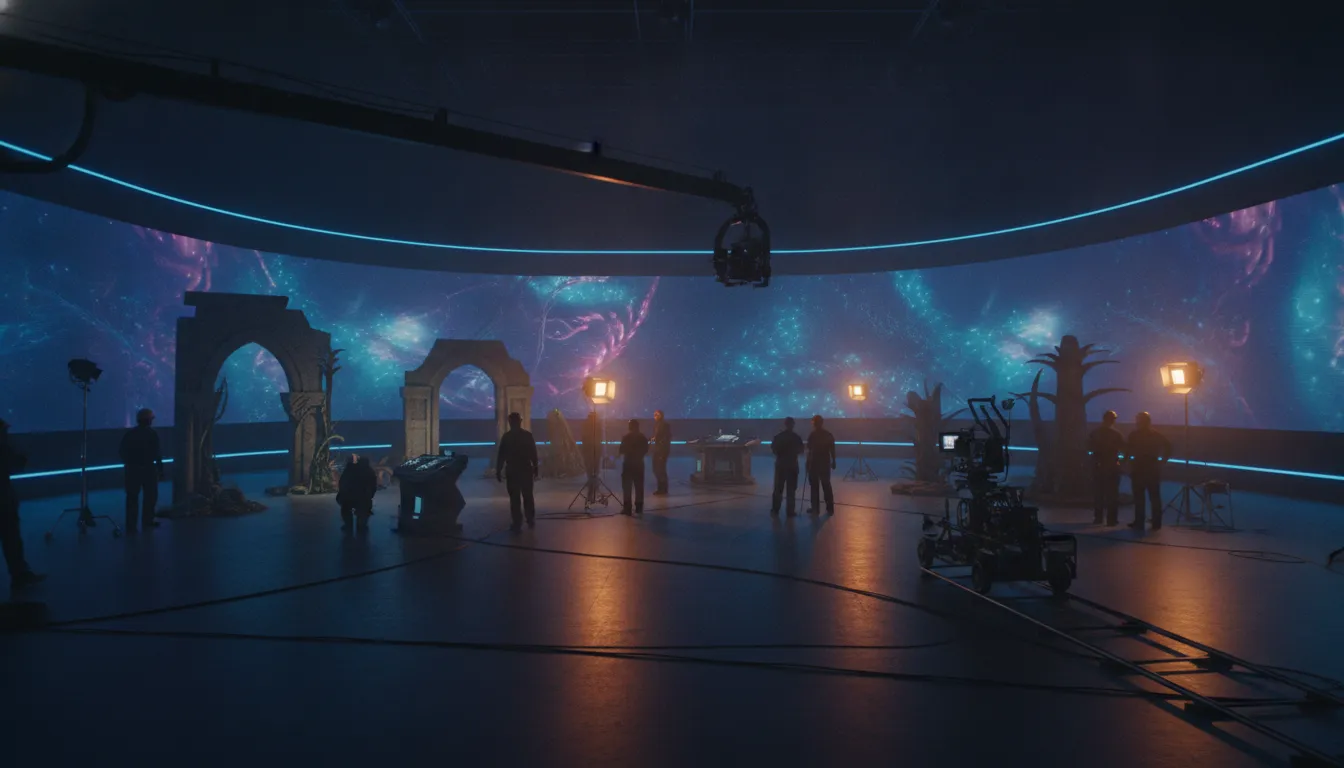
Arctic7's Narwhal Studios brings virtual production and cinematic experience into that conversation. This matters when a publisher is not only scaling a game, but also building an interconnected entertainment ecosystem around an IP.
How Do Augmented Specialists Integrate Into an Existing Studio?
Augmented specialists integrate successfully when onboarding is treated as an operating design problem, not an administrative step. The team needs a shared understanding of goals, tools, decision rights, access, communication, and review. The contributor should be close enough to make useful decisions. Product ownership must remain clear.
Align the toolchain before measuring output
Before work begins, document the source of truth for code, assets, tasks, documentation, builds, and approvals. Confirm engine versions, branching conventions, naming standards, build responsibilities, and escalation routes. A contributor who is highly capable but working from the wrong branch or outdated asset standard creates friction instead of leverage.
Set a short onboarding period with concrete outputs. The first review should test whether the contributor understands the product, the quality bar, and the team's way of working. Measure progress through accepted work, risk removed, and useful collaboration. Do not measure only activity or hours. MIT Sloan Management Review's research on workforce ecosystems reinforces that flexible talent models require deliberate management, not simply access to more people.
Preserve creative vision while welcoming new perspectives
Integration does not mean asking external specialists to imitate every existing habit. A strong contributor can identify a better technical approach or expose a production risk that the internal team has normalized. The creative director, product owner, and technical leads should define the non-negotiables, then create room for informed recommendations within those boundaries.
Use a single creative brief and a predictable review cadence. Decisions should be recorded where both teams can find them. That approach limits rework and protects the relationship from a common failure mode: one team assumes a discussion was an approval. While the other believes it was only exploratory.
Scale the relationship with the project
Staffing should change as the production changes. A project may need a small group during discovery, more engineering and art capacity during production, and focused QA or LiveOps support near launch. Plan the likely ramp-up and ramp-down points before they become emergencies. The goal is not maximum external headcount. It is the right capability at the right point in the production curve.
How Can IP Holders Protect Creative Control and Intellectual Property?
Staff augmentation can protect creative control because the internal studio retains product ownership, but that outcome depends on explicit operating and contractual controls. Define access boundaries, approval rights, confidentiality terms, source-of-truth rules, and work ownership before a specialist receives production access.
Set access boundaries before work starts
Grant the minimum access required for the role. Separate development, art, production, build, analytics, and publishing permissions where practical. Use managed accounts, documented offboarding, and regular access reviews. Security controls should support production rather than make collaboration impossible, but convenience is not a substitute for governance.
Make roles, approvals, and ownership visible
Write down who owns the creative vision, technical architecture, backlog priorities, acceptance criteria, release decision, and communication with the IP holder. A responsibility matrix can make gaps visible before a milestone. It also gives external specialists enough authority to execute without confusing their role with the authority of internal product or franchise leadership.
Document the work and control the source of truth
Maintain project documentation, code review history, asset provenance, build notes, and approval records in the studio's controlled systems. Contractual terms should address confidentiality, work product, intellectual property, data handling, and the return or removal of access. Because legal requirements vary by project and jurisdiction, counsel should review the final agreement. Operational discipline is the practical layer that makes those terms usable during production.
Arctic7's broader transmedia positioning is relevant for IP holders that must keep a narrative spine consistent across games, film, television, and immersive experiences. Its virtual production workflow guide and pipeline guide provide adjacent context for teams coordinating real-time and cinematic workflows.
What Should Executives Review Before Extending a Game Team?
Before approving a flexible staffing engagement, executives should test the business case, operating readiness, and partner fit together. The decision should show how the added capability supports a milestone, reduces a defined risk, and fits the studio's ownership and IP controls. A list of available specialists is not enough.
- Define the gap. Name the capability, milestone, quality risk, and expected duration.
- Choose the model. Confirm whether the work calls for augmentation, permanent hiring, outsourcing, or co-development.
- Set ownership. Document creative authority, technical decisions, acceptance criteria, and escalation paths.
- Prepare integration. Align tools, repositories, engine versions, communication, documentation, and review cadence.
- Protect the IP. Set role-based access, confidentiality, work-product terms, source-of-truth rules, and offboarding.
- Measure useful output. Track accepted work, schedule risk removed, quality, collaboration, and knowledge transfer.
- Plan the transition. Define how the team will scale up, scale down, or convert a recurring need into a permanent capability.
Use measurable production outcomes
Useful measures depend on the role. Engineering support may be evaluated through accepted features, build stability, technical debt removed, or milestone risk reduced. QA support may be evaluated through risk-based coverage, defect discovery, and release readiness. Production support may be evaluated through decision velocity, dependency visibility, and reliable delivery of accepted work.
These measures create a better executive conversation than hours purchased or seats filled. They also make it easier to decide whether the engagement should end, expand, or become a different partnership model.
How Does Arctic7 Support Publishers and IP Holders?
Arctic7 supports publishers and IP holders through game development, co-development, specialized game services, virtual production, cinematic storytelling, and broader transmedia strategy. The fit is strongest when a team needs experienced contributors without losing the internal ownership that keeps a franchise coherent.
The company operates as a partner rather than a generic staffing marketplace. Its teams can contribute to game system design, prototyping, engineering, technical art, production, monetization, LiveOps, cinematics, and real-time pipelines. That range is useful when a production problem crosses disciplines or when a game is one part of a larger IP expansion.
For an executive team, the next step is a focused conversation about the gap, the milestone, the required roles, and the ownership model. The objective is not to add people for their own sake. It is to add the right capability while preserving quality, creative control, and the long-term value of the IP. Review A7 Austin's game capabilities and the virtual production tools guide for related production context.
Discuss game development and co-development support with Arctic7
Frequently Asked Questions About Game Studio Staff Augmentation
When should a studio choose staff augmentation over outsourcing?
Choose staff augmentation when the internal studio needs defined expertise or temporary capacity but should retain day-to-day ownership of the work. Choose outsourcing when an external partner can own a bounded deliverable or phase with clear acceptance criteria.
Which roles can be added through game studio staff augmentation?
Common roles include gameplay and systems engineers, Unreal or Unity specialists, technical artists, environment and character artists. QA leads, producers, project managers, LiveOps specialists, and other contributors tied to a milestone or capability gap.
How do augmented specialists integrate with an existing game team?
Integration depends on clear onboarding, toolchain alignment, repository and access rules, reporting lines, acceptance criteria, review cadence, and documented decisions. External specialists should work within the studio's established process while retaining enough context to make informed decisions inside their role.
Can staff augmentation protect creative control and intellectual property?
Yes, when the studio keeps product and creative ownership and defines access, confidentiality, work-product, approval, documentation, and offboarding controls. The engagement model supports control, but disciplined governance and project-specific legal review are still required.
New Immersive & XR Media Capabilities Added to Arctic7's Suite of Games, Film & TV and Digital Services

Arctic7 Shares Details of its Work on Skeleton Crew and Cinematics Partnership with Fateless

The Human Touch: Adding Personality to Project and Product Management
Whether it’s your team, your client, or your stakeholders, understanding the human dynamics is just as critical as hitting milestones.

McDonald's Case Study: Bridging Brand and Play | Arctic7
Bridging Brand and Play: An Interview with Lindsay Blenkhorn Daggitt