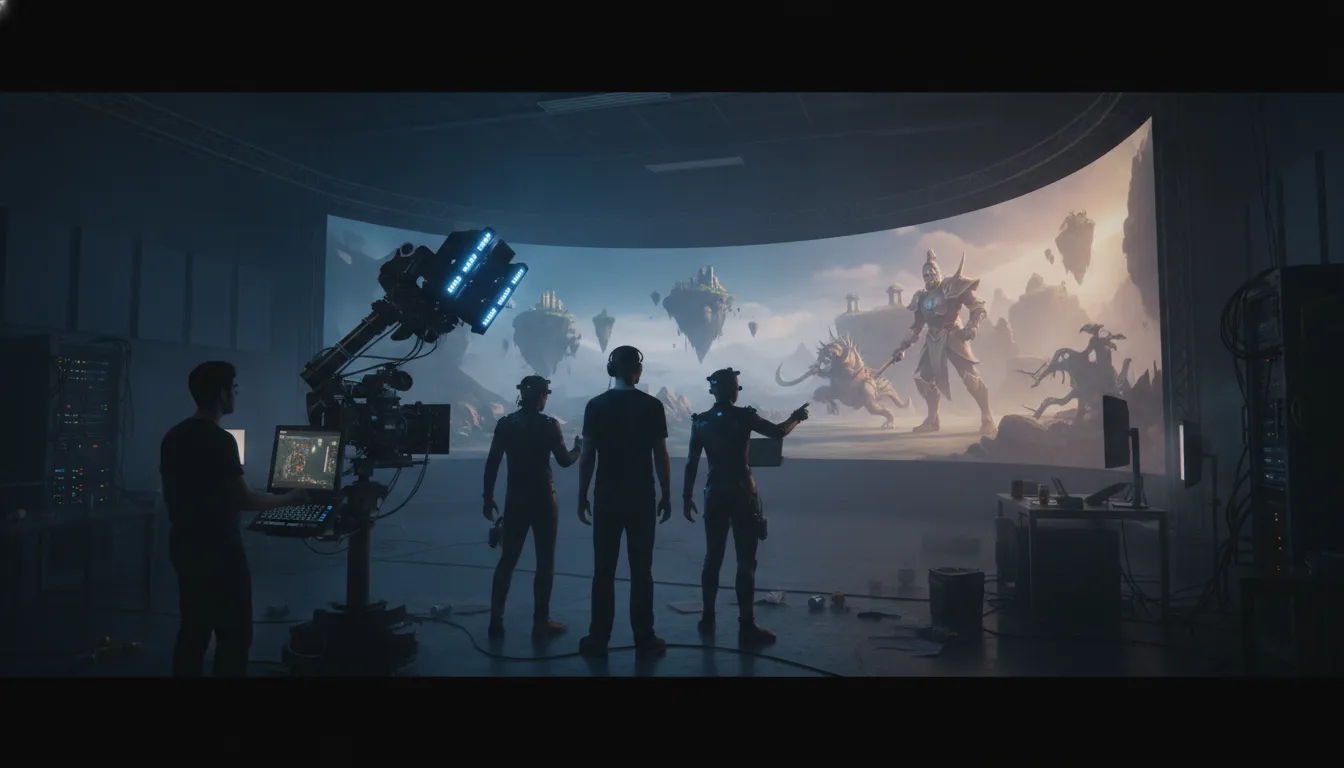

Game Cinematic Production: From Story to Screen
A cinematic can introduce a character, clarify a turning point, or make a fictional world feel large enough to keep exploring. Its impact is decided long before the final frame. Narrative intent, character behavior, camera language, performance, engine workflow, sound, and delivery requirements must reinforce the same player-facing experience.
Bring your cinematic world to life with Arctic7's virtual production team
Game cinematic production is the coordinated process of turning narrative intent into playable-world storytelling. It runs from early worldbuilding and story planning through asset creation, animation, real-time rendering, editorial, and final delivery. The strongest pipelines treat each choice as part of both the player's emotional journey and the franchise's wider continuity.
That makes the work more than a sequence of visual tasks. It is a production system that connects creative ambition with technical constraints, gameplay context, and future opportunities for the IP. The process begins by defining exactly what the cinematic needs to accomplish within the game and the world around it.
What Is Game Cinematic Production?
Game cinematic production is the end-to-end process of turning a game's narrative, characters, and world into directed visual sequences that serve the player experience. It includes story intent, design, previs, asset creation, performance, animation, lighting, effects, sound coordination, editorial, and delivery. The strongest workflows connect every cinematic choice to gameplay and franchise continuity.
A cinematic is not simply a polished video placed between missions. It can introduce a character, establish stakes, reveal a new part of the world, reward progress, or create an emotional pause before the player acts again. That purpose should guide production from the first creative conversation. Teams need to understand what the sequence must make the player feel, know, or anticipate. They can then build the visual language around that outcome.
That is the difference between a complete production workflow and a broad studio-selection exercise. Choosing a partner matters, but it is only one decision within a larger system. Production leaders still need a shared brief, clear approvals, an agreed asset pipeline, performance direction, engine or rendering decisions, and delivery specifications. Without those connections, a cinematic may look impressive while weakening character logic, contradicting gameplay, or creating assets that cannot support the wider franchise.
What sits inside the workflow?
Depending on the project, the work can include:
- Narrative development: defining the sequence's dramatic function, character motivation, world rules, and relationship to the player's next action.
- Visual planning: translating the intent into storyboards, shot design, camera language, layout, and previs before expensive production choices are locked.
- Production craft: building or adapting environments and characters, then combining modeling, texturing, rigging, animation, facial performance, lighting, visual effects, and compositing.
- Technical delivery: preparing the sequence for its intended engine, platform, resolution, aspect ratio, localization needs, and release context.
The stakeholder group is broad. Narrative and creative directors protect story purpose. Game directors and designers protect continuity with mechanics and player agency. Artists, animators, technical directors, sound teams, producers, and platform specialists turn the plan into a reliable asset. Franchise leaders ensure that the sequence contributes to a coherent world rather than functioning as an isolated showcase.
This is why unified game and virtual production can be strategically useful. Shared tools and production pipelines allow teams to carry visual and narrative decisions across formats while adapting them to the needs of each medium. Arctic7's broader approach starts with narrative and worldbuilding, then develops a production blueprint that supports platform-specific execution without losing the soul of the IP. For decision-makers, the goal is not cinematic spectacle alone. It is a reusable, player-facing expression of the world your franchise is building.
How Does Narrative Planning Shape a Cinematic?
Narrative planning turns a cinematic from a sequence of impressive shots into a purposeful player experience. It clarifies what the moment must communicate, whose perspective matters, what the characters want, and how the scene fits the rules of the world. Those decisions guide every later production choice, from script and storyboard to camera, performance, and final delivery.
In game cinematic production, the strongest planning protects both emotional clarity and player anticipation. A reveal should feel earned, and a character's action should have a readable motivation. The visual language should prepare the player for what follows in the game or wider franchise.
For a practical perspective on how narrative intent can translate into production stages, see this guide to narrative design for virtual production.
- Define the purpose of the moment. Begin with the player outcome, not the spectacle. Is the cinematic introducing a threat, rewarding progress, reframing a relationship, or creating anticipation for the next playable sequence? Establish one primary dramatic job and identify the information the audience must understand before control returns.
- Map the audience and character perspective. Decide what the player knows, what remains hidden, and whose emotional experience anchors the scene. Character motivation should be visible through objectives, choices, and behavior. When the audience understands what a character wants, even a restrained gesture or pause can carry narrative weight.
- Set the world rules and continuity guardrails. Record the rules that govern technology, powers, factions, locations, and character relationships. These constraints are not limitations on creativity. They give the cinematic credibility and help preserve the soul of the IP when the scene later connects to gameplay, another platform, or a future story.
- Write the script for visual action. The script should specify action, dialogue, pacing, and transitions while leaving room for performance and camera discovery. Avoid explaining information that the player can understand through staging. Every line should sharpen the conflict, reveal motivation, or change the player's understanding of the situation.
- Translate the script into storyboard and shot list. Storyboards establish composition, screen direction, eyelines, coverage, and the rhythm of the edit. The shot list then makes production intent executable. It should identify which shots carry story information, which create anticipation, and which provide emotional release, rather than treating every image as equally important.
- Use previz to test the experience before full production. Previsualization exposes problems in timing, camera movement, blocking, scale, and continuity while changes remain manageable. A documented game-cinematic pipeline example lists modeling, texturing, rigging, previz-layout, animation, and FX as connected stages, illustrating how previz sits between narrative planning and final performance work: published production-stage example.
This sequence gives creative and production leaders a shared decision framework. It also makes review more precise. Instead of asking whether a shot looks impressive in isolation, the team can ask whether it advances the purpose. Preserves world logic, and leaves the player ready for the next meaningful action.
Building the World, Characters, and Performances
Environment and character decisions turn a scripted sequence into a place players can recognize, understand, and care about. In game cinematic production, modeling, texturing, rigging, animation, motion capture, facial performance, and camera direction should serve the same dramatic intent. Together, they establish empathy, visual readability, and continuity across the wider franchise.
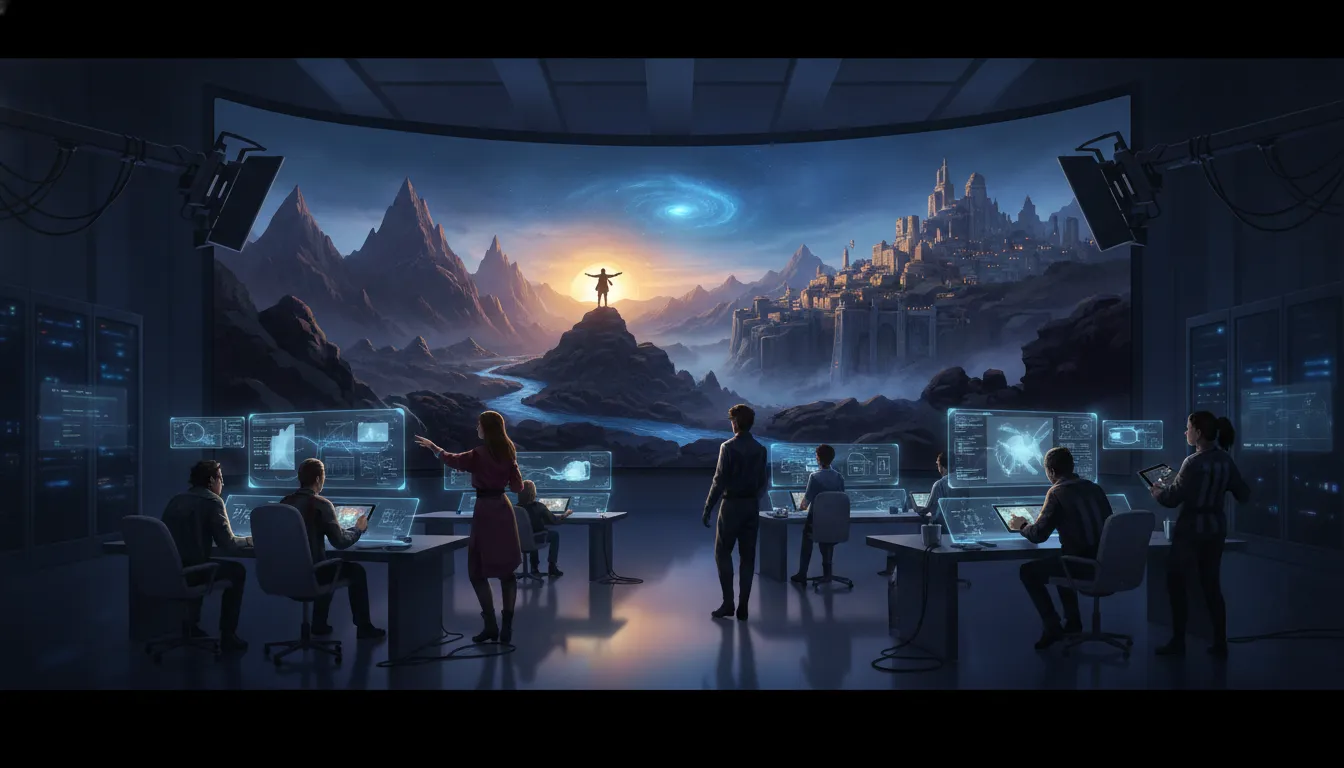
A useful starting point is to define what the audience must notice and feel in each shot. A character may need to read as vulnerable before the dialogue confirms it. A familiar location may need to communicate its history through silhouette, materials, scale, and lighting. These choices are not decorative. They give players information quickly and help a world feel consistent whether it appears in a gameplay sequence, trailer, film, or another format.
That is why production benefits from a clear narrative foundation. Workshops, worldbuilding, and creative guardrails can identify the qualities that make an IP expandable before teams commit to a large volume of assets. Our perspective on narrative design for virtual production explores how story intent can guide those practical decisions.
Designing assets for recognition and empathy
Environment design establishes context. Architectural forms, props, textures, color relationships, and spatial scale can tell players where they are and what has changed since the last encounter. The strongest environments support the action rather than competing with it. They create clear focal points, preserve gameplay readability, and leave room for the camera to frame a meaningful performance.
Character modeling and texturing work in the same way. Proportion, surface detail, costume construction, and distinctive features should express identity while remaining legible at the intended viewing distance. Asset teams can then build a reliable foundation for rigging and animation. A model that looks impressive in isolation but limits expression or movement will weaken the scene once performance begins.
Choosing the right performance language
Rigging connects design to behavior. A well-planned rig supports the physical traits, gestures, and range of motion that define a character. Animation may use keyframes, motion capture, or a combination of both. Motion capture can bring grounded physical nuance to a scene, while keyframe work offers precise control over stylized action, timing, and visual clarity. The choice should follow the intended emotion, not a production trend.
Facial performance deserves the same discipline. Small changes in gaze, posture, and expression can determine whether players read a moment as hesitation, trust, fear, or resolve. Camera direction completes the relationship between character and audience. Lens choice, framing, movement, and cuts control where attention goes and how long an emotion has to land.
When these decisions are documented as part of a coherent production pipeline, each new asset can reinforce the franchise rather than quietly redefining it. Platform-specific development can still allow innovation, but the underlying visual language remains recognizable. That balance helps a cinematic feel purposeful in the immediate scene and useful as a durable piece of the wider entertainment ecosystem.
How Do Real-Time Tools, VFX, and Rendering Work Together?
Real-time tools, visual effects, lighting, rendering, and compositing form one connected decision system. The engine assembles the scene and reveals creative choices quickly, while VFX and lighting establish atmosphere, focus, and physical credibility. Rendering and compositing then prepare the approved sequence for its intended platform. They preserve the emotional purpose of the moment.
The practical advantage is not speed for its own sake. It is the ability to review a scene in context and test alternatives. Teams can identify whether a visual choice supports the character, story beat, and player experience before downstream work makes change expensive.
| Workflow | Best suited to | Creative consideration |
|---|---|---|
| Real-time review | Rapid scene iteration and approvals | Useful when teams need to assess camera, lighting, animation, and effects together while decisions are still flexible. |
| Pre-rendered delivery | Sequences requiring tightly controlled final imagery | Supports detailed finishing and compositing, but changes may require more downstream coordination. |
| Hybrid workflow | Projects balancing engine review with finished delivery | Combines rapid creative feedback with selective finishing, provided assets, color, and continuity are governed consistently. |
Engine assembly makes creative intent visible
Once environments, characters, cameras, and animation are in the scene, the engine becomes a shared review space. Lighting can direct attention toward a face, object, or movement. Particle effects, atmospheric elements, and simulations can reinforce scale or danger. Compositing brings layers together so the team can judge whether effects support the shot rather than obscure its purpose.
This is where technical choices become editorial choices. A brighter key light may clarify a character's reaction. A restrained effect may keep the player's attention on a decisive action. A camera adjustment may make a transition feel connected to gameplay instead of presenting a detached film sequence. Review should include creative leadership, cinematic direction, art, and technical specialists, not only a final rendering check.
Platform constraints belong in the conversation early
Resolution, frame rate, memory, hardware targets, engine version, and delivery format can influence how assets and effects are built. The answer is not to reduce every sequence to the least capable target. It is to establish the platform requirements early, identify where variation is necessary, and protect the elements that carry story meaning across versions.
Arctic7 documents platform-specific asset development, real-time workflows, Unity and Unreal support, and production pipelines. Its unified game and virtual production perspective is useful when the same world must serve more than one entertainment format. Teams can also explore the company's virtual production capabilities when they need a production approach that connects visualization, technical execution, and broader franchise continuity.
Handled well, rendering is not the final technical gate. It is part of a feedback loop that helps a team refine atmosphere, readability, performance, and pacing until the cinematic earns its place in the player's journey.
From Final Render to a Reusable Franchise Asset
Final approval is not the end of game cinematic production. It is the point where a creative sequence becomes a governed asset that can travel across platforms, markets, and future franchise moments. A disciplined delivery process protects story continuity, preserves production value, and gives teams a reliable foundation for reuse.
Close the editorial and sound loop
Editorial review should confirm more than picture lock. It should test whether the pacing, shot order, character performances, and narrative information serve the intended player experience. The review also provides a final opportunity to identify continuity issues, such as a prop, costume, environment, or character motivation that conflicts with the established world.
Once picture approval is clear, the sound handoff needs equally precise documentation. Editors and audio teams should align on the approved cut, dialogue versions, music direction, effects requirements, and deliverable references. This separation of responsibilities does not mean sound is an afterthought. It means the audio team receives an authoritative visual source and can shape impact without introducing ambiguity into the final approval path.
Build versions without losing the source of truth
Localization and versioning turn one approved sequence into a controlled family of deliverables. Language variants, subtitle files, textless elements, alternate aspect ratios, platform edits, and accessibility requirements should be tracked against a master version. Naming conventions, revision numbers, ownership, and approval status make it possible to distinguish an approved asset from a work in progress.
This is where Arctic7 cinematics partnership offers a relevant model for thinking about cinematic work as part of a broader world, rather than as an isolated export. The same principle applies when a sequence supports different release contexts: adapt the presentation while protecting the narrative purpose and recognizable identity of the franchise.
Govern assets for the next use
An asset library should preserve the approved render, project files where appropriate, audio stems, captions, source elements, character and environment references, technical specifications, and sign-off records. Governance also requires clear permissions. Teams need to know which elements may be reused in trailers, launch campaigns, in-game sequences, social cutdowns, or future story beats, and which require fresh approval.
That discipline supports multi-platform IP development because future teams can build from documented creative intent instead of reconstructing decisions from scattered files. A shared pipeline across creative and technical teams, like the one discussed in unified game and virtual production, further reduces the risk of visual or narrative drift.
After launch, performance, stakeholder feedback, and production learnings should return to the pipeline. The objective is not to recycle every frame. It is to retain the decisions that define the world, while giving each new platform or story moment the flexibility it needs.
How Do Production Choices Improve Player Experience?
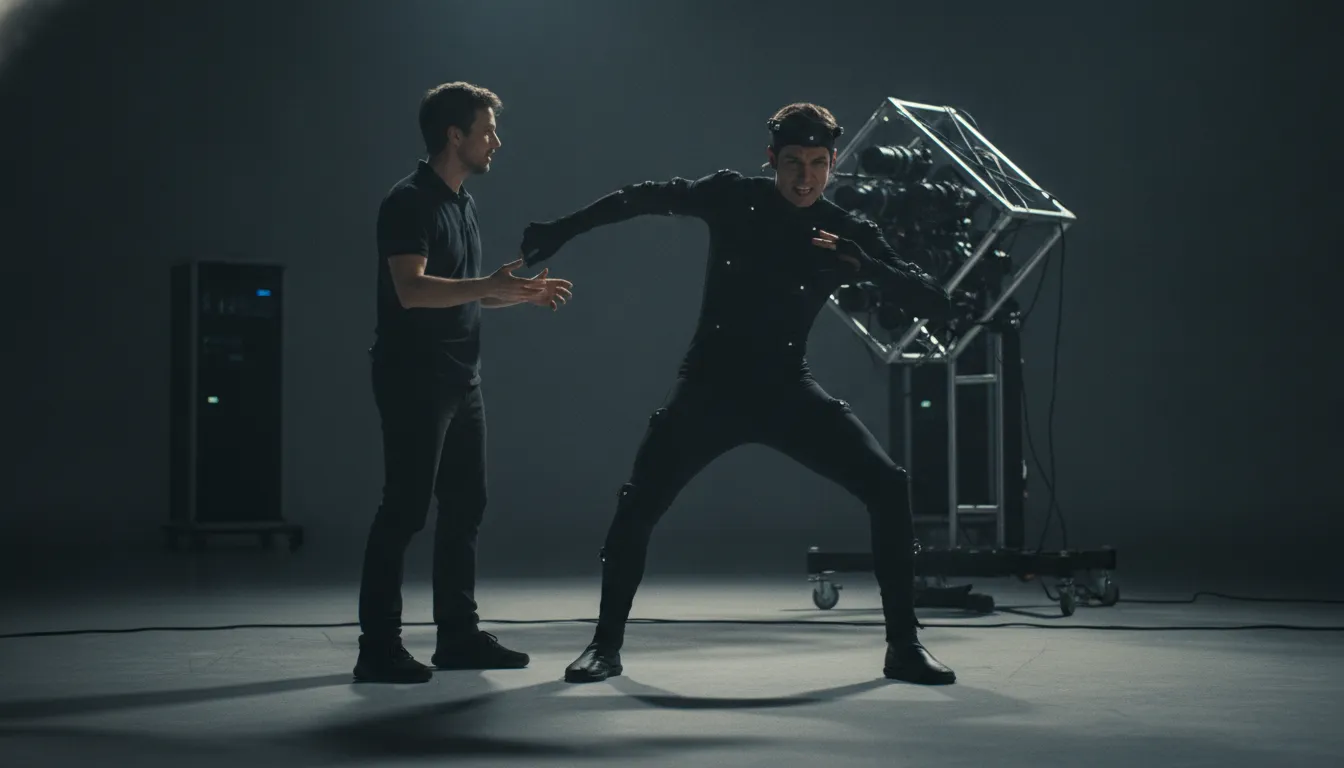
Production choices improve player experience when every shot serves a clear purpose in play. Pacing should preserve momentum, camera language should direct attention without taking control away, and performance should earn its emotional payoff. The strongest cinematic work also hands the player back to gameplay cleanly, while protecting the rules and identity of the wider franchise world.
Use pacing to protect agency
Start by deciding what the player must feel and understand at each beat. A short transition may be enough to establish a threat, while a character reveal may need room for reaction. The question is not how much spectacle a sequence can contain. But how long the player can remain a participant before the experience starts to feel like passive viewing.
Review each pause, camera move, and transition against the gameplay loop. If a cinematic interrupts exploration, combat, or discovery, it should deliver information or emotion that justifies the interruption. Clear entry and exit points matter. Players should know why control was removed, what changed, and when they can act again.
Direct attention without narrowing the experience
Camera direction, composition, lighting, and sound all shape readability. A dramatic angle is useful only if the player can still identify the character, objective, danger, or environmental clue that matters. Test shots at gameplay distance and on the target display conditions, not only in a clean review render. Readability is part of cinematic craft, especially when action, effects, and interface elements compete for attention.
Agency can also be preserved through responsive staging. Where the engine and design allow it, let the sequence acknowledge the player's position, prior choices, equipment, or relationship with a character. Even small variations can make a fixed narrative beat feel connected to the player's journey. These decisions should be planned early, because they affect asset preparation, animation, camera logic, and localization.
Make emotion and continuity work together
Emotional payoff depends on setup. A performance cannot compensate for unclear motivation or inconsistent world rules. Align character objectives, facial performance, animation, camera, and sound around the same dramatic turn. Then check the handoff into gameplay: the player's next action should reflect the new knowledge, urgency, or relationship established by the scene.
For franchise leaders, continuity extends beyond one release. Character behavior, visual language, terminology, and world logic should remain recognizable when an idea moves between game, film, television, or an immersive format. A unified game and virtual production approach can help teams share real-time workflows and digital foundations without forcing every platform to behave identically.
A practical approval framework is therefore simple: identify the intended player emotion and confirm the information the scene must communicate. Test where agency begins and ends, review readability in context, and validate continuity against the franchise framework. If a choice fails one of those checks, refine the production decision before adding more spectacle.
Explore Arctic7's virtual production capabilities for connected game worlds
Frequently Asked Questions
What should be decided before game cinematic production begins?
Define the cinematic's narrative purpose, audience, relationship to gameplay, character motivations, and place in the wider franchise world. Establish creative guardrails early so visual ambition supports the IP rather than creating continuity conflicts later.
Which teams are involved in producing a game cinematic?
A typical production brings together narrative and creative leadership, storyboard and previs artists, modelers, and texture artists. It also includes riggers, animators, technical artists, VFX specialists, lighting and rendering teams, editors, and sound or localization partners. The exact mix depends on the cinematic's scope and delivery requirements.
When should a game engine enter the cinematic workflow?
Use the engine early enough to test camera language, scale, lighting, performance, and the relationship between cinematic assets and gameplay assets. Early real-time reviews can expose technical constraints while changes are still less expensive than they are after final rendering.
How do cinematics stay consistent with gameplay and franchise lore?
Maintain a shared reference for character behavior, world rules, terminology, visual language, and asset versions. Review the cinematic against gameplay beats and approved franchise guidance at each major checkpoint, from storyboards through final delivery.
What makes a cinematic effective for players?
It gives players information or emotion that matters, then delivers it with purposeful pacing, readable staging, expressive performance, and a camera that directs attention without confusion. The strongest result feels like a meaningful extension of play, not an interruption disconnected from the player's role.
Ready to connect cinematic storytelling across your franchise?
A considered production process can help align narrative intent, player experience, and the wider world your IP is building. When game cinematics need to work alongside film, television, or other interactive experiences, the right creative and technical framework matters.
New Immersive & XR Media Capabilities Added to Arctic7's Suite of Games, Film & TV and Digital Services

Arctic7 Shares Details of its Work on Skeleton Crew and Cinematics Partnership with Fateless

The Human Touch: Adding Personality to Project and Product Management
Whether it’s your team, your client, or your stakeholders, understanding the human dynamics is just as critical as hitting milestones.

McDonald's Case Study: Bridging Brand and Play | Arctic7
Bridging Brand and Play: An Interview with Lindsay Blenkhorn Daggitt