



Film Post Production Services for Global IP
For an IP holder, the final stretch of a production is not a handoff to a collection of isolated specialists. It is where performance, story, sound, visual effects, color, and delivery decisions become the version audiences will experience across markets and platforms.
Film post production services bring editorial, sound, VFX, color, mastering, versioning, and delivery into a controlled workflow. Managed well, they do more than finish a title: they protect creative intent. Maintain continuity across a franchise, and give studios a dependable path from approved cut to every required release.
Explore Arctic7's cinematic storytelling and virtual-production capabilities.
Arctic7's team can help you map the next stage of the project.
That executive view changes how leaders assess scope, review gates, asset governance, and partner accountability. It also clarifies why post-production should connect with broader cinematic storytelling and transmedia planning rather than operate as a disconnected final phase. The first step is defining the work and the value it creates.
What Are Film Post Production Services?
Film post production services are the connected creative and technical activities that turn captured footage and recorded sound into a finished, distributable screen work. They include editorial, dialogue and sound work, visual effects, color correction and grading, titles, mastering, versioning, and delivery. For executive teams, the value lies in coordinating these disciplines around one approved creative and operational plan.
Post begins after principal photography, but it is not simply a final checklist. It is where raw material is shaped into the order, rhythm, tone, and emotional experience audiences will receive. The National Film Institute describes post-production as the final phase that binds a film together, covering work such as cutting footage, combining audio, adding music, dubbing, sound effects, color, graphics, and dissemination materials.
Post-production is more than editing
Editorial is usually the first major interpretive layer. Editors determine how performances, locations, and visual information function when assembled into a narrative. Sound teams then refine dialogue, ADR, Foley, effects, music, and the final mix so that the audience understands both what is happening and how it should feel. VFX and finishing extend or correct what was captured, while color work creates visual consistency and reinforces atmosphere.
These workstreams are interdependent. A picture change can alter sound timing, effects shots, music cues, subtitles, credits, and delivery schedules. A color decision can affect visual effects integration or the continuity of a world across episodes, trailers, and marketing assets. Effective film post production services therefore combine craft expertise with disciplined review gates, asset tracking, and version control.
Why integrated governance matters
For a single film, governance protects the approved cut and makes dependencies visible. For an expanding intellectual property universe, it also protects continuity. Decision-makers need a clear record of which story, character, design, performance, and technical choices are approved. Which remain provisional, and how each version is adapted for its intended platform or market.
That is why post-production should connect to the wider production strategy rather than operate as an isolated vendor handoff. A partner must be able to align creative stakeholders, manage feedback without losing accountability, and prepare consistent deliverables across screens and formats. Arctic7's transmedia services approach connects strategy, creative execution, and technical workflows across entertainment categories. Its virtual production services can also inform earlier decisions about environments, assets, and real-time workflows that later affect finishing.
The executive question is not simply whether every post task is available. It is whether the whole chain can preserve intent, surface risk early, and deliver a coherent audience experience at the required scale.
What Does the Film Post Production Workflow Include?
A disciplined workflow turns completed production material into a finished, reviewable, and distributable experience. The sequence is not entirely linear. Editorial decisions affect sound and VFX, color references picture and cinematography, and delivery requirements can influence choices much earlier in the process. For an IP holder or studio, the goal is to keep creative intent, technical control, and version governance aligned from the first assembly to the final master.
- Ingest, organize, and protect the source material. Camera footage, production audio, visual references, graphics, scripts, and metadata are brought into a dependable asset-management system. Clear naming, permissions, backups, and project structure establish the foundation for every later review. This is also where teams confirm that editorial has the materials needed to work without losing provenance or introducing avoidable duplication.
- Build the editorial assembly. Editors synchronize picture and sound, select performances, shape the narrative, and establish pacing. Because scenes are commonly filmed for production efficiency rather than presentation order, editorial is where raw material becomes a coherent story. Titles, credits, temporary graphics, and reference effects may be added while the cut moves through internal, creative, and stakeholder reviews.
- Refine dialogue, music, and sound design. Once the picture has enough structure, sound teams clean dialogue, identify recording gaps, and develop the sonic world. ADR can replace or strengthen production lines, while Foley, effects, ambience, and music give scenes emotional definition. Editors, sound designers, Foley artists, composers, and mixers must work from the same approved picture versions. The National Film Institute identifies ADR, Foley, sound combining, music, and sound effects as core post-production activities: National Film Institute post-production overview.
- Complete VFX and graphics. VFX supervisors coordinate shots, plates, assets, simulations, compositing, and approvals. Graphics, titles, credits, and any required screen or environmental elements are finalized alongside the picture. A structured review process matters here because late creative changes can affect editorial timing, sound cues, color work, and downstream versions.
- Grade and finish the image. Color correction and grading establish consistency across shots, locations, and capture conditions while reinforcing the intended tone. Finishing may also include image cleanup, reframing, legal checks, and final graphics integration. When virtual production is part of the pipeline, teams can connect these decisions to earlier real-time visualization and capture planning. Arctic7's virtual production workflow guide provides related context on how production planning and technical workflows connect.
- Master, version, and deliver. The approved picture and mix are conformed into the required master, then adapted for the intended platforms, territories, languages, and promotional uses. Version control should record what changed, which approvals apply, and which assets belong to each deliverable. The final stage may include trailers, captions, dubbed or subtitled versions, technical specifications, and delivery packages. The workflow is complete only when every required file can be identified, checked, and transferred to its destination with the creative and technical approvals intact.
For complex franchises, these stages function as connected control points rather than isolated vendor handoffs. A partner that understands the relationship between cinematic storytelling, virtual production, asset governance. And transmedia strategy can help protect both the immediate release and the wider world the release is designed to expand.
How Do Film Post Production Services Protect Franchise Continuity?
Film post production services protect franchise continuity by turning creative intent into a controlled, reviewable system. Editorial decisions, sound, VFX, color, asset naming, approvals, and platform masters should all reinforce the same canon, character logic, visual language, and audience promise. That control becomes essential when one story extends across films, series, games, trailers, and localized versions.
Continuity starts with an agreed creative reference point. Before teams begin finishing work, production leaders can establish the approved story treatment, character details, terminology, visual references, music direction, and rules for how the world behaves. This is more useful than relying on informal memory. It gives editors, VFX artists, colorists, sound teams, marketing partners, and game developers a shared basis for making decisions when the material evolves.
Editorial review is the first major governance gate. A cut can preserve a character's motivation, reveal information in the intended order, and maintain the tone established in earlier installments. Review notes should distinguish between changes to pacing, changes to meaning, and changes to canon. That distinction helps decision-makers resolve competing opinions without allowing a late adjustment to create an unintended contradiction elsewhere.
Asset and version governance then makes those decisions durable. Teams need a clear source of truth for picture-locked shots, approved character models, environment references, dialogue, music cues, VFX elements, color looks, subtitles, and promotional extracts. Version labels, permissions, change logs, and review ownership reduce the risk that an outdated shot appears in a trailer, a platform master, or a game-related deliverable. A dependable storage system is also a recognized post-production workflow practice, according to the National Film Institute's post-production overview.
Sound and color carry continuity even when audiences do not consciously identify them. A recurring sonic motif can preserve a character's emotional identity, while a consistent grade can keep locations and timelines legible. These choices require cross-team review, because editorial changes affect dialogue and music, VFX changes affect color finishing, and localization or platform requirements can alter timing. The goal is not identical treatment in every medium. It is a coherent experience that respects each format's strengths.
For franchises moving between screen and interactive media, approvals should include representatives who understand the wider ecosystem, not only the current cut. Arctic7's documented approach combines narrative workshops, creative guardrails, workflow architecture, platform-specific production, and creative alignment. That model connects transmedia services to practical review discipline, while capabilities such as virtual production services can help teams carry visual and worldbuilding decisions forward. Continuity is therefore less a final inspection than a sequence of deliberate decisions, recorded and reviewed from editorial assembly through delivery.
Editorial and Sound: Where Performance Becomes Story
Editorial and sound are not downstream finishing tasks. They are the disciplines that determine what the audience understands, feels, and remembers. The cut establishes emphasis and point of view, while dialogue, effects, music, and the final mix shape the emotional meaning of each moment. Together, they turn production material into a coherent dramatic experience.
Editorial gives the story its point of view
Picture editorial is where performance becomes structure. Raw material is often captured in the most efficient order for locations, performers, and production logistics, not in the order audiences will see it. The editor therefore makes consequential choices about rhythm, reaction, information, and omission. A stronger editorial process also creates clearer review gates, so creative leaders can assess story intent before downstream work makes changes expensive.
For an IP holder, that means reviewing more than whether a scene is technically complete. The questions are whether a character remains recognizable, whether a relationship has the intended weight, and whether the cut supports the larger world. Editorial, titles, credits, and delivery versions must remain aligned with those decisions.
Sound makes the world believable
Dialogue editing protects performance by managing clarity, continuity, and intelligibility. ADR can restore or replace lines when production audio is compromised, but it is also a performance and synchronization decision. Foley gives physical presence to movement and objects. Sound design builds the world beyond the frame, while music establishes mood and tone. A final mix balances these elements so that the audience follows the story rather than noticing the mechanics.
The National Film Institute's overview of post-production identifies editors, sound engineers, Foley artists, colorists, mixers, and composers as contributors to the finished work. That division of expertise is useful, but leadership still needs one connected creative objective. Review loops should test picture and sound together, not treat each department as an isolated approval.
Review the whole experience, not separate deliverables
Music selection, dialogue revisions, sound effects, and the mix can change the interpretation of a scene even after the picture feels locked. Senior stakeholders should therefore define who owns narrative decisions, which references establish tone, and how changes are documented across versions. This is especially important when a story moves between film, television, games, or immersive formats.
Arctic7's virtual production filmmaking workflow perspective reflects the same principle: creative and technical decisions work best when they are aligned early. That connected approach helps post-production serve the story and the wider entertainment ecosystem, rather than simply completing a checklist of technical outputs.
VFX, Color, and Finishing Across Formats
Finishing is where visual ambition becomes a consistent, deliverable picture. The executive question is not simply whether a team can create an effect or grade a scene. It is whether every creative decision remains legible, repeatable, and aligned as the project moves across theatrical, streaming, broadcast, trailer, and platform-specific versions.
| Craft area | Executive risk | Control point |
|---|---|---|
| Visual effects | Late creative changes create inconsistent shots, missed approvals, or continuity problems across scenes and versions. | Set shot reviews, version ownership, visual references, and approval gates before final delivery. |
| Color correction and grading | Exposure, palette, or skin-tone inconsistencies weaken the intended mood and make different capture formats feel disconnected. | Separate technical correction from creative grading, then review the look against an agreed visual language. |
| Online finishing and mastering | Titles, credits, graphics, audio, and picture may drift between masters, trailers, localized versions, and promotional assets. | Maintain a controlled master, documented specifications, and a final quality-control pass for each required output. |
These workstreams should be planned as one connected system. The National Film Institute identifies color correction, graphics, titles, credits, sound work, and preparation for dissemination as parts of post-production, rather than isolated afterthoughts. Its workflow overview also underscores why dependable storage and organized assets matter when multiple specialists contribute to the final picture.
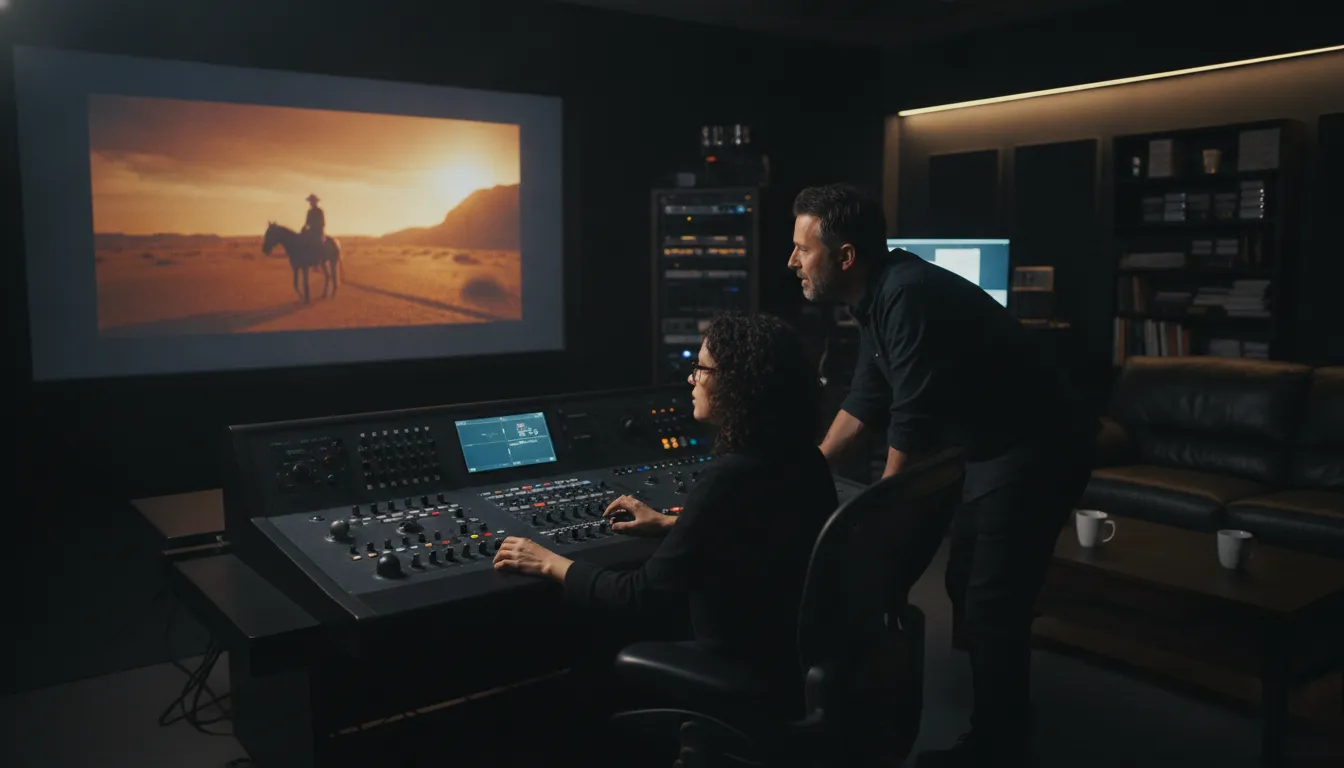
Color decisions deserve particular discipline. Technical correction aims to make footage natural and consistent, while grading can add atmosphere and emotion, as the CalArts post-production handbook explains. Treating those as separate decisions gives creative leaders a clearer review conversation: first confirm that the image is technically sound. Then decide what the image should make the audience feel.
For projects intended to grow beyond one release, the control layer extends to reference frames, naming conventions, review notes, and version governance. Arctic7's broader strength is connecting creative alignment and technical execution across formats. That perspective helps teams protect the identity of an IP while finishing assets for the specific conditions of each screen and channel.
How Should You Evaluate Film Post Production Services?
Evaluate film post production services as an integrated decision-making system, not a menu of isolated capabilities. The right partner should define the complete scope, connect editorial, sound, VFX, color, versioning, and delivery. Protect assets through review and access controls, and understand how the finished work supports a wider IP strategy.
Start by asking whether the proposed scope matches the project you are actually making. A credible evaluation should account for picture editorial, dialogue and ADR, sound design and mixing, VFX, color correction and grading, titles, mastering, and platform-specific deliverables. The National Film Institute describes post-production as the phase that binds a film together, including visual and audio editing, dubbing, sound effects, color correction, graphics, and dissemination materials. Its workflow overview is a useful baseline for checking whether a proposal leaves important dependencies unstated.
Assess depth, not just a service list
Names alone do not demonstrate capability. Ask who owns editorial decisions, how creative intent moves from offline edit to finishing, and how sound, color, and VFX teams work from the same approved references. You should also understand the handoff between departments. For example, a color workflow must distinguish technical correction from creative grading, while the finishing process should preserve approved looks across scenes, revisions, and deliverable versions.
Then examine workflow integration. Can the partner accept your editorial tools, asset conventions, review platform, and production calendar? Are dailies, source media, project files, masters, subtitles, localized versions, and promotional cutdowns tracked under a clear system? A dependable storage approach and explicit naming conventions are not administrative details. They reduce avoidable errors when multiple stakeholders review material or when a franchise needs to revisit assets later.
Test review, security, and version control
Request a sample review map before appointing a provider. It should identify approval owners, review gates, change notes, escalation routes, and the rule for declaring a version final. Ask how sensitive footage and unreleased story information are accessed, transferred, retained, and removed. The goal is not merely faster feedback. It is a defensible chain of decisions that prevents an obsolete cut, unapproved visual treatment, or incorrect audio mix from reaching distribution.
Delivery readiness deserves the same scrutiny as creative quality. Confirm the required masters, codecs, audio configurations, captions, subtitles, aspect ratios, quality-control checks, and delivery destinations. A partner should be able to explain what is tested before handoff and how corrections are logged if a platform rejects a file.
Look for strategic fit beyond the finish
Finally, consider whether the partner can connect post-production to the larger world around the project. Arctic7 combines strategy development, creative execution, and technical excellence across entertainment formats. Its transmedia services provide context for evaluating that broader alignment, while its virtual production services and documented real-time workflows show why production and post decisions should not be treated as separate conversations. For a wider view of production coordination, explore this virtual production filmmaking workflow. The strongest choice is the partner that can deliver a finished film while preserving the creative guardrails, assets, and narrative logic needed for what comes next.
From Post Pipeline to Connected Entertainment Ecosystem
Post-production creates more than a finished screen asset. For an IP owner, it establishes the creative and technical reference point that every later expression of the world must understand. Editorial decisions define canon and emphasis. Sound, color, visual effects, and finishing establish the sensory language. Versioning and delivery then determine how that language travels across screens, territories, and platforms.
This is why a post pipeline should be designed with the wider ecosystem in view. The National Film Institute describes post-production as the phase that binds a film together, bringing editors, sound engineers, Foley artists, colorists, and other specialists into a shared process. That integrated view matters when the same property may later support a series, game, immersive experience, or marketing world. The National Film Institute's overview of post-production provides useful context for the craft disciplines involved.
Make creative intent portable
A disciplined workflow records more than final exports. It preserves approved performances, visual references, sound decisions, asset versions, and the rationale behind important changes. Those records give future teams a reliable starting point instead of forcing them to reverse-engineer the finished film. They also create clearer review gates between creative stakeholders, production teams, and platform specialists.
For Arctic7, that connection spans transmedia services, cinematic storytelling, and production planning. The objective is not to treat every format as a copy of the original. Each medium should use its own strengths while remaining recognizably part of the same world. That requires shared creative guardrails, coordinated asset development, and a production blueprint that can accommodate future decisions.
Connect virtual production to finishing
Virtual production makes this relationship visible early. Real-time visualization, ICVFX, Unreal Engine workflows, and digital environments can help teams evaluate story, performance, and worldbuilding before final delivery. Arctic7's virtual production capabilities and Narwhal Studios provide relevant context for how those workflows support screen production. The virtual production pipeline guide also explains the coordination required across a project lifecycle.
The result is a post pipeline that does not end at mastering. It becomes part of an operating system for the IP. That system protects narrative coherence, supports cinematic quality, and gives games, film, television, and immersive teams a dependable foundation for the next release.
Frequently Asked Questions
What do film post production services typically include?
They can cover picture editing, dialogue editing and ADR, sound design and mixing, visual effects, color correction and finishing, mastering, versioning, and delivery. The right scope depends on the project, but an effective partner coordinates these stages through one controlled workflow rather than treating them as disconnected vendor handoffs.
When should a studio choose a full-service post-production partner?
Choose one when the project has multiple creative departments, release formats, territories, or connected stories that require consistent oversight. A coordinated partner can clarify ownership, manage review gates, and preserve approved creative decisions as the film moves from editorial through finishing and delivery.
How can post-production support franchise continuity?
Continuity improves when teams maintain shared references for approved picture, sound, color, visual effects, terminology, and delivery versions. Clear asset naming, documented approvals, and a reliable change history help creative and production leaders protect canon and tone across films, series, trailers, and platform-specific releases.
What should executives ask before selecting a post-production partner?
Ask which stages the team owns, how reviews and approvals are managed. How assets are secured, which formats and territories it can deliver, and how it handles late changes. Also assess communication, integration with your existing teams, and whether the partner can support the broader entertainment ecosystem around the project.
Get started with a connected post-production partner
A coordinated post-production approach can help align creative decisions, technical finishing, and delivery across the life of an entertainment property. If you are evaluating how cinematic storytelling and virtual production can support a broader interconnected ecosystem, Arctic7 can help you explore the right path.
Explore Arctic7's cinematic storytelling and virtual-production capabilities.
Arctic7's team can help you map the next stage of the project.
New Immersive & XR Media Capabilities Added to Arctic7's Suite of Games, Film & TV and Digital Services

Arctic7 Shares Details of its Work on Skeleton Crew and Cinematics Partnership with Fateless

The Human Touch: Adding Personality to Project and Product Management
Whether it’s your team, your client, or your stakeholders, understanding the human dynamics is just as critical as hitting milestones.

McDonald's Case Study: Bridging Brand and Play | Arctic7
Bridging Brand and Play: An Interview with Lindsay Blenkhorn Daggitt


