



Experiential Technology Studio: A Buyer Guide
Immersive entertainment projects rarely fail because a team lacks access to new technology. They fail when the technology is not connected to a coherent IP strategy, production workflow, or plan for operating the experience after launch. For an IP holder or entertainment brand, the right partner must turn an ambitious world into a system that can be tested, produced, scaled, and maintained.
An experiential technology studio should begin with discovery, prototyping, and workflow architecture, then connect spatial or real-time capabilities to content systems, platform-specific deliverables, and live operations. The goal is not to showcase hardware. It is to create a repeatable production model that protects creative intent while extending audience engagement across formats.
That means the first deliverables should clarify the opportunity, expose technical and creative risks, and establish how teams will move from concept to dependable execution. The strongest approach starts by defining what the project must prove before production accelerates.
Explore Arctic7's transmedia and immersive services
What should an experiential technology studio deliver first?
An experiential technology studio should begin with decisions, not devices. Its first deliverables are an IP and audience assessment, a shared strategic direction, a workflow architecture, and a production blueprint that makes the next investment legible. The goal is to connect creative ambition with the platforms, teams, content systems, and operating model required to deliver it.
That lifecycle view separates a genuine partner from a specialist brought in only to build a demo. The studio should clarify what the experience must achieve, how it extends the wider world, and which parts of the concept need to be proven before production scales.
Prepare the IP before choosing the technology
Discovery should start with the source material, audience, and intended role of the experience. Workshops and audits can identify the strongest characters, environments, rules, and story opportunities, while also exposing constraints around continuity, rights, tone, and platform adaptation. This is especially important when an IP is moving across film, television, games, immersive media, or digital services. A useful interconnected entertainment ecosystem needs a coherent world logic, not just several disconnected executions.
The output should be practical: a definition of the audience and use case, a prioritized opportunity map, an IP-readiness assessment, and clear success criteria. Spatial computing, XR, real-time rendering, or other tools may be relevant, but they should answer a creative or operational requirement rather than determine the brief by default.
Turn strategy into a production blueprint
Once the opportunity is defined, the studio should establish a unified strategy and workflow architecture. That means mapping how creative, technical, and production teams will collaborate; identifying reusable assets and dependencies; and deciding which deliverables belong to each platform. A documented production blueprint might include key art, teasers, prototypes, platform-specific content, and governance for creative alignment. Arctic7 describes this progression through its three-stage method: prepare the IP, define strategy and workflow architecture, then execute the blueprint.
The blueprint should be specific enough to guide resourcing and sequencing. In the documented virtual production case example, the planning scale included more than 200 virtual stage walks, 25-plus pre-light and camera-blocking sessions. 45-plus virtual location scouts, 15 virtual art department artists, eight hero sets, and 34-plus set variants. Those figures illustrate the value of translating an ambitious visual concept into countable production activities and dependencies.
For IP holders, the strongest first milestone is therefore not a polished novelty demo. It is a shared plan that shows what should be built, why it matters. How teams will work together, and what evidence is needed before the project moves into full production.
How does prototyping turn an immersive idea into a production decision?
A prototype should do more than demonstrate that an experience can be built. It should test whether the interaction supports the IP, whether audiences understand what to do, and whether the production path is realistic. For an IP holder, that evidence turns an exciting concept into a decision about scope, platform, investment, and timing.
- Define the decision and the hypothesis. Start with the question leadership needs answered. Will visitors understand the core interaction without instruction? Can a game mechanic carry a film or television world into a new format? Does a spatial experience deepen the relationship with the audience, or is it only a visual spectacle? Write the hypothesis before selecting hardware or building a polished environment. This keeps the prototype focused on a meaningful creative or commercial risk.
- Prototype the interaction, not just the look. A convincing environment can conceal a weak experience. Build the smallest test that lets people perform the central action, make a choice, navigate a space, or influence the world. Observe where they hesitate, what they ignore, and which behaviors emerge without explanation. The prototype should reveal audience behavior early, while changes are still inexpensive. Arctic7's documented game development and co-development capabilities include system design and prototyping, tooling, and production pipelines, all of which support this practical test-and-learn stage.
- Test the engine and technical constraints. Engine choice should follow the experience and its delivery requirements, not trend pressure. Test the required frame rate, interaction model, rendering approach, device coverage, content pipeline, and integration points. Arctic7 documents development with both Unreal Engine and Unity, so a prototype can help establish which workflow best supports the intended platform, team, and future content demands. It can also expose constraints involving tracking, latency, data, staffing, or asset reuse before they become production blockers.
- Map the result to a production blueprint. The prototype becomes useful when its findings are translated into a plan. Record what worked, what failed, which assumptions changed, and what must be solved next. Arctic7's three-stage method moves from preparing the IP through workshops and audits, to defining a unified strategy and workflow architecture, then executing a production blueprint with platform-specific deliverables. That sequence gives creative, technical, and executive stakeholders a shared basis for a go, revise, or no-go decision.
The strongest outcome is not always a green light. A disciplined prototype may narrow the audience, change the engine, reduce the feature set, or stop an experience that cannot scale reliably. That is valuable evidence. It protects the IP from an expensive build whose interaction, technical foundation, or operating model has not earned its place in the wider ecosystem.
For teams planning an experience across formats, review Arctic7's immersive and XR media capabilities alongside the prototype's findings. The goal is not to select technology in isolation, but to connect a validated interaction to a production system that can support the world beyond the first demonstration.
Which spatial and real-time capabilities matter beyond the trend cycle?
Spatial computing is best treated as a project category, not a shopping list of devices. The durable question is whether a system helps a creative team build, test, operate, and extend an experience across the environments where audiences will encounter it. A headset, LED wall, projection surface, sensor, or haptic interface is useful only when it supports that larger production logic.
For senior decision-makers, the answer is a connected capability stack: real-time visualization, reliable tracking, responsive interaction, accessible experiences, and workflows that can move from development into production. These foundations matter longer than any particular hardware cycle because they improve creative decision-making and reduce friction between departments.
Answer: Durable spatial and real-time capability means more than owning current hardware. It combines engine-based visualization, accurate tracking, responsive interaction, accessible design, dependable operations, and portable workflows. These systems let teams make better creative decisions, adapt content across platforms, and protect the value of an experience as devices and audience expectations change.
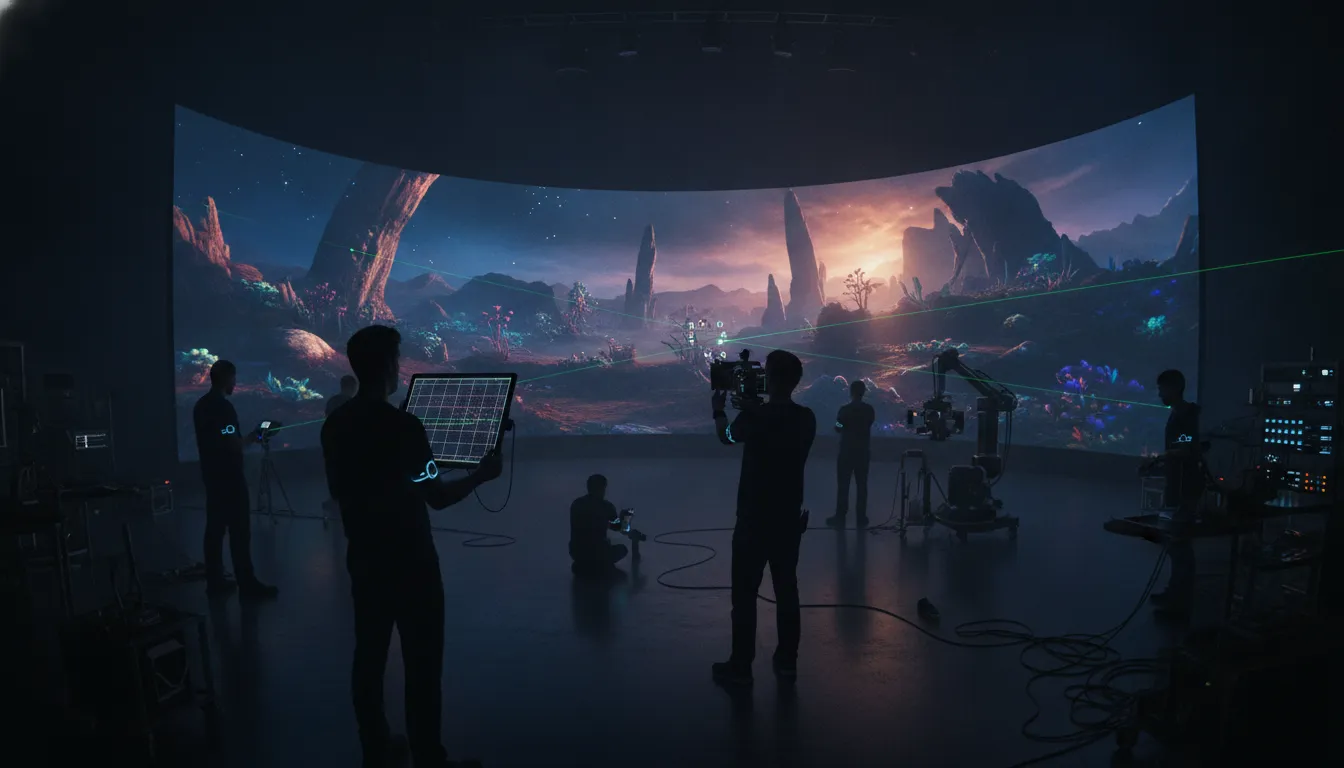
Real-time visualization is often the first practical test. Can directors, designers, cinematographers, and IP owners see the same world, assess scale and composition, and make changes before expensive production decisions are locked? Unreal Engine workflows can support that shared view, especially when they connect interactive development with film and television production rather than creating another isolated pipeline. Arctic7 documents this integration through Narwhal Studios, including virtual art department workflows, ICVFX, LED volumes, and real-time rendering.
That capability should be evaluated as a workflow, not a demo. Ask how assets are created, versioned, lit, tracked, reviewed, and approved. In virtual production, camera tracking and spatial calibration must remain dependable under pressure. In an interactive installation or branded world, sensors and interaction logic need clear failure states. A compelling prototype that cannot be maintained, recalibrated, or handed to an operating team is not a production-ready experience.
Accessibility belongs in the technical brief from the beginning. Experiences may need alternative input methods, readable visual hierarchy, adjustable motion, captions, spatial audio options, or a non-headset path. Portability matters for the same reason. A world designed for one venue or device has a shorter commercial life than a system whose content and interaction layers can be adapted for screens. Live environments, game engines, and future formats.
Finally, assess reliability as part of the creative capability. Monitoring, documentation, tested fallback modes, and clear ownership protect the audience experience when connectivity, tracking, rendering, or hardware behaves unpredictably. The most valuable immersive XR and VR work therefore connects spatial ambition to production discipline. For a broader view of how these components can operate together, review Arctic7's unified game and production pipeline.
How should content systems support a living brand world?
A content system for a living brand world is the operating layer that keeps story, assets, technology, and delivery aligned as the experience expands. It should give creative teams a shared source of truth, give technical teams reusable production assets. And give stakeholders a clear way to approve changes without slowing every release. The goal is not to produce more content indiscriminately. It is to make each approved idea adaptable across the platforms where the audience encounters the world.
That means defining narrative rules, asset ownership, naming conventions, version control, and approval gates before production accelerates. It also means planning for content after launch, when new characters, environments, events, and audience interactions must fit the existing world rather than create disconnected branches.
In practice, a strong content system connects narrative governance with reusable assets, interoperable engines, and platform-specific deliverables. It lets a team preserve creative intent while adapting work for games, film. Immersive experiences, and digital channels, then maintain that system through live operations and ongoing technical support.
Interconnected entertainment ecosystems need more than a shared style guide. They need a production blueprint that translates the IP into repeatable workflows. Arctic7 describes its method as preparing the IP through workshops and audits, defining a unified strategy and workflow architecture, and executing a blueprint with platform-specific deliverables. That sequence gives teams a practical decision structure: what belongs to the canon. What can be adapted, which assets should be built for reuse, and who owns the next approval.
Reusable assets are most valuable when they remain useful across tools and formats. A character model may need to support a game build, a virtual production environment, a cinematic sequence, and promotional content. Documented game capabilities such as system design, prototyping, Unreal Engine and Unity development, tooling, production pipelines. And post-launch content planning show why engine interoperability belongs in the initial architecture rather than being added after launch.
Versioning is equally important. Every major asset should have a clear source, status, dependencies, and approved use cases. Without that discipline, teams may rebuild the same environment in different engines, publish inconsistent character details, or make a live update that breaks downstream content. A shared review process protects both narrative coherence and production capacity.
Post-launch planning completes the system. Games as a Service, live operations, and development across mobile, PC, and console require content pipelines that can support updates over time. Managed IT, application development, and 24/7 support can also matter when the experience depends on reliable digital infrastructure. For a closer look at the broader transmedia and immersive services model, evaluate not only the launch deliverables, but also how the studio will preserve, extend, and operate the world afterward.
What does reliable live operation look like after launch?
Reliable live operation turns a technically successful launch into a dependable audience experience. It combines monitoring, maintenance, staffing, incident response, analytics, and a disciplined content-update process. The goal is not simply to keep a platform online. It is to preserve creative quality, respond to audience behavior, and give the rights holder clear ownership of decisions over time.
For an IP holder, live operations should be designed before release, with named responsibilities. Escalation paths, and an operating cadence that connects technical support to creative and commercial priorities.
Monitor the experience, not only the infrastructure
Operational monitoring should cover availability, performance, integrations, device compatibility, user flows, and content behavior. In an interactive installation or digital experience, a service can be technically reachable while a key interaction, asset, or handoff is failing. Teams need dashboards and alert thresholds that help them identify the difference between an isolated fault and a broader reliability issue.
Analytics should also inform decisions without becoming a substitute for judgment. Review participation patterns, drop-off points, repeat use, support requests, and content performance alongside qualitative feedback. These signals can guide updates to pacing, onboarding, navigation, or programming while protecting the experience's narrative and brand intent.
Make ownership explicit
A live plan should identify who owns platform health, content approvals, release management, audience support, vendor coordination, and incident communications. Staffing may change after launch, so the operating model must document access, runbooks, maintenance windows, backup procedures, and decision rights. A clear handoff is especially important when a studio, publisher, venue, and technology supplier share responsibility.
Post-launch content planning is a documented capability within Arctic7's game-development work, alongside system design, production pipelines, and development in Unity and Unreal. These capabilities are relevant when an experience needs updates rather than a one-time delivery. Explore game development and co-development for a related view of those production and live-content requirements.
Prepare for incidents and purposeful change
Incident response should define severity levels, technical and creative escalation, stakeholder notifications, recovery steps, and a post-incident review. Maintenance is more than patching. It includes testing integrations, refreshing dependencies, checking devices or environments, and validating that new content works across supported platforms.
For broader entertainment technology environments, A7 Digital documents managed IT, application development, and 24/7 support tailored to the sector. Whether support is delivered internally or through a partner, dependable ownership lets creative teams focus on improving the world while operators protect its continuity, safety, and audience value.
How do you evaluate an experiential technology studio?
A strong experiential technology studio should show more than an impressive demo. Evaluate whether it can align an experience with the IP, move from prototype to production blueprint, connect spatial and real-time workflows, and support the work after launch. The best partner makes creative ambition more executable, measurable, and durable across platforms.
| Evaluation area | Durable evidence | Warning sign |
|---|---|---|
| Strategy and IP alignment | A documented process that prepares the IP through workshops and audits, defines a unified strategy and workflow architecture, and ends with a production blueprint and platform-specific deliverables. Ask how creative decisions will protect the world across formats. | The pitch begins with devices, engines, or visual effects before clarifying the audience, franchise objective, narrative role, or business outcome. |
| Prototype discipline | Prototypes answer named production questions. They establish what should be built, tested, revised, and approved before a larger commitment. Look for system design, technical validation, rapid iteration, and a clear path from prototype findings to scope. | A polished proof of concept is presented as the strategy, with no success criteria, test plan, decision gates, ownership model, or explanation of how the work scales. |
| Spatial and real-time pipeline | Evidence of integrated game-engine workflows, real-time visualization, virtual art department processes, ICVFX, or LED-volume production where relevant. Narwhal Studios documents these capabilities, including collaboration protocols that connect game-engine and traditional film production. | The studio lists fashionable hardware or immersive formats but cannot explain asset handoffs, latency, rendering constraints, calibration, collaboration, or what happens when the experience leaves the demo environment. |
| Content systems | A practical model for producing, versioning, governing, and reusing assets across film, games, XR, and digital platforms. Review whether the proposed system supports platform-specific deliverables without fragmenting the creative vision. Arctic7's game development and co-development work is relevant when interactive systems and content pipelines overlap. | Content is treated as a one-off installation package, with no ownership of source assets, adaptation plan, pipeline documentation, or method for maintaining continuity across releases. |
| Live operations | Ask for an operating model covering staffing, monitoring, maintenance, incident response, content updates, and reliability. Live performance depends on throughput, dwell time, support capacity, and the ability to keep an experience functioning after launch. | Launch day is the finish line. The proposal omits service ownership, escalation paths, maintenance windows, analytics, accessibility checks, or a plan for changing content safely. |
| Cross-platform governance | Clear decision rights, review checkpoints, technical standards, and a shared production language across creative, engineering, production, and platform teams. A partner should be able to coordinate an interconnected world rather than optimize one channel in isolation. See Arctic7's interconnected entertainment ecosystems perspective for the broader operating model. | Every discipline has its own roadmap, terminology, and approval process. The studio cannot identify who resolves conflicts between narrative intent, technical feasibility, schedule, and platform requirements. |
Use the scorecard during references, not only during the pitch. Ask for a comparable project artifact, such as a prototype decision log, workflow diagram, asset-governance plan, or live-support runbook. Specific evidence reveals whether the studio has a repeatable operating capability or simply knows how to stage a compelling first impression.
Frequently Asked Questions
What does an experiential technology studio do?
An experiential technology studio connects creative direction, technical development, and production operations to build interactive experiences. Depending on the project, that may include discovery workshops, prototypes, spatial or real-time systems, content pipelines, platform-specific deliverables, and support after launch.
When should an entertainment brand involve a studio?
Bring a studio in before major production decisions are locked, especially when an experience must extend an existing IP across physical, digital, immersive, or live channels. Early involvement helps align the creative vision, test feasibility, define the workflow architecture, and establish a production blueprint before costs and dependencies compound.
How can you tell whether a capability is durable or just a technology trend?
Evaluate the underlying production system rather than the novelty of the hardware. Ask whether the team can prototype, integrate content and data, support real-time iteration, maintain quality across platforms, and operate the experience reliably. A durable capability improves creative control, scalability, or audience value after the initial launch.
What should an experiential technology studio deliver after launch?
Post-launch delivery should include monitoring, maintenance, technical support, content updates, and a clear owner for operational decisions. For connected or live experiences, the studio should also define escalation paths and a sustainable content workflow. So the project can evolve without rebuilding its technical foundation each time.
Ready to explore your next brand world?
The right experiential technology studio can help connect creative ambition with a practical path from prototype to launch and ongoing operation. If your project needs a clearer view of the capabilities, systems, and partnership model required. Explore Arctic7's transmedia and immersive service capabilities for your next brand-world or entertainment project.
New Immersive & XR Media Capabilities Added to Arctic7's Suite of Games, Film & TV and Digital Services

Arctic7 Shares Details of its Work on Skeleton Crew and Cinematics Partnership with Fateless

The Human Touch: Adding Personality to Project and Product Management
Whether it’s your team, your client, or your stakeholders, understanding the human dynamics is just as critical as hitting milestones.

McDonald's Case Study: Bridging Brand and Play | Arctic7
Bridging Brand and Play: An Interview with Lindsay Blenkhorn Daggitt


