


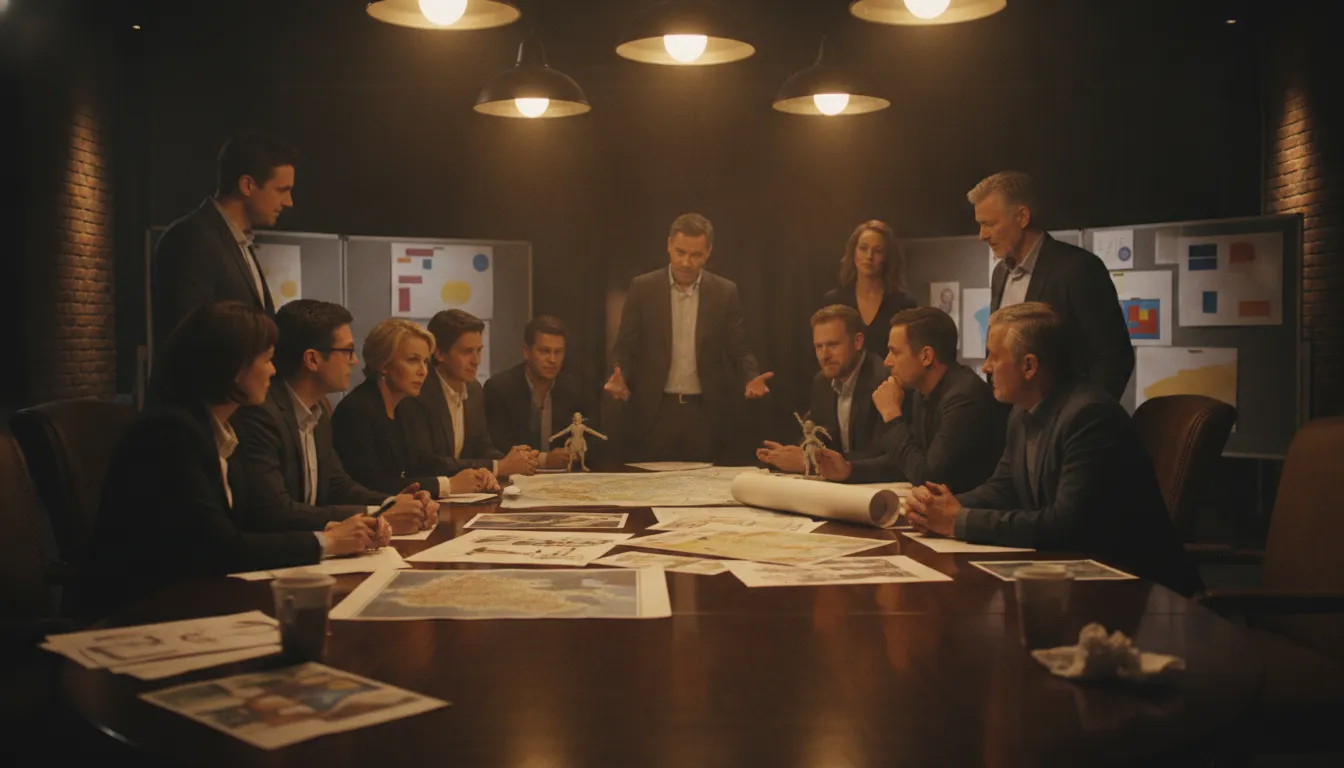

Entertainment Production Services for Expanding IP
When an established IP moves beyond its original format, the challenge is not simply producing more content. Each game, film, or television project must add value while preserving the world, tone, and relationships that make the franchise recognizable. Without a shared creative and production framework, expansion can quickly become a collection of disconnected releases.
Entertainment production services for a growing IP should connect strategy, worldbuilding, creative development, technical production, and coordinated delivery across platforms. Arctic7 works as a transmedia partner, helping IP holders build an interconnected ecosystem rather than treating each project as an isolated adaptation.
That distinction matters because transmedia storytelling distributes meaningful elements of a larger narrative across different media. Each format should contribute something distinct while remaining part of a coherent whole. The right service stack therefore begins before cameras roll or a game enters development. It starts by clarifying what the IP can support, what each platform should deliver, and how the pieces will work together.
Explore integrated entertainment production services for your expanding IP.
What Do Entertainment Production Services Include for a Growing IP?
Entertainment production services for a growing IP extend well beyond making a single film, game, or series. They connect narrative strategy, worldbuilding, creative development, technical production, and delivery so each format contributes to a coherent ecosystem. The work protects canon and tone while giving specialist teams the frameworks, assets, and workflows needed to expand the world.
That distinction matters because transmedia storytelling is not simply the same story repackaged for different screens. It uses multiple media to guide audiences through an interconnected narrative, with each extension contributing something meaningful. For IP holders, the production stack must therefore support both creative integrity and practical execution across platforms.
Strategy and IP readiness
The stack begins with a shared understanding of what makes the IP worth expanding. Narrative workshops, IP audits, creative frameworks, and stakeholder alignment help establish the canon, world rules, audience promise, and relationships among future extensions. This foundation reduces the risk that a game, film, or immersive experience feels retrofitted to the wider franchise.
It also gives decision-makers a common framework for distinguishing adaptation from transmediation. A direct adaptation may translate an existing plot, while a transmedia extension can develop new characters, locations, or dimensions of the world. That choice affects the creative brief, rights conversations, production requirements, and definition of success.
Creative development across formats
Once the foundation is clear, entertainment production services can include worldbuilding, narrative design, system design, prototyping, lookbooks, pilot scripting, and cinematic development. Game teams may need mechanics and interactive systems that express the IP, while film and television teams may need a central narrative spine, visual language, and production-ready concepts. The goal is alignment without forcing every format to behave identically.
- Games: narrative and worldbuilding workshops, system design, prototyping, development support, and post-launch content planning.
- Film, television, and immersive media: cinematic storytelling, visual development, virtual production planning, and platform-specific experiences.
| Production stage | Primary focus | Typical outputs |
|---|---|---|
| Readiness | Protect the IP foundation | Audits, workshops, creative guardrails |
| Strategy | Plan the ecosystem | Roadmap, platform roles, workflows |
| Activation | Build and coordinate | Assets, pipelines, releases, iteration |
Technical production then turns those creative decisions into usable assets and repeatable pipelines. Depending on the project, that may involve real-time tools, game-engine development, virtual production, or digital infrastructure. It is not the same as event logistics, where services commonly center on staging, lighting, audio, rigging, and live venue delivery. Integrated IP production is concerned with building and extending a world over time.
For a practical overview of how these capabilities fit together, explore Arctic7's integrated transmedia services and its approach to connecting creative, technical, and production disciplines.
How Do You Build a Strategy Before Production Begins?
Build the strategy in three connected stages: make the IP transmedia ready, define how it should expand, and activate a production blueprint. This sequence turns creative intent into platform-specific deliverables, workflows, and synchronized timelines while giving every team a shared framework for protecting the world, characters, and narrative logic.
- Make the IP transmedia ready through audits, workshops, and alignment.
- Define the roadmap, platform roles, deliverables, and connected workflows.
- Activate the production blueprint through asset development, iteration, and delivery.
Before a studio commissions assets or commits to a production path, the underlying IP needs enough definition to travel. Arctic7's readiness work begins with narrative workshops, IP audits, creative frameworks, and stakeholder alignment. Together, these activities clarify what is core to the property, which elements can evolve, and where creative guardrails are necessary across games, film, television, and immersive experiences.
An IP audit is not simply a catalogue of existing material. It is a structured examination of the property's narrative assets, audience promise, rights considerations, and expansion potential. A workshop can then test the world from different perspectives: which stories belong in a film. Which systems might become interactive, and which details should remain consistent even when the format changes. This helps decision-makers address fragmentation before it becomes a production problem.
The second stage defines the strategic architecture. A multi-year transmedia roadmap sets out the role of each platform, the deliverables each one requires, the workflows that connect teams, and the timing relationships between releases. The roadmap should distinguish a genuine extension from a simple adaptation. It should also show how a narrative spine, character logic, and worldbuilding principles carry through each workstream without forcing every medium to behave the same way.
That level of definition gives stakeholders something concrete to review. Creative leaders can evaluate the direction, production teams can understand dependencies, and rights holders can see how decisions relate to the broader IP. The output is not a promise of a fixed schedule. It is a decision-making framework that makes priorities, handoffs, and unresolved questions visible.
In the third stage, the strategy becomes a production blueprint. Platform-specific production, asset development, creative alignment, and iteration are organized around the agreed framework. Depending on the property, that may involve narrative and worldbuilding workshops, system design, prototyping, or technical pipeline planning. The point is to select the right production path for the IP rather than impose the same process on every project.
For IP holders evaluating integrated transmedia services, this sequence provides a practical way to connect creative ambition with production readiness. It aligns the people making decisions before the teams building the work begin, which is where a coherent cross-platform ecosystem starts.
Creative Development Creates the Shared Narrative Spine
A shared narrative spine gives every extension of an intellectual property a coherent relationship to the whole. It connects worldbuilding, character logic, gameplay, and screen storytelling without forcing every platform to tell the same story. Effective creative development turns an expanding IP into a living ecosystem with clear guardrails and room for discovery.
The work begins with worldbuilding. A team defines the rules, history, themes, characters, and open questions that make the world expandable while protecting its identity. That framework helps creative leaders distinguish between a faithful extension and a simple retelling. It also gives writers, designers, and producers a common reference point when they develop separate experiences for different audiences.
For games, the narrative framework must become playable. Narrative and worldbuilding workshops can establish the experience a player should have, while system design tests how that experience is expressed through mechanics, progression, choice, and interaction. Prototyping is valuable because it exposes whether the intended fantasy survives contact with the game system. Arctic7 describes this combination of narrative workshops, system design, and prototyping as part of its game development and co-development capabilities.
Film and television require a different translation of the same creative foundation. Lookbooks can align visual language, tone, references, and production intent before the team moves into execution. Pilot scripting then gives the world a dramatic and structural test, showing how its characters and conflicts work in a screen format. Cinematic storytelling and virtual production can remain connected to the central narrative spine rather than becoming an isolated visual exercise. This is the role of a disciplined film and TV production workflow.
The history of The Blair Witch Project illustrates how creative development can extend beyond the finished film. According to the University of Central Florida's account, the campaign launched a website backstory before the film had a final cut and built a fan base before completion. The example is not a formula for every franchise. It shows how carefully designed story material can create curiosity around an IP before a primary release is complete.
For IP holders, the practical question is not whether every platform should carry identical content. It is whether each platform contributes something purposeful while remaining recognizable as part of the same world. That requires creative frameworks strong enough to preserve IP integrity and flexible enough to support games, film, television, and future experiences.
Which Technical Production Capabilities Matter Across Platforms?
The right technical stack connects creative intent to repeatable production across games, film, television, and immersive experiences. It may include Unreal or Unity development, custom tooling, real-time visualization, virtual production, and disciplined pipelines. The priority is not adopting every new system, but selecting capabilities that protect quality, flexibility, and IP continuity.
For game development, engine expertise matters because the engine becomes more than a runtime environment. It can shape prototyping, asset workflows, systems design, iteration, and post-launch content planning. Arctic7 supports development in both Unreal and Unity, alongside tooling and production pipelines. That range allows a team to assess the project's needs before committing to an engine-led workflow.
Tooling should solve a defined production problem. A team might need a pipeline that keeps assets consistent across departments, supports rapid prototyping, or makes it easier to adapt content for different platforms. Technical pipeline development can also be a focused engagement rather than part of a full-scale build. This is useful when an IP holder has internal production capacity but needs specialist support at a particular stage.
Real-time production connects planning with the set
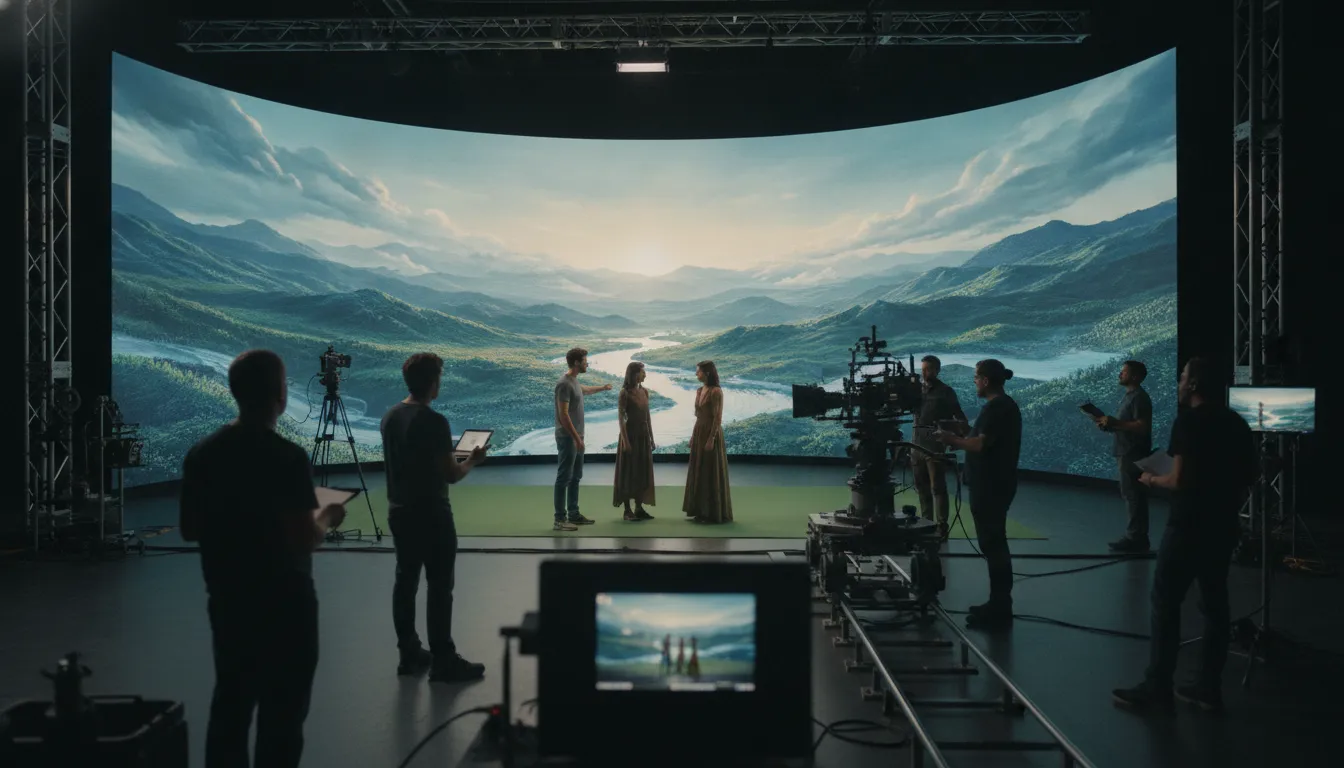
For film and television, real-time visualization can bring creative and technical decisions closer together. In-camera visual effects, LED volumes, Unreal Engine environments, and real-time rendering are among the capabilities associated with Narwhal Studios, Arctic7's virtual-production entity. Its cinematic storytelling expertise illustrates how these tools can support a production workflow, rather than functioning as isolated visual effects features.
Virtual production is not a universal answer. A project may benefit from an LED volume, while another may need previsualization, conventional location work, or a hybrid approach. The decision should follow the creative brief, physical requirements, asset maturity, and delivery plan. Arctic7's virtual production capabilities sit within that broader evaluation: technology serves the world being built, not the other way around.
Right-size the production pipeline
It is also important to distinguish IP production from event-production logistics. Event providers may focus on staging, lighting, audio, video, LED walls, and rigging for a live occasion. Those capabilities can be valuable in the right context, but cross-platform entertainment production additionally requires engine workflows, narrative alignment, asset governance, iteration, and continuity across releases.
The strongest technical plan therefore begins with the intended audience experience and works backward. It defines which assets must travel between formats, where real-time tools create genuine value, and which systems need long-term support. That approach keeps the technology proportionate to the IP while giving creative and production leaders a common framework for making decisions.
Delivery Turns a Roadmap Into Coordinated Releases
Delivery is where a transmedia strategy becomes a sequence of usable, coordinated releases. It connects platform-specific deliverables to synchronized timelines, governs shared assets and versions, and keeps creative intent visible as work moves through production. The goal is not to make every format identical, but to make each extension feel deliberate, compatible, and connected.
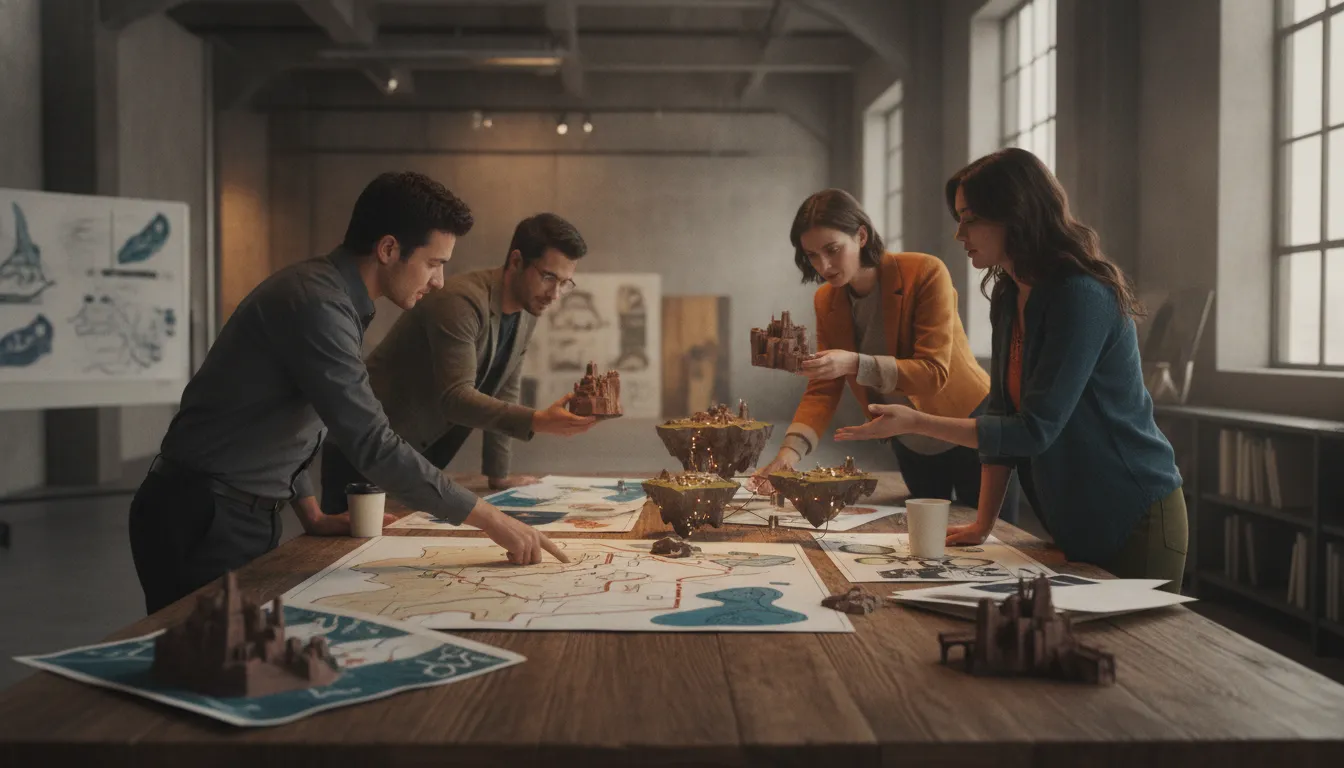
A roadmap should define what each platform needs and when those materials must be ready. A game may require systems, builds, tools, and ongoing content plans. A film or television production may need scripts, lookbooks, environments, and production-ready visual references. XR or immersive work may introduce another set of technical and experiential requirements. Arctic7 describes this stage as platform-specific production, asset development, creative alignment, and rapid iteration across games, film, television, and XR. Its integrated transmedia services are structured around that wider delivery model.
Coordination becomes especially important when the same world is represented in several formats. Teams need a shared understanding of approved characters, environments, narrative rules, technical specifications, and current asset versions. Without that governance, a late change in one production can create avoidable inconsistencies elsewhere. A disciplined workflow records dependencies, clarifies ownership, and gives creative and technical leads a common basis for review.
Plan for the life of the release
Delivery should also extend beyond launch day. In game development, post-launch content planning can shape how a world continues to evolve after the initial release. That planning is most effective when it begins alongside production rather than being treated as an afterthought. Tooling and production pipelines support iteration, while the roadmap keeps additions aligned with the broader IP and with the capabilities of the target platform.
This is also where it helps to distinguish creative production from production finance and production management. Companies such as Entertainment Partners describe production finance and management as operational functions involving areas such as finance, studio production management, enterprise systems, and insight solutions. Those functions can be essential to a project, but they do not replace the creative and technical work of developing worlds, assets, systems, performances, or interactive experiences. A complete delivery model makes the relationship between these disciplines explicit.
For IP holders, the practical test is whether the release plan makes collaboration easier without flattening the distinct strengths of each medium. Reviewing Arctic7's entertainment production portfolio provides a useful view of how an integrated partner can connect creative development, technical execution, and coordinated delivery across an expanding ecosystem.
How Does an Integrated Partner Reduce Cross-Platform Friction?
An integrated partner reduces cross-platform friction by connecting creative decisions, technical workflows, and production responsibilities before each medium moves into execution. Instead of treating a game, film, series, immersive experience, or digital service as an isolated commission. The partner coordinates the shared IP logic while adapting deliverables to each platform's requirements.
That coordination matters because friction often begins between teams, not inside a single production. A game team may interpret the world differently from a film team. A virtual-production workflow may create assets that are difficult to adapt elsewhere. A digital experience may be planned after the core creative decisions are already fixed. An integrated model creates shared reference points for narrative, systems, assets, and technical requirements, so each discipline can contribute without losing sight of the wider ecosystem.
Arctic7 describes its model as combining AAA game development, film and television production, immersive experiences, and digital services. Its interactive entertainment partner perspective is useful here: the goal is not simply to place the same content on several platforms. But to connect IP adaptation, ecosystem design, production strategy, audience experience, and technical execution.
Flexible engagement for different production needs
Integration does not require every client to outsource an entire slate. Arctic7 offers full-scale development, co-development, and specialized engagements. A full-scale engagement may cover a complete production responsibility. Co-development can add capability to an existing studio or internal team while preserving established ownership and workflows. A specialist engagement can focus on a defined need, such as a narrative workshop, system design, monetization strategy, or technical pipeline development.
This flexibility allows the production model to match the IP's stage and the client's capabilities. The shared objective is a clearer handoff between disciplines, with the right people involved early enough to identify dependencies and resolve ambiguity before it becomes rework. It also makes room for specialist expertise without turning every project into a one-size-fits-all technology program.
More than event production
Narrow event production typically focuses on the live environment and its immediate technical requirements, such as staging, lighting, audio, video, LED walls, or rigging. Those services are valuable when the brief is an event. Cross-platform IP development has a different center of gravity. It must preserve a world, narrative spine, character logic, audience experience, and production pipeline across multiple forms of entertainment.
That is the distinction between an event supplier and an integrated partner for entertainment production services. The latter can connect strategic planning with creative development, platform-specific production, and technical delivery. To explore how those capabilities fit together, review Arctic7's integrated transmedia services and assess which combination of full-scale development, co-development, or specialist support fits the next stage of your IP.
Frequently Asked Questions
What do entertainment production services include for a growing IP?
They can span the full path from IP readiness and narrative development to platform-specific production, asset creation, technical pipelines, and coordinated delivery. The right mix depends on the franchise, audience, and formats involved. A cross-platform program may include games, film, television, immersive experiences, or selected specialist capabilities rather than every service at once.
How do you protect a story world across games, film, and television?
Start with a shared narrative spine, clear creative frameworks, and agreed guardrails for canon, tone, characters, and worldbuilding. Narrative workshops, IP audits, and stakeholder alignment help teams distinguish what must remain consistent from what each medium can develop independently. This approach supports expansion without making every project feel like a simple copy.
When should technical production planning begin?
Technical planning should begin while the creative and production blueprint are taking shape, not after the story is locked. Early decisions can clarify engines, tooling, visualization, virtual production, asset requirements, and handoffs between teams. Unreal or Unity support, production pipelines, and real-time workflows may be appropriate when they serve the project's specific creative and delivery needs.
Can an IP holder use a specialist engagement instead of full development?
Yes. An IP holder may choose full-scale development, co-development, or a focused engagement such as a narrative workshop, system-design sprint, monetization strategy, or technical pipeline project. A modular approach can address a defined production need while preserving a broader strategic view of how the property may expand across platforms.
Ready to Expand Your IP Across Platforms?
Entertainment production services work best when strategy, creative development, and technical execution support the same larger world. If you are evaluating the next stage of an IP across games, film, television, or immersive experiences, a coordinated production approach can help clarify the right capabilities and priorities.
New Immersive & XR Media Capabilities Added to Arctic7's Suite of Games, Film & TV and Digital Services

Arctic7 Shares Details of its Work on Skeleton Crew and Cinematics Partnership with Fateless

The Human Touch: Adding Personality to Project and Product Management
Whether it’s your team, your client, or your stakeholders, understanding the human dynamics is just as critical as hitting milestones.

McDonald's Case Study: Bridging Brand and Play | Arctic7
Bridging Brand and Play: An Interview with Lindsay Blenkhorn Daggitt


