


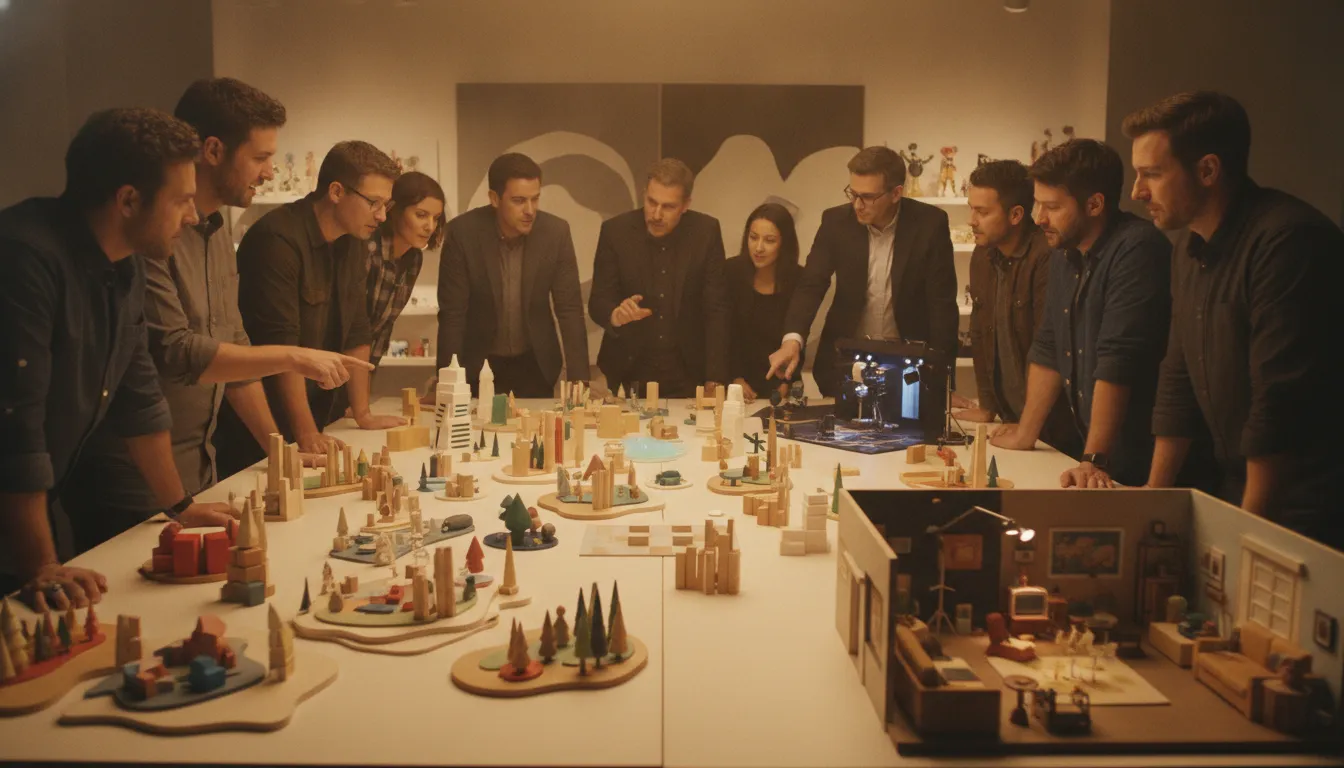

Entertainment IP Strategy: Build a World
Expanding an entertainment property is not a matter of choosing every available format. It is a portfolio decision: which audience experience should come next, what job should it perform, and what evidence justifies the next investment?
An entertainment IP strategy turns creative ambition into a sequence of accountable choices across games, film, television, and other formats. It defines each format's role, tests the property's readiness, maps dependencies, and sets clear evidence-based points to proceed, revise, or stop.
The strongest approach protects the property's core promise while giving each medium room to do what it does best. That requires more than a release list. It requires a shared view of the world, the audience action each initiative should create, and the conditions that make expansion responsible. Start by clarifying the decisions the portfolio must resolve.
Explore Arctic7's virtual production capabilities
What Does an Entertainment IP Strategy Need to Decide?
An entertainment IP strategy is an executive portfolio decision about where a property should expand, what each format should contribute, and which initiatives deserve investment first. It connects creative purpose with audience opportunity, rights readiness, production dependencies, risk, and governance. The goal is not maximum output. It is a coherent sequence of experiences that earns its place in the larger world.
The distinction matters when a property could support a film, series, game, immersive experience, or supporting digital work. A platform list says where content might appear. A strategy explains why a particular format is the right vehicle, what it must accomplish. What evidence is needed before progressing, and what the organization should not pursue yet. That discipline protects the property's identity while giving each medium room to use its own strengths.
An MIT thesis on transmedia production describes coordination across film, home video, gaming, merchandising, and new media. It also connects transmedia management with risk and brand management as production and marketing costs rise. Those observations make the executive question more precise: how should resources, creative attention, and operational capacity be allocated across a connected portfolio? The MIT research outlines this portfolio and management context.
That decision includes several linked tests:
- Strategic role: What does this initiative add to the world or audience relationship that another format cannot?
- Readiness: Are the core promise, creative guardrails, rights position, and production assumptions sufficiently clear?
- Sequence: Which work should establish the world, generate useful learning, or unlock a later initiative?
- Governance: Who owns the decision, approves changes, and protects coherence across teams?
The MIT source also identifies management approaches spanning production, marketing, social networks, product placement, and lifecycle management. In practice, that means the strategy must continue beyond the initial greenlight. It should define how the portfolio will be reviewed as audience response, production realities, and the property itself develop.
For IP holders that need to align creative ambition with technical execution, Arctic7's cross-format services bring strategy development, creative work, and production capabilities into the same planning conversation. The value of that integration is not a promise of a particular outcome. It is a clearer basis for deciding what to build, when to build it, and what evidence should change the plan.
Start With the Property's Core Promise and Rights Position
Readiness is a portfolio filter, not a legal tutorial. Before an IP earns investment in a new format, the team should be able to explain its core promise, world rules, story engine, creative guardrails, and rights position. That evidence helps leaders distinguish a property with meaningful expansion potential from a collection of attractive but disconnected ideas.
Begin with the promise audiences should recognize wherever they encounter the property. What emotional or imaginative experience sits at its center? Then document the world rules: what is possible, what is forbidden, and what consequences follow. A durable story engine should generate new conflicts, choices, relationships, or mysteries without forcing every format to retell the same plot.
Creative guardrails protect the property's identity while leaving room for medium-specific interpretation. Define non-negotiable themes, tonal boundaries, continuity principles, and approval responsibilities. Separately identify the areas where a game, film, series, or immersive experience can make its own creative choices. This distinction gives each format a job without turning the shared world into a rigid compliance exercise.

The rights inventory should be equally practical. Record who controls the relevant underlying works, characters, marks, likenesses, adaptations, territories, and channels. Note what is documented, licensed, restricted, or unresolved. A SEC-filed franchise agreement offers a useful illustration of why this matters: its definition of animated entertainment spans hardware. Software, artistic designs, scripts, musical scores, staging, and lighting, while its system also includes rides, amusement games, and other attractions. The agreement further states that using marks or system elements in another channel without express written authorization constitutes infringement under its terms. That is one contract example, not universal legal advice, but it demonstrates how broad a channel inventory can become. Read the SEC-filed agreement and have qualified counsel assess the agreements that govern your property.
Arctic7's documented method moves from workshops and narrative audits, to a unified strategy with deliverables and workflows, and then to platform-specific production. That sequence makes readiness visible before teams commit to a format. For the execution implications, review the virtual production workflow as one example of how creative intent and production requirements meet.
How Should Leaders Prioritize Formats and Investment?
Leaders should rank formats by the job they perform, the audience action they invite, and the evidence that the team can deliver them well. Score strategic value alongside readiness, dependencies, and learning potential. Then set a clear stop, revise, or go test before a promising idea becomes an unfunded collection of commitments.
A practical scorecard keeps portfolio decisions from becoming popularity contests. It also reflects the reality that film, television, games, immersive work, and companion media create different kinds of value. The goal is not to make every format. It is to choose the next format whose contribution is distinctive, timely, and supportable.
| Format | Audience job | Strategic value | Readiness evidence | Key dependency | Stop or go test |
|---|---|---|---|---|---|
| Film or television | Watch, empathize, and enter the world through a focused dramatic spine. | Establishes character, tone, stakes, and a widely legible entry point. | Strong premise, viable narrative arc, aligned creative leadership, and production plan. | Script, talent, schedule, rights, and downstream canon decisions. | Go when the central experience is clear. Stop when expansion is carrying unresolved world logic. |
| Game | Play, choose, master systems, and return to the world. | Turns world rules into agency and can reveal whether the IP supports meaningful participation. | Testable systems, interaction model, prototype evidence, and a team able to sustain development. | Core mechanics, narrative flexibility, technology, live operations, and post-launch ownership. | Go when interaction is stronger than retelling. Revise when the game is only a branded adaptation. |
| Immersive or digital | Explore, participate, connect, and experience presence. | Creates discovery and community layers around the central world. | Clear audience journey, technical proof, access plan, and operational owner. | Platform capability, assets, moderation, accessibility, and ongoing maintenance. | Go when presence adds meaning. Stop when novelty is doing all the strategic work. |
| Companion media | Deepen context, perspective, history, or conversation at a different pace. | Supports discovery and retention without asking one flagship format to carry every story. | Specific editorial role, sustainable cadence, and clear canon boundaries. | Editorial ownership, approvals, localization, and audience navigation. | Go when it adds useful context. Pause when it repeats the flagship experience. |
Assign each candidate a simple rating for strategic value, readiness, dependency exposure, and learning value. The scoring method should make assumptions visible, not disguise judgment as precision. IP.com describes a 14-factor portfolio framework benchmarked against comparable patents; that is useful only as a bounded analogy for disciplined criteria, not as entertainment evidence.
For interactive initiatives, connect the scorecard to Arctic7's game development capabilities early enough to test systems and narrative together. For cinematic or mixed-reality work, review the virtual production workflow as part of technical readiness. A format earns investment when its audience job, evidence, dependencies, and next decision are all explicit.
Which Evidence Should Move an Entertainment IP Strategy Through Its Gates?
Advance an entertainment IP strategy when the next investment is supported by evidence, not enthusiasm. A useful gate asks what is sufficiently known, what remains untested, who owns the decision, and what a limited commitment would teach the team. The answer can be go, revise, or pause.
Rights gate: can the team develop this direction with authority?
Start with a rights register that identifies the property elements, territories, formats, approvals, restrictions, and unresolved questions relevant to the proposed work. The evidence is not a legal conclusion. It is a shared planning record that tells creative and production teams which assumptions are safe to use and which require qualified counsel. The MIT thesis treats intellectual-property rights management as part of transmedia narrative analysis, reinforcing that rights diligence belongs inside strategy rather than after creative decisions are made (MIT thesis). Go when authority and constraints are clear. Revise when a permission or approval path is defined but incomplete. Pause when the proposed investment depends on rights the team cannot presently verify.
World gate: can the property generate more than one meaningful experience?
Bring an inspectable creative pack: the core promise, world rules, character motivations, story engine, non-negotiable guardrails, and open areas for medium-specific interpretation. A narrative audit should show what another team can develop without weakening the identity of the original property. Go when the world supports a distinct next experience. Revise when the promise is strong but rules or expansion logic are vague. Pause when the format is being asked to compensate for a world that is not yet defined.
Format gate: does the proposed medium earn investment?
Document the format's job, audience action, narrative contribution, dependencies, and learning value. A game should offer more than a plot translated into mechanics, while a film or series should not be burdened with work better suited to interactive discovery. Score the proposal against alternatives, then specify the smallest credible test. Go when the format adds a distinct experience and produces useful evidence. Revise when its role overlaps another initiative. Pause when the rationale is only platform pressure.
Production gate: can partners execute the next decision?
Convert the approved direction into a scope, ownership map, dependency plan, review cadence, risk register, and tangible sample. A prototype, scene, playable slice, or concept reel exposes gaps earlier than a full commitment. The virtual production pipeline offers a useful reference for making technical and creative dependencies visible. Go when teams share the guardrails and can name the next deliverable. Revise when capability or sequencing needs work. Pause when unresolved dependencies would turn scale into avoidable rework.
Build Governance That Protects the World Without Stalling It
Governance keeps a multi-format entertainment IP strategy coherent while giving creative teams room to work. It should clarify decision rights, separate canon from flexible interpretation, expose dependencies, record changes, and create a predictable review cadence. The goal is not to add approvals for their own sake. It is to make important decisions visible early enough to improve them.
Start with a practical decision-rights map. Name the owner for the core world and canon, the lead for each format, the person responsible for rights questions, and the final escalation point when teams disagree. A game team may own systems and player experience, while a film team owns performance and dramatic pacing. Those responsibilities can differ without creating competing versions of the property.
Make canon usable, not rigid
A living canon document should identify non-negotiable history, character motivations, world rules, terminology, and unresolved questions. Alongside it, label areas open to interpretation. This distinction helps teams understand whether a proposed change preserves the world, deliberately expands it, or requires a wider continuity decision.
Rights scope belongs in the same early conversation, with qualified counsel handling legal interpretation. A SEC-filed franchise agreement offers a bounded operational example: its defined system includes entertainment elements as well as operating procedures. Training, reporting, and promotional programs, while rights not expressly granted remain with the franchisor. That is not a universal rule. But it demonstrates why a rights inventory should state what is actually authorized rather than assume that a world can move freely into every channel. Read the agreement's defined scope and retained-rights language.
Track dependencies and review change deliberately
Map dependencies between scripts, character designs, game systems, production assets, technical pipelines, release windows, and marketing claims. Maintain a change log and decision register beside versioned story documents. Each entry should record what changed, why, who approved it, and which downstream work must be revisited.
Use stage reviews at defined intervals, not only when a crisis appears. Ask what has changed, whether the audience journey still makes sense, and whether the next investment remains ready. This operating discipline supports creative enablement across strategy, production, and technical teams. It is also visible in Narwhal Studios, Arctic7's virtual-production entity and proof point for coordinated execution. Good governance protects the world by helping the right people make the right decisions at the right moment.
From Portfolio Strategy to Cross-Format Production
Once a portfolio choice is approved, the work shifts from deciding what to make to coordinating how it will be made. Arctic7's documented method moves from IP preparation, through a unified strategy and delivery system, to platform-specific production. This handoff keeps creative intent visible while giving each format clear owners, dependencies, and workflows.
The first stage is preparation. Workshops and narrative audits help teams identify what makes the world worth expanding, where its story engine has room to grow, and which elements must remain protected. This is more than a creative discovery exercise. It establishes the guardrails that allow a film, series, game, or immersive experience to interpret the property without weakening its identity. The output should make the core promise, audience experience, and non-negotiable creative principles understandable to every downstream team.
The second stage defines the operating system for the portfolio. Stakeholders align around a unified strategy, then translate it into deliverables, workflows, timelines, and decision rights. A production roadmap should show which assets are shared, which are format-specific, and where one team depends on another. It should also identify review points for story, design, technology, localization, and release readiness. A clear virtual production workflow can help make those handoffs concrete when physical and digital production must stay synchronized.
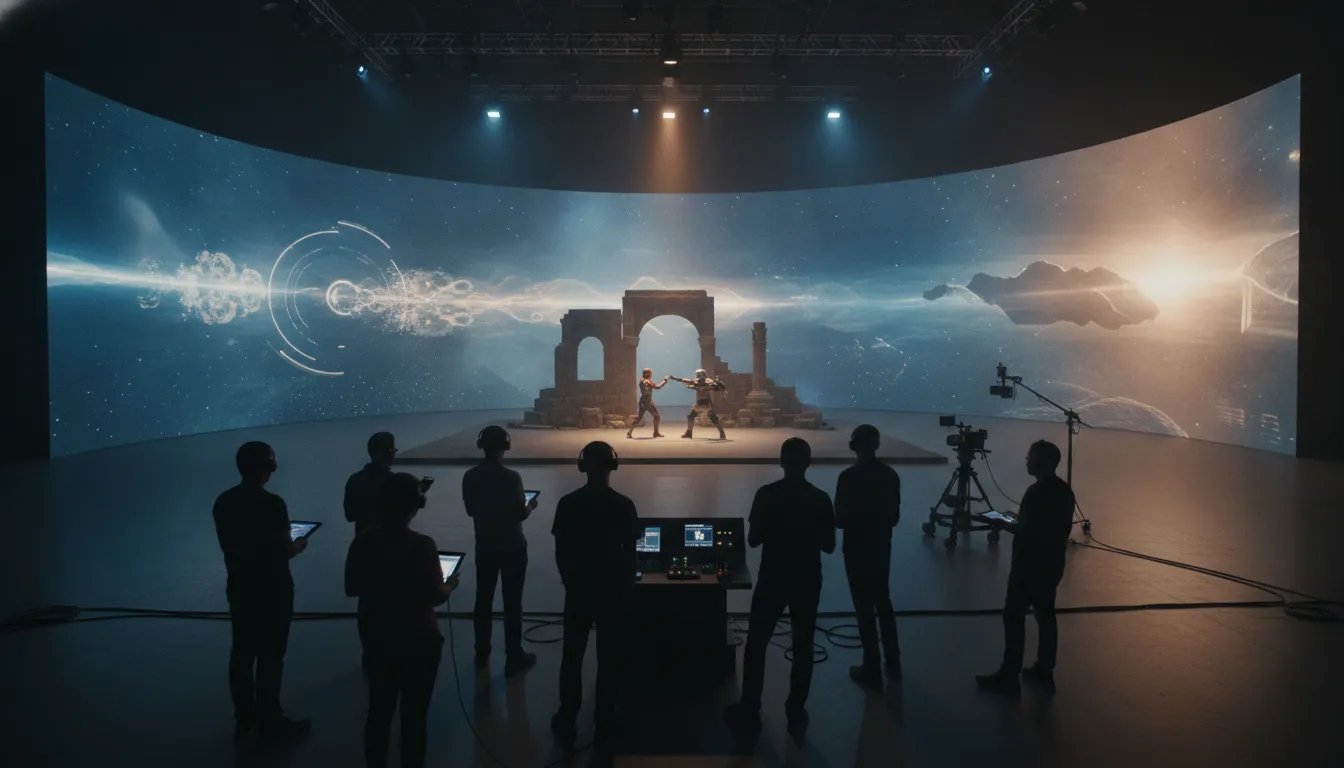
The third stage activates platform-specific production while maintaining creative alignment. The game team may need systems that support player agency and future content. Film and television teams may need a tightly controlled visual and narrative pipeline. Virtual production may introduce technical dependencies that affect environments, performance capture, previs, and editorial decisions. The shared strategy should define the interfaces between these disciplines without forcing every team into the same process.
That is why production planning should document both the creative handoff and the technical handoff. A virtual production pipeline can clarify how assets, approvals, and reviews move from development into execution. Teams can also compare virtual production for filmmaking with virtual production with Unreal Engine when the technical plan crosses departments. The same principle applies to game development, immersive work, and post-launch planning: each format receives a real production blueprint, while the portfolio retains one coherent creative direction.
Before work begins, confirm the named owner for each major decision, the dependencies that can stop progress, and the evidence required at the next review. This turns an approved entertainment IP strategy into coordinated action rather than a collection of parallel projects.
Frequently Asked Questions
What does IP mean in movies and television?
IP means intellectual property: the characters, settings, stories, concepts, designs, and other creative elements that can support entertainment works. A strong property can provide a shared foundation while each film, series, game, or immersive experience does a distinct job.
What does an entertainment IP strategy cover?
It covers the decisions behind a property's broader portfolio, including its core promise, world rules, rights position, audience purpose, format roles, investment sequence, dependencies, evidence requirements, and governance. The goal is a coherent plan for deciding what to develop, when to advance it, and what to pause.
When should an IP expand into another format?
Expand when the property has a clear creative promise, the proposed format has a specific job, required rights and capabilities are understood, and evidence supports the next investment. Expansion should create a meaningful new audience or experience, not simply reproduce the same story in another medium.
How do leaders choose the right format for an entertainment property?
Start with the intended audience action and the property's strategic need. Compare each format by its ability to express the idea, deepen the world, build learning, use available capabilities, and fit the dependency map. Then score readiness and define a clear stop, go, or revise decision.
What do stage gates test in an entertainment IP strategy?
Stage gates test whether the next investment is justified. A practical review can examine rights and permissions, world and creative readiness, format fit, production feasibility, ownership, dependencies, and the evidence gathered so far. Each gate should produce an explicit decision and a short list of conditions for advancement.
Ready to Explore Virtual Production?
A clear production path can help turn a prioritized entertainment IP strategy into coordinated work across formats. Explore how Arctic7 can support the technical and creative demands of connected entertainment worlds.
New Immersive & XR Media Capabilities Added to Arctic7's Suite of Games, Film & TV and Digital Services

Arctic7 Shares Details of its Work on Skeleton Crew and Cinematics Partnership with Fateless

The Human Touch: Adding Personality to Project and Product Management
Whether it’s your team, your client, or your stakeholders, understanding the human dynamics is just as critical as hitting milestones.

McDonald's Case Study: Bridging Brand and Play | Arctic7
Bridging Brand and Play: An Interview with Lindsay Blenkhorn Daggitt


