
How to Choose a Creative Production Partner for IP
Choosing a creative production partner is a strategic decision for any IP holder planning to move beyond a single release. The right team must connect the world, the audience, and the production reality across games, film, television, and immersive formats. A polished reel matters, but it is only one part of the evidence.
Explore Arctic7's integrated production capabilities
What should a creative production partner actually own?
A creative production partner should help an IP holder move from ambition to an aligned production plan. That includes strategic interpretation, creative direction, technical planning, governance, and delivery. The partner does not replace the rights holder's authority. It creates the shared structure that lets every specialist make better decisions.
The distinction is important because multi-platform work creates more than a larger task list. Each format has its own audience behavior, production language, technical constraints, and release rhythm. A game cannot simply be treated as an interactive version of a film, and a television extension cannot be reduced to marketing support. The partner must protect what makes the IP recognizable while allowing each expression to feel native.
Before reviewing vendors, define the decision you are making. Are you looking for a strategy-led partner to shape an expansion roadmap? A full-scale team to take ownership from concept through delivery? A co-development partner that integrates with an existing studio? Or a specialist for one production stage? The best evaluation criteria depend on that answer.
Start with strategic alignment, not a showreel
Strategic alignment means the partner can explain why a new format belongs in the IP, which audience it serves, and how it advances the wider ecosystem. It is the difference between adding another asset and designing a meaningful extension. The conversation should begin with the world and the audience, not only the execution brief.
Ask prospective partners to respond to the same short brief. Give them the IP premise, the current audience, the intended format mix, known constraints, and the decision you need to make. Then compare how they frame the opportunity. Strong partners will ask about canon, audience roles, platform behavior, rights, timing, and the relationship between each planned experience.
Look for a clear point of view on questions such as:
- What should remain consistent across every expression of the IP?
- Where should the game, film, series, or immersive experience develop its own identity?
- Which audience need does each format serve?
- What should be tested before the production plan becomes expensive to change?
- How will creative decisions be recorded and communicated across teams?
Arctic7 describes this type of work through a sequence that moves from making an IP transmedia ready, to defining the strategy, to activating a production blueprint. That model is useful as an evaluation lens because it separates discovery from execution without treating them as unrelated phases.
Evaluate creative range by the decisions it can connect
Creative range is not a long list of disciplines. It is the ability to connect story, worldbuilding, visual language, interaction, performance, and audience experience without losing the central idea. A partner with useful range can move between formats while understanding what must change, what must remain, and why.
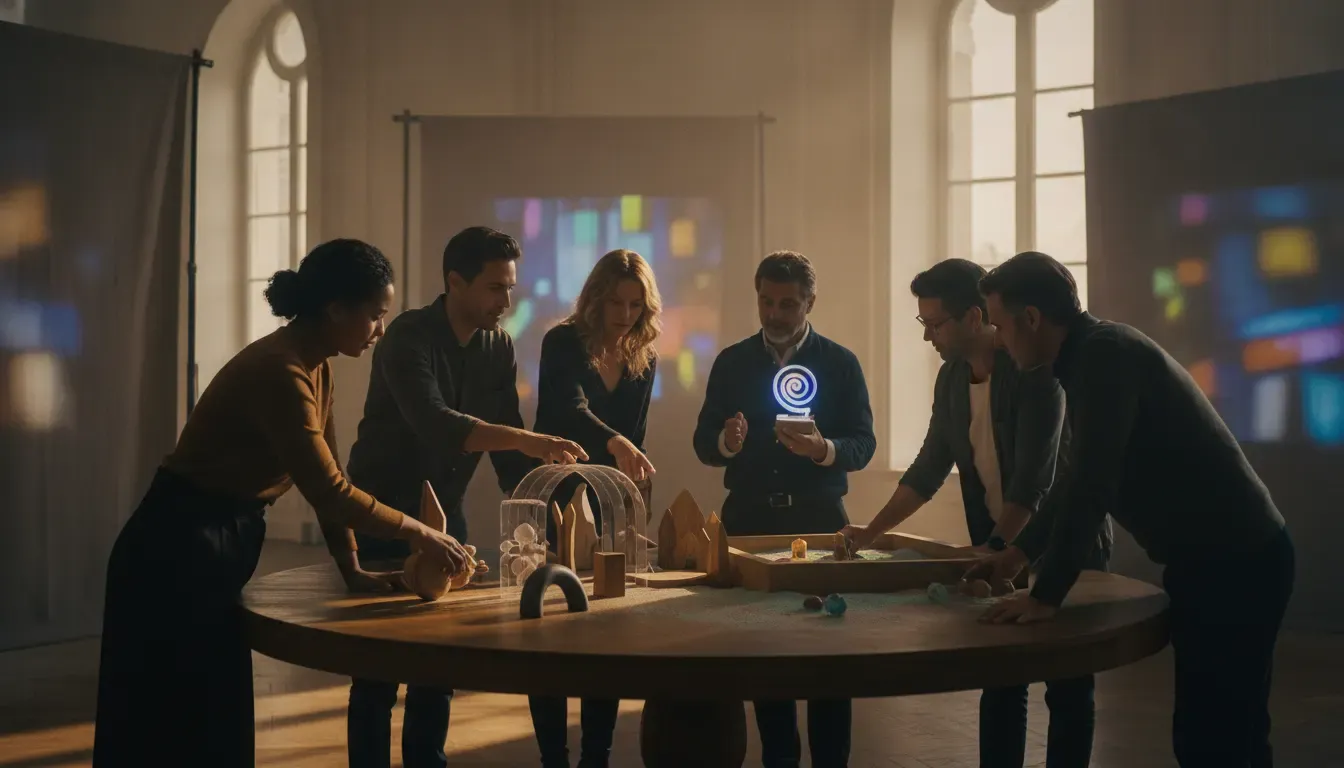
Review work at the level of decisions, not just finished images. Ask who set the narrative direction, how the visual system was established, what changed during production, and how the team handled competing stakeholder feedback. A strong presentation should reveal thinking, trade-offs, and the relationship between the original brief and the delivered work.
For an IP holder, useful creative capabilities may include narrative development, worldbuilding, lookbooks, tone decks, game systems, cinematics, virtual production planning, immersive design, and content operations. Not every partner needs to perform all of these services directly. The question is whether the partner can lead the connective tissue and bring in the right specialists without creating a new silo for every format.
Arctic7's services overview frames games, film and television, immersive work, and digital tools as connected capabilities. Its cinematic storytelling guide also describes the role of a shared visual system that can travel across formats while remaining native to each medium.
How do you compare partners across games, film, television, and immersive formats?
Compare partners against the same cross-format criteria, then test the criteria with a brief that exposes handoffs. Examine strategic thinking, creative leadership, production governance, technical depth, collaboration model, and delivery evidence. The goal is not to find the largest provider. It is to find the team that can keep the system coherent.
| Evaluation area | Question to ask | Evidence to request |
|---|---|---|
| Strategic alignment | Can the team define the role of each format? | Expansion thesis, audience map, and decision principles |
| Creative range | Can the team protect the IP while adapting it? | Comparable work, treatments, and rationale behind choices |
| Technical depth | Can the proposed pipeline support the creative goal? | Pipeline map, asset plan, tools, and delivery requirements |
| Governance | Who owns decisions when priorities conflict? | Roles, review gates, escalation path, and change process |
| Delivery proof | Has the team managed comparable complexity? | Milestones, handoffs, risks, and references relevant to the brief |
This approach prevents a common buying error: comparing one team's reel with another team's staffing chart and a third team's technology list. Those artifacts are useful, but they answer different questions. A scorecard makes the trade-offs visible and gives the buying committee a shared language for discussion.
Test technical depth where creative ambition meets production reality
Technical depth should make creative ambition more achievable, not turn the evaluation into a contest of tools. Ask how the partner translates a creative objective into real-time workflows, asset standards, version control, performance targets, approvals, and final delivery. The answer should connect technology to a specific creative or production decision.
For a game, that may include engine expertise, platform requirements, branching strategy, performance, build integration, and post-launch content planning. For film and television, it may include virtual art department work, previs, photogrammetry, virtual scouting, ICVFX, and the handoff between real-time and traditional VFX. For immersive work, it may include spatial interaction, device constraints, comfort, and environmental storytelling.
Request a simplified pipeline walkthrough. It should show where assets originate, who reviews them, how changes are tracked, and what happens when an asset needs to serve more than one format. If a proposed partner cannot explain those interfaces in plain language, the technical risk may surface later as duplicated work, approval delays, or a loss of creative continuity.
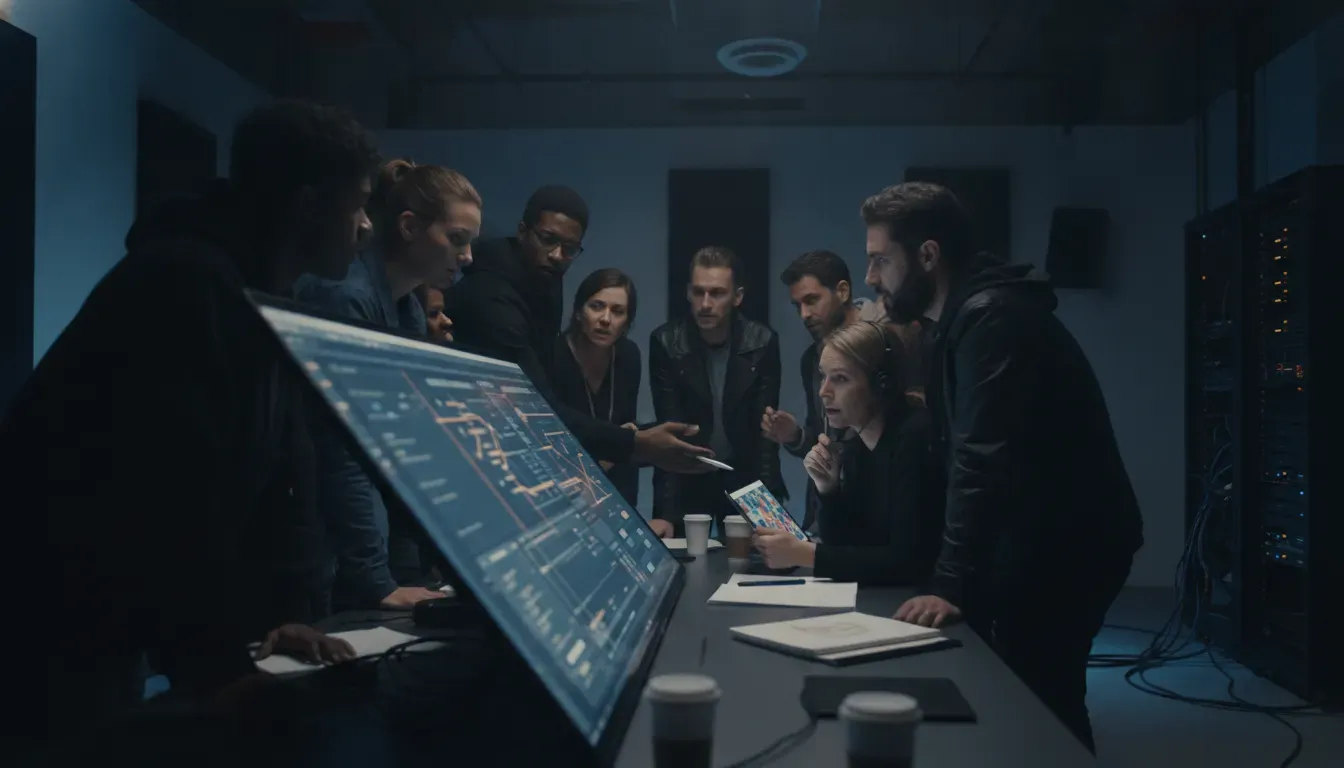
Arctic7's virtual production capability, led by Narwhal Studios, presents discovery, virtual art department, visualization, final pixel, and ICVFX as connected stages. That is the kind of end-to-end explanation a buyer should seek, whether the project uses those exact methods or a different production stack.
See how Arctic7 connects strategy, creative execution, and technical production
Make production governance part of the creative evaluation
Production governance is the operating system behind a good creative relationship. It defines who decides, how feedback is consolidated, when risks are escalated, and which changes require approval. In multi-platform work, governance protects the creative spine because every format can otherwise optimize for a different local priority.
During diligence, ask to see a sample responsibility matrix, review calendar, milestone plan, and risk or decision log. The documents do not need to be complex. They need to show that the partner understands how work moves between creative leadership, production, technology, rights holders, and platform teams.
Pay close attention to the response when you introduce an uncomfortable scenario. What happens if the game schedule moves ahead of the series? What happens if a character design works in a cinematic but fails in an interactive environment? What happens if an important stakeholder joins the approval chain late? A mature partner will describe the decision path rather than promise that conflict will never occur.
The engagement model should also be explicit. Arctic7's business context describes full-scale development, co-development, and specialized service engagements. Those models imply different expectations for ownership, integration, staffing, and decision rights. Put the selected model in writing before work begins.
What evidence should an IP holder request before selecting a partner?
Request evidence that shows how the partner works, not only what the finished work looks like. Useful evidence includes comparable briefs, treatments, pipeline maps, milestone plans, delivery checklists, risk registers, approval examples, and references from projects with similar format complexity. Evidence should be specific enough to test against your own needs.
Portfolios are still valuable, but ask what each example proves. A recognizable title may show access to a major franchise, yet it may not show the scope of the partner's contribution. A visually impressive sequence may prove craft, yet not governance or cross-platform thinking. Ask who owned the work, which disciplines were involved, what the team delivered, and how the partner collaborated with the rights holder.
Arctic7's projects portfolio presents work across AAA co-development, engineering, real-time pipelines, and virtual art department work. The relevant question for a buyer is not whether a portfolio resembles the next project perfectly. It is whether the examples reveal transferable ways of solving problems across creative and technical boundaries.
How should an IP holder run the final selection?
The final selection should combine a structured brief response, a working session, evidence review, and a clear decision record. This process tests both the partner's output and the quality of the relationship. It also gives the IP holder a fair comparison before committing to a long production cycle.
- Define the brief. State the IP objective, target audiences, formats, constraints, decision-makers, and expected next milestone.
- Ask for the same response. Require each candidate to explain the opportunity, assumptions, proposed workstreams, and major risks.
- Run a working session. Give the team a realistic trade-off, such as adapting a world element across a game and a screen-based format.
- Inspect the interfaces. Review how strategy, creative, production, technology, rights, and approvals connect.
- Score the evidence. Use the same criteria for every candidate and record where proof is strong, partial, or missing.
- Confirm the operating model. Document ownership, review gates, escalation, staffing assumptions, and the definition of a successful next phase.
The best choice is not always the partner with the broadest capability list. It is the partner whose way of thinking matches the IP's ambition, whose working model fits the rights holder's organization, and whose evidence supports confidence in the next decision.
For game-focused evaluation, Arctic7's game development and co-development services provide a useful reference point for assessing full-cycle and integrated support. For the broader transmedia context, the transmedia production company guide explains how a central narrative can connect work across formats without treating every expression as the same product.
Talk with Arctic7 about building a connected production path for your IP
Frequently asked questions
What is a creative production partner?
A creative production partner combines strategic, creative, technical, and production support to help an organization turn an IP objective into finished work. For multi-platform entertainment, the partner also helps coordinate the relationship between games, film, television, immersive experiences, and the wider audience journey.
How is a partner different from a production vendor?
A vendor is often commissioned to deliver a defined scope. A partner may contribute earlier, helping clarify the objective, shape the approach, manage dependencies, and guide decisions through delivery. The distinction is not a guarantee of quality. It is a question of scope, ownership, integration, and decision rights.
Should one partner handle every format?
Not always. One integrated partner can reduce coordination friction, but the right model depends on the IP, internal capabilities, schedule, and required specialties. The important question is who owns the connective strategy and how the partner coordinates specialist teams when more than one provider is involved.
What should an IP holder ask in the first meeting?
Ask how the team understands the IP, which audience and platform assumptions it would test, what it would need to learn before proposing production, how decisions would be owned, and what evidence supports its approach. The quality of the questions is often as informative as the quality of the pitch.
What is the first step in choosing a creative production partner?
Write a short decision brief before contacting candidates. Define the IP opportunity, formats under consideration, audience, non-negotiable creative principles, known constraints, and the next decision you need to make. Then ask each partner to respond to the same brief so the comparison is meaningful.
New Immersive & XR Media Capabilities Added to Arctic7's Suite of Games, Film & TV and Digital Services

Arctic7 Shares Details of its Work on Skeleton Crew and Cinematics Partnership with Fateless

The Human Touch: Adding Personality to Project and Product Management
Whether it’s your team, your client, or your stakeholders, understanding the human dynamics is just as critical as hitting milestones.

McDonald's Case Study: Bridging Brand and Play | Arctic7
Bridging Brand and Play: An Interview with Lindsay Blenkhorn Daggitt