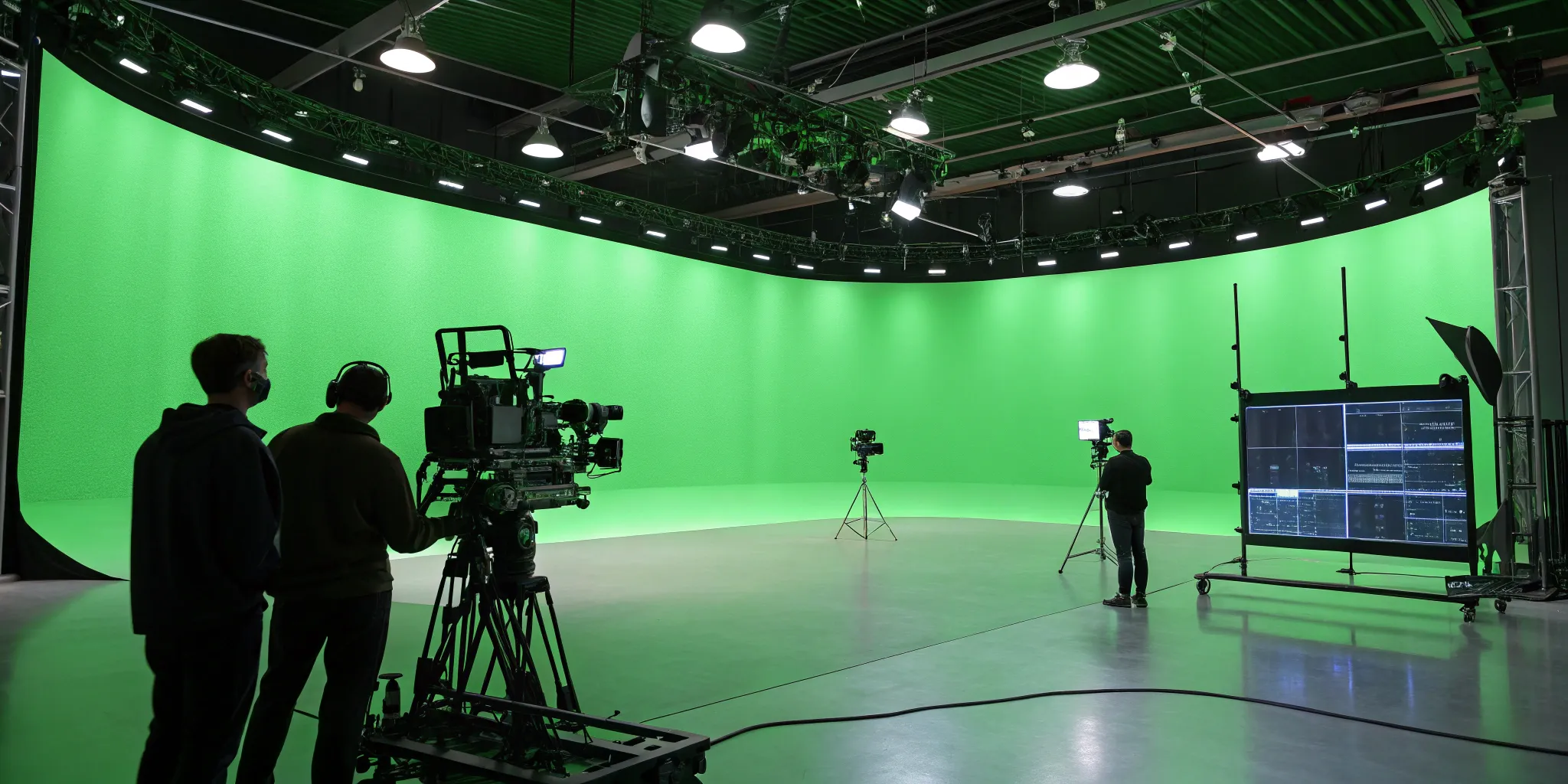

Virtual Production Studio: How It Works & Why It Matters
Your intellectual property is more than just a single story; it's an entire universe waiting to be explored across film, games, and interactive experiences. The challenge is building that universe in a way that feels cohesive and authentic on every platform. This is where virtual production becomes a foundational strategy. By creating your worlds as digital assets from the very beginning, you can ensure consistency and reuse them for different projects. A virtual production studio is the birthplace of these interconnected worlds, allowing you to craft a transmedia ecosystem that deepens fan engagement. Here, we’ll explore how this approach helps you expand your IP’s reach and build lasting value.
Key Takeaways
- Front-Load Your Creative Decisions: Virtual production shifts critical work to pre-production, allowing you to finalize environments, lighting, and camera angles before you shoot. This proactive approach leads to a more efficient filming process and fewer surprises down the line.
- Control Your Environment and Your Budget: By replacing physical locations with digital worlds, you gain complete command over your surroundings. This eliminates variables like weather and travel, resulting in more predictable timelines and smarter spending.
- The Right Partner is Your Greatest Asset: You don't need to build a studio to leverage this technology. Collaborating with an experienced virtual production partner gives you access to cutting-edge equipment and a skilled team, turning a complex technical process into a seamless creative one.
What Is a Virtual Production Studio?
Think of a virtual production studio as the place where the physical and digital worlds of filmmaking meet. It’s a high-tech soundstage that replaces traditional green screens with massive LED walls displaying photorealistic, 3D environments. This setup allows directors, actors, and the entire crew to see and interact with the final visual effects in real-time, right through the camera lens. Instead of imagining a fantasy world or a distant planet, they are fully immersed in it. This approach fundamentally changes the creative process, moving key decisions from post-production into the live-action shoot, which gives creators more control and flexibility on set.
Virtual Production vs. Traditional Filming
Traditional filming often involves significant logistical hurdles. You might spend a fortune building elaborate physical sets or flying your entire crew to a remote location, only to be delayed by bad weather. These high costs and unpredictable variables can put a strain on any budget and timeline. Virtual production offers a powerful alternative. By creating immersive digital environments on an LED stage, you can film a desert scene in the morning and a futuristic cityscape in the afternoon without ever leaving the studio. This method drastically reduces the need for physical set construction and travel, giving you complete control over your environment, from the lighting to the time of day.
The Core Tech Behind Virtual Production
The magic behind virtual production is powered by a combination of cutting-edge technologies. At its heart are powerful game engines, like Unreal Engine, which render complex, interactive 3D worlds in real-time. These digital scenes are displayed on massive, high-resolution LED walls that surround the set. Sophisticated camera tracking systems then sync the camera’s real-world movements with the virtual environment, creating a seamless illusion of depth and perspective. This integration of real-time graphics allows filmmakers to make creative adjustments on the fly, instantly seeing how a change in lighting or scenery will look in the final shot, fostering a more collaborative and adaptive filmmaking process.
How Does Virtual Production Technology Work?
Virtual production isn’t a single piece of technology but rather a sophisticated ecosystem where several key components work together. Think of it as the place where the physical world of filmmaking meets the digital power of game development, all happening live on set. This fusion of hardware and software allows creative teams to see their final shots, complete with visual effects, through the camera lens during the actual shoot. It’s a fundamental shift from the traditional "fix it in post" mentality to a more integrated and flexible production process where creative decisions can be made on the fly.
At its core, this workflow is driven by three main pillars: massive LED screens that display digital environments, advanced camera tracking systems that sync the real and virtual worlds, and powerful game engines that render everything in real time. When these elements are combined, they create a dynamic and immersive filming environment. This setup gives directors and cinematographers the ability to manipulate digital sets and lighting as if they were physical objects. The result is a more collaborative and efficient workflow that empowers creators to bring their most ambitious ideas to life with greater confidence and control from day one.
LED Walls and Real-Time Rendering
The most visible element of a virtual production studio is the massive LED wall, which replaces the traditional green screen. Instead of acting against a blank backdrop, performers are immersed in a dynamic digital environment displayed on high-resolution screens. The true innovation here is real-time rendering, which uses powerful graphics hardware to generate and display the virtual background instantly. This allows the environment to react to the camera’s every move, providing realistic, interactive lighting and reflections on actors and physical props. This creates a more believable scene from the start and gives performers a tangible world to engage with, leading to more authentic performances.
Camera Tracking and Motion Capture
To make the virtual environment on the LED wall believable, it must change perspective perfectly with the physical camera's movement. This is achieved through sophisticated camera tracking systems. Sensors attached to the camera constantly feed its precise position, orientation, and lens data into the game engine. The engine then adjusts the digital background in perfect sync, creating a seamless parallax effect that gives the scene a true sense of depth. This same principle applies to motion capture, which allows digital characters to be integrated and directed on set alongside live-action talent, further blurring the line between the real and the virtual.
The Role of Game Engines in Filmmaking
The brain behind the entire virtual production operation is the game engine. Software like Epic Games' Unreal Engine is used to build, manage, and render the digital worlds displayed on the LED walls. These powerful tools give filmmakers an incredible amount of creative control directly on set. Directors can collaborate with artists to change the time of day, move set elements, or adjust weather conditions with just a few clicks. This turns static pre-production assets into a live, interactive environment, allowing for real-time experimentation and decision-making that was previously only possible in post-production. It’s a workflow that empowers creators to achieve their vision with greater precision and immediacy.
What Are the Benefits of Virtual Production?
Virtual production is more than just a technological trend; it’s a strategic shift in how creative projects are brought to life. By merging the physical and digital worlds on set, it offers powerful advantages that streamline the entire production pipeline. For IP holders and studios, this means greater creative control, smarter use of resources, and a more collaborative environment for your team. Let's look at the key benefits that are making virtual production an essential tool for modern storytelling.
Gain Creative Flexibility in Real-Time
One of the most significant advantages of virtual production is the ability to make creative decisions on the fly. Thanks to advancements in real-time rendering technology and powerful game engines, what you see on the LED screen is what you get in the camera. This allows directors and cinematographers to experiment with lighting, camera angles, and environmental details instantly. If a shot isn’t working, you can change the time of day from noon to sunset with a few clicks instead of waiting for the perfect light or scheduling a reshoot. This immediate visual feedback empowers creators to refine their vision right on set, ensuring the final shot is perfect before you even call "cut."
Improve Cost Efficiency and Reduce Post-Production
Virtual production allows you to build expansive, photorealistic worlds without the massive costs of physical set construction or the logistical challenges of location shooting. You can film scenes in multiple "locations" in a single day, all from one studio. This approach saves a significant amount on travel, set building, and location permits. Furthermore, the process of capturing in-camera visual effects reduces the time and budget traditionally allocated to post-production. Instead of fixing it in post, you get it right on the day, leading to a more predictable budget and a faster path to the final product.
Enhance Collaboration Across Departments
Traditional filmmaking often involves siloed departments working on different stages of the project. Virtual production breaks down these walls, fostering a highly collaborative environment from the very beginning. On a virtual production set, the art department, VFX artists, cinematographers, and directors all work together in the same space, seeing the same final image in real-time. This shared perspective ensures everyone is aligned on the creative vision. Problems that might not have been discovered until post-production can be identified and solved on the spot, creating a more cohesive and efficient workflow for all of our transmedia projects.
Overcoming Common Virtual Production Challenges
Adopting any new technology comes with a learning curve, and virtual production is no exception. While the benefits are transformative, it’s smart to go in with a clear understanding of the potential hurdles. The good news is that these challenges are well-understood and entirely manageable with the right planning and expertise. For IP holders and studios, anticipating these issues is the first step toward a smooth and successful production.
The most common challenges fall into three main areas: finding talent with the right skills, handling the initial investment, and managing the technical complexity of integrating different systems. By addressing each of these head-on, you can build a workflow that harnesses the full power of virtual production without getting bogged down by the details. An experienced partner can guide you through these steps, turning potential obstacles into opportunities for innovation and efficiency.
Bridging Skill Gaps with Specialized Training
Virtual production creates a new intersection between filmmaking and real-time game development, which means it requires a new kind of creative technologist. Your traditional film crew may be masters of cinematography but new to Unreal Engine, while a game developer might not understand the pressures and protocols of a live-action set. This creates a skills gap that needs to be addressed. Finding individuals who are fluent in both worlds can be difficult, and effective training programs are still catching up to industry demand. The key is to build a blended team where different experts can collaborate effectively, or to partner with a studio that already has this talent in-house.
Managing Upfront Investment Costs
There’s no getting around it: the technology that powers a virtual production studio is a significant investment. High-resolution LED walls, real-time rendering hardware, and precision camera tracking systems all come with a hefty price tag. As one industry report notes, "an initial investment in the technology can be high." For many production companies and IP holders, building a dedicated stage isn't financially practical. This is why partnering with an established virtual production studio is often the most strategic approach. It gives you access to cutting-edge services and technology on a project-by-project basis, removing the burden of capital expenditure and ongoing maintenance.
Solving Technical Integration Complexities
A virtual production set is a complex ecosystem of interconnected hardware and software. Getting the LED volume, camera tracking, and game engine to work together in perfect harmony requires deep technical expertise. This new workflow requires the traditional crew to work closely with a "brain bar" of real-time artists and engineers to ensure virtual and physical assets are seamlessly integrated. Last-minute changes to lighting or environments need to be implemented instantly, which demands a robust and reliable pipeline. A partner with a proven track record, like the work Arctic7 did for Marvel Studios' Ant-Man and the Wasp: Quantumania, has already refined these workflows, ensuring all the technical pieces work together flawlessly.
Debunking Myths About Virtual Production
Virtual production is transforming how we create stories, but with any game-changing technology comes a bit of confusion. You’ve probably heard a lot of buzz about what it can and can’t do. While the benefits are significant, some common myths can create a skewed picture of the process. Let's clear the air and separate the facts from the fiction so you can understand how this technology really works and what it means for your project. By getting a handle on these realities, you can better plan your production and leverage the true power of this innovative approach to filmmaking and game development.
Myth: Virtual Production Eliminates Post-Production
This is one of the biggest misconceptions out there. The idea of capturing final-pixel shots in-camera is exciting, but it doesn't mean the post-production team can pack up and go home. Instead, virtual production redefines their role. It shifts a significant amount of work from fixing problems after the shoot to refining and enhancing the project. As one industry expert notes, while less fixing may be required in post, that time should be reallocated to other crucial tasks. Think of it less as an elimination and more as a strategic redistribution of effort, allowing your team to focus on creative polishing rather than tedious corrections.
Myth: Virtual Production Reduces VFX Jobs
It’s easy to assume that creating virtual worlds on set means less work for visual effects artists later on, but the reality is quite the opposite. The truth is that virtual production does not equate to a reduction of VFX jobs. Instead, it integrates VFX talent into the production process earlier and more deeply than ever before. Artists are essential in pre-production to build the real-time environments and assets. During the shoot, they are on set, making live adjustments to the digital world. This shift creates new roles and requires a different skillset, making VFX artists collaborative partners from day one, not just a clean-up crew at the end.
Myth: Virtual Production Limits Creative Control
Some creators worry that relying on pre-built digital environments will box them in creatively. However, virtual production actually offers an incredible amount of flexibility. Unlike a traditional location shoot where you’re at the mercy of weather and lighting, a virtual set gives you complete command. The technology allows for real-time changes to the environment, letting filmmakers make creative decisions on the fly. Want to move a mountain, change the time of day, or adjust the lighting for a perfect shot? You can do it in moments. This immediate feedback loop empowers directors and cinematographers to experiment and perfect their vision right on set, offering more control, not less.
A Look at Leading Virtual Production Studios
The virtual production landscape is growing fast, with studios of all sizes offering specialized services. From boutique firms focused on specific niches to large-scale operations handling blockbuster productions, there's a partner for every project. Understanding what different studios bring to the table can help you find the right fit for your creative and technical needs. Let's look at a few key players who are making waves in the industry.
Arctic7: Your Transmedia and Virtual Production Partner
When your goal is to build an entire world, not just a single film, you need a partner that thinks bigger. At Arctic7, we stand out with an innovative approach to virtual production, offering a range of services that blend real-time technology with classic filmmaking. We provide comprehensive support from the earliest pre-visualization stages all the way through final production, ensuring your vision comes to life exactly as you imagined. Our expertise in virtual and augmented reality helps create truly immersive stories that captivate audiences and extend your IP's reach across platforms. It’s about building an interconnected entertainment ecosystem, and we have the tools and team to make it happen.
Other Key Players in the Industry
Beyond Arctic7, several other studios are pushing the boundaries of what's possible. Dimension offers top-tier virtual production services for cinematic content, using advanced LED soundstages to immerse actors in digital worlds. For those focused on accessibility, 80six provides customizable LED stages designed to make this technology more affordable and sustainable. The industry's growth is also being fueled by education. The Virtual Production Lab at North Carolina State University, for example, is preparing the next generation of creators with hands-on training, ensuring a steady stream of talent ready to tackle these new workflows.
How to Choose the Right Virtual Production Partner
Finding the right virtual production partner is crucial for bringing your vision to life. This isn't just about renting a stage; it's about finding a team that can integrate seamlessly with your own, offering both the technical muscle and creative insight you need. The right partner acts as an extension of your crew, helping you make the most of this powerful technology. They should understand how to expand your world across different platforms, ensuring every element feels connected and authentic.
A great partner provides comprehensive services that cover everything from initial strategy to final execution. They’ll help you plan your shots, build your virtual assets, and run the on-set technology, all while keeping your creative goals front and center. Let's walk through the key factors to consider so you can make a confident choice for your next project.
Assess Technical Specs and Equipment
The quality of your final image depends heavily on the technology your partner uses. When you’re vetting studios, ask about the specifics of their LED walls. Look for features like 10-bit HDR color, which offers a much richer and more realistic image than the standard 8-bit. The size of the stage also matters; a space like an 11,743-square-foot studio gives you more room for ambitious camera moves and larger set pieces. You want a partner with a stage that is purpose-built for virtual production, as this ensures all the components—from the screens to the camera tracking systems—work together flawlessly.
Match Experience to Your Project's Scale
Every project is different, so you need a partner whose experience aligns with your goals. A studio that primarily shoots commercials may not be the right fit for a feature film or an episodic series. Look at a potential partner’s portfolio. Have they worked on projects of a similar scale and genre? For example, a team that contributed to a universe as expansive as Marvel's Ant-Man and The Wasp: Quantumania has proven experience with complex, VFX-heavy productions. This track record shows they can handle the creative and logistical demands of a large-scale project and deliver high-quality results under pressure.
Ensure Seamless Post-Production Integration
One of the biggest misconceptions about virtual production is that it eliminates the need for post-production. While it can significantly reduce the amount of "fix-it-in-post" work, post-production is still essential for final polishes, color grading, and enhancements. A good partner understands this and has a clear, established workflow for integrating on-set footage with the post-production pipeline. Ask them how they handle data management and asset handoffs. Their process should be designed to make the transition from production to post as smooth as possible, saving you time and preventing headaches down the line.
Evaluate Studio Size and Workflow
Beyond the physical size of the stage, you need to evaluate the studio's workflow and how their team operates. The best virtual production studios are more than just a collection of gear; they’re collaborative environments. The on-set crew, from the game engine operators to the virtual art department, needs to communicate effectively with your director and cinematographer. Look for a partner whose team is experienced and works as a cohesive unit. A smooth, efficient workflow on set is what allows you to iterate quickly and truly harness the creative power of virtual production.
How Much Does Virtual Production Cost?
Talking about the cost of virtual production is a bit like asking how much it costs to build a house—it depends entirely on the size, materials, and location. While there’s no one-size-fits-all price tag, understanding the key variables can help you budget effectively. The initial investment in technology and talent can seem high, but when you look at the big picture,
At Arctic7, we help our partners find the most effective path for their projects, ensuring the budget aligns with their creative vision. By focusing on a streamlined transmedia strategy, we can plan for asset reuse across platforms, which creates significant long-term value from the initial production investment.
Key Factors That Influence Price
The final cost of your virtual production project hinges on a few main factors. Project complexity is the biggest driver; a simple scene with a static background will cost far less than a dynamic, interactive environment with complex visual effects. The scale of the production also plays a major role, from the size of the LED volume to the number of shoot days required. Finally, the specific technology and the level of expertise needed will influence the price. While the initial setup requires a significant investment in hardware and skilled technicians, a life cycle assessment of virtual production shows that these upfront costs are often offset by long-term savings.
Comparing Costs to Traditional Methods
When you stack virtual production against traditional filming, the financial benefits become clear. Traditional shoots come with a long list of expenses: location scouting and fees, travel for cast and crew, set construction, and weather-related delays. Virtual production consolidates many of these costs into a single, controlled studio environment. You can shoot a desert scene in the morning and a futuristic cityscape in the afternoon without ever leaving the stage. This efficiency drastically reduces logistical overhead and post-production fixes. By creating digital environments, you can streamline the production process, saving both time and money while giving your creative team unprecedented control over the final shot.
Understanding Different Pricing Models
Virtual production studios offer various pricing structures to fit different project needs. Some provide all-inclusive packages for a flat rate, which is great for straightforward projects with a clear scope. Others charge a day rate for the stage and crew, with additional costs for asset creation and specific technical requirements. This à la carte model offers more flexibility for complex or evolving projects. As the technology becomes more widespread, these flexible pricing models are making virtual production more accessible than ever. The key is to find a partner who can tailor a solution to your specific budget and creative goals, ensuring you only pay for what you truly need.
Is Virtual Production Right for Your Project?
Deciding whether to use virtual production comes down to your project’s specific creative and logistical needs. While it offers incredible advantages, it’s not a one-size-fits-all solution. The key is to match the technology’s strengths—like real-time feedback, environmental control, and digital asset integration—with your story’s demands. If your project involves complex visual effects, fantastical settings, or requires a high degree of flexibility on set, virtual production could be the perfect fit. Let’s look at how it applies to different types of media.
Film and Television
For film and television, virtual production is a game-changer, especially for projects set in sci-fi, fantasy, or historical worlds. It allows crews to shoot in immersive, photorealistic environments without the cost and complexity of building massive physical sets or traveling to remote locations. Thanks to advancements in real-time rendering and powerful game engines, you can capture final-pixel shots in-camera, giving directors and actors immediate context for their scenes. This was instrumental in creating the expansive worlds seen in projects like Star Wars: Skeleton Crew. If your script calls for environments that are difficult, dangerous, or impossible to film traditionally, virtual production is an excellent choice.
Commercials and Advertising
In the fast-paced world of advertising, virtual production offers both creative freedom and practical efficiency. It allows brands to achieve cinematic brilliance and breathtaking photorealism without the logistical headaches of location shoots. Need to film a car on a winding mountain road at sunset and then in a bustling city at night, all in one day? A virtual production studio makes that possible. You can instantly swap out backgrounds, change lighting conditions, and even alter digital products on the fly. This level of control ensures your final ad perfectly matches your vision while saving valuable time and resources, making it a powerful tool for any brand looking to create high-impact cinematic content.
Interactive Experiences
If your goal is to create an interactive or transmedia experience, virtual production is practically essential. The technology is a natural bridge to virtual reality (VR) and augmented reality (AR), allowing you to build assets that can be used across games, immersive experiences, and traditional film. This approach is perfect for IP holders who want to build a cohesive world that fans can engage with on multiple platforms. By creating digital environments and characters in a game engine from the start, you lay the groundwork for exciting new experiences that go beyond passive viewing. It’s a foundational step in building the kind of interconnected entertainment ecosystems that define modern storytelling.
How to Get Started with Virtual Production
Making the switch to virtual production is more about shifting your mindset than completely overhauling your process. It moves critical creative decisions to the beginning of the production timeline, giving you more control and flexibility where it matters most. Instead of discovering problems in post-production, you solve them in pre-production. This front-loaded approach means your creative vision is clearer and more achievable before you even start shooting. It’s a move from a linear, sequential process to a more iterative and collaborative one, where departments that used to work separately now work together in real-time. This integration is the core of the virtual production workflow. It empowers directors to make informed choices on set, knowing exactly how the final shot will look, and allows actors to perform in immersive environments rather than against a green screen. By focusing on three key areas—planning your pre-production, preparing your team for a new workflow, and selecting the right studio partner—you can set your project up for a smooth and successful transition. Getting these fundamentals right will help you harness the full creative and financial potential of this technology, turning ambitious ideas into stunning visual realities.
Plan Your Pre-Production
With virtual production, pre-production becomes the heart of your creative process. Instead of building massive physical sets or traveling to distant locations, your team can create and refine immersive digital environments from the start. This allows you to scout virtual locations, test camera angles, and lock in lighting decisions before a single actor steps on set. Think of it as front-loading your creative work. This detailed planning phase helps you identify potential issues early and ensures that when you start filming, your vision is already dialed in. A well-executed pre-production phase is the foundation for a streamlined and efficient shoot.
Prepare Your Team for a New Workflow
Virtual production brings together professionals from filmmaking, visual effects, and game development, which means your team's workflow will look a little different. Set design becomes a real-time, collaborative process where you can modify virtual environments instantly. Your crew will need to get comfortable with new tools and processes, like capturing comprehensive data on camera movements and actor interactions within the digital space. The key is to foster a collaborative environment where everyone, from the director to the VFX artist, can contribute in real time. Providing training and encouraging open communication will help your team adapt and make the most of what this technology offers.
Select the Right Studio Partner
Choosing the right partner is one of the most important decisions you’ll make. With a majority of film producers now using virtual production, there are many studios to consider, but not all have the same level of expertise. Look for a partner who understands both the creative and technical sides of the process. They should have a proven track record, like the work done on projects such as Ant-Man and the Wasp: Quantumania, and be able to guide you through every stage. The right partner acts as an extension of your team, offering the strategic insight and technical skill needed to bring your world to life seamlessly.
Related Articles
- Ant-Man and the Wasp: Quantumania: A Case Study in Global Virtual Production | Virtual Production
- Interview: Film & TV Services Explained | Virtual Production
- Virtual Production
- Frameworks
Frequently Asked Questions
Does virtual production replace the need for on-location shooting entirely? Not at all. Think of virtual production as another powerful tool in your filmmaking toolkit, not a replacement for everything else. It's the perfect solution for creating environments that are impossible, impractical, or too expensive to shoot in reality. However, for scenes that rely on the authentic texture of a real-world location, traditional shooting is still a great option. The real magic happens when you strategically combine both methods to serve the story in the most effective way possible.
My team has no experience with game engines. Is virtual production still an option for us? Absolutely. This is a common concern, and it's exactly why choosing the right partner is so important. You don't need to become an expert in Unreal Engine overnight. A good virtual production studio will have a dedicated team of real-time artists and technicians who handle the technical side of things. Your team's job is to bring the creative vision; their job is to execute it on the LED stage. The process is designed to be collaborative, allowing your director and crew to focus on filmmaking while the technical team manages the engine.
Is virtual production only for big-budget sci-fi and fantasy projects? While it’s famous for creating otherworldly planets and epic fantasy landscapes, virtual production is incredibly versatile. It's used for everything from car commercials that need perfect lighting on a mountain road to historical dramas that require precise period settings. Any project that can benefit from having complete control over its environment is a great candidate. The technology is becoming more accessible, making it a practical choice for projects of various scales and genres, not just blockbusters.
How does using virtual production change the pre-production process? It makes pre-production more important than ever. In a traditional workflow, many creative and technical decisions are pushed to post-production. With virtual production, you make those decisions upfront. Your team will spend more time building and refining digital assets and environments before the shoot begins. This front-loaded approach means that by the time you get on set, your world is already built, and you can focus entirely on capturing the perfect performance with the final look already in-camera.
If we create digital assets for a film, can we reuse them for a game or VR experience later? Yes, and this is one of the most powerful long-term benefits for IP holders. Because virtual production environments are built within game engines, the digital assets—like characters, props, and entire worlds—are inherently interactive and ready for other platforms. This creates a seamless pathway to expand your story into video games, VR/AR experiences, or other interactive media. It’s a smart, efficient way to build a transmedia universe from a single, unified set of assets.
New Immersive & XR Media Capabilities Added to Arctic7's Suite of Games, Film & TV and Digital Services

Arctic7 Shares Details of its Work on Skeleton Crew and Cinematics Partnership with Fateless

The Human Touch: Adding Personality to Project and Product Management
Whether it’s your team, your client, or your stakeholders, understanding the human dynamics is just as critical as hitting milestones.

McDonald's Case Study: Bridging Brand and Play | Arctic7
Bridging Brand and Play: An Interview with Lindsay Blenkhorn Daggitt