
A Guide to Virtual Production for Franchise Expansion
Building a franchise is a marathon, but keeping your world consistent across films, series, and games can feel like running in different directions at once. Physical sets get torn down, creative teams change, and the visual thread holding your universe together starts to fray. This inconsistency can pull audiences out of the story and weaken your IP's foundation. Virtual production changes this dynamic entirely. It’s a method that centralizes your world-building, creating a single source of truth for all your projects. This article will show you how using virtual production for franchise expansion ensures every installment feels connected, saving you from costly rebuilds and narrative disconnects while creating a more sustainable and scalable future for your story.
Key Takeaways
- Create a Cohesive Universe: Virtual production allows you to build and reuse digital assets, ensuring your world's locations, props, and overall aesthetic remain consistent across films, series, and games.
- Make Production Smarter and Faster: By capturing near-final visual effects in-camera, you can drastically shorten post-production timelines and reduce major expenses like location travel and physical set construction.
- Prepare Your IP for Multi-Platform Growth: Since virtual environments are built in real-time game engines, your assets are instantly ready for use in video games or other interactive experiences, simplifying your expansion into new media.
What is Virtual Production (and How Does It Reshape Franchise Building)?
If you’ve ever stood on a set surrounded by green screens, you know the creative disconnect that can happen. Actors perform in a void, and directors have to imagine the final shot, hoping it all comes together months later in post-production. Virtual production changes that entire dynamic. It’s a modern approach to filmmaking that merges the physical and digital worlds in real time, right on set. Instead of waiting for post-production, you can see near-final visual effects live, allowing for a more interactive and intuitive creative process.
For franchise builders, this isn't just a technical upgrade; it's a strategic advantage. Virtual production allows you to create and control your story's universe with incredible precision from day one. By combining real-time visual effects, motion capture, and computer graphics, you can build a cohesive world that stays consistent across films, television series, and games. This method gives creators the power to make better decisions on set, experiment with new ideas instantly, and ensure every part of your franchise feels connected. It’s a foundational tool for building expansive, believable worlds that audiences can get lost in, as seen in major productions like Marvel Studios’ Ant-Man and the Wasp: Quantumania.
The Shift from Post-Production to Real-Time Rendering
The biggest change virtual production introduces is moving visual effects from a final step to an integral part of filming. At its core, this technique uses real-time rendering and motion-tracking technology to let actors and filmmakers interact with the digital environment while on set. Imagine your lead actor walking through an alien landscape that is displayed on a massive screen behind them, with the perspective shifting perfectly as the camera moves. This immediate visual feedback allows directors to frame shots with the final background in mind and helps actors deliver more grounded performances because they can see and react to the world around them. It closes the gap between imagination and execution.
Crafting Digital Worlds with LED Volume Technology
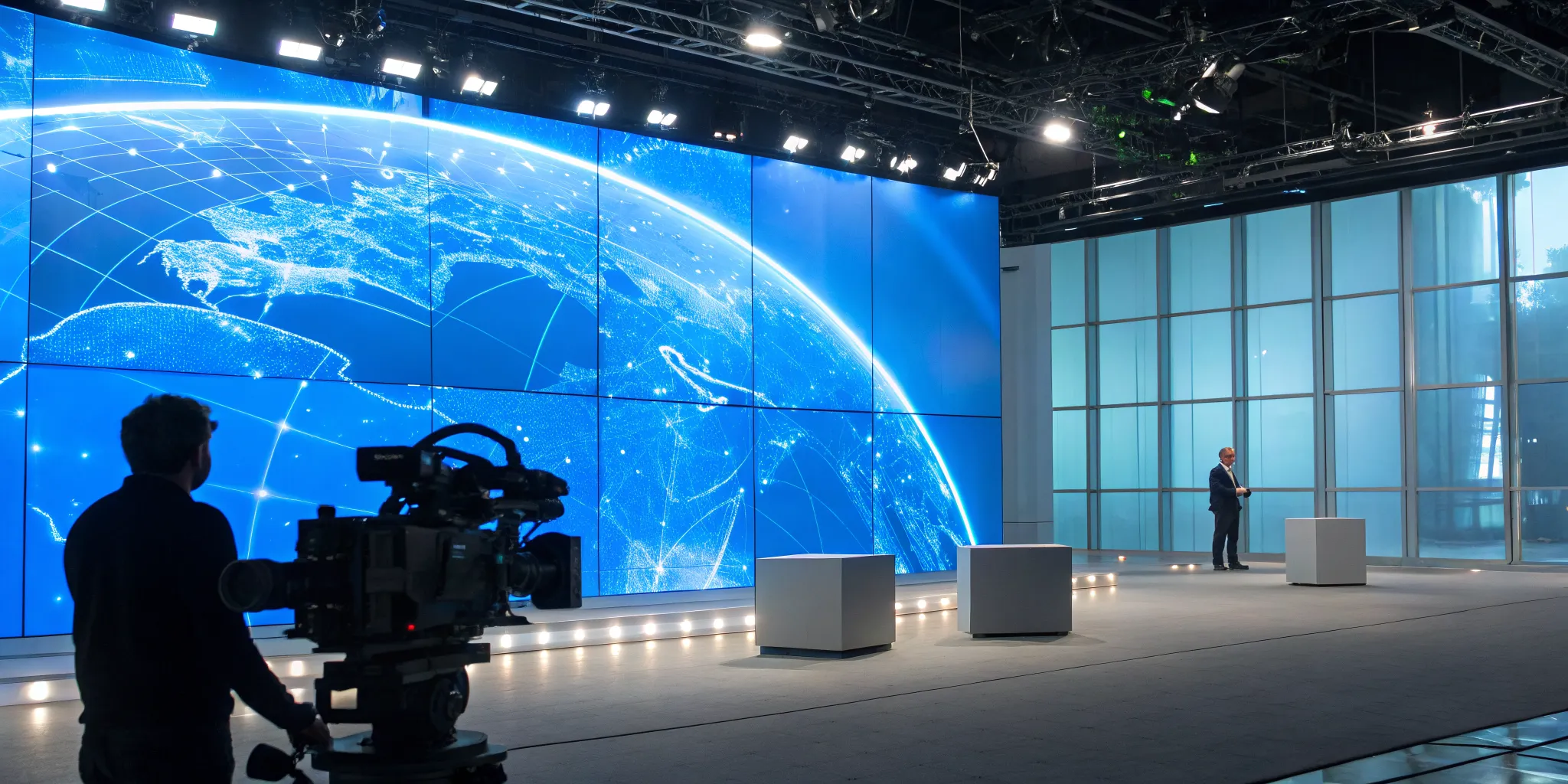
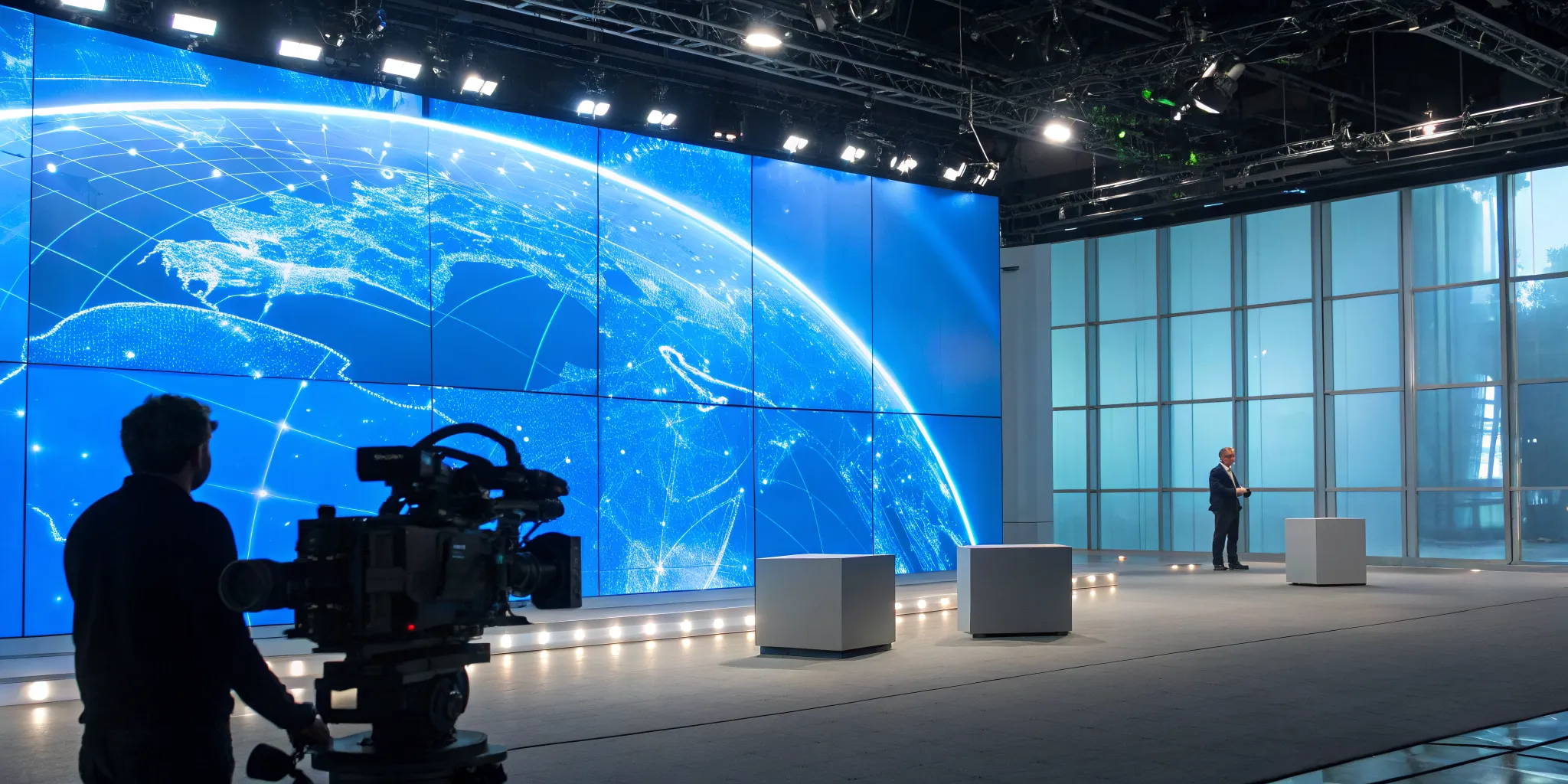
So, how does this all work? The magic happens inside an LED volume, which is a stage surrounded by large, high-resolution LED screens. These screens display the digital environments, replacing traditional green screens. By using cutting-edge technologies like real-time rendering engines, motion capture, and these massive LED walls, virtual production generates vibrant, interactive settings right inside the studio. This not only creates a more immersive experience for everyone on set but also offers huge benefits for franchise consistency. The digital assets used to create these worlds can be saved, modified, and reused across different projects, ensuring your franchise’s look and feel remain unified. This is a core part of our transmedia services at Arctic7.
How Does Virtual Production Unify Your Franchise's Story?
When you're building a franchise, consistency is everything. You want your audience to feel like they’re returning to a familiar world with every new installment, whether it’s a film, a series, or a game. Virtual production is more than just a technological shortcut; it’s a powerful tool for narrative cohesion. It acts as the connective tissue that holds your universe together, ensuring every piece of content feels like part of the same unified story. This consistency builds trust with your audience and deepens their connection to the world you’ve created, making them eager to explore every corner of it. By centralizing your world-building in a digital environment, you create a single source of truth that all your projects can draw from.
Maintain Visual Continuity Across Projects
One of the biggest challenges in a long-running franchise is keeping the look and feel consistent across different projects and creative teams. Virtual production solves this by allowing you to create, save, and reuse digital assets. Imagine the iconic bridge of a starship or the throne room of a fantasy kingdom. Once built as a digital environment, it can be perfectly replicated for a sequel, a prequel series, or even a video game. This means the lighting, textures, and architecture remain identical, which helps you maintain a consistent look and feel that audiences recognize instantly. You no longer have to worry about rebuilding expensive physical sets that were torn down years ago; your key locations live on, ready for their next scene.
Build Immersive, Scalable Worlds
Virtual production gives you the power to dream bigger. It transforms filmmaking by letting you construct vast, detailed worlds that would be impractical or impossible to build physically. You can design sprawling futuristic cities or breathtaking alien landscapes and place your actors directly inside them. These digital environments are not just static backdrops; they are scalable and interactive. You can start with a single city block for your first film and then expand it to an entire metropolis for the sequel. This approach allows your world to grow alongside your story, creating a rich, immersive experience that feels boundless and real to your audience, encouraging deeper exploration and engagement with your IP.
Gain Creative Flexibility with Procedural Environments
What if you could change the weather on set with a single click or move a mountain to frame a shot perfectly? Virtual production offers this level of creative control through procedural environments. These are digital settings generated by algorithms, which means you can create or alter them in real time during a shoot. This gives your director and creative team incredible flexibility to experiment on the fly. Instead of being locked into a physical location, you can adjust the environment to better serve the story, testing different lighting, layouts, or atmospheric effects instantly. This ability to iterate quickly supports a more dynamic and responsive approach to creative execution, empowering your team to make bolder artistic choices without derailing the production schedule.
What Are the Financial Wins of Virtual Production?
Beyond the incredible creative possibilities, virtual production offers a compelling financial case for expanding your franchise. It’s not just about making things look cool; it’s about making them smarter, faster, and more cost-effectively. By rethinking the traditional production pipeline, you can redirect funds from logistical headaches to what truly matters: creating a richer world for your audience. This approach transforms your production process into a streamlined, efficient engine for growth.
For IP holders, this means you can produce more content, explore new storylines, and expand your universe without the budget constraints that typically come with ambitious, multi-location projects. It’s a strategic shift that pays dividends long after the cameras stop rolling, creating a more sustainable and profitable foundation for your franchise's future. Let's look at exactly where you'll see the savings.
Cut Location and Travel Expenses
One of the most immediate and significant financial benefits of virtual production is the reduction in location-based costs. Think about a traditional shoot: you have expenses for location scouting, travel for the entire cast and crew, accommodations, and securing permits. All of this adds up quickly, especially for franchises set in multiple or fantastical worlds. With virtual production, you can bring any environment, from a distant galaxy to a historic city, directly to your actors on an LED stage.
This eliminates the need to fly your team across the globe. It also removes the risk of costly delays caused by bad weather or other on-location complications. Instead of spending your budget on logistics, you can invest it in refining the digital assets that make your world come alive. This controlled environment gives you complete command over your setting, ensuring every dollar is spent on the screen.
Shorten Production and Post-Production Timelines
Virtual production fundamentally changes the when and how of visual effects work, leading to major time savings. In a traditional workflow, VFX are added during a lengthy and expensive post-production phase. With VP, many visual effects are captured in-camera, in real time. This means your creative team, from the director to the actors, can see and react to the final shot as it’s being filmed.
This shift can reduce post-production time by a significant margin, allowing you to get your content to market faster. For a franchise, this accelerated timeline is invaluable. It means you can shorten the gap between sequels, spinoffs, and other transmedia releases, keeping your audience engaged and your IP top-of-mind. Our team saw these benefits firsthand while contributing to projects like Marvel Studios' Ant-Man and The Wasp: Quantumania, where complex digital worlds were an integral part of the live-action shoot.
Calculate Your ROI and Long-Term Savings
While there is an upfront investment in virtual production technology and talent, the long-term return on investment is substantial. When you factor in the cumulative savings from reduced travel, fewer location fees, and condensed post-production schedules, the financial picture becomes very clear. Some studios have reported an overall reduction in production costs of up to 30% compared to traditional methods.
For a growing franchise, these savings are more than just a line item on a budget. They represent an opportunity to reinvest in your IP. The money saved on one film can help fund a companion video game, an animated series, or another project that deepens your story world. By building a library of high-quality digital assets, you create an efficient, scalable ecosystem for all future productions, making your franchise more resilient and profitable over time.
What Tech Powers Virtual Production?
Virtual production isn't a single gadget; it's a powerful ecosystem of technologies working in harmony. Think of it as a digital stage where your physical and virtual worlds merge in real time. This combination of hardware and software is what gives your creative team the ability to shoot final-pixel shots directly on set, blending live-action performance with digital environments seamlessly. Understanding these core components helps you see how this approach can reshape your production pipeline from the ground up.
Core Tools: LED Walls and Real-Time Engines
At the heart of most virtual production stages are two key pieces of technology: massive LED walls and a real-time game engine. The LED volume, a curved wall of high-resolution screens, replaces the traditional green screen. Instead of acting against a blank backdrop, your talent is immersed in the actual digital environment of your story. This environment is powered by a real-time rendering engine like Unreal or Unity. These engines process and display complex 3D worlds instantly, allowing directors and cinematographers to make creative changes on the fly, from adjusting the lighting to moving a mountain in the background.
Capturing Action with Virtual Cameras and Motion Capture
To make the digital world on the LED screens feel real, the system needs to track the action happening on set. This is where virtual cameras and motion capture come in. A tracking system follows the physical camera's every move, so the digital background on the LED wall shifts its perspective in perfect sync. This creates a realistic parallax effect, making it seem as though you're looking through a window into a real place. For digital characters or creatures, motion capture technology allows actors' performances to be translated directly onto their digital counterparts in real time, creating a hybrid experience that integrates live and digital elements flawlessly.
Adding Life with Interactive Elements
The magic of virtual production goes beyond just displaying a pretty background. Because the environment is run by a game engine, it can be interactive. An actor can walk up to a digital control panel and "press" a button, triggering a change in the on-screen graphics. A director can ask for rain, and the technical artist can make it happen with a few clicks, with the light from the LED screens realistically reflecting off the wet surfaces on set. This interactivity gives your team incredible freedom to experiment and allows for a more organic performance, as actors can react to their digital surroundings in a tangible way.
How Does Virtual Production Fuel Multi-Platform Growth?
Virtual production does more than just change how you shoot a scene; it fundamentally reshapes how you build and expand your entire intellectual property. Think of it as creating a central, digital hub for your universe. Every asset, from a sprawling alien cityscape to the specific texture of a hero's suit, is built once and then becomes available for use across different media. This approach breaks down the traditional silos between film, television, and gaming, creating a unified ecosystem where your story can grow without limits.
Instead of starting from scratch with each new project, your teams can pull from an established library of digital assets. A background environment created for a feature film can become the setting for a new streaming series or an explorable level in a video game. This not only accelerates production timelines but also ensures a level of consistency that makes your world feel more tangible and believable to your audience. By leveraging virtual production services, you can build a franchise that is cohesive, scalable, and ready for multi-platform expansion from day one. It’s about working smarter, not harder, to create interconnected entertainment experiences that deepen audience engagement and open up new revenue opportunities.
Share Assets Seamlessly Between Film, TV, and Games
One of the most powerful aspects of virtual production is the ability to share digital assets across projects. Because virtual sets are built within real-time game engines, the environments, props, and even character models created for a film are already game-ready. This means the stunning virtual location you designed for a movie's climactic scene can be directly repurposed for a television spinoff or an interactive game, completely eliminating the need to rebuild that world. This transforms entertainment by creating a direct pipeline between your linear and interactive content, saving immense amounts of time and resources while ensuring every part of your franchise feels connected.
Keep Character and Environment Design Consistent
Maintaining a consistent look and feel is essential for building a believable franchise. Audiences notice when a key location looks different from one movie to the next or when a character's design changes between a series and a game. Virtual production solves this by creating a single source of truth for your world's visuals. By reusing digital sets and character models, you ensure that every detail remains consistent across every platform. This visual continuity, as seen in our work on projects like Star Wars: Skeleton Crew, strengthens the audience's immersion and makes the world feel like a real, unified place, no matter which story they are experiencing.
Collaborate with Global Teams Without Travel
Virtual production decentralizes the creative process, allowing your teams to collaborate effectively from anywhere in the world. The virtual set becomes a shared digital workspace where directors, cinematographers, VFX artists, and game developers can all contribute in real time. A director in Los Angeles can work with a design team in London without anyone needing to board a plane. This not only cuts down significantly on travel costs and logistical headaches but also makes high-end production more accessible. It allows you to assemble the best global talent for your project, fostering a more dynamic and efficient creative workflow that isn't limited by geography.
What Are the Creative Benefits for Your Team?
Virtual production is more than just a new set of tools; it’s a fundamental shift in the creative process. By moving key visual effects work from post-production directly onto the set, it gives your creative team unprecedented control and freedom. Instead of reacting to green screens and placeholders, your directors, actors, and designers can actively shape the world in real time. This collaborative, immediate environment doesn't just make production more efficient. It opens up new possibilities for storytelling, performance, and world-building that are essential for growing a compelling franchise.
Immerse Actors and Directors in the Story's World
Say goodbye to the days of actors performing in a sea of green, trying to imagine a dragon or a distant alien planet. With virtual production, the world is right there with them, projected onto massive LED walls. This immediate, immersive environment allows actors to react authentically to their surroundings, leading to more grounded and believable performances. Directors can frame shots with confidence, seeing the complete picture in-camera. This deeper connection to the story's world was a key component in projects like Marvel Studios' Ant-Man and the Wasp: Quantumania, where actors could interact with the quantum realm in real time, making their performances feel more genuine.
Get Instant Visual Feedback on Set
One of the biggest creative game-changers in virtual production is the power of instant feedback. What you see in the camera is what you get. The lighting from the LED walls interacts with actors and physical props realistically, and the digital background moves in perfect parallax with the camera. This means your director and cinematographer can make crucial decisions about framing, lighting, and composition on the spot. Our virtual production services are designed to integrate this feedback loop directly into your workflow. There’s no more waiting weeks for dailies from the VFX team to see if a shot worked, ensuring the final visuals align perfectly with your franchise's aesthetic.
Experiment Freely and Iterate Faster
Imagine being able to change a scene from sunny daylight to a moody sunset with a single command, or swapping a mountain range for a futuristic cityscape without rebuilding a set. This is the creative freedom virtual production offers. Because the environments are digital, your team can experiment with different looks and ideas without the high costs or time constraints of physical production. This rapid iteration is invaluable for franchise development. You can test visual concepts for a new planet in a spinoff series or refine the atmosphere for a video game level in real time. This ability to explore possibilities quickly, as seen in the expansive worlds of franchises like Star Wars, helps you make bolder creative choices and build more innovative story worlds.
How Can You Create Franchise Content Faster?
When your audience is waiting for the next installment, speed is a major competitive advantage. Virtual production isn't just a tool for creating stunning visuals; it's a strategic method for accelerating your entire content pipeline. By rethinking traditional workflows, you can deliver sequels, spinoffs, and new franchise entries faster than ever before. This speed comes from running production stages at the same time, making creative decisions in real time, and blending new techniques with established ones for maximum efficiency. It’s about working smarter to get your stories to your audience while the excitement is high.
Use Parallel Workflows for Sequels and Spinoffs
In the past, every sequel or spinoff meant starting the pre-production process from the beginning. With virtual production, you can build a library of digital assets, environments, and characters that are ready to be deployed across multiple projects. This allows for parallel workflows where the groundwork for a sequel can be laid while the first film is still in production. Virtual production helps filmmakers plan movies faster, allowing directors to visualize and modify scenes before filming even begins. This leads to fewer surprises on set and much quicker decision-making, turning each project into a building block for the next and dramatically shortening your production timeline.
Test and Refine Visuals in Real Time
Virtual production lets your creative team finalize a complex effects shot right on set, instead of months later in a dark room. This immediate feedback loop eliminates the guesswork of a green screen. Your team can see the final composite image live through the camera, with actors fully immersed in the digital environment. This allows your director and VFX supervisor to make creative adjustments on the fly, ensuring the final product matches their vision perfectly. This was essential for our work on projects like Ant-Man and the Wasp: Quantumania, where iterating quickly was key to achieving the film's unique and complex look without extending post-production schedules.
Integrate Hybrid Models for Better Efficiency
Adopting virtual production doesn't require you to abandon traditional filmmaking completely. The most efficient approach is often a hybrid one that combines the best of both worlds. You can use an LED volume for scenes set in fantastical, hard-to-reach locations while shooting intimate, character-driven moments on a practical set. By merging digital environments with real-time technologies, you can build a flexible production model that enhances creativity while reducing costs. This strategic integration allows you to allocate your budget and time where they will have the most impact, ensuring every part of your production is as efficient as possible.
What Are the Common Challenges of Virtual Production?
Adopting virtual production is a game-changer for expanding a franchise, but it’s not as simple as flipping a switch. Like any powerful new technology, it comes with a learning curve and its own set of hurdles. Thinking about these challenges ahead of time helps you build a solid strategy, ensuring your transition is smooth and your investment pays off. The biggest obstacles aren't about the technology's capability, but rather the financial, technical, and human adjustments required to make it work for you.
The main areas to prepare for are the initial costs, the need for new team skills, and the process of getting your creative departments to embrace a completely new way of working. While the long-term benefits like cost savings and creative freedom are significant, they are earned by successfully meeting these upfront challenges. A partner with deep experience in virtual production can help you anticipate these needs, making the entire process feel less like a leap of faith and more like a calculated, confident step forward for your IP. By planning for these factors, you can turn potential roadblocks into a clear path toward innovation and growth.
The Upfront Investment in Tech and Setup
Let's address the big one first: the cost. Setting up a virtual production stage requires a significant upfront investment. We're talking about high-resolution LED walls, powerful real-time rendering hardware, and specialized camera tracking systems. While studies show virtual production can ultimately reduce overall production costs by up to 30%, the initial capital needed to build or rent the infrastructure can be substantial. This isn't just about buying equipment; it's about creating an entirely new, integrated production environment. Careful financial planning and resource allocation are essential to make sure the investment aligns with your franchise's long-term goals and delivers a strong return.
The Need for New Skills and Team Training
Virtual production blurs the lines between traditional departments, which means your team's skill set needs to evolve. The technology changes the production landscape by merging pre-production, production, and post-production into a single, fluid process. Roles that were once separate now need to collaborate in real time. For example, your production designer might need to work directly in a game engine, and your cinematographer may need to understand virtual camera systems. This shift requires a commitment to training your existing crew and potentially bringing in specialists who are fluent in this new technical language. Building a team with the right expertise is just as important as investing in the right hardware.
Getting Creative Teams Onboard with New Methods
Beyond the tech and training, there's a cultural shift that needs to happen. Virtual production transforms filmmaking by asking creative leaders to make decisions much earlier than they're used to. Instead of fixing things in post, many visual choices are locked in live on set. This requires a change in mindset and workflow for directors, cinematographers, and actors alike. Getting your creative teams onboard means helping them see the process not as a limitation, but as a new canvas for real-time experimentation. When everyone embraces the ability to see and shape the final shot instantly, it opens up incredible opportunities for storytelling, as seen in projects like Ant-Man and the Wasp: Quantumania.
How Do You Measure Virtual Production Success?
The incredible visuals you can create with virtual production are just the start. To truly understand its value for your franchise, you need to measure its impact on your business goals. Success isn't just about what you see on screen; it's about tangible results that affect your bottom line, production timelines, and team dynamics. By establishing a clear framework from the beginning, you can track your return on investment and make a solid business case for adopting these powerful new methods.
Define Your Key Performance Metrics
You can’t hit a target you can’t see. Before you begin a project, your creative and financial teams need to agree on what a "win" looks like. Setting specific, measurable targets for each project allows you to effectively track your efforts and see the real impact of virtual production on your franchise. These key performance indicators (KPIs) could be anything from reducing time-to-market for a game sequel to tracking the percentage of digital assets reused between a film and a TV series. This process turns an abstract goal into a concrete plan and is a core part of the strategy development that sets a project up for success.
Track Production Efficiency and Revenue Impact
Virtual production can directly influence your franchise's bottom line. Reports have shown that productions using these techniques can see significant cost reductions compared to traditional methods. These savings come from concrete changes, like eliminating expensive location shoots, cutting down on travel and logistics for cast and crew, and fixing visual effects in real-time instead of during costly post-production cycles. Tracking these efficiencies gives you a clear picture of your ROI. The savings can then be reinvested into developing other parts of your IP, creating a more sustainable financial model for long-term franchise growth.
Evaluate Time Savings and Team Adoption
Beyond cost, time is one of your most valuable resources. Virtual production combines real-time visual effects with motion capture and computer graphics, leading to substantial time savings. This isn't just about finishing faster; it’s about giving your creative teams more freedom to experiment and collaborate on set. When directors and actors can see a nearly final shot as it happens, they can make better creative decisions instantly. It’s also crucial to measure how well your team adopts these new workflows. A successful transition means your people feel empowered by the technology, which was essential for aligning creative vision on complex projects like Marvel Studios’ Ant-Man and the Wasp: Quantumania.
How Does Virtual Production Future-Proof Your Franchise?
Thinking about the long-term health of your franchise means preparing for a future you can't fully predict. Audience tastes shift, new technologies emerge, and the ways people consume stories evolve. Adopting virtual production is one of the most effective ways to build an IP that is not just successful today, but also resilient and adaptable for years to come. It’s about creating a foundation that can support your world as it grows across different stories and platforms.
Future-proofing your franchise with virtual production isn't about chasing trends. It's a strategic move that centers on three key advantages: technological scalability, environmental sustainability, and readiness for next-generation entertainment. By investing in these digital workflows, you create a flexible and efficient ecosystem for your IP. This approach allows you to consistently deliver high-quality content, meet new market demands, and expand your story's reach without having to reinvent your production pipeline for every new project. It’s how you build a legacy that lasts.
Use Scalable Technology for Future Demands
Virtual production gives you a technological framework that can grow with your franchise. By combining real-time visual effects, motion capture, and computer graphics, you are creating digital assets, not just disposable sets. This means the stunning alien planet you build for your first film can be easily expanded and refined for a sequel. The same digital environment can then be repurposed for a video game or an interactive VR experience, ensuring visual consistency and saving immense resources. This scalability allows you to adapt to evolving audience expectations and new technologies, building an interconnected entertainment ecosystem that deepens fan engagement over time.
Reduce Your Production's Environmental Footprint
As audiences and investors become more environmentally conscious, sustainable production practices are no longer optional. Virtual production offers a clear path to reducing your franchise's carbon footprint. Instead of flying cast and crew to remote locations or constructing massive physical sets that end up in a landfill, you can create photorealistic worlds inside a studio. This approach significantly cuts down on travel, material waste, and energy consumption. Virtual production transforms filmmaking by making it a more sustainable process, which is not only responsible but also a powerful part of your brand's story.
Prepare for Next-Generation Entertainment
The line between passive viewing and interactive experience is blurring. Virtual production positions your franchise at the forefront of this change. By creating your worlds with real-time rendering engines, you are essentially building game-ready environments from day one. These vibrant, interactive settings are the building blocks for next-generation entertainment, from immersive video games to virtual reality narratives and metaverse events. This proactive approach ensures your IP is prepared to expand into new formats as they arise, allowing you to engage with your audience in deeper, more interactive ways. It’s a strategy that has proven successful for some of the world's most iconic properties, including the Star Wars universe.
Related Articles
- The Power of Virtual Production for Immersive Experiences
- How Does Virtual Production Work? A Creator's Guide
- Virtual Production for Game Prototypes: A Starter Guide
Frequently Asked Questions
Isn't this just a more expensive green screen? That's a great question, but the two are fundamentally different. A green screen is a blank space that your team has to imagine a world onto, with the final look only coming together months later. Virtual production, using an LED volume, puts the finished digital world right on set. Your actors can see and react to the environment, and your director can frame shots against the actual background in real time. It’s the difference between acting in a void and performing inside the story itself.
The upfront cost sounds high. How do I know if the investment is worth it for my franchise? It's helpful to view virtual production as a long-term investment in your intellectual property, not just a line item for one film. While there is an initial cost for the technology and setup, the savings begin almost immediately. You cut expenses on travel, location scouting, and set construction. More importantly, the digital assets you create can be reused and modified for sequels, spinoffs, and games, making each future project faster and more affordable to produce.
Is virtual production only useful for big-budget sci-fi or fantasy projects? Not at all. While it's fantastic for creating otherworldly landscapes, its real strength is control. You can use it for historical dramas to recreate locations that no longer exist, or for a contemporary thriller to film a car chase without shutting down city streets. If your story requires a specific time of day, like a perfect sunset that needs to last for a twelve-hour shoot, virtual production makes it possible. It's a powerful tool for any project that needs a controlled, consistent, or hard-to-access environment.
My creative team is used to traditional methods. How difficult is it to switch to this new workflow? The transition is less about technical skill and more about a shift in creative habits. The biggest change is that many decisions traditionally made in post-production now happen live on set. This requires your director, cinematographer, and designers to collaborate more closely during filming. The key is to see this not as a restriction, but as an opportunity. It gives your team immediate visual feedback, allowing them to experiment and perfect the shot in the moment.
How does using virtual production for a film actually help me create a video game later? This is where the true power for franchise building comes in. Because virtual sets are built using real-time game engines, the digital environments you create for a film are already optimized for interactive use. The detailed virtual city from your movie can become an explorable level in a video game without having to be rebuilt from scratch. This creates a seamless bridge between your film and game development, ensuring visual consistency and saving a significant amount of time and resources.
New Immersive & XR Media Capabilities Added to Arctic7's Suite of Games, Film & TV and Digital Services

Arctic7 Shares Details of its Work on Skeleton Crew and Cinematics Partnership with Fateless

The Human Touch: Adding Personality to Project and Product Management
Whether it’s your team, your client, or your stakeholders, understanding the human dynamics is just as critical as hitting milestones.

McDonald's Case Study: Bridging Brand and Play | Arctic7
Bridging Brand and Play: An Interview with Lindsay Blenkhorn Daggitt