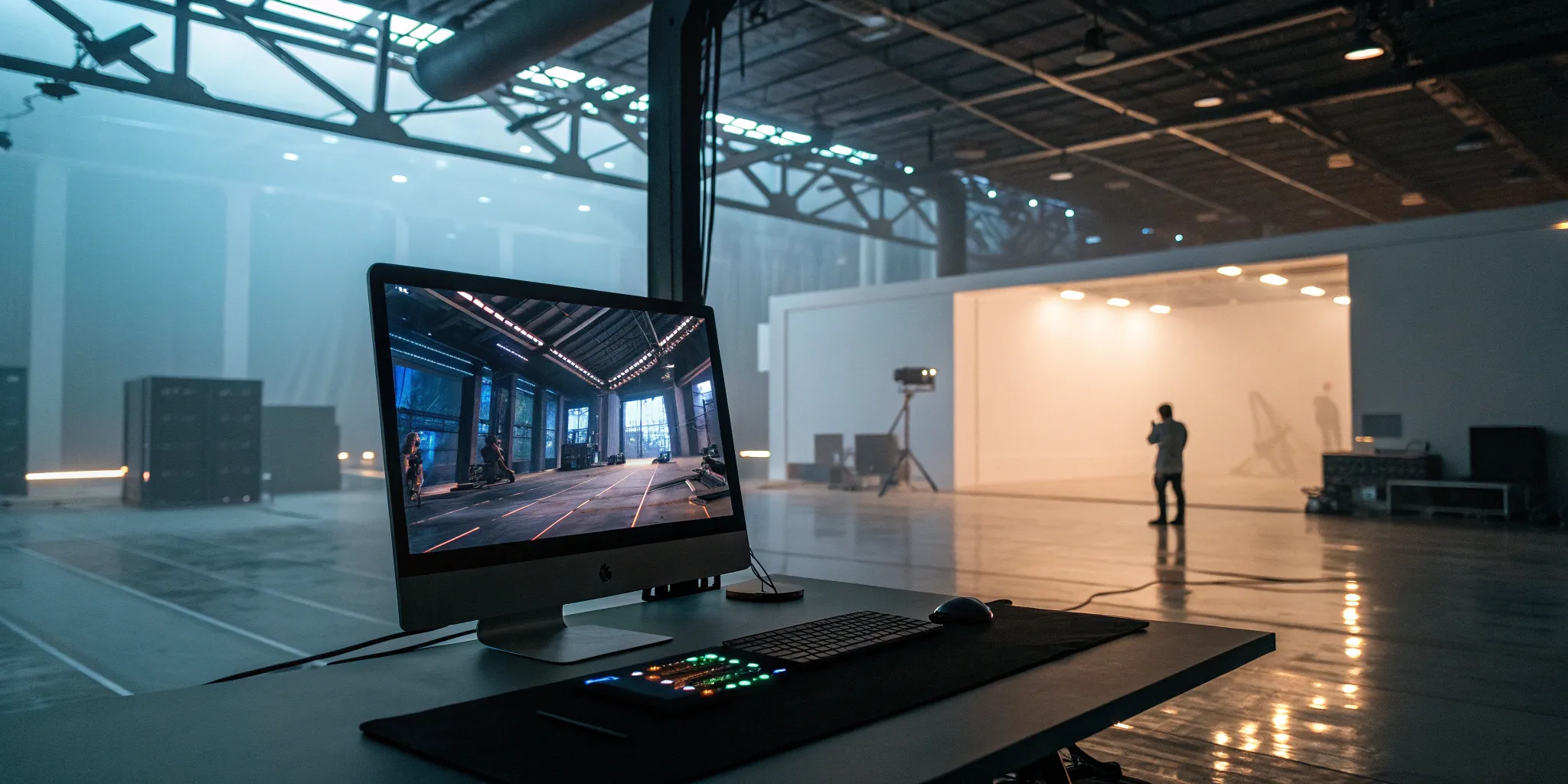

8 Top Virtual Production Companies to Watch
If you’re an IP holder, your goal is to build a world that lives and breathes beyond a single film or game. Virtual production is more than just a new filmmaking technique; it’s a powerful engine for transmedia storytelling. The digital assets, characters, and environments you create can be seamlessly shared across film, television, and interactive experiences, creating a cohesive and expansive universe for your audience. This requires a partner who thinks beyond a single production pipeline. We’ll explore the virtual production companies that specialize in this holistic approach, helping you build interconnected entertainment ecosystems that extend your IP’s reach and deepen audience engagement for years to come.
Key Takeaways
- Focus on Partnership Over Technology: The best virtual production company acts as a creative extension of your team. Prioritize a partner who understands your IP and vision, as their collaborative approach and proven portfolio are more critical than their equipment list alone.
- Embrace the Upfront Creative Workflow: Success in virtual production hinges on intensive pre-production. Be prepared for a highly collaborative planning phase where key creative decisions and digital asset creation happen before you shoot, leading to greater efficiency and control on set.
- Treat Virtual Production as a Strategic Investment: Look beyond the initial setup costs to the long-term value. This method reduces logistical expenses and creates a library of high-quality digital assets that can be repurposed across games, film, and other platforms, extending the life of your IP.
How to Spot a Great Virtual Production Company
Choosing a virtual production partner is a major decision that can shape the future of your entire project. With so many companies entering the space, it’s easy to get distracted by flashy demo reels and promises of cutting-edge tech. But a truly great partner offers more than just access to an LED volume. They bring a blend of technical mastery, proven experience, and a strategic vision that aligns with your creative goals.
So, what should you actually look for? It boils down to three core areas: the tools they use, the work they’ve done, and the services they provide. A company that excels in all three is more than just a vendor; they’re a creative ally who can help you build an immersive world. They understand that technology is there to serve the story, not the other way around. When you’re vetting potential partners, keep an eye out for a team that can speak as fluently about character arcs as they can about camera tracking. This balance is the hallmark of a top-tier virtual production company ready to bring your IP to life.
Core Technologies and Equipment
At its heart, virtual production blends digital worlds with live-action filmmaking in real time. A great company has mastered the essential tools for this, including real-time rendering engines like Unreal Engine, massive LED screens for immersive backdrops, and precise motion capture systems. But simply owning the equipment isn’t enough. The real magic happens when a team can seamlessly integrate these technologies to create a cohesive workflow. Ask potential partners about their tech stack and how they ensure every piece of hardware and software works together to serve the creative vision. A truly proficient studio offers a suite of integrated services that makes the technology feel invisible, allowing filmmakers to focus on performance and storytelling.
Industry Experience and Track Record
A strong portfolio is your best indicator of a company’s capabilities. Look for a partner with a proven track record of working on projects similar in scale and ambition to your own. Have they collaborated with major studios or handled beloved IPs? Their past work not only demonstrates their technical skill but also shows they can deliver under pressure and meet the high standards of top-tier productions. Don’t just watch their sizzle reel; dig into their case studies. Seeing how they tackled creative and technical challenges on a project like Marvel’s Ant-Man and The Wasp: Quantumania will give you a much clearer picture of their problem-solving abilities and what it’s like to work with them.
Range of Services and Specializations
Virtual production isn’t a single activity; it’s a pipeline that can touch every phase of a project, from initial concept to final delivery. The best companies offer a comprehensive range of services that go beyond just the on-set shoot. Look for a partner who can support you with pre-visualization, digital asset creation, in-camera VFX, and post-production integration. A company with a broad set of creative and technical services can act as a true end-to-end partner, ensuring consistency and quality throughout the entire process. This holistic approach is especially vital for transmedia projects, where assets and worlds need to flow smoothly between games, film, and other platforms.
Meet the Top Virtual Production Companies
The world of virtual production is brimming with incredible talent, and finding the right team can feel like casting the perfect lead for your film. Each company brings a unique set of skills, technologies, and creative philosophies to the table. Some are pioneers who built the technology from the ground up, while others are specialists who excel in a specific part of the process, like planning or world-building.
To help you find the perfect match for your project, I’ve put together a list of some of the top virtual production companies out there. Think of this as your guide to the key players who are shaping the future of filmmaking and entertainment. Whether you’re creating a blockbuster film, an episodic series, or an immersive game, one of these teams can help bring your vision to life on the virtual stage.
Arctic7 - Your Partner in Transmedia Storytelling
While many companies focus solely on the technical execution of virtual production, Arctic7 stands out by taking a holistic, story-first approach. We see virtual production not just as a tool for filmmaking, but as a powerful engine for building entire universes. Our specialty is helping IP holders think beyond a single release, creating interconnected ecosystems that span games, film, and television. We partner with you on everything from initial strategy to creative execution, ensuring your world feels cohesive and engaging on every platform.
Our transmedia services are designed to extend the life of your IP, deepen audience engagement, and open up new revenue streams. By integrating game development and virtual production, we build worlds that are not only visually stunning but also rich with narrative potential, ready to be explored across different media.
Industrial Light & Magic (ILM)
When you think of virtual production, you probably think of The Mandalorian, and for that, you can thank Industrial Light & Magic. As the legendary visual effects house founded by George Lucas, ILM pioneered the large-scale use of LED volumes with its groundbreaking StageCraft technology. They are the titans of the industry, handling some of the biggest film and television projects in the world.
ILM is the go-to partner for productions that require cutting-edge technology and a team with a long legacy of innovation. Their work has set the gold standard for what’s possible on a virtual stage. Choosing ILM means partnering with the team that not only uses the top-tier tools but also helped invent them, ensuring your project is in the hands of true masters.
The Third Floor
Every great production starts with a great plan, and that’s where The Third Floor shines. They are the industry’s leading experts in visualization, specializing in previs, techvis, and postvis. Before a single frame is shot on the LED stage, The Third Floor works with directors and creative teams to meticulously map out every scene. This process allows filmmakers to experiment with camera angles, lighting, and blocking in a virtual environment, saving valuable time and money during the actual shoot.
Think of them as the architects of your film. Their detailed visualization services ensure that the creative vision is perfectly aligned with the technical execution. For any complex project, their planning work is an invaluable step in the virtual production pipeline.
Pixomondo
With a global network of studios and a portfolio filled with epic series like House of the Dragon and Star Trek: Discovery, Pixomondo has established itself as a powerhouse in virtual production for high-end television. They have invested heavily in building state-of-the-art LED stages in key production hubs like Toronto and Vancouver, making top-tier virtual production accessible to productions around the world.
Pixomondo’s team excels at creating the sprawling, fantastical worlds that define modern genre television. Their ability to deliver cinematic-quality visuals on an episodic schedule has made them a trusted partner for major studios and showrunners. They have a proven track record of using virtual production to bring ambitious creative visions to the small screen without compromise.
DNEG
DNEG is a name synonymous with Oscar-winning visual effects, with stunning work on films like Dune and Blade Runner 2049. They have seamlessly integrated virtual production into their award-winning pipeline, using it to create some of the most breathtaking and photorealistic visuals in modern cinema. Their approach is deeply rooted in a commitment to creative excellence and technical innovation.
Working with DNEG means tapping into a deep well of VFX artistry. They are masters of creating complex, believable worlds and are an ideal partner for filmmakers whose projects demand a high degree of visual sophistication. Their virtual production capabilities are a natural extension of their legacy, pushing the boundaries of what’s visually possible in storytelling.
Framestore
Known for its creative-first approach and incredible character work in films like Guardians of the Galaxy and the Paddington series, Framestore brings a unique artistic sensibility to virtual production. They are storytellers at heart, using technology to enhance performance and create emotionally resonant visuals. Their expertise in creature and character animation translates beautifully to the virtual stage, where they can bring digital characters to life in real-time alongside human actors.
If your project hinges on compelling character performances or a distinct visual style, Framestore is an excellent choice. They don’t just build virtual sets; they create living, breathing worlds infused with artistry and personality, ensuring the technology always serves the story.
Dimension Studio
Dimension Studio offers a complete, end-to-end solution for filmmakers looking to dive into virtual production. They provide comprehensive support from the initial concept all the way through to the final product, making the entire process feel seamless. A key part of their strength comes from their close partnership with the VFX giants at DNEG, allowing them to offer a truly integrated service.
They provide top-notch virtual production services designed to help creative teams produce stunning cinematic content. Dimension is also a leader in volumetric capture and the creation of realistic digital humans, making them a fantastic partner for projects that blur the line between the real and the virtual.
80six
For productions that need a world-class stage and the technical backbone to support it, 80six is a leading choice. They operate a large, purpose-built studio specifically designed for virtual production and extended reality (xR) content. Their specialty is providing the physical infrastructure—the LED stages, cameras, and tracking systems—that productions need to get to work.
Their Virtual Production Studios are highly flexible, with LED volumes that can be reconfigured to meet the specific needs of any project. 80six provides the cutting-edge canvas and the technical team to run it, allowing creative teams to focus on capturing the perfect shot without worrying about the underlying technology.
What Can a Virtual Production Company Do for You?
When you partner with a virtual production company, you’re not just hiring a vendor with cool tech; you’re bringing on a strategic creative partner. These teams are experts at merging the physical and digital worlds to give you unprecedented control over your production. Instead of waiting until post-production to see if a shot works, you can make critical creative decisions live on set, with final-pixel quality visuals right in front of you. This fundamentally changes the filmmaking process from a linear, siloed pipeline into a collaborative, iterative loop.
A great virtual production partner helps you build your world before you even start shooting. They work with your creative leads during pre-production to design and test digital environments, plan complex camera moves, and solve technical challenges that would otherwise cause major delays on set. During production, they operate the real-time systems that bring your vision to life, allowing your actors to perform in immersive environments and your director to frame shots with complete confidence. This approach not only saves time and money by reducing the need for location travel and extensive post-production fixes, but it also opens up a world of creative possibilities that simply weren’t feasible before. From crafting fantastical alien landscapes to recreating historical settings with perfect accuracy, a virtual production company provides the tools and expertise to tell bigger, bolder stories.
LED Wall Technology and Virtual Sets
Forget the green screen. The centerpiece of many virtual production stages is the LED wall, a massive, high-resolution screen that displays digital environments behind your actors. This isn't just a fancy background; it's an active part of your set. The LED panels emit light, casting realistic reflections and lighting onto your actors and physical props. This creates a seamless blend between the real and the virtual, a technique known as in-camera VFX (ICVFX). Your cast can see and react to the world around them, leading to more natural performances. Plus, you can jump from a desert to a dense jungle with the click of a button, all without leaving the studio.
Motion and Performance Capture
Virtual production allows you to direct digital characters with the same immediacy as live-action actors. Using motion capture (mo-cap) suits, performers' movements are translated onto a digital avatar in real time. This means you can see the final animated character interacting within the virtual set right through the camera's viewfinder. This real-time feedback loop is a game-changer, allowing directors to give immediate notes on performance and framing. It closes the gap between imagination and execution, ensuring the emotional nuance of a performance is captured perfectly, whether for a towering monster or a stylized cartoon hero.
Real-Time Rendering and Graphics
The magic that powers virtual production comes from sophisticated game engines like Unreal Engine. These platforms can render photorealistic, complex 3D environments and characters instantly. This capability for real-time rendering is what allows you to see final-quality images live on set. Want to change the time of day from noon to sunset? You can do it on the fly and see the lighting update immediately. This gives your creative team incredible flexibility to experiment and make decisions with full knowledge of how the final shot will look, eliminating the guesswork that often comes with traditional visual effects pipelines.
Pre-Visualization and Planning
Virtual production transforms pre-production from a series of sketches and storyboards into a dynamic, interactive process. Using virtual reality and real-time tools, your entire team—from the director to the production designer—can walk through digital sets together long before they are built. This collaborative pre-visualization process helps you plan camera angles, block scenes, and identify potential issues early on. By solving problems in a virtual space, you can refine your creative vision and develop a solid technical plan, ensuring that when you get to the expensive on-set phase, every minute is used effectively.
Post-Production Integration
A common myth is that virtual production eliminates the need for post-production. In reality, it redefines its role. By capturing so much in-camera, you significantly reduce the need for tedious tasks like keying and rotoscoping. This frees up your post-production team to focus on what they do best: enhancing the story. Instead of fixing problems, they can dedicate their time to final color grading, adding subtle atmospheric effects, and polishing the final product. A skilled virtual production company understands this workflow and ensures a smooth transition from set to post, providing clean plates and data to make the finishing process as efficient as possible.
Let's Talk Budget: The Cost of Virtual Production
Talking about money can be tricky, but when it comes to virtual production, it’s one of the most important conversations to have. You’ve probably heard that the technology is expensive, and it’s true that the initial investment can be significant. But focusing only on the upfront cost misses the bigger picture. The real value of smarter—shifting your budget from unpredictable logistics and post-production fixes to controlled pre-production and on-set execution.
This approach means fewer surprises and more creative control where it counts. Instead of pouring money into flights, location permits, and massive set constructions that get torn down, you’re investing in digital assets that can be reused and repurposed. To really understand what a virtual production might cost, you need to look at what drives the price, where the savings come from, and what "hidden" expenses to plan for. It’s a different way of thinking about a production budget, but one that offers incredible efficiency and creative freedom.
What Impacts the Price Tag?
The biggest factors influencing your virtual production budget are the scale and complexity of your project. Building a simple, static background for a commercial is very different from creating a dynamic, interactive world for a feature film. The initial setup, including the LED volume, tracking cameras, and real-time rendering hardware, represents a significant cost. However, this investment pays off in the long run by drastically cutting down on other expenses. You’ll save on travel for cast and crew, physical set construction, and the time-consuming process of location scouting. The more you can accomplish "in-camera," the more you can control your post-production budget and timeline.
Typical Budget Ranges by Project Type
While every project is unique, virtual production can deliver impressive savings across the board. It’s not uncommon for productions to see 20-40% cost reductions compared to traditional methods. These savings come from eliminating the need to travel to distant locations, which also removes costs for accommodation, shipping, and permits. You also reduce the need for large, disposable physical sets. Because you can switch between virtual locations instantly, production timelines are often accelerated, meaning you get more done in fewer shoot days. Whether you're creating a game cinematic or a television series, the efficiency gains can have a huge impact on your bottom line.
Hidden Costs to Keep in Mind
One of the biggest myths about virtual production is that it eliminates the need for visual effects. In reality, it just shifts the work. Those incredible real-time backgrounds require extensive VFX work to be built and optimized before the shoot even begins. This front-loaded creative process is a major part of the budget. Similarly, while the goal is to get the perfect shot in-camera, you should still plan for some post-production time to handle any necessary fixes or enhancements. It’s also important to factor in the cost of hiring a crew with the specialized technical and creative skills needed to operate in a virtual production environment.
What It's Really Like to Work with a Virtual Production Company
Stepping into the world of virtual production can feel like you’re getting a peek behind the curtain of filmmaking’s future. It’s more than just impressive LED walls and real-time graphics; it’s a fundamental shift in how creative projects come to life. Instead of a linear, siloed process, virtual production is a dynamic, collaborative loop where creative and technical teams work in sync from day one. This approach brings a new level of creative freedom and efficiency, but it also comes with its own learning curve. Understanding the reality of the workflow—from the myths to the must-haves—is the first step in harnessing its full potential for your project.
Debunking Common Myths
One of the biggest misconceptions is that virtual production gets rid of post-production entirely. While it’s true that you can capture more in-camera, this doesn’t mean the post-production team gets to pack up early. Instead, their role shifts. Rather than spending months fixing errors or replacing green screens, they can focus their time on enhancing the final product with more detailed effects and polish. Another common myth is that CGI is here to replace all practical effects. The truth is, the two work best together. Virtual production allows for a more seamless integration of digital and physical elements, creating a richer, more believable world.
Technical Integration Needs
Virtual production isn’t a single piece of software or a “magic button.” It’s a complex ecosystem of different technologies that need to work together perfectly. At its core, this process relies on powerful game engines, like Unreal Engine, and advancements in real-time rendering to create and display immersive digital environments instantly. This requires a robust technical infrastructure, from high-powered GPUs to specialized camera tracking systems. A great virtual production partner has the expertise to not only operate this technology but also to build a custom workflow that integrates these tools smoothly, ensuring the tech serves the creative vision, not the other way around.
The Creative Collaboration Process
The most significant change virtual production brings is to the collaborative workflow. Traditionally, departments like cinematography, visual effects, and production design worked in separate phases. Now, everyone is on set—virtual or physical—together from the beginning. Directors can see a close-to-final shot in real-time, allowing them to make creative decisions on the fly. This process fosters a shared understanding and ensures all departments are creatively aligned. For example, our work on projects like Marvel Studios’ Ant-Man and The Wasp: Quantumania relies on this tight-knit collaboration to build vast, imaginative worlds that feel completely real.
How to Choose the Right Virtual Production Partner
Picking a virtual production partner is a lot like choosing a director or a lead designer—it’s a decision that will shape your entire project. The right team won’t just provide the technology; they’ll become a core part of your creative process, helping you solve problems and bring your vision to life in ways you might not have imagined. But with so many talented companies out there, how do you find the one that’s the perfect fit for your IP?
It comes down to looking past the sizzle reels and asking the right questions. You need a partner who not only has the technical chops but also aligns with your creative goals, communicates clearly, and can work within your practical constraints. Think of it as a search for a long-term collaborator, not just a service provider. By focusing on a few key areas—their technology, creative synergy, communication style, and ability to meet your specific project needs—you can confidently select a team that will help you build an incredible world. Let’s break down what to look for in each of these areas.
Evaluate Their Tech and Portfolio
First things first: does the company have the right tools for the job? Virtual production relies on a complex stack of hardware and software, so you’ll want to see what a potential partner is working with. Look for state-of-the-art LED stages, robust motion capture systems, and expertise in real-time rendering engines like Unreal Engine. But technology is only half the story. Their portfolio is where you’ll see how they actually use those tools.
Look for projects that are similar in scale or style to what you’re planning. If you’re creating a sprawling sci-fi universe, you’ll want a partner with experience in complex world-building, like the work done for Marvel Studios. A strong portfolio demonstrates not just technical skill but also creative problem-solving.
Check for Creative Alignment
Virtual production is an intensely collaborative process. Unlike traditional filmmaking where departments can sometimes work in silos, virtual production brings everyone together in a shared digital space from day one. This makes creative alignment absolutely essential. Your partner shouldn't just execute your ideas; they should understand your vision and contribute to it. They become an extension of your creative team.
When you talk with a potential partner, try to get a feel for their creative culture. Do they ask thoughtful questions about your story and characters? Do they seem genuinely excited about your project? The best partnerships happen when there’s a shared passion for the IP and a mutual respect for the creative process. You’re looking for a team of creative and technical experts who will be as invested in your world as you are.
Understand Their Communication Style
With so many moving parts and different teams involved, clear and consistent communication is the glue that holds a virtual production project together. A technically brilliant team with a poor communication process can cause major headaches and delays. Before you sign a contract, make sure you understand how a company manages its projects and communicates with clients.
Ask them about their workflow. Who will be your main point of contact? How often can you expect updates? How do they handle feedback and revisions? A great partner will have a transparent and structured process that keeps you in the loop every step of the way. Their range of services should include clear project management to ensure everything runs smoothly from pre-visualization through final delivery.
Match Your Project Needs and Timeline
Finally, it all has to fit within your budget and timeline. Virtual production can have higher upfront costs than traditional methods, but it often leads to significant savings down the line by reducing the need for travel, physical set construction, and extensive post-production work. Be upfront with potential partners about your budget, scope, and deadlines.
A good partner will work with you to find solutions that fit your constraints. They’ll be honest about what’s achievable and help you prioritize where to invest your resources for the biggest impact. They won’t try to sell you on technology you don’t need. Instead, they’ll focus on tailoring a plan that meets your specific goals, ensuring your project is delivered on time and on budget without compromising on quality.
What's Next in Virtual Production?
Virtual production has already reshaped how we create entertainment, moving from a niche technology to a cornerstone of modern filmmaking and game development. By using powerful game engines and real-time rendering, creators can build and explore digital worlds with a level of freedom that was once unimaginable. But the innovation is far from over. The next wave of advancements is set to make virtual production even more powerful, accessible, and integrated into every stage of the creative process.
Looking ahead, we're seeing four key areas of evolution that will define the future of storytelling. Artificial intelligence is making real-time environments smarter and more responsive. Cloud-based platforms are breaking down geographical barriers, allowing global teams to collaborate seamlessly. Motion capture technology is becoming more sophisticated and less intrusive, capturing every nuance of a performance. And as the technology matures, its environmental and financial benefits are becoming clearer, making ambitious, world-spanning projects more sustainable than ever. These advancements are not just incremental improvements; they represent a fundamental shift in how stories are brought to life, and we at Arctic7 are at the forefront of integrating these tools to build expansive new worlds.
AI Integration and Real-Time Processing
The synergy between artificial intelligence and real-time processing is one of the most exciting frontiers in virtual production. While powerful GPUs and game engines already allow filmmakers to make creative decisions on the spot, AI is adding a new layer of intelligence to the process. Imagine AI algorithms that can generate photorealistic assets on demand, suggest optimal camera placements, or even automate complex character animations based on simple inputs. This level of assistance frees up creative teams to focus on the story, not the technical hurdles. As real-time rendering technology continues to advance, AI will act as a powerful co-pilot, making it faster and more intuitive to visualize and execute even the most ambitious creative visions.
Cloud-Based Collaboration Tools
Virtual production is inherently collaborative, bringing together departments that traditionally worked in separate silos. The next step in this evolution is moving these collaborative workflows to the cloud. Cloud-based platforms are making it possible for directors, artists, and technicians to work together in a shared virtual environment from anywhere in the world. This removes the need for every team member to be physically present on a soundstage, opening up opportunities to work with the best global talent. This approach not only streamlines communication but also ensures everyone is working with the most current version of a project, reducing errors and accelerating the production timeline. It’s a more flexible and efficient way to foster collaboration across the entire production pipeline.
Advanced Motion Capture Systems
Motion capture is the key to breathing life into digital characters, and the technology is becoming more powerful and seamless. The future lies in systems that are more accurate and less restrictive for performers. We're moving beyond cumbersome suits and complex setups toward more sophisticated solutions, including markerless tracking that captures incredibly detailed facial expressions and body movements with greater freedom. This allows actors to deliver more natural and nuanced performances, which can be superimposed onto a virtual set in real time. For transmedia properties that span games and film, this advanced performance capture ensures character consistency and emotional depth, creating a more believable and engaging experience for the audience across every platform.
Environmental and Cost-Saving Benefits
Beyond the creative advantages, the evolution of virtual production offers significant practical benefits. By replacing physical sets and distant location shoots with virtual environments on an LED stage, productions can drastically reduce their carbon footprint. This means less travel, less waste from set construction, and a more sustainable approach to filmmaking. These green benefits go hand-in-hand with major cost savings. Studios can see significant budget reductions by eliminating expenses related to travel, location permits, and building physical sets. This efficiency makes it possible to allocate more of the budget toward what appears on screen, enabling higher production values and making even the most imaginative projects financially viable. It’s a true win-win for both the planet and the bottom line.
How to Prepare for Your Virtual Production Project
Jumping into the world of virtual production is exciting, but it can also feel a little overwhelming. Before you start reaching out to potential partners, it’s a good idea to get your own house in order. Taking the time to outline your vision and needs will make the entire process smoother, helping you find a company that truly gets what you’re trying to achieve. Think of it as creating a roadmap for your project. When you know your destination, it’s much easier to find the right vehicle—and the right team—to get you there.
A little prep work goes a long way. It helps you ask smarter questions, evaluate portfolios more effectively, and set a foundation for a successful collaboration. When you can clearly articulate your goals, a potential partner can give you a more accurate proposal and a realistic timeline. This initial planning phase is your opportunity to dream big while also grounding your project in practical terms. It ensures that from the very first conversation, you and your future virtual production partner are speaking the same language and working toward the same incredible final product.
Define Your Project Requirements
Before you start your search, take some time to map out exactly what you need. The clearer you are about your own project, the easier it will be to find a partner who fits. Start by outlining the fundamentals: the overall size and scope of the project, your budget range, and your creative goals. Are you aiming for stylized animation or photorealistic worlds? Then, think about any specific technical needs. Do you require motion capture, custom digital assets, or access to a large LED stage? Putting all of this into a project brief will help you communicate your vision effectively and is a key part of a solid transmedia strategy.
Key Questions to Ask Potential Partners
Once you have your brief, it’s time to start the conversation. Treat your initial calls with potential partners like an interview—you’re trying to find the best fit for your team. Ask about their experience with projects similar to yours, whether it’s for film, television, or immersive experiences. Don’t be afraid to get specific. Ask them to walk you through a project where they achieved the kind of "breathtaking photorealism" you're looking for. A great partner will be able to show you how their work on a project like Ant-Man and the Wasp: Quantumania could apply to your own IP.
Set Realistic Expectations and Timelines
Let’s talk about budget and timelines. While virtual production can have a higher upfront cost than traditional methods, it often leads to significant savings down the line. By finalizing digital environments and camera work in pre-production, you can reduce the need for expensive location shoots, set construction, and lengthy post-production fixes. This front-loaded process means that the virtual production pipeline requires intensive planning. Be prepared for a deep dive into creative and technical details before you ever step onto a stage. Have an open conversation with potential partners about realistic milestones and what a collaborative workflow looks like with their team.
Related Articles
- Ant-Man and the Wasp: Quantumania: A Case Study in Global Virtual Production | Virtual Production
- Frameworks
- Virtual Production
- Interview: Film & TV Services Explained | Virtual Production
Frequently Asked Questions
Is virtual production only for huge sci-fi blockbusters? Not at all. While it’s famous for creating alien worlds, the technology is incredibly versatile. Think of it as the ultimate tool for environmental control. It’s used for everything from recreating historical locations for a period drama to shooting a car commercial with the perfect sunset that lasts for twelve hours. The real benefit is being able to craft the exact setting you need, whether that’s a fantastical landscape or a simple, intimate interior, without being limited by weather, travel, or time of day.
What’s the real difference between using an LED wall and a traditional green screen? The biggest difference is what happens live on set. With a green screen, your actors are performing in an empty, abstract space, and you don't see the final world until months later in post-production. An LED wall creates an immersive environment that the actors can see and react to, leading to more grounded performances. It also casts realistic light and reflections on your actors and props, which means the final image captured in the camera is incredibly close to the finished product.
How can virtual production save money if the upfront costs are so high? It’s less about cutting costs and more about reallocating your budget in a smarter way. Instead of spending money on flights, location permits, shipping, and building massive physical sets that get thrown away, you invest that money into creating high-quality digital assets. These assets can be used throughout the shoot and can even be repurposed for sequels, games, or other experiences. This shift dramatically reduces logistical headaches and the expensive "fix it in post" surprises that can derail a traditional production.
How early in my project's development should I bring in a virtual production partner? You should bring them in as early as you possibly can, ideally during the script or concept development phase. Virtual production isn't just a tool you use during the shoot; it’s a holistic process that works best when integrated from the very beginning. An early partnership allows the virtual production team to help you design a workflow tailored to your story, plan your digital assets, and solve creative challenges before they become expensive problems on set.
My IP exists in a book or comic. How does virtual production help expand it into a game or a series? This is where virtual production truly shines as a world-building engine. The digital environments, characters, and props created for a film or series can become the foundational assets for a video game, an animated short, or an immersive VR experience. A partner with a transmedia focus helps you plan for this from day one, ensuring the world you build is not only visually stunning for one project but is also designed to grow and live across multiple platforms, creating a cohesive and expansive universe for your audience.
New Immersive & XR Media Capabilities Added to Arctic7's Suite of Games, Film & TV and Digital Services

Arctic7 Shares Details of its Work on Skeleton Crew and Cinematics Partnership with Fateless

The Human Touch: Adding Personality to Project and Product Management
Whether it’s your team, your client, or your stakeholders, understanding the human dynamics is just as critical as hitting milestones.

McDonald's Case Study: Bridging Brand and Play | Arctic7
Bridging Brand and Play: An Interview with Lindsay Blenkhorn Daggitt