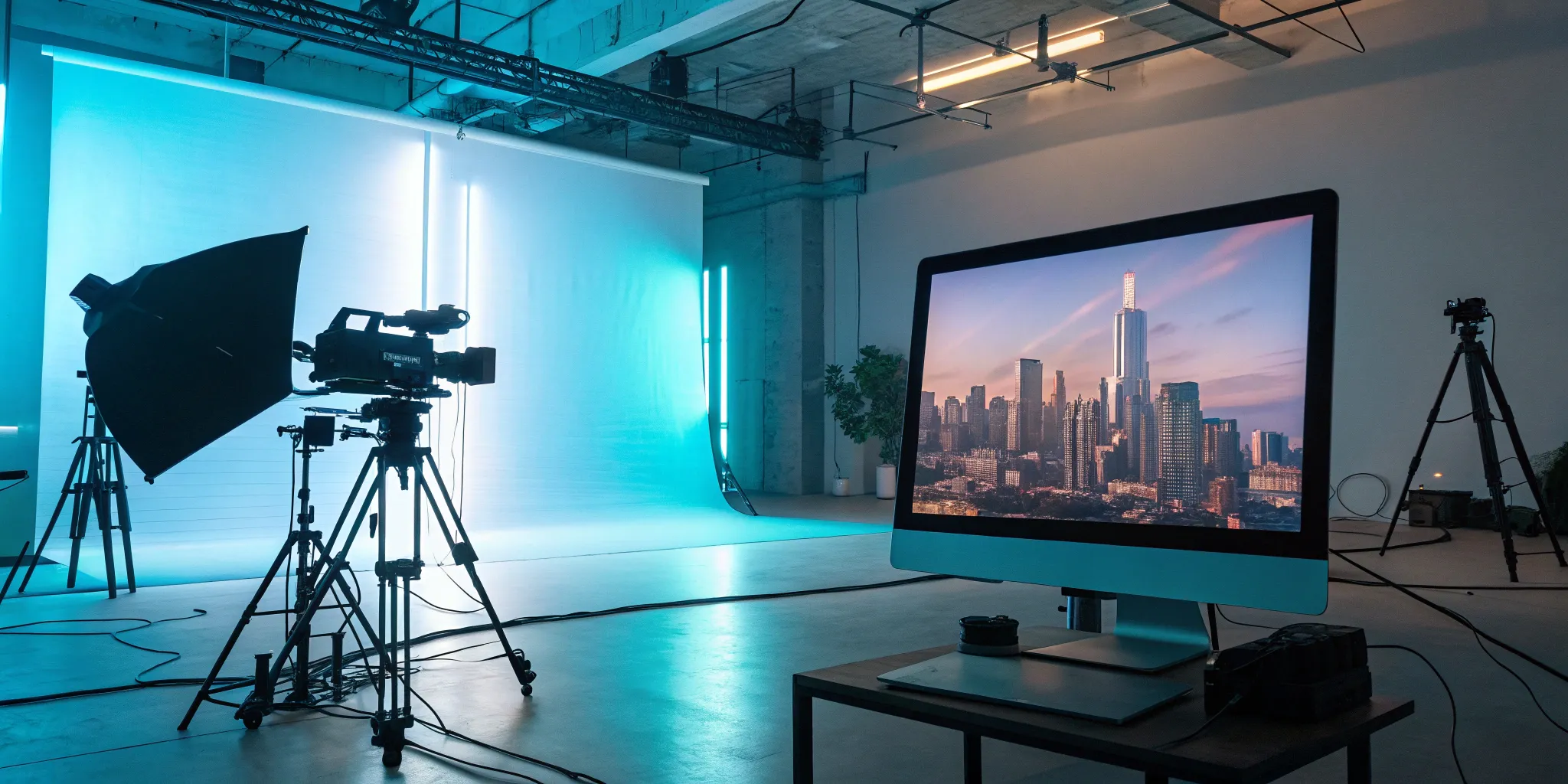

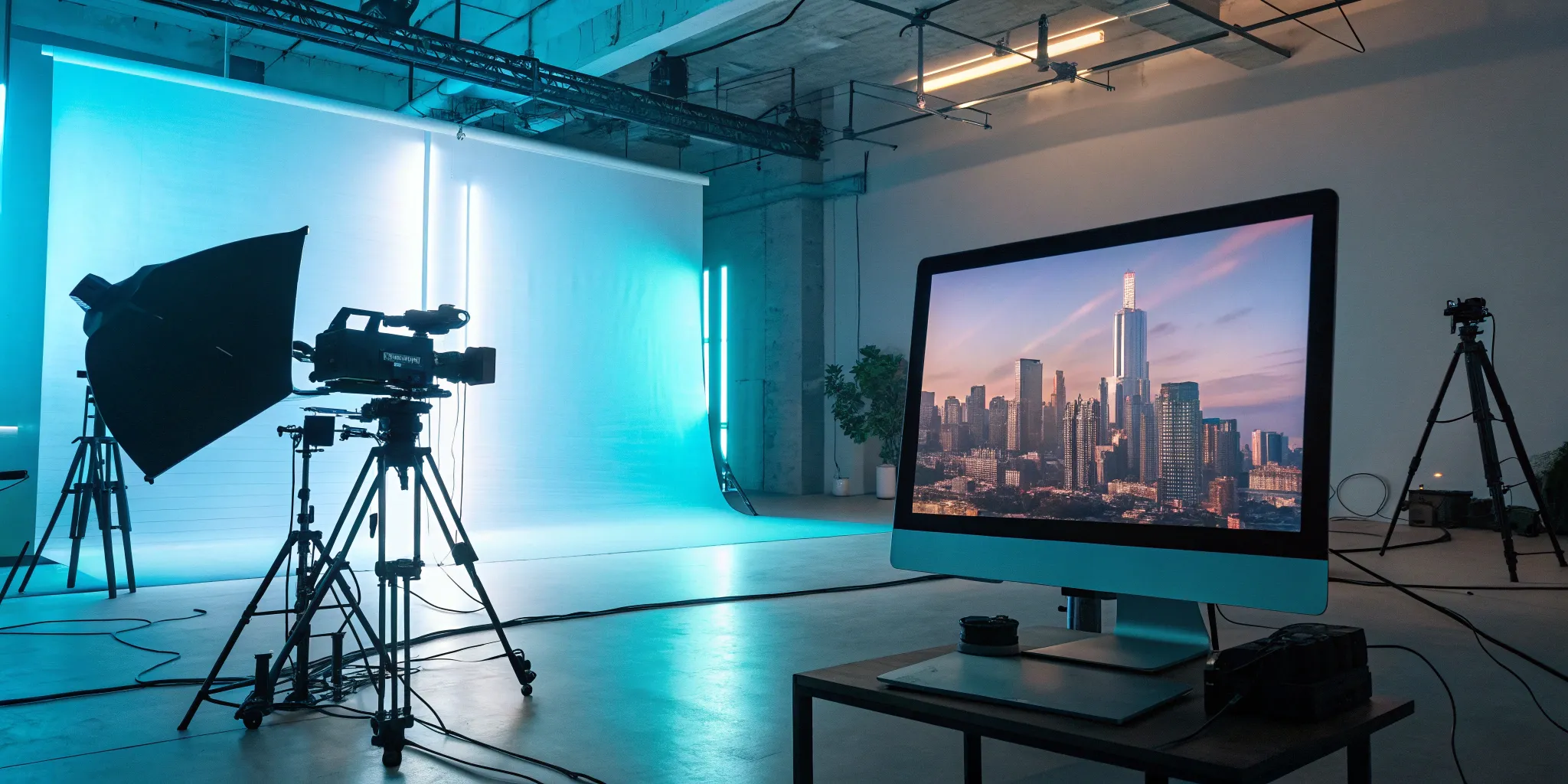
How Unreal Engine Changes Film & Television Production
For intellectual property holders, building a cohesive and expansive universe is the ultimate goal. The challenge has always been maintaining visual consistency and creative integrity as your story moves from a film to a game or an animated series. This is the strategic advantage of using Unreal Engine for film and television production. It provides a unified, real-time environment where your world's digital assets can be created once and then used across multiple platforms. This not only streamlines the workflow but ensures that every part of your universe feels connected and true to your vision. In this article, we’ll explore how this powerful tool enables a transmedia strategy, allowing you to build deeper, more immersive worlds that captivate audiences everywhere.
Key Takeaways
- Embrace a real-time workflow: By rendering final-quality visual effects live on set, you can make immediate creative decisions, capture complex shots in-camera, and collapse the traditional gap between production and post-production.
- Build limitless worlds more efficiently: Unreal Engine gives you the power to create any environment you can imagine and adjust it on the fly, all while cutting costs associated with physical sets, location travel, and lengthy post-production cycles.
- Prepare for a shift in mindset, not just tools: A successful transition to Unreal Engine involves more than software; it requires investing in the right hardware, training your team for a real-time workflow, and establishing a collaborative pipeline from the start.
What is Unreal Engine for Film & TV?
If you’ve ever wished you could see your final visual effects while still on set, you’re already thinking about the core promise of Unreal Engine. At its heart, Unreal Engine is a powerful suite of tools for creating interactive 3D content. While it started in the video game world, its capabilities have expanded dramatically, making it an essential part of modern film and television production. It allows creators to build and render photorealistic worlds, characters, and effects instantly, changing how stories are brought to life on screen.
A real-time 3D creation tool
The key phrase here is "real-time." Traditionally, creating visual effects was a slow, layered process that happened long after filming wrapped. With a real-time 3D creation tool like Unreal Engine, you can see the final shot—complete with complex environments and effects—live on set. This means directors, cinematographers, and actors can react to the virtual world as if it were a physical location. It closes the gap between imagination and execution, allowing for more informed creative decisions right in the moment instead of months later in an editing bay.
From games to the big screen
It’s true—Unreal Engine was built for video games. This background is actually its greatest strength in filmmaking. Game engines are designed for performance and efficiency, built to render complex scenes instantly. That same power is now being applied to create cinematic-quality visuals for major film productions. Instead of seeing its gaming roots as a limitation, think of it as a battle-tested foundation. The engine is robust enough to handle the demands of interactive entertainment, which makes it more than capable of meeting the needs of linear storytelling in film and TV.
Understanding its core rendering power
The engine’s rendering power is what makes real-time feedback possible. Instead of sending a scene to a render farm and waiting hours or days for the result, artists can see changes instantly. A lighting director can adjust a virtual sun and see the shadows shift in real-time. This immediate visual confirmation speeds up the entire production process. Teams can iterate on ideas much faster, experimenting with different looks and camera angles on the fly. This not only saves time but also opens the door for more creative exploration during principal photography.
Why Choose Unreal Engine for Your Next Production?
If you think Unreal Engine is just for video games, it’s time to look again. This powerful real-time 3D creation tool has moved far beyond its gaming roots and is now a cornerstone of modern film and television production. For IP holders and studios, it presents a massive opportunity to build immersive worlds, streamline workflows, and tell stories in ways that were once impossible. By using Unreal Engine, you can make creative decisions faster, control your budget more effectively, and deliver stunning visuals that capture audience imaginations.
The shift is all about moving creative and technical work from post-production into the live-action filming stage. Instead of relying on green screens and guesswork, directors and cinematographers can see near-final shots in real-time, right on set. This fundamental change affects every part of the production pipeline, from pre-visualization to the final cut. It’s not just a new tool; it’s a new way of making movies and shows. At Arctic7, we use our expertise in virtual production to help creators harness this technology, turning ambitious visions into tangible, breathtaking realities.
The advantage of real-time rendering
The biggest change Unreal Engine brings to the table is real-time rendering. Traditionally, creating visual effects was a slow process that happened long after filming wrapped. With Unreal, you can see complex digital environments and effects live on set. This means directors, actors, and the crew can react to the virtual world as if it were a physical location. As L.A. Castle Studios notes, "Unreal Engine is changing how TV and film are made, offering real-time visual effects and cost-effective virtual sets." This immediate feedback loop allows for on-the-fly adjustments to lighting, camera angles, and set design, which is a level of creative control that was previously unheard of. It’s a technology we’ve seen put to incredible use in projects like Marvel Studios’ Ant-Man and The Wasp: Quantumania.
How it improves cost efficiency and sustainability
Virtual production powered by Unreal Engine offers significant financial and environmental benefits. By creating digital sets, you eliminate the costs associated with building and tearing down physical ones. You also cut down on travel expenses, since you can film a desert scene one day and a futuristic city the next without ever leaving the studio. This approach is not only cheaper but also more sustainable. A virtual production is a "'green' way to film," reducing waste, travel pollution, and the overall carbon footprint of a project. Because the workflow is faster and requires fewer resources, it "costs less money overall," making it possible for more creators to bring ambitious, large-scale projects to life without a blockbuster budget.
Gaining more creative flexibility
Imagine being able to build any world you can dream up, without the constraints of physics or budget. That’s the creative freedom Unreal Engine provides. You can "create any set you can imagine, anywhere, without the usual costs or problems of building physical sets or traveling." Want to film during a perfect "golden hour" sunset for twelve hours straight? You can. Need to move a mountain a few feet to the left for a better shot? It’s just a few clicks away. This flexibility allows filmmakers to experiment and achieve unique visual styles that would be impractical or impossible with traditional methods. It’s an ideal tool for IP holders looking to expand their universes with rich, imaginative, and visually consistent worlds across different media.
Reducing your post-production workload
One of the most significant workflow improvements with Unreal Engine is the drastic reduction in post-production time. By capturing visual effects in-camera, you get shots that are much closer to the final product, which means less time and money spent on compositing, rendering, and revisions. As one filmmaker on Reddit put it, "Using Unreal for rendering can greatly speed up your workflow and reduce the need for large render farms." Tasks that once took weeks, like lighting a complex scene, can now be accomplished in a matter of hours. This accelerated process allows your team to focus on refining the story and perfecting the edit instead of waiting on technical processes, ultimately leading to a better final product delivered on a shorter timeline.
How Unreal Engine Changes the Filmmaking Workflow
Adopting Unreal Engine isn't just about swapping one piece of software for another; it's about fundamentally rethinking the entire production process. The traditional, linear path from pre-production to post-production becomes a more fluid and collaborative cycle. Instead of waiting months to see a final shot, you can make creative decisions on the fly and see the results instantly. This shift empowers directors, cinematographers, and artists to experiment more freely, catching potential issues early and unlocking new storytelling possibilities. It moves the bulk of creative problem-solving from post-production into the live production environment, where it’s faster, cheaper, and more intuitive to get things right.
Virtual production vs. traditional methods
Traditionally, filmmaking has relied heavily on a sequential process. You shoot actors on a green screen, and months later, visual effects artists in post-production composite them into a digital world. This approach creates a disconnect for everyone on set—actors react to a blank screen, and the director has to imagine the final shot. With Unreal Engine, virtual production brings post-production directly onto the set. By rendering photorealistic environments on massive LED walls in real-time, you can capture complex visual effects in-camera. This means what you see on the monitor is what you get, allowing for immediate feedback and adjustments. It’s a more integrated and efficient way to create, turning a once-fragmented process into a cohesive one.
Collaborating in real-time
One of the biggest workflow changes with Unreal Engine is the move toward real-time collaboration. In a traditional pipeline, departments often work in silos. The art department builds assets, which are then passed to lighting, and finally to VFX. This creates long feedback loops where a simple change can take days or weeks to implement. Unreal Engine acts as a shared, interactive space where teams can work on a project simultaneously. A director can ask for a lighting change, and an artist can adjust it live on set, with everyone seeing the result instantly. This ability to iterate in the moment speeds up decision-making and fosters a more dynamic and creative environment for the entire crew.
Creating a streamlined pipeline
Unreal Engine helps unify the production pipeline by allowing you to use the same digital assets from the earliest stages of pre-visualization all the way to the final render. This eliminates the cumbersome process of converting files between different software for each stage of production. Because the engine can produce final-pixel quality renders, it significantly reduces the reliance on time-consuming offline rendering and massive render farms. This not only accelerates your workflow but also makes high-end visual effects more accessible. By creating a single source of truth for all visual elements, you ensure consistency and quality, as seen in major productions like Ant-Man and the Wasp: Quantumania.
Integrating pre-visualization from the start
Pre-visualization (pre-vis) has always been a part of filmmaking, but Unreal Engine elevates it to a new level. Instead of creating rough animatics or storyboards that serve only as a guide, you can build out entire scenes in a photorealistic environment before filming even begins. Directors and cinematographers can explore camera angles, test lighting setups, and block actor movements with incredible accuracy. This high-fidelity pre-visualization isn't just a throwaway step; the assets and environments created during this phase can be used directly in the final shoot. This blurs the line between planning and execution, giving creative teams unprecedented control from the very start of a project.
A Look at Unreal Engine's Virtual Production Capabilities
Virtual production isn't just a new piece of tech; it's a fundamental shift in how creative projects are made. By merging physical and digital worlds in real-time, it collapses the traditional, linear production pipeline into a more fluid and collaborative process. Unreal Engine is at the heart of this transformation, providing the real-time rendering power needed to bring these complex workflows to life. Instead of waiting months for post-production to see how a shot will look, your team can make critical creative decisions live on set. This approach gives you more control, more flexibility, and a more efficient path from concept to final pixel. It’s about building the world first and then shooting within it, using a powerful combination of digital sets, advanced camera technology, and dynamic environmental controls. These virtual production services are changing what’s possible in storytelling, allowing creators to build expansive, believable worlds with greater speed and creative freedom. For IP holders, this means you can visualize your world with incredible fidelity from day one, ensuring every creative choice aligns with your vision. It also opens the door to reusing high-quality digital assets across games, films, and other experiences, creating a more cohesive and cost-effective transmedia strategy. This is how you build a universe, not just a single movie or show.
Using LED walls and virtual sets
Forget green screens and the guesswork that comes with them. Unreal Engine is revolutionizing how filmmakers create environments by using massive LED walls as dynamic, interactive backdrops. This technology allows you to build immersive virtual sets that actors can see and react to, creating a more grounded and believable performance. The light from the LED screens also casts realistic reflections and ambient lighting on your actors and physical props, a detail that is incredibly difficult and time-consuming to replicate in post-production. This method of capturing in-camera visual effects means your final shot is much closer to complete the moment you call "cut," saving countless hours of compositing work down the line.
Rendering backgrounds in real-time
One of the most significant advantages of using Unreal Engine is its ability to render complex, photorealistic backgrounds in real-time. This capability provides immediate visual feedback on set, allowing directors and cinematographers to make on-the-fly adjustments to lighting, camera angles, and set dressing. If a shot isn’t working, you know instantly and can fix it right then and there. This dramatically reduces the time and cost associated with traditional post-production, where visual effects are painstakingly added long after filming has wrapped. It transforms the filmmaking process into a more iterative and creative experience, giving you the power to experiment and perfect your vision live.
Working with camera tracking systems
The magic that makes virtual sets believable is the seamless integration of advanced camera tracking systems with Unreal Engine. These systems monitor the precise position, orientation, and lens settings of the physical camera in real-time. This data is then fed into the engine, which adjusts the perspective of the 3D background on the LED wall to match the camera’s viewpoint perfectly. This creates a flawless parallax effect, giving the illusion that the camera is moving through a tangible, three-dimensional space. This technology is what sells the shot, ensuring that every pan, tilt, and dolly move feels completely natural and integrated with the virtual world.
Controlling environments dynamically
With Unreal Engine, your virtual set is not a static image; it's a living, breathing world that you can manipulate instantly. This empowers creators to experiment with unique visual styles and effects, enabling them to control environments dynamically. Need to change the time of day from noon to a golden-hour sunset? You can do it with a few clicks. Want to add fog rolling into the scene or adjust the intensity of the wind? It can all be done live. This level of control gives filmmakers incredible creative flexibility, allowing them to fine-tune the mood and atmosphere of a scene in the moment, rather than being locked into the conditions of a physical location or the limitations of a static backlot.
Essential Unreal Engine Tools for Film & TV Creators
Unreal Engine is more than just a powerful rendering engine; it’s a complete creative suite packed with tools designed to give filmmakers and showrunners direct, hands-on control over their digital worlds. Instead of waiting for renders or sending notes to another department, you can make critical creative decisions on the fly. This suite of tools is what truly transforms the production process, making it more intuitive, collaborative, and efficient. From editing cinematic scenes to creating lifelike digital actors, the engine provides an integrated environment where every aspect of your virtual production can be managed. Let's look at a few of the most impactful tools that are changing how stories are brought to life on screen.
Sequencer for cinematic editing
Think of Sequencer as your command center for cinematic storytelling within Unreal Engine. It’s a powerful, timeline-based editor that lets you orchestrate every element of a scene in real-time. You can create cinematic sequences by manipulating camera angles, adjusting character animations, tweaking lighting, and mixing audio, all within a single interface. This non-linear workflow is incredibly freeing for directors and cinematographers, allowing for rapid iteration and experimentation without the traditional delays of rendering. You can test a dozen different camera moves in minutes, not days, ensuring the final shot perfectly captures your vision. It’s a tool that brings the immediacy of live-action filmmaking to the world of digital production.
MetaHuman Creator for realistic digital characters
Creating believable digital humans has historically been one of the most time-consuming and expensive parts of visual effects. The MetaHuman Creator changes that entirely. This cloud-based tool streamlines the process, allowing you to design and customize highly realistic digital characters in a fraction of the time it used to take. You can adjust everything from facial features to skin textures with incredible detail. For filmmakers, this means you can populate your virtual worlds with convincing characters without blowing your budget. It frees up your artists to focus on the nuances of performance and storytelling, rather than getting bogged down in the technical complexities of modeling and rigging from scratch.
Systems for lighting and environments
Unreal Engine gives you the power to build and control entire worlds. Its advanced systems for lighting and environments are central to the rise of virtual production for TV & film. Tools like Lumen provide dynamic global illumination and reflections, allowing you to create incredibly realistic and responsive lighting in real-time. You can change the time of day from high noon to a moody sunset with a simple slider adjustment. This capability, combined with the ability to build vast, detailed virtual sets, means you can shoot any scene, anywhere, at any time, all from the comfort of a studio. It dramatically reduces the need for location scouting and set construction, saving both time and money.
Take Recorder for direct camera capture
The Take Recorder is a fantastic tool for bringing a more organic, human touch to your digital cinematography. It allows you to capture camera movements directly from a variety of inputs, including virtual reality controllers or even an iPad. This means a director or cinematographer can physically "operate" the virtual camera, performing pans, tilts, and dolly moves with an intuitive, hands-on approach. This method often results in more natural-looking camera work than what can be achieved through keyframing alone. It’s perfect for recording character performances and capturing the subtle dynamics of a scene, blending the precision of digital tools with the instinct of live-action filmmaking.
Overcoming the Challenges of Unreal Engine Adoption
Adopting any powerful new technology comes with a learning curve, and Unreal Engine is no exception. While its potential is immense, integrating it into a traditional film or television pipeline presents a few common hurdles. But don't let that discourage you. With the right strategy and expertise, these challenges are entirely manageable. Thinking through them ahead of time is the first step toward building a production workflow that’s faster, more flexible, and more creative. Let's walk through the main obstacles you might face and how to approach them.
Closing the technical skill gap
One of the first things to understand is that Unreal Engine was built for games. This means its entire logic—from how it handles assets to its user interface—is different from the traditional 3D software many film and VFX artists are used to. Your team might find themselves facing unique challenges as they learn its specific systems. It’s less about learning a new tool and more about adopting a new, real-time mindset. Bridging this gap often requires dedicated training or bringing in specialists who are already fluent in game engine workflows. An experienced transmedia partner can help your team get up to speed and establish best practices from day one.
Meeting hardware and infrastructure needs
There’s no getting around it: real-time rendering is demanding. To run complex scenes smoothly in Unreal Engine, you need powerful hardware. This means investing in workstations with high-end GPUs, fast processors, and plenty of RAM. Beyond individual computers, you’ll also need a robust network infrastructure that can handle the large file sizes and data streams required for real-time collaboration. While this initial investment can seem significant, it’s essential for unlocking the engine’s full potential. The right setup prevents bottlenecks and ensures your creative team can work without technical limitations holding them back.
Integrating assets into your workflow
Moving your existing 3D assets into Unreal Engine isn't always a simple drag-and-drop process. To get the most out of the engine’s advanced features, assets need to be optimized for real-time performance. For example, scenes must be built in a specific way to work well with Unreal’s dynamic lighting system, Lumen. Similarly, converting complex models to Nanite, its virtualized geometry system, can be a time-consuming but necessary step. Building a solid asset pipeline that accounts for these conversion and optimization stages is key to achieving the stunning visual quality you see in projects like Ant-Man and The Wasp: Quantumania.
Getting your team on the same page
The collaborative, real-time nature of Unreal Engine can break down the traditional silos between pre-production, production, and post-production. While this is a huge advantage, it requires new tools and processes to keep everyone aligned. Working with a team can be difficult without proper version control systems like Git or Perforce, which are standard in game development but may be new to film crews. Establishing a clear workflow, defining roles, and ensuring everyone is communicating effectively is crucial. This cultural shift toward a more integrated and iterative process is just as important as the technical one.
Setting Your Studio Up for Success with Unreal Engine
Adopting Unreal Engine is more than just a software switch; it’s about building a new, more dynamic ecosystem for your creative projects. While the transition requires planning, setting your team up with the right foundation from the start will make the process feel less like a hurdle and more like a natural evolution of your workflow. With a smart strategy, you can integrate this powerful tool and start seeing the benefits in your production pipeline almost immediately.
Finding the right training and resources
Getting your team comfortable with Unreal Engine is the first critical step. The good news is there’s a massive community and a wealth of information available. You can start with the countless free tutorials on YouTube to grasp the basics of creating cinematics and navigating the interface. For a more structured approach, consider dedicated courses that offer in-depth training. Epic Games also provides a fantastic Unreal Engine Online Learning portal, which is an invaluable resource for teams of all skill levels. The key is to empower your artists and technicians with the knowledge they need to feel confident and creative within the engine.
Building an effective production pipeline
Integrating Unreal Engine effectively means rethinking your traditional pipeline. Because rendering happens in real-time, you can eliminate the long waits and massive render farms that used to be standard. This shift not only saves significant time and money but also creates a more iterative and collaborative environment. Your team can make changes on the fly, see results instantly, and experiment more freely. At Arctic7, we build custom pipelines that leverage this speed, allowing for faster feedback loops and a more agile approach to bringing creative visions to life, from early concepts to final pixels.
Following implementation best practices
To get the most out of Unreal Engine, it’s important to work with its core systems, not against them. You’ll need to build your scenes in a way that complements powerful features like the Lumen lighting system and Nanite’s virtualized geometry. This might mean adjusting how you import assets or taking extra time to convert them properly, but the payoff is huge. Following these best practices ensures your projects run smoothly and you achieve the highest visual fidelity possible. It’s about learning the engine’s language so you can make it do exactly what you want.
Using a mixed-software strategy
Adopting Unreal Engine doesn’t mean you have to abandon the tools your team already knows and loves. In fact, the most effective workflows often use a mix of software. Many studios do their initial modeling, sculpting, and character rigging in programs like Maya or Blender before bringing those assets into Unreal Engine for final animation, lighting, and rendering. This hybrid approach allows your artists to continue using specialized tools they’re experts in while still gaining all the real-time advantages of Unreal. It’s about creating a flexible, powerful toolkit that’s tailored to your project’s specific needs.
How to Enhance Your Storytelling with Unreal Engine
Unreal Engine is more than just a production tool; it’s a creative sandbox that fundamentally changes how you can tell your story. By moving a significant portion of the post-production process into real-time, it gives creators unprecedented control and flexibility right on set. This shift allows you to make bolder creative choices, iterate faster, and immerse your audience in your world more completely than ever before. Instead of waiting weeks to see if an idea works, you can test it, refine it, and perfect it in moments.
This real-time capability is at the heart of how we help IP holders expand their universes at Arctic7. It’s about breaking down the barriers between imagination and execution. Whether you're building a sprawling sci-fi epic or an intimate character drama, the engine provides a suite of tools that empower you to visualize, build, and capture your vision with stunning fidelity. Let’s explore a few specific ways you can use Unreal Engine to bring a new dimension to your storytelling.
Using real-time visualization to experiment
One of the biggest creative advantages of Unreal Engine is the ability to see your work instantly. Traditionally, filmmakers have relied on storyboards and pre-visualization that are separate from the final shot. With Unreal, your pre-visualization is your set. Directors can walk through a virtual environment, experiment with camera angles, test different lighting setups, and block scenes with digital stand-ins before the crew even arrives. This process of real-time visualization removes the guesswork, allowing for more intentional and creative shot-making. It gives you the freedom to ask "what if?" and see the answer immediately, leading to stronger, more dynamic visual storytelling.
Integrating in-camera visual effects
In-camera visual effects (ICVFX) are a game-changer for both performers and production teams. By projecting final-pixel backgrounds onto massive LED walls, you can create immersive, realistic virtual sets in real-time. This means actors can react to the actual environment they’re supposed to be in, rather than a green screen, leading to more authentic performances. For the production, it means capturing complex visual effects shots directly in-camera, which drastically reduces the need for extensive post-production compositing. This technique was used to great effect in projects like Ant-Man and The Wasp: Quantumania, allowing filmmakers to build otherworldly environments that felt tangible on set.
Adjusting scenes dynamically during filming
Imagine being on set and having the power to change the time of day from noon to sunset with a single click. With Unreal Engine, that level of control is a reality. Because the virtual environment is rendered in real-time, directors and cinematographers can make dynamic adjustments during a take. You can move a mountain, add weather effects, or alter the lighting to better match the emotional tone of a scene. This collaborative workflow means artists can see changes instantly and contribute ideas on the fly. It transforms the filmmaking process from a rigid, linear pipeline into a fluid, creative conversation where the best idea can be implemented in the moment.
Developing characters with digital humans
Creating believable digital characters has historically been one of the most time-consuming and expensive parts of visual effects. Tools like Epic Games' MetaHuman Creator are changing that. This framework makes it possible to create highly realistic digital humans in a fraction of the time. For storytellers, this opens up a world of possibilities. You can create digital doubles for complex stunts, populate entire cities with unique background characters, or even develop fully digital protagonists for animated features or games. By simplifying the creation process, MetaHuman allows you to focus on what truly matters: crafting a compelling character with a rich inner life.
Related Articles
- How Unreal Engine for Virtual Production Is Remaking Film
- How to Design Environments for Virtual Production in UE4
Frequently Asked Questions
How is using an LED wall with Unreal Engine better than a traditional green screen? Using an LED wall creates a much more immersive and interactive environment on set. Unlike a green screen, where actors have to imagine their surroundings, an LED wall displays the final digital background in real-time. This allows performers to give more natural reactions and helps the cinematography team frame shots perfectly. The light from the screen also casts realistic reflections and ambient color onto actors and props, an effect that is very difficult and time-consuming to fake later in post-production.
Do we need to hire a whole new team of game developers to use this? Not at all. While Unreal Engine has its roots in gaming, you don't need to replace your entire crew. The most successful approach often involves a mix of strategies, like providing targeted training for your existing artists and technicians or partnering with specialists who can guide your team through the process. Many studios find success by blending their traditional film production talent with a few key individuals who have real-time engine experience, creating a powerful hybrid team.
Is this technology only for big-budget sci-fi and fantasy projects? While it’s fantastic for creating otherworldly planets and epic fantasy landscapes, its use is much broader. Think of it as a tool for creating any environment you can imagine without the logistical headaches of a physical location. You can build a perfect, historically accurate set for a period drama, create a stylized world for an animated feature, or simply guarantee a "golden hour" sunset that lasts all day for a romantic scene. It’s about creative control, regardless of the genre.
Can we use our existing 3D models and creative assets, or do we have to start from scratch? You can absolutely leverage your existing assets. A significant part of the workflow involves adapting and optimizing the 3D models you already have for real-time performance in the engine. While some adjustments are needed to make sure they work well with features like dynamic lighting, you are not starting from zero. This process is actually a key step in building a unified asset library that can be used across film, games, and other media.
It sounds like there's a big upfront investment. How does that lead to long-term savings? While there are initial costs for hardware and training, the savings come from fundamentally changing the production process. You drastically reduce or eliminate expenses related to building and tearing down physical sets, traveling to distant locations, and storing large set pieces. More importantly, by capturing so much in-camera, you cut down on months of expensive post-production work, reducing the need for large render farms and extensive compositing. It shifts costs from post-production into production, where you have more creative control.
New Immersive & XR Media Capabilities Added to Arctic7's Suite of Games, Film & TV and Digital Services

Arctic7 Shares Details of its Work on Skeleton Crew and Cinematics Partnership with Fateless

The Human Touch: Adding Personality to Project and Product Management
Whether it’s your team, your client, or your stakeholders, understanding the human dynamics is just as critical as hitting milestones.

McDonald's Case Study: Bridging Brand and Play | Arctic7
Bridging Brand and Play: An Interview with Lindsay Blenkhorn Daggitt