
Unreal Engine 5 Virtual Production for Indie Studios
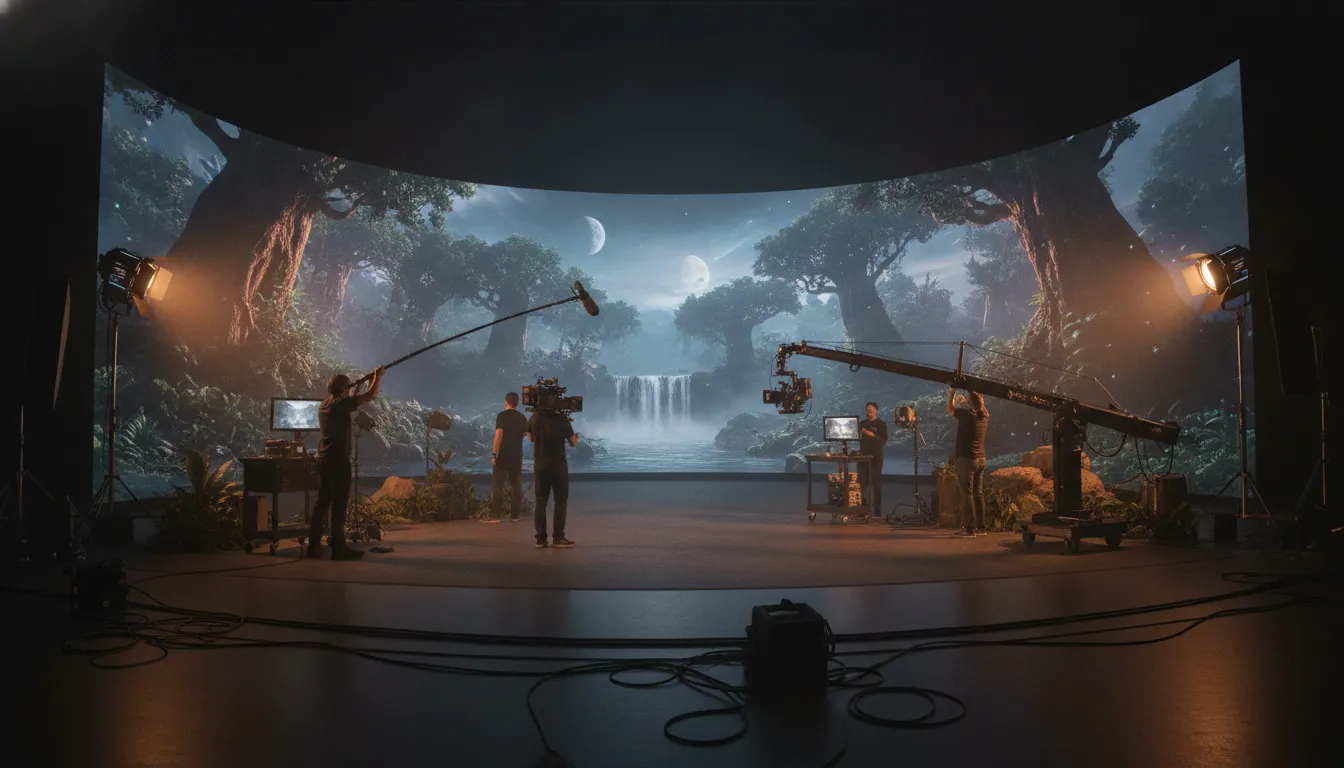
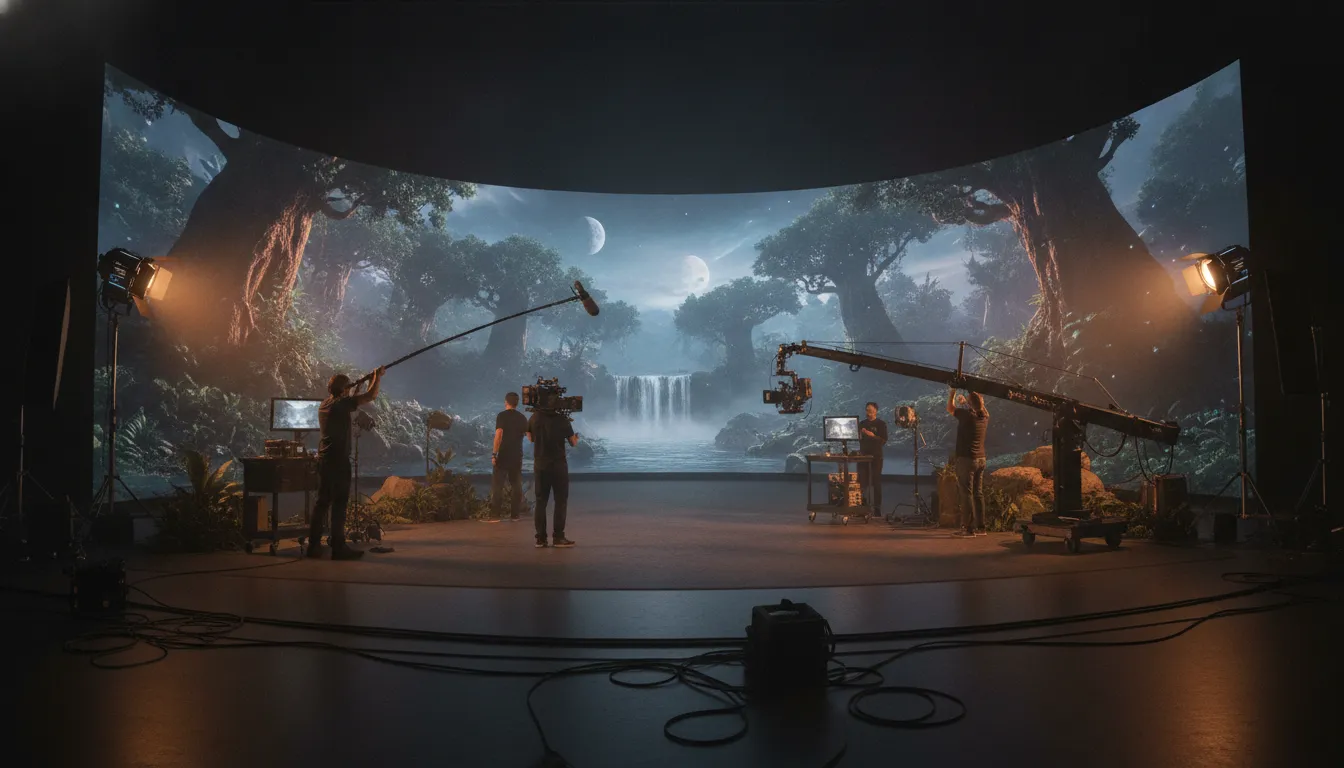
Unreal Engine 5 virtual production helps indie and mid-sized studios create high-quality visuals without the high costs of old movie sets. This tech uses real-time tools to show digital backgrounds on LED screens or green screens while the camera rolls. By moving big creative choices to the live set, crews can see the final shot right then and avoid slow work after filming. The global market for this tech is growing fast and is likely to reach $1.35 billion by 2030, says Grand View Research. For smaller teams, a basic setup needs only a powerful computer and a tracking system to produce results that once needed a major studio. Using these tools helps creators build better visuals and keep full control over their stories in a fast and simple way.
Unreal Engine 5 Virtual Production: What Does Unreal Engine 5 Bring to Virtual Production?
Unreal Engine 5 (UE5) changes how studios handle real-time rendering. For years, virtual production workflows relied on pre-baked lightmaps and low-polygon models to maintain frame rates. Now, UE5 removes these technical barriers. These tools allow mid-sized teams to produce film-quality visuals on an LED stage without the massive rendering budgets of the past.
Master high-detail scenes with Nanite
In older versions of the engine, artists spent weeks baking Level of Detail (LOD) models to keep scenes running fast. UE5's Nanite system solves this by using virtualized geometry. This tech lets you import film-quality assets with billions of polygons directly into your scene. Because Nanite handles the detail levels in real time, it eliminates the need for LOD baking and strict polygon budgets.
This shift is vital for teams using Narwhal Studios' virtual production pipeline. By removing the technical steps between design and the stage, creators can focus on the art rather than the code. Studios can now use high-poly scans and complex sets that would have crashed previous systems.
Dynamic lighting through Lumen
Lighting was once the most time-consuming part of virtual production. If a director wanted to move a sun lamp or change a light color, the team had to re-bake the entire scene. UE5's Lumen system provides dynamic global illumination that reacts to scene changes instantly. This means your lighting on the LED volume updates in real time as you move objects or adjust light sources.
Real-time lighting makes the live set far more flexible. You can see how bounce light hits the actors and props immediately. This speed helps teams stay on schedule while exploring new creative ideas. For a deeper look at these tools in action, you can read our Ant-Man and the Wasp: Quantumania virtual production case study, which shows how Narwhal Studios uses real-time tech for hero sets.
Better tracking and camera integration
UE5 also improves how the engine talks to physical cameras. Systems like nDisplay and Live Link allow virtual camera tracks from Sony or ARRI to sync with the digital world. This ensures that the perspective on the LED wall matches the camera move perfectly. These deep integrations make the final composited image look seamless and natural on screen.
How Indie and Mid-Sized Studios Can Afford UE5 Virtual Production
Many small teams think virtual production is too costly. They see giant LED walls and think they need millions of dollars to start. But unreal engine 5 virtual production is now within reach for most teams. You can build a high-end pipeline without a massive budget by starting with the right tools.
Low cost hardware for green screen vp
You do not need a farm of servers to begin. Research from MDPI Applied Sciences in 2024 shows that a basic setup can cost less than $15,000. This entry-level green-screen system runs on a single machine. You will need at least 64GB of RAM and a powerful graphics card like the NVIDIA 4090. Pair this with a tool like Antilatency for tracking. Then you can run Unreal Engine 5.3 for great results on a small scale.
Building this type of setup allows your team to learn the workflow. It is much easier to master the basics of how to set up a virtual production studio with Unreal Engine when the hardware is simple. Once you have the core skills, you can move toward more complex projects.
Smart lighting and tracking solutions
Hardware is a big part of the cost for any studio. In fact, hardware made up over 50% of the virtual production market in 2024 as shown by Grand View Research. To save money, you should look for tools that solve many problems at once. For example, a retroreflective green-screen light ring system can help you get a clean key in a tight space. This setup removes the need for large, costly lights.
Small studios benefit from these space-saving ideas:
- Use light rings to avoid green spill on your actors.
- Stick to tracking tools that work well in small rooms.
- Focus on real-time tools to cut down on post-production time.
Scaling from green screen to led volumes
As your studio grows, you can scale your pipeline. You might start with green screen but plan to move to LED volumes later. The change is easier when an expert partner helps you. Working with experts can help you avoid costly mistakes during the setup phase.
Take Narwhal Studios' virtual production pipeline as a model. It is built on years of work with top films. They know how to pick the right hardware that grows with your needs. Hiring a team with this level of skill saves you money in the long run. You get a stable system from day one and avoid the trial-and-error that drains small budgets.
Building Your Virtual Production Pipeline Step by Step
Moving to Narwhal Studios' Unreal Engine virtual production pipeline changes how you make films. As an early leader, Narwhal Studios helps you get the most from these tools. Old film work leaves many choices for later. In a virtual workflow, you make major art calls while you are on the live set. This shift helps you see the final look of each shot right away. It cuts down on the need for costly redo shoots and speeds up the work that comes after.
Picking Your Production Scale
You must first decide between a green screen or an LED wall. Green screens cost less and fit well in small rooms. But LED walls let your actors see the world around them. This creates real light and glints on your props. Most studios start by checking their budget and the look of the project. You can find more help in our guide on how to set up a virtual production studio with Unreal Engine.
Setting Up Your Real-Time World
Building the digital world is the next big task. In Unreal Engine 5, you use Nanite to handle high-quality items. Nanite lets you use film-level models with many parts. It removes the need for slow tasks like baking steps. This means you can bring in complex 3D items and see them right away without losing quality. Many schools, like NYU Tandon, now teach these ways for modern film work.
Setting up the tech side is also a top need. You will need to use nDisplay to send your scene to many screens. This keeps the digital world in step with your real camera moves. A strong setup makes sure the light from the walls matches the light in your virtual scene. This creates a smooth blend between real actors and digital backgrounds.
- Check your filming needs. Pick between a green screen or an LED wall based on your cash and space.
- Set up your Unreal Engine 5 scene. Use nDisplay to link your digital world to your stage screens.
- Connect camera tracking. Use Live Link to sync tools like Sony or ARRI cameras with your virtual scene.
- Tune your 3D assets. Use Nanite to handle complex shapes and high detail without extra prep work.
- Run tech scouts and practice. Test your light and camera moves before you start the main shoot.
Refining the Art Workflow
Once your tools are ready, you must link the camera tracking. Unreal Engine uses Live Link to connect with cameras. This tool sends the camera's spot and lens data to the engine. It makes sure that the digital backdrop moves just like the real camera. This real-time link is what makes the virtual world feel like a solid, real space during the shoot.
Final tests are the key to a smooth shoot day. Run tech scouts to check how your virtual light acts with real-world props. This helps you find and fix any bugs in the tracking or the scene. Practice runs allow your crew to learn the new beat of a live virtual set. By the time the actors show up, your pipeline should feel like a smooth part of the work.
Real Results: What Studios Are Achieving with UE5 Virtual Production
The use of Unreal Engine 5 virtual production has grown fast in the film field. Many studios now use these tools to create top-quality films more quickly. By the end of 2023, there were more than 200 LED volume stages in use around the world. Major studios are also moving toward these new tools. Over 60% of large production houses now use in-camera visual effects (ICVFX) in their work.
Expanding Global Growth
As of late 2023, the world had over 200 LED volume stages built for film and TV. This shows that the field is ready for real-time work. Most big studios now use ICVFX to blend digital worlds with live action. This change helps teams see the final shot while they are still on set. This leads to fewer mistakes and better shots for the final edit.
Using Unreal Engine 5 helps studios handle hard scenes. The engine allows for real-time light and high-quality shapes. This means filmmakers do not have to wait for long render times later. Instead, they can make big art choices during the shoot. They can see how the light hits the actors in real time. This speed keeps the project on track and helps the crew stay focused on the art.
Proven Success with Narwhal Studios
Narwhal Studios has been a leader in this field for a long time. They helped start the virtual art department (VAD) work back in 2015. Over the last seven years, the team has finished six major ICVFX projects with Lucasfilm. Their work includes hit shows like The Mandalorian and Star Wars: Skeleton Crew. You can see more about their history on the Narwhal Studios' virtual production pipeline page.
The team at Narwhal Studios worked with Lucasfilm on some of the biggest shows in the Star Wars world. Their six projects over seven years show a deep bond with top artists. This includes work on Obi-Wan Kenobi, Ahsoka, and The Book of Boba Fett. By using Unreal Engine, they could create vast alien worlds that felt real to the actors on set. This helped the actors do their best work because they could see the world around them while they worked.
The studio also worked on the Marvel film Ant-Man and the Wasp: Quantumania. During that project, the team led over 200 virtual stage walks. They used Unreal Engine 5 to scout 45 virtual spots before the cameras started rolling. They built eight main digital sets and more than 30 types of backgrounds for the film. This work is shown in the Ant-Man and the Wasp: Quantumania virtual production case study.
Real Production Results
Studios that use virtual production often save both time and money. One of the biggest wins is a drop in reshoot costs. When you can see the digital world behind the actors, you catch errors early. This shifts the big art tasks from the end of the project to the live set. This means the director can be sure that each shot is right before the day is over.
Faster production schedules are another clear win for these studios. When you use Unreal Engine 5, you do not have to travel to far spots for every shot. You can scout 45 virtual spots in a single day, as the Narwhal team did for Marvel. This saves on travel and gear costs. It also keeps the crew safe in a controlled space. For mid-sized studios, this means they can make a film that looks like a big-budget hit without spending as much money.
This work gives directors more freedom to try new ideas on the fly. They can change the light or move a mountain with a few clicks. This speed keeps the cast and crew on track. It also helps the final film look more polished. By using these tools, mid-sized studios can now compete with the biggest names in the business. They can build rich worlds and tell grand stories that were once too hard to film.
When Does Virtual Production Make Financial Sense?
Using unreal engine 5 virtual production is a big step for any studio. The market is growing fast. Data shows the in-camera visual effects (ICVFX) market was worth $665.6 million in 2024. Pro views say it will reach $1.35 billion by 2030. This is a 12.9% growth each year based on Grand View Research. North America leads this trend. It held 41.7% of the market in 2024. This growth shows that more teams see the value in this tech.
Market growth and trends
New tools make top film tech easy to get. Some experts say the market could even hit $1.78 billion by 2032. As the tech gets better, costs for mid-size teams come down. You can learn how to set up a virtual production studio with Unreal Engine to start small. This helps you join a big shift toward digital sets.
New tools allow for better plans. Studios can build worlds in a virtual space before they ever arrive on set. This cuts the need for real props or big crews in the field. Using a digital world helps you control every part of the shot. You can change the time of day with one click. This level of control is a key part of the money gain. It helps you keep costs low while you build your vision.
Balancing costs and gains
One major plus of this way is how it changes your work flow. It shifts key art picks from late in the work to the live set. This means you see the final look while you film. This change helps lower the cost of new shoots. It also speeds up the end of the film. While the first setup costs can be high, the time you save often pays off. You get a faster path to the final cut. You also get to use Narwhal Studios' virtual production pipeline for hard shots.
For many teams, the savings come from travel. Moving a whole cast and crew to a far place costs a lot. With virtual sets, you can film in London in the morning and Tokyo after lunch. You do all of this in the same room. This saves on flights, hotels, and food. These savings can then go back into the level of the film itself. It makes it easy for smaller studios to make big-budget looks.
To help you decide, here is a look at how these ways compare. We look at project types and costs.
| Factor | Traditional Production | Virtual Production (UE5) |
|---|---|---|
| Project Type | Real-world places or green screens | Fantasy worlds or hard VFX shots |
| Budget Split | Lower start costs, high post costs | Higher start costs, lower post costs |
| Timeline | Longer post-production phase | Faster final delivery after shoot |
| Reshoot Risk | High risk if lighting or look is off | Low risk due to live lighting checks |
| Travel Costs | High for multi-place shoots | Low as places are digital files |
Why Narwhal Studios Leads in Unreal Engine Virtual Production
Narwhal Studios, the virtual production arm of Arctic7, has set the standard for real-time film work since 2015. While many firms are just now learning to use Unreal Engine for filmmaking, Narwhal pioneered these paths years ago. Their team helped build the Virtual Art Department (VAD) model that the film world uses today. As an Epic MegaGrant recipient, Narwhal Studios is a proven technical leader in the Unreal Engine space.
Deep success with major film projects
Narwhal Studios has a long record of success with the biggest names in film. Over the last seven years, the team has worked on six major projects with Lucasfilm and Industrial Light & Magic. These include hit shows like The Mandalorian, Ahsoka, and Skeleton Crew. Their work on the Ant-Man and the Wasp: Quantumania virtual production case study shows their scale. The team finished over 200 virtual stage walks and 45 scouts for the film.
Building worlds for every studio size
The skills Narwhal gained on large sets now help mid-sized studios skip the hard learning curve of Narwhal Studios' virtual production pipeline. Their goal is to make high-end tools useful for all creators, not just those with big budgets. This unique skill set has earned praise from across the field. One producer noted that the Narwhal team has "unique experience in building virtual worlds" that is years ahead of the current market. By using these proven paths, Skeleton Crew production partnership models show how studios can save time on set.
Proven technical paths in UE5
Working in Unreal Engine 5 needs a solid plan to keep the frame rate high and the light real. Narwhal Studios uses the latest tools like Lumen and Nanite to create worlds that look and feel real for actors. This technical edge helps studios move key choices from post-production to the live set. This change lets directors see final results in real time. Seeing the results early helps to cut down on the need for costly reshoots later.
Frequently Asked Questions
What hardware do I need for Unreal Engine 5 virtual production?
A workstation with at least 64GB of RAM and an NVIDIA RTX 4090 GPU is the core need for Unreal Engine 5 virtual production. You also need a tracking system to sync your camera moves with the digital scene. A system like Antilatency helps find your camera's place in the room. This setup lets your studio render high-quality worlds in real time. For more detail, the Unreal Engine site lists full specs for pro rigs.
What is a Virtual Art Department (VAD) in the Unreal pipeline?
A Virtual Art Department creates and manages the digital assets and worlds used on a virtual stage. Unlike traditional art teams, the VAD works during pre-production to make sure everything is ready for the live set. This team builds the environments that actors see on the LED walls or green screens. According to Arctic7, having a VAD helps studios catch errors early and avoid costly changes in post-production.
Do I need a full LED volume for virtual production?
No, you do not need a multi-million dollar LED wall to start. Small studios can use a green screen with Unreal Engine 5 to get professional results. This method is much cheaper and fits in smaller rooms. According to MDPI, simple setups using a single workstation and basic tracking tools can cost under 15,000 dollars. This makes virtual production reachable for indie filmmakers and mid-sized commercial teams.
What is the main benefit of virtual production over traditional VFX?
The main benefit is the ability to see the final scene while you are still on set. In traditional VFX, you wait weeks for post-production to see how the background looks with the actors. Virtual production renders the world in real time, so the director and crew can make changes instantly. According to Arctic7, this shift helps teams save time and reduces the risk of expensive reshoots.
Ready to Build Your Unreal Engine 5 Virtual Production Pipeline? Unreal Engine 5 virtual production is no longer reserved for blockbuster budgets. Whether you are equipping your first green-screen stage or planning a full LED volume. The right partner can make the difference between a smooth production and costly trial and error. At Narwhal Studios, we have been pioneering real-time virtual production workflows since 2015 and have delivered ICVFX for Lucasfilm, Marvel Studios, Warner Bros, and Netflix. Schedule a consultation with Narwhal Studios to discuss your virtual production pipeline. Tell us about your upcoming project, and we will help you map out the most cost-effective path to real-time production quality using Unreal Engine 5. Contact Narwhal Studios TodayNew Immersive & XR Media Capabilities Added to Arctic7's Suite of Games, Film & TV and Digital Services

Arctic7 Shares Details of its Work on Skeleton Crew and Cinematics Partnership with Fateless

The Human Touch: Adding Personality to Project and Product Management
Whether it’s your team, your client, or your stakeholders, understanding the human dynamics is just as critical as hitting milestones.

McDonald's Case Study: Bridging Brand and Play | Arctic7
Bridging Brand and Play: An Interview with Lindsay Blenkhorn Daggitt