
Production Services Company: A Buyer's Guide
Entertainment IP rarely stays inside one format. A successful expansion may require story development, game systems, virtual production, and real-time technology. It also needs delivery workflows that remain aligned as the world moves from screen to console, immersive experience, or digital platform.
For buyers, the challenge is not finding specialists. It is determining whether a partner can connect those disciplines without losing creative intent or production accountability.
A production services company coordinates the people, processes, and technical capabilities required to move an entertainment project from preparation through production, post-production, and delivery. The strongest integrated partners add strategic direction and cross-format expertise, helping IP holders scale an interconnected ecosystem rather than manage disconnected vendors.
That distinction matters when evaluating scope, team depth, workflows, and proof of delivery. The category becomes clearer when you separate the broad responsibilities of production from the narrower role of a single-format vendor.
Explore Arctic7's virtual production services for connected entertainment production.
What Is a Production Services Company?
A production services company helps turn an entertainment concept into a finished, deliverable release. It may coordinate creative development, crews, stages, technology, post-production, and delivery, depending on the scope. An integrated partner goes further by connecting those functions to the IP strategy, audience, platform requirements, and long-term franchise plan.
A conventional production company typically develops or produces a specific project. It may be led by a producer or director, work under contract with a studio or network, and assemble the people and resources required for that production. Its responsibility often centers on getting one film, series, commercial, or other defined asset made and approved.
An integrated production services company can support a broader system of work. Rather than treating each format as an isolated assignment, it aligns strategy, creative decisions, technical pipelines, and delivery across games, film, television, immersive experiences, or digital platforms. That model is useful when an IP holder needs to protect a coherent world while expanding it across multiple audience touchpoints. Arctic7 describes this approach through its integrated entertainment services, which combine strategy development, creative execution, and technical production.
What does the production lifecycle include?
The lifecycle begins before cameras roll or development teams start building. Pre-production can include securing story rights, writing or refining the script, hiring key personnel, setting schedules, and creating a budget. For a cross-platform IP, this is also where teams should clarify canon, ownership, approvals, audience objectives, and the relationship between planned formats.
Production is the execution stage. Depending on the project, that may involve stages or locations, set construction, props, wardrobe, performance capture, virtual production, game-engine development, or other technical systems. The right partner translates the approved creative direction into a controlled workflow, while keeping decisions visible to the stakeholders who own the IP.
Post-production turns recorded or developed material into release-ready assets. Editing, sound, dubbing, effects, color, testing, localization, and final mastering may all be involved. In a virtual production workflow, technical and creative decisions can overlap throughout the process, which is why a provider needs both production discipline and technical fluency. Arctic7's virtual production services reflect that intersection.
Distribution is not simply a handoff of files. It can include selecting still images, preparing press materials, coordinating publicity, placing advertising, and packaging assets for the intended channels. The New York State film production guidance describes eligible activities across pre-production, production, post-production, sale, and distribution, illustrating how broad the working definition can be.
What Does a Production Services Company Actually Deliver?
A production services company can deliver far more than an isolated creative asset or a set of production hours. The strongest integrated partner prepares the IP, aligns strategy and worldbuilding, builds experiences for specific platforms, coordinates technical execution, and supports the work after launch. The result is a connected ecosystem that is easier to govern, extend, and improve.
For buyers, the practical test is whether one partner can connect creative intent to production reality. That means translating an IP strategy into narrative, game, film, television, immersive, and digital deliverables while preserving the qualities that make the world recognizable. It also means defining who owns each decision, how teams collaborate, and what happens when the project moves from development into live operation.
Strategy and worldbuilding before production
Integrated delivery should begin before a camera rolls or a prototype is built. Arctic7's documented approach uses workshops and audits to prepare an IP, defines a unified transmedia strategy, and then converts that strategy into a production blueprint with platform-specific deliverables. This sequence gives stakeholders a shared basis for deciding what belongs in each medium, which elements must remain consistent, and where each format can add something new.
That strategic layer can include narrative workshops, worldbuilding, system design, monetization strategy, and technical pipeline development. It is available through full-scale development, co-development, or specialized services, depending on the buyer's internal team and the maturity of the property. Explore Arctic7's integrated entertainment services for the broader delivery model.
Production across games, screen, and immersive formats
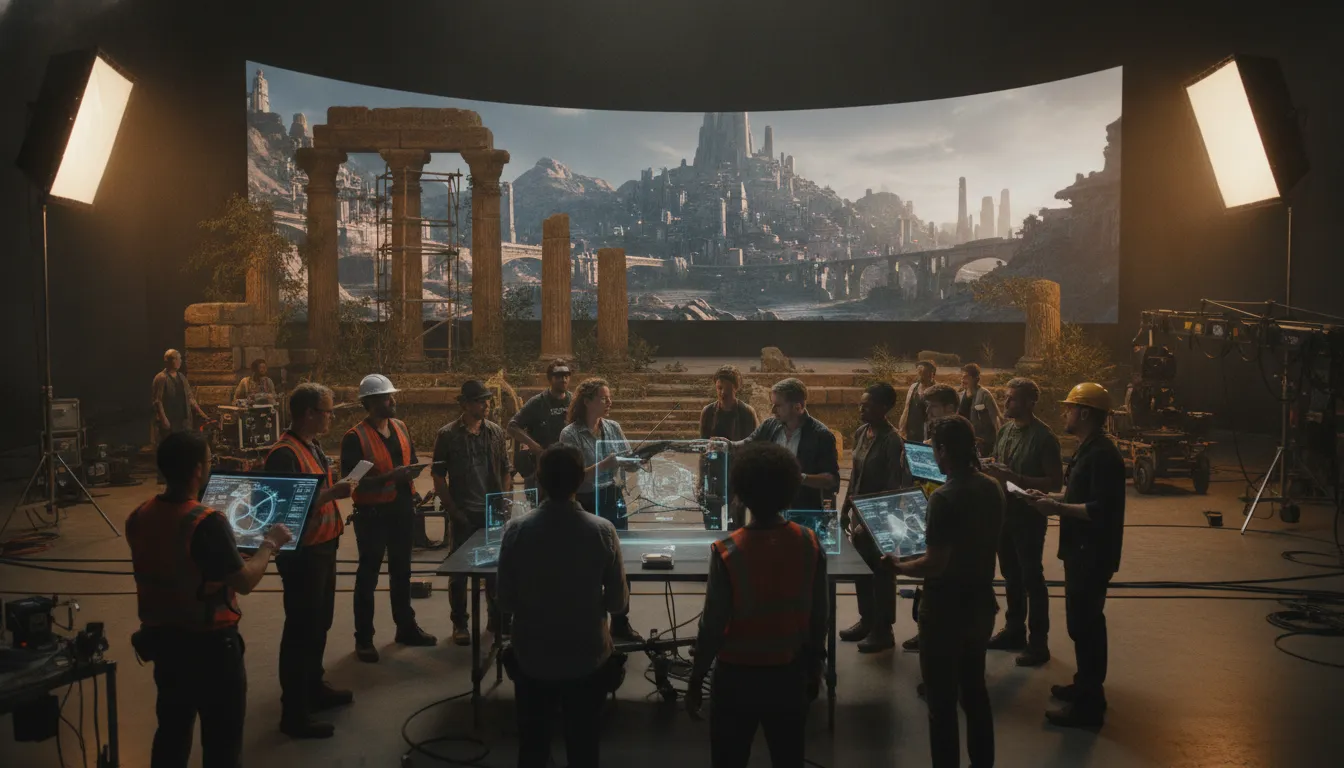
The execution layer should match the ambition of the IP. In games, deliverables can span prototyping, Unreal Engine and Unity development, tooling, production pipelines, monetization, and post-launch support. Arctic7's game development capabilities also cover narrative and worldbuilding, helping the interactive experience contribute to the wider ecosystem rather than operate as a disconnected adaptation.
For film and television, virtual production and real-time workflows can connect pre-production decisions with on-set visualization and post-production needs. Narwhal Studios specializes in ICVFX, LED volumes, Unreal Engine, real-time visualization, and real-time rendering. Its documented credits include six Star Wars productions, Marvel's Ant-Man and the Wasp: Quantumania, and Netflix originals. Those capabilities are outlined through Narwhal Studios and Arctic7's virtual production services.
Digital support that keeps the ecosystem moving
Delivery does not end at release. An integrated partner may provide immersive and XR development, application development, managed IT, and ongoing technical support alongside the core production work. Arctic7's A7 Digital provides managed IT, application development, and 24/7 support for entertainment-industry technology needs. Together, these layers give buyers a clearer path from strategic intent to launch, iteration, and long-term audience engagement.
How Should Buyers Evaluate a Production Services Company?
A strong production services company should be judged by more than a polished reel. Buyers need evidence that a partner can understand the IP, assemble the right specialists. Connect creative decisions to technical execution, and carry the work through defined approvals and handoff. The evaluation should test the operating system behind the visible work.
- Start with portfolio relevance. Review work that resembles your actual challenge, not simply projects with similar visual polish. Look for experience across the formats, audience, tone, and technical demands you need. Ask what the company personally delivered, which teams were involved, and whether it can explain the decisions behind the result. A relevant example, such as this Marvel virtual production case study, is more useful when the provider can connect the credit to its specific role.
- Map the team, not just the logo. Request the proposed leadership structure and the disciplines that will remain engaged. A credible team should show how producers, directors, designers, artists, engineers, virtual production specialists, and post-production partners collaborate. Confirm who owns decisions, who is client-facing, and which capabilities are internal, affiliated, or subcontracted.
- Test creative and technical depth together. Virtual production is a useful stress test because it requires both technology knowledge and creative practice, as NYU Tisch explains in its virtual production program overview. Ask how the team handles real-time rendering, Unreal Engine, ICVFX, LED environments, asset preparation, and editorial intent as one workflow. Technical fluency without storytelling judgment creates friction. Creative ambition without pipeline knowledge creates avoidable rework.
- Make the workflow visible. Ask for the path from discovery through delivery: workshops, audits, briefs, prototypes, reviews, version control, approvals, and final masters. Every stage should have named inputs, outputs, owners, and decision gates. You should be able to see how a change in the IP, platform, or production plan moves through the system rather than discovering it late.
- Examine governance and compliance discipline. Serious production requires more than ideas. Review how the provider manages eligibility questions, rights, documentation, budgets, applications, approvals, and production updates. Public film-program guidance treats eligibility, budget preparation, and updates as distinct areas of discipline, a useful reminder that governance belongs in the operating plan, not in an afterthought.
- Pressure-test schedule and budget control. Do not ask only whether the team can meet a date. Ask how it builds the schedule, identifies dependencies, records assumptions, handles scope changes, and escalates risks. Request a milestone-level view of reviews and approvals. The goal is not a false promise of certainty. It is a shared method for making tradeoffs early, while choices are still manageable.
- Define the handoff before you begin. Clarify what the final delivery includes: source assets, technical documentation, production files, usage rights, training, maintenance responsibilities, and post-launch support. The best partner leaves your team with a usable, organized system, not a collection of disconnected files. This is especially important when one IP must continue across games, film, television, immersive experiences, and digital platforms.
When Is an Integrated Partner Better Than a Specialist?
An integrated partner is not automatically the right choice. A specialist may be the strongest option when the brief is narrow, the internal team is experienced, and adjacent work is already coordinated. An integrated model becomes more valuable when several formats, stakeholder groups, or shared world assets must move together without losing creative or technical continuity.
Choose an integrated entertainment services partner when coordination itself is a material production risk. The decision is less about finding the largest provider and more about matching the operating model to the complexity of the IP.
| Operating model | Best use case | Primary advantage | Main consideration |
|---|---|---|---|
| One specialist | A focused deliverable, such as a character system, visual-effects package, or game prototype | Deep expertise and a direct creative relationship | Adjacent teams must own the handoffs, context, and downstream decisions |
| Multiple specialists | A complex program where distinct disciplines require independent expertise | Access to highly focused capabilities and flexible sourcing | The buyer carries greater coordination, governance, and integration responsibility |
| Integrated partner | Cross-format expansion, shared worldbuilding, or production with many internal and external stakeholders | One connected strategy, workflow, and accountability structure | The partner must demonstrate genuine depth across every required discipline |
Coordination is the real differentiator
A multi-vendor model can work well when the client has strong production management and a clear technical architecture. It becomes harder when the same characters, environments, story rules, or interaction systems must serve film, television, games, and immersive experiences. Each additional handoff creates an opportunity for interpretation to drift, requirements to be lost, or a decision to be revisited.
An integrated partner can reduce that burden by connecting strategy, creative development, technical production, and delivery planning. That does not mean every task belongs under one roof. The strongest model may still bring in outside specialists, but a capable lead partner maintains the shared brief, decision rights, asset logic, and review gates.
When a specialist remains the better choice
Use a specialist when the problem is clearly bounded and success depends on a particular craft. A focused provider can be more efficient for a defined visual-effects sequence, a single platform adaptation, or a discrete technical prototype. An integrated partner adds value when the cost of fragmented decisions is likely to exceed the benefit of narrower sourcing.
For buyers, the practical test is simple: count the formats, dependencies, approvals, and shared assets that must remain aligned. If that coordination map is dense, an integrated production services company may provide more value through continuity and governance than through any individual service alone.
How Does an Integrated Production Partner Protect Creative Coherence?
Creative coherence depends on more than a shared style guide. An integrated partner protects it by aligning the IP, strategy, production decisions, and stakeholder reviews before separate teams begin building for different platforms. That creates a practical system for preserving the same world, tone, character logic, and audience promise across every expression.
Arctic7's approach begins with IP readiness workshops and audits. These sessions surface what is established, what can evolve, and where the boundaries of the canon or brand experience need clearer definition. They also expose production risks early, such as disconnected rights assumptions, incompatible pipelines. Or a story element that works in film but needs a different form in a game or immersive experience.
From there, a unified transmedia strategy gives each format a meaningful role. The objective is not to repeat one story across games, film, television, and immersive work. It is to decide how each platform expands the larger ecosystem while remaining recognizably part of the same IP. Arctic7 documents that direction in a production blueprint with platform-specific deliverables, so creative ambition can be translated into decisions teams can actually execute. Explore Arctic7's integrated entertainment services.
Shared guardrails turn strategy into daily decisions
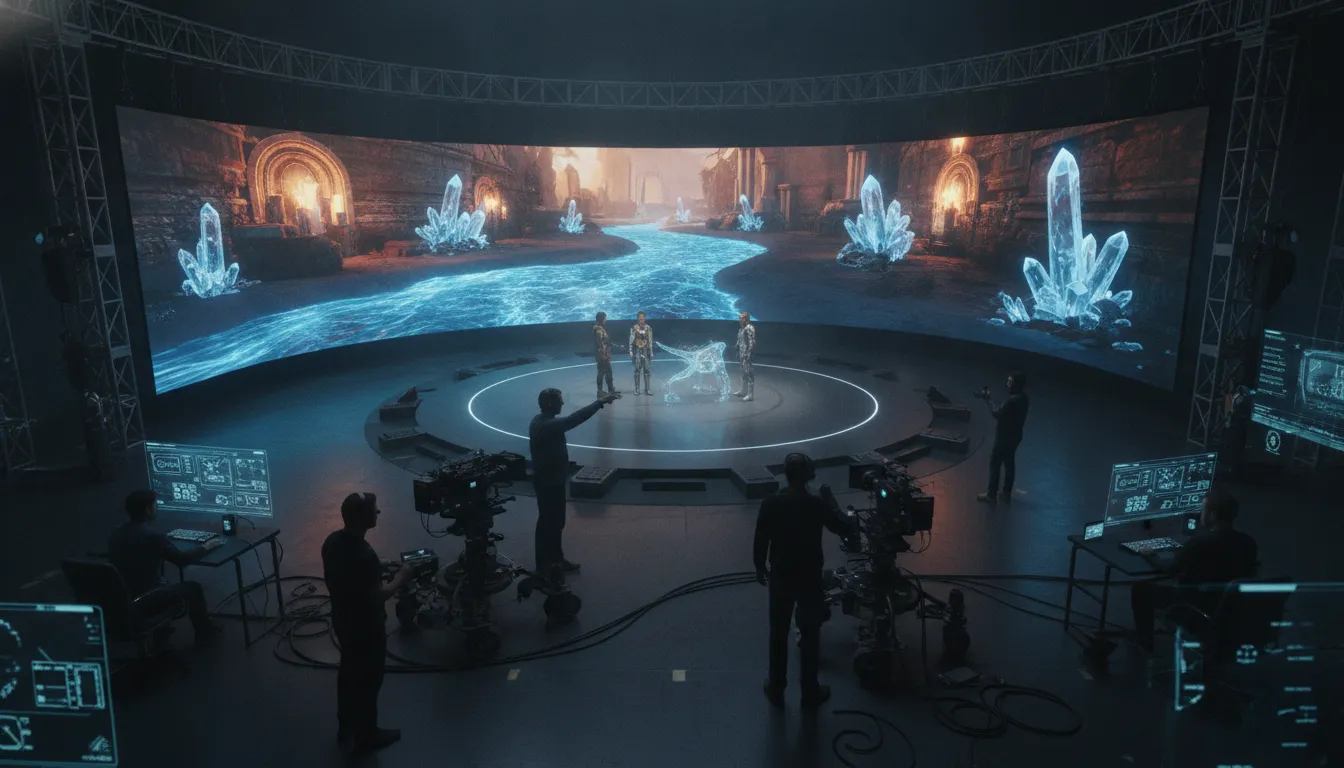
Creative guardrails should be specific enough to guide teams without removing room for interpretation. They can cover world rules, character motivations, visual language, interaction principles, technical constraints, and the points where a new experience must connect back to the core franchise. A shared asset and decision framework then gives writers, designers, directors, developers, and technical artists a common reference instead of relying on informal memory.
This is where cross-disciplinary depth matters. A production services company working across formats must understand how a narrative choice affects gameplay systems, performance capture, virtual production, post-production, and delivery. Arctic7 combines strategy development, creative execution, and technical production, including game development, real-time visualization, and virtual production capabilities. That combination allows teams to identify conflicts while choices are still inexpensive to change, rather than discovering them during final delivery.
Alignment keeps ownership clear
Coherence also requires governance. Regular reviews should bring the right rights holders, creative leads, platform specialists, and production owners together around visible decisions. The goal is not to add meetings. It is to establish who approves canon, who owns format adaptation, how changes are documented, and when a deliverable is ready to move forward.
Arctic7's work across interconnected productions illustrates why that alignment matters. Its documented Star Wars production partnership and Lollipop Racing case study provide useful examples of applying creative and technical capabilities to distinct entertainment contexts. For IP leaders, the test is straightforward: every team should know the shared intent, the platform-specific responsibility, and the decision path when those two come into tension.
What Should the First Engagement Scope Include?
A strong first engagement scope converts a promising production relationship into a shared operating plan. It should define the creative objective, establish rights and canon boundaries. Name the work to be delivered, assign decision-makers, set review gates, and explain how success will be assessed. The scope should also leave the next team with a documented, usable handoff.
At minimum, the first engagement should align the partner and IP owner on what is being explored and what is authorized. It should also identify who approves each decision and what evidence determines whether the work is ready to advance. This clarity protects creative intent while giving production teams enough structure to move efficiently.
Define the objective and the IP boundaries
Begin with the decision the engagement needs to support. Is the team preparing a transmedia concept, testing a production approach, developing a playable prototype, or creating a blueprint for a larger program? A precise objective prevents a discovery phase from expanding into undefined execution.
The scope should then record the relevant rights, approved source material, canon requirements, audience assumptions, and known restrictions. This is not administrative detail. The New York State Department of Taxation and Finance outlines pre-production as including story rights, scripts, key personnel, schedules, and budgets. See its film production guidance. The same discipline helps any format stay grounded in what the IP owner can authorize.
Specify deliverables, roles, and review gates
List the concrete outputs, such as a strategy brief, narrative framework, production blueprint, prototype, technical assessment, or platform-specific recommendations. For each deliverable, identify the accountable lead, contributors, approver, and required inputs. Avoid vague language such as "explore possibilities" without defining what the partner will return.
Milestones should correspond to meaningful decisions, not simply elapsed time. Establish gates for scope alignment, creative direction, rights and canon review, technical feasibility, and final recommendation. If the engagement touches film or television incentives, compliance should be treated as a governance workstream rather than an afterthought. California's film commission guidelines separately address project eligibility, funding, budget and application preparation, and production updates, illustrating why those responsibilities need named owners and an agreed reporting rhythm. They are guidance, not a substitute for legal or tax advice.
Measure the outcome and document the handoff
Success measures should match the objective. They may include approval of the strategic direction, completion of agreed creative and technical artifacts, validation of a workflow, or a clear decision about the next phase. Do not promise audience, revenue, or schedule outcomes that the first engagement cannot substantiate.
Close with a handoff package that records decisions, open questions, source assets, assumptions, dependencies, risks, and recommended next actions. An integrated partner can help connect that work across formats through integrated entertainment services.
The value of the first scope is its clarity. Every stakeholder should understand what was decided, what remains unresolved, and who owns the next move.
Frequently Asked Questions
What does a production services company do?
A production services company can support an entertainment project from early planning through delivery. Its work may include rights and script planning, budgeting and scheduling, production logistics, post-production, and distribution support. The exact scope depends on the partner's capabilities and the project's format. New York State's production guidance describes these stages across pre-production, production, post-production, sale, and distribution.
When should an IP holder choose an integrated partner?
Choose an integrated partner when the project must extend across games, film, television, immersive experiences, or digital platforms while preserving a coherent world. One partner can align strategy, creative development, technical production, and handoffs across formats. This is especially useful when fragmented workflows would create duplicated effort or inconsistent decisions.
How should buyers evaluate a production services company?
Evaluate the team against the actual demands of the project, not only its reel. Review relevant format and IP experience, senior creative involvement, technical depth, production methodology, communication cadence, governance, scalability, and post-delivery support. For virtual production, assess creative and technology expertise together because successful work requires both, as NYU's virtual-production program explains.
What should be included in the first project scope?
The first scope should define the IP and rights context, objectives, audiences, formats, deliverables, roles, milestones, review gates, dependencies, and success measures. It should also clarify which decisions the partner owns and how approvals work. A disciplined pre-production plan addresses story rights, key personnel, schedules, and budget before production begins. See New York State guidance.
Ready to Explore an Integrated Production Brief?
A strong first conversation can clarify how creative strategy, technical production, and delivery should connect across your entertainment ecosystem. Arctic7 can help you examine the opportunity, define the right production scope, and identify where virtual production supports the wider brief.
Explore Arctic7's virtual production services and get started on your brief.
New Immersive & XR Media Capabilities Added to Arctic7's Suite of Games, Film & TV and Digital Services

Arctic7 Shares Details of its Work on Skeleton Crew and Cinematics Partnership with Fateless

The Human Touch: Adding Personality to Project and Product Management
Whether it’s your team, your client, or your stakeholders, understanding the human dynamics is just as critical as hitting milestones.

McDonald's Case Study: Bridging Brand and Play | Arctic7
Bridging Brand and Play: An Interview with Lindsay Blenkhorn Daggitt