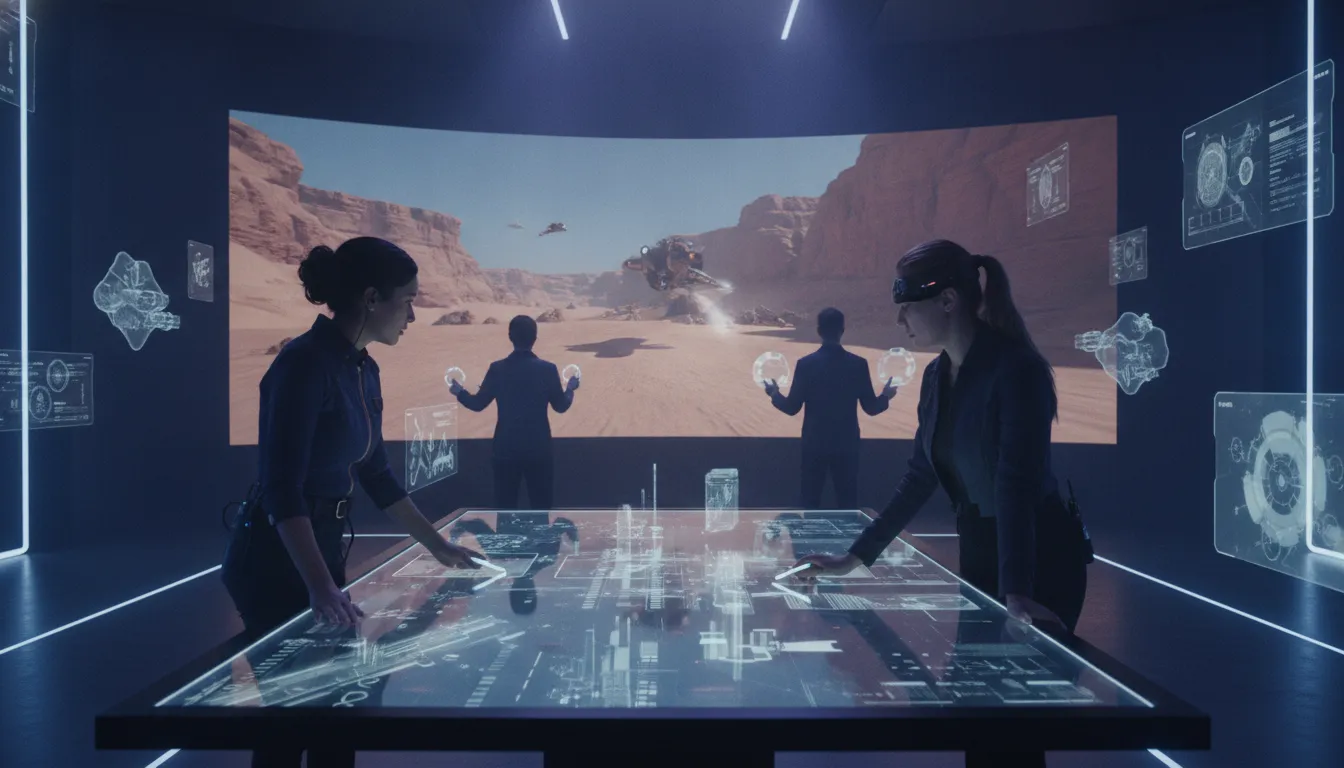

Previsualization Services: A Production Planning Guide
A production can lose days and substantial budget when a sequence reaches set before its camera logic, blocking, or technical demands are fully understood. The earlier those decisions become visible, the more room the creative team has to test, revise, and align without paying for physical changes or reshoots.
Previsualization services turn a planned sequence into a practical visual model before production, using tools such as storyboards. Shot lists, photography, and 3D animatics to clarify beats, camera movement, lighting, blocking, and VFX requirements. That shared reference helps directors, producers, and department heads identify creative or technical problems early. Coordinate their decisions, and protect the schedule as the work moves from concept to execution.
The value is not limited to a polished preview. Effective previz creates a working bridge between the creative idea and the production realities that determine whether it can be delivered efficiently. That starts with understanding what the service includes and how its outputs support different kinds of productions.
Ready to see your sequence before it reaches set? Talk to Arctic7 about previsualization.
What Are Previsualization Services?
Previsualization, or previs, is the process of visually planning scenes, sequences, or environments before physical production begins. It gives directors, producers, designers, and technical departments a shared view of how an idea will work before crews build sets, position cameras, or commit significant resources. The purpose is not to replace creative judgment. It is to make that judgment easier to test, communicate, and refine while changes are still practical.
Previsualization services can be simple or highly developed, depending on the production. A team may begin with storyboards that establish composition and dramatic beats, then develop shot lists and photographic references to clarify the intended look. For sequences that depend on timing, movement, or complex visual effects, the work can progress into 3D animatics. These animated scenes add camera motion, character blocking, and editorial rhythm, allowing the production team to assess how a sequence plays before filming.
From Storyboards to Technical Planning
Techviz extends the creative conversation into the practical requirements of the shoot. It examines technical specifications, lens metrics, camera movement constraints, set dimensions, and logistical limitations. That analysis can reveal whether a planned camera move is physically safe. Whether a set supports the required performance, or whether a lens and stage configuration will produce the intended image. In this way, techviz connects the director's ambition with the conditions needed to execute it.
The most useful previs is therefore more than a polished preview. It is a working document for the production. Directors can explore lighting moods and atmosphere in a tangible format. Production designers can evaluate whether a virtual set makes spatial sense for camera movement, lighting, and performance. Producers and financiers can understand complex technical plans without having to translate abstract conversations into an imagined final image. The resulting documentation helps departments maintain aesthetic and technical consistency from preproduction through postproduction.
How Previs Connects to a Virtual Art Department
In a Virtual Art Department, previs becomes part of an integrated production pipeline rather than an isolated early exercise. VAD artists, designers, cinematographers, and technical specialists can collaborate on environments, camera logic, lighting, and stage requirements while the creative direction is still taking shape. Real-time rendering makes it possible to test alternatives quickly and shorten the feedback loop between departments.
That approach is particularly valuable for virtual production, where digital environments must interact convincingly with real lighting, actors, and camera movement. Arctic7's virtual-production practice, including its Narwhal Studios entity, positions VAD work as an early strategic layer of production. The team has developed previs and VAD capabilities since 2015, with six in-camera visual effects projects involving Lucasfilm and debut projects with Netflix, Warner Bros., and Amazon. For IP holders and studios, the value is a clearer path from world-building concept to a shootable, technically coherent production.
What Previsualization Delivers: Beats, Camera Moves, and Blocking
The strongest previsualization services turn an idea into a working visual plan that every department can examine, challenge, and refine. The deliverable is not simply a polished preview. It is a practical production reference that connects story beats to camera decisions, performance space, lighting intent, and technical constraints before those choices become expensive on set.
A shared visual language for the scene
At the story level, previs establishes the rhythm of a sequence. Animatics add timing and camera motion to storyboards, giving directors and editors a foundational sense of pace before principal photography. A glance can be held for a precise duration, a reveal can be delayed, and a transition can be tested against the emotional beat it needs to support. That timing helps the team discuss the scene in concrete terms rather than relying on competing interpretations of a script or verbal pitch.
Previsualization also makes abstract creative direction tangible. A director may describe a scene as intimate, oppressive, cool, or dreamlike, but those words can mean different things to different departments. By previewing lighting mood and atmosphere in a visual environment, the team can respond to something it can see and revise. The result is a clearer conversation about contrast, color, shadow, negative space, and the relationship between the subject and the environment.
Camera, blocking, and set decisions before construction
In a virtual space, teams can plan camera blocking, lighting positions, and set design together. Directors can test lens choices and camera paths while production designers evaluate whether a set has enough spatial logic for movement, lighting setups, and actor performance. This process can reveal that a planned tracking shot needs more clearance. That a practical element will obstruct the frame, or that a location cannot support the intended staging. The decision is easier to make when the alternative is still a digital adjustment rather than a physical rebuild.
Virtual camera workflows extend that exploration. Filmmakers can navigate a virtual scene with a handheld device as if operating a physical camera, testing viewpoints and movement in a more intuitive way. This is especially useful when conventional diagrams cannot communicate the feeling of a shot. The resulting camera language can then inform physical production, a virtual stage, or a hybrid workflow.
Iteration that connects creative and technical teams
Real-time rendering allows teams to iterate quickly on composition, lighting, environment scale, and movement without waiting for a traditional render cycle. Producers, directors, cinematographers, designers, and VFX teams can review the same version, identify problems, and make decisions while the sequence is still flexible. Previs documentation can then carry those decisions forward as a reference for production and postproduction.
That is where virtual production becomes a natural next step for projects that need live interaction between performers, real lighting, and digital environments. The value of these previsualization services is not limited to a convincing movie file. It is the alignment, evidence, and practical clarity that allow a complex sequence to move from concept to execution with fewer unknowns.
Where Previsualization Services Slot Into Preproduction
Previsualization belongs early in preproduction, after the creative direction and broad sequence requirements are established, but before physical production begins. At this point, the team can still change the camera plan, blocking, environment, lighting approach, or technical method without disrupting a shooting schedule or rebuilding a finished set. The purpose is not to create a polished final effect. It is to make important decisions visible while those decisions are still affordable to change.
That timing gives directors and producers a practical way to test creative intent against production reality. A sequence can be explored in a virtual space before crew, cast, stages, locations, and visual-effects resources are fully committed. Potential creative or technical problems become easier to identify, and the team can resolve them before they become expensive reshoots or on-set compromises. In real-time workflows, revisions can also be reviewed quickly, shortening the feedback loop between an idea, a visual test, and an approved direction.
One visual plan for every department
Previs is most valuable when it is treated as a shared production language rather than a director-only reference. Producers can evaluate scope and scheduling implications. Directors can judge performance, rhythm, staging, and camera intent. Production designers can test whether a set supports the required movement and sightlines. Cinematographers and department heads can discuss lenses, lighting, rigging, effects, stunts, and practical constraints against the same visual reference.
This shared view is particularly useful for complex sequences, where a written description may leave too much room for interpretation. Previsualization documentation can guide departments from preproduction through postproduction, preserving consistency in aesthetic and technical execution. It also gives non-creative stakeholders a concrete way to understand a sequence, making approvals more precise without requiring everyone to interpret specialist terminology.
From creative planning to technical execution
Previs does not end when the broad creative approach is approved. It maps naturally into techviz, which adds the technical detail needed to execute the plan safely and feasibly. Lens metrics, camera movement limits, set dimensions, and logistical constraints can be checked against the intended shots. This is where an attractive idea becomes a workable plan for the stage, location, equipment, and crew.
After photography, postvis extends the same workflow in the opposite direction. Finalized plates can be combined with temporary visual-effects elements for rapid creative review before high-fidelity rendering. The result is a connected path from early concept, through technical planning, to post-production review, rather than a series of disconnected handoffs.
The workflow is especially powerful when virtual production is part of the plan. Previsualization can move into a studio environment where virtual backgrounds interact with real lighting and actors in real time. That integration lets the team validate creative and technical choices under conditions closer to the shoot itself, while preserving the speed and flexibility of early iteration.
How Previsualization Reduces Reshoots and Budget Risk
Reshoots are rarely caused by one isolated mistake. They usually emerge when creative intent, technical requirements, and physical constraints remain unresolved until the cameras are already rolling. Previsualization moves those decisions into a lower-cost planning environment, where the team can test a sequence before committing crew time, set materials, location days, or visual-effects resources.
That makes the value of previs more practical than simply producing attractive reference imagery. A well-developed sequence exposes bottlenecks while they can still be changed. Directors can examine blocking and camera movement, producers can understand the operational implications, and department heads can work from a shared visual plan. The result is less on-set discovery and more deliberate execution.
| Production consideration | Early previsualization | On-set discovery |
|---|---|---|
| Shoot days | Sequences are blocked and refined before the shoot, helping the team use scheduled days for execution and creative polish. | Time is absorbed by testing coverage, solving spatial problems, and revising plans under production pressure. |
| Reshoot risk | Creative and technical issues are identified earlier, reducing the likelihood and cost of expensive reshoots. | Missed camera logic, incomplete coverage, or unclear action may only become visible after principal photography. |
| Budget variance | Set requirements and VFX resources can be assessed before full production, supporting more accurate allocation. | Late changes can trigger additional construction, crew time, equipment, location costs, or VFX work. |
| Stakeholder alignment | Producers, directors, department heads, and non-creative stakeholders can review the same concrete visual plan. | Different interpretations of an abstract brief may surface only when changes are expensive or politically difficult. |
Test the physical plan before construction
One of the clearest savings comes from validating camera angles and lens requirements in 3D before a set is built. A virtual environment can reveal that a wall blocks the intended move, a practical element falls outside the lens, or the available space cannot support the planned staging. Production design can then adjust the layout before materials are ordered or construction begins. Previsualization also helps assess whether a set will function for camera movement, lighting setups, and actor performance, rather than judging it only as a static image.
Make VFX costs visible earlier
For effects-heavy sequences, previs gives production a working basis for estimating the number and complexity of shots, the resources required, and the likely budget before full production starts. It does not eliminate uncertainty, but it replaces broad assumptions with a sequence that can be reviewed, revised, and scoped. That distinction matters when capital must be allocated across practical production, postproduction, and interactive or virtual elements.
It also reduces VFX technical debt. By identifying visual mismatches before production plates are filmed, the team can solve problems before they multiply across the shot pipeline. Fewer late surprises leave the VFX house more capacity for refinement, while directors spend more of the shooting day on performance and creative polish instead of technical troubleshooting.
When those previs decisions connect directly to a virtual production workflow, teams can further evaluate how virtual environments interact with lighting and performers in real time. The business case is straightforward: spend more effort where changes are inexpensive, so the shoot and postproduction stages carry less avoidable risk.
Previsualization vs Storyboards: When to Move to 3D
Traditional storyboards remain one of the most efficient ways to establish a sequence. A strong board can communicate composition, screen direction, performance beats, and editorial intent before a camera is built or a set is dressed. Storyboards are also a form of previsualization, alongside shot lists, photographic references, and more advanced 3D animatics. They are not an outdated step to be discarded.
The decision to move beyond flat boards comes when the image depends on relationships that a still drawing cannot fully explain. A sequence involving a moving camera, multiple performers, a virtual environment, complex lighting, or substantial visual effects can look clear on paper while remaining ambiguous in space. The modern shift from 2D storyboards toward 3D previsualization services reflects the growing demand for cinematic storytelling that is more complex, immersive, and visually challenging.
What 2D storyboards communicate well
Storyboards are particularly effective during the earliest creative conversations. Directors can explore the visual language of a scene quickly, while producers and department heads gain a shared reference for the intended beats. Boards also make it easy to compare alternate compositions without spending time building a detailed digital environment. For dialogue, straightforward coverage, and sequences whose spatial logic is already understood, that speed can be more valuable than added dimensionality.
They become less decisive when the production must answer practical questions. How far does the camera travel? Does a lens choice reveal an unwanted set edge? Can two characters cross without interrupting the lighting plan? Where should an actor stand relative to a virtual set extension? A sequence of still frames may suggest an answer without proving that the answer works continuously.
When 3D previz earns its place
Three-dimensional previsualization turns those questions into something the team can test. Directors and cinematographers can evaluate camera movement, lens perspective, blocking, set scale, and the relationship between foreground action and digital environments. Production designers can assess whether a proposed space is functional for performance, lighting, and camera access before construction. In VFX-heavy work, the same process can expose visual mismatches before production plates are filmed, reducing downstream technical debt.
Animatics provide a useful bridge between the two approaches. They add timing and camera motion to storyboard images, giving the editorial and production teams a preliminary rhythm for the sequence. When timing is the primary uncertainty, an animatic may be enough. When the uncertainty involves depth, parallax, physical access, lighting interaction, or a complicated VFX handoff, a fully navigable 3D scene usually provides stronger evidence.
The threshold is not a matter of choosing the more sophisticated tool. It is a matter of choosing the clearest decision-making environment. If a creative or technical question depends on motion through space, 3D previz can answer it earlier and with less ambiguity. Real-time workflows also allow teams to iterate quickly, testing alternate camera paths or blocking choices without waiting for a traditional render for every revision.
That makes 3D previsualization especially valuable when multiple stakeholders must approve a sequence. A concrete moving reference helps producers, financiers. And department leads understand the plan without asking them to translate a flat board into a mental model of the finished scene. Storyboards establish intent; 3D previz demonstrates how that intent behaves in the world of the production.
Previsualization Services for Games, Film, and Virtual Production
Previsualization has different practical demands across entertainment formats, but the underlying purpose is consistent: make creative and technical decisions visible before they become expensive. For game teams, that may mean testing how a player moves through an environment. For film and television, it may mean proving that a complicated sequence can be photographed, performed, and completed with visual effects. In virtual production, it becomes a real-time bridge between the digital world and the physical stage.
Designing playable worlds before full production
In game development, previsualization services help teams map interactive environments and camera mechanics before full-scale environment production begins. A level may look impressive in a still image but fail when a player moves through it, changes direction, or encounters a scripted event. Previz gives designers, directors, and technical artists a shared way to test sightlines, pacing, spatial relationships, and the relationship between gameplay flow and visual quality.
This work can also expose problems that are difficult to see in a concept document. A camera move that works for a cinematic sequence may frustrate players when it is tied to navigation. An environment may support a dramatic composition but leave too little space for interaction, combat, or performance capture. By exploring those choices early, the team can refine the experience before detailed assets and environments make change slower and more costly.
Planning complex film and television sequences
For film and television, previz is increasingly standard practice in hybrid live-action and VFX productions. It helps directors and department heads coordinate blocking, camera movement, lighting intentions, set geography, and digital elements before the shoot. That shared visual reference matters when a sequence involves multiple units, stunts, virtual characters, or environments that will not exist physically on the day.
The need becomes even more pronounced on blockbuster productions, where thousands of VFX shots may need to remain coherent across a larger narrative. Previz allows teams to evaluate a sequence as a complete system rather than as isolated shots. It can clarify which moments require physical production, which require digital augmentation, and where a particular camera or performance choice creates downstream effects. The result is not a replacement for creative judgment. It is a more precise workspace for exercising it.
That same logic supports cinematic storytelling. When the intended rhythm, scale, and visual language are established early. The production can spend more of its shooting time on performance and creative polish instead of solving avoidable technical questions.
Connecting previz to a virtual production stage
Virtual production studios extend this planning process into real time. Modern previsualization services can integrate with the stage environment so creative teams can see how virtual backgrounds interact with real lighting, lenses, camera movement, and actors. Decisions that once had to be inferred from separate drawings, plates, or offline renders can be evaluated in the context of the live performance.
This is where a Virtual Art Department becomes strategically valuable. The VAD can carry creative intent into technical execution, translating previz into environments and workflows that are usable on stage. Real-time iteration lets directors adjust composition and atmosphere while the team can still respond. Rather than discovering after the shoot that a digital environment, camera plan, or lighting approach does not work together.
Arctic7's Narwhal Studios brings direct production experience to this workflow. Its previs and VAD work has been active since 2015, including six ICVFX projects with Lucas Film and debut projects with Netflix, Warner Bros., and Amazon. For IP holders and production partners, that history demonstrates why previz should be treated as part of the production strategy from the earliest design conversations. Not as a late-stage visualization service added after the major decisions have already been made.
Frequently Asked Questions
When should a production bring in a previz team?
Bring in previz during early preproduction, once the sequence, locations, or major creative objectives are defined. The team can test blocking, camera movement, lighting, set geometry, and technical constraints before departments commit to costly physical work. Earlier involvement gives producers and department heads a shared visual reference for decisions that otherwise remain abstract.
How does previsualization reduce reshoots and budget risk?
Previsualization exposes creative and technical problems before the shoot, when changing a camera angle or sequence is less expensive than rebuilding a set or bringing a crew back. It also helps estimate VFX resources, verify lens and movement requirements, and identify mismatches before production plates are filmed. The result is a more deliberate allocation of time, crew, set, and postproduction resources.
Are storyboards enough, or does a production need 3D previz?
Storyboards are effective for establishing composition, coverage, and story beats. Move to 3D previz when spatial relationships, complex camera moves, lighting, stunts, VFX, or virtual environments materially affect the shot. A 3D sequence can add timing, motion, scale, and lens context that a flat drawing cannot communicate, while both formats can work together in the same planning process.
What does a typical previz deliverable include?
Deliverables vary by project, but may include storyboards, shot lists, 3D animatics, camera and lens studies, blocking references, set-planning views, and technical documentation. Animatics add timing and camera motion, while techviz focuses on lens metrics, movement limits, safety, and logistical feasibility. The finished package should give creative and technical departments a practical guide from preproduction through postproduction.
New Immersive & XR Media Capabilities Added to Arctic7's Suite of Games, Film & TV and Digital Services

Arctic7 Shares Details of its Work on Skeleton Crew and Cinematics Partnership with Fateless

The Human Touch: Adding Personality to Project and Product Management
Whether it’s your team, your client, or your stakeholders, understanding the human dynamics is just as critical as hitting milestones.

McDonald's Case Study: Bridging Brand and Play | Arctic7
Bridging Brand and Play: An Interview with Lindsay Blenkhorn Daggitt