

Immersive XR Media: Building Next-Generation Virtual Brand Experiences
Linear storytelling alone cannot sustain the deep engagement modern entertainment franchises demand. Audiences today expect to step inside the worlds they love, not just watch them from a distance. The most successful IP holders are already building interconnected digital ecosystems that turn passive viewers into active participants, and immersive XR media is the engine driving that transformation.
Ready to explore immersive XR media for your next franchise expansion? Speak with Arctic7's transmedia team to map your IP's XR strategy.
What Is Immersive XR Media?
Immersive XR media uses virtual, augmented, and mixed reality tools to blend physical and digital environments, creating shared presence and emotional connections that go far beyond traditional screens. For IP holders, it is the foundation for building lasting audience loyalty and diversified revenue streams.
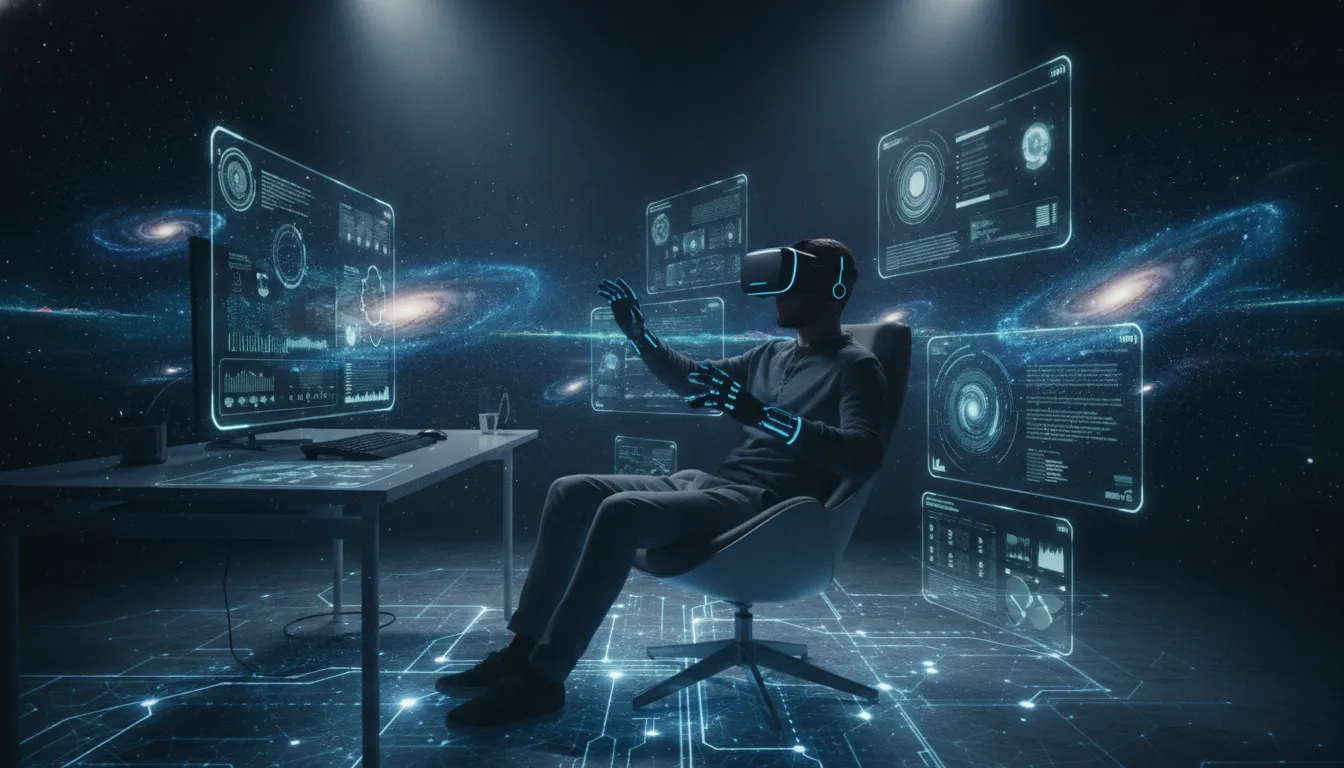
Immersive XR media represents a set of digital technologies that transform how audiences perceive and interact with branded content. XR stands for Extended Reality, an umbrella term encompassing Virtual Reality (VR), Augmented Reality (AR), and Mixed Reality (MR). Unlike traditional media, these formats engage multiple senses and let users step inside a narrative rather than observe it from outside.
Defining the XR Umbrella
Three core technologies sit under the XR umbrella. VR places users in a fully digital environment, blocking out the physical world entirely. AR overlays digital information onto the real world through devices like smartphones or smart glasses. MR blends both approaches so digital and physical objects can interact in real time. The XR Association notes that the field also encompasses emerging technologies still in development.
These tools work together to create environments where the boundary between real and digital begins to dissolve. For entertainment brands, this is not just a technological novelty. It is a shift in how audiences form lasting connections with intellectual property. Arctic7 has demonstrated this approach through its expanded immersive and XR media services, which bridge games and film storytelling for leading studios.
From Passive Viewers to Active Participants
The most significant change immersive media introduces is the transition from passive consumption to active participation. Traditional media is linear: the audience follows a predetermined path. Immersive media, by contrast, requires the audience to move, touch, and make choices that shape the experience. Research from the Northeastern XR Initiative confirms that this active role builds stronger emotional bonds between fans and brands.
When audiences can influence a digital world, they develop a sense of ownership over the experience. This principle is central to modern VR and AR storytelling and virtual production workflows. Instead of merely presenting a world, creators invite their audience to live within it, making each interaction deeply personal and memorable.
The Power of Shared Presence
Shared presence is the psychological phenomenon of feeling co-located with others in a digital space, even when physically separated. The Northeastern XR Initiative describes this as creating memories that feel as real as lived experience. Shared presence transforms a solitary activity into a social event, which is particularly valuable for entertainment brands seeking to build communities around their IP.
This sense of togetherness relies on fast infrastructure including 5G connectivity and AI-driven rendering to maintain smooth, lag-free interactions. For IP holders, designing spaces where fans can meet, share, and co-create extends a single film or game into a living social world. Arctic7's immersive and XR media services help brands design these shared environments from the ground up.
Why Are Entertainment Brands Moving From Passive to Active Experiences?
The shift from lean-back consumption to active participation is not accidental. Several converging factors are driving entertainment brands to invest in immersive XR media, and the trend shows no sign of slowing.
The End of the Lean-Back Era
Audiences, particularly younger demographics, have grown accustomed to interactive digital experiences. Social platforms, gaming, and user-generated content have trained them to expect agency in their entertainment. When a brand delivers a passive experience, it competes at a disadvantage against interactive alternatives that command hours of active engagement per session.
Immersive media changes the value proposition. Instead of selling a single viewing, brands can create persistent worlds that fans return to repeatedly. This shifts the business model from one-time transactions to ongoing relationships.
Fragmentation Risk and the Need for Unified Worlds
As IP holders expand across games, film, television, and live experiences, they face a significant risk: brand fragmentation. When a story feels inconsistent across platforms, audience trust erodes and the intellectual property weakens. A unified creative vision maintained across every touchpoint prevents this fragmentation.
Arctic7 helps studios solve this challenge by building immersive XR media ecosystems from a single creative foundation. By planning for every platform early in development, brands ensure that every new piece of content strengthens the core narrative rather than diluting it.
New Revenue Models Through Active Audiences
Active audiences are more valuable than passive ones. Fans who spend hours inside a branded world are more likely to purchase digital goods, attend live events, and advocate for the brand within their social circles. This engagement creates diversified revenue streams beyond traditional box office or merchandising:
- In-world digital goods and virtual collectibles
- Premium access to exclusive XR experiences
- Virtual event tickets and live performances
- Branded spatial advertising within persistent worlds
- User-generated content marketplaces
How Entertainment Brands Are Building Immersive XR Ecosystems
Leading entertainment brands no longer treat films and games as standalone products. Instead, they construct interconnected worlds that span multiple screens, devices, and physical locations. This ecosystems approach to immersive XR media allows fans to enter their favorite stories from any access point and carry their engagement across platforms.
Building Worlds With XR Technology
Major studios combine VR, AR, MR, and spatial computing to create layered experiences. Each technology serves a distinct role within the broader ecosystem. VR delivers deep immersion for dedicated sessions. AR brings elements of the brand into the user's physical environment. MR enables hybrid experiences where physical and digital objects coexist and interact.
For IP holders, these digital spaces function as permanent brand destinations. Unlike a theatrical release window or a season of television, an XR world remains accessible year-round, providing continuous engagement opportunities. Research from the Northeastern XR Initiative confirms that the sense of shared presence in these environments builds lasting emotional connections that static media cannot replicate.
Proven Success in Virtual Production
Arctic7 has been a key contributor to this transformation. The team spent seven years partnering with Lucasfilm on productions including The Mandalorian and Ahsoka, completing six major projects that integrated virtual production pipelines with game engine technology. This work demonstrated how real-time rendering can make film production more flexible and cost-effective.
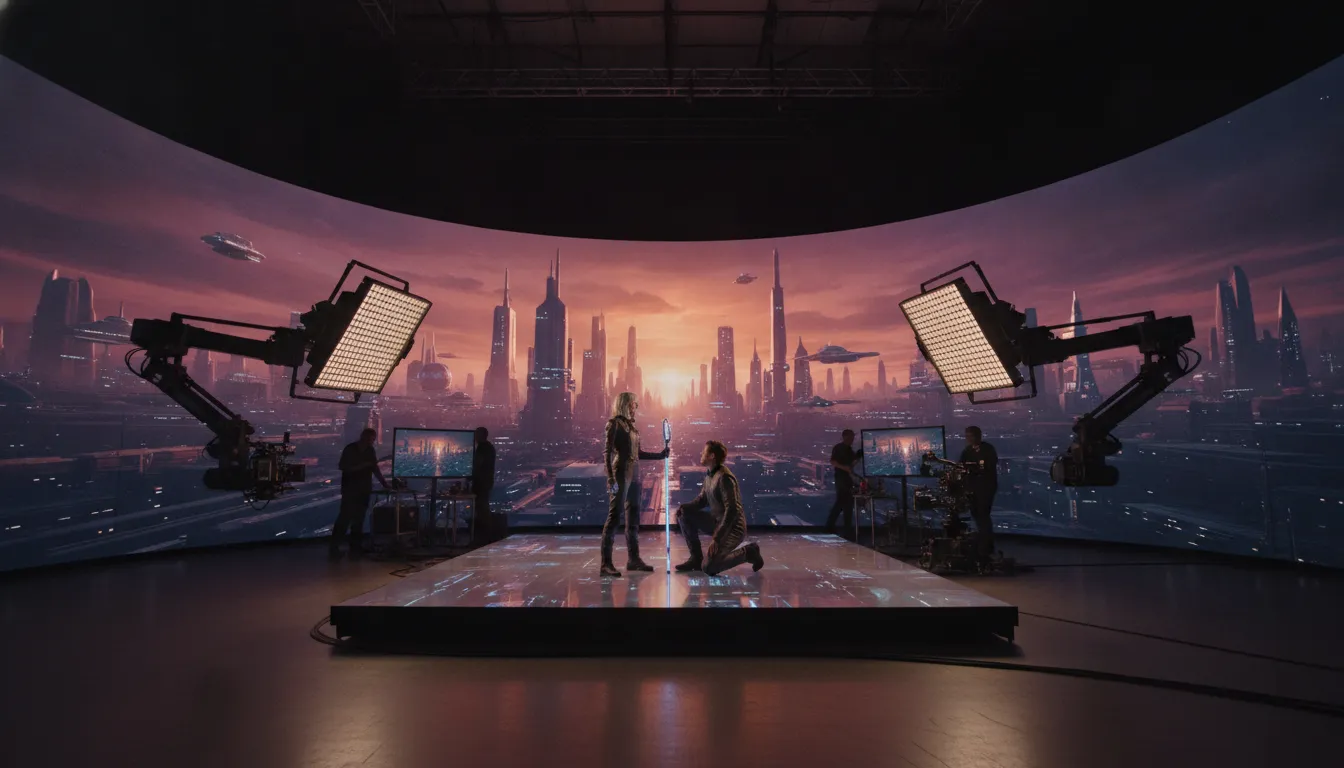
Work on Marvel's Ant-Man and the Wasp: Quantumania further illustrates the scale of these capabilities. Arctic7 delivered over 200 virtual stage walks and 45 virtual scouts, building eight hero sets with thirty-four variants. This depth of experience in Arctic7's immersive and XR media services gives brands a turnkey path from film production to interactive worlds.
Key Technologies Driving Immersive XR Media
The technology stack behind immersive XR media encompasses a range of tools that each serve distinct purposes within a unified ecosystem. Understanding how these technologies complement one another is essential for IP holders planning cross-platform expansion.
This shift represents a fundamental change in storytelling. Fans can now enter the worlds of the films and games they love rather than simply watching them. Modern XR tools bridge the gap between physical reality and digital possibility, allowing a single brand to exist across multiple dimensions simultaneously.
| Technology | How It Works | Best Use Case | Example |
|---|---|---|---|
| Virtual Reality (VR) | Creates a fully digital environment, blocking the physical world | Deep narrative immersion and gaming | 360-degree branded cinematic experiences |
| Augmented Reality (AR) | Overlays digital content onto the real-world view | Mobile engagement and location-based activations | Interactive park maps with character encounters |
| Mixed Reality (MR) | Blends real and digital objects for real-time interaction | Training, design visualization, and hybrid experiences | Virtual set scouting with real-time environment response |
| Spatial Computing | Uses AI and sensors to map and respond to physical space | Dynamic, context-aware persistent worlds | AI-driven virtual sets that adapt to user movement |
The Rise of Spatial Computing
Spatial computing represents the next frontier for XR media. These systems use artificial intelligence and environmental sensors to make digital spaces behave like physical ones. The environment learns from user movement, voice commands, and spatial context, creating interactions that feel natural rather than scripted. Fast networks like 5G enable these experiences to remain smooth and responsive even in complex scenes.
For major studios, spatial computing is a tool for building persistent worlds that users can explore as if they were real locations. This depth of engagement transforms a brief visit into a lasting memory. As AI capabilities advance, these environments will become increasingly lifelike, giving IP holders new dimensions for creative expression.
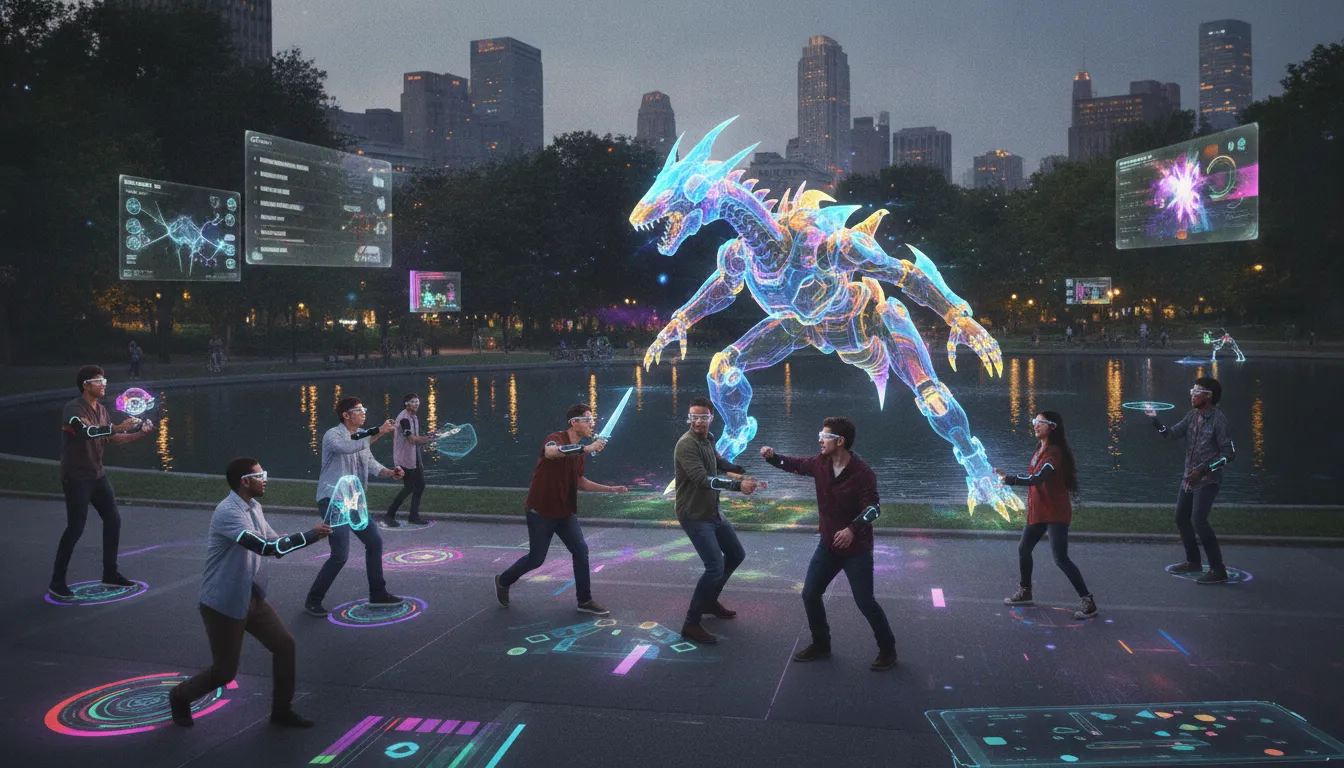
IP holders should select partners with proven expertise across the full XR spectrum. The technology must serve the story, not distract from it. When implemented well, the technology becomes invisible, and the audience simply experiences a world that feels more real.
Virtual Production and XR: A Natural Convergence
The boundary between film production and interactive experiences is dissolving. Virtual production (VP) and XR media are converging into a unified workflow where digital assets built for a film set simultaneously serve as the foundation for VR games. AR apps, and mixed reality experiences. This convergence represents a major efficiency gain for IP holders managing multiplatform franchises.
Building the Virtual Art Department
Arctic7 pioneered Virtual Art Department (VAD) workflows in 2015, years before they became an industry standard. The VAD approach moves environment design to the earliest stages of production. Teams construct digital sets and props in real-time engines such as Unreal Engine or Unity. These assets serve double duty: they appear on LED volumes during principal photography and later become the building blocks for XR experiences.
A strong VAD ensures that digital environments hold up on large-format LED screens while remaining lightweight enough for real-time rendering. This process is detailed in Arctic7's essential guide to virtual production. When a set is built in a game engine, it responds dynamically to camera movement, creating parallax and depth that green screens cannot match.
Lessons From the Star Wars Universe
Arctic7's seven-year partnership with Lucasfilm on The Mandalorian and Ahsoka demonstrates how VP and XR converge in practice. These productions used LED volumes to render alien worlds in real time within a physical soundstage. The same digital assets used on set can later power VR games or AR applications, ensuring visual consistency across every consumer touchpoint.
This approach reduces production costs by reusing high-quality assets while preserving a unified creative vision. A digital set approved by the film's director becomes the canonical environment for cinematic VR experience development, guaranteeing that fans encounter the same world whether they watch a show or play a game.
Real-Time Scaling for Marvel Studios
The Ant-Man and the Wasp: Quantumania engagement illustrates the operational scale these workflows support. Arctic7's team delivered over 200 virtual stage walks and 45 virtual scouts across eight hero sets with thirty-four variants. Real-time engine technology allowed the crew to test dozens of camera angles and lighting scenarios before committing to physical builds, saving both time and budget.
This convergence means production no longer ends when the film wraps. The digital world persists as a space for fans to explore. Brands can now build an entire ecosystem around a single content release, transitioning audiences from passive viewing to active participation.
What Role Does AI Play in the Future of XR Media?
Artificial intelligence is becoming a critical enabler of immersive XR media at every layer of the technology stack. From content creation to real-time interaction, AI reduces production costs while increasing the depth and responsiveness of digital environments.
AI-Driven Content Creation
Generative AI tools are accelerating the creation of XR assets. Text-to-3D models, AI-generated textures, and procedural world-building allow teams to populate digital environments faster than traditional manual modeling. This speed is essential for brands that need to launch XR experiences alongside film or game releases on tight production schedules.
Intelligent NPCs and Dynamic Narratives
AI-powered non-player characters (NPCs) can respond to user actions in real time, creating the illusion of a living world. Instead of following scripted paths, these characters adapt their behavior based on user choices, making each visit to a branded XR environment feel unique. This dynamic storytelling keeps audiences coming back to discover new content.
Personalization at Scale
AI enables XR experiences to adapt to individual users. A branded virtual world can modify its lighting, music, difficulty, and narrative direction based on user preferences and behavior patterns. This personalization deepens emotional engagement because each fan experiences a version of the world tailored to their tastes.
Building Your XR Media Strategy: A Step-by-Step Approach
A structured approach to immersive XR media planning helps brands avoid IP fragmentation and ensures every digital touchpoint reinforces a single creative vision. Many entertainment brands expand across platforms without a clear roadmap, resulting in inconsistent audience experiences and diluted brand equity.
Audit your IP for transmedia potential. Evaluate your characters, storylines, and visual assets to determine which elements translate best into interactive XR formats. Some narratives excel as VR experiences, while others are better suited for AR activations that connect to the physical world.
Define a unified creative vision. Establish the rules and aesthetic standards that will apply across every platform. This creative bible ensures that a fan encounters the same brand quality whether in a game, a film, or an AR app. Arctic7's IP fragmentation strategy helps studios define these standards early.
Select the right XR technologies. Match your audience's preferences and your IP's strengths to specific XR formats. VR suits deep narrative immersion. AR reaches mobile users in their daily environment. MR bridges both worlds for hybrid experiences.
Build assets from a shared pipeline. Create digital assets once and deploy them across film production, game development, and XR experiences. This shared workflow maintains visual consistency and reduces per-platform production costs. Arctic7's custom VR game development process is built around this principle.
Launch with a content calendar. Coordinate XR experience launches with film releases, game updates, and live events to maximize audience impact. A staggered rollout keeps the brand present in audience awareness across multiple touchpoints throughout the year.
Measure and iterate. Track engagement metrics within your XR environments including session duration, return rate, and conversion to purchases. Use these insights to refine the experience and plan future expansions.
Frequently Asked Questions
What is immersive XR media?
Immersive XR media is the use of Extended Reality technologies including Virtual Reality. Augmented Reality, and Mixed Reality to create interactive digital environments that blend with the physical world. It enables audiences to actively participate in branded experiences rather than passively consume content.
How do VR, AR, and MR differ?
Virtual Reality replaces the physical environment with a fully digital one. Augmented Reality overlays digital content onto the real world. Mixed Reality allows digital and physical objects to interact in real time. Each serves different use cases within an entertainment ecosystem.
What industries benefit most from immersive XR media?
Entertainment, gaming, film, television, live events, and brand marketing all benefit from XR media. Any organization with valuable intellectual property seeking deeper audience engagement and diversified revenue streams can leverage these technologies.
How does Arctic7 help brands build XR experiences?
Arctic7 provides end-to-end services from strategy development through creative execution and technical delivery. The team's experience includes seven years with Lucasfilm on Star Wars productions and work with Marvel Studios, combining virtual production expertise with game development capabilities.
What is the typical timeline for launching an XR brand experience?
Timelines vary based on complexity. A focused AR activation can launch in 3-4 months. A full VR experience typically requires 6-12 months. Comprehensive ecosystem builds spanning multiple XR formats may take 12-18 months depending on scope and platform count.
How do brands measure the success of XR experiences?
Key metrics include session duration, return visit rate, social sharing, in-experience purchases, and brand recall surveys. Leading brands also track cross-platform engagement lift: whether XR experience participants consume more of the brand's traditional content.
Ready to Build Your Immersive Brand Ecosystem?
Immersive XR media represents a generational shift in how entertainment brands connect with their audiences. The transition from passive viewing to active participation creates deeper loyalty, diversified revenue, and lasting competitive advantage for IP holders who move early. Arctic7 combines virtual production expertise, game development capabilities, and cross-platform strategy to help brands build interconnected entertainment ecosystems that span games, film, and television.
Contact Arctic7 today to schedule a consultation and explore how immersive XR media can expand your IP's reach across every screen and headset.
New Immersive & XR Media Capabilities Added to Arctic7's Suite of Games, Film & TV and Digital Services

Arctic7 Shares Details of its Work on Skeleton Crew and Cinematics Partnership with Fateless

The Human Touch: Adding Personality to Project and Product Management
Whether it’s your team, your client, or your stakeholders, understanding the human dynamics is just as critical as hitting milestones.

McDonald's Case Study: Bridging Brand and Play | Arctic7
Bridging Brand and Play: An Interview with Lindsay Blenkhorn Daggitt