Immersive Reality in Film Production: A Guide for IP Holders
Entertainment audiences increasingly move between stories, games, social spaces, and interactive experiences. For an IP holder, immersive reality is not simply a new display format: it is a design question about how people can enter a world, what they can do there, and how that experience relates to the wider story. The strongest opportunity is not to put every property into a headset. It is to choose the right form of participation and build it so it feels intentional across platforms.
Explore Arctic7’s transmedia services
What does immersive reality mean for an entertainment IP?
Immersive reality describes experiences designed to make an audience feel present within or actively connected to a digital or blended environment. The term can cover virtual, augmented, and mixed reality, as well as interactive installations and other spatial experiences. For an IP holder, the practical question is not which label wins. It is whether the experience gives the audience a meaningful way to engage with the world while preserving the qualities that make the property recognizable.
Immersion can come from different things: a compelling point of view, a convincing environment, responsive systems, a sense of agency, or participation with other people. A headset may support presence, but it does not guarantee it. Nor does every immersive experience require a headset. The format should follow the audience, the intended activity, the story, and the production constraints.
That distinction matters in planning. A cinematic scene asks the audience to follow a directed sequence. A game asks them to make choices inside a ruleset. An immersive experience may invite them to look around, move through a space, handle objects, solve a problem, or shape what happens next. These are different creative contracts. The format should make that contract clear before the team commits to content or technology.
For terminology and industry context, the XR Association provides a starting point for exploring the extended-reality ecosystem. For a project team, however, working definitions should be specific to the experience. Say what the participant sees, does, and influences, rather than relying on a broad label alone.
Why should an IP holder consider immersive reality?
An immersive experience can give an audience a different relationship with a familiar world. Instead of only watching a character enter a location, participants might explore a place from a new perspective or interact with its systems. Used thoughtfully, that can add an expressive layer to an IP, create a new point of entry for fans, and connect experiences that otherwise live on separate platforms.
The strategic case should begin with audience value, not novelty. Ask what the participant can experience here that a film, series, or conventional game cannot deliver in the same way. If the answer is only “it is immersive,” the concept needs more work. A strong case identifies a distinctive activity, a reason the property is a natural fit, and a plausible way the experience can reach its intended audience.
Immersive reality can also encourage an IP team to examine the world’s underlying logic. Which locations invite exploration? What rules govern the environment? How does the audience understand its role? Answering those questions can sharpen world-building across formats. But this only helps when the learning is shared with the teams responsible for other expressions of the property, rather than remaining isolated in a prototype.
There is no automatic commercial outcome. New experiences carry creative, technical, operational, and audience-adoption risks. A platform can change; a prototype can be compelling in a demonstration but difficult to sustain; and a concept can attract attention without serving a lasting audience need. Treat the opportunity as a set of testable assumptions, not a guaranteed revenue stream.
How do you decide whether immersive reality is right for a story?
Begin with the story function. Identify an audience question, emotional need, or world-building opportunity that the new experience can answer. Then describe the experience without naming a device: “Participants investigate a location and compare clues” is more useful than “a VR experience.” The first describes an activity the creative and production teams can evaluate. The second names a possible delivery method before the concept is ready.
- Define the audience. Specify who the experience is for, what they already know about the property, where they might encounter it, and what level of commitment they are likely to make.
- State the audience promise. Write one sentence that explains what the participant will be able to do or feel. Avoid promises that depend on unspecified technology or a large content library.
- Find the story fit. Identify why this property, character, location, or theme benefits from participation. If the same idea could be pasted onto any franchise, strengthen its connection to the IP.
- Set boundaries. Decide what is canonical, what is an alternate or exploratory perspective, and what the experience must not contradict. The rules should be understandable to the audience and usable by every creative team.
- Test the smallest meaningful version. Prototype the central action or moment. Learn whether participants understand what they can do and whether that action delivers the intended value before expanding scope.
These steps distinguish an immersive concept from a platform pitch. They also give decision-makers a basis for comparing options. If the audience promise is weak, a larger environment will not fix it. If the core action works, the team can then consider which platform and production approach best support it.
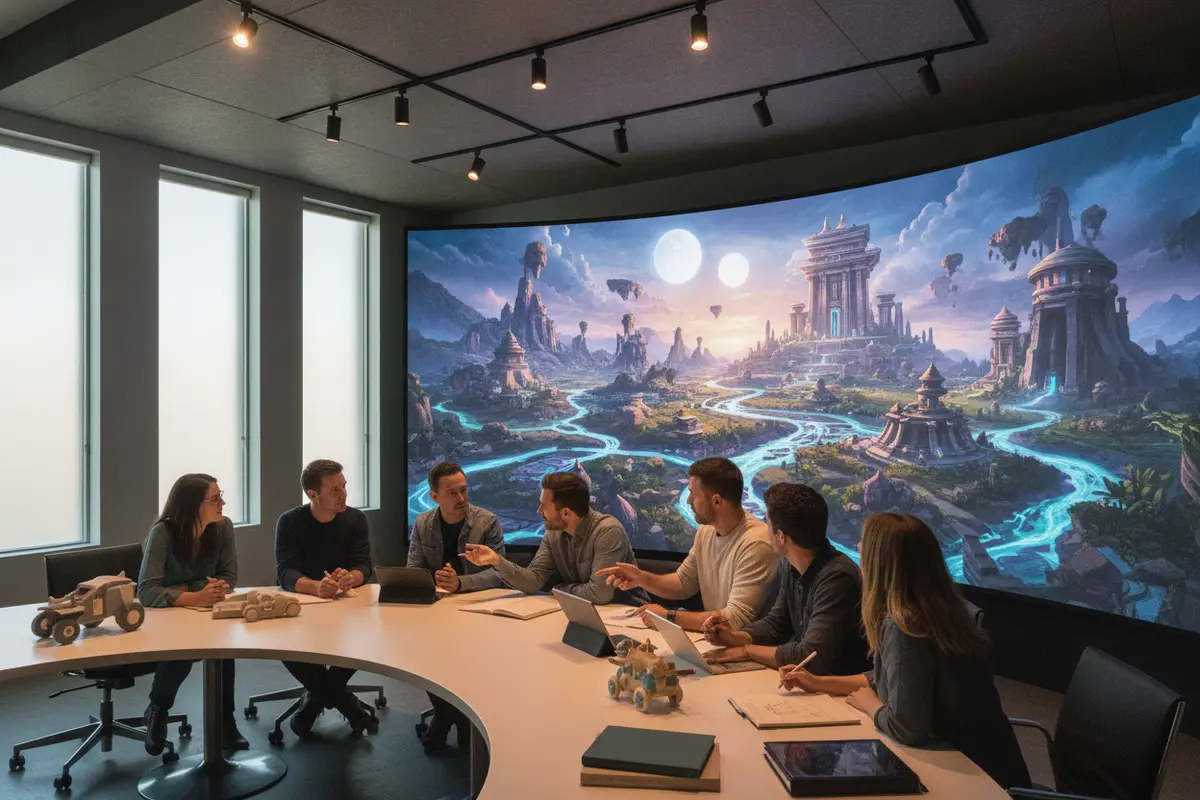
Which formats can support an immersive reality experience?
There is no single format that defines immersive reality. A project might use a fully digital environment, add digital elements to a view of the physical world, combine physical and virtual elements, or create a location-based experience. Each option creates different expectations for access, interaction, comfort, production, and support. Comparing formats early helps prevent the team from designing for a technology that does not serve the use case.
| Format | What the audience may do | Planning questions |
|---|---|---|
| Virtual reality | Enter a digital environment and look or move through it; interaction varies by design. | What equipment and space are needed? How will comfort, orientation, and onboarding be handled? |
| Augmented reality | View digital elements in relation to a physical setting or camera view. | What location, device, lighting, and tracking conditions does the experience depend on? |
| Mixed reality | Interact with digital objects that appear connected to a physical environment. | How will spatial alignment, boundaries, and changes in the participant’s surroundings be managed? |
| Location-based or installation experience | Participate in a designed physical space, individually or with others. | How will throughput, staffing, accessibility, maintenance, and venue conditions affect delivery? |
| Interactive screen-based experience | Explore or influence a world through a screen, with or without spatial features. | Can it deliver the core experience to more people or complement a more immersive version? |
The categories overlap, and the same IP may use more than one. A screen-based companion might introduce a world before a location-based event, while a virtual production workflow can help filmmakers create scenes in that world. The purpose of the comparison is not to rank formats. It is to expose the decisions that shape the experience and its delivery.
For example, if the intended activity is to inspect a carefully constructed location, a headset may support that point of view, but it also raises questions about access, orientation, and how long a participant can comfortably engage. If the intended activity is to find a character or object in a real venue, a mobile or installation-based approach may be a better fit. Make the choice by testing the central action with representative participants and the actual constraints of the setting.
How can immersive reality connect to film, television, and games?
A connected entertainment ecosystem does not require every platform to tell the same story in the same way. It requires each expression to understand its relationship to the whole: what it contributes, what it assumes, and what it leaves open. A film can establish a character’s motivation; a game can let players test a world’s systems; an immersive experience can give participants a situated perspective. Those roles can complement one another without making any one format feel like a compulsory prequel or advertisement.
Build a shared world reference before production fragments across teams. It can record core themes, character knowledge, chronology, locations, world rules, approved variations, and unresolved decisions. Keep it practical. Teams need a source they can use to make choices, not a document so broad that it becomes impossible to maintain.
Then define the handoffs. What information must the film team provide to a game team? Which assets can be reused, and which need to be rebuilt for different camera positions, interactions, or performance requirements? Who reviews a new story element? How will a change in one format be communicated to the others? A clear answer helps preserve creative intent without assuming that every production uses identical assets or tools.
Arctic7’s work spans game development, virtual production, and transmedia planning. That combination is relevant when a property’s creative and technical questions cross production boundaries. The goal is not to force all work into one pipeline; it is to coordinate the decisions that affect the shared experience.
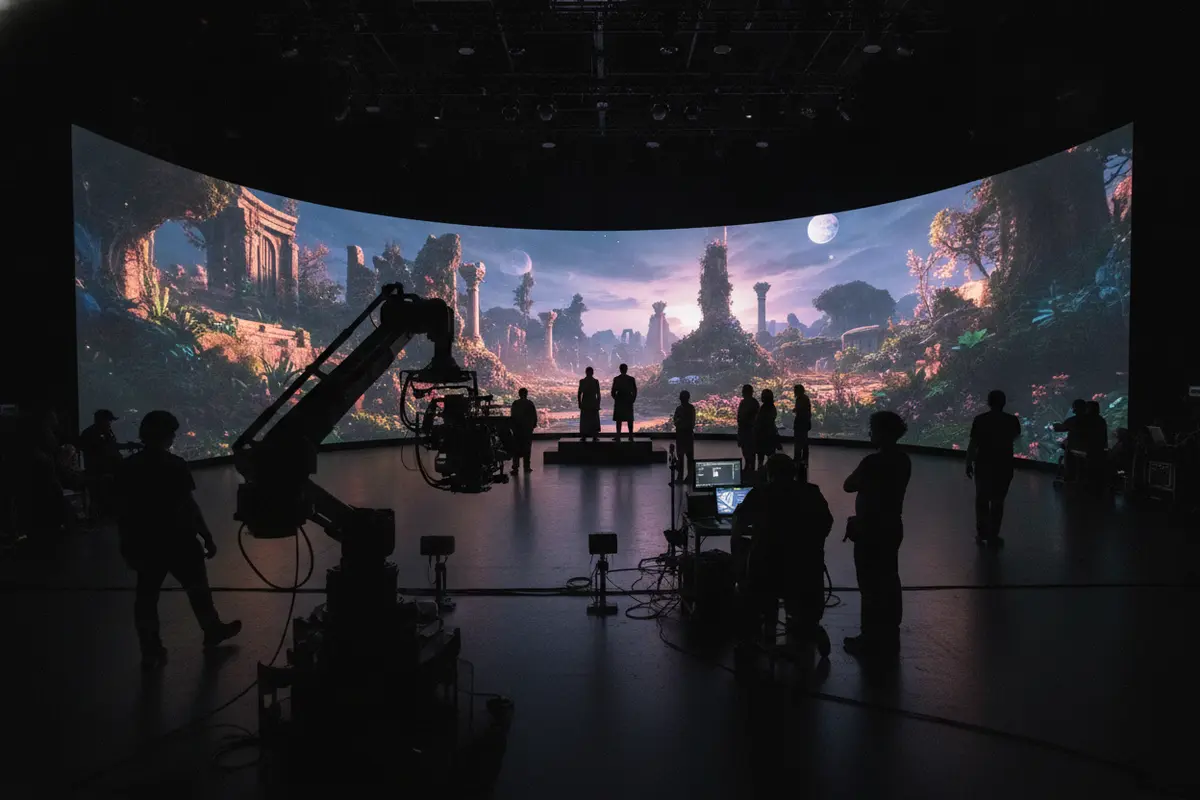
Virtual production can provide a useful bridge between digital world design and live-action filmmaking. Teams can work with real-time environments and evaluate creative choices in the context of a set. But it is not a shortcut around planning: environment design, performance, camera needs, lighting, and technical workflows still need to be coordinated. Narwhal Studios is Arctic7’s virtual-production entity and a concrete example of the company’s work in this area. Explore the project portfolio when assessing the range of production work.
What should a production plan resolve before development?
Once the concept has a clear audience promise, translate it into a production brief. It should connect the creative intent to the practical work: experience flow, content, interaction, technology, team responsibilities, approvals, testing, delivery, and ongoing support. This is where a promising idea becomes a set of decisions that a team can estimate and manage.
Experience and content
Map the participant journey from discovery through the end of the experience. Show what they see, what choices they have, what feedback they receive, and what happens if they take an unexpected path. Identify the assets and performances needed, including environments, characters, audio, animation, interface elements, and any branching content. Label what is essential for the central promise and what is optional.
Technology and constraints
Document the intended devices, platform assumptions, performance targets, connectivity needs, tracking or input methods, and any venue dependencies. These assumptions should be validated with the teams who will build and operate the experience. Avoid treating a technology demonstration as proof that the complete audience experience is production-ready.
Ownership and approvals
Name who can approve story, design, technical changes, and final delivery. Define how feedback is consolidated and how a decision is recorded. For a multi-format property, establish who owns shared world information and how each team raises conflicts. A review process that is clear on paper but too slow for production can become a bottleneck, so match the process to the pace and risk of the work.
Testing and operations
Plan to test comprehension and comfort, not just whether the build runs. Observe whether participants know where to look, understand available actions, and can complete the intended experience. Include accessibility, safety, privacy, data handling, moderation, and support questions as appropriate to the format. For a public installation, consider staffing, reset time, maintenance, and what happens when equipment or connectivity fails.
For specialist support or a production partner, start by mapping the capabilities the project actually needs. Arctic7’s services overview describes its cross-disciplinary service context, while its team page offers information about the people and disciplines represented. The useful next step is a focused conversation about the creative objective, constraints, decision-makers, and gaps in the current plan.
How do you measure whether the experience is working?
Choose measures that connect to the promise you made to the audience. A project designed to help people explore a location may need to understand navigation and discovery. A story experience may need to test comprehension, emotional response, or the clarity of its relationship to the wider canon. A location-based experience may also need operational measures such as completion flow and reliability. One generic engagement number cannot explain all of these outcomes.
Before a test, define what evidence would change the team’s decision. If people fail to understand the central action, should the interaction be simplified? If they enjoy exploring but miss the story information, should the sequence or feedback change? If a format limits access, should the team consider a complementary version? Clear decision thresholds make testing useful rather than ceremonial.
- Audience understanding: Can participants explain the premise and their role in their own words?
- Interaction clarity: Do they discover the intended actions without excessive instruction?
- Creative value: Does participation add a perspective or feeling that supports the property?
- Production feasibility: Can the concept be delivered with the available skills, schedule, tools, and approvals?
- Operational readiness: Can the experience be supported in its intended context?
Use a sequence of tests rather than expecting one prototype to validate everything. Early tests can evaluate the concept and audience promise. Later tests can examine usability, performance, integration, and operations. Keep the learning visible to stakeholders, including what the team decided not to build and why. That record prevents old assumptions from quietly returning as scope expands.
What risks should IP holders plan for?
Immersive reality projects combine creative choices with platform and operational decisions. The risks are manageable when they are surfaced early, assigned to an owner, and tied to a response. Treat the list below as a starting point; the exact risks depend on the audience, format, property, and distribution setting.
- Technology-first concepts: A platform demonstration can overshadow a weak audience proposition. Return to the participant’s activity and test whether it is valuable without relying on technical spectacle.
- Unclear canon: Participants may interpret an interactive detail as a definitive story fact. Label canon status and establish a review path for new material.
- Uncontrolled scope: Large worlds and many interactions can increase content and testing needs quickly. Protect the core experience and make additions earn their place.
- Fragmented ownership: Teams can make incompatible choices if approvals and shared-world decisions are unassigned. Set decision rights and escalation routes before parallel production begins.
- Audience access and comfort: Device availability, physical context, sensory needs, and onboarding can affect who participates. Consider alternatives and test with the intended audience.
- Operational burden: A live or location-based experience may need staff, updates, equipment care, and contingency plans. Include these needs in the concept and delivery model.
Risk planning is not a reason to avoid experimentation. It helps a team distinguish a reversible creative test from a costly commitment. Prototype the uncertain parts first, document the limits of the evidence, and expand only when the next decision is clear.
How should leaders evaluate an immersive reality partner?
Look for a partner that can connect audience intent to creative execution and technical delivery. A compelling concept requires more than a production capability; a robust build still needs a reason to exist in the story world. Ask how the team will move from discovery and strategy into a production blueprint, how it will coordinate with existing stakeholders, and how it will handle the property’s rules as the work evolves.
Useful questions include: What assumptions would you test first? Which disciplines need to be involved at concept stage? How will you keep the experience consistent with other formats? What will the team deliver at each decision point? How will changes in scope or story be handled? What evidence will show whether the experience is ready to expand?
Review relevant work and ask what each example demonstrates. A portfolio can show experience with particular formats or production challenges, but no single example proves that a proposed concept will work for a different audience or IP. Discuss the project’s specific needs, constraints, and approval structure. For an overview of Arctic7’s cross-format positioning, visit its transmedia and storytelling site or browse its industry insights.
A good partner should help make the decision space clearer, not simply add more possibilities. That may mean identifying a smaller first experience, recommending a different format, or clarifying which questions must be answered before a production commitment. Strategic restraint can protect both the creative idea and the resources needed to deliver it well.
Frequently asked questions
Is immersive reality the same as virtual reality?
No. Virtual reality is one possible format, typically centered on a digitally created environment. Immersive reality is often used more broadly to describe experiences that create a sense of presence or participation, including other spatial and blended formats. For planning, define the participant’s activity and intended setting rather than relying on the umbrella term.
Does an immersive reality project need a headset?
No. A headset may be right for a particular experience, but immersive participation can also happen through a screen, physical installation, or other designed environment. Select the format based on the audience, the action, accessibility, and delivery context.
How can immersive reality fit a film or television franchise?
It can offer a complementary perspective on the world, characters, or themes, provided the experience has a clear role and respects the property’s story rules. Coordinate creative approvals and shared-world information with the film or television team, and avoid making the experience feel required to understand the primary story.
What should be tested first?
Test the central audience promise and the main interaction before investing in a large content scope. Find out whether participants understand what they can do, whether the action feels connected to the IP, and whether the format supports the intended experience.
How does virtual production relate to immersive reality?
Virtual production can help a film or television team create and work with digital environments in real time. It is a production approach, not a synonym for an audience-facing immersive experience. The two can share world-building and technical considerations, but they serve different purposes.
Discuss the creative and production needs of your IP
Closing perspective
Immersive reality earns its place in an entertainment ecosystem when it gives an audience a purposeful way to engage with a world. Start with the participant, define the story function, compare formats, and test the most important assumptions before scaling production. With clear creative ownership and coordination across disciplines, IP holders can explore new forms of participation while keeping the larger experience coherent.
New Immersive & XR Media Capabilities Added to Arctic7's Suite of Games, Film & TV and Digital Services

Arctic7 Shares Details of its Work on Skeleton Crew and Cinematics Partnership with Fateless

The Human Touch: Adding Personality to Project and Product Management
Whether it’s your team, your client, or your stakeholders, understanding the human dynamics is just as critical as hitting milestones.

McDonald's Case Study: Bridging Brand and Play | Arctic7
Bridging Brand and Play: An Interview with Lindsay Blenkhorn Daggitt