
ICVFX and LED Volumes: A Virtual Production Workflow for Cinematic Storytelling
Green screens are fading out as major studios swap old tools for live digital sets. The new virtual production workflow gives directors total control over backgrounds in real time. It ends the "fix it in post" era and puts creative power back on the stage where it belongs.
Ready to explore how a virtual production workflow can transform your next project? Contact Arctic7 to discuss ICVFX and LED volume solutions for your studio.
Moving away from old green-screen methods requires a clear look at how real-time pixels change the entire creative cycle for every crew member. The shift is technical, creative, and financial all at once.
Virtual Production Workflow: What Makes ICVFX and LED Volumes Different from Traditional VFX?
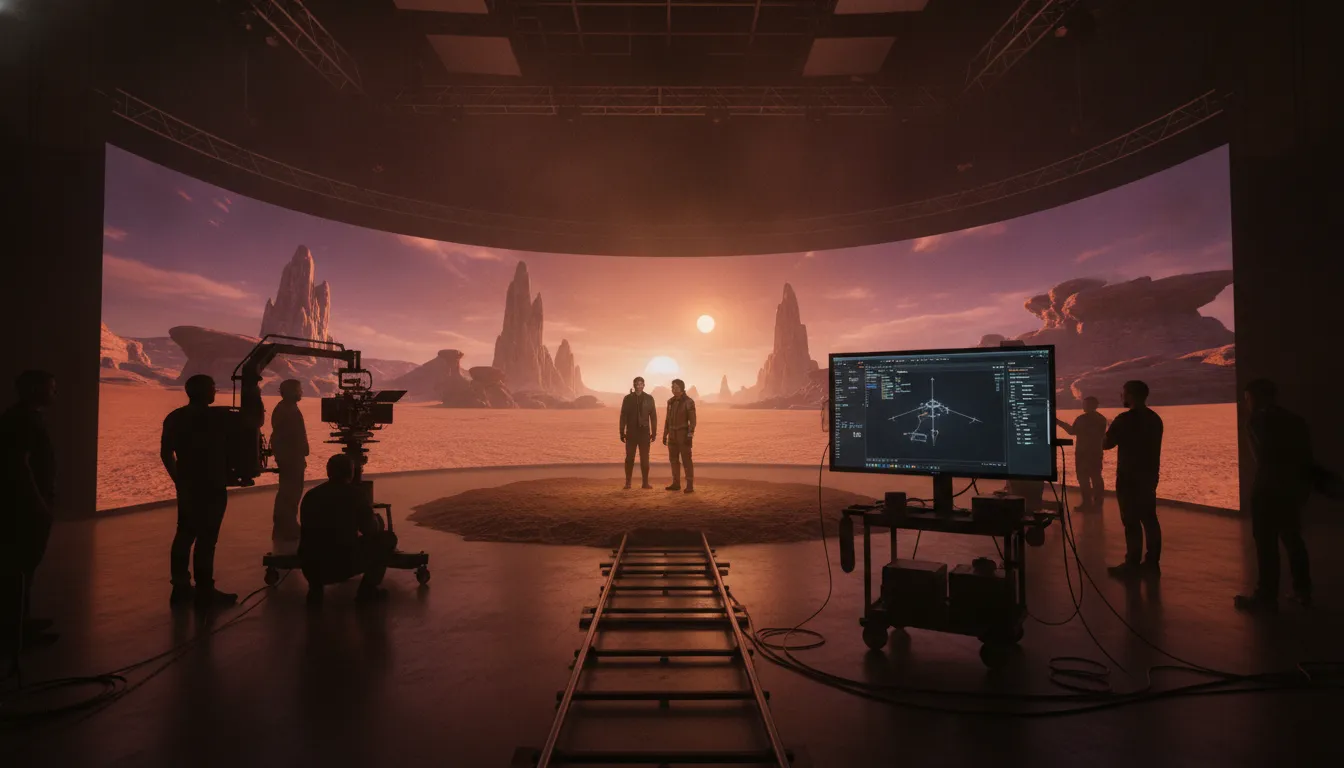
A virtual production workflow is a real-time filming method that uses game engines and LED screens to build lifelike sets on a live stage. This process lets directors see final visual effects through the camera lens while they shoot, which removes the need for older green screens.
Old visual effects (VFX) often start on a green screen. Actors stand in a bare studio with green cloth behind them. Artists then add the background many months later. This old way works, but it has many limits. Today, In-Camera Visual Effects (ICVFX) change how we work. This tech lets the crew see the final world while they are still on set. This new virtual production workflow makes filming feel more like live theater than a computer project.
Real-time worlds and game engines
ICVFX uses 3D tools to build sets that look real. Makers use game engines like Unreal Engine to build these worlds. These sets show up on giant LED screens that surround the actors. This is a big shift in the virtual production pipeline. You are not just filming an actor in a void. Instead, you are filming an actor inside a computer world that moves with the camera. The camera tracking sends positional data to the GPU in under 10 milliseconds, so perspective, parallax, and depth of field all update at 60 frames per second. That level of feedback was impossible before real-time rendering became available on set.
Solving the lighting and greenspill problem
Green screens have a big problem called greenspill. This happens when green light bounces off the actor or props. LED volumes solve this issue. The screens give off real light that matches the computer world on the wall. Major studios like Disney and Amazon now use these tools instead of green screens. This move helps them avoid common filming errors and saves hours of hard work later. The LED panels themselves use a fine sub-millimeter pixel pitch, which prevents the moire patterns that plagued early virtual production attempts. Color-calibrated panels also ensure the skintones captured in camera match the creative intent without a color-timing pass.
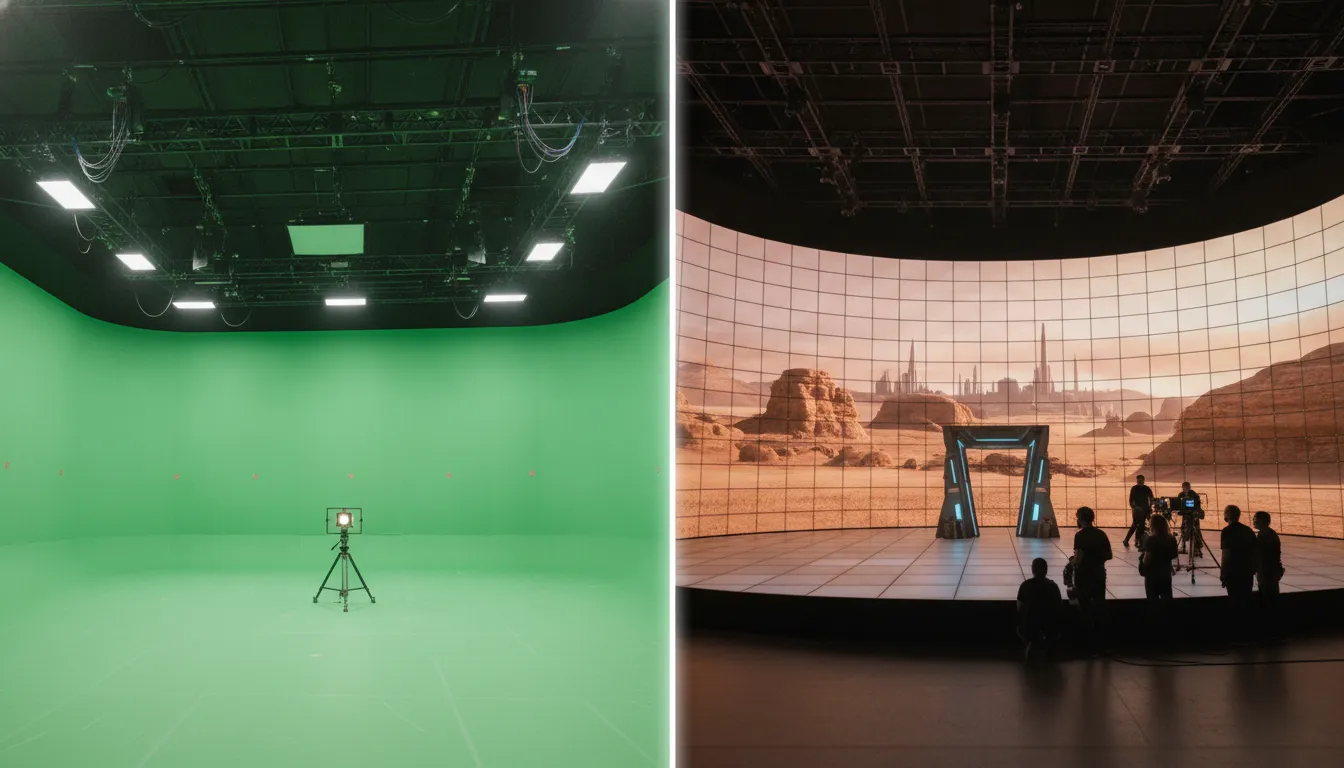
| Feature | Traditional VFX (Green Screen) | ICVFX (LED Volume) |
|---|---|---|
| Greenspill | High; needs manual fix | None; light is natural |
| Real-time Feedback | Seen months later | Seen in real-time |
| Actor Immersion | Low; acting in empty space | High; actor sees the world |
| Post-Production Load | Heavy; many layers to add | Light; background is in-camera |
| Cost Profile | Lower start; high post costs | Higher start; lower post costs |
| Creative Flexibility | High change in post | High change on set |
| Color Pipeline | Separate grade needed | In-camera color matched |
| Asset Reusability | Limited per project | Modular and reusable |
The End-to-End ICVFX Workflow: From Previs to Final Pixel
The modern virtual production workflow moves most of the work to the start of the project. It merges film methods, stage craft, game design, and motion tracking into a single real-time process. By using a smart virtual production pipeline, studios can fix scenes in the moment rather than discovering problems in the edit bay months later.
- Previs and VAD Asset Creation: Teams build digital worlds using Unreal Engine and photogrammetry to set the scale and look of the film. Environment artists model every tree, building, and sky within a game engine that the LED wall can render at 60 fps.
- Camera Tracking Sync: Experts link real camera systems with digital sensors so the virtual world moves with the lens. Optical tracking markers or mechanical encoder data feeds into the render engine to match focal length, height, and pan in real time.
- LED Volume Setup: Crews prepare the LED wall and live lighting to show the 3D worlds with the right color and depth. Pixel mapping ensures the display matches the scene's color space without visible seams between panels.
- Real-time Rendering: The game engine draws the background in real-time, matching the camera's view to create the final pixel look. This eliminates the guesswork that traditional compositing workflows rely on.
- Live Filming and Acting: Actors work inside the volume while motion capture and camera data merge into a single live feed. Performers can react to the environment naturally because it is actually there in front of them.
- On-set Changes: Directors change lighting or move virtual objects in a snap to get the best shot without extra work later. The art director can adjust a sunset to dawn in minutes while the crew waits in position.
- Teardown and Reuse: Digital sets are saved for new scenes or other games, making the work fast and scalable. Studios can license or repurpose assets across multiple seasons, sequels, and transmedia projects.
How Does Previsualization and the Virtual Art Department Build Digital Worlds?
The success of a virtual production workflow starts with careful planning before filming begins. The Virtual Art Department (VAD) is the team that builds the digital worlds. Arctic7, through Narwhal Studios, pioneered the VAD workflow in 2015. This was years before most studios even knew what virtual production could do.
Virtual location scouting
One of the main ways VAD saves time is through virtual location scouts. On the Book of Boba Fett, Narwhal Studios ran 32 virtual location scouts with decision makers. The team also completed 50 pre-light and camera blocking sessions with the DP. These sessions let the creative team see the digital environment weeks before any physical construction began. Directors could approve or reject a mountainous landscape, a desert canyon, or a spaceport market without leaving the conference room.
Massive set design at scale
The VAD team for Book of Boba Fett built 25 hero sets with over 80 variants. They created 100 lighting scenarios and more than 500 camera placements. The design phase took 8 months. This work shows why the VAD is the backbone of the virtual production pipeline. Each variant of a hero set represented a different time of day, weather pattern, or camera angle. The team built everything modularly so lighting and environmental changes could be swapped in seconds during the shoot. This modular approach is what makes a virtual production workflow faster than traditional on-location filming, where every lighting change takes hours of physical labor.
How Does Real-Time Asset Integration Work on the LED Volume?
The core of a virtual production workflow is the moment when digital assets meet live actors on the LED stage. Unlike green screen, where the background is added months later, ICVFX displays the digital world on massive LED panels during the actual shoot. The actors see what the audience will see, which changes how performances are delivered.
Game engine assets on screen
Unreal Engine drives the visuals on the LED wall. Assets built during previsualization appear on the screens in real time. As noted by NC State University, this setup lets directors create realistic virtual worlds populated by interactive characters. The render thread handles occlusion culling and LOD transitions so the wall shows only what the camera sees. Which keeps GPU load manageable even for dense cityscapes or alien landscapes.
Dynamic lighting on the set
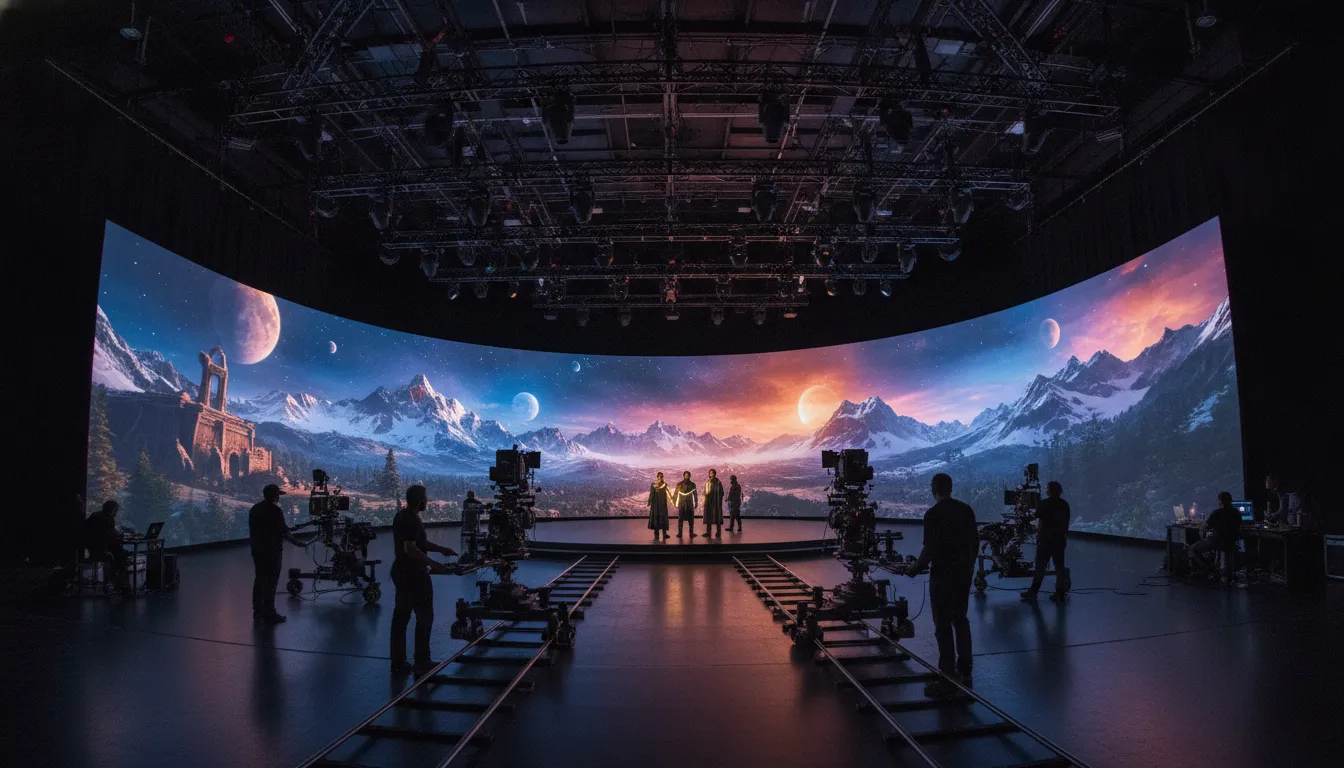
LED volumes do not just show backgrounds. They also act as light sources. The screens cast real light and reflections onto actors and props. A shiny car on set will reflect the actual mountains from the LED wall instead of green fuzz. This natural bounce lighting is one of the most cited advantages by cinematographers who have worked on ICVFX stages. It removes the need to key out green reflections frame by frame in post. It also gives actors accurate eye-lights and environmental reflections that improve the final image straight out of camera.
How Does In-Camera VFX Compress the Post-Production Timeline?
ICVFX brings visual effects work onto the live set, which lets the crew capture final pixels in real time. NC State University notes that this approach removes the need for expensive post-production cleanup. The team at Arctic7 has saved weeks of work across six ICVFX projects with Lucasfilm over seven years. Instead of receiving dailies and sending them to a post house for six months of compositing. The editorial team receives shots that are 80 percent finished on day one.
Compressing the schedule
Traditional VFX-heavy productions spend months in post. ICVFX shrinks that window. This shift was critical for the Ant-Man and the Wasp Quantumania case study, where virtual stage walks let the team lock in shots before the shoot ended. Directors could walk through the quantum realm environments, approve camera angles, and sign off on lighting before a single frame was shot on the hero stage. That kind of pre-approval cuts the feedback loop from weeks to hours.
Asset reuse across projects
Digital assets built for one show can be reused in others. Research from PMC shows that these tools help teams work faster while staying creative and productive. Arctic7 has carried lighting rigs, environment templates, and character assets from The Mandalorian into Obi-Wan Kenobi and Ahsoka. This reuse directly reduces per-project costs and builds an ever-growing library of ready-to-deploy virtual environments for future immersive XR productions.
How Does Narwhal Studios Use Virtual Production in Practice?
Narwhal Studios is the key proof point for how ICVFX works at scale. Founded in 2015, the studio helped start the Virtual Art Department model. This Narwhal Studios virtual production method lets teams build and test sets before filming. The studio was one of the first in the world to combine game engine workflows with traditional film production pipelines under one roof.
The seven-year Lucasfilm partnership
Arctic7 has worked with Disney Lucasfilm on six ICVFX projects over seven years. This includes The Mandalorian, The Book of Boba Fett, Obi-Wan Kenobi, Ahsoka, Skeleton Crew, and Ant-Man and the Wasp Quantumania. One producer from Fathead said Narwhal is "years ahead of anyone else in the business." That partnership spans multiple showrunners. Visual effects supervisors, and production designers, which proves the workflow transfers across creative teams. It is not a one-director tool. It is a studio-grade virtual production studio setup that any production can adopt.
Building large hero sets
Work on The Book of Boba Fett shows the scale. The VAD team built 25 hero sets with over 80 versions, 100 lighting plans, and more than 500 camera placements. On Ant-Man and the Wasp Quantumania, the team ran over 200 virtual stage walks and 45 virtual location scouts. For The Mandalorian Season 3, Narwhal used a 22-person VAD team. Major studios now use these tools to replace old green screens entirely. The VAD team size grew with each successive Lucasfilm project as directors saw the value of having environment artists on site during principal photography.
What Key Technologies Power the ICVFX Pipeline?
The shift from green screens to ICVFX relies on high-end hardware and real-time software. These tools help create immersive XR capabilities that foster creativity and boost work speed, as noted by the National Institutes of Health. Understanding the tech stack helps production executives evaluate the investment needed to bring virtual production in-house.
LED panel systems and rendering engines
High-quality LED panels use a fine pixel pitch for sharp images. Unreal Engine 5 uses Lumen for dynamic lighting and Nanite for high-detail geometry to render virtual worlds in real time. This speed is vital for a modern virtual production studio setup. The panel resolution and refresh rate must match the camera shutter speed to eliminate scanning artifacts. Most professional stages now use Roe or Absen panels with a pixel pitch of 2.5mm or finer and a refresh rate above 3,840 Hz to stay flicker-free at any frame rate.
Precision tracking and capture
Camera tracking links the real-world camera to the virtual one. Optical or mechanical sensors tell the engine exactly where the lens is in 3D space. Photogrammetry, motion capture, and DMX lighting control also help sync virtual events with physical gear. Some stages now use inside-out tracking via IR marker arrays mounted on the LED wall frame. Which removes the need for external tracking cameras and speeds up stage calibration from days to hours. The entire tracking chain operates with sub-millimeter accuracy at latencies below 10 milliseconds to prevent the lag that would make actors and operators motion sick.
Frequently Asked Questions
How much does a virtual production workflow cost for film studios?
Only high-budget projects can usually afford the resources needed for the filming stage. Studios must weigh these startup costs against the time saved during post-production. A typical LED volume stage lease runs between $20,000 and $50,000 per week, but the post-production savings often offset that expense by several multiples on VFX-heavy productions.
What software is used for in-camera VFX and LED volumes?
Unreal Engine and Unity are the two most common tools used to create photorealistic sets. These platforms allow teams to place actors into digital environments that react to camera moves instantly. Disguise and Pixotope are also used for compositing and real-time rendering on larger stages.
Why are major studios replacing green screens with virtual production?
Major companies like Disney and Amazon are moving away from green screens because it allows directors to see the final look of a scene while still on set. This reduces post-production time, eliminates greenspill cleanup, and improves actor performance by placing them inside the actual environment.
Can virtual production teams collaborate remotely?
Yes. Research shows that these workflows help pros stay creative and make decisions faster no matter where they are located. Many virtual production pipelines now support remote review sessions where producers in different cities can view the LED wall feed in real time over secure streaming links.
How long does it take to set up an LED volume stage?
A full LED volume stage typically takes 4 to 6 weeks to install and calibrate. This includes panel assembly, pixel mapping, camera tracking calibration, and lighting integration. Smaller modular stages can be set up in 5 to 10 days for short-form or commercial work.
Ready to speed up your next film project with Arctic7?
Using LED volumes lets your crew see final pixels on set, which helps you make big choices in real time and cuts months off your timeline. The technology is proven across six Lucasfilm projects and counting. Whether you are planning a feature film, an episodic series, or a commercial production. A virtual production workflow can reduce your post-production cycle and deliver a higher-quality final image.
Ready to schedule a consultation? Contact Arctic7 to discuss how ICVFX and LED volumes can accelerate your next film project with expert help and proven workflows that save you both time and money.
New Immersive & XR Media Capabilities Added to Arctic7's Suite of Games, Film & TV and Digital Services

Arctic7 Shares Details of its Work on Skeleton Crew and Cinematics Partnership with Fateless

The Human Touch: Adding Personality to Project and Product Management
Whether it’s your team, your client, or your stakeholders, understanding the human dynamics is just as critical as hitting milestones.

McDonald's Case Study: Bridging Brand and Play | Arctic7
Bridging Brand and Play: An Interview with Lindsay Blenkhorn Daggitt