
How to Choose a Virtual Production Company
A single day of downtime on an LED stage can derail an entire feature film budget. For producers and studios, moving to in-camera visual effects requires more than just renting hardware. It demands a partner that can bridge narrative art and complex real-time technology.
Start today: get a virtual production consultation for your project
A virtual production company is a unified partner that gives you LED stages, virtual art, and real-time workflows to shoot final visual effects on set. To choose the right team, you must assess key strengths like stage access, Virtual Art Department depth, and cross-media pipeline setups. The best partners do not just rent empty stages; they mix deep story planning with on-set tech work to end post-production delays. This unified approach prevents costly shoot-day delays and helps studios build linked entertainment worlds that span film, TV, and games. By judging these key strengths, you can select an expert team that protects your budget and brings your creative vision to life.
Selecting the right partner needs a clear view of how they work on set and in pre-production. To help you judge candidates, we must first address a basic question: What Does a Virtual Production Company Do? The answers begin with a closer look at the services, stages, and workflows that define a genuine production partner.
What Does a Virtual Production Company Do?
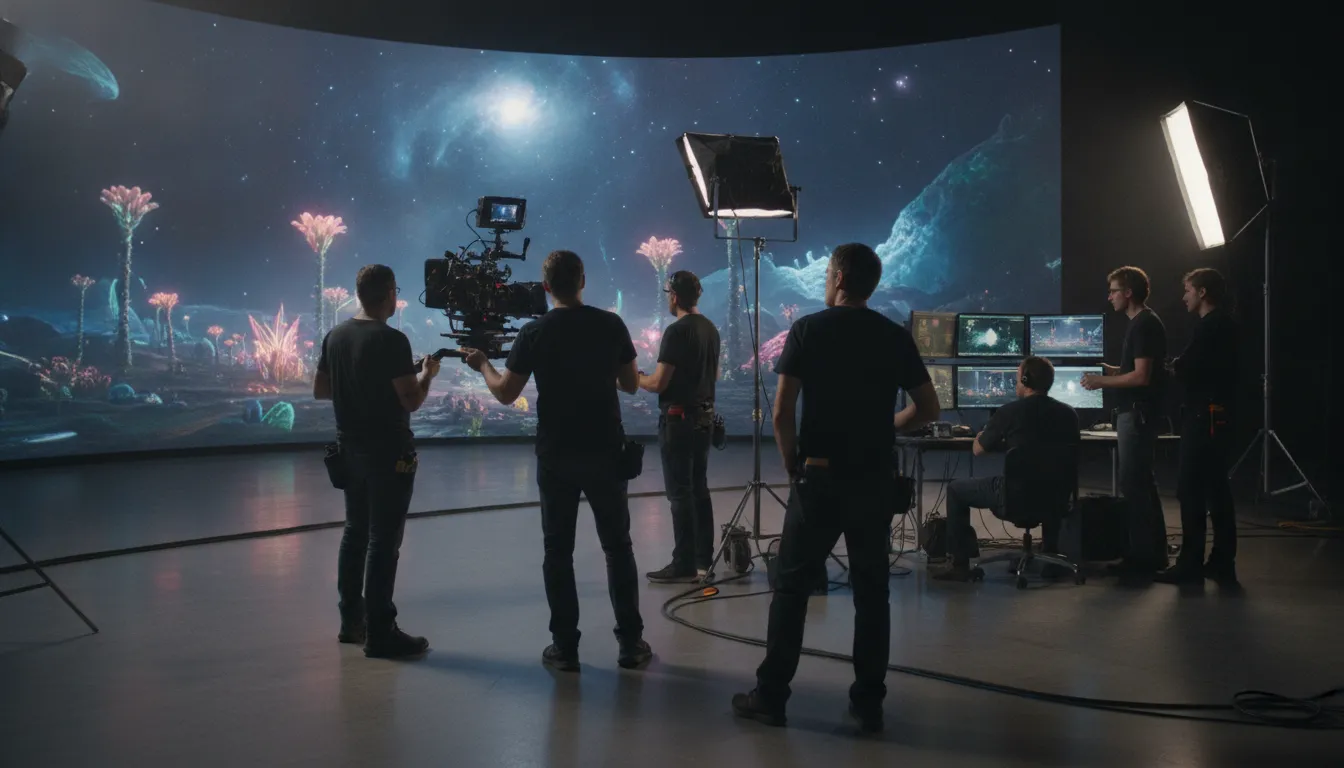
A virtual production company helps film, TV, and game creators merge physical and digital spaces. By blending physical filming with real-time computer graphics, a studio can capture final visual effects in the camera on set. This process cuts down the time spent on post-production. It also gives directors and actors a clear view of their digital scenes as they work.
Core services and pre-planning
A full-service virtual production services partner supports a project through every stage of growth. This work starts with previs to plan shots before anyone steps on set. It also includes on-set supervision to guide the crew and keep the shoot on track. During prep, the virtual art department builds the 3D assets that will appear on screen. A team can also handle asset capture and motion capture to digitize real actors and props. By offering co-production support, the studio helps producers combine normal filming with real-time tools. This deep prep ensures that the digital world and physical sets fit together without a seam.
LED volume setup and stages
At the heart of this workflow is the LED volume. These setups use large tiled LED walls to render lifelike backgrounds in real time. Many stages use elite panels, like ROE Visual Diamond-class walls with a 2.6-mm pixel pitch. These tight pixels keep the background sharp and clear, even when the camera is close. This high-end screen tech is key for in-camera visual effects, which let teams film final effects on set. Some of these purpose-built stages are huge. For example, a top-tier stage can span an 11,743 square foot space to host big sets and crew. These large spaces give directors the room they need to shoot complex scenes. They also use motion-controlled camera systems to run automated, smooth camera moves.
Real-time technology and tracking
To make the background move with the camera, the studio relies on a real-time tech stack. This workflow uses camera tracking to send the live camera's position to a game engine. The engine, such as Unreal Engine, then renders the 3D scene from the exact angle of the lens. You can read more about how these assets are built in this guide on the virtual production pipeline. Powerful media servers then push this live video feed to the LED walls. Real-time compositing tools blend physical actors and digital sets with no lag. These advanced pipelines are taught in detail by tech leaders at schools like NYU Tandon. This blend of tracking, rendering, and server power acts as the backbone of every shoot day.
Why Virtual Production Is Reshaping Film and Television
The global virtual production market was worth about 3.04 billion dollars in 2024. Industry experts forecast that this market will grow to 9.52 billion dollars by 2034. This growth shows a compound annual rate of about 13.5 percent. Today, the United States has 84 active virtual production stages. The United Kingdom now hosts 40 of these modern sites.
This fast expansion of physical setups shows how fast the film world is changing. Studios want to build better worlds without long trips to far places. Producers do not need to fly crews to many places for different scenes. They can capture many locations on a single stage in one afternoon.
Rapid growth of LED stages
Producers now work with a skilled virtual production company to access these large LED walls. These walls display high-quality digital backgrounds in real time on set. This tech lets actors see their sets, which helps them give better shows. It also gives the crew full control over lighting and weather. Directors no longer have to guess what a green screen background will look like weeks later. They can make final creative calls on the spot.
The power of real-time engines
Another big shift is the merging of film tools with real-time game engines like Unreal Engine. In the past, games and films used very different pipelines. Now, teams can use the same 3D assets for both games and TV shows. This crossover makes asset reuse simple and saves money for brands. A studio can build a digital asset once and use it across different media forms. This shared workflow is a key pillar of modern transmedia strategy. It connects creative teams across different industries to work on one unified project.
By using a unified virtual production pipeline, creators can make real-time changes on set. Directors can adjust the digital world during a live shoot. They do not have to wait for months of post-production work. This makes creative choice fast and natural. The lighting on the actors matches the background perfectly. This creates a highly lifelike final image.
Why studios must adapt now
Studios and producers face pressure to ship high-quality work faster. Old filming ways need green screens and slow post-production steps. This often leads to high costs and slow edits. In contrast, virtual setups allow for in-camera visual effects. This means the camera captures final shots directly on set, which reduces the need for green screen fixes. The cast and crew work with real images instead of green voids.
Using a clear virtual production workflow helps teams work faster. Creative directors can test light and angles on the fly. This avoids costly reshoots and speeds up the entire schedule. Studios that adopt these methods early will lead the next wave of filmmaking. Using these workflows now sets a solid foundation for future projects.
How to Choose a Virtual Production Company: Key Capabilities to Evaluate
Choosing a virtual production company is a key decision that shapes your whole project. Because virtual production moves post-work to the prep stage, your chosen partner must have more than just a large LED screen. They must act as a close partner that can match your creative plan with real-time systems.
To make the best choice, you must look at technical and creative areas. Real-time color matching between the camera and the LED wall is one of the most important technical details to verify. You should find partners that master these real-time workflows, not just screen operators.
| Capability | What to Look For | Red Flags |
|---|---|---|
| LED Volume Access | Bespoke LED stages with 2.6-mm pixel pitch ROE Visual panels and real-time tracking. | Sub-leased event screens with high pixel pitch and no camera tracking. |
| VAD Depth | In-house Virtual Art Department that builds, tunes, and changes assets on-set. | Art pipelines sent to third parties who cannot fix assets on-set in real time. |
| Technical Talent | Dedicated real-time directors, engine experts, and on-set pipeline engineers. | Single operators wearing too many hats with no team support. |
| Cross-Media Reach | Dual skills in film and game development to reuse assets across formats. | Isolated workflows that prevent sharing assets between games and film. |
| Proven Track Record | Clear shoot-day history, with over 800 shoot days on active ICVFX sets. | Reels showing only short tests or unverified concept proofs. |
| Pipeline Integration | Standard real-time tools using Unreal Engine, servers, and camera tracking. | Fragmented systems that delay scene load times and on-set changes. |
Core infrastructure and LED volumes
A strong virtual production company must give you clear access to custom spaces. A great studio setup, like an 11,743 square foot space, should offer custom LED stages with camera tracking. You should look for setups that use ROE Visual Diamond panels with a tight 2.6-mm pixel pitch.
These specs ensure that your background looks sharp and real on camera. Knowing how these parts connect is vital for a smooth shoot. If you want to learn more about this setup, read our guide on how a virtual production pipeline works.
Creative talent and VAD depth
Art assets are the heart of virtual production, which makes the Virtual Art Department (VAD) a vital resource. Strong partners have an in-house VAD that links art direction and real-time rendering. The best teams do not just load files; they build and tune digital worlds before you shoot.
This depth lets on-set teams change assets in real time to avoid costly delays. This joint work is a main part of our virtual production services, where creative plans meet high-end tech.
Pipeline integration and track record
A virtual production company should be judged by its performance on set. You should always ask for clear proof of their actual shoot days. Teams with a deep track record, like those with over 800 shoot days on active stages, know how to handle live set pressure.
They have tuned their pipelines to ensure that you use every minute of volume time well. Before you sign a contract, make sure to ask how their team handles technical errors.
Understanding LED Volume Access and Stage Configuration
Producers who want to capture high-end scenes must learn how LED stages operate. Choosing a top-tier virtual production company gives you direct access to these advanced spaces. Before you book a stage, you must understand the scale, the hardware, and the tech behind the screen. This knowledge helps you plan your budget and shoot with ease.
Tiled LED walls and pixel pitch
LED volumes use large tiled LED walls to render real in-camera backgrounds in real time. These screens let actors see and react to digital sets. Many high-end stages use ROE Visual Diamond-class panels with a tight 2.6-mm pixel pitch. This tiny pitch creates a crisp, clear image even when the camera gets close to the wall. A study from the University of Southern California shows how this tech changes on-set lighting and camera work. Large setups can cover an ~11,743 sq ft purpose-built studio. These big spaces combine bespoke LED walls, camera tracking, game engines, and media servers to build massive, immersive worlds. This large scale lets you shoot major film and TV scenes in a fully controlled indoor space.
Robotic camera arms and motion control
Modern stages also use motion-controlled camera systems to expand what you can shoot. These setups use robotic arms that move the camera and a physical LED panel in perfect sync. This movement lets directors create dynamic camera moves that are hard to capture on a normal set. By using a standard virtual production pipeline, the stage syncs the on-screen digital world with your camera lens. The camera tracking system tells the game engine where the camera is looking. The engine then updates the LED wall at rapid speed, which keeps the background angle perfectly aligned. This means you can capture final visual effects in-camera during the shoot. You will not have to wait weeks for green screen work in post-production.
Key stage questions for studio producers
Producers must look closely at stage details before choosing a partner. Not every stage can fit the needs of a complex shoot. You should ask detailed questions about stage size, ceiling clearance, pixel pitch, and tracking tech. Asking these questions early helps you avoid costly delays and ensures the space matches your creative vision. When you interview a team, make sure to cover these key stage details:
- Does the stage have enough ceiling clearance for your lighting and camera rigs?
- What is the exact pixel pitch of the main LED wall and the ceiling panels?
- Which camera tracking systems does the studio use to sync the engine with the lens?
- How are open dates scheduled for pre-production prep and testing?
- Are the media servers and game engines fast enough to run your custom assets without lag?
Evaluating Virtual Art Department Depth and Real-Time Talent
When you look for a virtual production company, you will find many options. Some vendors own LED stages but lack the skills to run them. A true partner needs more than just screens and lights. They must have a deep Virtual Art Department (VAD) and strong real-time technical talent to make your shoot work.
How the virtual art department bridges the gap
The VAD is the core of any successful virtual shoot. This department bridges the gap between art direction, CG asset creation, and on-set real-time rendering. Without a skilled VAD, digital worlds will not align with physical props. A strong team shapes the digital space long before you step onto the physical set.
Top teams use a solid virtual production pipeline to build and test assets. This work ensures that 3D environments run smoothly on LED walls. Research at schools like USC shows that early prep reduces on-set errors and saves money. For top-tier work, Arctic7's Narwhal Studios pioneered these VAD workflows and completed six Star Wars in-camera visual effects (ICVFX) projects under tight deadlines.
The need for specialized real-time roles
Real-time technical talent is hard to find and build. A serious virtual production company must have experts across three key areas. These are the pipeline, the game engine, and on-set roles. These specialists keep the digital world in sync with the real camera as it moves across the stage.
If engine lag is too slow or camera tracking drops, the shoot stops. You need an active team on set that knows how to fix game engine issues in real time. Vendors who only rent out space are often weaker than full creative teams that blend storytelling with technical skills. You can read about the virtual production workflow to see how modern crews operate on set.
Proven expertise over empty promises
Many resellers buy LED panels and call themselves a virtual production company. But they often lack the crew to run a complex shoot. A great partner must show a track record of successful shoot days. They should have a deep history of working with major studios and IP holders.
Before you sign a contract, ask about their previous work and look at the specific projects they have done. Make sure their team has real-world experience on large stages. A partner with proven skills will help you reuse digital assets across formats, such as games and film. This approach protects your budget and helps you connect games, film, and TV.
The Role of Cross-Media Capability in Your Selection
Choosing a virtual production company is more than finding a stage with LED walls. You need a partner that can work across other types of media. Today, the world of film and television is blending with video games. Because of this, a partner with both game and film skills will save you time and money. This skill should be a key factor in your selection.
The convergence of games and film
Virtual production relies on the same engines that power modern video games. This convergence means that a virtual production company must understand game development. The same 3D assets that are built for a movie can also be used in a game. Major film schools like NFI explain how these real-time tools help filmmakers design scenes before they shoot. When you hire a team with these dual skills, you get a smoother workflow.
Efficiency through asset and pipeline reuse
The biggest benefit of this blend is the reuse of assets. In the past, teams built new assets for each project. This process was slow and cost too much. Now, a single 3D model can work for a television show, a movie, and a game. This reuse cuts your costs and keeps your brand looking the same on every screen. You do not have to pay other teams to build the same digital world twice. To make this work, your partner needs a strong grasp of 3D asset creation and workflows. They must know how to move these assets between film pipelines and game engines without losing detail. It is not just about having the tools, but knowing how to connect them.
The transmedia ecosystem advantage
A great virtual production company does not just rent out a stage. They act as a key partner to build an ecosystem for your intellectual property. This ecosystem links your games, films, and shows together. Arctic7 is a transmedia partner that builds these connected worlds. We do not look at each project as a single deal. Instead, we look at the whole picture to help your brand grow. By using our game development services alongside our virtual studio, we make sure your assets are ready for any format. This method protects your budget and opens up new ways to reach your audience. You can launch a game and a show at the same time with the same look and feel. It helps you turn a simple film into an active franchise that fans can explore.
Start today: book a tour of a working virtual production stage
Frequently Asked Questions
What services does a virtual production company provide?
A virtual production company helps you plan shoots, create digital assets, and supervise on-set visual effects. They also offer LED volume production and co-production support. These services combine real filmmaking with digital tools. Partnering with a team like Narwhal Studios ensures you get complete creative and technical help.
How do LED volume stages work in virtual production?
LED volume stages use large, sharp LED screens to show real-time 3D backgrounds behind real actors. These screens link to camera-tracking systems and game engines like Unreal Engine. This setup adjusts the digital background to match the camera as it moves. The process creates realistic in-camera visual effects during the live shoot.
What are the main technical workflows used by virtual production companies?
The main workflows include previs planning, asset design in a Virtual Art Department, camera tracking, and real-time rendering. Real-time rendering merges real objects with virtual backgrounds on LED walls. According to Dimension Studio, these connected workflows have supported over 800 shoot days to help make production smooth.
How do you select the best virtual production company for your project?
Selecting the best company means checking their LED volume access, Virtual Art Department skills, and cross-media abilities. You should also review their technical talent and history of successful shoots. For instance, Narwhal Studios has delivered six Star Wars projects, which shows their deep skill.
Ready to Choose Your Virtual Production Partner?
Choosing the right virtual production company is the difference between a smooth, on-budget shoot and costly in-camera delays. A partner with deep LED volume access, an in-house Virtual Art Department, and proven cross-media workflow earns its place on set from day one. At Arctic7, we own and operate Narwhal Studios, giving producers and studios end-to-end virtual production execution across film, television, and games. We pair creative narrative strategy with real-time technical delivery, so your final visual effects are captured on set, not deferred to post.
Get a free consultation with our virtual production team. Explore Arctic7 virtual production services and see how we can bring your story to life on the volume. Tell us about your project and we will show you how end-to-end virtual production keeps your shoot on schedule and on budget.
New Immersive & XR Media Capabilities Added to Arctic7's Suite of Games, Film & TV and Digital Services

Arctic7 Shares Details of its Work on Skeleton Crew and Cinematics Partnership with Fateless

The Human Touch: Adding Personality to Project and Product Management
Whether it’s your team, your client, or your stakeholders, understanding the human dynamics is just as critical as hitting milestones.

McDonald's Case Study: Bridging Brand and Play | Arctic7
Bridging Brand and Play: An Interview with Lindsay Blenkhorn Daggitt