
Game Content Production Services for Growth
Game content is not a single production line. The work required to prove a concept differs from what is needed to ship a polished release, sustain live operations, or extend an established world into new formats. For publishers and developers, the buying decision is therefore less about finding extra hands and more about matching the right creative, technical, and operational capability to each stage.
Game content production services should cover the full lifecycle, from narrative, worldbuilding, system design, and prototyping through art, engineering, tooling, production pipelines, monetization support, and post-launch planning. The right scope depends on your internal team, platform mix, roadmap, and franchise ambitions.
Arctic7 documents this full-spectrum approach across mobile, PC, and console, with Unreal and Unity development alongside bespoke design and post-launch support. It also supports full-scale development, co-development, and specialized engagements, allowing partners to add capacity without forcing every project into the same model. That makes the first question one of timing and risk: what must be defined before production begins, and what foundation will let the project scale beyond launch?
Explore Arctic7's game development and production capabilities
What Should Game Content Production Services Cover Before Production Begins?
Before full production begins, game content production services should turn an ambitious concept into a shared, testable production plan. That means aligning narrative and worldbuilding with the intended player experience. Establish a visual language, document the design, prototype the riskiest ideas, and define how scope and decisions will be governed. The objective is not paperwork for its own sake. It is to give creative, technical, and publishing teams a reliable basis for deciding what to build, why it matters, and what must change before investment accelerates.
Game development commonly moves through preproduction, production, and postproduction, and preproduction lays the foundation for the work that follows. Academic game-production guidance describes this phase as collaborative concept development involving designers, artists, and programmers.
In practical terms, pre-production services should align the story and world, visual direction, design documentation. Prototypes, scope boundaries, and approval process before the team commits to full-scale asset and engineering production. Buyers should leave the phase with evidence, not only enthusiasm.
Narrative, worldbuilding, and visual direction
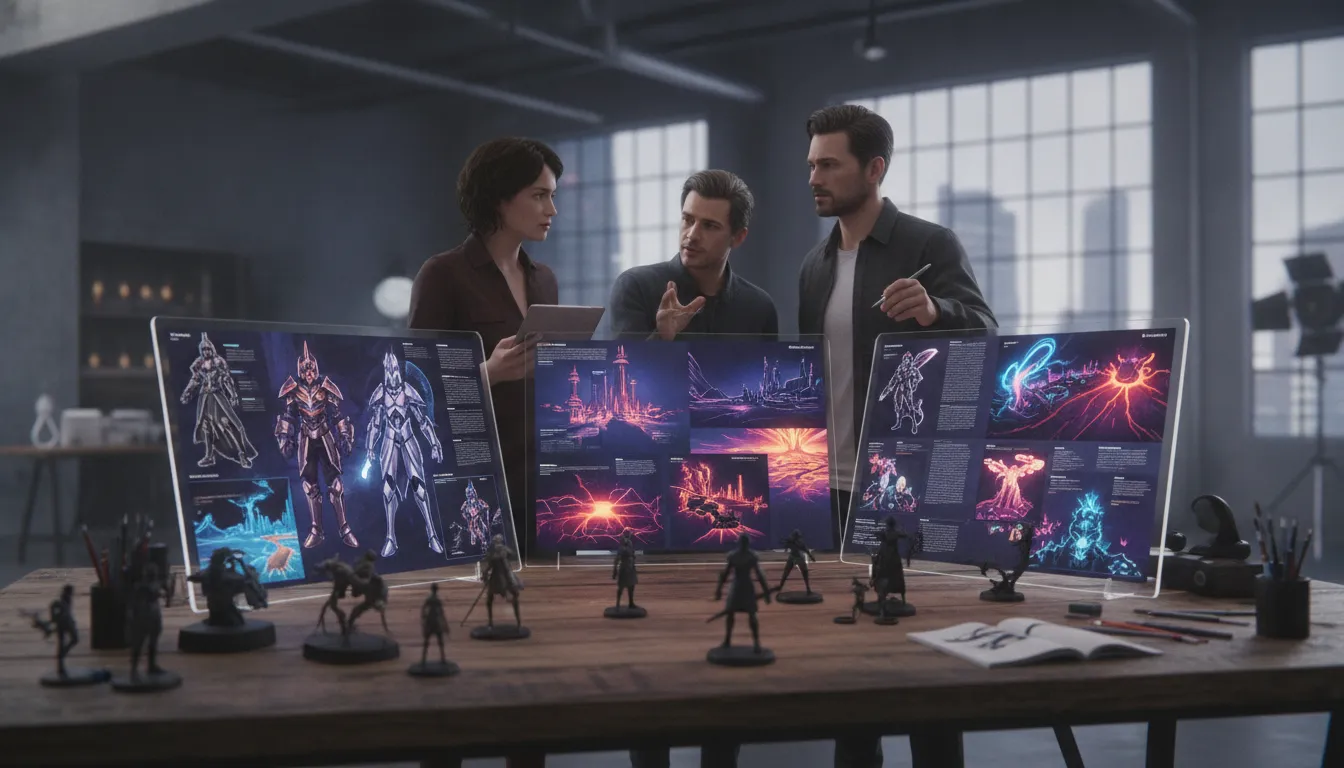
Start by defining the world the player enters and the experience the game is meant to deliver. Narrative goals, character motivations, rules of the world, progression logic, and platform context should reinforce one another. For an established IP, this is also where canon, audience expectations, and opportunities for future media expansion need to be made explicit.
Concept art then gives the team a shared visual reference. It can help designers visualize the game before production, while early style frames, character explorations. Environment studies, and interface references establish what belongs inside the project and what does not. Strong visual direction is more than an attractive mood board. It should communicate quality targets, constraints, and the decisions that artists and technical teams will need to repeat at scale.
Design documents and prototypes
A useful design document describes the game's features in enough detail to guide later development. It should connect the core loop to systems, content types, progression, technical assumptions, and acceptance criteria. The document must remain usable rather than becoming a static record. As teams learn from prototypes, they should update it.
Prototypes provide that evidence. They allow designers to test and revise features before full production, exposing problems in mechanics, usability, technical feasibility, or player motivation while change is still comparatively manageable. In some cases, a prototype can also help a studio communicate the concept to a publisher and support financing discussions. It should not be mistaken for a finished vertical slice, however. Its value is in answering the highest-risk questions.
Scope and decision governance
Finally, agree on the boundaries around the first release. Define the must-have experience, deferred features, platform requirements, dependencies, review gates, ownership of approvals, and the evidence required to move forward. Establishing a decision cadence prevents every disagreement from becoming a production delay. It also gives publishers a clearer view of where creative ambition, engineering capacity, and schedule risk intersect.
For buyers that need strategy, co-development, or specialized support to connect these pieces, Arctic7 describes integrated production capabilities across creative, technical, and production needs. The right pre-production partner should leave the internal team better equipped to make informed tradeoffs, not dependent on a vague promise of execution.
How Do Production Teams Turn a Game Vision Into Launch-Ready Content?
Launch-ready content emerges when creative direction, engineering, production control, and quality assurance operate as one system. The design document gives the team a shared reference, while artists, writers, designers, programmers, and producers continuously test whether each asset serves the intended player experience. This structure turns a vision into integrated content that can be reviewed, revised, tested, and prepared for release.
A production team first translates the approved vision into coordinated workstreams. Narrative and worldbuilding establish the logic, tone, characters, and player-facing context. Art teams then convert that direction into concept-driven textures, models, animations, environments, and objects. Engineering brings the experience into the chosen engine, finalizing gameplay systems, physics, graphics, tools, and the technical foundations that allow content to function in context. The academic overview of game production describes this collaboration as a practical production phase in which designers, artists, and programmers use the design document as a guide.
Build documentation into the production system
Documentation should not be treated as administrative overhead. It is the operating layer that connects creative intent to repeatable execution. Asset specifications, naming conventions, technical requirements, narrative references, review criteria, and ownership rules help teams make decisions without reopening settled questions. Clear documentation also gives external contributors a reliable way to work within the same visual and technical language as an internal studio.
Tools and pipelines reinforce that alignment. A team may need engine tooling, import standards, version control practices, build automation, and review environments that make work visible across departments. These systems are especially important when content is produced across locations or by a blended internal and external team. Arctic7's game development and co-development capabilities include narrative and worldbuilding, system design, Unreal Engine and Unity development, tooling, and production pipelines.
Use builds and feedback to manage risk
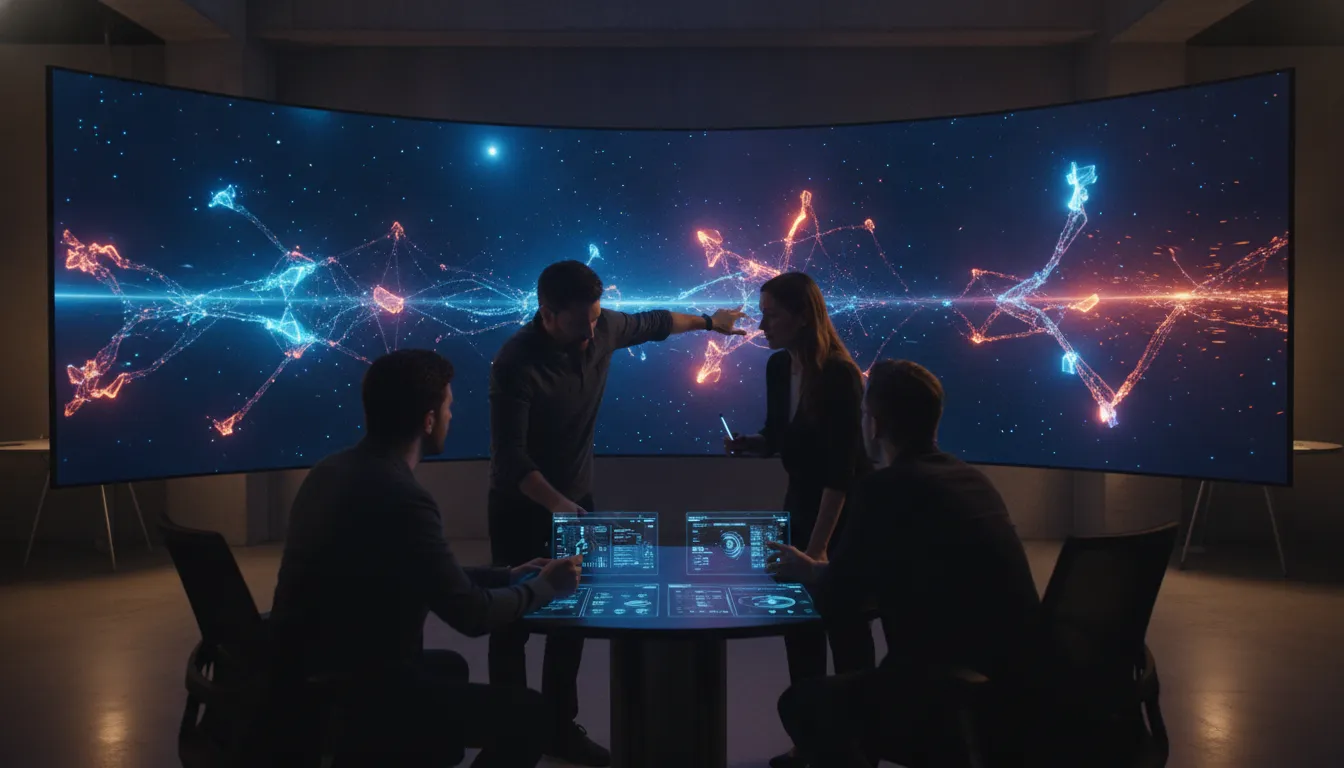
Continuous builds give the team an increasingly representative version of the game rather than leaving integration until the end. Each build creates an opportunity to inspect how art, narrative beats, mechanics, interfaces, and technical systems work together. Cross-functional feedback can improve a mechanic, clarify a story moment, expose an integration problem, or remove a feature that is not feasible within the agreed scope. The goal is not to protect every original idea. It is to protect the player experience and the launch plan.
QA belongs inside this loop, not at the final gate. Testers and discipline leads should review functionality, asset quality, performance requirements, platform behavior, accessibility needs, and regressions as content evolves. Producers can then track defects, approvals, dependencies, and readiness criteria against the same release plan. In parallel, the team prepares launch assets such as trailers, screenshots, key art, store materials. Messaging, and localization-ready files, ensuring that external communication reflects the product that will actually ship.
This production model makes launch a managed transition rather than a last-minute scramble. It connects the creative promise to the playable product, gives decision-makers evidence for approvals, and creates a foundation for post-launch content without fragmenting the game's identity.
Which Game Content Production Services Matter During Live Operations?
Live operations require more than a steady stream of new assets. The production partner must help stabilize the launch build, maintain reliable delivery across platforms. Support monetization decisions, and preserve the franchise's creative and technical direction as the roadmap changes. The right mix of game content production services therefore depends on whether the priority is recovery, ongoing service, or expansion into the next phase of the IP.
| Lifecycle need | Content cadence | Technical support | Monetization | Platform coverage | Governance |
|---|---|---|---|---|---|
| Launch stabilization | Rapid fixes, patches, and priority content | Build stability, tooling, performance, and issue resolution | Validate systems and release readiness | Protect the launch experience on each committed platform | Clear triage, approvals, and release ownership |
| Live operations | Planned updates, events, features, and seasonal content | Ongoing pipeline, platform, and post-launch support | Design and refine sustainable live-service systems | Coordinate mobile, PC, and console requirements | Roadmap alignment, quality gates, and feedback loops |
| Franchise expansion | New experiences, formats, and platform-specific deliverables | Adapt tools, pipelines, and shared assets for broader production | Connect new content to longer-term audience and revenue strategy | Extend the world across additional game and entertainment platforms | Protect IP consistency while coordinating multiple stakeholders |
Arctic7 documents a full-spectrum capability across mobile, PC, and console, with Unreal Engine and Unity development, tooling, production pipelines, and post-launch content planning. That breadth matters when a live roadmap crosses technical boundaries. A partner that can contribute to systems, content, and production operations can reduce the handoff gaps that slow releases and create inconsistent player experiences.
Monetization should also be treated as a design and production concern, not a final layer applied after content is complete. Arctic7's documented game-service engagements include bespoke game design, monetization support and design, general production services, and post-launch support. Its Ottawa team, Games as a Service and live operations practice, focuses on live services and monetization across mobile, PC, and console using Unity and Unreal.
Governance becomes more important as the service matures. Publishers should define who owns the roadmap, how changes are approved, which quality gates apply to each release, and how player or performance feedback informs the next decision. The delivery model can be full-scale development, co-development, or a specialized engagement, depending on the internal team and the specific operational gap.
For proof of how an external production partner can support an established franchise, review Arctic7's AAA live-ops co-development example. The broader lesson is not to outsource live operations indiscriminately. It is to match the operating model to the roadmap, preserve accountability. And choose a partner whose creative, technical, and production capabilities can remain connected as the game evolves.
How Should Publishers Choose a Production Partner?
The right partner is not the one making the broadest scale claim. It is the one that can demonstrate documented fit for your platform, genre, production phase, creative standards, and governance model. Evaluate game content production services as an operating relationship, not a catalog of capabilities, and test whether the partner can extend your team without weakening accountability.
- Match capabilities to the actual production gap. Start with the work you need delivered, such as narrative and worldbuilding, system design, prototyping, art production, technical development, live content, or post-launch support. A partner with a long service list may still be a poor fit if it cannot connect those disciplines into your workflow. Review the provider's integrated production capabilities against your roadmap, dependencies, and internal ownership.
- Choose the engagement model deliberately. Decide whether you need full-scale development, co-development with an existing studio, or a specialized service engagement. These models create different responsibilities for creative direction, approvals, staffing, documentation, and delivery risk. Arctic7 documents all three, which gives publishers a basis for structuring the relationship around the gap rather than forcing every project into a single outsourcing model.
- Verify platform and genre experience. Ask for relevant examples, not a generic client logo list. Check experience across the platforms you support, the engines in your pipeline, and the genre conventions your audience expects. Evidence should include shipped or documented work, team responsibilities, and the production context. The game development and co-development offering, for example, identifies mobile, PC, and console work alongside Unreal and Unity capabilities.
- Inspect style and approval workflows. Request to see how the partner translates a creative brief into benchmarks, reviews, revisions, and final sign-off. Confirm who owns the source files, how feedback is consolidated, and how creative disagreements are resolved. A practical benchmark is whether the team can show a repeatable process for protecting artistic consistency while incorporating publisher and platform-holder feedback. Partner selection guidance from Side similarly emphasizes artistic vision and quality standards alongside genre, platform, and timeline fit.
- Test scalability without assuming it. Ask how capacity expands, who manages additional teams, and how quality control changes as the project grows. Arctic7's documented McDonald's Happy Studio engagement scaled beyond 100 professionals at peak. A useful example of capacity expansion that should still be examined for its governance and delivery practices. Scale is valuable only when communication, review, and accountability scale with it.
- Demand evidence that survives scrutiny. Compare case studies, references, work samples, technical depth, and named responsibilities. Ask what the partner learned from constraints or revisions, not only what it claims to have achieved. The final decision should rest on observable proof of fit and a clear operating model, not generic scale claims.
Why Does Transmedia Planning Change Post-Launch Game Content?
Transmedia planning changes post-launch content from a sequence of isolated updates into a coordinated franchise program. The answer is not simply to release the same story everywhere. It is to establish shared world rules, reusable creative and technical assets, and a unified production strategy, then adapt each expression for its platform. That lets game teams plan future content with film, television, and immersive experiences in view, without treating any one format as an afterthought.
For publishers, this distinction affects the decisions made after launch. A new character may need to work as a playable asset, a cinematic subject, and part of a larger brand system. A location designed for a game could inform virtual production or an immersive installation, provided its design language and rights are documented clearly. The goal is not to force every asset into every channel. It is to identify what can be reused, what must be redesigned, and who approves each interpretation.
A unified game production pipeline can connect real-time technology and digital assets across games, film, and television. In practice, that means post-launch planning should account for asset naming, version control, technical specifications, narrative continuity, and delivery schedules before new content enters production. These details give creative and production leaders a common reference point when a game update also supports a trailer, episodic story, or immersive activation.
Build guardrails before expanding the world
IP guardrails are especially important once multiple teams and platforms are involved. They can define canon, visual direction, character behavior, tone, licensing boundaries, and escalation paths for decisions that affect the wider franchise. Guardrails should support creativity, not freeze it. Platform-specific teams still need room to use the strengths of a game, a screen production, or an immersive experience. The shared framework simply makes those differences intentional.
Arctic7's documented method moves through three stages: making the IP transmedia ready, defining a unified strategy, and activating a production blueprint with platform-specific deliverables. That sequence gives post-launch game content a strategic context. Instead of asking only what the next update should contain, franchise leaders can ask which audience. Format, and production capability it serves, and how it fits with the wider release plan.
Arctic7 combines game development, film and television production, and immersive experiences under one integrated partner. Its documented franchise experience includes Halo Infinite, Rainbow Six Siege, Assassin's Creed: Origins, and FIFA Ultimate Team. For teams evaluating transmedia IP expansion, that integrated model can simplify alignment between creative leadership, technical production, and platform-specific delivery while preserving the distinct role of each medium.
Frequently Asked Questions
What is game art outsourcing?
Game art outsourcing means partnering with an external studio to create visual assets rather than handling every deliverable in-house. Depending on the production plan, that can include concept art, character models, environments, textures, animations, visual effects, and user interface elements. The right arrangement extends specialist capacity while your internal team retains creative direction and product ownership.
What is a typical game art production pipeline?
A typical pipeline starts in pre-production by defining the visual style, references, quality benchmarks, and approval process. Artists then create and integrate assets such as models, textures, animation, lighting, and effects. Continuous quality assurance, quality control, optimization, and performance checks help the work reach final integration and polish.
What are the benefits of outsourcing game art?
Outsourcing can give a publisher flexible production capacity and access to specialist skills that may not exist on the internal team. It can also let in-house developers focus on gameplay, product decisions, and creative leadership while an external partner manages defined asset streams. The model is most effective when ownership, milestones, feedback, and quality standards are explicit.
How do I choose the right game art outsourcing studio?
Assess the studio against your genre, platforms, artistic direction, asset types, production timeline, and quality expectations. Review relevant work, ask how approvals and revisions are managed, and clarify how the team integrates with your tools and production leadership. A partner with an engagement model suited to your scope may be more valuable than one offering the broadest menu of services.
How do you ensure the art style remains consistent with our creative vision?
Establish the style guide, reference materials, quality bar, and approval workflow before large-scale production begins. Keep a dedicated art-direction function involved through milestone reviews, and use structured feedback to catch deviations early. Shared visual references and consistent review criteria give internal stakeholders and external artists the same basis for decisions.
Ready to Plan Your Next Game Lifecycle?
When content needs shift from pre-production through live operations and franchise expansion, an integrated production partner can help align creative, technical, and operational priorities. Arctic7 brings game development capabilities to the demands of evolving game worlds and interconnected entertainment ecosystems.
New Immersive & XR Media Capabilities Added to Arctic7's Suite of Games, Film & TV and Digital Services

Arctic7 Shares Details of its Work on Skeleton Crew and Cinematics Partnership with Fateless

The Human Touch: Adding Personality to Project and Product Management
Whether it’s your team, your client, or your stakeholders, understanding the human dynamics is just as critical as hitting milestones.

McDonald's Case Study: Bridging Brand and Play | Arctic7
Bridging Brand and Play: An Interview with Lindsay Blenkhorn Daggitt