
Game Co-Development Services: A Guide for IP Holders and Publishers
Building a successful video game requires more than just a great idea and a passion for storytelling. It demands deep technical skill, vast resources, and the ability to scale production quickly without losing creative focus.
Game co-development services are strategic partnerships where external game studios collaborate directly with primary developers, IP holders, or publishers to build games, share creative decisions, and distribute technical risks. Unlike traditional transactional outsourcing, these services integrate specialized external teams directly into the core development pipeline to manage complex game systems, scale up production capacity, and accelerate time-to-market. According to a game production case study hosted by Academia.edu, robust quality control, effective coordination, and adequate resource allocation are vital when working across these distributed teams to ensure high-quality, complex entertainment experiences.
Whether you are an IP holder looking to expand your franchise across new platforms or a publisher needing specialized engineering support. Understanding how this collaborative model works is the first step. To help you plan your next project, let us look at the fundamental question: What Is Game Co-Development?
What Is Game Co-Development?
The global game market demands complex, high-quality entertainment. To meet this need, the industry relies on an interconnected globalized workforce as shown by academic research on modern game production paths. Building a modern game takes massive resources, deep technical skills, and years of work. Many studios and intellectual property (IP) holders find that they cannot build everything in-house. They turn to external partners to help them scale. This is where game co-development services come into play.
A True Extension of Your Core Team
Game co-development is a strategic partnership where an external studio works as a direct extension of your lead team. Unlike basic outsourcing, which often handles simple, repetitive tasks, co-development involves shared creative and technical decisions. The external team does not just take orders; they contribute directly to game architecture and design. This level of collaboration is a core feature of game development and co-development services today.
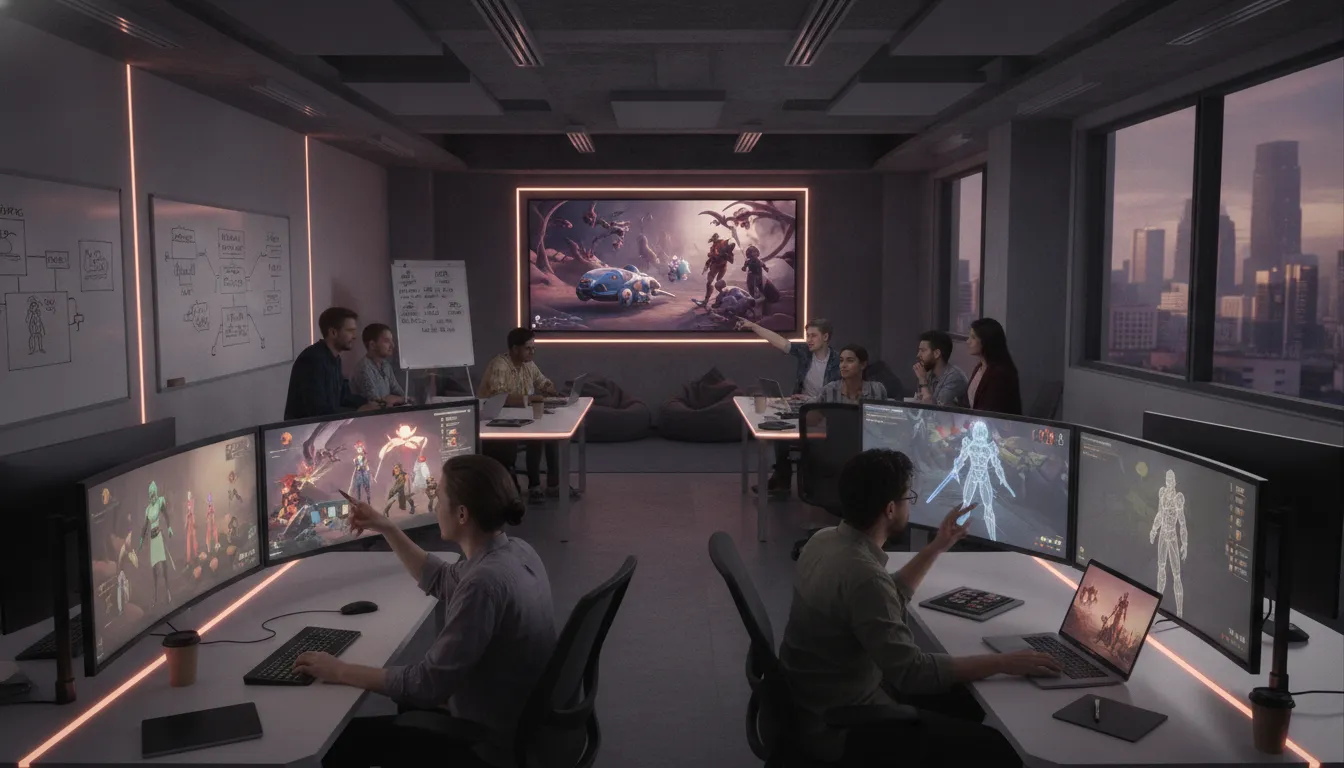
In this model, the partner studio integrates with your systems, tools, and communication channels. They participate in daily stand-up meetings, solve hard engineering problems, and help shape the gameplay experience. This close integration ensures that the final product feels cohesive, as if a single team built it from start to finish.
Sharing Creative Ownership and Technical Decisions
In a co-development setup, the external partner takes on significant portions of the game. They might own an entire gameplay system, build the user interface, or handle all the level design. Because they share in the technical and creative decisions, they have a stake in the quality of the game. This shared responsibility helps the primary developer focus on core mechanics and overall vision, while the partner executes complex sub-systems with high expertise.
Risk Distribution and Creative Control
Co-development is a highly prevalent strategy in game development because it helps studios manage costs and access specialized skills. By spreading the work across multiple teams, publishers and IP holders can distribute project risk. If one team faces a technical bottleneck, other teams can keep moving forward. This setup allows game creators to scale their production capacity up or down as the project demands, without the overhead of permanent hiring.
Crucially, this model allows IP holders to maintain complete creative control. External partners handle the heavy lifting of production, but the core IP vision remains secure. You get the scale of a massive global team while keeping full authority over your brand, story, and characters. This makes it an ideal path for expanding your IP into new formats and markets.
Models of Game Co-Development: Staff Augmentation, Dedicated Teams, and Full Co-Production
How studios structure co-development work determines how team members collaborate, communicate, and deliver results. Choosing the right integration method allows game publishers and intellectual property holders to align resources with the unique technical demands of a project. Depending on the size of the project and the internal gaps of the primary developer, studios generally opt for one of three core game co-development services models.
Staff Augmentation
Staff augmentation is the most direct model for studios needing immediate support. In this framework, individual specialists from an external partner integrate directly into the lead team. This setup is ideal when a project requires highly specific, short-term talent, such as senior physics engineers or technical artists, without the long-term overhead of hiring full-time staff. According to established studio methodologies, this model provides flexible scaling, allowing teams to adjust their sizes precisely as development phases change. The primary developer maintains full, daily operational control over the added specialists, who work alongside internal developers using the same tools and schedules.
Dedicated Teams
For more self-contained milestones or full systems, the dedicated team model offers a balanced compromise. Under this approach, the partner studio provides a complete, functional unit, including its own leads, producers, artists, and engineers. This team takes ownership of a specific vertical, such as a multiplayer mode, UI design, or a platform port. This structure keeps the core team focused on main creative pillars while the partner manages supportive development. Industry studies from academic research on distributed development highlight that managing this model requires clear quality control and robust coordination to ensure the team is a true extension of the primary studio's culture.
Full Co-Production
Full co-production represents a deeply collaborative, strategic partnership where both studios work as equal peers. Rather than handling isolated tasks, the partner studio co-owns major parts of the game's core architecture, design, and development process. This model is common in massive, multi-platform projects where the sheer volume of assets and technical requirements exceeds the capacity of a single studio. By parallelizing development efforts through joint planning, publishers can accelerate time-to-market while sharing creative and technical risks. The two groups operate with shared documentation, synchronized build pipelines, and joint leadership to deliver a unified, high-quality entertainment experience.
Why Choose Co-Development Over In-House or Full Outsourcing?
Building a modern game requires a balance of control, speed, and budget. Choosing how to staff your project is a major decision. Many leaders look first at hiring an in-house team or using standard outsourcing. However, co-development partner for your next title options offer a powerful alternative. Each path has unique trade-offs that affect your final product.
The Realities of In-House Production
Building everything with an internal team gives you total control over the creative process. You can manage design details and protect your intellectual property with ease. But this approach is slow and very expensive. Recruiting staff takes months, and overhead costs persist even between project phases. Relying solely on internal resources can also lead to heavy crunch times when deadlines loom.
The Limits of Traditional Outsourcing
Standard outsourcing works well for simple, isolated assets like 3D models or basic UI elements. It is highly scalable and keeps initial costs low. Yet, this model introduces tough hurdles. Standard outsourcing can easily lead to serious quality control issues and coordination blocks if you do not have constant oversight. A case study published on Academia.edu notes that outsourcing can introduce major challenges in coordination and quality control if not managed with deep care.
The Strategic Power of Co-Development
Co-development functions as a true hybrid model. It is not just about raw labor. It is a strategic partnership where an external team contributes directly to core game engineering, systems, and design. Sharing the development of complex systems through co-development partnerships helps mitigate technical and scheduling risks while keeping quality high. This model also balances workloads to reduce crunch. You get the speed of external scaling with the deep integration of an in-house team.
Direct Comparison of Production Models.
To help you choose the best path for your next title, this table compares the three main development models across key business factors.
| Factor | In-House | Full Outsourcing | Co-Development |
|---|---|---|---|
| Control | Complete | Very Low | Shared and Managed |
| Cost | High Overhead | Low Unit Cost | Flexible and Efficient |
| Speed | Slow to Scale | Fast Setup | Rapid Integration |
| Risk | High Financial Risk | High Delivery Risk | Shared Risk Profile |
| IP Ownership | Secure | Contractual | Secure and Defined |
| Scalability | Very Difficult | Highly Flexible | Highly Scalable |
How to Choose the Right Game Co-Development Partner
Selecting a partner for game co-development services is a major business decision. The right partner acts as a true extension of your team and helps you scale production. You must evaluate candidates carefully across several key areas to protect your intellectual property and ensure project success.
Evaluate Portfolio and Technical Skills
Begin by looking at a candidate's past work and genre experience. A strong partner must show they have shipped titles similar to yours. You should check their engine expertise, platform capabilities, and tools. This step helps verify that their technical team can handle your game's unique architecture and code pipeline.
Check Cultural Fit and Team Structure
A strong cultural alignment between partners is essential for long-term successful collaborations, as noted by industry guidelines on collaborative game design. When you hire external help, the best co-development teams function as a true extension of the primary studio's internal culture. You need to review how they structure their teams and communicate. Ensure their work style, hours, and values align with your own team to avoid friction.
- Review genre experience: Study their portfolio to find shipped games in your specific genre.
- Assess technical depth: Verify their skill with your target game engine, platforms, and tools.
- Evaluate cultural fit: Make sure their team matches your communication style, values, and work culture.
- Check scalability: Confirm they can scale their team up or down based on your project needs.
- Verify security processes: Check their protocols for data safety and intellectual property protection.
- Review client references: Talk to past partners to learn about their reliability and work quality.
If you are looking for an experienced partner with global reach, you can learn more about Arctic7's studios in Ottawa, Austin, and Europe. Choosing a partner with a proven track record across regions ensures your project remains in safe hands.
Why Game Co-Development Services Matter for IP Holders and Publishers
Intellectual property is the most valuable asset in the modern entertainment business. For creators and brands, extending a franchise into the interactive space is no longer just an option. It is a proven way to keep players engaged and build new revenue streams. By utilizing professional game development and co-development services, brand owners can expand their content reach across multiple platforms without losing focus on their core business. This strategic approach helps companies build interconnected entertainment ecosystems where games, film, and television support one another.
Protecting Brand and IP Integrity
Working with external teams often raises concerns about brand control and consistency. However, professional game co-development services are built to address this specific challenge. Reliable partners act as a direct extension of the primary studio. They prioritize keeping the core creative vision intact while scaling up work capacity to meet market demands. Through close collaboration, brand owners can ensure the absolute integrity of their intellectual property throughout the entire production lifecycle. This structure allows key creative leaders to focus on high-level strategy while the partner manages day-to-day supportive development tasks.
Reaching the Market Much Faster
The timeline to build and launch a major game can take years, which risks missing key market opportunities. Co-development services help publishers speed up their time-to-market. By bringing in a specialized team, a publisher can parallelize complex engineering and art production tasks. This distributed approach significantly shortens the schedule for large game projects. According to academic research on distributed game production, managing costs and accessing specialized skills through external teams is a highly prevalent strategy in the modern game industry. You can learn more about these collaborative pathways in this case study on distributed game development, which examines how large studios manage complex co-production pipelines.
Leveraging Niche Technical Skills
Modern games require an incredibly wide range of specialized technical capabilities. Building an in-house team for every niche discipline, from physics engines to complex network optimization, is rarely practical or cost-effective. Co-development partners solve this problem by providing immediate access to senior talent with deep experience in specific genres and technology stacks. This model allows publishers to scale their engineering power up or down based on the current phase of development. Ultimately, sharing the workload of complex game systems helps mitigate both technical and scheduling risks, ensuring a smoother path to a successful launch.
Frequently Asked Questions
What is the difference between outsourcing and game co-development services?
Traditional outsourcing involves a vendor completing specific, isolated assets like art or music. In contrast, game co-development services represent a strategic partnership where an external studio actively contributes to core game architecture, engineering, and design decisions while operating as a true extension of your team.
How do game co-development services help lower project risk?
Co-development partnerships help developers and publishers mitigate scheduling and technical risks by distributing the workload of complex game systems. According to Arctic7, sharing development tasks allows studios to manage the vast volume of assets and engineering requirements without relying on unsustainable crunch time.
Can a co-development partner help port an existing game to new platforms?
Yes. Porting titles to additional platforms is a common service offered by co-development partners. This service allows intellectual property holders and publishers to extend the reach of their games to a much broader audience while keeping the primary internal team focused on core creative pillars.
What tools are required to keep distributed game teams aligned?
Distributed co-development teams rely on standard collaborative software to keep work synchronized across locations. Teams typically use tools like Jira for task tracking, Perforce for version control, and Slack for daily communication. Regular communication routines like daily standups help prevent production bottlenecks and maintain creative alignment.
Ready to Scale Your Next Project?
Delaying a major game build can lead to high costs and missed windows in a tight market. Partnering with a skilled team early on keeps your project on track and helps control your budget. By using outside support, you can scale up fast and bring your vision to players without the delay of hiring a full team yourself.
Ready to contact Arctic7 to discuss your project needs? Click here to find out more about our game development and co-development services and get started today.
New Immersive & XR Media Capabilities Added to Arctic7's Suite of Games, Film & TV and Digital Services

Arctic7 Shares Details of its Work on Skeleton Crew and Cinematics Partnership with Fateless

The Human Touch: Adding Personality to Project and Product Management
Whether it’s your team, your client, or your stakeholders, understanding the human dynamics is just as critical as hitting milestones.

McDonald's Case Study: Bridging Brand and Play | Arctic7
Bridging Brand and Play: An Interview with Lindsay Blenkhorn Daggitt