
How to Choose a Game Cinematic Studio Partner
Choosing a game cinematic studio is not simply a matter of finding the most polished reel. For a publisher, the right partner must turn a story objective into memorable screen language, work inside a demanding production pipeline, and deliver assets that support the game, the launch, and the wider world of the IP.
The best game cinematic studio combines narrative judgment, visual direction, performance and animation craft, technical fluency, and dependable production management. Publishers should evaluate a partner against the complete journey from brief and previs through approvals, final delivery, and future reuse, not against isolated shots alone.
Explore Arctic7's transmedia production services
What should a publisher expect from a game cinematic studio?
A game cinematic studio should translate the publisher's creative brief into a clear narrative and visual plan, then carry that plan through production. It should understand characters, gameplay context, platform requirements, and franchise continuity while coordinating artists, directors, technical teams, and stakeholders around measurable delivery milestones.
The scope can include reveal trailers, launch films, in-game cutscenes, character moments, key art, social edits, or real-time sequences. These formats have different jobs, but they share a need for coherent direction. A studio that treats every deliverable as an unrelated commission can create visual inconsistency and duplicate work.
Look for a partner that can clarify the purpose of each sequence before production begins:
- Audience outcome: what should the viewer understand, feel, or want to do next?
- Story function: is the sequence introducing a world, revealing a character, escalating a conflict, or rewarding player progress?
- Format: will the work run in engine, as a pre-rendered film, or in multiple campaign formats?
- Continuity: which character, world, tone, and canon decisions are non-negotiable?
- Business role: how does the cinematic support launch timing, audience growth, or the larger IP roadmap?
This early clarity separates a production partner from a vendor that only receives finished instructions. It also gives the publisher a fair way to compare studios with different specialties.
1. Test narrative and art direction before reviewing the reel
Start by testing how a prospective partner thinks, not only what it has rendered. Ask the studio to explain the dramatic purpose of a sample sequence, the audience promise, the character motivation, and the visual decisions that make the moment belong to the game. Strong reasoning is a leading buying signal.
A reel proves that a team can make compelling images. It does not always prove that the team can protect a story. During evaluation, ask for a short treatment or discussion of a representative brief. Listen for whether the studio asks about player knowledge, franchise context, tone, rating, localization, and the relationship between the cinematic and the interactive experience.
Good art direction creates a repeatable language. It defines how the camera observes the world, how characters move through it, how light reinforces mood, and how production design communicates history or status. The language should be distinctive without fighting the game's established identity. A studio should be able to explain what it would preserve, what it would evolve, and why.
This is particularly important for publishers expanding an established IP. The cinematic may be seen by existing fans, new players, press, platform partners, and licensing stakeholders. A capable partner can create surprise without making the world feel arbitrary. It can also identify which details belong in the frame and which should remain undisclosed until launch.
2. Look for a complete visual development pipeline
A reliable visual development pipeline moves from a shared brief into treatments, storyboards, concept work, layout, and previs before high-cost production is locked. This sequence gives publishers a practical approval path, exposes creative risks early, and lets the team test pacing and composition before final assets are built.
Ask how the studio moves from a sentence of intent to a sequence that can be approved. The answer should include more than a software list. It should show who owns the treatment, how storyboards are reviewed, when previs becomes a meaningful checkpoint, and how changes are recorded.
Previsualization is valuable because it makes timing and camera choices visible before the final asset is expensive to change. It can reveal that a reveal arrives too early, that a character's action is unclear, or that a set does not support the intended movement. The publisher should see how the studio uses those discoveries to improve the work rather than treating previs as a formality.
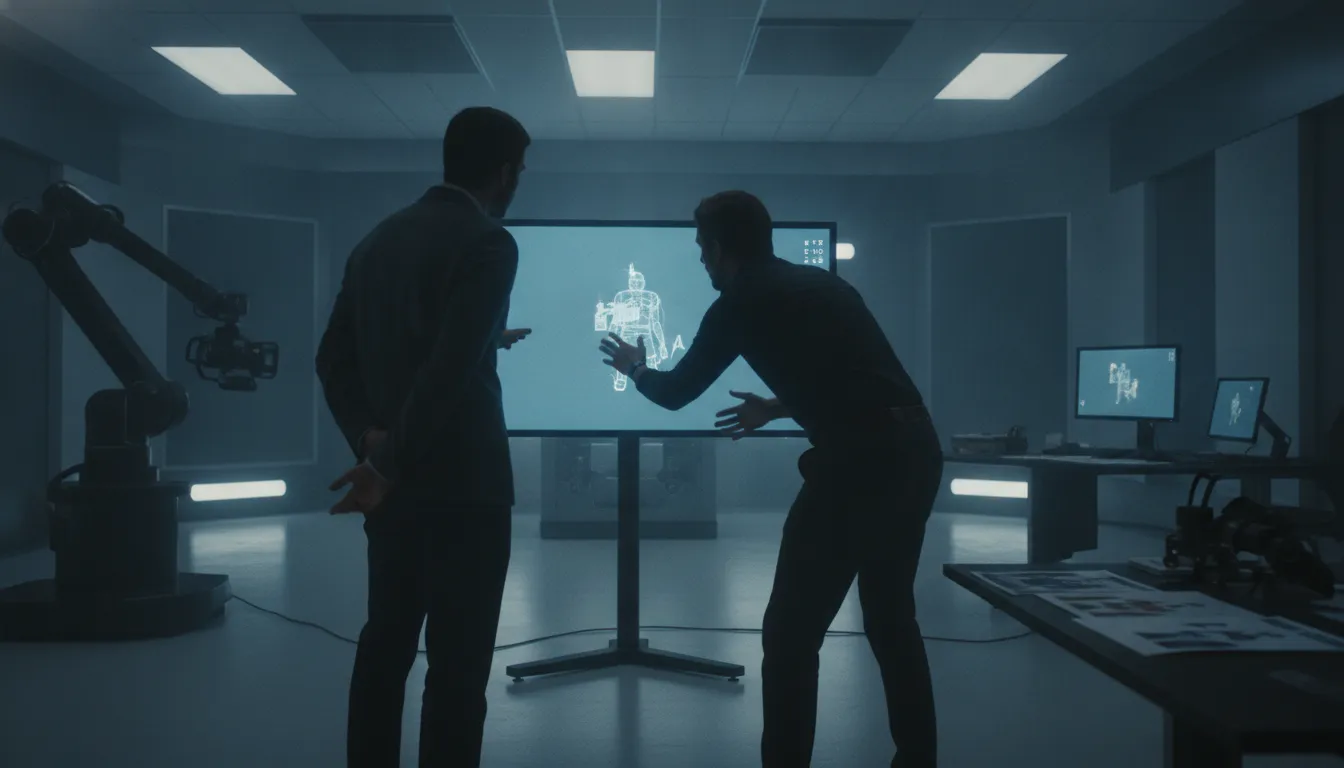
Review the handoffs between departments as carefully as the final frames. Concept artists, modelers, riggers, animators, layout artists, lighting artists, effects artists, editors, and sound teams should not work from conflicting versions of the brief. A production manager should make the dependencies visible and identify the decision that each review is meant to resolve.
3. Confirm technical fit with the game and the publisher
Technical fit means more than knowing Unreal Engine or Unity. The studio must understand the publisher's asset standards, source-control practices, naming conventions, build environment, performance targets, review tools, and delivery formats. The right partner can integrate with the existing pipeline without creating a parallel system that becomes difficult to maintain.
Ask technical leaders to describe how they would work with the publisher's tools and constraints. Useful questions include:
- Will the sequence be delivered as a rendered film, an in-engine cinematic, or both?
- Which game assets can be reused, and which require cinematic-specific development?
- How will animation, facial performance, simulation, lighting, and rendering be reviewed?
- How are performance budgets, resolution targets, memory limits, and platform variants handled?
- What is the process for packaging source files, shots, edit versions, and final masters?
Real-time tools can make iteration faster because creative teams can see changes in context. Epic Games' Unreal Engine cinematics documentation describes the engine's role in cinematics and movie-making, while its virtual production guidance explains how real-time game engines connect digital and physical production. Those capabilities matter when they solve a project problem, not when they appear only as a line on a capabilities page.
The publisher should also ask how the studio handles technical uncertainty. A trustworthy answer includes an early test, a named owner, a decision date, and a fallback. It does not promise that every ambitious idea will work unchanged on every platform.
See how Arctic7 supports game development and co-development
4. Evaluate performance, animation, and cinematic craft
High-end game cinematics depend on the relationship between performance and direction. Publishers should assess how a studio blocks a scene, directs movement, captures or creates performance, and refines animation until character intent reads clearly. Technical polish cannot compensate for an action that lacks emotional or narrative clarity.
Ask to see work that demonstrates more than spectacle. A strong portfolio should show different scales and tones: dialogue, action, atmosphere, creature or character movement, and moments where restraint carries the scene. It should be possible to understand what the audience is meant to notice even without a production meeting.
For performance-heavy work, explore the studio's process for casting, reference, motion capture, facial animation, retargeting, cleanup, and director review. For stylized work, ask how the team preserves intentional exaggeration rather than smoothing every movement into the same realistic register. The relevant question is not whether a team uses a particular capture method. It is whether the method serves the character and the shot.
Editorial and sound should enter the conversation early. Rhythm, silence, music, dialogue, effects, and transitions influence the meaning of a sequence. A studio that leaves edit and sound until the final week may create beautiful shots that do not assemble into a persuasive film. Review a work-in-progress cut, not only the polished final.
5. Assess collaboration, approvals, and communication
The safest collaboration model gives the publisher one clear creative counterpart, defined review gates, consolidated feedback, and visible ownership for every open decision. A game cinematic studio should make collaboration easier for internal teams, external IP stakeholders, and platform partners without turning every revision into a new negotiation.
Before signing, map the approval system. Identify the publisher's creative owner, game team representative, franchise or licensing reviewer, marketing lead, and final approver. Then ask the studio how feedback will be collected and translated into action. Multiple stakeholders can improve a project, but unstructured feedback can produce contradictory notes and endless revisions.
A practical review cadence may include a kickoff brief, treatment approval, storyboard approval, previs review, asset review, animation review, edit review, final technical check, and master delivery. The exact gates will change by project. The important point is that each gate has a purpose, a decision-maker, and a definition of done.
Communication quality is also visible in the questions a studio asks. Does it surface a dependency before it becomes a schedule problem? Does it distinguish a creative preference from a production risk? Does it show the publisher an early version when change is still affordable? These behaviors are stronger indicators of partnership quality than a confident sales presentation.
6. Verify scale, capacity, and delivery resilience
Scale is the ability to preserve quality while a project adds shots, characters, languages, formats, or approval groups. Evaluate the named team, senior oversight, overflow plan, asset reuse strategy, and delivery controls. A studio should show how it remains accountable when a major release compresses the schedule.
Ask who will actually work on the project. A reel may represent a large organization, while the proposed team may be much smaller. Neither model is automatically better. What matters is whether the people with the relevant creative and technical experience are involved at the right moments and whether responsibility remains clear as the project grows.
Capacity planning should account for production peaks, localization, platform cutdowns, social versions, accessibility requirements, and late editorial changes. Request a milestone plan that shows dependencies and review time, not simply a final delivery date. Ask what happens if a key artist becomes unavailable or if the publisher adds a new format after the first cut.
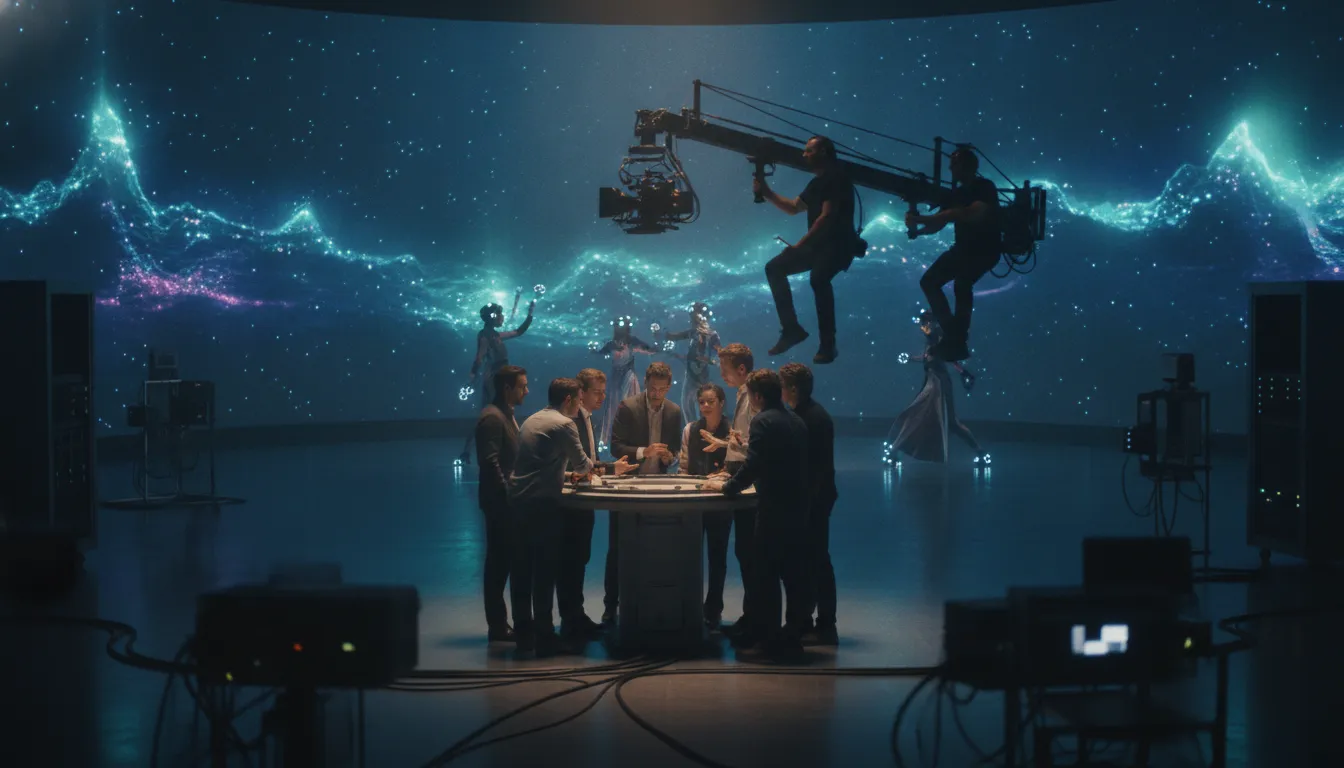
Delivery resilience also includes file organization and version control. The publisher should receive usable masters, approved source assets where agreed, and a record of the final specifications. A cinematic is more valuable when its underlying decisions and assets can support future campaign edits or another expression of the IP.
How can publishers compare game cinematic studios fairly?
Use the same brief, questions, and evidence request for every candidate. Score narrative understanding, visual development, technical integration, craft, collaboration, capacity, and delivery controls separately. This prevents an impressive reel or a familiar brand name from masking gaps that could become expensive after production starts.
| Evaluation area | Evidence to request | Risk signal |
|---|---|---|
| Narrative and art direction | Treatment discussion, visual language, character and world reasoning | Focuses on spectacle without explaining story purpose |
| Visual development | Storyboard, previs, review gates, change process | Cannot show how ideas are approved before final production |
| Technical integration | Engine workflow, asset standards, test plan, delivery package | Promises tool expertise without addressing the publisher's pipeline |
| Performance and craft | Dialogue, action, animation, edit, sound, and work-in-progress examples | Portfolio contains only finished spectacle reels |
| Collaboration | Team structure, approval map, feedback and escalation process | Unclear decision ownership or revision boundaries |
| Scale and resilience | Named team, capacity plan, schedule dependencies, contingency | Delivery date lacks milestones, buffers, or ownership |
Weight the scorecard around the project's risk. A publisher commissioning a short pre-rendered reveal may prioritize narrative and editorial judgment. A publisher requesting an in-engine sequence across platforms may place more weight on technical integration and asset reuse. The scorecard should reflect the work, not a generic procurement template.
When is a transmedia partner the better choice?
A transmedia partner is useful when the cinematic must connect to more than one release surface or help establish a world that will expand across games, film, television, or immersive formats. That partner can align creative direction and technical execution with the franchise roadmap instead of treating the cinematic as a one-time asset.
The distinction is not that one model is always superior. A specialist may be the right fit for a tightly scoped asset with a settled brief. A broader partner becomes valuable when the publisher is still defining the world, needs game and film fluency, or wants the cinematic to establish a visual system that other teams can use.
Arctic7 positions its work around interconnected entertainment ecosystems. Its virtual production workflow guide and Unreal Engine studio guide show how adjacent production knowledge can support cinematic planning, while Narwhal Studios provides a concrete virtual-production proof point. Its services describe narrative and worldbuilding workshops, game development support in Unreal Engine and Unity, virtual production planning, and cross-platform strategy. That combination is relevant when a publisher wants cinematic storytelling to strengthen the IP beyond one trailer or cutscene.
Make the choice based on the job to be done. The strongest partner is the one that can explain the creative boundary, technical path, approval model, and future value of the work in terms the publisher's teams can act on.
Talk with Arctic7 about building cinematic worlds for games and entertainment IP
Frequently asked questions
What does a game cinematic studio do?
A game cinematic studio develops and produces visual storytelling for games, including reveal trailers, launch films, in-game cutscenes, character sequences, and related campaign assets. Depending on the engagement, it may provide narrative development, storyboards, previs, animation, performance capture, real-time rendering, editorial, sound coordination, and final delivery.
How should a publisher judge a game cinematic studio's portfolio?
Judge the portfolio for narrative clarity, character performance, visual direction, technical range, and evidence of collaboration. Ask what the studio owned on each project, how it handled approvals, and whether the examples resemble your game's genre, engine, audience, and delivery requirements. A polished reel alone is not enough.
Should a game cinematic be built in engine?
It depends on the sequence's purpose, platform requirements, visual target, and future reuse. In-engine work can support real-time iteration and integration with the game, while pre-rendered work can offer more controlled final imagery. Some projects benefit from both. Decide after reviewing the creative and technical requirements, not from a default preference.
What should be in a game cinematic studio brief?
Include the sequence's audience and story purpose, game and franchise context, character and world requirements, visual references, target formats, engine or rendering constraints, approval stakeholders, milestone expectations, and required deliverables. The brief should also identify what is unknown so the studio can propose tests instead of hiding risk.
Can a game cinematic studio support a larger entertainment IP?
Yes, when the studio has the narrative, technical, and collaboration experience to work across the IP's release surfaces. Evaluate whether it can protect continuity, adapt visual language for each format, share usable assets, and coordinate with game, film, television, marketing, and licensing teams without losing a clear creative owner.
New Immersive & XR Media Capabilities Added to Arctic7's Suite of Games, Film & TV and Digital Services

Arctic7 Shares Details of its Work on Skeleton Crew and Cinematics Partnership with Fateless

The Human Touch: Adding Personality to Project and Product Management
Whether it’s your team, your client, or your stakeholders, understanding the human dynamics is just as critical as hitting milestones.

McDonald's Case Study: Bridging Brand and Play | Arctic7
Bridging Brand and Play: An Interview with Lindsay Blenkhorn Daggitt