


Film Production Risk Management Across IP Portfolios
When an entertainment portfolio spans film, television, games, and immersive experiences, the most consequential risks rarely sit inside one production. They emerge between projects: a delayed asset, unresolved approval, shared vendor, or release decision that changes the value of work already underway. Executives therefore need a view that connects dependencies, accountability, and investment choices across the full IP ecosystem.
Film production risk management at portfolio level means governing how projects affect one another, setting clear decision rights, and using stage gates to test readiness before more capital or audience commitments are made. Arctic7 describes aligned workflows, collaboration frameworks, and synchronized release schedules as part of its approach to multi-platform IP development.
Explore Arctic7's transmedia and production services
The practical question is not whether every uncertainty can be removed. It is whether leaders can see the connections early enough to choose what proceeds, pauses, changes scope, or stops. That begins by distinguishing a single project's exposure from the governance demands of the portfolio around it.
What Does Film Production Risk Management Look Like at Portfolio Level?
At project level, film production risk management asks whether one production can deliver safely, creatively, legally, and on schedule. At portfolio level, the question is broader: can several connected bets move forward without competing for the same people, assets, approvals, capital, or audience attention? Leaders need visibility into shared dependencies, decision rights, and the consequences of delaying or accelerating one title.
The portfolio view changes the unit of risk
A project can appear healthy while the portfolio is becoming fragile. For example, a film, game, and immersive experience may each have credible plans, yet depend on the same story milestone, technical team, licensing decision, or launch window. A delay in one workstream can then weaken the value of another, while parallel development can create duplicated effort or inconsistent audience experiences.
Portfolio governance therefore evaluates concentration and interaction, not only probability and impact within a single production. It asks which assumptions are shared, which decisions are reversible, and which commitments should wait for stronger evidence. This matters when IP holders face high costs and risks in multi-platform development, fragmented IP, and inconsistent quality at scale. Arctic7 identifies these challenges and a lack of unified creative vision in its customer profile.
The practical output is an executive view of the ecosystem: a small number of strategic outcomes, named owners for cross-project decisions, and explicit thresholds for continuing, rescoping, sequencing, or stopping work. It is not a larger project risk register. It is a way to decide where leadership attention and resources create the most portfolio value.
Align the portfolio before scaling production
Arctic7 describes a three-stage approach that moves from IP readiness and stakeholder alignment, through unified strategy and workflows, to platform-specific production. Its strategy phase can define multi-year rollout plans, collaboration frameworks, deliverables, and synchronized release schedules. Those elements provide useful governance inputs without turning the framework into a proprietary risk-management product.
For an IP holder, the goal is disciplined alignment with room for platform-specific creativity. A portfolio review should connect the strategic intent to the next decision, the evidence required, and the owner accountable for acting. Explore Arctic7's transmedia and production services or read more about cross-format IP governance.
Why Does Dependency Mapping Matter for Multi-Format IP?
Dependency mapping gives executives a view of how one creative or operational decision travels across a portfolio. It connects characters, worlds, assets, vendors, approvals, schedules, and release commitments, so leaders can see which conditions must move together. This makes film production risk management a portfolio discipline, not a collection of isolated project updates.

Map the creative and production chain
Start with the elements that travel between formats. A character may originate in a film, appear in a game, and anchor licensed experiences. A world may depend on a set design, a virtual production asset, a game-engine environment, or a specific vendor. The map should show the handoffs between those elements, along with the person or team responsible for approving each transition.
This is more useful than treating every deliverable as independent. A production function examines the relationship between inputs and output quantity, and the same logic applies to a transmedia portfolio: the quality and timing of one output can constrain several others. That is why game development across an IP portfolio should be considered alongside film and television planning, rather than after the fact.
Connect approvals, schedules, and release choices
Dependencies also reveal where an approval delay becomes a portfolio decision. A late character approval may affect animation, casting, game integration, marketing assets, and launch sequencing. An unavailable vendor or unfinished virtual set may shift a shoot, post-production window, or release date. Risk assessment should therefore continue along the production process, as the Hong Kong Academy for Performing Arts describes, rather than end at initial planning: risk assessment across the production process.
The executive map should distinguish hard dependencies from manageable coordination points. It can then support a synchronized release schedule while preserving platform-specific execution. Arctic7 describes this balance as maintaining creative alignment while allowing platform innovation, including through virtual production capabilities. A franchise bible and continuity rules can provide the shared reference point, but the map must also assign owners, decision dates, and consequences when a dependency moves.
Which Decisions Need Clear Executive Ownership?
Clear ownership turns film production risk management from a shared concern into an executable system. Executives should assign one accountable decision-maker for each material choice, define when an issue leaves the project team, and require evidence before work advances. That structure protects creative intent while making trade-offs visible across a wider IP portfolio.
Separate accountability from contribution
Many people may contribute to a decision, but accountability should not be distributed so widely that no one can act. A franchise executive can own cross-format coherence, while production, finance, legal, and technical leads provide specialist advice. In a co-development model, creative and technical decision-making may be shared, with risk and resources distributed between partners, as Arctic7 describes in its service overview (transmedia and production services).
The accountable owner is not necessarily the person doing the work. Their responsibility is to make the call, record its rationale, and escalate when the available evidence no longer supports the approved path.
Make escalation evidence-based
Readiness evidence should be specific enough to test, not a general statement that the team is comfortable proceeding. For example, California's motion-picture safety program requires covered productions to employ a safety advisor, and the advisor performs risk assessments and completes a final safety evaluation report. Those requirements apply in that defined program and jurisdiction; they are a sourced example, not universal legal advice. See the production governance and risk criteria when evaluating a production partner.
| Decision area | Accountable owner | Escalation trigger | Readiness evidence |
|---|---|---|---|
| Portfolio priorities and release sequencing | Franchise or portfolio executive | A dependency threatens another format or committed release window | Approved roadmap, dependency map, and decision record |
| Creative alignment across formats | Chief creative or IP owner | A proposed change alters character, world, or audience promise | Current creative guardrails and signed stakeholder review |
| Production feasibility and resource trade-offs | Executive producer or delivery lead | Capacity, schedule, or technical assumptions no longer hold | Validated plan, named dependencies, and resourcing evidence |
| Safety and regulated production decisions | Designated production executive with qualified advisors | Required assessment, control, or jurisdictional obligation is incomplete | Applicable assessment, advisor input, and documented approval |
How Can Film Production Risk Management Support Stage-Gate Decisions?
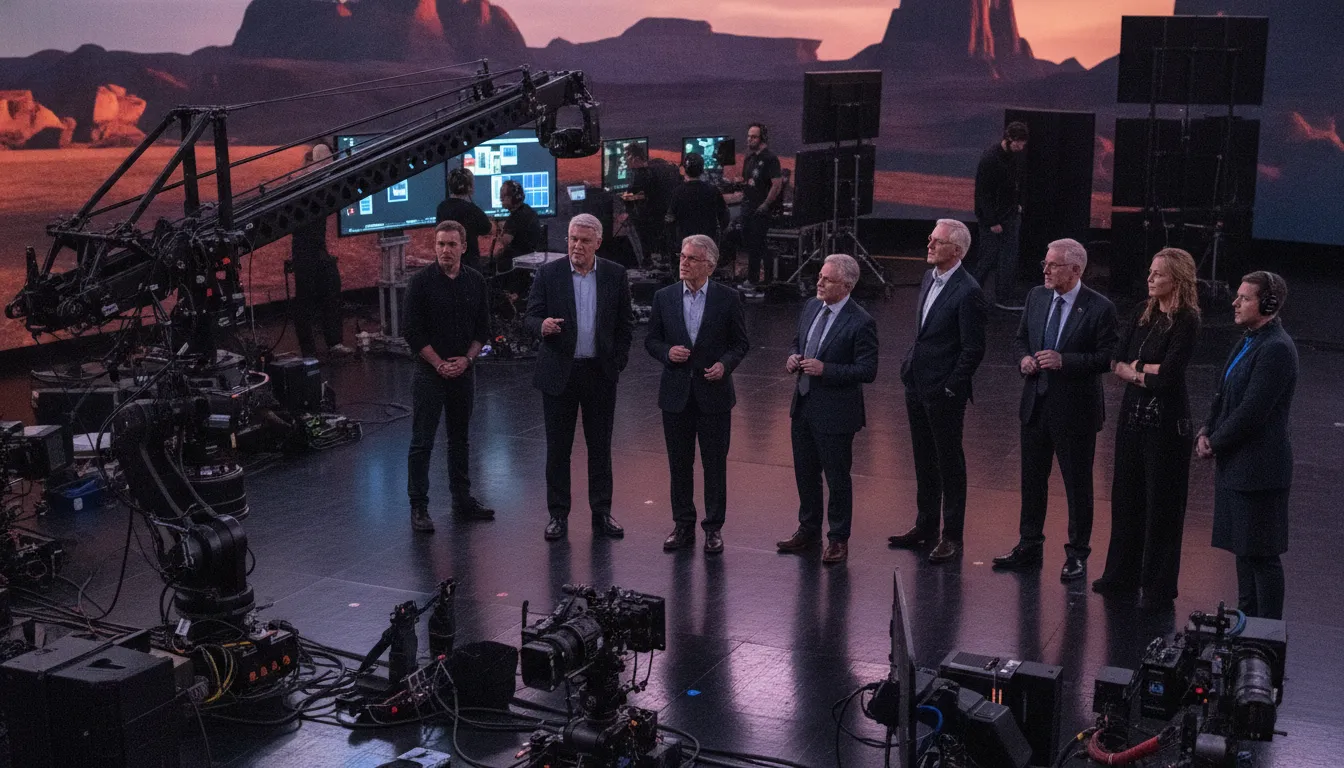
Film production risk management becomes most useful when it changes what leaders decide, not simply what teams document. A stage-gate model turns uncertainty into explicit entry evidence, accountable decisions, and exit conditions. It also keeps creative, technical, safety, and release dependencies visible as an IP moves from readiness to audience delivery.
Sequence the gates around evidence
- Gate 1: Confirm IP readiness. Entry evidence includes an agreed creative direction, stakeholder alignment, and a documented view of what must remain consistent across formats. The decision is whether the IP is sufficiently defined to move into coordinated planning. The exit condition is an approved set of guardrails, ownership, and unresolved questions with named owners. This aligns with Arctic7's readiness approach, which includes narrative workshops, IP audits, creative guardrails, and stakeholder alignment.
- Gate 2: Approve the strategy and workflow. Leaders review the proposed rollout sequence, deliverables, collaboration model, and dependencies between film, television, games, or immersive extensions. The decision is whether the plan is coherent enough to authorize detailed development. The exit condition is a unified workflow and a release roadmap that teams can use to coordinate work rather than optimize isolated outputs.
- Gate 3: Authorize production. Before committing to platform-specific execution, require evidence that creative alignment, technical feasibility, resources, and safety controls are in place. California offers a narrow example of the standard required for covered productions: its motion-picture safety pilot runs from July 1, 2025 through June 30, 2030. It requires detailed, script-specific general risk assessments, plus applicable specific assessments. The decision is whether the production can proceed under defined controls. The exit condition is documented approval and a route for escalating exceptions.
- Gate 4: Clear synchronized release. Review final evidence across formats, including delivery readiness, outstanding risks, audience dependencies, and the coordination of launch timing. California's program also provides a useful accountability example: the assigned safety advisor performs risk assessments and completes a final safety evaluation report. The decision is release, delay, or re-scope. The exit condition is a recorded release decision and an operating plan for post-launch learning.
Keep the decision record durable
California defines motion-picture production broadly, including films, television, streaming productions, advertisements, and music videos. That scope reinforces why gates should describe the actual work and jurisdiction, rather than assume one production model fits every format. For a broader transmedia and production services view, connect each gate to the portfolio's decision rights, dependencies, and release objectives.
What Should an IP Portfolio's Risk Appetite Define?
An IP portfolio's risk appetite should translate executive intent into usable boundaries: what cannot be compromised, which trade-offs are acceptable, who may approve them, and when an issue must move upward. In practice, it is the bridge between ambition and disciplined decision-making across film, television, games, and immersive formats.
Separate non-negotiables from strategic trade-offs
Non-negotiables cover safety, legal compliance, ethical standards, and protections for people and the underlying IP. They are not preferences to be balanced against schedule pressure. For example, California guidance establishes training and safety standards for firearms and blanks, while generally prohibiting live ammunition in motion-picture production except in the most limited circumstances. Those constraints should sit outside commercial risk scoring, with named owners and evidence requirements.
Strategic trade-offs are different. An executive team may accept a limited schedule variance to protect creative quality, defer a market launch to resolve a dependency, or fund a pilot before committing to a full rollout. A risk matrix can make those choices visible, but the matrix should support judgment rather than replace it. The Hong Kong Academy for Performing Arts includes risk matrices and risk evaluation in its production-risk course material, reinforcing that assessment is an ongoing governance activity, not a one-time form.
Define authority, escalation, and residual exposure
A useful appetite statement specifies delegated authority by decision type and threshold. Production leads might resolve contained delivery issues. Portfolio executives should decide when a change affects canon, audience promise, investment sequencing, or another format's release. Escalation should also be triggered by uncertainty, not only by a red rating.
Finally, record residual exposure: the risk that remains after reasonable controls are applied, its business owner, and the decision date for reviewing it. Arctic7's IP-readiness work includes narrative workshops, IP audits, creative guardrails, and stakeholder alignment, which can give these boundaries a shared foundation. For practical guidance on production governance and risk, connect the appetite to partner evaluation. A broader transmedia strategy for IP holders then shows where those decisions must remain aligned across formats.
How Should Investment and Release Choices Reflect Portfolio Risk?
A portfolio decision should answer two questions: what must be funded now to preserve future choices, and what evidence is required before committing further resources? This approach treats film production risk management as staged capital allocation, linking investment to dependencies, audience evidence, delivery readiness, and the consequences of delaying or accelerating a release.
Sequence capital to preserve option value
Do not treat every format as an equal, simultaneous commitment. Start with the work that reduces uncertainty across the portfolio, such as IP readiness, stakeholder alignment, a pilot, or a focused prototype. A modest early commitment can preserve the option to expand while avoiding premature investment in downstream production. Production theory recognizes capital, labor, and entrepreneurship as fundamental inputs, while a production function examines how inputs relate to output. For executives, the practical lesson is to connect each release decision to a clear learning objective, not to a fictional return forecast.
That learning may concern audience response, technical feasibility, creative alignment, or the ability of teams to share assets and approvals. A pilot script for a multiplatform IP can therefore function as an evidence-building instrument, provided leaders define what the pilot must prove before work begins.
Set evidence thresholds for continue, rescope, or stop
At each gate, review the evidence against the portfolio's priorities: does the work strengthen the core world, meet its quality threshold, and remain compatible with planned releases? If dependencies are unresolved, continue only where the next investment specifically removes uncertainty. If the premise is sound but the scope exceeds available capability, rescope the format, sequence, or release window. Stop when the work no longer supports the portfolio or when an unacceptable exposure cannot be reduced.
Release planning should also account for synchronization. Arctic7 describes strategy work that can define multi-year rollout plans, collaboration frameworks, and synchronized release schedules. Its service model then moves from readiness and unified workflows toward platform-specific production, helping teams preserve creative alignment while formats evolve. This is especially relevant when game development across an IP portfolio depends on decisions made in film, television, or other media. The goal is disciplined flexibility: invest in evidence, protect meaningful options, and make stopping or changing course a governed decision rather than a late reaction.
How Do Executives Turn the Framework Into an Operating Cadence?
Executives turn film production risk management into an operating cadence by making portfolio decisions at a fixed rhythm, reviewing exceptions between gates, and preserving the reasoning behind each choice. The objective is not another production checklist. It is a repeatable forum for aligning creative ambition, resources, dependencies, and accountability across connected initiatives.
Run a monthly portfolio review
Once a month, the executive group should review the portfolio as a system. Each initiative reports its current gate, the decisions it needs, dependencies that could affect another format, and any change in exposure since the previous review. The discussion should end with explicit outcomes: continue, pause, re-scope, or escalate. A simple exception log keeps the meeting focused on material departures from the agreed plan rather than routine status updates.
The review should also test whether the operating model still fits the work. Arctic7 describes a progression from IP readiness and stakeholder alignment to unified strategy and workflows, followed by platform-specific production. That sequence gives leaders a useful reference for asking whether a project is ready to advance, or whether unresolved alignment should be addressed first. Its strategy phase can also define rollout plans, collaboration frameworks, and synchronized release schedules. Virtual production pipeline dependencies deserve particular attention when technical choices affect creative or release commitments.
Make decisions durable and learning visible
Every gate review should produce a short decision record: what was decided, who was accountable, which evidence was considered, what assumptions remain, and when the decision will be revisited. This prevents teams from reopening settled questions without new evidence. It also makes shared decision-making practical. Arctic7 describes co-development as sharing creative and technical decisions while distributing risk and resources, a model that depends on clear records rather than implied authority.
At the next monthly review, close the loop. Compare expected and observed outcomes, examine recurring exceptions, and update the framework or delegated authorities where the pattern warrants it. The process should remain ongoing because risk assessment follows the production process, not a single planning event. For a concrete view of how specialized capability can support this cadence, explore Narwhal Studios virtual production.
Frequently Asked Questions
What does governance look like across a multi-format IP portfolio?
It connects film, television, games, and immersive projects through shared priorities, dependencies, decision rights, and release assumptions. Leaders review the portfolio as an interconnected system, rather than treating every production as an isolated project with its own schedule and investment logic.
Who should own major portfolio decisions?
Accountability should sit with a named executive or governing group that can balance creative intent, commercial exposure, delivery capacity, and downstream effects. Project leads provide evidence and recommendations, while executives decide when to continue, escalate, re-scope, pause, or stop an initiative.
How do stage gates improve investment decisions?
Stage gates create explicit moments to test readiness before additional capital or commitments are released. Each gate should define the evidence required, the decision authority, and the conditions for exit. This makes assumptions visible and prevents momentum from substituting for informed approval.
How are multi-format risks different from single-production risks?
They include dependencies between projects, such as shared characters, assets, approvals, vendors, schedules, or audience promises. A delay or change in one format can alter the value, timing, or feasibility of another, so leaders must evaluate both local exposure and portfolio-wide consequences.
What belongs in an executive risk appetite?
It should state which outcomes are non-negotiable, which trade-offs are acceptable, who may authorize exceptions, and when escalation is mandatory. Safety, legal, and rights constraints usually require firm boundaries, while sequencing, scope, and release timing may allow measured strategic flexibility.
New Immersive & XR Media Capabilities Added to Arctic7's Suite of Games, Film & TV and Digital Services

Arctic7 Shares Details of its Work on Skeleton Crew and Cinematics Partnership with Fateless

The Human Touch: Adding Personality to Project and Product Management
Whether it’s your team, your client, or your stakeholders, understanding the human dynamics is just as critical as hitting milestones.

McDonald's Case Study: Bridging Brand and Play | Arctic7
Bridging Brand and Play: An Interview with Lindsay Blenkhorn Daggitt


