
Consumer Brand Game Development: A Strategic Guide
Consumer Brand Game Development: A Strategic Guide
A branded game is no longer simply an advertisement with a score attached. For marketing leaders, it can become a repeatable experience that gives audiences a reason to spend time with an IP. Make choices within its world, and return for new forms of participation. The strategic challenge is making that experience feel worth playing on its own terms.
Explore Arctic7 game development and transmedia production
Consumer brand game development works best when the game's mechanics express a genuine brand truth, serve a clear player need, and connect naturally to a wider entertainment ecosystem. The goal is not to interrupt attention, but to earn it through meaningful play while creating signals you can test across engagement, affinity, and continued participation.
That shift changes the brief from producing a campaign asset to designing a playable product. It also raises a more important question: why are so many consumer brands investing in participation as a core part of how they build lasting relationships with audiences?
Why Consumer Brands Are Building Playable Experiences
A playable experience gives a consumer a role, not merely a message to receive. For brand leaders, that changes the strategic question from how to interrupt attention to how to earn participation. A well-designed game can function as a product in its own right, while also serving as a durable touchpoint within a wider entertainment ecosystem.
The distinction matters because a campaign skin borrows the language of games without delivering the value of play. It may place a logo, character, or visual identity inside an existing format, but it rarely gives the audience a meaningful reason to return. A product-led game starts elsewhere. It defines a playable promise, establishes rules that reward curiosity and skill, and gives the brand a role within an experience people choose to enter.
That is the shift from interruption to participation. Research on gamification describes online games on mobile platforms as having the potential to create unusually strong customer engagement by reaching younger demographics where they spend their time. The strategic implication is not that every brand needs a game. It is that brands should evaluate whether play can express their value, world, or audience relationship more effectively than another piece of promotional content. Research on gamification and customer engagement provides useful context.
Participation also creates a different kind of brand touchpoint. A player makes decisions, develops familiarity with the rules, and encounters the brand through an unfolding experience. This does not guarantee loyalty or commercial performance, but it gives teams richer signals to test. Is the premise compelling? Do the mechanics feel coherent with the brand? Do players have a reason to continue? The game becomes a living interaction rather than a single exposure.
For IP holders and entertainment brands, the opportunity is larger still. Transmedia strategy can connect a game with film, television, and digital content so that each format contributes distinct value. In that model, the game is not a disposable campaign asset. It is a playable doorway into a broader world, capable of extending IP reach and strengthening audience engagement across a longer lifecycle.
That requires strategic integration from the start. Game development should sit alongside narrative, ecosystem, and audience decisions, rather than arrive after a campaign has already been defined. Arctic7's game development and co-development services reflect that integrated approach, while its transmedia services connect the playable experience to the wider system around it. The goal is a game that earns attention through its own quality and gives the brand a meaningful place in the audience's chosen experience.
When Does a Branded Game Create Real Consumer Loyalty?
A branded game creates real consumer loyalty when it gives people meaningful reasons to return, participate, and identify with the experience. Attention is the starting signal, not the outcome. Durable affinity develops when the game feels enjoyable in its own right, reflects the brand's values, rewards contribution, and offers fresh value through community and an evolving world.
Attention can be purchased with a launch burst, a celebrity appearance, or a prominent placement. Loyalty is earned through repeated experiences that make the player feel involved rather than targeted. A strong consumer brand game development strategy therefore asks a harder question than whether people noticed the game. It asks whether they chose to spend time there, shaped something within it, and found a reason to bring someone else into the experience.
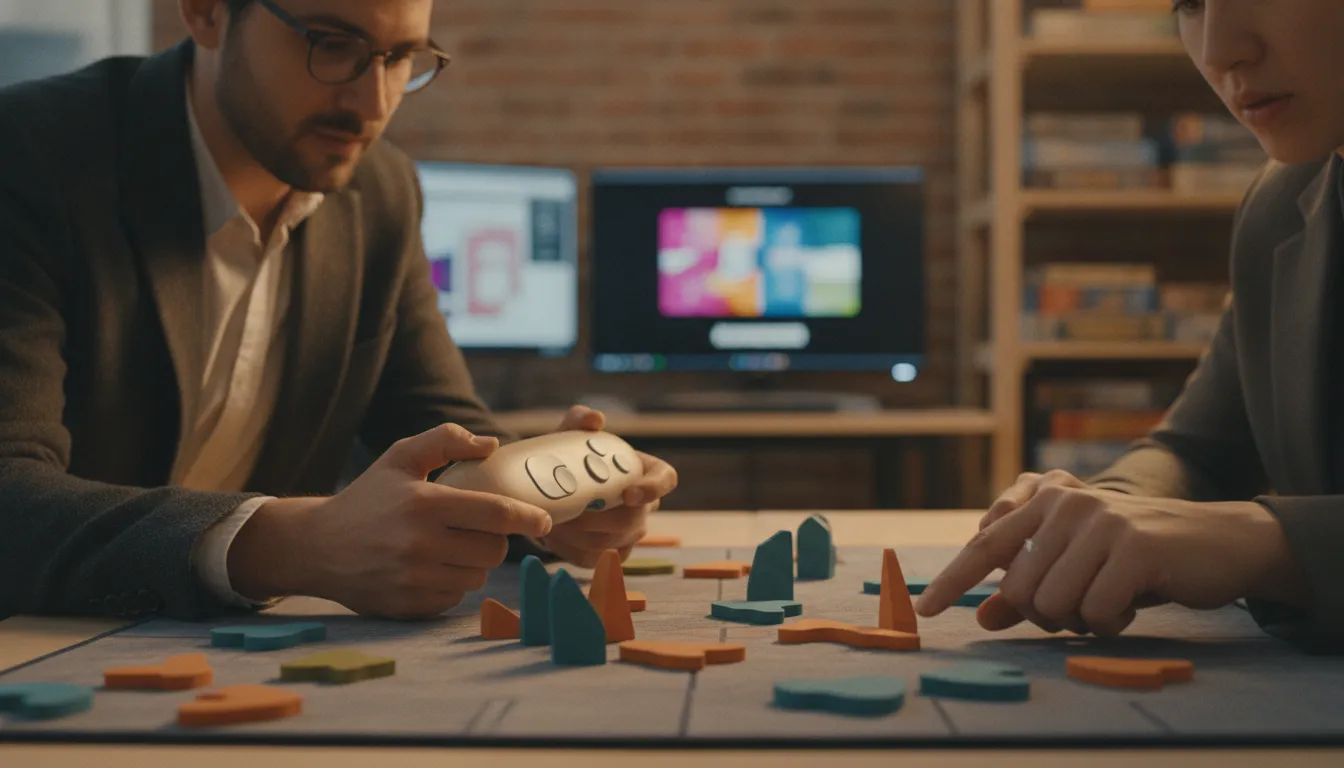
Participation is the first bridge from exposure to affinity. Players make decisions, solve problems, customize experiences, and build mastery. Those actions create a more active relationship with the brand than passive impression alone. Research on gameful experience links this form of engagement with more positive attitudes toward the game and in-game advertising. The implication for brand leaders is clear: the playable experience must carry genuine value before any brand message asks for attention. Academic research on gameful experience supports that distinction.
Psychological ownership deepens the relationship. When players feel that their progress, choices, identity, or contribution belongs to them, the game becomes personally significant. That feeling does not require literal ownership of an asset. It can come from earned status, a meaningful avatar, a shared achievement, or a space the player helped shape. In this context, brand association is stronger because the audience has a stake in the experience, not simply an opinion about an advertisement. Research on psychological ownership identifies it as an important pathway within a gameful experience.
Community turns individual engagement into a social habit. A game can give people language, rituals, challenges, and moments worth sharing. That does not mean adding a forum after launch and calling the work complete. Community must be designed into the player journey through cooperative goals, respectful competition, live events, and transparent communication. Research examining participation and psychological distance suggests that how closely people feel connected to a brand can shape their response to gamification. The participation and psychological distance study offers a useful lens for that relationship.
Finally, loyalty requires repeatable value. New content, evolving challenges, useful social roles, and narrative discoveries can give players a reason to return without making every visit feel like a sales prompt. Interactive elements can also make brand or cause-related initiatives more involving when participation carries meaning. The practical test is whether the game would still deserve a player's time if the logo were less prominent. If the answer is yes, the brand has created an experience capable of earning durable affinity.
How Do You Align Game Mechanics With Brand Objectives?
Align mechanics with the player experience you want to create and the brand meaning you want to reinforce. Start with a clear objective, translate it into a desired player behavior, then choose mechanics that make that behavior satisfying. The brand should shape the world and choices, not interrupt play as an advertisement.
The first test is strategic, not technical: what should the audience understand, feel, or do after playing? A game built for discovery might reward curiosity. A game built for community might make cooperation more valuable than individual dominance. A game built around a cause might turn contribution into visible, meaningful progress. This is the balance described in research on gamification and advertising intrusiveness: mechanics can create engagement, but excessive commercial pressure can weaken the experience and the brand association. See the discussion of gameful experience and intrusiveness in this academic study.
| brand objective | player behavior | mechanics to consider | design risk |
|---|---|---|---|
| Build familiarity with a world | Explore and return | Discoverable environments, progression, collectibles | Exploration becomes a checklist |
| Strengthen community | Cooperate and share | Team objectives, social challenges, co-created rewards | Participation feels mandatory |
| Express a value or cause | Choose and contribute | Branching decisions, visible outcomes, contribution loops | Values become a shallow sales device |
| Support product understanding | Experiment and remember | Contextual tools, meaningful feedback, skill-based mastery | Features become a disguised demo |
The table is a starting hypothesis, not a formula. Brand values must be translated into actions players can recognize as intrinsically worthwhile. If a brand stands for resourcefulness, let players solve problems with multiple viable approaches. If it stands for connection, let relationships change the outcome. The mechanic earns its place when removing the brand reference would still leave a compelling game, while the brand context gives the choice added meaning.
Audience psychology also matters. Research on user participation and psychological distance suggests that the relationship people have with a brand can affect how gameful participation shapes brand favorability. That means the same mechanic may work differently for an established IP community and for people encountering a brand for the first time. Use low-friction onboarding, test the emotional distance between audience and brand, and avoid assuming recognition equals affinity. See the PubMed study on participation and psychological distance.
Finally, place the brand inside the narrative logic rather than on top of it. Interactive placement can feel less intrusive when it supports the player's goal, context, or decision, a distinction explored in research on gamification and consumer favorability. Review every branded reward, prompt, and progression gate: does it deepen the story, clarify the world, or improve play? If the answer is no, redesign it. Strong consumer brand game development makes mechanics serve the experience first, so brand objectives are achieved through participation rather than through interruption.
What Does Consumer Brand Game Development Involve?
Consumer brand game development is a disciplined path from brand truth to a playable product and a measurable learning system. It aligns audience insight, game design, production governance, and ecosystem planning so the experience feels worth playing, reflects the IP's stature, and can grow beyond a single campaign.
The strongest teams treat development as both product creation and strategic discovery. A game should earn attention through its own play value, while revealing which characters, themes, and behaviors can support the wider entertainment world. This is why Arctic7 approaches game development as part of an interconnected ecosystem, not as an isolated marketing execution. The process typically follows six connected stages:
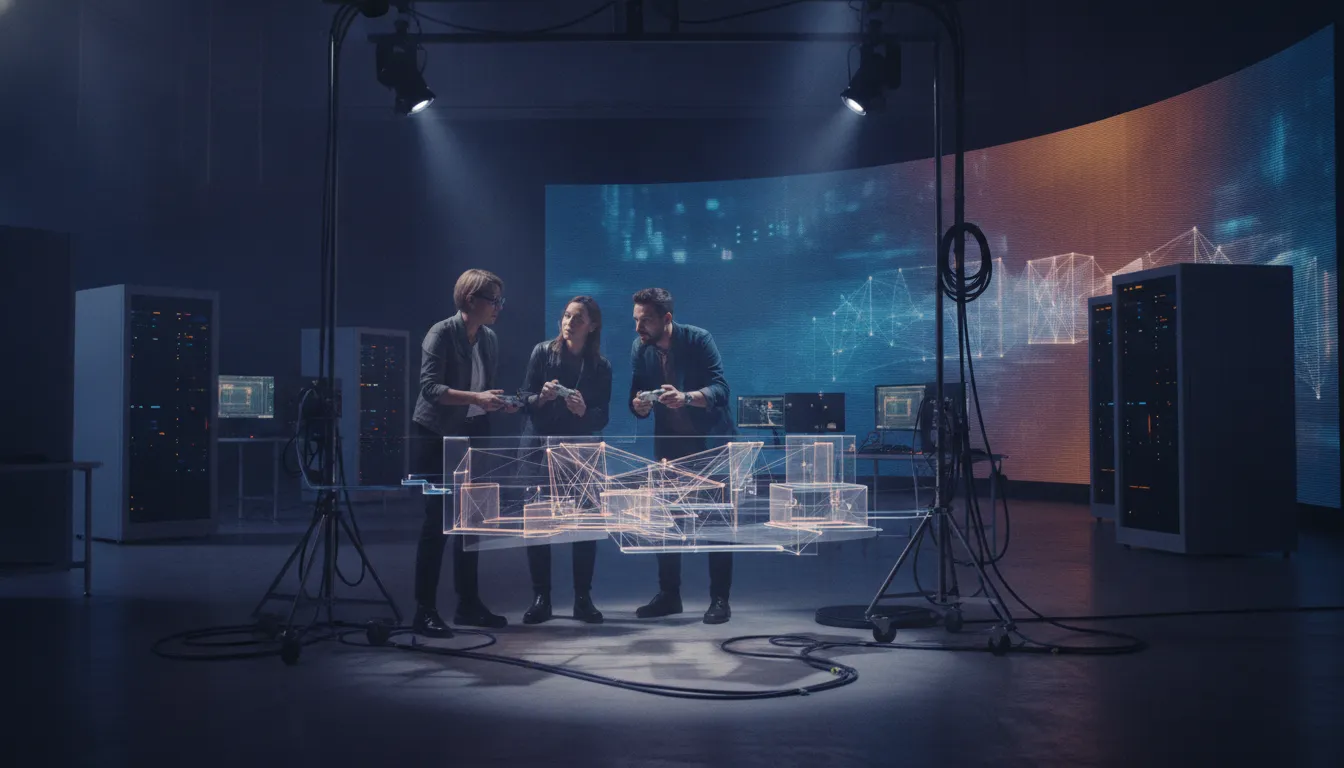
- Clarify brand and audience truth. Start with what the brand genuinely owns: its promise, cultural role, distinctive world, and reasons people care. Then map the audience's motivations, fluency with games, and tolerance for branded participation. This step prevents a familiar logo from carrying a concept that has no emotional or behavioral fit. It also sets the standard for a high-fidelity experience that reflects the brand's stature.
- Define the playable promise. Convert that truth into a clear reason to play. Is the player mastering a skill, exploring a world, solving a problem, competing with friends, or creating something personal? The playable promise should be expressible in one sentence and visible in the first minutes of the experience. Brand presence then supports the fantasy instead of interrupting it with forced advertising.
- Prototype the core loop. Build the smallest credible version of the central interaction before committing to full production. Test controls, pacing, progression, social dynamics, and the relationship between the mechanics and the brand world. A prototype is not a miniature final product. It is a decision tool that exposes weak assumptions early, when changing direction is faster and less expensive.
- Build the production plan. Once the core loop earns confidence, define the scope, platforms, technical architecture, content pipeline, milestones, ownership, and quality gates. This is where an integrated partner adds leverage. Arctic7's game development and co-development services can connect strategy with the specialists needed to move from concept through production while protecting creative intent. Plan launch content and future extensions together, without locking the team into unnecessary complexity.
- Test with real players. Evaluate more than whether people can complete the game. Observe where they lose interest, what they remember, which brand associations feel natural, and whether the experience invites repeat participation. Segment feedback by audience familiarity and player motivation. The objective is not to optimize toward a predetermined claim, but to learn which choices create genuine value and which need redesign.
- Launch and learn. Release with a measurement plan that connects experience quality, participation, brand response, community signals, and opportunities for the wider IP. A brand game can serve as a testing ground for broader development strategy, informing future characters, stories, and formats. Feed those lessons into integrated transmedia services, treating the game as a living entry point rather than a finished campaign asset.
This workflow is deliberately collaborative. Arctic7's game development capability is one service line within a broader method that includes strategy and ecosystem design. That combination helps IP holders make better decisions at each gate, from the first playable promise to the next chapter of the world.
From Branded Game to Transmedia World
A branded game should not be the final expression of an idea. It can be a distinct doorway into a larger world. It gives audiences an active role while opening room for film, television, immersive experiences, and digital content to add new dimensions. The objective is not to repeat one story everywhere, but to build an interconnected entertainment ecosystem in which every format earns its place.
The game is often the most participatory entry point. Players do not simply watch a character or recognize a visual identity. They make choices, master systems, explore environments, and develop a personal relationship with the world. That gameful experience can create psychological ownership, which is one reason the medium can deepen the connection between an audience and an IP. This broader approach extends IP reach, strengthens engagement, and diversifies the ways a world creates value.
From there, each format should contribute something it can do exceptionally well. Film can deliver concentrated emotional arcs, visual spectacle, and cinematic storytelling. Television can widen the cast, explore parallel timelines, and sustain character development over multiple episodes. Immersive experiences can turn lore into physical presence through spatial design, live interaction, and shared discovery. Digital media can keep the world active between major releases through short-form stories, creator participation, behind-the-scenes material, and evolving community touchpoints.
This is why copy-paste adaptation is the wrong model. Releasing the same plot in a game, film, and series may create consistency on paper, but it limits the creative and commercial potential of each medium. A game should not feel like a film with controls added, and a television series should not function as an extended game cutscene. Instead, the central IP needs a coherent foundation, with format-specific additions that reward audiences for moving between experiences without making any single one feel incomplete.
The production challenge is maintaining continuity while protecting difference. Shared world rules, character principles, visual language, and governance can preserve IP integrity. At the same time, cinematic storytelling and virtual production can create high-fidelity assets that carry the world across screens and spaces. That production bridge is especially important when an IP must maintain prestige across game development, film, television, and immersive work.
Arctic7 approaches this as ecosystem design rather than a one-off campaign. Its integrated transmedia services connect strategy, game development, cinematic storytelling, virtual production, and content optimization. The approach can be seen in work such as the first look at Lollipop Racing, while Arctic7's work on Skeleton Crew and Fateless illustrates how distinct entertainment properties can sit within a wider creative practice. Together, these capabilities reinforce the role of the game as a playable gateway, not an isolated promotional asset. When every extension adds new meaning, the audience is not being sent through the same door repeatedly. They are discovering more rooms in the same world.
Measuring the Value of a Brand Game Beyond Installs
A brand game should be measured as a playable product and an ecosystem entry point, not only as a media placement. A useful framework tracks experience quality, participation, brand response, community health, and ecosystem progression. These signals reveal what players value, where the experience needs refinement, and how the game contributes to longer-term IP strategy.
Installs are a starting signal, not a verdict. A meaningful measurement plan connects behavioral data with qualitative research and brand indicators, then compares performance against the game's stated objectives. It should show whether people enjoy the experience, choose to return, respond differently to the brand, and move naturally into other parts of the world.
1. Experience quality
Start with the fundamentals of play: onboarding completion, session patterns, feature discovery, technical stability, and voluntary repeat use. Pair those signals with moderated playtests, interviews, and open-ended feedback. A game can attract attention while frustrating players, so quality measures should identify friction before it is mistaken for weak brand demand. This is especially important when high-fidelity execution is part of the IP promise. As Arctic7's customer positioning makes clear, games can deepen engagement with an intellectual property when they are built as part of a wider entertainment ecosystem (Arctic7's ecosystem approach).
2. Participation
Measure what players actively do, not merely what they see. Track meaningful choices, social actions, creative contributions, event participation, and progression through the core loop. Participation should reflect the intended experience rather than pressure people into repetitive actions. Research on digital experiences suggests that leveraging existing IP can increase familiarity and reduce acquisition friction, but the game still has to earn continued attention through useful play (research on gamification as a digital experience).
3. Brand response
Use pre- and post-experience surveys, brand association studies, consideration questions, and qualitative interviews to understand response. Look for changes in what the audience understands, feels, or wants to explore, while separating correlation from causation. Interactive elements may strengthen favorability in cause-related marketing contexts, but that finding is a reason to test the mechanism, not a guarantee of a particular outcome (research on consumer favorability).
4. Community health
Monitor the quality of conversations, creator activity, support themes, moderation workload, and whether returning participants help welcome new ones. Retention is more meaningful when it reflects an ongoing relationship with the world, rather than a short-lived promotional spike. Segment findings by market, since a global brand game may serve audiences across the United States, Europe, and the Middle East in different cultural and platform contexts.
5. Ecosystem progression
Finally, map the next actions a player can take: exploring a film or series, entering another game, engaging with a character story, joining an event, or sharing the world with someone else. Review those pathways for relevance and consent, not forced cross-promotion. The strongest dashboard combines these five layers into a learning loop, helping teams decide what to improve, extend, or retire as the entertainment ecosystem develops.
Explore Arctic7 game development and co-development
Frequently Asked Questions About Consumer Brand Game Development
How can consumer brands benefit from game development?
Consumer brand game development can turn a passive audience into active participants by giving people a reason to explore, return, and share an experience. A well-designed game can strengthen familiarity, express brand values through play, and create a measurable environment for learning. The benefit is not exposure alone; it is a more meaningful relationship built around participation.
Can a branded game create lasting consumer loyalty?
A branded game can support loyalty when it delivers repeatable value, respects the player, and gives the community reasons to participate over time. Gameful experiences may encourage psychological ownership, but loyalty is not automatic. Teams should test retention, sentiment, participation, and community health while improving the experience rather than relying on advertising intensity alone.
How should brands align game mechanics with their objectives?
Start with the behavior and brand meaning you want to encourage, then select mechanics that make that behavior enjoyable and natural. Exploration, collaboration, customization, or progression may each serve different objectives. Mechanics should support the narrative and player experience, not interrupt it with forced promotion. Research on gameful experience and advertising intrusiveness supports this distinction.
What role does transmedia storytelling play in brand game development?
Transmedia storytelling gives a brand game a distinct role within a wider entertainment ecosystem. The game can offer agency and discovery, while film, television, immersive experiences, or digital content contribute different forms of story and engagement. This is not copy-pasting one narrative across formats. Each entry point should add meaningful value while strengthening the shared world.
How should a brand choose a game development partner?
Choose a partner that can connect brand strategy, game design, production, and long-term ecosystem thinking without compromising the IP's identity. Review how the team handles discovery, prototyping, collaboration, testing, and launch learning. An integrated partner such as Arctic7's game development team should be able to translate a creative ambition into a playable, scalable experience.
Build a Playable Brand World
A branded game should do more than place a logo inside a familiar format. It should give audiences a meaningful way to enter your world, express its values, and discover stories that reward participation. For senior brand leaders, that means treating game development as a strategic product and a foundation for long-term ecosystem growth.
Arctic7 brings strategy, creative development, technical execution, and transmedia thinking into one connected process. We help IP holders and entertainment brands define the playable promise, shape experiences around real audience behavior, and design new doors into a wider world across games, film, television, and digital media.
The result is not a copy of another format. It is a purposeful extension of the universe, built to stand on its own while strengthening the whole. Explore how an integrated partner can turn your next brand ambition into a world audiences can play.
New Immersive & XR Media Capabilities Added to Arctic7's Suite of Games, Film & TV and Digital Services

Arctic7 Shares Details of its Work on Skeleton Crew and Cinematics Partnership with Fateless

The Human Touch: Adding Personality to Project and Product Management
Whether it’s your team, your client, or your stakeholders, understanding the human dynamics is just as critical as hitting milestones.

McDonald's Case Study: Bridging Brand and Play | Arctic7
Bridging Brand and Play: An Interview with Lindsay Blenkhorn Daggitt