
What is Extended Reality in Filmmaking? Explained
Filmmaking has always been a process of delayed gratification. You shoot on a green screen, send it to post-production, and wait months to see the final world come to life. This traditional workflow often leaves actors imagining their surroundings and directors guessing at the final composition. But a fundamental shift is happening, one that brings the power of post-production directly onto the set. It allows you to build your world, step inside it, and perfect every detail in real-time. This guide will explain what is extended reality in filmmaking and how this technology is flipping the old script, giving creators unprecedented control and turning the on-set experience into a unified, creative environment.
Key Takeaways
- Shift creative decisions from post-production to the live set: XR filmmaking allows you to build and refine your virtual world in real-time, capturing final-pixel shots in-camera. This gives you immediate visual feedback and significantly reduces the time and guesswork of traditional green screen work.
- Gain total creative control while improving production efficiency: Using LED volumes lets you create any environment imaginable, eliminating the costs and logistical headaches of location shoots. This controlled setting also provides realistic lighting and a tangible world for actors, leading to more grounded performances.
- Treat XR as a strategic shift, not just a tech upgrade: A successful transition into virtual production depends on careful planning, building the right team skills, and starting with a manageable project. Partnering with an experienced team helps you overcome technical hurdles and integrate the new workflow smoothly.
What is Extended Reality (XR)?
Think of Extended Reality (XR) as the master key to a whole new dimension of storytelling. It’s not a single piece of technology, but rather an umbrella term that covers all immersive technologies that merge the real and virtual worlds. This includes Virtual Reality (VR), Augmented Reality (AR), and Mixed Reality (MR). For filmmakers and IP holders, XR is a game-changer. It allows you to build and control complex, interactive, and photorealistic environments right inside a studio, giving you unprecedented creative freedom to expand your universe.
Instead of being limited by physical locations or the blank canvas of a green screen, you can transport your cast, crew, and ultimately your audience to any world you can imagine. This technology is at the heart of modern virtual production, a set of services that are redefining what’s possible in film and television. By blending physical and digital elements on set, XR gives creators the tools to build more believable worlds and tell more ambitious stories. It’s about making the digital tangible and the impossible possible, allowing you to maintain creative control while pushing the boundaries of your IP.
Breaking Down XR: AR, VR, and MR
To really get a handle on XR, it helps to understand its core components. Each one offers a different way to blend our world with a digital one.
- Virtual Reality (VR) creates a completely artificial, digital environment that you can step into and interact with, usually with a headset that blocks out the real world.
- Augmented Reality (AR) overlays digital information—like images, text, or 3D models—onto your view of the real world, typically through a phone or smart glasses.
- Mixed Reality (MR) takes this a step further by allowing digital objects to interact with the physical world in real-time.
XR encompasses all of these, as well as any future technologies that merge physical and digital realities.
How XR Builds Immersive Worlds
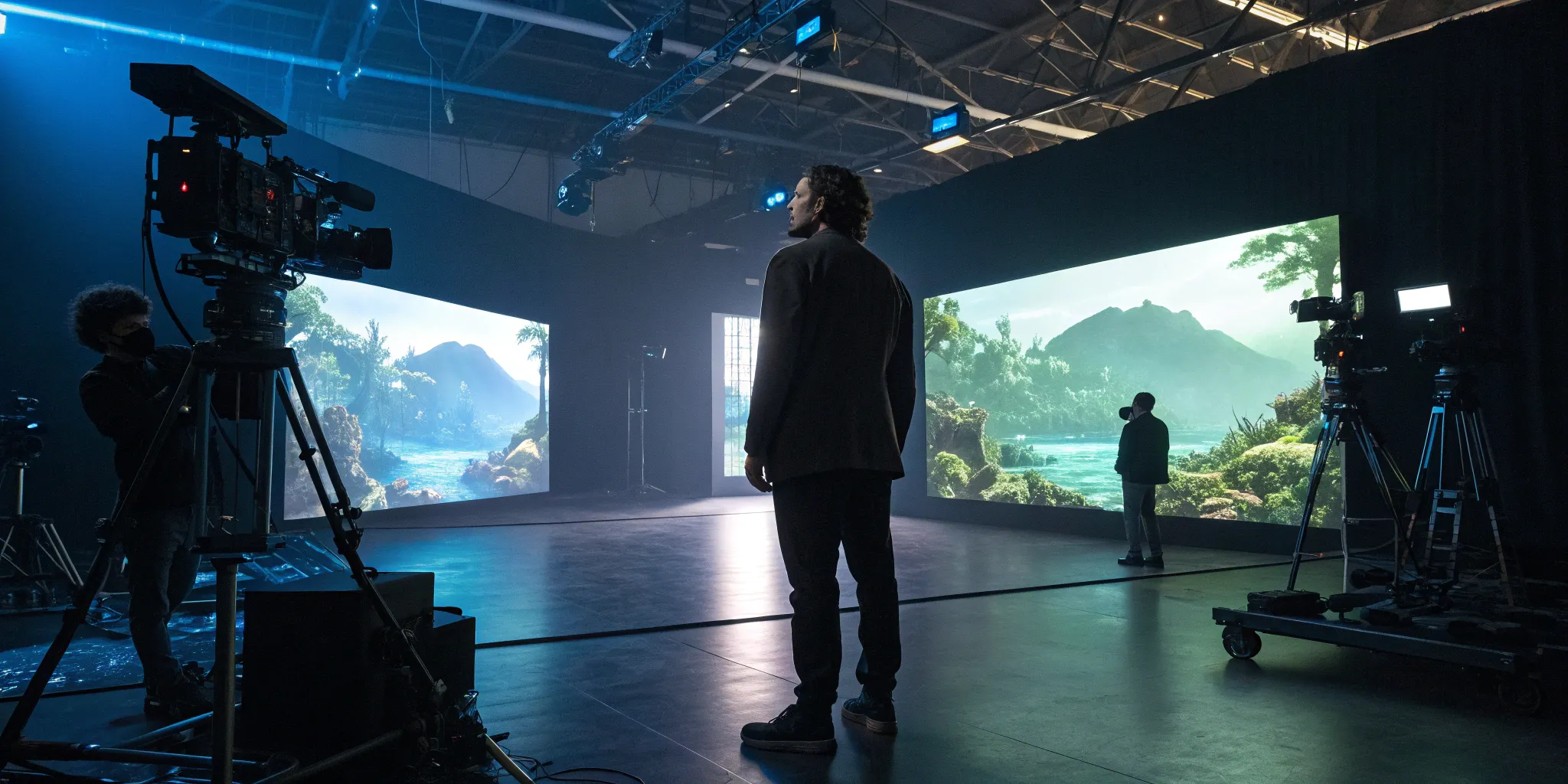
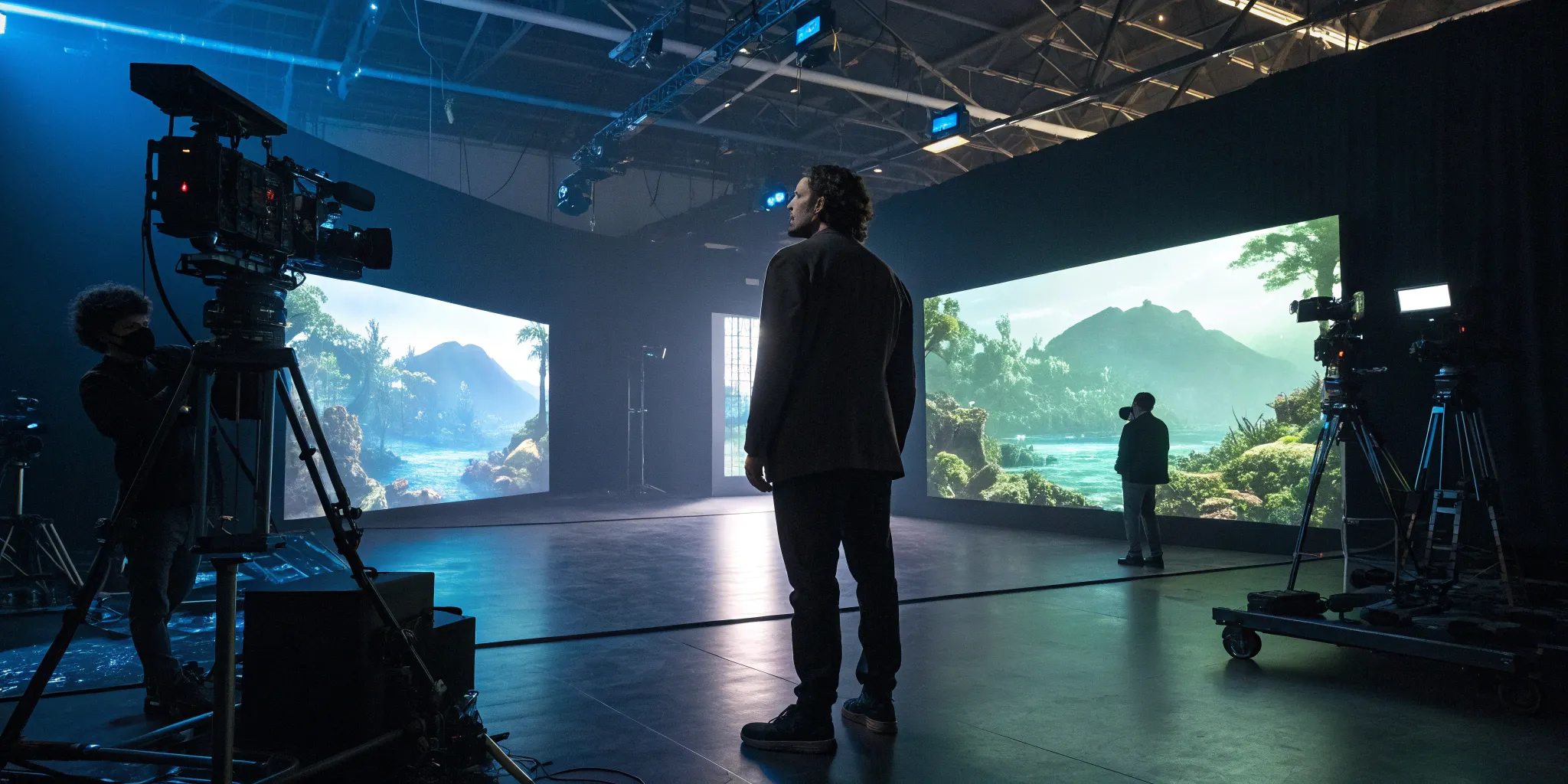
In filmmaking, XR virtual production lets your team visualize and interact with computer-generated environments live on set. This is often done using massive LED walls, called volumes, that display the digital world around the actors. This technology gives filmmakers incredible flexibility, allowing them to adjust lighting, camera angles, and even the environment itself in real-time. For actors, it means they can react to their surroundings naturally, leading to more authentic performances. This immediate feedback loop empowers creators to experiment and perfect their vision on the fly, as seen in major productions like Ant-Man and the Wasp: Quantumania.
How Does XR Differ From Traditional Filmmaking?
If you’ve spent any time on a film set, you know the rhythm of traditional production: shoot now, fix it in post. So much of the magic happens months after the cameras stop rolling, with visual effects teams working tirelessly to build worlds on a green screen canvas. Extended Reality flips that entire process on its head. Instead of creating the world later, you bring the world to the set. This shift from post-production guesswork to real-time creation is the core difference, impacting everything from actor performances to final lighting.
This isn't just a new tool; it's a new way of thinking about filmmaking. It allows for a more collaborative and iterative process right on the soundstage. Directors, cinematographers, and actors can see a close-to-final version of the shot as it’s being filmed, making creative decisions with immediate feedback. This approach merges the physical and digital worlds in a way that gives creators unprecedented control and flexibility from day one. It fundamentally changes the on-set dynamic, turning what was once a fragmented pipeline into a unified, creative environment where technical and artistic departments work in sync.
Moving Beyond Green Screens
We’ve all seen behind-the-scenes footage of actors delivering powerful lines to a tennis ball on a stick against a vast green wall. While effective, it requires a huge amount of imagination from everyone on set. With XR, the digital environment is displayed on massive LED walls, immersing the cast and crew in the world of the story. Actors can react to the environment around them because they can see it. This leads to more grounded, authentic performances and helps directors frame shots with a clear understanding of the final composition, just as our team saw while contributing to projects like Marvel Studios’ Ant-Man and The Wasp: Quantumania.
Real-Time Interaction vs. Post-Production
Traditionally, key creative decisions about visual effects are made long after principal photography wraps. A director might not see how a digital character truly interacts with a scene for months. XR virtual production changes this by allowing filmmakers to visualize and adjust CG elements live on set. You can move a mountain, change the time of day, or reposition a spaceship with a few clicks. This turns post-production into an integral part of the live-action shoot, enabling directors, cinematographers, and VFX supervisors to collaborate on the final image in real-time and make instant creative choices.
Integrating Realistic Light and Environments
One of the biggest challenges of green screen is making the lighting on your actors match the digital background you’ll add later. XR solves this beautifully. The LED screens that display the virtual world also emit light, casting realistic, dynamic lighting and reflections onto the actors and physical props. This seamless integration makes everything feel like it truly belongs in the same space. Combined with sophisticated camera tracking systems that allow the virtual background to move in perfect sync with the camera’s perspective, the illusion becomes completely believable, saving countless hours in post-production lighting and compositing.
Your XR Filmmaking Toolkit
So, what does it actually take to bring an XR production to life? While the technology is complex, the core components work together in a surprisingly straightforward way. Think of it as a high-tech stage where the digital and physical worlds meet. At Arctic7, our transmedia services rely on mastering these tools to build interconnected worlds for our partners. Understanding these key pieces will give you a clear picture of how we can create stunning, immersive visuals for your next project, whether it’s a game, film, or series.
LED Volume Stages and Virtual Sets
Forget green screens—the centerpiece of modern XR production is the LED volume. This is a large stage surrounded by high-resolution LED screens that display your virtual environment. These screens act as a dynamic backdrop, but they do more than just replace a physical set. They also emit realistic light and reflections onto your actors and props, grounding them in the scene in a way that’s impossible with a green screen. This setup allows you to jump from a frozen tundra to a desert planet in minutes, all without leaving the studio. The result is a seamless blend of real and virtual elements that looks convincing right in the camera.
Camera Tracking and Motion Capture
To make the illusion work, the virtual world needs to react perfectly to the real camera’s movements. This is where camera tracking comes in. Special systems follow the exact position and orientation of the camera, telling the real-time engine how to adjust the digital background’s perspective. When the camera pans, tilts, or dollies, the virtual world moves with it, creating a believable sense of depth. At the same time, motion capture systems can be used to translate an actor's performance onto a digital character within the scene, allowing for direct interaction between live-action and CG elements on set.
Real-Time Rendering Engines
The real-time rendering engine is the powerful software at the heart of the entire operation. This is the brain that takes all the data—the virtual environment, the camera tracking information, and any digital characters—and generates the final image instantly. Using game engines like Unreal Engine or Unity, these platforms render complex scenes on the fly, allowing you to see near-final-quality shots live on set. This immediate feedback loop is a game-changer, giving directors, cinematographers, and actors the ability to make creative decisions and see the results right away, streamlining the entire production process.
The Creative Power of XR in Film
Extended Reality is more than just a technological upgrade for your toolkit; it’s a creative catalyst that redefines what’s possible on screen. By merging the physical and digital worlds directly on set, XR gives filmmakers unprecedented control over their vision from day one. Instead of fixing things in post-production, you can shape your world in real-time, making creative decisions with immediate feedback.
This shift empowers every member of your team. Directors can frame shots against the final backdrop, cinematographers can paint with light in ways that were once impossible, and actors can deliver more grounded performances. It’s a more intuitive and collaborative way to work, allowing you to focus on the story you want to tell without being limited by the logistics of physical locations or the abstractions of a green screen. This technology is at the core of building the kind of interconnected entertainment ecosystems that captivate modern audiences.
Drawing Out Authentic Performances
One of the most significant creative benefits of XR is its impact on actors. With a green screen, performers have to imagine everything—the looming monster, the breathtaking alien landscape, the futuristic city. But in an XR volume, the world is right there with them. The final digital environment is displayed on massive LED screens, allowing actors to see, feel, and react to their surroundings authentically.
This immediate, immersive feedback helps draw out more natural performances. When an actor can make eye contact with a digital character or see the reflection of an explosion in a puddle at their feet, their reactions become more genuine. This grounds their performance in the reality of the scene, creating a more believable and emotionally resonant experience for the audience.
Creating Any World Imaginable
With XR, the only real limit to your film’s setting is your imagination. Whether you’re building a forgotten ancient city, a bustling sci-fi metropolis, or a whimsical fantasy forest, you can create it digitally and bring it to life on set. This technology allows you to design and control every element of your environment, from the weather to the time of day, with the click of a button.
Filmmakers can now build entire worlds that actors can physically interact with in real-time. This was a key part of our work on projects like Ant-Man and The Wasp: Quantumania, where creating a believable, otherworldly environment was essential to the story. This capability frees IP holders from the constraints of location scouting and set construction, opening the door to visually stunning narratives that would have been too costly or impractical to produce otherwise.
Mastering Light and Atmosphere
Lighting is one of the most powerful tools in a filmmaker's arsenal, and XR offers a revolutionary way to control it. In an LED volume, the screens themselves become the primary light source. This means the light that falls on your actors and physical props is coming directly from the virtual environment, creating perfectly integrated, realistic reflections and shadows.
This method of interactive lighting eliminates the "color spill" common with green screens, where that telltale green glow reflects onto actors and sets. As a result, you spend far less time correcting color and lighting issues in post-production. You can achieve complex, dynamic lighting setups on set that perfectly match your digital world, giving your cinematographer incredible creative freedom to craft the perfect mood and atmosphere for every scene.
Exploring Interactive Storytelling
XR’s potential extends far beyond a single film. It serves as a powerful bridge for transmedia storytelling, allowing you to create assets and worlds that can be used across games, virtual experiences, and other digital platforms. The digital environments built for a film can be repurposed for a VR game or an AR mobile app, creating a cohesive and expansive universe for your audience to explore.
This approach makes storytelling more interactive and immersive. By using digital overlays on real-world settings, you can extend narratives beyond the screen and invite your audience to engage with your IP in new ways. For creators, this opens up exciting possibilities for building deeper connections with fans and diversifying how your story is told. It’s a foundational element of a modern, multi-platform entertainment strategy.
How XR Transforms Your Production Workflow
Extended reality does more than just create stunning visuals; it fundamentally changes how you make a film from the ground up. Instead of a linear, siloed process where creative decisions are locked in early and problems are pushed to post-production, XR introduces a more fluid and iterative workflow. It brings the power of post-production directly onto the set, giving your entire team—from the director to the actors—a shared vision to work from in real time. This shift empowers you to experiment, solve creative challenges on the fly, and capture final-pixel shots in-camera.
By integrating virtual elements with the physical set, you can streamline every phase of production. This approach not only saves a significant amount of time and money but also opens up new creative possibilities that were once impractical or impossible. Adopting a virtual production workflow means you can build your world, step inside it, and perfect it before you even roll the camera. Let’s walk through how this transformation unfolds at each stage.
Visualize Your Film in Pre-Production
In traditional filmmaking, pre-production relies on storyboards, concept art, and imagination. With XR, you can build and explore your entire set digitally before a single physical piece is constructed. Using powerful graphics engines and LED screens, you can conduct virtual location scouts from anywhere in the world. Directors and cinematographers can walk through a virtual environment, test camera angles, and block scenes with digital stand-ins. This allows you to make crucial creative decisions about lighting, composition, and set design with complete confidence. You can see exactly how a scene will look and feel, ensuring your vision is perfectly aligned long before the cameras start rolling.
Collaborate in Real-Time on Set
The days of acting against a vast green screen are fading. XR places your cast and crew directly inside the world of your story. LED volumes display high-resolution background environments, allowing actors to see and react to the digital world around them, leading to more grounded and authentic performances. This real-time interaction is a game-changer for everyone on set. The director can request immediate changes to the environment, the cinematographer can adjust lighting that realistically reflects on actors and props, and the whole team can see a close-to-final version of the shot right on the monitor. This was a key technique used in films like Ant-Man and the Wasp: Quantumania to create its otherworldly visuals.
Simplify Your Post-Production Process
One of the biggest advantages of an XR workflow is the ability to capture complex visual effects in-camera. Because the digital background, lighting, and reflections are all filmed live, you drastically reduce the need for time-consuming post-production work like keying, rotoscoping, and compositing. Filmmakers can see the final look on set and make adjustments instantly, avoiding the costly "fix it in post" mentality. This not only accelerates your timeline but also gives you a much clearer picture of your final product from day one. Your post-production team can then focus on refinement and enhancement rather than building entire scenes from scratch, making the entire VFX pipeline more efficient.
Breaking Down the Costs of XR Filmmaking
When you first hear about LED volumes and real-time rendering engines, it’s easy to assume that XR filmmaking comes with an astronomical price tag. And while there is an initial investment, the financial story is much more interesting than you might think. The costs are front-loaded, but the savings you gain throughout production—from pre-visualization to post—can be substantial.
XR virtual production is fundamentally changing the economics of the entertainment industry by making the entire process faster and more creatively efficient. Instead of thinking of it as an added expense, it’s more accurate to see it as a reallocation of your budget. You’re shifting funds away from travel, location scouting, and extensive post-production VFX, and investing them into a controlled, flexible, and powerful on-set environment. Let's look at how the numbers actually break down.
Initial Investment vs. Long-Term Savings
The upfront cost of building or renting an XR stage is the biggest line item. This includes the LED walls, camera tracking systems, and the powerful hardware needed to run it all. However, this initial spend unlocks significant long-term savings. Because you can capture final-pixel shots in-camera, you drastically reduce the need for costly and time-consuming post-production work. What you see on the monitor on set is incredibly close to the final product.
This workflow means fewer surprises and fewer reshoots. Directors, cinematographers, and actors can see the virtual world they’re interacting with in real time, leading to better decisions and more authentic performances on the day. Over the course of a project, these efficiencies add up. Access to powerful virtual production tools streamlines the entire pipeline, saving you time and money that would otherwise be spent fixing problems in post.
Saving on Location and Travel
One of the most immediate and tangible financial benefits of XR is the massive reduction in location-based expenses. Imagine shooting a scene set in the Sahara Desert in the morning and another in a neon-drenched cyberpunk city in the afternoon—all without leaving the studio. This capability eliminates the need to fly cast and crew to remote or multiple locations, saving a fortune on flights, accommodations, and transport.
This is a game-changer for projects with tight schedules or actors with limited availability. You’re no longer at the mercy of weather conditions, permit issues, or the "golden hour" for that perfect shot. By bringing the world to your stage, you gain complete control over your environment. This was a key part of the production for films like Ant-Man and the Wasp: Quantumania, which used virtual sets to create its incredible, otherworldly Quantum Realm without ever leaving the soundstage.
Factoring in Gear and Expertise
Beyond the LED stage itself, the core of an XR workflow relies on specialized gear and the talent to run it. This includes high-end cinema cameras, motion capture systems, and real-time rendering software. Game engines like Unreal Engine have become central to this process, offering robust support for creating and managing the complex virtual environments projected onto the screens.
However, the technology is only as good as the team operating it. You need specialists who understand the entire pipeline, from digital asset creation to on-set systems calibration. This is where partnering with a studio that has deep transmedia expertise becomes invaluable. Investing in a skilled crew ensures that you’re not just using new tools, but are fully leveraging them to achieve your creative vision efficiently and effectively.
Common Challenges in XR Production (And How to Solve Them)
Adopting any new technology comes with a learning curve, and XR filmmaking is no different. While the creative possibilities are immense, jumping into virtual production requires navigating a few common hurdles. Think of these not as roadblocks, but as checkpoints on your path to creating something truly groundbreaking. The key is to anticipate them and have a solid plan in place.
The main challenges you’ll encounter revolve around mastering the technology, ensuring all your hardware plays nicely together, and getting your crew up to speed with new workflows. With the right strategy and the right partners, you can move past these obstacles smoothly and focus on what really matters: telling an incredible story. Let’s break down each challenge and talk through practical solutions.
Overcoming the Technical Learning Curve
While XR technology has become more accessible, it isn’t exactly plug-and-play. As experts note, "there is still a learning curve, meaning people need time to learn how to use it." Your team can’t be expected to become virtual production wizards overnight. This new frontier requires a different technical language and a new way of thinking about the filmmaking process, from pre-production asset creation to on-set troubleshooting.
The most effective solution is to lean on a team that has already put in the hours. Partnering with a studio that has deep technical expertise allows your creative team to stay focused on their vision without getting bogged down by the complexities of the tech. This collaborative approach bridges the knowledge gap, turning a steep learning curve into a gentle slope.
Solving Hardware Compatibility Issues
A virtual production set is a complex ecosystem of specialized gear, including LED panels, camera tracking systems, and powerful rendering computers. For everything to work, all these components must communicate with each other flawlessly. When they don’t, you can face frustrating delays and technical glitches that bring production to a halt. Ensuring hardware compatibility is essential to realizing the benefits of XR, like immediate creative feedback and reduced post-production time.
The best way to solve this is by establishing a solid technical pipeline before you even think about shooting. This involves rigorous testing to confirm that every piece of hardware and software is perfectly integrated. Working with a virtual production supervisor or a dedicated partner like Arctic7, who has experience building these systems for major projects like Marvel Studios productions, ensures your tech is reliable from day one.
Training Your Crew for XR
Your crew is your greatest asset, but the shift to XR changes how many traditional on-set roles function. A Director of Photography now has to think about lighting virtual environments, and a production designer works with digital assets as much as physical ones. Research shows that many film professionals feel that training courses should do more to prepare them for the realities of working in this new environment. It’s not just about learning software; it’s about adapting to a fundamentally different workflow.
Instead of pulling your team out for theoretical training, consider bringing experts on set to work alongside them. This hands-on approach allows your crew to learn practical skills in a real-world context, guided by a seasoned team that understands the pressures of production. This method builds confidence and integrates new skills directly into your workflow, ensuring your crew is not just trained, but truly prepared for the future of filmmaking.
How to Get Started with XR Filmmaking
Jumping into extended reality can feel like a huge leap, but it’s more manageable when you break it down into clear, actionable steps. It’s not about buying all the flashiest gear at once. Instead, a successful start in XR filmmaking comes from a thoughtful approach to your tools, a commitment to building the right skills on your team, and meticulous planning. By focusing on these three areas, you can build a solid foundation for your first XR project and set your crew up for success.
Choose Your Tools and Software
The right toolkit is the backbone of any XR production. At the core, you’ll need a real-time rendering engine like Unreal Engine or Unity to build and display your virtual worlds. These engines are the digital brains of the operation. You’ll also need a camera tracking system to sync your real-world camera movements with the virtual environment.
While massive LED volumes are impressive, you don’t need one to get started. Many filmmakers begin by experimenting with smaller setups or even just the software itself to get a feel for the workflow. The goal is to find powerful virtual production tools that fit your project's scale and budget. For teams new to the space, online platforms offer a range of XR-related courses that can help you understand the software landscape before you invest in hardware.
Build Your Team's Technical Skills
XR filmmaking merges traditional on-set roles with new, highly specialized technical skills. Your team will need people who are fluent in both the language of cinema and the logic of game engines. You might need a Virtual Production Supervisor, real-time 3D artists, or technicians who understand the nuances of camera tracking and LED panel calibration.
You can approach this in two ways: upskill your existing crew through dedicated training or bring in experienced specialists to fill the gaps. The key is to prioritize hands-on experience. The best training programs prepare crews for the practical, fast-paced realities of a virtual production set. Investing in your team’s skills and training is just as critical as investing in the right technology. A skilled team that can troubleshoot on the fly is your greatest asset.
Plan Your First XR Production
Your first XR project is your training ground. It’s best to start with something manageable, like a short film, a single complex scene, or a commercial. This allows your team to learn the workflow and build confidence without the immense pressure of a feature-length production. The planning phase in XR is intensive because it front-loads many of the creative and technical decisions you’d normally make in post-production.
This process involves using extended reality to visualize and interact with your digital sets and assets long before you start shooting. You’ll map out camera movements, test lighting setups, and finalize environmental designs all within the virtual space. This level of pre-visualization ensures that when you get on set, your time is spent capturing the perfect performance, not solving technical problems.
What's Next for XR in Film?
The world of XR is moving incredibly fast, and its impact on filmmaking is only just beginning. As the technology matures, it’s becoming more powerful, more integrated, and surprisingly, more accessible. The future isn't about replacing traditional filmmaking but augmenting it with tools that give creators unprecedented control and freedom. We're seeing three major trends shaping what's next: the hardware is getting better and cheaper, artificial intelligence is adding a new layer of creative potential, and the tools are becoming available to a wider range of storytellers.
For IP holders and studios, this evolution presents a massive opportunity. The ability to build and explore digital worlds is no longer confined to massive-budget productions. These advancements are making it possible for more creators to think bigger about their stories and how they can bring them to life. Whether it's developing a new game or a virtual production for a streaming series, the transmedia services that connect these experiences are becoming more crucial than ever. The next wave of innovation will empower storytellers to build deeper, more immersive universes for audiences to explore.
New Hardware and Better Access
One of the biggest shifts in the XR landscape is the improvement and accessibility of hardware. Headsets are becoming lighter and more powerful, and LED volumes are becoming more common. This progress is steadily lowering the barrier to entry. While major studios continue to make significant investments in immersive content, these lower entry barriers have enabled independent filmmakers to start experimenting with VR and AR in truly creative ways. This means you don’t need a nine-figure budget to start leveraging the power of virtual production, opening the door for more diverse and innovative stories to be told.
The Role of AI and Spatial Computing
The intersection of artificial intelligence and XR is where things get really exciting. AI is beginning to streamline complex processes, from generating 3D assets to creating realistic character animations in real time. This is part of a larger move toward spatial computing, where digital information is seamlessly integrated with the physical world. We're already seeing how AI and XR technologies are changing the face of film at major festivals. For production, this means creating smarter, more responsive virtual sets that can react to actors' performances or lighting changes instantly, making the filmmaking process more intuitive and creatively fluid.
Making XR Tools Available for All
Ultimately, the future of XR in film hinges on accessibility. It’s not just about cheaper hardware; it’s also about software and workflows becoming more user-friendly. This surge in XR is leading to a democratization of storytelling, giving independent creators and smaller studios affordable ways to conduct bold experiments that redefine cinematic narratives. As these tools become more widespread, the focus shifts from technical hurdles to pure creativity. This allows IP holders to partner with teams like Arctic7 to focus on what truly matters: building expansive, engaging worlds that capture the imagination of audiences everywhere.
Related Articles
- How Unreal Engine for Virtual Production Is Remaking Film
- The Virtual Production Workflow: A Practical Guide
- How Does Virtual Production Work? A Creator's Guide
Frequently Asked Questions
Is XR filmmaking only for massive sci-fi or fantasy projects? Not at all. While XR is perfect for creating otherworldly landscapes, its real strength is control. You can use it to replicate a perfect sunset that lasts for a 12-hour shoot day, create a historically accurate backdrop without building a massive physical set, or even shoot a car scene without ever leaving the studio. It's a versatile tool for any genre that requires a specific or hard-to-get environment, giving you creative freedom no matter the story.
What's the biggest practical difference for my creative team when using XR? The most significant change is the shift from a "fix it in post" mindset to real-time, on-set collaboration. Instead of imagining how a scene will look, your director, cinematographer, and actors can see a near-final version of the shot as it happens. This means creative decisions about lighting, framing, and performance are made with immediate feedback, turning the production process into a more unified and intuitive effort from day one.
Do I have to build an expensive LED stage to get started with XR? Absolutely not. Building a permanent stage is a major investment, but it's not the only way to access the technology. Many studios rent time on existing XR stages, which is a great way to use the tools on a project-by-project basis. You can also start smaller by using the software for pre-visualization to plan your shots in a virtual environment long before you step onto any set, physical or virtual.
How does using an XR stage actually improve an actor's performance? It grounds them in the world of the story. When actors work on a green screen, they have to imagine their surroundings, which can be a huge creative challenge. In an XR volume, they are immersed in the digital environment displayed on the LED walls. They can see the alien city or feel the light from a virtual explosion, allowing them to react naturally and deliver a more authentic, believable performance.
How does this technology fit into a larger transmedia strategy? XR is a natural bridge for expanding your intellectual property. The high-quality digital assets and environments you build for a film's virtual production don't have to live and die with that one project. They can be repurposed and adapted for video games, VR experiences, or interactive mobile apps, creating a cohesive and interconnected universe for your audience to explore across different platforms.
New Immersive & XR Media Capabilities Added to Arctic7's Suite of Games, Film & TV and Digital Services

Arctic7 Shares Details of its Work on Skeleton Crew and Cinematics Partnership with Fateless

The Human Touch: Adding Personality to Project and Product Management
Whether it’s your team, your client, or your stakeholders, understanding the human dynamics is just as critical as hitting milestones.

McDonald's Case Study: Bridging Brand and Play | Arctic7
Bridging Brand and Play: An Interview with Lindsay Blenkhorn Daggitt